Want more images or videos?
Request additional images or videos from the seller
1 of 12

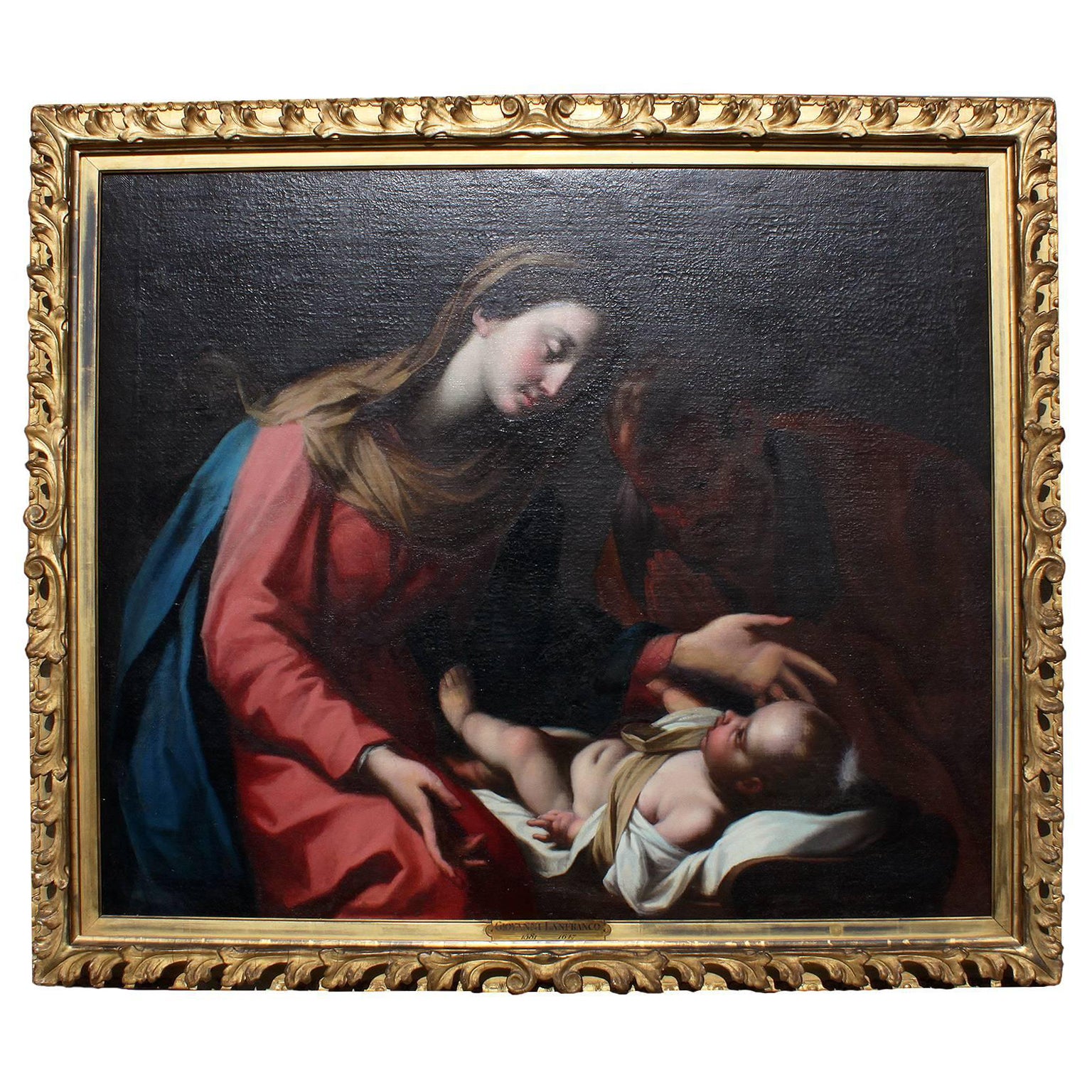
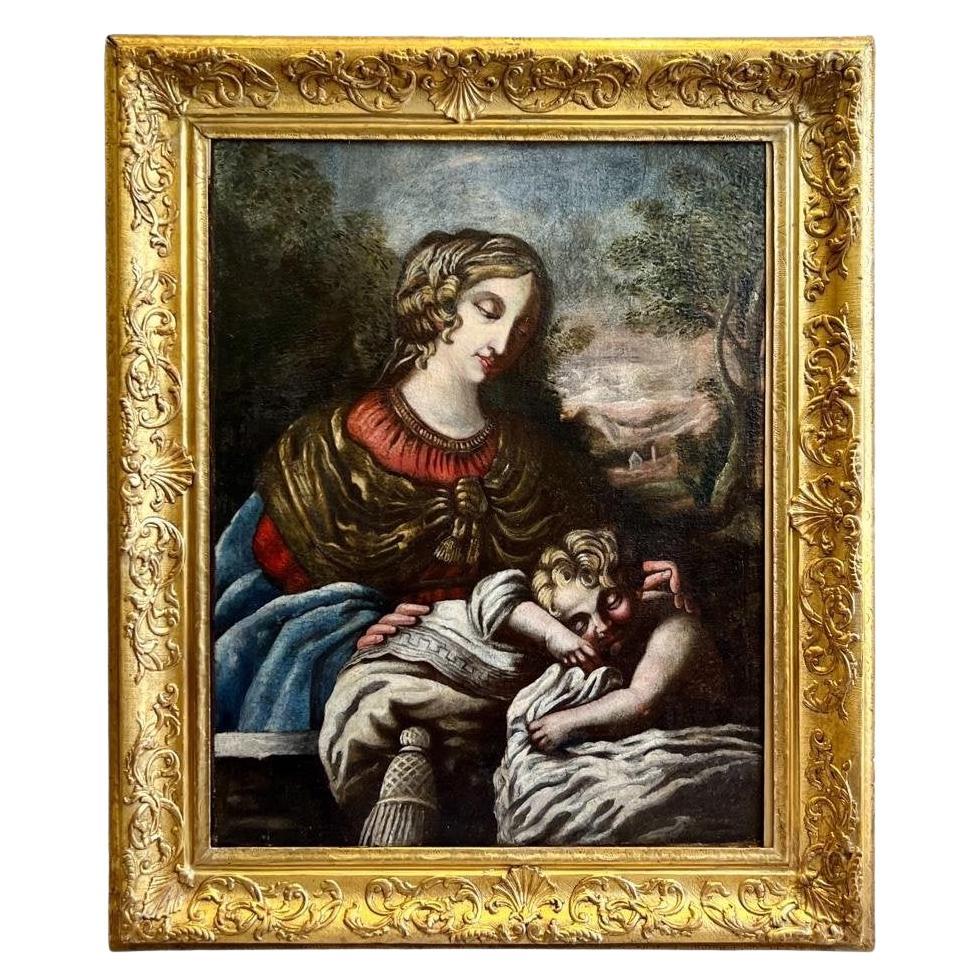
1848 Madonna Adoring The Sleeping Child Painting Oil on Canvas by Adele Pinot

$3,335.62
£2,450.18
€3,402VAT Included
CA$4,602.89
A$4,685.27
CHF 2,666.94
MX$56,554.64
NOK 31,098.02
SEK 31,472.98
DKK 21,350.21

About the Item

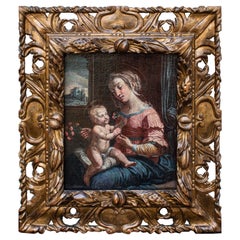
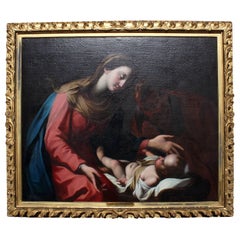
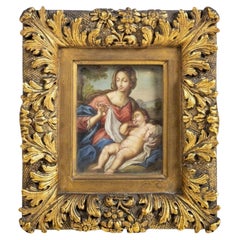
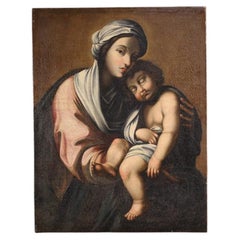
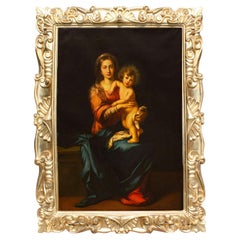
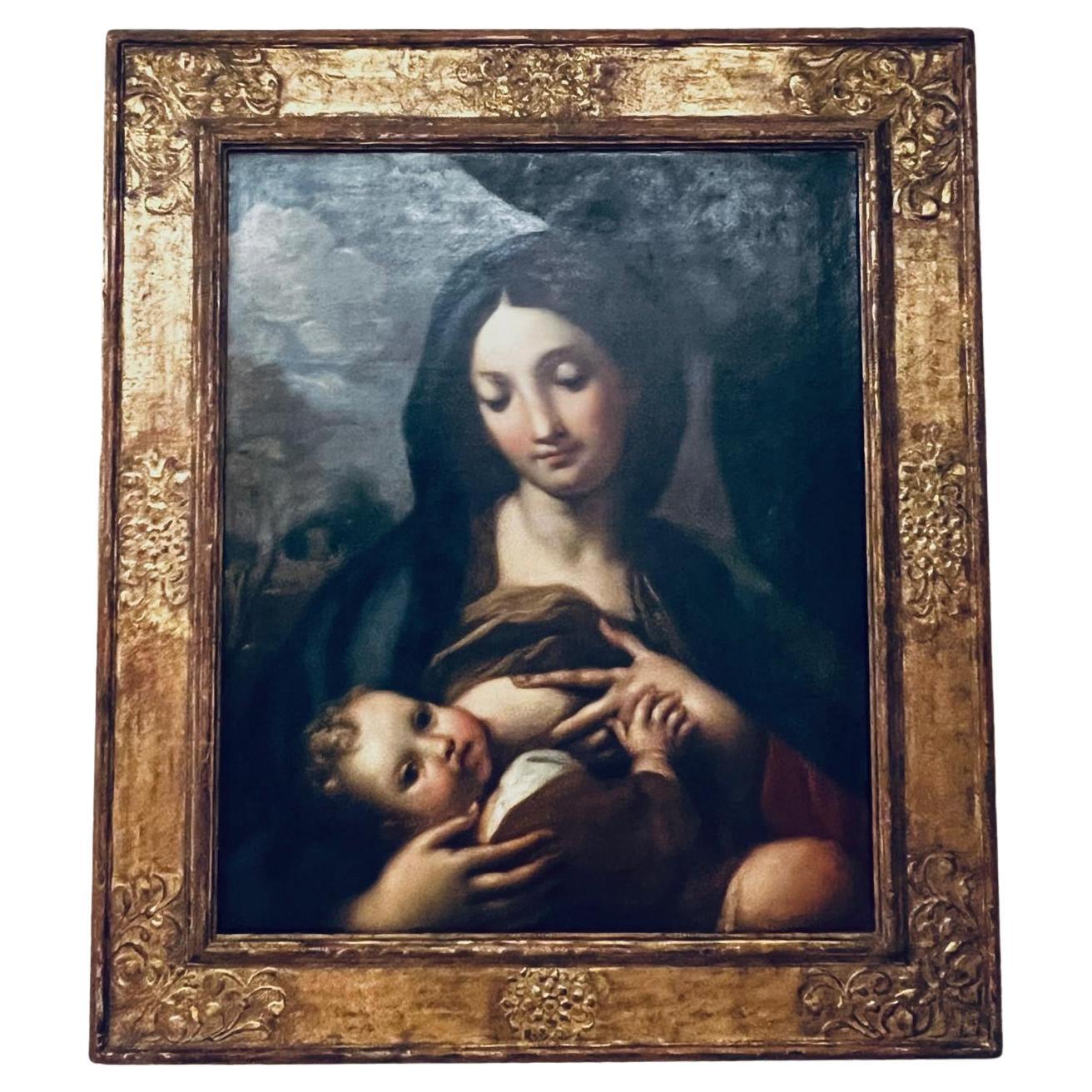
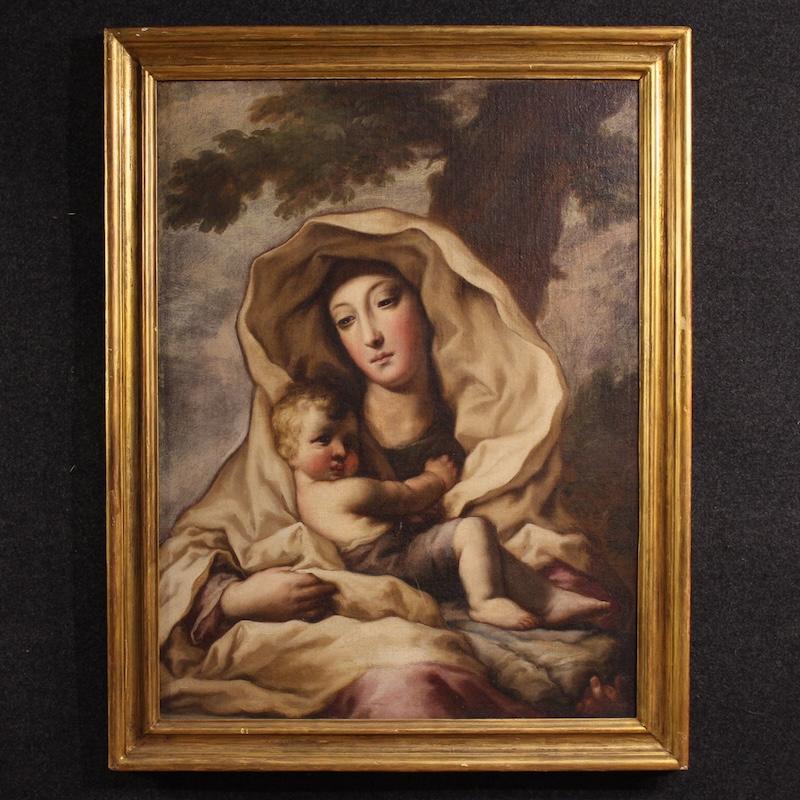
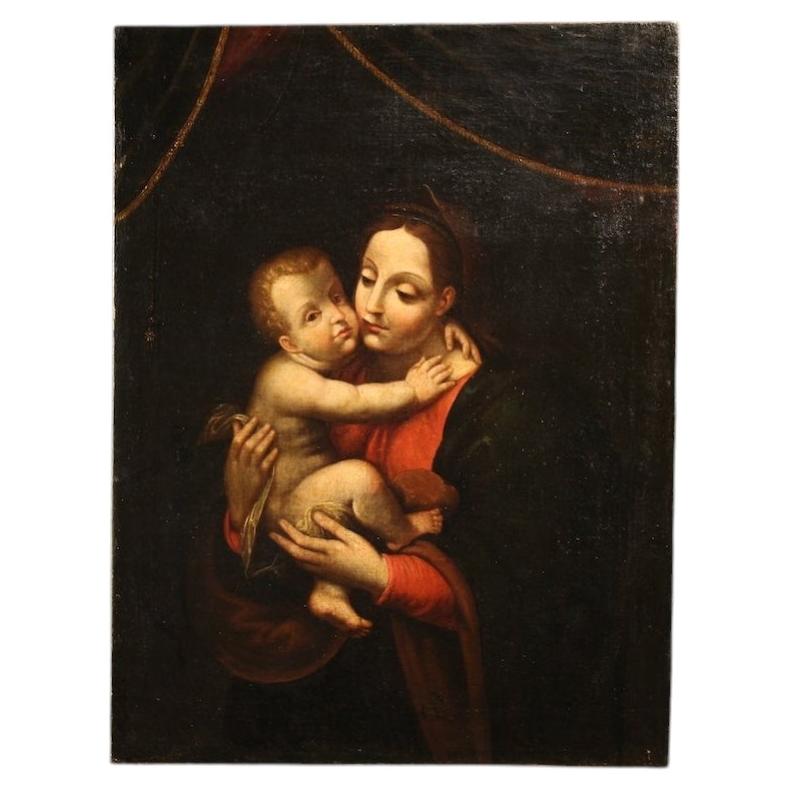
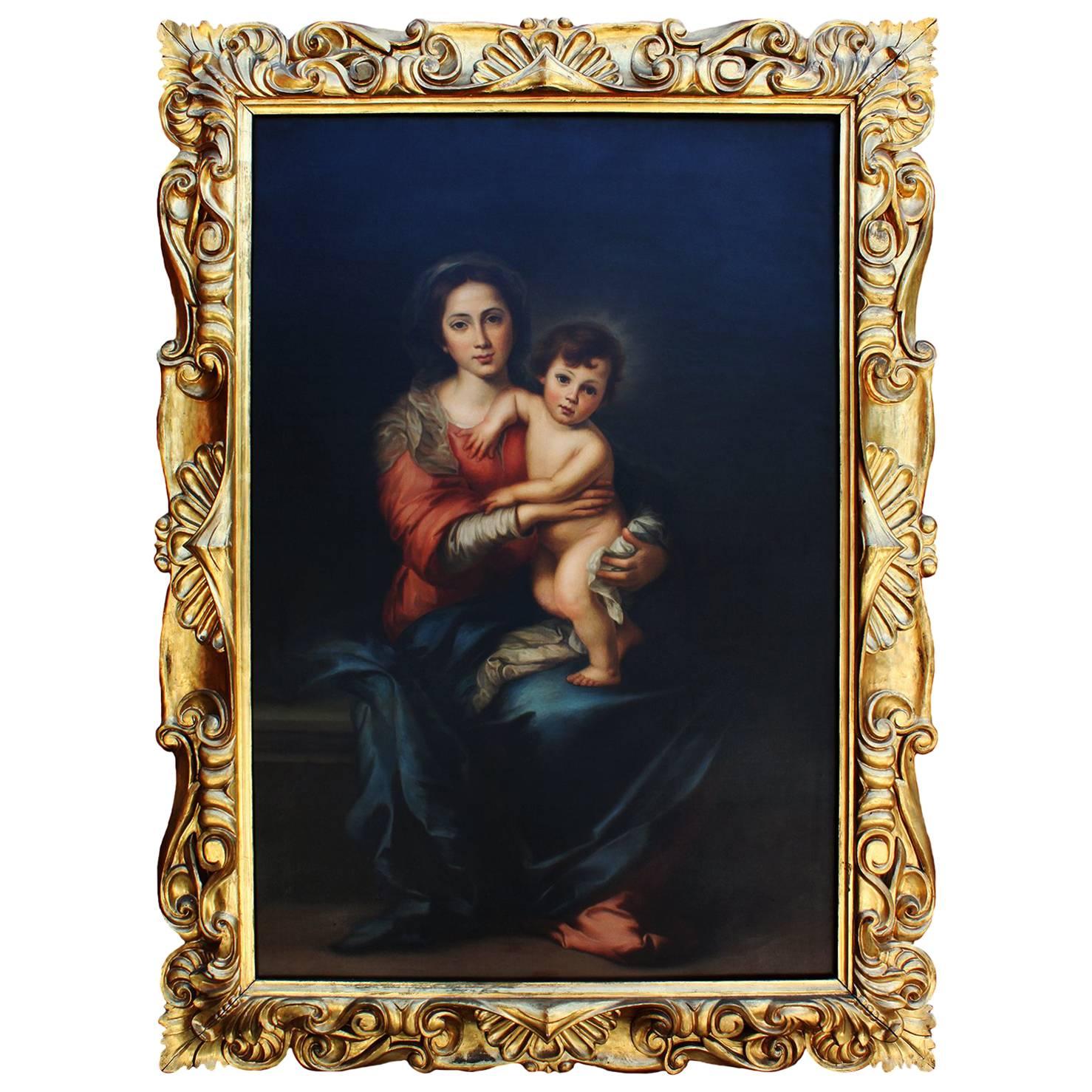
Adele Pinot (1848), by Guido Reni (Bologna, 1575 - 1642) Madonna Adoring the Sleeping Child Oil on canvas, 97 x 107 cm Signed lower right "Adele Pinot 1848" The canvas examined depicts the Madonna and Child, caught in a moment of great tenderness and intimacy. Wrapped in a brilliant luminosity, the little Jesus is depicted in the foreground comfortably lying on some soft drapes. The face appears peacefully asleep and is framed by blond curls; the complexion is white and the legs, just curled up and slightly bent at the knee, help to accentuate the naturalness and sweetness of the composition. Full of tenderness and maternal love, the figure of the Madonna appears, with delicate features and a head covered by a veil, which, placed at three quarters, is totally attracted to the contemplation of her little son. The high quality that can be found in the execution of the figures is also emphasized in the rendering of the soft drapery and in the careful attention to detail. The work, created in 1848 by the French artist Adele Pinot, re-elaborates the famous Madonna in adoration of the Child by Guido Reni (Bologna, 1575 - 1642) now preserved in the Doria Pamphilj Gallery in Rome. Reni's oval-shaped painting, probably repeated by the master, was the object of a certain fortune both in painting and engraving. In fact, there is an early and faithful copy made by Giovanni Battista Salvi, known as Sassoferrato (Sassoferrato, 1609 - Rome, 1685), currently preserved in the Galleria Parmeggiani at the Civic Museums of Reggio Emilia. Salvi must have particularly appreciated the Renian iconographic invention, as he subsequently derived many paintings of the same subject and similar composition, as evidenced by his Madonna with sleeping child in the Estense Gallery in Modena. Also dated to the seventeenth century are another pictorial reproduction of the work now preserved at the National Museum of Palazzo Mansi in Lucca and some engravings made, with some variations, by the Dutch Cornelis Bloemaert and the French painter Jean Boulanger both placed in the Cabinet of Drawings and Prints of the National Art Gallery of Bologna. The Bloemaart burin was printed by Giovanni Giacomo De 'Rossi and features a dedication to the Spanish nobleman Pietro Paolo Avila, «Picturae et liberalium artium Studiosisimo», while that of Jean Boulanger was published by the Parisian Jean Leblond I. by the Dutch Cornelis Bloemaert and the French painter Jean Boulanger both placed in the Cabinet of Drawings and Prints of the National Art Gallery of Bologna. The Bloemaart burin was printed by Giovanni Giacomo De 'Rossi and features a dedication to the Spanish nobleman Pietro Paolo Avila, «Picturae et liberalium artium Studiosisimo», while that of Jean Boulanger was published by the Parisian Jean Leblond I. by the Dutch Cornelis Bloemaert and the French painter Jean Boulanger both placed in the Cabinet of Drawings and Prints of the National Art Gallery of Bologna. The Bloemaart burin was printed by Giovanni Giacomo De 'Rossi and features a dedication to the Spanish nobleman Pietro Paolo Avila, «Picturae et liberalium artium Studiosisimo», while that of Jean Boulanger was published by the Parisian Jean Leblond I. These engravings, the d'après and the canvases by Sassoferrato undoubtedly contributed to the immense fortune of this image by Reni, widespread and appreciated over the centuries above all for its devotional potential and the intense emotionality transmitted.
  • Similar to:
    Guido Reni (Painter)
  • Dimensions:
    Height: 38.19 in (97 cm)Width: 42.13 in (107 cm)Depth: 1.58 in (4 cm)
  • Style:
    Baroque Revival (In the Style Of)
  • Materials and Techniques:
  • Place of Origin:
  • Period:
  • Date of Manufacture:
    1848
  • Condition:
    Wear consistent with age and use.
  • Seller Location:
    Milan, IT
  • Reference Number:
    1stDibs: LU5918226671752

More From This Seller

View All
Early 17th Century Roman School Praying Madonna Painting Oil on Canvas

Early 17th Century Roman School Praying Madonna Painting Oil on Canvas

Located in Milan, IT

Roman school, late 16th-early 17th century Praying Madonna Oil on canvas, 81 x 69 cm Frame 83 x 95.5 cm A divine whiteness reverberates with vibrant luster on the maphorion of the present Virgin. The palpable iridescence that structures the thin rosaceous garment, woven with the same fresh light, produces a slight rustle when she takes her hands off. The Madonna in fact takes a prayerful pose, opening her palms to underline her fervent ecstatic intention; the white neck is rendered with perishable fullness of pigments, like the hands, perfectly alive, and the very shiny eyes. With fine shrewdness the artist of the present styles the Virgin's hair with thin white ribbons, exacerbating the purity. An evocative light falls gently on the bust, a materialized sign of divine glory. The present can be traced back to the late Mannerist climate that prevailed in the capital after the emanation of the Tridentine council (1545-1563). The late Mannerist licenses that can still be seen there, such as the intense lyricism in the stylistic code adopted by the artist, are innervated in the new basic catechetical intent, which at the end of the century produced a certain figurative rigorism. The present, however, still responds to that extraordinary Roman dynamism that raised the capital to a bulwark for the entire mannerist lesson, matched only by a second artistic center, the Florentine one. The engaging carriage of the Virgin reflects the contemporary examples of Giuseppe Valeriano (1542-1596), a Jesuit painter, returning in the Marriage of the Virgin of the Roman Church of Jesus, as well as in the Madonna of Sorrows in the Recanati Altarpiece, equal ardor. But it is in the Assumption of the Virgin painted in four hands with Scipione Pulzone...

Category

Antique Early 17th Century Italian Paintings

Materials

Canvas

16th Century Madonna of the Carnations Painting Oil on Canvas from Raffaello

16th Century Madonna of the Carnations Painting Oil on Canvas from Raffaello

By Raphael (Raffaello Sanzio da Urbino)

Located in Milan, IT

16th century, by Raffaello Sanzio (Urbino, 1483 - Rome, 1520) Madonna of the Carnations Measures: Oil on canvas 38 x 30 - with frame 59 x 52.5 cm The Madonna dei Garofani made b...

Category

Antique 16th Century Italian Paintings

Materials

Canvas

17th Century Mystical Marriage of Saint Catherine Oli on Canvas Roman School

17th Century Mystical Marriage of Saint Catherine Oli on Canvas Roman School

Located in Milan, IT

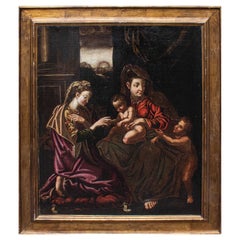
17th century, Roman School Mystical marriage of Saint Catherine of Alexandria Oil on canvas, 32 x 23 cm Frame cm 45 x 36 The saint is depicted in front of the Virgin holding the Child portrayed with the wedding ring in his hand, enriched with a precious stone. According to the Golden Legend, Catherine of Alexandria was a very beautiful young woman, the only daughter of the king of Costa, who had refused to marry the emperor Maxentius because she was a Christian and devoted to Christ. Maxentius, unable to convince her to sacrifice to idols, had sent to call the wisest men and fifty philosophers and orators who presented themselves and tried to divert her from faith in Christ. Catherine, however, played so well that she was able to convert them, arousing the anger of the emperor who condemned them to the stake. Catherine, however, who had criticized Maxentius for the new persecutions against the Christians, was sentenced to prison without food. Abandoned for twelve days, she was fed by a dove sent by God. Maxentius then decided to execute her with the torture of the toothed wheel become her attribute iconographic; but by divine intervention this broke and the young was saved. Finally, she was beheaded and milk flowed from her neck. Catherine’s princely status is witnessed here by her sumptuous dress. The iconography of the mystical marriage was born in the fifteenth century, probably because the traditional iconographic attribute, the wheel, was sometimes so small as to look like a ring, and refers to a vision that will always remain present in the mind and heart of the saint. In Heaven she appeared to her, among the Angels and Saints, Christ the Child, in the arms of the Virgin. He took a precious ring that the Virgin Mary handed to her and put it in her finger, saying "I, your Creator and Saviour, take you in marriage; confident that you will keep you pure until you celebrate your eternal wedding with me, in Paradise" When Catherine was laughing, she found in her finger the same ring that she had seen and had in Heaven, and she considered herself forever the bride of Christ. In this extraordinary episode we can see the heart of Catherine’s religious sense, and of all her spirituality. For her, Christ is like the bridegroom, with whom there is a relationship of intimacy, communion and fidelity; he is the beloved, whom she loves above all...

Category

Antique 17th Century Italian Decorative Art

Materials

Canvas

17th Century Mystical Marriage of Saint Catherine Painting Oil on Canvas

17th Century Mystical Marriage of Saint Catherine Painting Oil on Canvas

Located in Milan, IT

17th century Mystical marriage of Saint Catherine Measures: Oil on canvas, 98 x 81 cm - with frame 119 x 102 cm The scene represents the mystical marriage between Catherine of A...

Category

Antique 17th Century Italian Paintings

Materials

Canvas

You May Also Like

"Madonna With Sleeping Child, Follower Of Giovan Battista Salvi Il Sassoferrato

"Madonna With Sleeping Child, Follower Of Giovan Battista Salvi Il Sassoferrato

Located in Madrid, ES

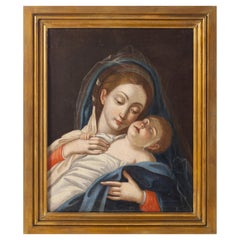
"Madonna With Sleeping Child, Follower Of Giovan Battista Salvi Il Sassoferrato (1609 - 1685)" Madonna with Sleeping Child Follower of Giovan Battista Salvi known as 'il Sassoferrato...

Category

Antique 18th Century Italian Baroque Paintings

Materials

Paint

Antique 17th Century Madonna with Child, Rome Carlo Maratta Oil on Canvas

Antique 17th Century Madonna with Child, Rome Carlo Maratta Oil on Canvas

By Carlo Maratta

Located in Doha, QA

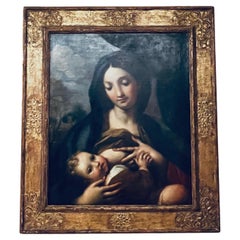
C. Maratta went to Rome in 1636 and became an apprentice in the Studio of Andrea Sacchi. Pope Alexander VII commissioned many paintings from him. Maratta’s paintings of the later 165...

Category

Antique 17th Century Italian Baroque Paintings

Materials

Canvas

Antonio Allegri, Our Lady with the Child Jesus 16th Century

Antonio Allegri, Our Lady with the Child Jesus 16th Century

By Antonio da Correggio

Located in Madrid, ES

Antonio Alegri, (Correggio - 1494-1534) Our Lady with the Child Jesus oil on copper, Italian School 16th century With inscription on the back '1494-1534...

Category

Antique 16th Century Italian Baroque Paintings

Materials

Copper

18th Century Oil on Canvas Antique Religious Painting Madonna with Child, 1720

18th Century Oil on Canvas Antique Religious Painting Madonna with Child, 1720

Located in Vicoforte, Piedmont

Antique Italian painting from the first half of the 18th century. Artwork oil on canvas depicting a religious subject, Madonna and Child, of good pictorial quality. The vertically ar...

Category

Antique 1720s Italian Paintings

Materials

Canvas

Large & Impressive Oil on Canvas "Madonna & Child" After Murillo - V. Bianchini

Large & Impressive Oil on Canvas "Madonna & Child" After Murillo - V. Bianchini

By Bartolomé Esteban Murillo

Located in Los Angeles, CA

A Large and Impressive Early 20th Century Oil on Canvas "Madonna and Child" After Bartolomé Esteban Murillo (Spanish, 1618-1682) depicting a seated Virgin Mary with a baby Jesus Chri...

Category

Vintage 1910s Italian Baroque Paintings

Materials

Canvas, Giltwood