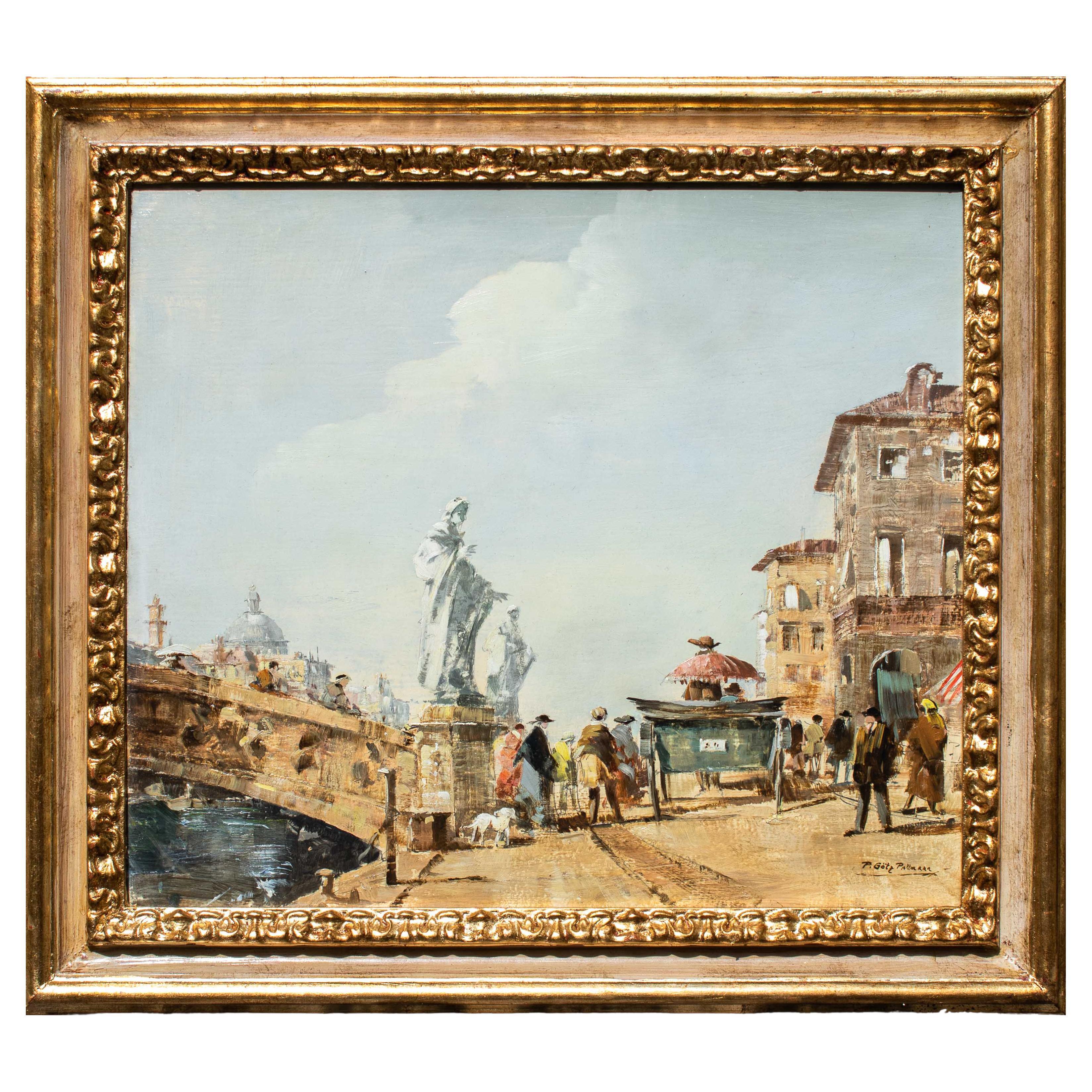
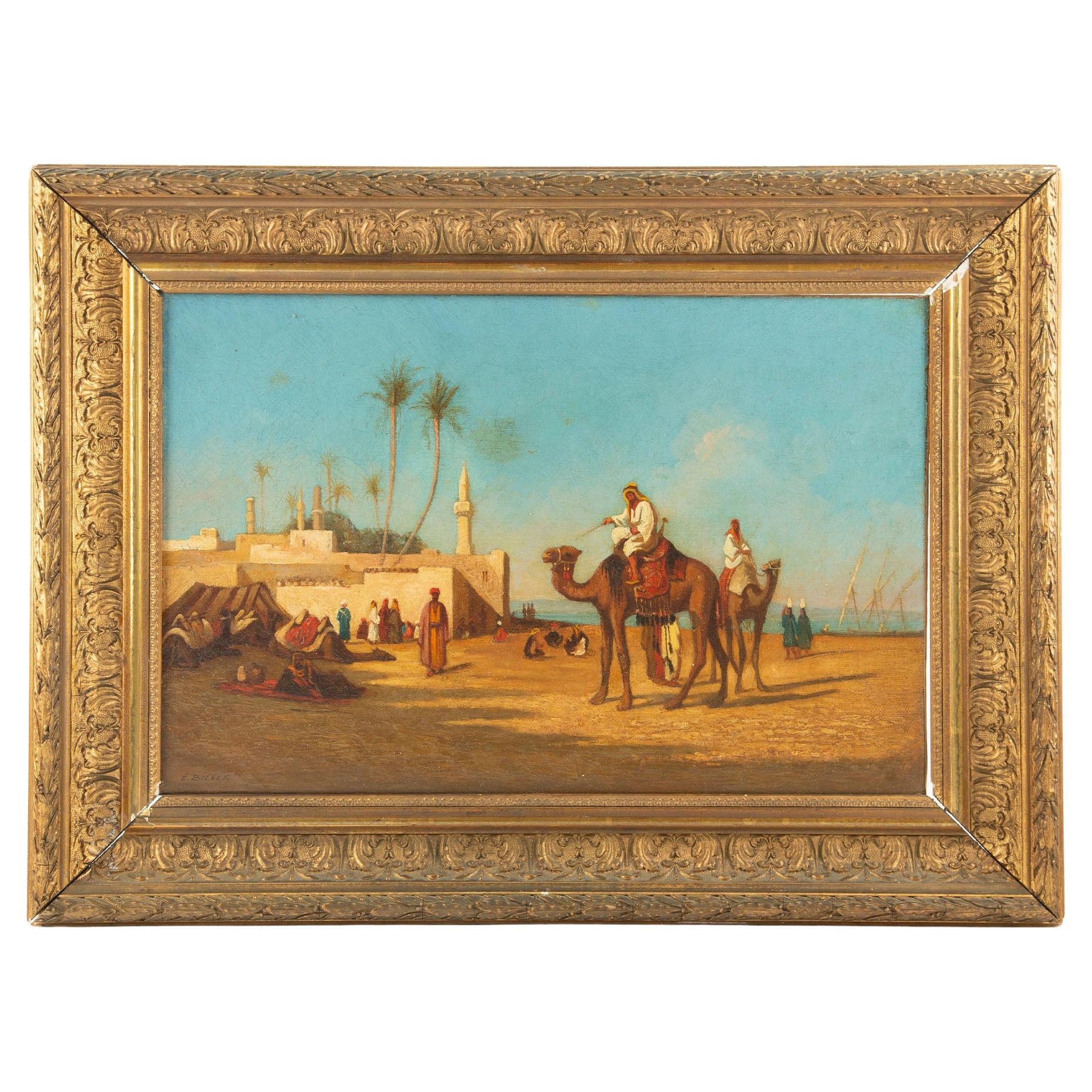
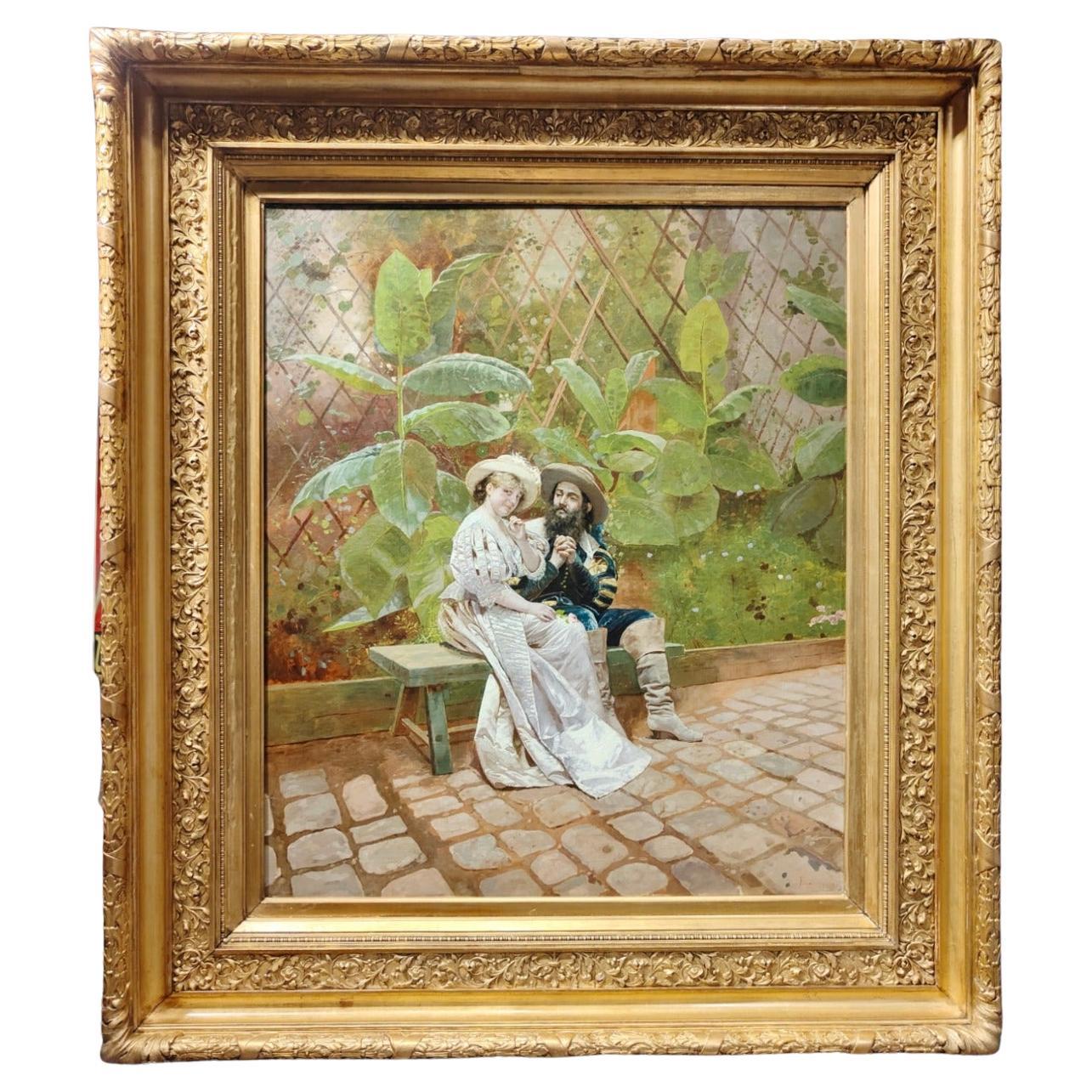
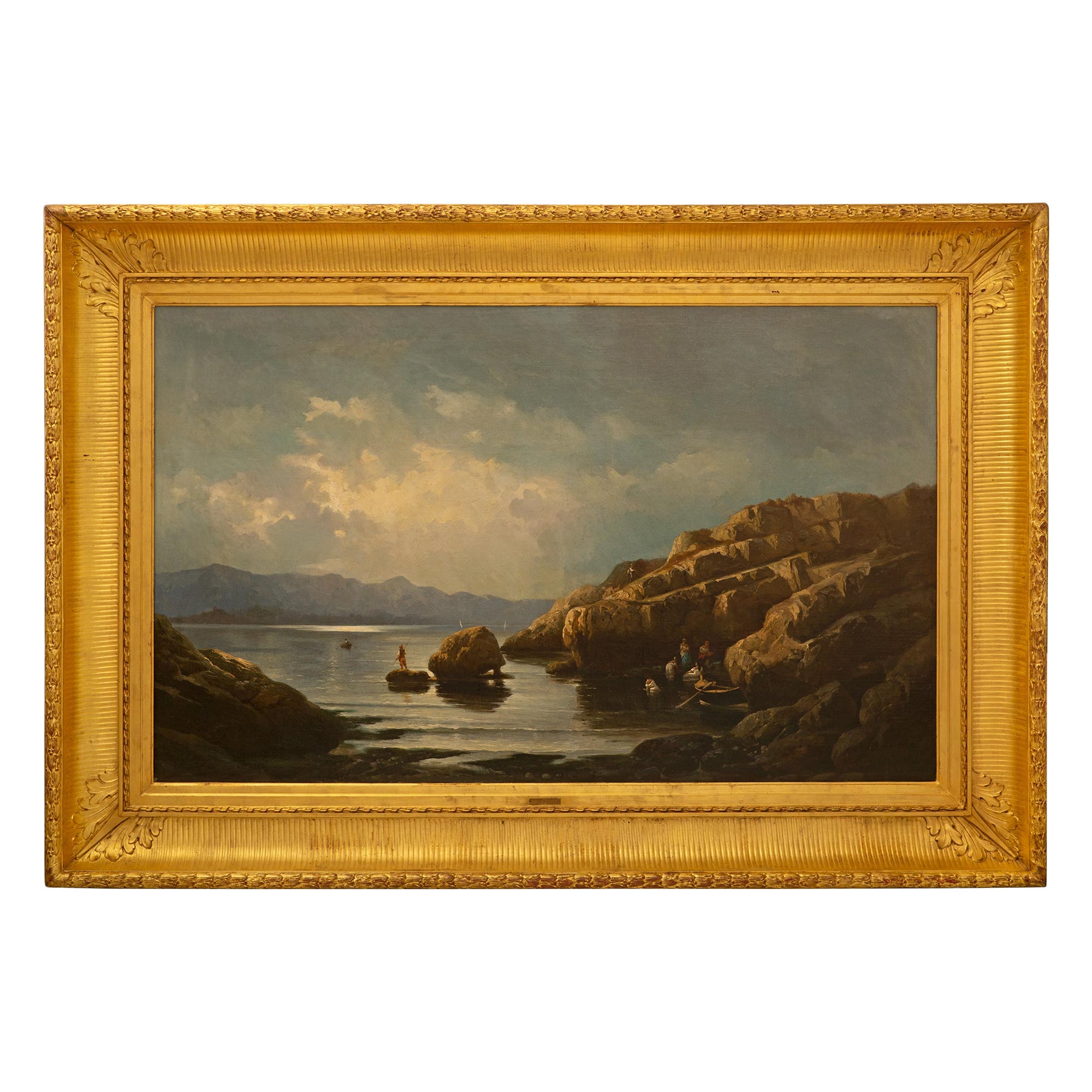
Hubert Sattler (Vienna, 1817 – Salzburg, 1904)
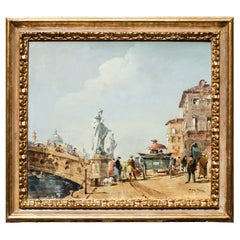
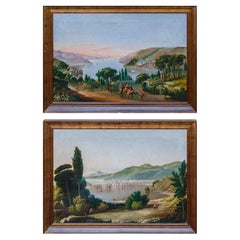
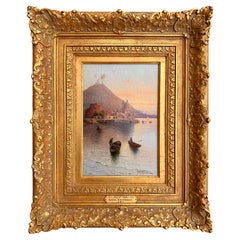
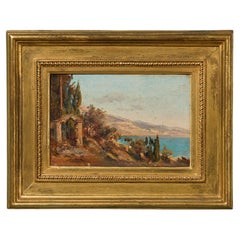
View of Nice
Oil on panel, 11.5 x 16 cm
Framed, 19.5 x 24 cm
Signed in the lower right corner with the pseudonym “L.” "Ritschard"
Hubert Sattler (1817–1904) was an Austrian painter who specialized in cityscapes and landscapes and often signed his works under the pseudonyms Louis Ritschard (as in the case at hand), E. Grossen, and Gottfried Stähly-Rychen.
Born in Vienna in 1817, he received his early training from his father, Johann Michael Sattler (1787–1847), himself an accomplished landscape painter, and from his maternal grandfather, a well-known painter of the time, from whom he learned to draw and paint; thereafter, at the age of only twelve, he entered the Academy of Fine Arts in Vienna. Following in his father's footsteps, he became a landscape painter, specializing in the research and creation of large-scale canvases to be displayed in cosmoramas. These took the form of exhibitions of perspective paintings of various places—often famous landmarks around the world—created through the careful use of lighting and lenses, which lent the images a greater sense of realism. Sattler’s works were thus characterized by a high degree of detail; they were sometimes displayed in dark rooms and illuminated by special lights for paying customers who viewed them through an opening using a magnifying glass. While earlier cosmorama works were based on old engravings, Sattler’s stood out precisely because they were particularly accurate and up-to-date.
Sattler, in fact, was an artist who traveled extensively throughout his life, participating in numerous research expeditions and meticulously documenting every landscape and corner of every city he visited—from Italy to France to Spain, and on to the East and Latin America: he would then rework these impressions in his studio based on his own research and the photographs he took.
In the travel journal that was later published, Sattler recounted how, during his trip to the Near East (1842), he was stoned by the local population while sketching in Damascus, Syria.
His works were exhibited in many countries, sometimes traveling in a portable structure specially designed for their display and viewing. These exhibitions, which were very lucrative for the artist, were also well received by critics, who praised him highly for his artistic talent, so much so that in 1848 the provincial court of Hanover awarded him the title of professor. From 1850 to 1852, Sattler traveled through the northeastern United States, bringing with him a collection of about a hundred cosmoramic views, thereby introducing a spectacular innovation compared to the panoramic exhibitions that were all the rage in the country at that time.
In 1870, Sattler donated his father’s “Sattler Panorama of Salzburg” to the city, along with more than 300 of his own works. The panorama is on permanent display at the Panorama Museum in Salzburg, located within the Salzburg Museum, alongside a rotating exhibition featuring more than 130 of Hubert Sattler’s cosmoramic paintings held by the institution. In it, one can fully trace his journey, which takes him through Italy (Rome, Genoa, Pompeii, Venice, Taormina) and continues to major European capitals such as London and Paris. Then, crossing the Mediterranean, Sattler reveals the exotic landscapes of the Near East and Egypt before moving on to America, where he captures the metropolises of the future—such as New York, still without skyscrapers, Boston, Mexico City, as well as the great natural wonders, such as the Grand Canyon and Niagara Falls.
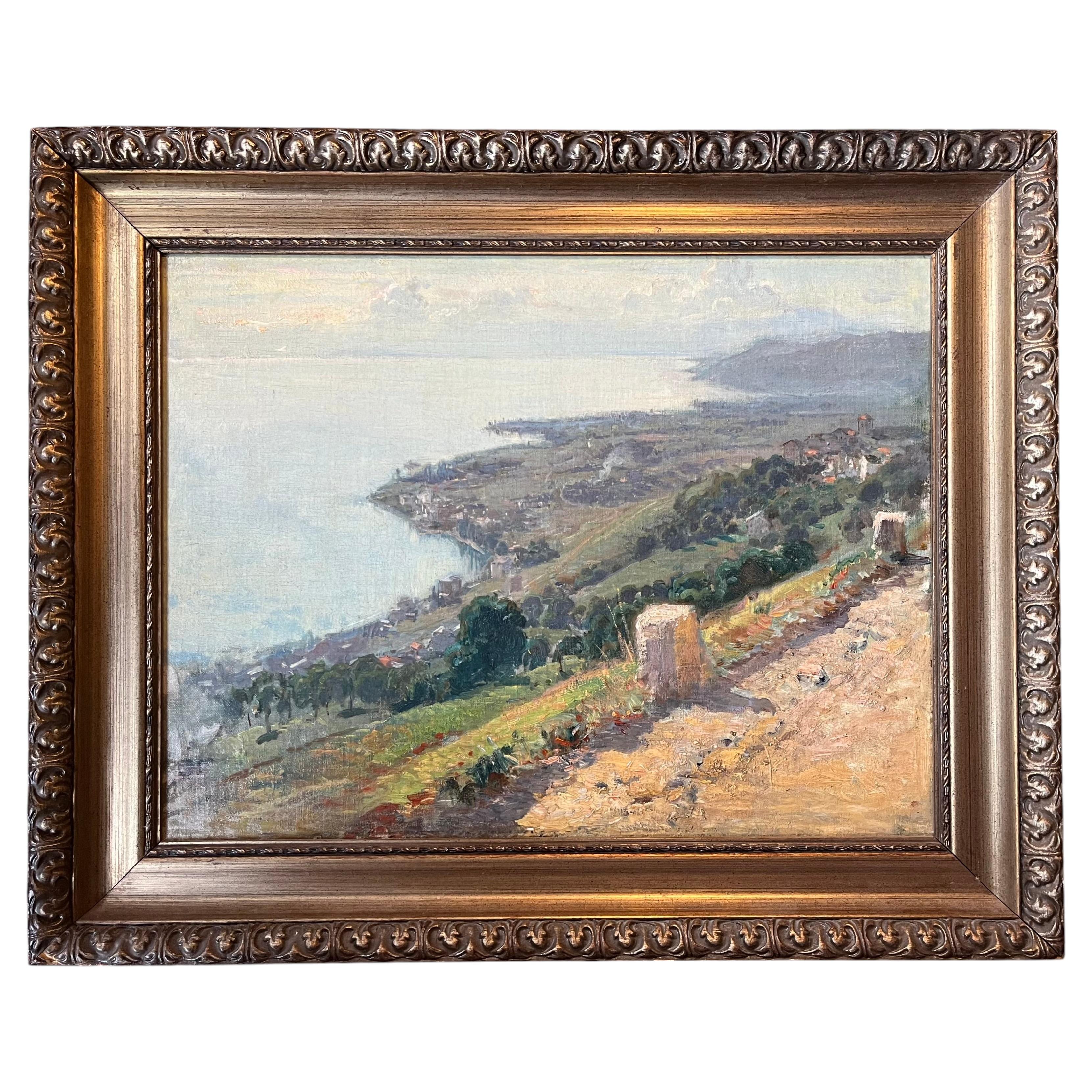
In this painting, the artist has chosen to capture a view of the famous Promenade des Anglais, the promenade that runs along the waterfront of the Baie des Anges in Nice, on the French Riviera.
The item is in good condition