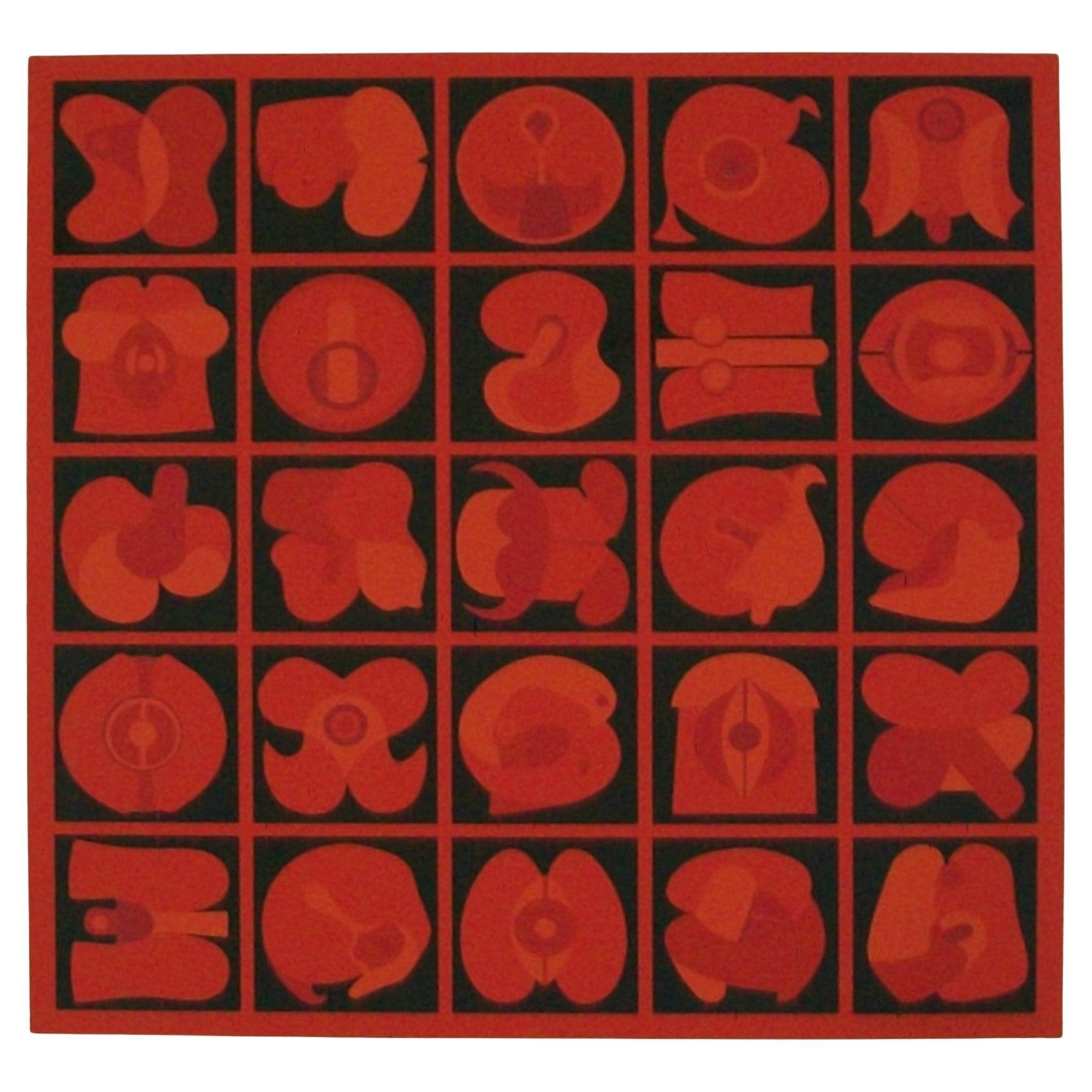
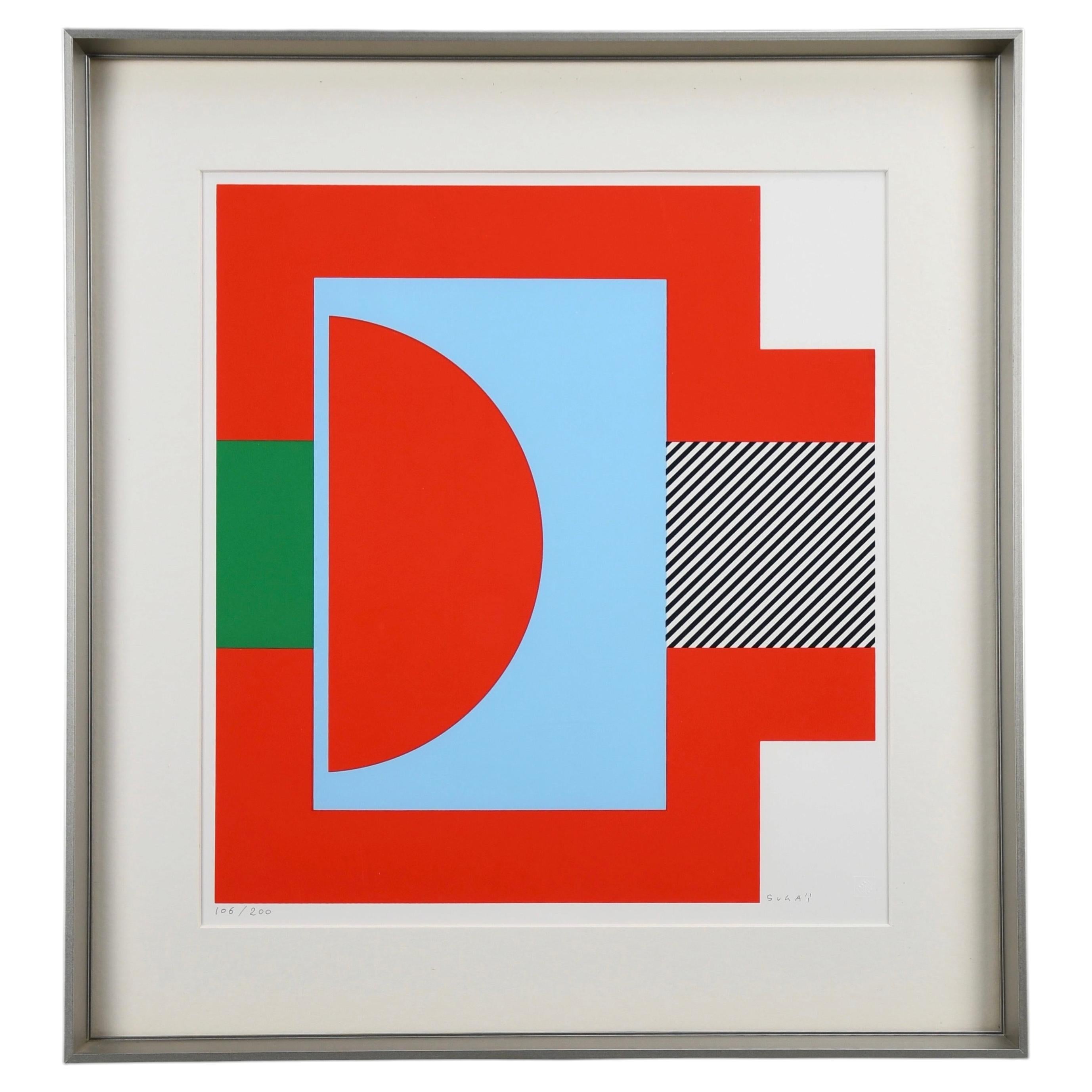
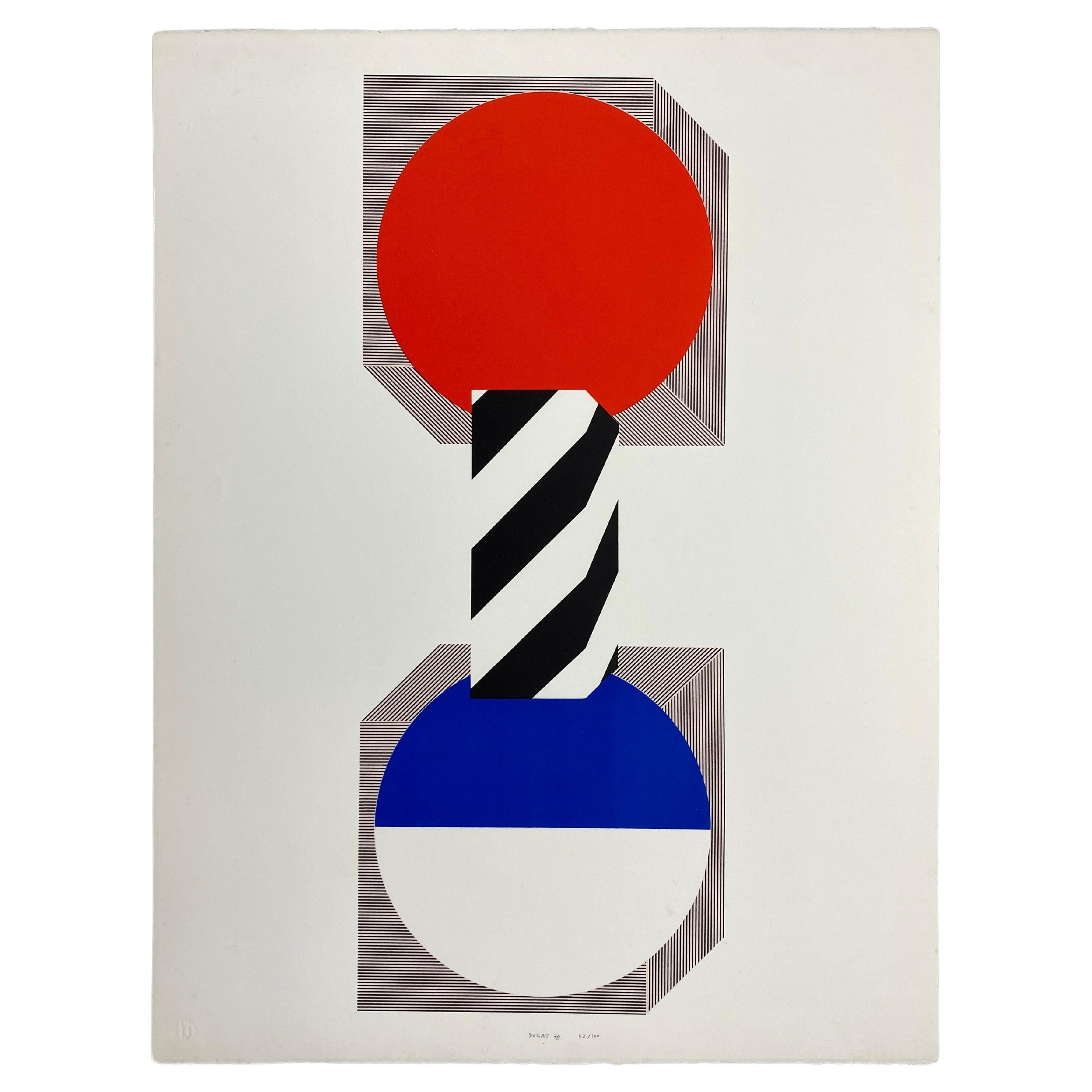
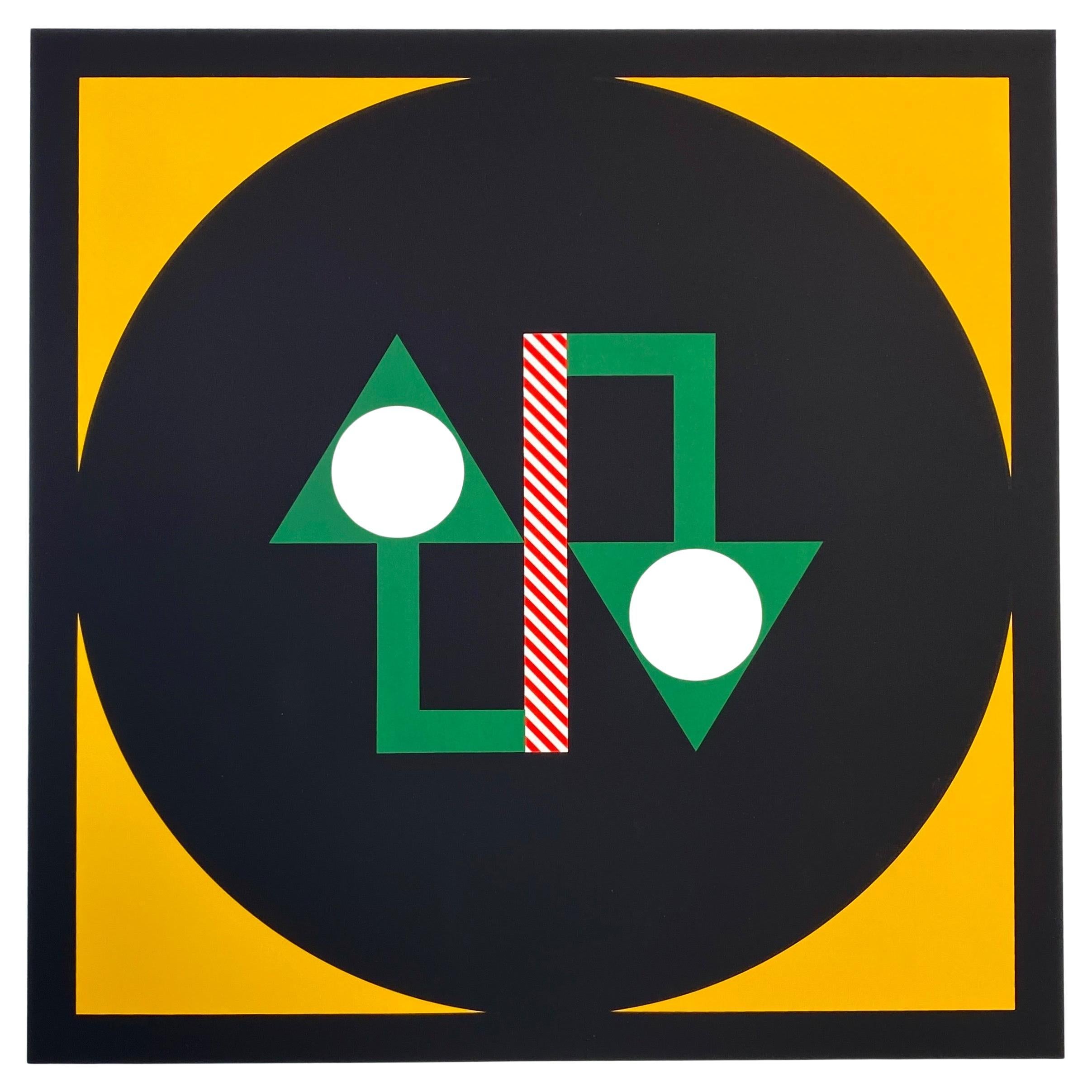
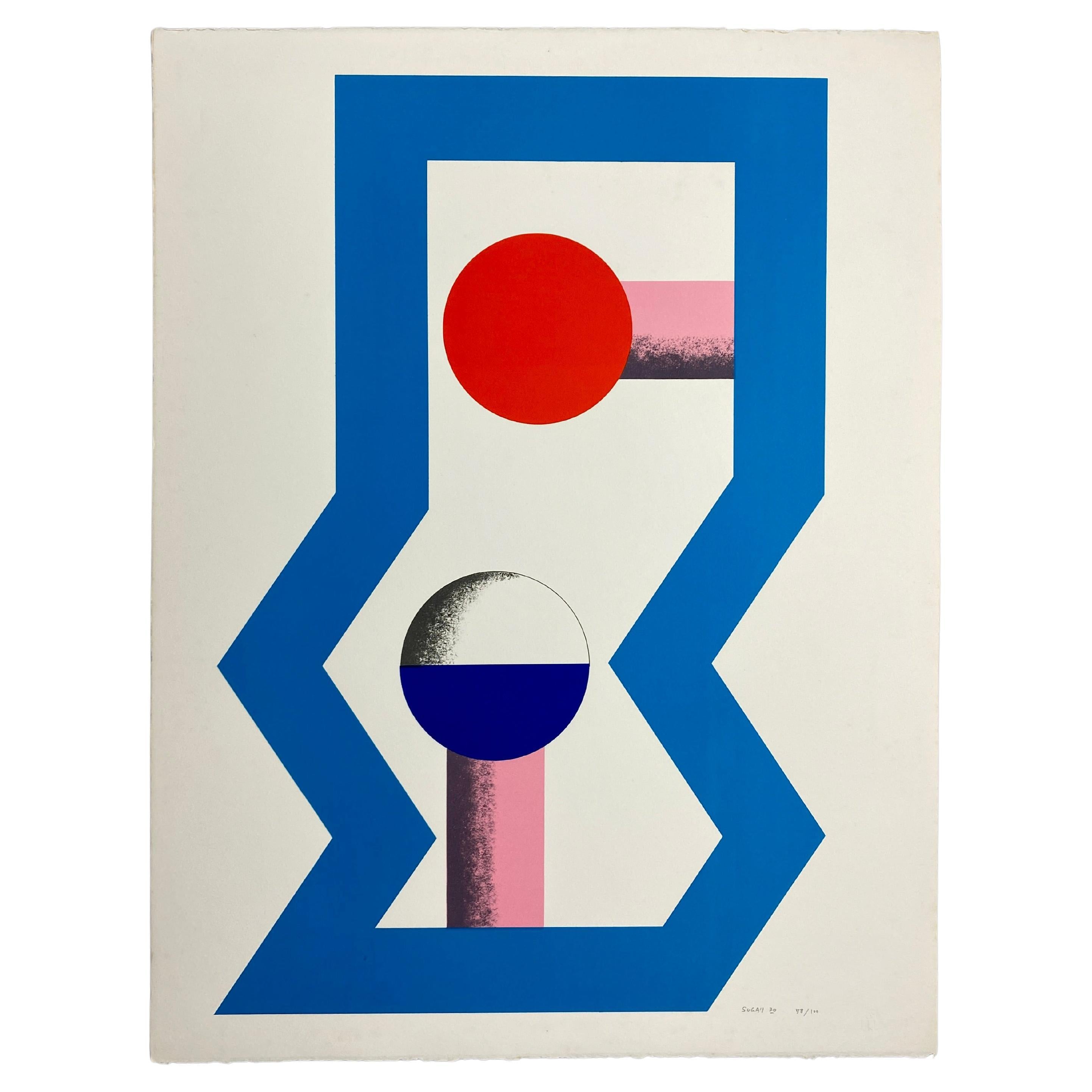
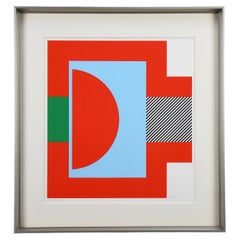
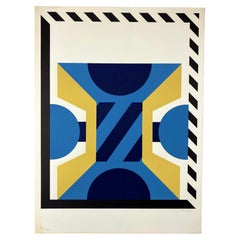
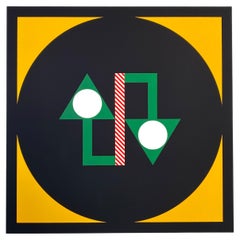
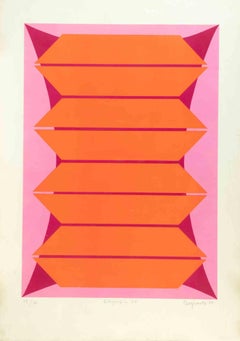
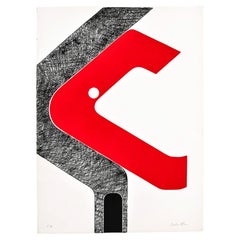
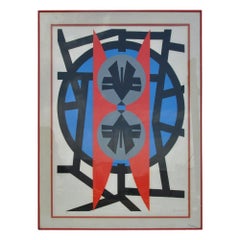
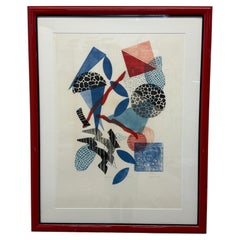
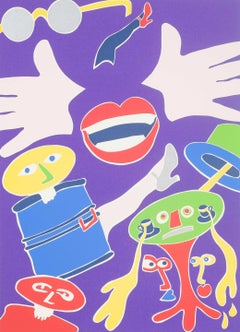
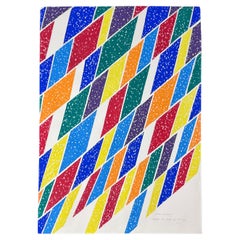
Kumi Sugai, Fête, 1970 – Signed & Numbered Lithograph (Edition 92/100)
Dimensions: H 65 x W 50 cm 25.6 x 19.7 in
A striking example of post-war Japanese modernism, Fête (1970) by Kumi Sugai captures the artist’s unique visual language—a synthesis of traditional Japanese aesthetics and bold, modern abstraction. This limited edition lithograph is number 92 of only 100, signed and numbered in pencil by Sugai himself.
Printed in Japan in vibrant, saturated tones with a dynamic composition that suggests rhythm and movement, Fête exemplifies the celebratory spirit its title implies. Sugai’s works from this period are increasingly sought after for their graphic clarity, energetic design, and cultural hybridity.
About the Artist
Kumi Sugai (1919–1996) was a Japanese painter and printmaker who moved to Paris in the early 1950s and remained there for most of his life. A former calligrapher, Sugai fused the precision of Japanese line work with the gestural freedom of Western abstract expressionism. By the 1960s and 70s, he developed his signature style—hard-edged forms and vibrant, almost Pop-like palettes, often referencing signs, symbols, and urban dynamism.
Sugai exhibited extensively at major international venues, including the Venice Biennale (1956), and his work is held in prestigious collections such as the Museum of Modern Art (New York), the Centre Pompidou (Paris), and the National Museum of Modern Art (Tokyo).
A rare opportunity to acquire a signed, limited edition work by an artist who bridged East and West with effortless originality.
Condition: Very good.
Cost of insured transport to the US is Euro 125.
Pick-up by appointment only.
We are a 1stDibs Platinum 5 Star Dealer.
Colors may slightly vary due to photographic lighting sources or your monitor settings.
Wear consistent with age and use.
Unframed.
Kumi Sugai was a Japanese painter. Best known for his Minimalist and Hard Edge geometric abstractions, Sugai was influenced by the relationships between Japanese calligraphy and Western typography. His paintings often featured a singular, centrally placed shape and a highly graphic aesthetic. Born in Kobe, Japan on March 13, 1919, he developed an interest in art a young age, initially enrolling at the Osaka School of Fine Arts in 1933 and later dropping out to work in commercial advertising during the Second World War. By 1952, Sugai settled in Paris, where he studied at the Académie de la Grande Chaumiere and absorbed contemporary Western painting styles, including Abstract Expressionism and, later, Minimalism and Pop Art. At first, Sugai adopted traditional ukiyo-e woodblock techniques, using bright colors to create prints infused with avant-garde art influences. In the 1960s, however, he transitioned into painting and printing more geometric images of letters and directional signs. Before his death on May 14, 1996 in Kobe, Japan, Sugai achieved international success, participating in the Pittsburgh International five times between 1955 and 1970, and holding a major retrospective of his work at the Seibu Museum of Art in Tokyo in 1983.