Want more images or videos?
Request additional images or videos from the seller
1 of 5

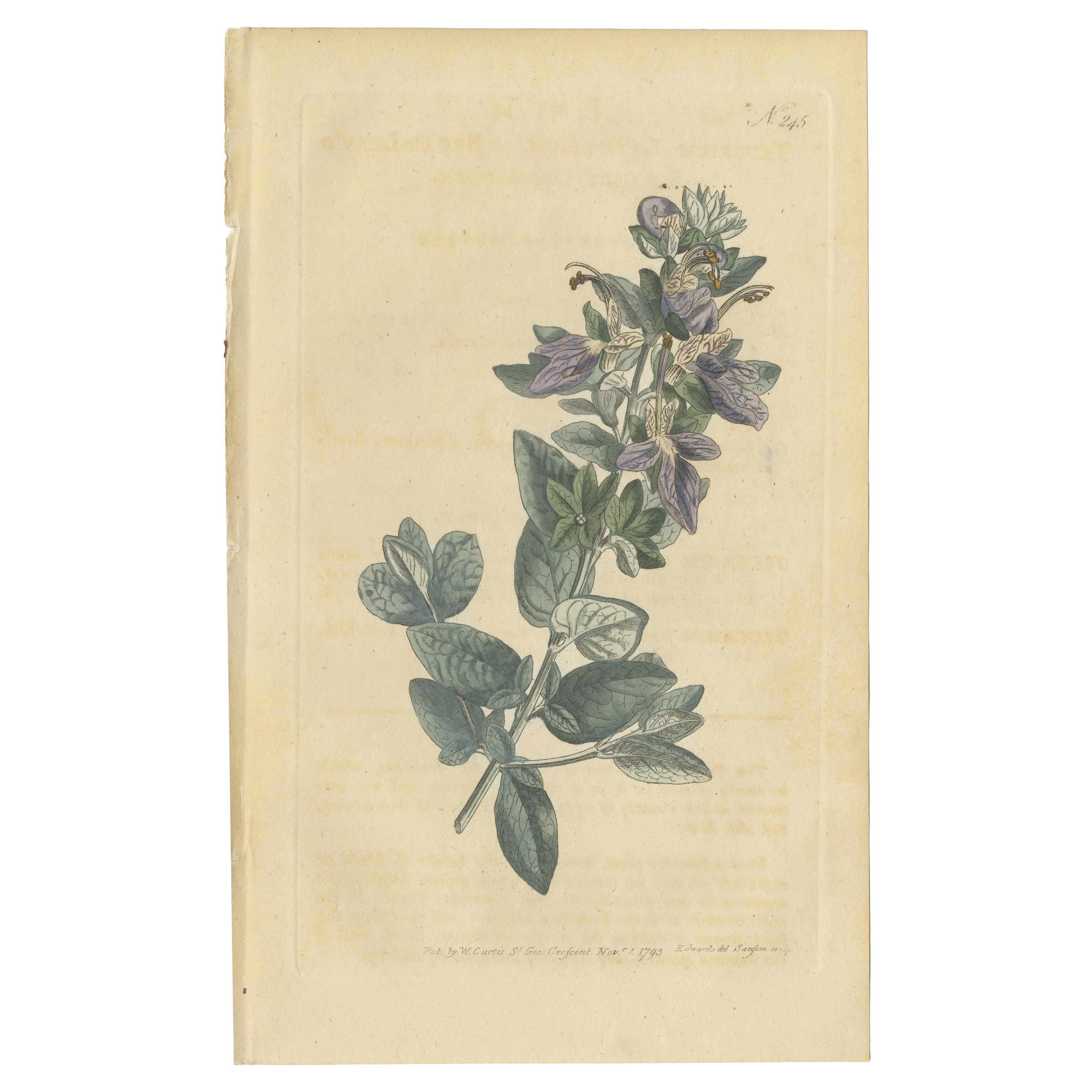
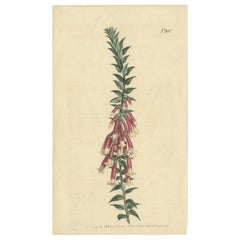
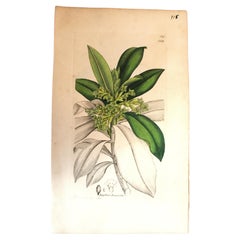
Antique Botany Print of Plectranthus Barbatus by Curtis, 1807

$169.46
$212.1920% Off
£125.57
£157.2720% Off
€144VAT Included
€18020% Off
CA$235.90
CA$296.0120% Off
A$239.99
A$300.2520% Off
CHF 137.90
CHF 171.4520% Off
MX$2,885.95
MX$3,636.1320% Off
NOK 1,610.01
NOK 2,018.4020% Off
SEK 1,619.65
SEK 2,011.7020% Off
DKK 1,098
DKK 1,372.4220% Off

About the Item

Antique botany print of Plectranthus Barbatus, also known by the synonym Coleus forskohlii. It produces forskolin, an extract useful for pharmaceutical preparations and research in cell biology. This print originates from 'Curtis's botanical magazine'. Artists and Engravers: Curtis's Botanical Magazine is the longest running botanical periodical featuring colour illustrations of plants. Curtis's Botanical Magazine has been published continuously since 1787, although there have been several series within the overall sequence. From 1984 to 1994 the magazine appeared under the title of The Kew Magazine. In 1995 the publication returned to its roots and the historical and popular name Curtis's Botanical Magazine again took precedence. We also offer thousands of antique prints covering fields of interest as diverse as architecture, natural history, religion, ethnology and many more. Antique prints have long been appreciated for both their aesthetic and investment value. They were the product of engraved, etched or lithographed plates. These plates were handmade out of wood or metal, which required an incredible level of skill, patience and craftsmanship. Whether you have a house with Victorian furniture or more contemporary decor an old engraving can enhance your living space.
  • Dimensions:
    Height: 8.86 in (22.5 cm)Width: 5.52 in (14 cm)Depth: 0 in (0.01 mm)
  • Materials and Techniques:
  • Period:
  • Date of Manufacture:
    1807
  • Condition:
    Condition: Good, general age-related toning. Blank verso, minor wear. Please study image carefully.
  • Seller Location:
    Langweer, NL
  • Reference Number:
    Seller: JAK-9801stDibs: LU3054325883002

More From This Seller

View All
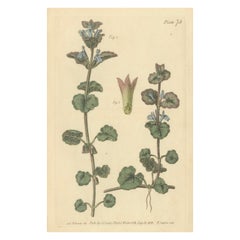
Antique Ground Ivy Botanical Engraving, Glechoma hederacea, 1805

Antique Ground Ivy Botanical Engraving, Glechoma hederacea, 1805

Located in Langweer, NL

Antique Ground Ivy Botanical Engraving, Glechoma hederacea, 1805 This exquisite handcoloured copperplate engraving depicts the Ground Ivy (Glechoma hederacea), also known as Gymnosp...

Category

Antique 1890s Prints

Materials

Paper

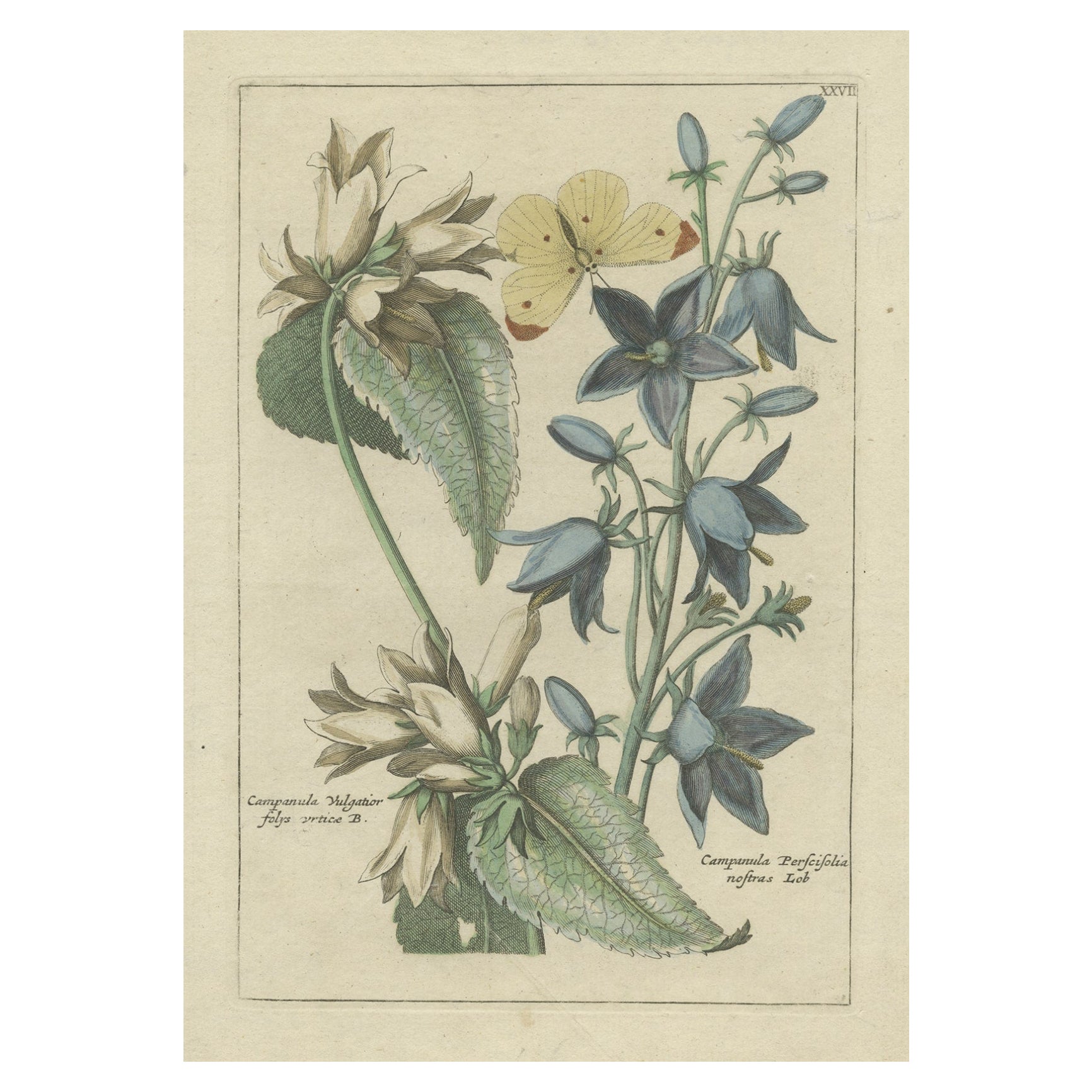
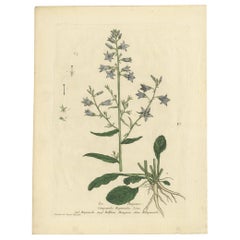
Antique Botany Print of Campanula Rapunculus by Regnault, circa 1780

Antique Botany Print of Campanula Rapunculus by Regnault, circa 1780

Located in Langweer, NL

Antique botany print titled 'La Raiponce'. Hand colored engraving of campanula rapunculus, also known as rampion bellflower, rampion, rover bellflower, or rapunzel. This print origin...

Category

Antique Late 18th Century French Prints

Materials

Paper

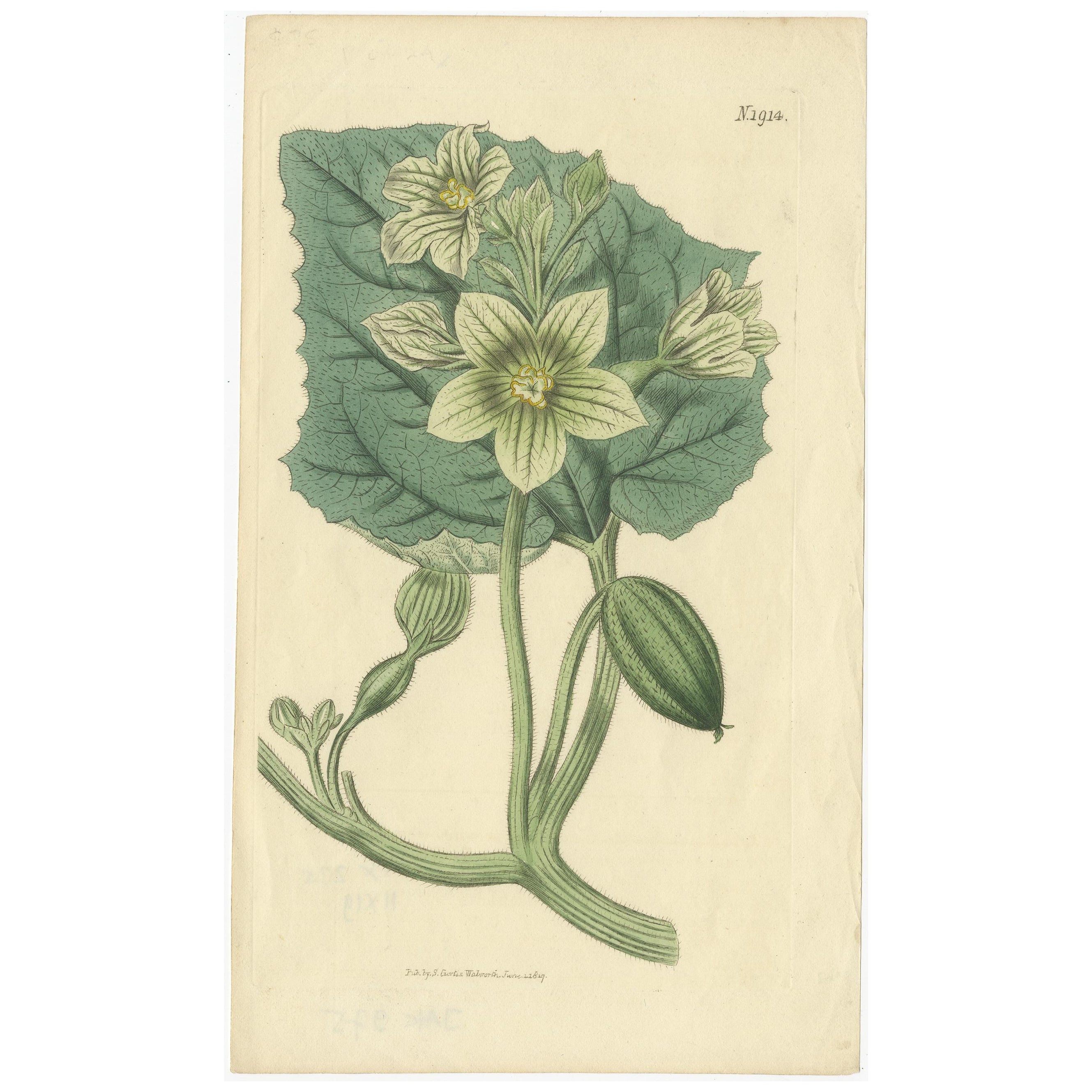
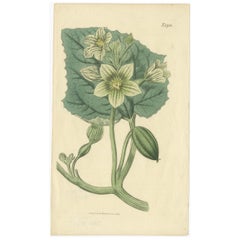
Antique Botany Print of Ecballium Elaterium by Curtis, 1817

Antique Botany Print of Ecballium Elaterium by Curtis, 1817

Located in Langweer, NL

Antique botany print of Ecballium Elaterium, also known as the squirting cucumber or exploding cucumber. It gets its unusual name from the fact that, when ripe, it squirts a stream o...

Category

Antique 19th Century Prints

Materials

Paper

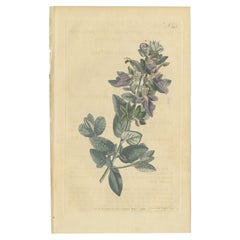
Antique Botany Print of the Broad Leaved Shrubby Germander

Antique Botany Print of the Broad Leaved Shrubby Germander

Located in Langweer, NL

Original antique botany print of the Broad Leaved Shrubby Germander. This print originates from 'The Botanical Magazine; or Flower-Garden Displayed (..)' by William Curtis. Published...

Category

Antique Late 18th Century Prints

Materials

Paper

Antique Botany Print of a Species of St. Johnswort by Curtis, circa 1777

Antique Botany Print of a Species of St. Johnswort by Curtis, circa 1777

Located in Langweer, NL

Antique botany print titled 'Hypericum Quadrangulum'. Hand colored engraving of a species of St. Johnswort. This print originates from 'Flora Londinensis' by William Curtis.

Category

Antique Late 18th Century Prints

Materials

Paper

Antique Botany Print of Epacris Impressa Also Known as Common Heath, 1806

Antique Botany Print of Epacris Impressa Also Known as Common Heath, 1806

Located in Langweer, NL

Antique botany print of epacris impressa also known as common heath. This print originates from 'Curtis's botanical magazine'. Artists and Engravers: Curtis's Botanical Magazine ...

Category

Antique 19th Century Prints

Materials

Paper

You May Also Like

Early 19th Century Botanical Engraving by John Curtis

Early 19th Century Botanical Engraving by John Curtis

Located in Seaford, GB

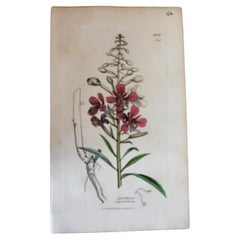
Early 19th Century Botanical Engraving by John Curtis – Hand Coloured Natural History Plate An original early 19th-century hand-coloured botanical engraving from the celebrated natural history publications of John Curtis (1791–1862), one of Britain’s most respected botanical and entomological illustrators. This beautifully detailed plate illustrates a flowering plant in scientific profile, showing bloom structure, leaves, buds, and root system with precision typical of early Victorian natural history illustration. Curtis’s work bridges science and art — created for study, yet prized today for its elegance and balance. These engravings formed part of the golden age of British botanical publishing, when artists collaborated with engravers and colourists to produce plates that were both accurate and visually refined. Each impression was printed from an engraved plate and then carefully coloured by hand, meaning no two examples are ever exactly identical. The composition has the clarity collectors seek: • Central botanical specimen • Naturalistic colour palette • Fine line engraving • Period scientific titling This makes it ideal as a single framed piece or as part of a gallery wall of antique botanical studies. About John Curtis John Curtis was a leading figure in British natural history illustration. He is best known for British Entomology and botanical works that combined taxonomic accuracy with graceful composition. His engravings are held in major museum collections and remain highly collectible in the decorative arts market. Period Early 19th century, circa 1820–1840. Technique Copperplate engraving with original hand colouring on laid paper. Condition Good antique condition consistent with age. Light toning and minor handling marks may be present, as expected with early 19th-century works on paper. Please see the images. Why Collect Curtis Botanical Prints...

Category

Antique Early 19th Century British George III Prints
Materials

Paper

Campanula Allionii – Original Antique Botanical Print, France, 19th Century

Campanula Allionii – Original Antique Botanical Print, France, 19th Century

Located in Fukuoka, JP

Hand-colored lithograph from the 1800s A finely detailed and richly colored 19th-century botanical print depicting Campanula Allionii, a charming alpine bellflower native to the sou...

Category

Antique 19th Century British Prints

Materials

Paper

Early 19th Century Botanical Engraving by John Curtis – Hand Coloured

Early 19th Century Botanical Engraving by John Curtis – Hand Coloured

Located in Seaford, GB

Early 19th Century Botanical Engraving by John Curtis – Hand Coloured Natural History Plate An original early 19th-century hand-coloured botanical engraving from the celebrated natural history publications of John Curtis (1791–1862), one of Britain’s most respected botanical and entomological illustrators. This beautifully detailed plate illustrates a flowering plant in scientific profile, showing bloom structure, leaves, buds, and root system with precision typical of early Victorian natural history illustration. Curtis’s work bridges science and art — created for study, yet prized today for its elegance and balance. These engravings formed part of the golden age of British botanical publishing, when artists collaborated with engravers and colourists to produce plates that were both accurate and visually refined. Each impression was printed from an engraved plate and then carefully coloured by hand, meaning no two examples are ever exactly identical. The composition has the clarity collectors seek: • Central botanical specimen • Naturalistic colour palette • Fine line engraving • Period scientific titling This makes it ideal as a single framed piece or as part of a gallery wall of antique botanical studies. About John Curtis John Curtis was a leading figure in British natural history illustration. He is best known for British Entomology and botanical works that combined taxonomic accuracy with graceful composition. His engravings are held in major museum collections and remain highly collectable in the decorative arts market. Period Early 19th century, circa 1820–1840. Technique Copperplate engraving with original hand colouring on laid paper. Condition Good antique condition consistent with age. Light toning and minor handling marks may be present, as expected with early 19th-century works on paper. Please see the images. Why Collect Curtis Botanical Prints...

Category

Antique Early 19th Century George III Prints

Materials

Paper

Early 19th Century Botanical Engraving by John Curtis

Early 19th Century Botanical Engraving by John Curtis

Located in Seaford, GB

Early 19th Century Botanical Engraving by John Curtis – Hand Coloured Natural History Plate An original early 19th-century hand-coloured botanical engraving from the celebrated natural history publications of John Curtis (1791–1862), one of Britain’s most respected botanical and entomological illustrators. This beautifully detailed plate illustrates a flowering plant in scientific profile, showing bloom structure, leaves, buds, and root system with precision typical of early Victorian natural history illustration. Curtis’s work bridges science and art — created for study, yet prized today for its elegance and balance. These engravings formed part of the golden age of British botanical publishing, when artists collaborated with engravers and colourists to produce plates that were both accurate and visually refined. Each impression was printed from an engraved plate and then carefully coloured by hand, meaning no two examples are ever exactly identical. The composition has the clarity collectors seek: • Central botanical specimen • Naturalistic colour palette • Fine line engraving • Period scientific titling This makes it ideal as a single framed piece or as part of a gallery wall of antique botanical studies. About John Curtis John Curtis was a leading figure in British natural history illustration. He is best known for British Entomology and botanical works that combined taxonomic accuracy with graceful composition. His engravings are held in major museum collections and remain highly collectable in the decorative arts market. Period Early 19th century, circa 1820–1840. Technique Copperplate engraving with original hand colouring on laid paper. Condition Good antique condition consistent with age. Light toning and minor handling marks may be present, as expected with early 19th-century works on paper. Please see the images. Why Collect Curtis Botanical Prints...

Category

Antique Early 19th Century British George III Prints
Materials

Paper

Staggerbush Botanical Print on Paper, USA Early 20th C.

Staggerbush Botanical Print on Paper, USA Early 20th C.

Located in New York, NY

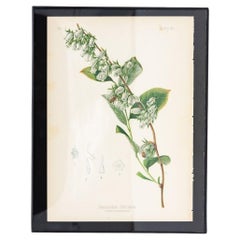
A color print of a Staggerbush on paper. This print captures the essence of the native to the US blooming plant of the northern landscape with delicate finesse. In this masterpiece, ...

Category

Early 20th Century American Prints

Materials

Paper

Johann Weinmann: c18th Botanical Engravings in Decalcomania Frames

Johann Weinmann: c18th Botanical Engravings in Decalcomania Frames

By Johann Weinmann

Located in Richmond, GB

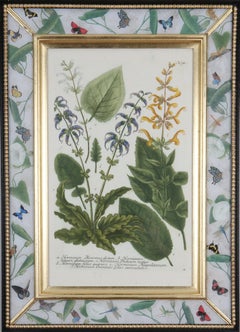
A wonderful selection of hand-coloured mezzotint engravings from: ""Phytanthoza Iconographia"", c1739, presented in hand- made parcel-gilt, ebonised and decalcomania frames. Joha...

Category

18th Century More Prints

Materials

Watercolor, Mezzotint