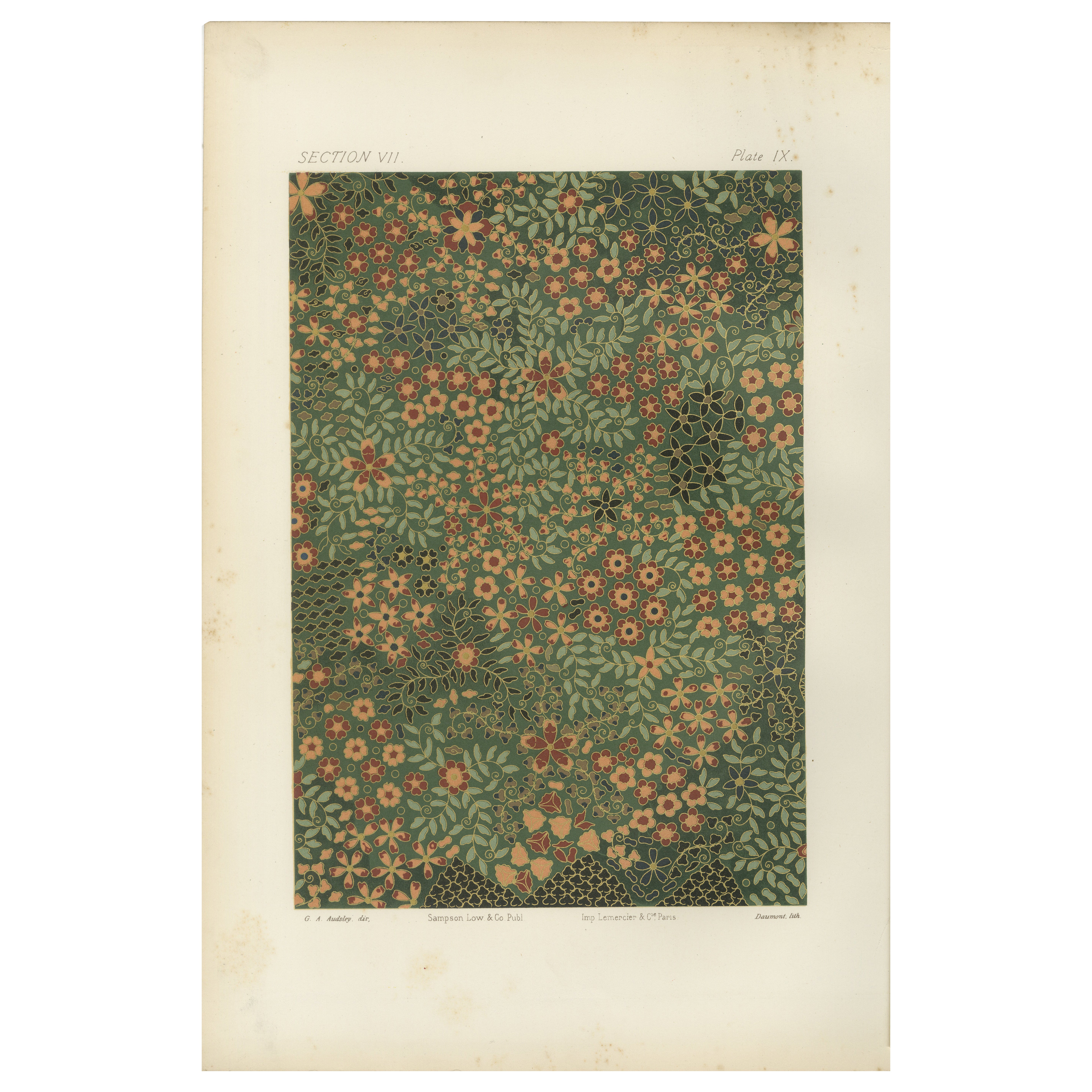
Antique Chromolithograph of Japanese Cloisonné Enamel – Floral Jar Surface, 1882
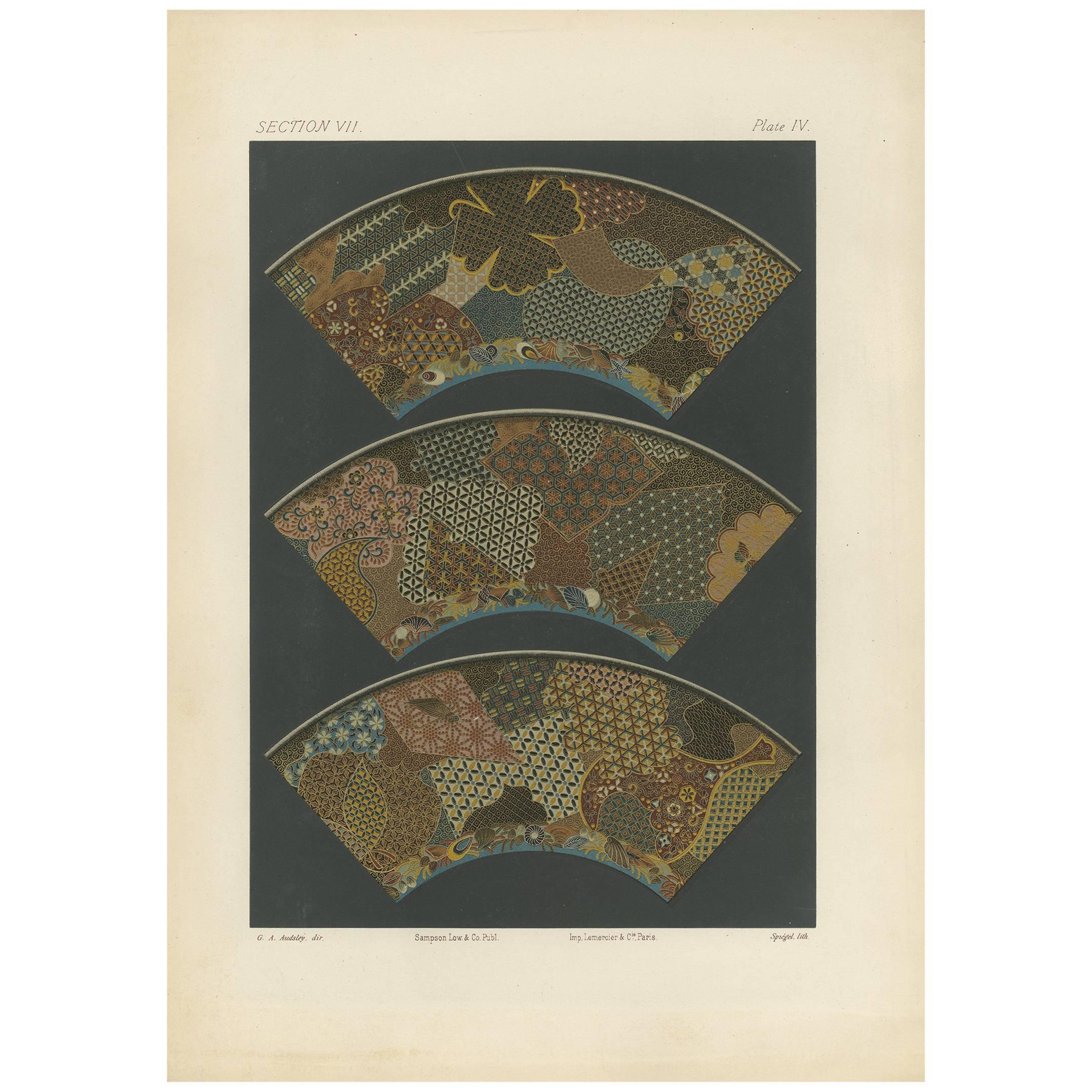
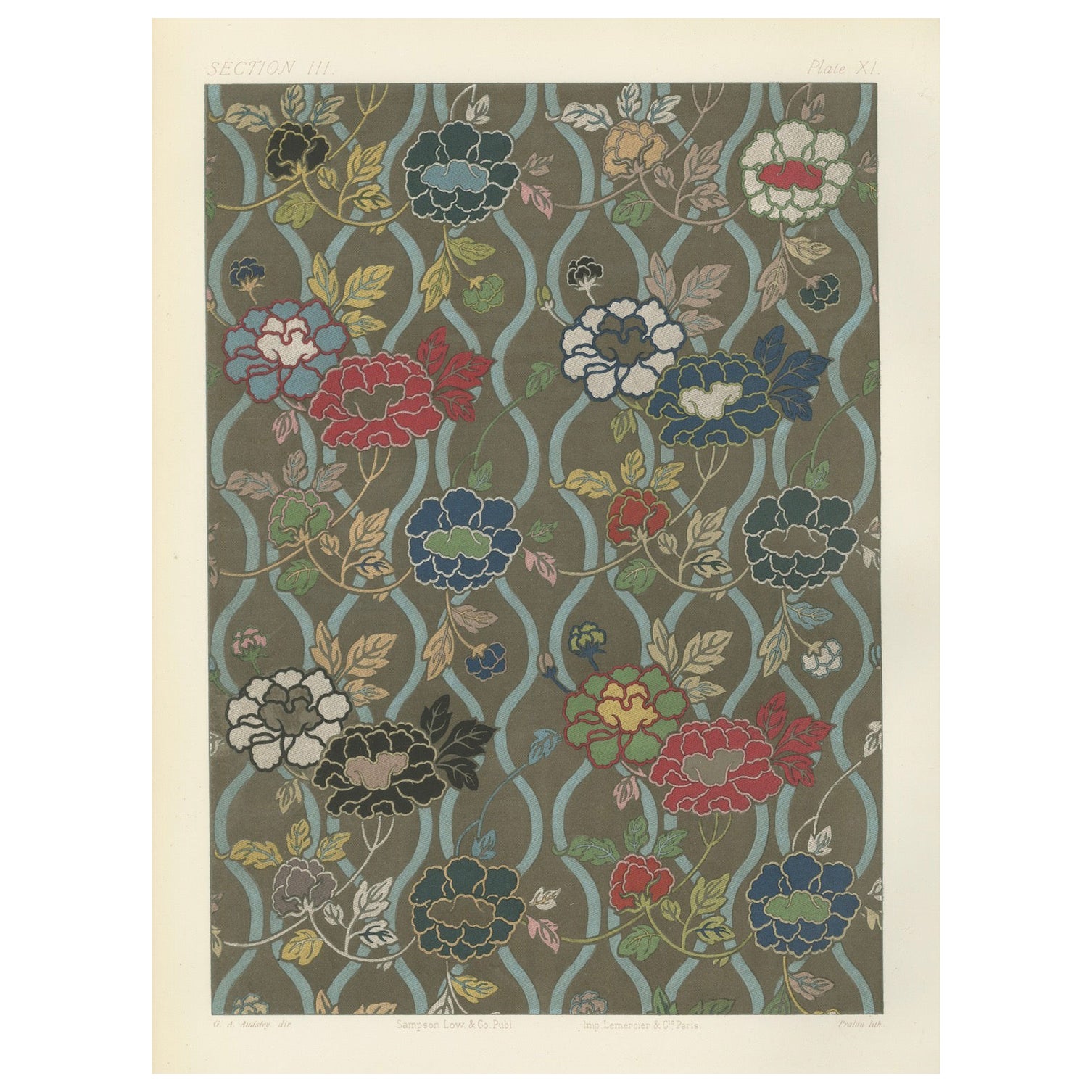
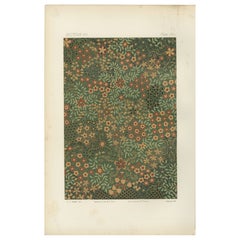
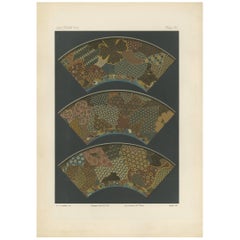
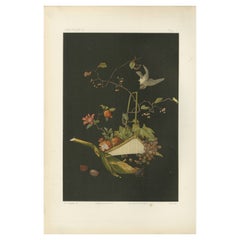
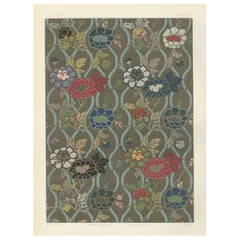
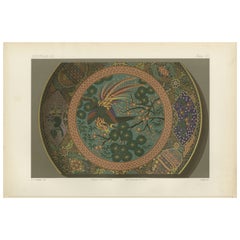
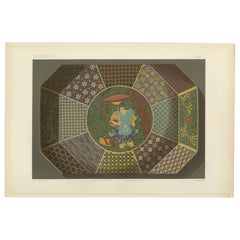
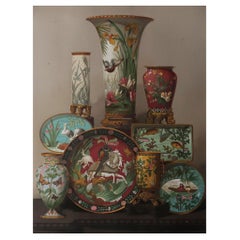
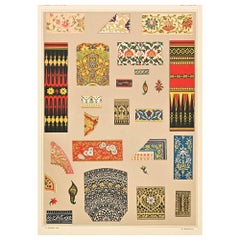
This exquisite chromolithograph, Section VII, Plate IX, comes from George Ashdown Audsley’s *The Ornamental Arts of Japan*, published in London by Sampson, Low & Co. in 1882, with plates printed by the celebrated Parisian firm Lemercier & cie. It depicts the intricate surface decoration of a large Japanese cloisonné enamel jar, showcasing the refined artistry of late Edo and early Meiji period craftsmanship.
The plate presents an elaborate floral design, densely patterned with blossoms, vines, and foliage, rendered in soft greens, warm reds, and subtle golden tones. The complexity of the interwoven motifs reflects both the technical mastery of cloisonné artisans and the Japanese aesthetic of harmony between nature and ornament. The chromolithographic process captures the brilliance and delicacy of the enamel work, making this plate a vivid representation of Japan’s decorative arts.
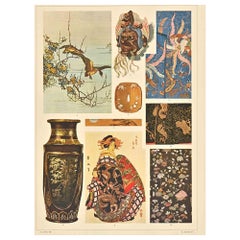
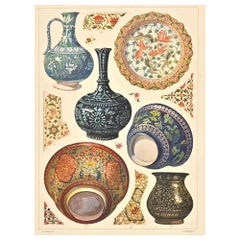
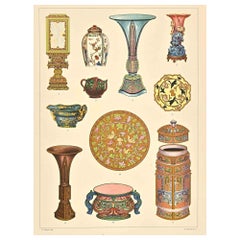
Audsley’s *The Ornamental Arts of Japan* has long been regarded as one of the most beautiful and ambitious art books of the 19th century. Spanning nine sections—including painting, embroidery, textiles, lacquer, metalwork, cloisonné enamel, carving, and heraldry—the work introduced European and American audiences to the richness of Japanese design. Its plates, many of which are of large format and executed with remarkable precision, remain highly prized by collectors of Japanese art and chromolithography.
Condition report: Very good condition with fresh colors. Minor toning at the sheet edges and light handling traces, not affecting the image.
Framing tips: A cream or ivory mat paired with a slim black or dark wood frame will highlight the fine detail of the floral patterns. For a more decorative presentation, a gilt frame enhances the warm tones and adds richness, echoing the luxury of Japanese cloisonné enamel.
Technique: Chromolithograph
Maker: G. A. Audsley, published by Sampson, Low & Co., London; printed by Lemercier & cie., Paris, 1882