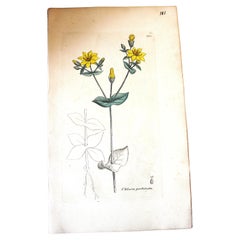
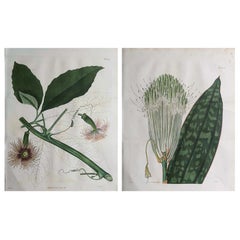
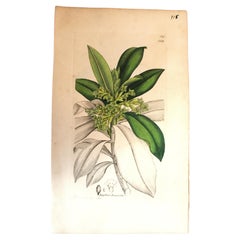
Want more images or videos?
Request additional images or videos from the seller
1 of 10

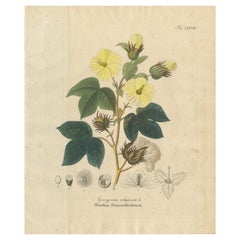
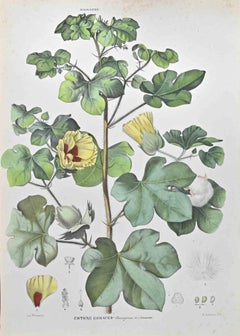
Antique Cotton Botanical Print, Gossypium Herbaceum, c.1831

$916.81
£681.48
€780VAT Included
CA$1,285.24
A$1,305.05
CHF 744.99
MX$15,769.34
NOK 8,751.17
SEK 8,727.30
DKK 5,947.75

About the Item

Antique Cotton Botanical Print, Gossypium Herbaceum, c.1831 Description: This clear and balanced botanical engraving depicts Gossypium Herbaceum, a principal cotton species used in textile production. The plant is shown with flowers, bolls, seeds, and structural details. The plate originates from Zenker’s Merkantilische Waarenkunde and represents one of the most economically significant plants of the Industrial Age. Cotton was central to global manufacturing and colonial trade networks. Original hand coloring is restrained and elegant, giving the plate a clean, almost modern aesthetic. Condition report: Moderate age-related toning with some light spotting, especially in the background. Framing tips: A neutral linen mat and a simple wood frame suit the understated strength of the image. Technique: Copper engraving with original hand coloring Maker: Jonathan Carl Zenker, Germany, 1831–1832
  • Dimensions:
    Height: 10.67 in (27.1 cm)Width: 8.94 in (22.7 cm)Depth: 0.01 in (0.2 mm)
  • Materials and Techniques:
    Paper,Engraved
  • Place of Origin:
  • Period:
  • Date of Manufacture:
    circa 1831
  • Condition:
    Moderate age-related toning with some light spotting, especially in the background.
  • Seller Location:
    Langweer, NL
  • Reference Number:
    Seller: BG-14181-371stDibs: LU3054348093882

More From This Seller

View All
Antique Cotton Botanical Print, Gossypium Religiosum, c.1831

Antique Cotton Botanical Print, Gossypium Religiosum, c.1831

Located in Langweer, NL

Antique Cotton Botanical Print, Gossypium Religiosum, c.1831 Description: This decorative botanical engraving illustrates Gossypium religiosum, another important cotton species, sho...

Category

Antique 1830s German Prints

Materials

Paper

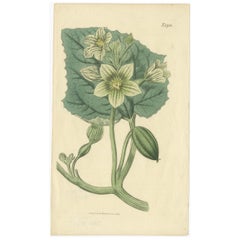
Antique Botany Print of Ecballium Elaterium by Curtis, 1817

Antique Botany Print of Ecballium Elaterium by Curtis, 1817

Located in Langweer, NL

Antique botany print of Ecballium Elaterium, also known as the squirting cucumber or exploding cucumber. It gets its unusual name from the fact that, when ripe, it squirts a stream o...

Category

Antique 19th Century Prints

Materials

Paper

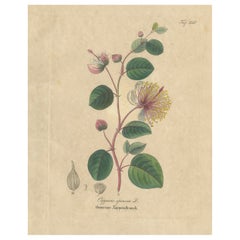
Antique Caper Botanical Print, Capparis Spinosa, Hand Colored, c.1831

Antique Caper Botanical Print, Capparis Spinosa, Hand Colored, c.1831

Located in Langweer, NL

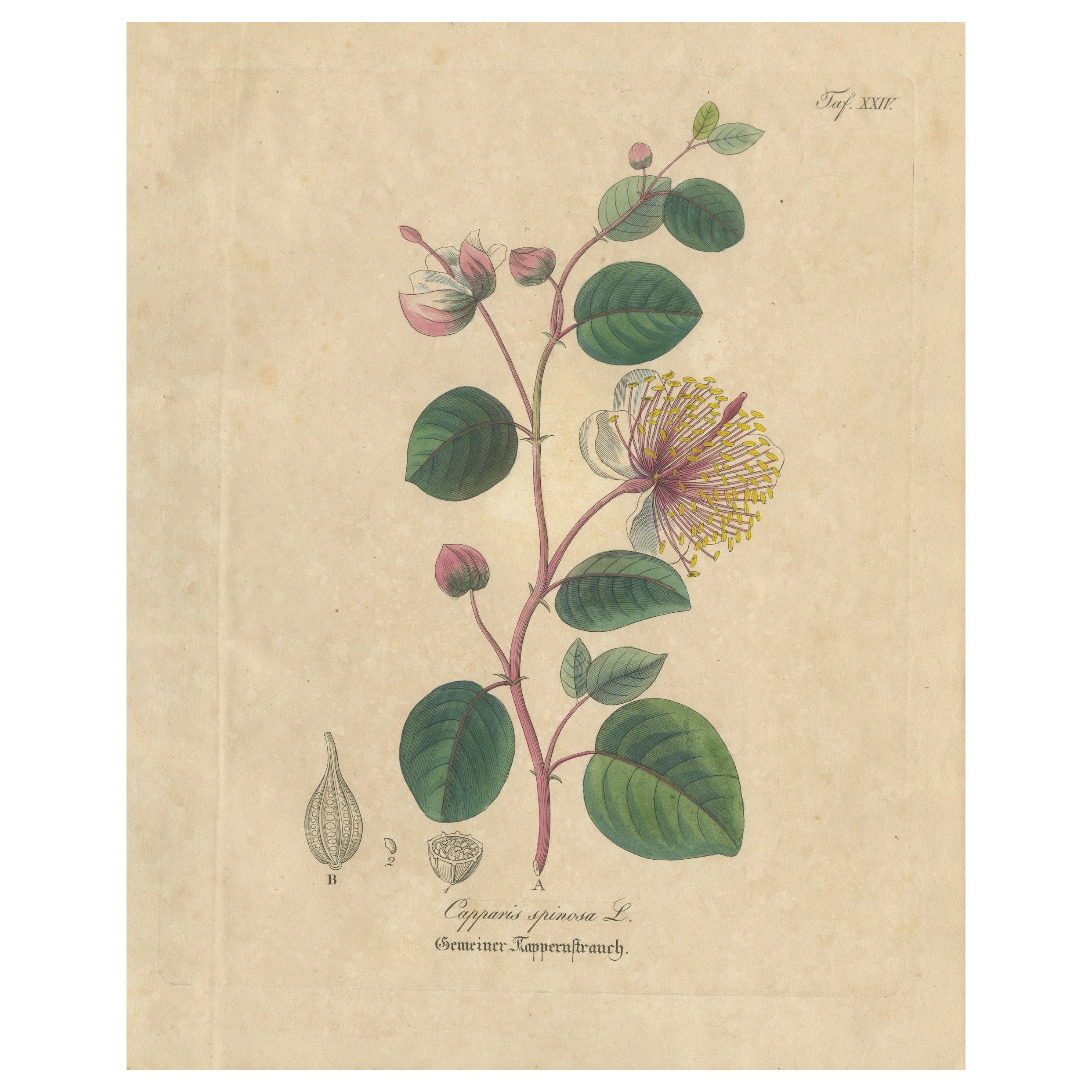
Antique Caper Botanical Print, Capparis Spinosa, Hand Colored, c.1831 This elegant botanical engraving illustrates Capparis Spinosa, the caper plant, featuring its distinctive folia...

Category

Antique 1830s German Prints

Materials

Paper

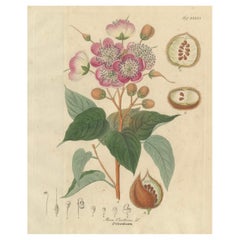
Antique Bixa Orellana Botanical Print, Copper Engraving, c.1831

Antique Bixa Orellana Botanical Print, Copper Engraving, c.1831

Located in Langweer, NL

Antique Bixa Botanical Print, Bixa Orellana (Annatto), c.1831 Description: This vibrant botanical engraving illustrates Bixa Orellana, the annatto plant, valued for its seeds which ...

Category

Antique 1830s German Prints

Materials

Paper

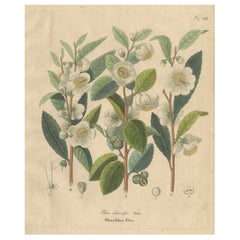
Antique Botanical Print of Thea Chinensis, Hand Colored, c.1831

Antique Botanical Print of Thea Chinensis, Hand Colored, c.1831

Located in Langweer, NL

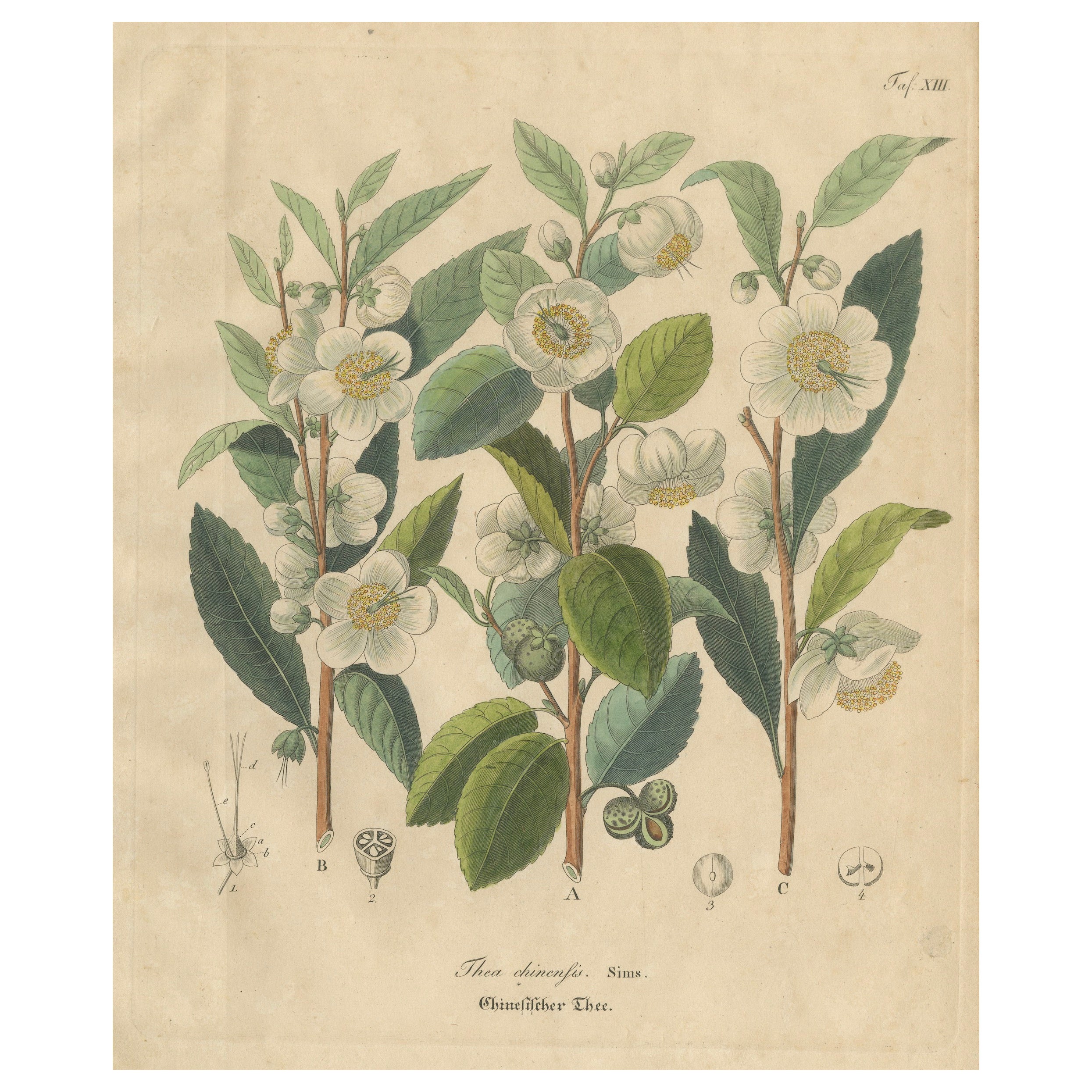
Antique Tea Botanical Print, Thea Chinensis, Hand Colored, c.1831 This elegant botanical engraving depicts Thea chinensis, the tea plant, one of the most influential commodities in ...

Category

Antique 1830s German Prints

Materials

Paper

You May Also Like

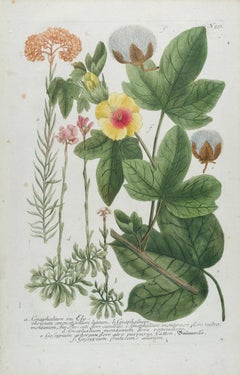
Flowering Cotton Plant: 18th Century Hand-colored Weinmann Botanical Engraving

Flowering Cotton Plant: 18th Century Hand-colored Weinmann Botanical Engraving

By Johann Wilhelm Weinmann

Located in Alamo, CA

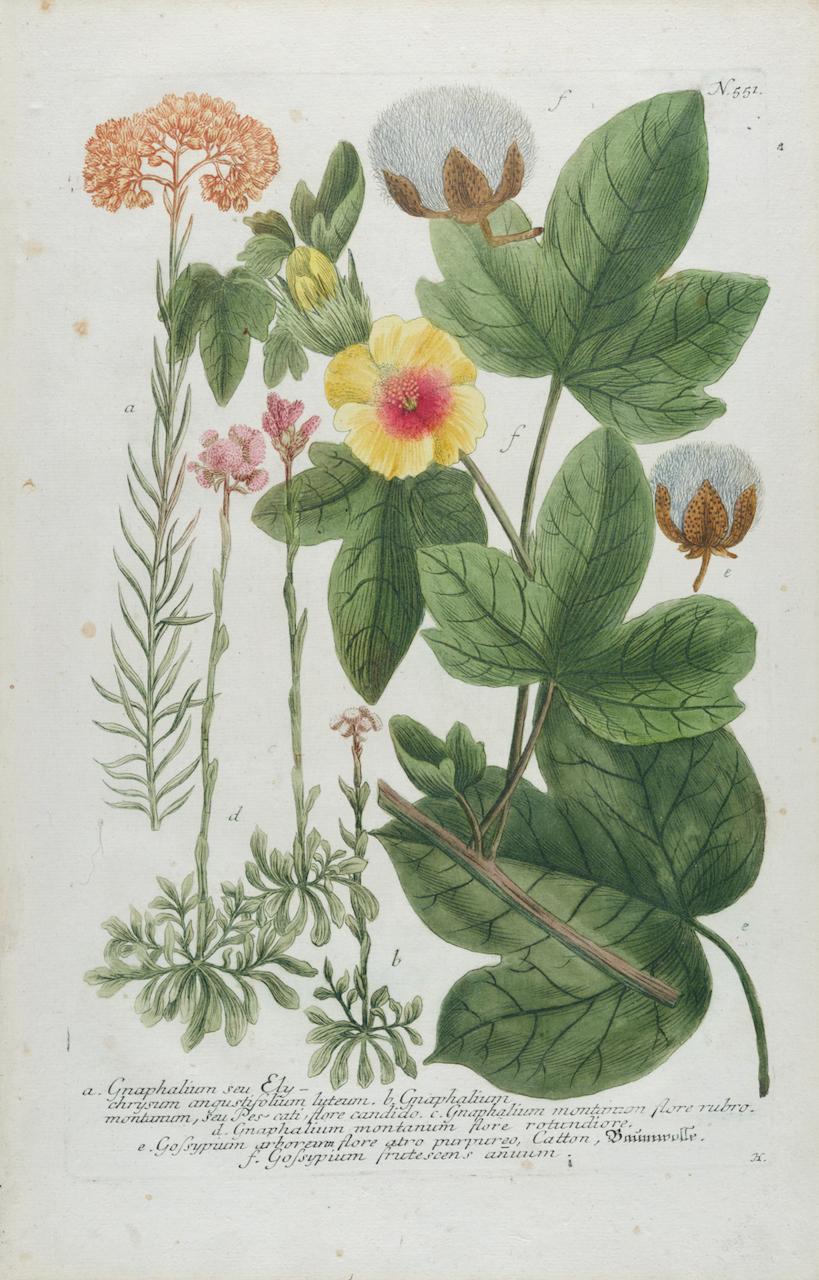
This striking hand-colored botanical mezzotint and line engraving is entitled "Gnaphalium, Gossypium (Cotton Plant)". It is plate 551 in Johann Weinmann's monumental publication "Phy...

Category

Mid-18th Century Naturalistic Still-life Prints

Materials

Engraving, Mezzotint

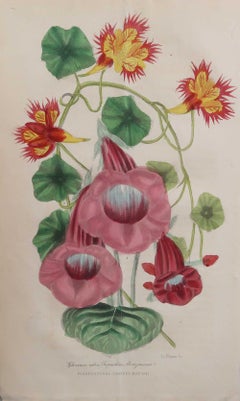
Original Antique Botanical Print- Gloxina Rubra. 1841

Original Antique Botanical Print- Gloxina Rubra. 1841

Located in St Annes, Lancashire

Great image of Gloxina Rubra Lithograph with original hand colour Published 1841 Unframed. Free shipping

Category

Antique 1840s English Victorian Prints

Materials

Paper

Herbaceous Cotton - Lithograph by Vincenzo Tenore - 1870s

Herbaceous Cotton - Lithograph by Vincenzo Tenore - 1870s

By Vincenzo Tenore

Located in Roma, IT

Lithograph hand watercolored. Belongs to the Series "Atlante di Botanica popolare ossia Illustrazione di Piante Notevoli di ogni famiglia" (Atlas of popular botany or illustration o...

Category

1870s Modern Figurative Prints

Materials

Lithograph

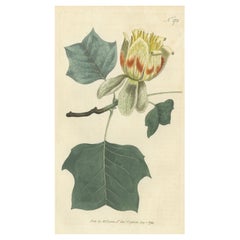
Early 19th Century Botanical Engraving by John Curtis

Early 19th Century Botanical Engraving by John Curtis

Located in Seaford, GB

Early 19th Century Botanical Engraving by John Curtis – Hand Coloured Natural History Plate An original early 19th-century hand-coloured botanical engraving from the celebrated natural history publications of John Curtis (1791–1862), one of Britain’s most respected botanical and entomological illustrators. This beautifully detailed plate illustrates a flowering plant in scientific profile, showing bloom structure, leaves, buds, and root system with precision typical of early Victorian natural history illustration. Curtis’s work bridges science and art — created for study, yet prized today for its elegance and balance. These engravings formed part of the golden age of British botanical publishing, when artists collaborated with engravers and colourists to produce plates that were both accurate and visually refined. Each impression was printed from an engraved plate and then carefully coloured by hand, meaning no two examples are ever exactly identical. The composition has the clarity collectors seek: • Central botanical specimen • Naturalistic colour palette • Fine line engraving • Period scientific titling This makes it ideal as a single framed piece or as part of a gallery wall of antique botanical studies. About John Curtis John Curtis was a leading figure in British natural history illustration. He is best known for British Entomology and botanical works that combined taxonomic accuracy with graceful composition. His engravings are held in major museum collections and remain highly collectible in the decorative arts market. Period Early 19th century, circa 1820–1840. Technique Copperplate engraving with original hand colouring on laid paper. Condition Good antique condition consistent with age. Light toning and minor handling marks may be present, as expected with early 19th-century works on paper. Please see the images. Why Collect Curtis Botanical Prints...

Category

Antique Early 19th Century British George III Prints
Materials

Paper

Pair of Large Scale Original Antique Botanical Prints. Curtis. Dated 1826

Pair of Large Scale Original Antique Botanical Prints. Curtis. Dated 1826

Located in St Annes, Lancashire

Wonderful pair of botanical prints Lithographs after drawings by Curtis Original hand color Published by S.Curtis. Dated 1826 Unframed. Free shipping

Category

Antique 1820s English Georgian Prints

Materials

Paper

Early 19th Century Botanical Engraving by John Curtis

Early 19th Century Botanical Engraving by John Curtis

Located in Seaford, GB

Early 19th Century Botanical Engraving by John Curtis – Hand Coloured Natural History Plate An original early 19th-century hand-coloured botanical engraving from the celebrated natural history publications of John Curtis (1791–1862), one of Britain’s most respected botanical and entomological illustrators. This beautifully detailed plate illustrates a flowering plant in scientific profile, showing bloom structure, leaves, buds, and root system with precision typical of early Victorian natural history illustration. Curtis’s work bridges science and art — created for study, yet prized today for its elegance and balance. These engravings formed part of the golden age of British botanical publishing, when artists collaborated with engravers and colourists to produce plates that were both accurate and visually refined. Each impression was printed from an engraved plate and then carefully coloured by hand, meaning no two examples are ever exactly identical. The composition has the clarity collectors seek: • Central botanical specimen • Naturalistic colour palette • Fine line engraving • Period scientific titling This makes it ideal as a single framed piece or as part of a gallery wall of antique botanical studies. About John Curtis John Curtis was a leading figure in British natural history illustration. He is best known for British Entomology and botanical works that combined taxonomic accuracy with graceful composition. His engravings are held in major museum collections and remain highly collectable in the decorative arts market. Period Early 19th century, circa 1820–1840. Technique Copperplate engraving with original hand colouring on laid paper. Condition Good antique condition consistent with age. Light toning and minor handling marks may be present, as expected with early 19th-century works on paper. Please see the images. Why Collect Curtis Botanical Prints...

Category

Antique Early 19th Century British George III Prints
Materials

Paper