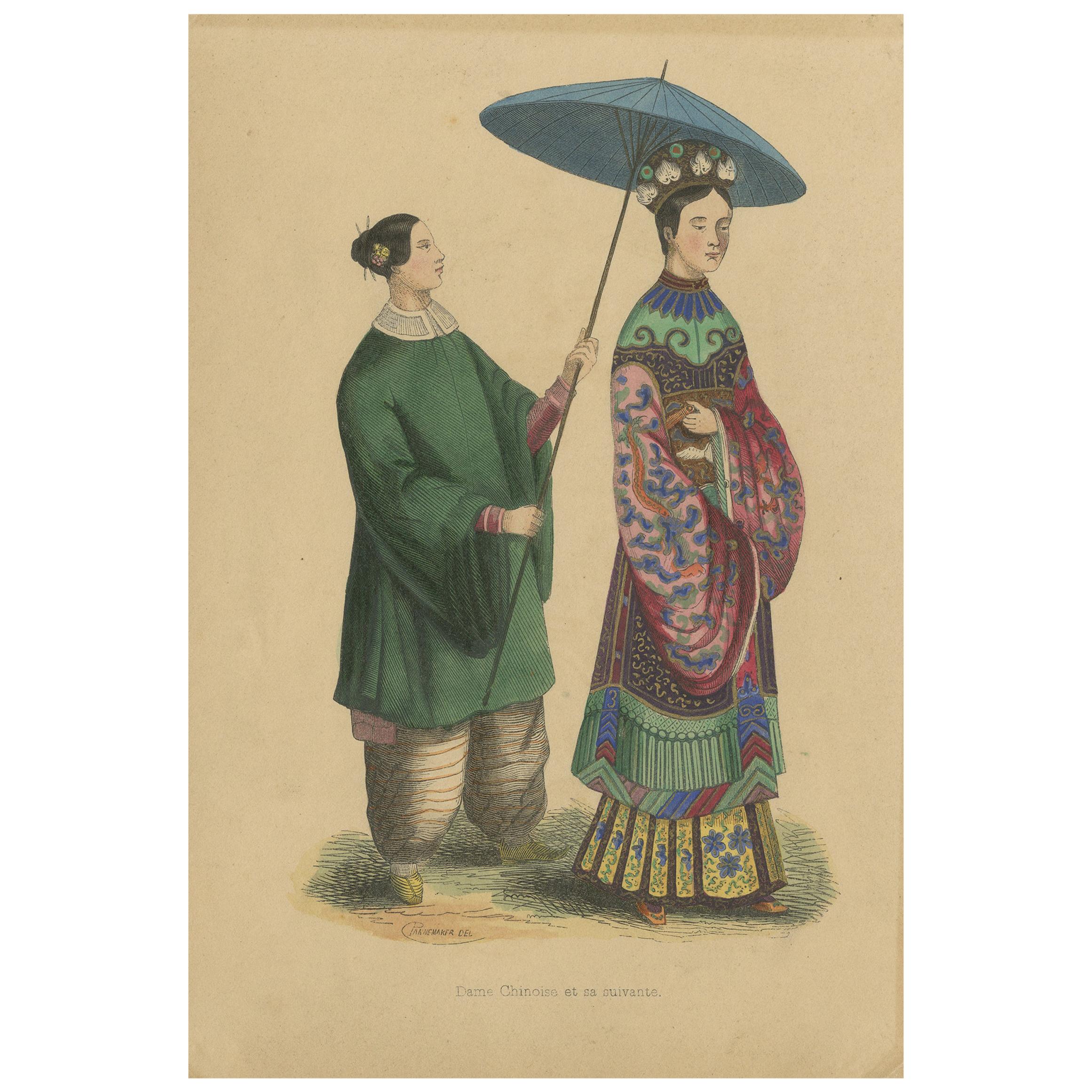
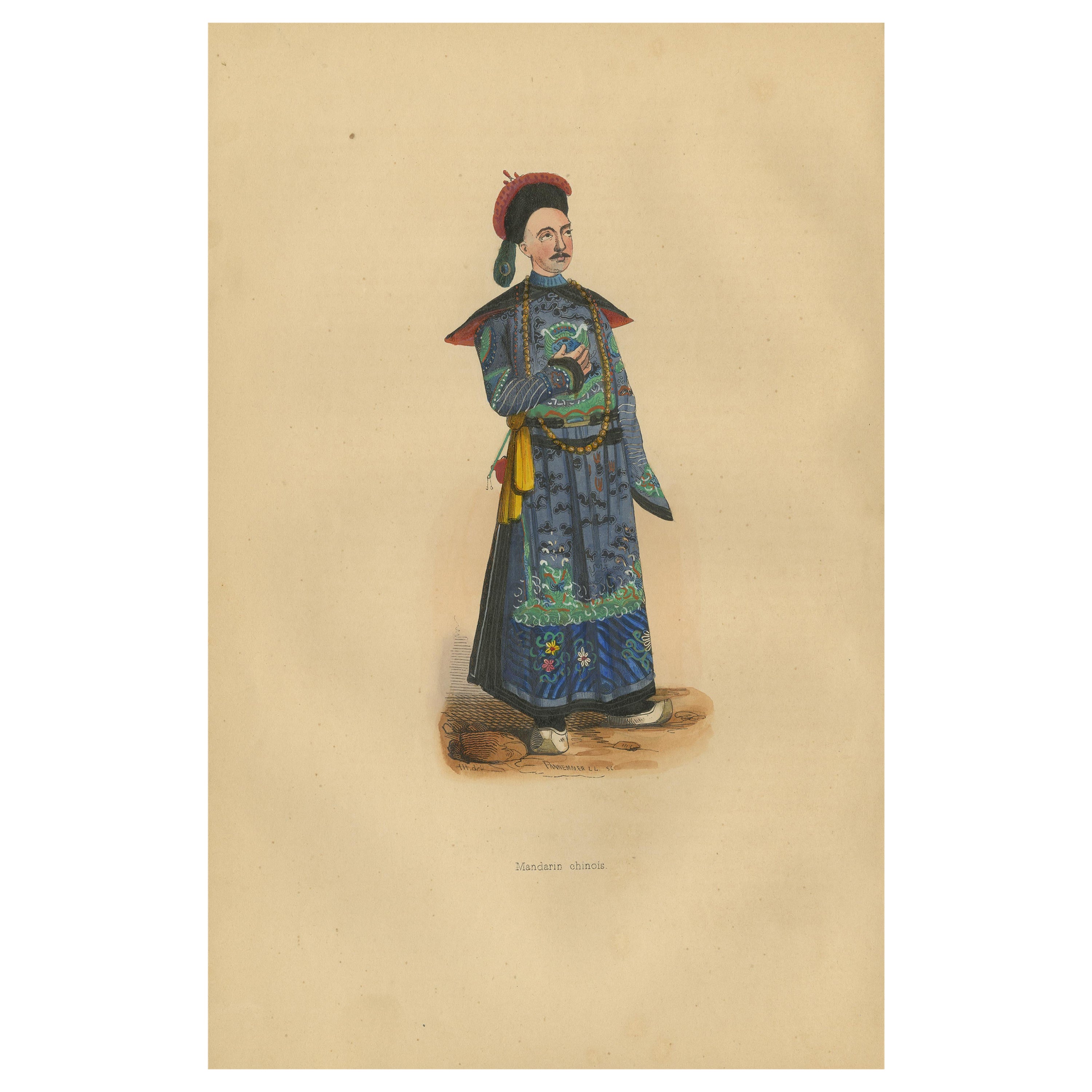
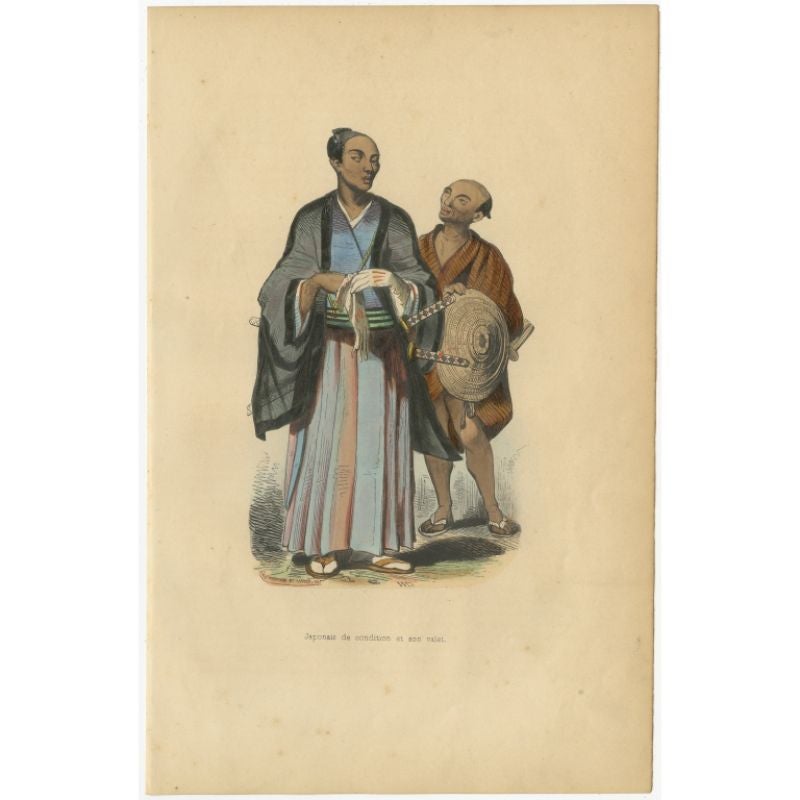
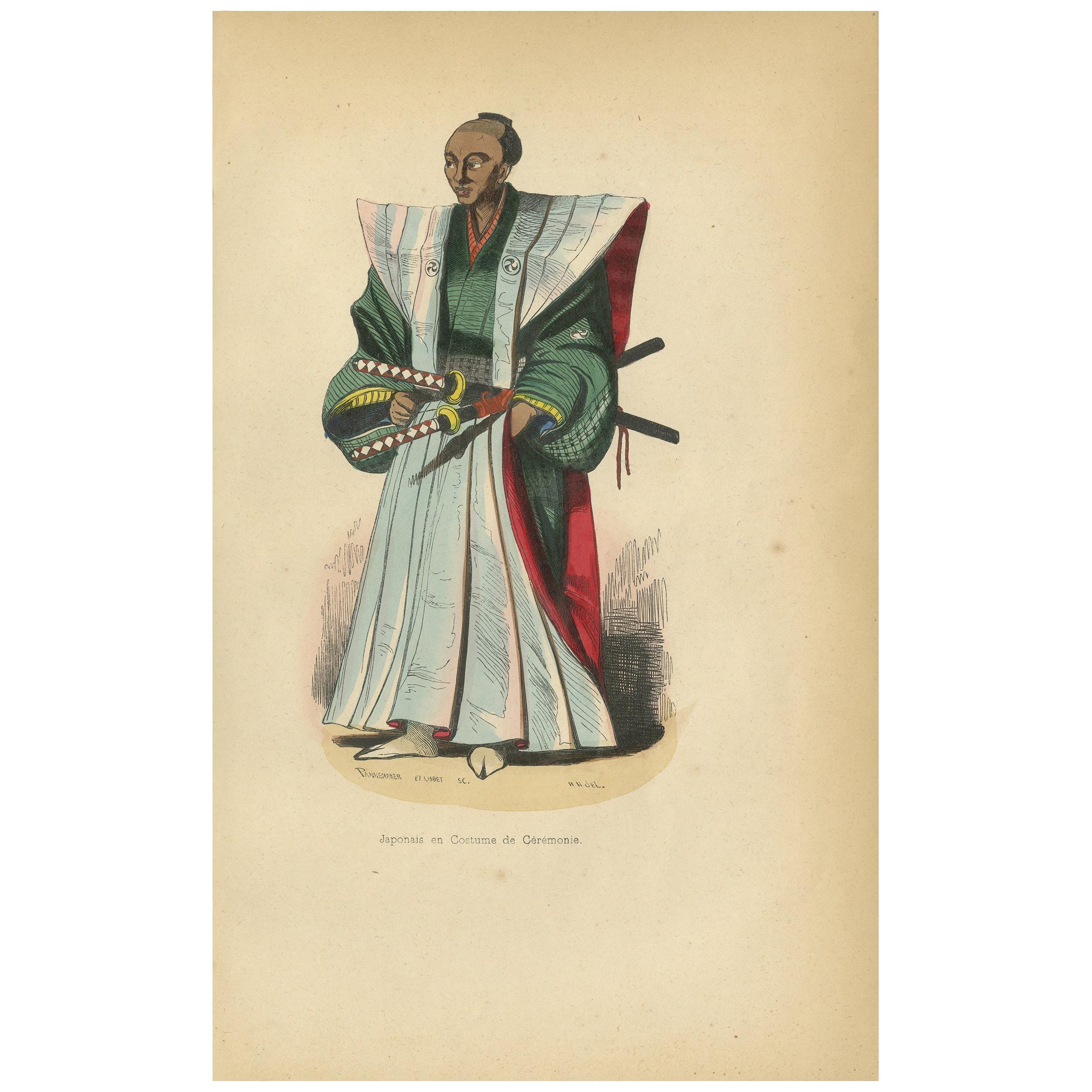
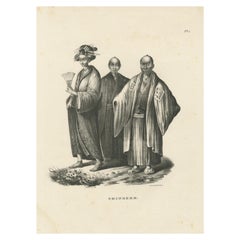
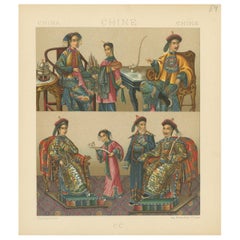
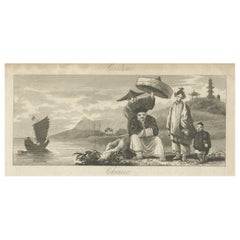
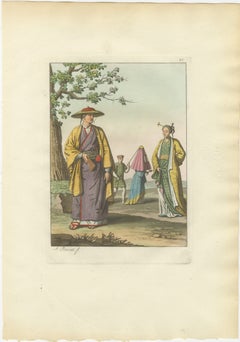
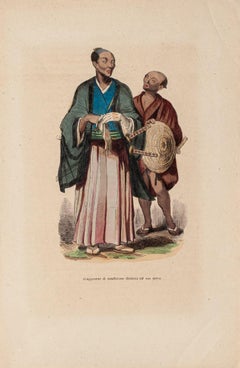
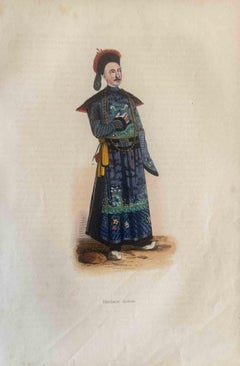
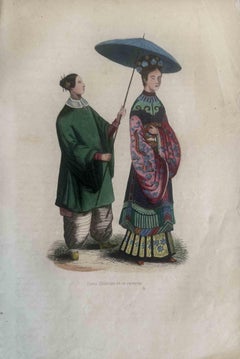
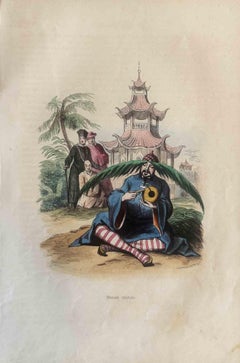
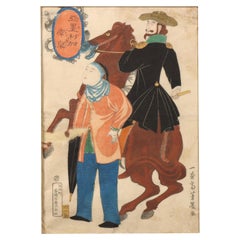
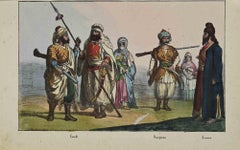
This is a lithograph by Karl Joseph Brodtmann, from his 1836 collection of ethnographic prints. The image depicts three figures identified as "Chinezen" (Chinese), standing in traditional attire. The artwork exemplifies Brodtmann's attention to cultural details and his intent to document the diversity of human appearance and dress, specifically focusing on the Chinese people in this particular lithograph.
Description: The lithograph portrays three Chinese figures in traditional clothing, providing a visual representation of Chinese fashion and culture as perceived by European observers in the early 19th century.
1. The first figure, a woman, stands gracefully on the left. She is dressed in a long, ornately embroidered robe and holds a fan. Her elaborate hairstyle is decorated with ornamental hairpieces, a detail that suggests her elevated social status or the formal nature of her attire.
2. The second figure, a man in the center, is dressed in a simple, dark robe. His outfit may suggest a scholarly or monk-like status, emphasizing modesty in comparison to the richly dressed individuals next to him.
3. The third figure, on the right, is a man dressed in a flowing, patterned robe. His dress features symbols that might be tied to his rank or profession, reflecting the intricate and hierarchical nature of Qing-era Chinese clothing.
The lithograph depicts these individuals standing on a simple, natural landscape, which grounds them in a specific environment. The detailed rendering of their garments and hairstyles demonstrates Brodtmann's careful observation and commitment to accurate representation of foreign cultures.
Maker: Karl Joseph Brodtmann (1787–1862) was a Swiss lithographer and artist known for his detailed and accurate representations of different ethnicities, plants, and animals. His ethnographic work aimed to document the diversity of the human race, with a particular focus on the people of Asia, Africa, and the Americas. He often worked in collaboration with other scientists and researchers, creating visual records for use in books, exhibitions, and studies.
Technique and Style: This piece was produced using lithography, which was the most advanced method for producing prints at the time. Lithography allowed Brodtmann to achieve fine detail and subtle shading, evident in the intricate patterns on the figures' robes and the nuanced depiction of their faces. His style can be described as ethnographic realism—while attempting to capture the essential details of foreign dress and appearance, he also infused his works with a European perspective on cultural and racial differences. The combination of careful detail and artistic composition made his works valuable both as scientific documents and as art.
The standing pose of the figures, the way their attire is prominently displayed, and the natural setting all speak to the way European artists framed non-European subjects, often focusing on exoticism and difference. However, Brodtmann's emphasis on realism also allowed for a more respectful and observational portrayal of his subjects compared to some other depictions of foreign peoples from the same era.
This work, like many of Brodtmann's lithographs, served as both a scientific and artistic representation of the people and cultures from non-Western societies, catering to the curiosity of a European audience eager to learn about distant lands.