Want more images or videos?
Request additional images or videos from the seller
1 of 9

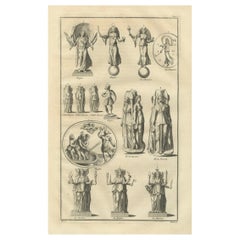
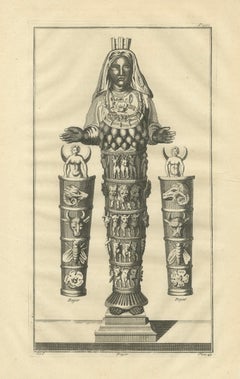
Diana of Ephesus Antique Engraving, Montfaucon Antiquité Expliquée, 1721

$997.17
£736.90
€845VAT Included
CA$1,383.73
A$1,408.84
CHF 811.36
MX$16,975.40
NOK 9,415.92
SEK 9,500.08
DKK 6,442.35

About the Item

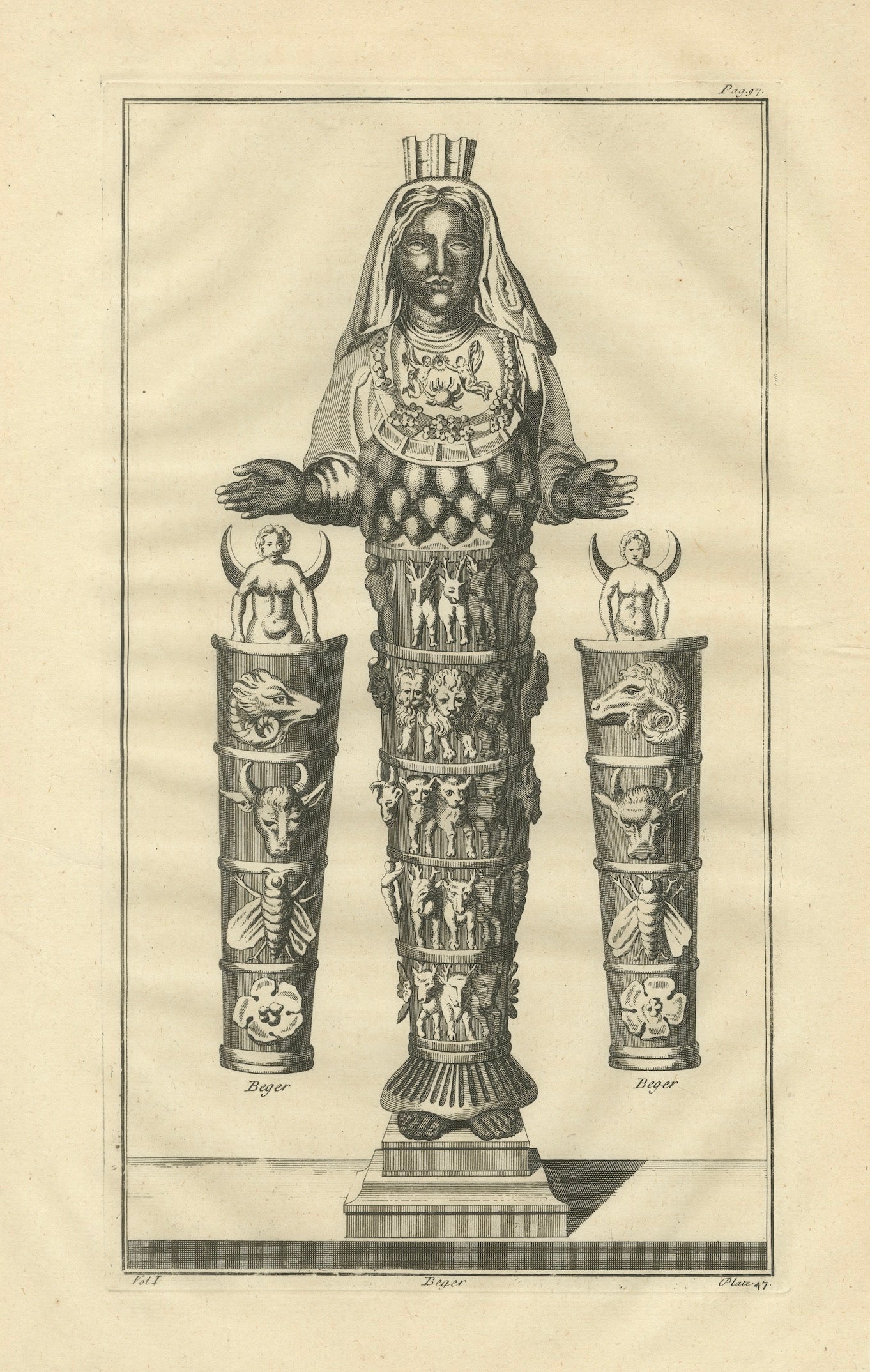
Diana of Ephesus Antique Engraving, Montfaucon Antiquité Expliquée, 1721 This original eighteenth-century copper engraving titled “Diane d’Ephese” illustrates several sculptural representations of the celebrated cult statue of Artemis of Ephesus, one of antiquity’s most enigmatic and symbolically charged religious images. The plate originates from Bernard de Montfaucon’s landmark antiquarian publication L’antiquité expliquée et représentée en figures, published in Paris in 1721, a pioneering encyclopedic study that helped establish the scholarly foundations of archaeology and art history during the Enlightenment. Montfaucon’s ambitious project sought to systematically document the material culture of the ancient world through carefully researched engravings based on surviving sculptures, coins, reliefs, and historical sources. This plate presents multiple interpretations of the Ephesian goddess, comparing sculptural variants and medallion representations. The central figures stand rigidly frontal, crowned and richly adorned, their bodies covered with registers of animals, symbolic figures, and ritual ornamentation. Smaller circular images below further demonstrate how the goddess appeared on ancient coins and reliefs, reflecting Montfaucon’s analytical approach to classical imagery. Unlike the familiar Greek Artemis, goddess of the hunt, the Ephesian Diana represents an older Anatolian mother deity assimilated into Greco-Roman religion. Her distinctive iconography—tiered body coverings, animal motifs, and fertility symbolism—expresses abundance, cosmic order, and divine protection. During the eighteenth century, such images fascinated European scholars attempting to interpret ancient religions through comparative symbolism, making Montfaucon’s publication a cornerstone reference for collectors, antiquarians, and early museums. The engraving is executed with refined precision typical of Parisian copperplate work of the early 1700s, combining scientific clarity with strong decorative appeal. The balanced composition and graphic symmetry allow the print to function equally as a scholarly artifact and an elegant wall piece suited to both classical and contemporary interiors. This original antique engraving is offered unframed, providing flexibility to select a frame appropriate to the intended interior setting. Condition: Good antique condition with age-related toning and light paper discoloration consistent with early eighteenth-century prints. Minor edge wear and handling marks mainly confined to the margins. Plate impression visible. Blank verso. Framing tips: A dark walnut or ebonized frame with a generous ivory mat enhances the engraving’s academic and neoclassical character. For a contemporary presentation, a slim black gallery frame with wide mat spacing creates a refined museum-style display. Technique: Copper engraving Maker: Bernard de Montfaucon, France, Paris, 1721 Keywords: Diana of Ephesus, Artemis of Ephesus engraving, Diane d’Ephese print, Montfaucon antiquité expliquée, antique classical engraving, 18th century archaeology print, French antiquarian engraving, classical goddess print, ancient religion illustration, fertility goddess art, Temple of Artemis Ephesus, Enlightenment era engraving, mythological antiquities print, museum quality antique print, Paris 1721 engraving, classical symbolism artwork, early archaeology illustration, collector antiquities print, neoclassical decor art, Bartele Gallery antique engraving.
  • Dimensions:
    Height: 16.62 in (42.2 cm)Width: 9.57 in (24.3 cm)Depth: 0.01 in (0.2 mm)
  • Materials and Techniques:
    Paper,Engraved
  • Place of Origin:
  • Period:
    1720-1729
  • Date of Manufacture:
    1721
  • Condition:
    Good antique condition with age-related toning and light paper discoloration consistent with early eighteenth-century prints. Minor edge wear and handling marks mainly confined to the margins. Plate impression visible. Blank verso.
  • Seller Location:
    Langweer, NL
  • Reference Number:
    Seller: BG-14184-1-481stDibs: LU3054349056672

More From This Seller

View All
Diana of the Ephesians Antique Engraving, Montfaucon Antiquité Expliquée 1721

Diana of the Ephesians Antique Engraving, Montfaucon Antiquité Expliquée 1721

Located in Langweer, NL

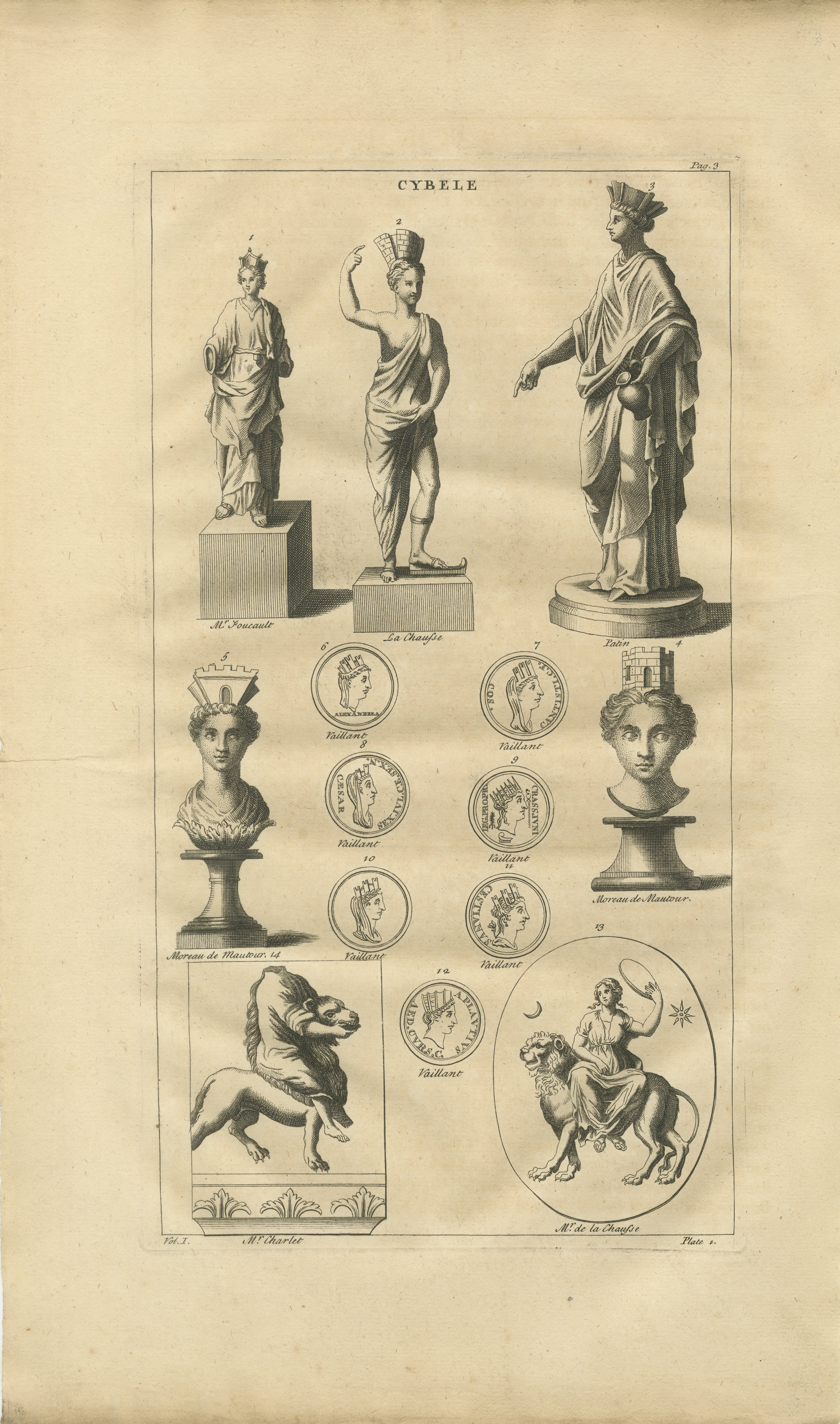
Diana of the Ephesians Antique Engraving, Montfaucon Antiquité Expliquée 1721 This original early eighteenth-century copper engraving depicts the famed Diana of the Ephesians (Artemis of Ephesus), one of the most recognizable and symbolically rich cult images of the ancient world. The plate originates from Bernard de Montfaucon’s monumental antiquarian publication *L’Antiquité expliquée et représentée en figures*, published in Paris in 1721, a foundational scholarly work that systematically documented classical antiquities and helped establish archaeology as an academic discipline. Montfaucon’s encyclopedic project sought to gather visual knowledge of ancient civilizations through carefully engraved illustrations based on surviving sculptures, coins, manuscripts, and earlier collections. This engraving presents the Ephesian Artemis in her distinctive archaic form: a rigid frontal figure crowned with a mural headdress, arms extended, and a body covered with symbolic registers. The multiple rounded forms across the torso—traditionally interpreted as fertility attributes—reflect the goddess’s role as a universal mother and protector of nature. Bands of animals, mythological creatures, and sacred motifs reinforce her association with cosmic order, fertility, and the natural world. Unlike the athletic huntress Artemis familiar from Greek sculpture, the Ephesian Diana represents an older Anatolian cult tradition absorbed into Greco-Roman religion. The engraving therefore documents not only a sculpture but also Enlightenment-era attempts to understand ancient religious symbolism through comparative study. Montfaucon’s precise linework and balanced composition exemplify the refined craftsmanship of Parisian copperplate engraving during the early 18th century, combining scholarly accuracy with strong decorative appeal. Today, engravings from L’Antiquité expliquée are highly regarded by collectors of classical antiquity, archaeology, and early academic illustration. The graphic symmetry and sculptural clarity make this image particularly suitable for interiors ranging from traditional libraries to contemporary gallery walls. This original antique engraving is offered unframed, allowing flexibility to select a frame that best suits the intended interior. Condition: Good antique condition with age-related toning and light discoloration to the paper, consistent with early eighteenth-century prints. Minor edge wear and handling marks confined mainly to the margins. Plate impression visible. Blank verso. Framing tips: A dark walnut or ebonized frame with a wide ivory mat enhances the classical presence of the figure. For a modern interior, a slim black frame with generous mat spacing creates a museum-quality presentation emphasizing the engraving’s symmetry. Technique: Copper engraving Maker: Bernard de Montfaucon, France, Paris, 1721 Keywords: Diana of Ephesus, Artemis of Ephesus engraving, Montfaucon Antiquité expliquée, antique classical engraving, Ephesian Diana print, Greek mythology print...

Category

Antique 1720s British Prints

Materials

Paper

Classical Mythological Figures Engraving, Montfaucon Antiquité Expliquée 1721

Classical Mythological Figures Engraving, Montfaucon Antiquité Expliquée 1721

Located in Langweer, NL

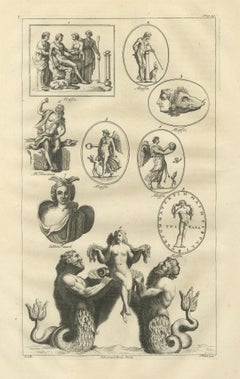
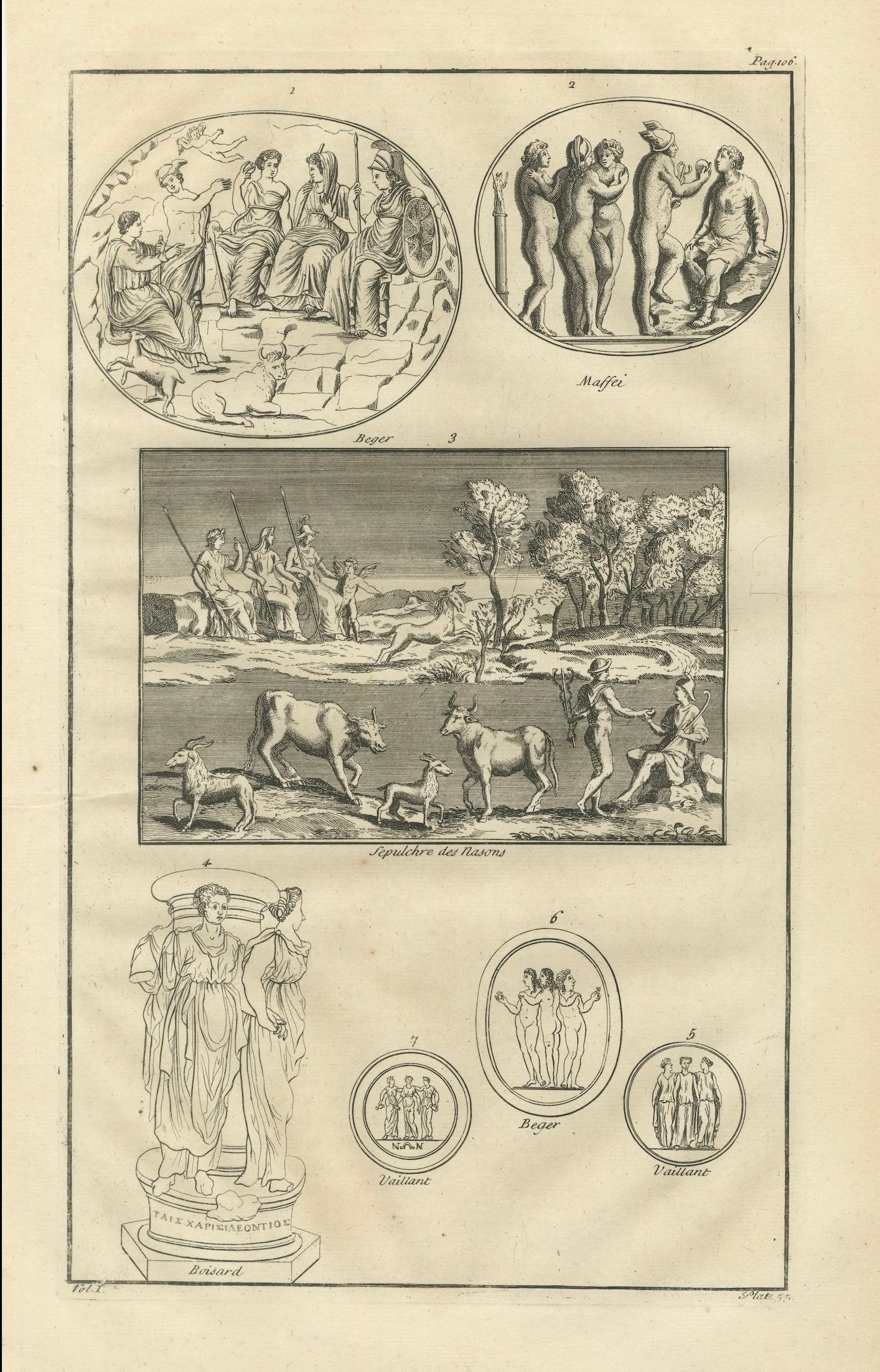
Classical Mythological Figures Engraving, Montfaucon Antiquité Expliquée 1721 This original early eighteenth-century copper engraving originates from Bernard de Montfaucon’s monumental antiquarian publication L’Antiquité expliquée et représentée en figures, published in Paris in 1721. Widely regarded as one of the most important scholarly works of the Enlightenment, Montfaucon’s encyclopedic study systematically documented the art, mythology, and material culture of the ancient world, laying essential foundations for modern archaeology and art history. The plate presents a carefully arranged compilation of mythological and sculptural studies derived from ancient sources. Multiple vignettes depict classical figures, relief fragments, and symbolic motifs recorded from antique sculptures, gems, and coins. The composition functions almost as a visual catalogue, comparing different representations of mythological subjects collected from prominent European antiquarian collections, including references to works associated with scholars such as Maffei and other early collectors of classical antiquities. At the bottom of the composition, two triton-like sea beings with human torsos and serpent tails raise a nude female figure above the waves, evoking marine mythology connected to nereids, sea deities, or allegorical representations of Venus emerging from the sea. Surrounding studies include winged figures, sculptural heads, medallions, and mythological scenes rendered with remarkable clarity. Montfaucon’s analytical approach—placing multiple related images together for comparison—reflects the Enlightenment ambition to classify and interpret antiquity through visual evidence. The engraving demonstrates the refined precision of early eighteenth-century Parisian copperplate engraving, characterized by delicate linework, balanced spacing, and restrained tonal shading. Beyond its scholarly significance, the plate possesses strong decorative appeal, combining classical imagery with an elegant graphic structure that suits both traditional and contemporary interiors. This original antique engraving is offered unframed, allowing flexibility to select a frame appropriate to the intended interior or collection setting. Condition: Good antique condition with age-related toning and light paper discoloration consistent with early eighteenth-century prints...

Category

Antique 1720s British Prints

Materials

Paper

Classical Antiquities Engraving, Sepulchrum des Nasonii, Montfaucon 1721

Classical Antiquities Engraving, Sepulchrum des Nasonii, Montfaucon 1721

Located in Langweer, NL

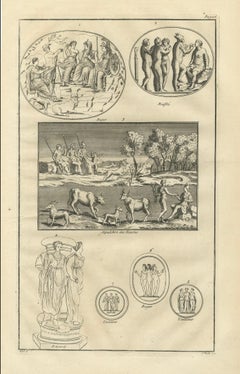
Classical Antiquities Engraving, Sepulchrum des Nasonii, Montfaucon 1721 This original early eighteenth-century copper engraving presents a scholarly compilation of classical antiquities drawn from ancient Roman artworks, engraved gems, and sculptural sources. The plate originates from Bernard de Montfaucon’s influential publication *L’Antiquité expliquée et représentée en figures*, published in Paris in 1721, one of the most important antiquarian works of the Enlightenment and a cornerstone in the development of archaeology and classical art history. The composition assembles multiple mythological and archaeological subjects arranged in a structured, comparative format typical of Montfaucon’s method. At the center appears a detailed scene labeled “Sepulchrum des Nasonii,” referring to the celebrated Tomb of the Nasonii located along the Via Flaminia in Rome, an important Roman funerary monument known for its painted mythological decorations. The engraving records figures, animals, and pastoral imagery derived from ancient wall paintings, offering eighteenth-century scholars and collectors access to monuments that were otherwise difficult to study directly. Surrounding vignettes reproduce imagery taken from antique cameos, engraved gems, and sculptural fragments. Oval compositions depict mythological figures and allegorical scenes, while the lower section includes a classical statue and medallion studies attributed to antiquarian sources associated with collectors and scholars such as Maffei and Vaillant. These references reflect Montfaucon’s ambition to synthesize knowledge gathered from Europe’s major antiquities collections into a single visual encyclopedia. Executed with refined precision, the engraving demonstrates the clarity and balance characteristic of Parisian copperplate engraving of the early 1700s. Fine linework and careful tonal shading translate sculptural and painted sources into a harmonious graphic composition. Today, plates from Montfaucon’s work are appreciated both for their scholarly significance and for their elegant decorative qualities, making them highly suitable for libraries, study interiors, or contemporary gallery walls seeking classical visual depth. This original antique engraving is offered unframed, allowing flexibility to select a frame that best complements the intended interior. Condition: Good antique condition with age-related toning and light discoloration consistent with early eighteenth-century paper. Minor edge wear and handling marks mainly confined to the margins. Plate impression visible. Blank verso. Framing tips: A dark walnut, gilt, or ebonized frame with a generous ivory mat enhances the academic and neoclassical character of the engraving. For modern interiors, a slim black gallery frame with wide mat spacing provides a refined museum-style presentation. Technique: Copper engraving Maker: Bernard de Montfaucon, France, Paris, 1721 Keywords: Montfaucon engraving, Antiquité expliquée, Sepulchrum des Nasonii, Roman antiquities print, classical archaeology engraving, antique mythological engraving, 18th century copperplate engraving, French antiquarian print, Roman tomb illustration, Via Flaminia Rome print...

Category

Antique 1720s British Prints

Materials

Paper

Classical Antiquities and Sacred Figures, Montfaucon Engraving, London 1721

Classical Antiquities and Sacred Figures, Montfaucon Engraving, London 1721

Located in Langweer, NL

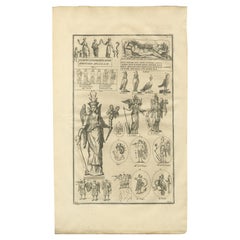
Classical Antiquities and Sacred Figures, Montfaucon Engraving, London 1721 This large and visually rich engraving originates from Bernard de Montfaucon’s monumental work Antiquity ...

Category

Antique 1720s British Prints

Materials

Paper

Antique Roman Goddess Statues and Reliefs, Montfaucon Classical Engraving 1721

Antique Roman Goddess Statues and Reliefs, Montfaucon Classical Engraving 1721

Located in Langweer, NL

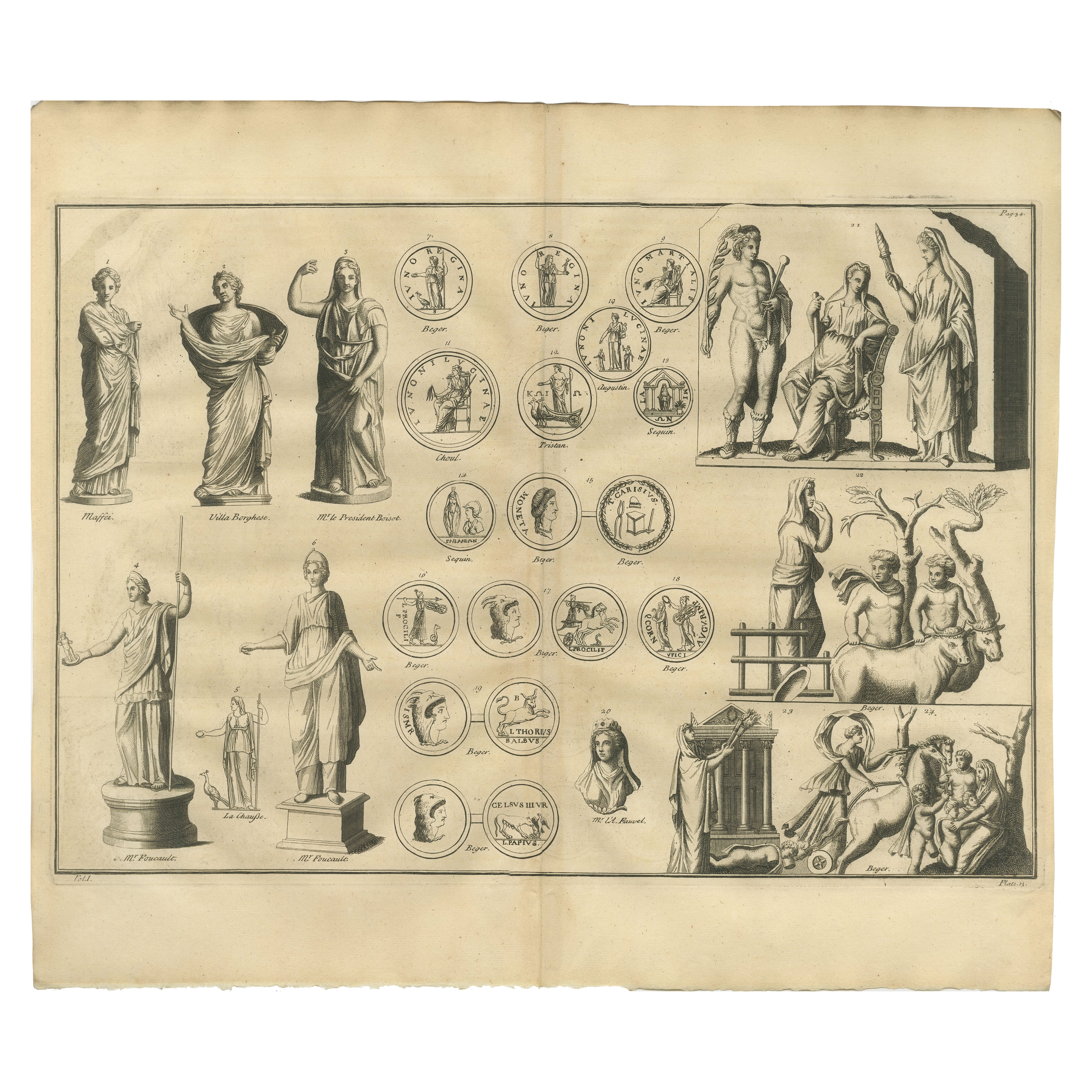
Antique Roman Goddess Statues and Reliefs, Montfaucon Classical Engraving 1721 This striking early 18th-century copper engraving presents a rich survey of Roman sculptural antiquity...

Category

Antique 1720s British Prints

Materials

Paper

Roman Female Statues and Medallions, Montfaucon Antiquarian Engraving, 1721

Roman Female Statues and Medallions, Montfaucon Antiquarian Engraving, 1721

Located in Langweer, NL

Roman Female Statues and Medallions, Montfaucon Antiquarian Engraving, 1721 Description This large-format engraving originates from Bernard de Montfaucon’s seminal publication Antiq...

Category

Antique 1720s British Prints

Materials

Paper

You May Also Like

Jacques-Philippe Le Bas "The Illumination" Engraving 18th Century

Jacques-Philippe Le Bas "The Illumination" Engraving 18th Century

By Jacques-Philippe Le Bas

Located in Beuzevillette, FR

Interesting engraving by Jacques-Philippe Le Bas depicts the illuminations set up on the evening of 29 August 1739 at the crossroads of St Denys and La Ferronnerie for the wedding of...

Category

Antique 18th Century European Prints

Materials

Paper