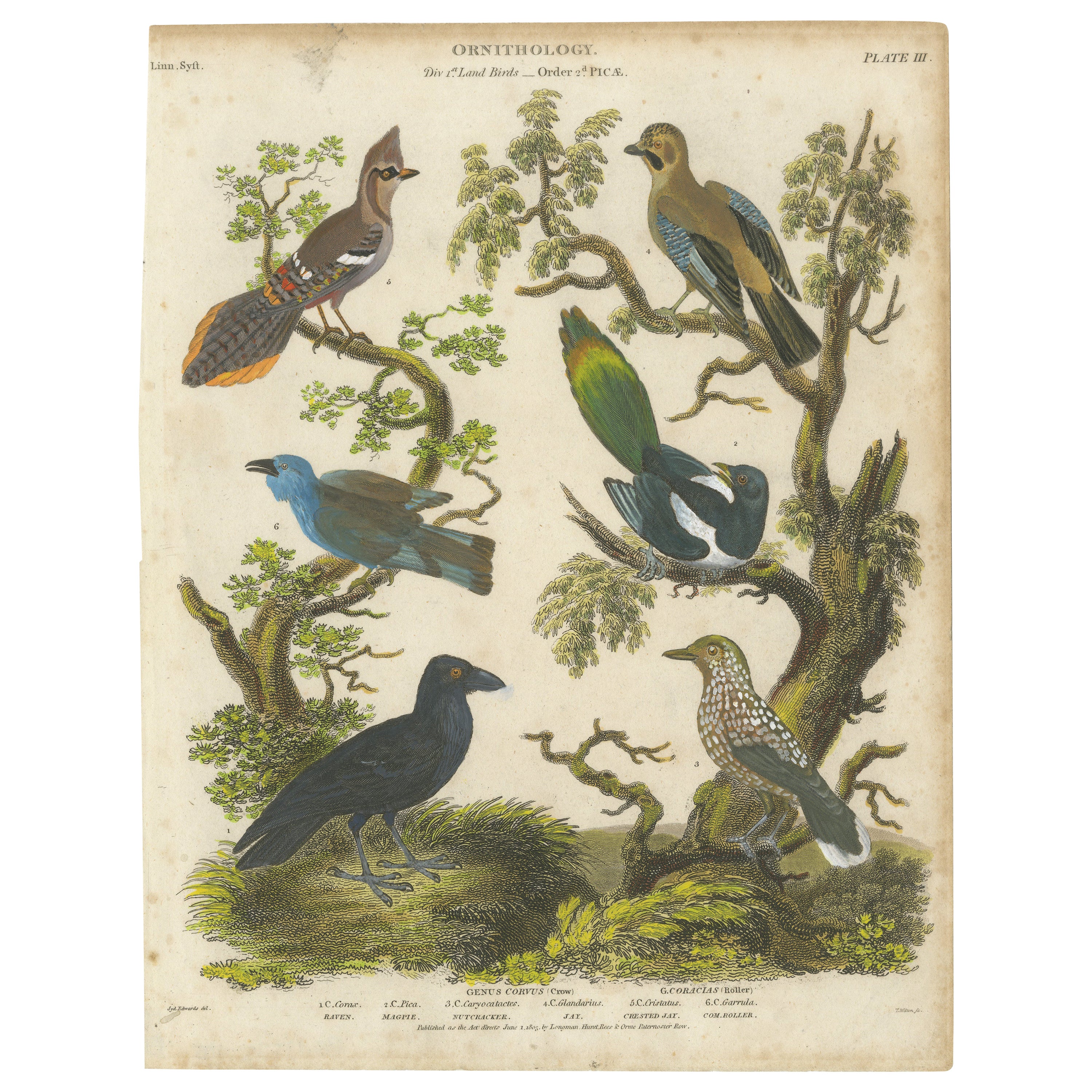
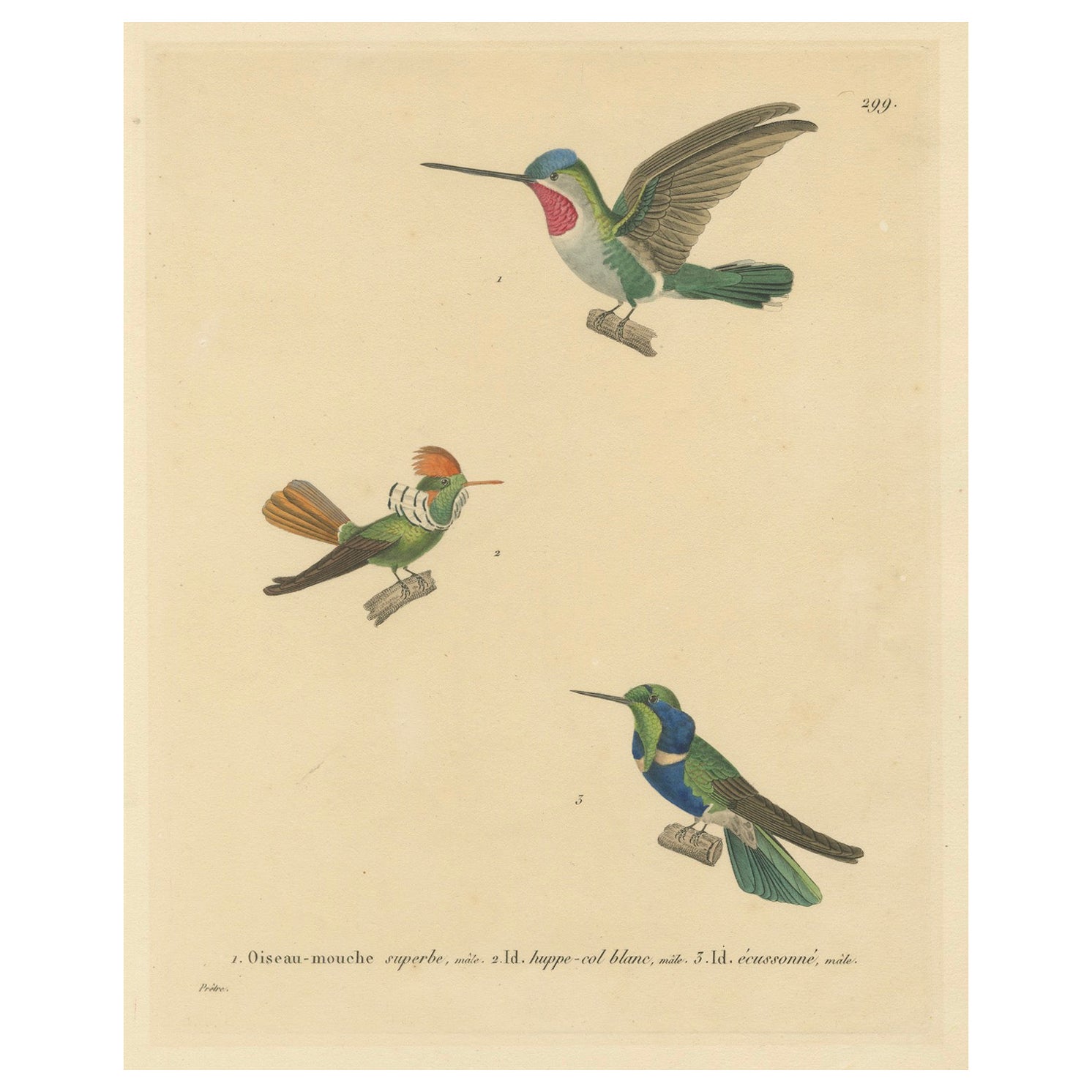
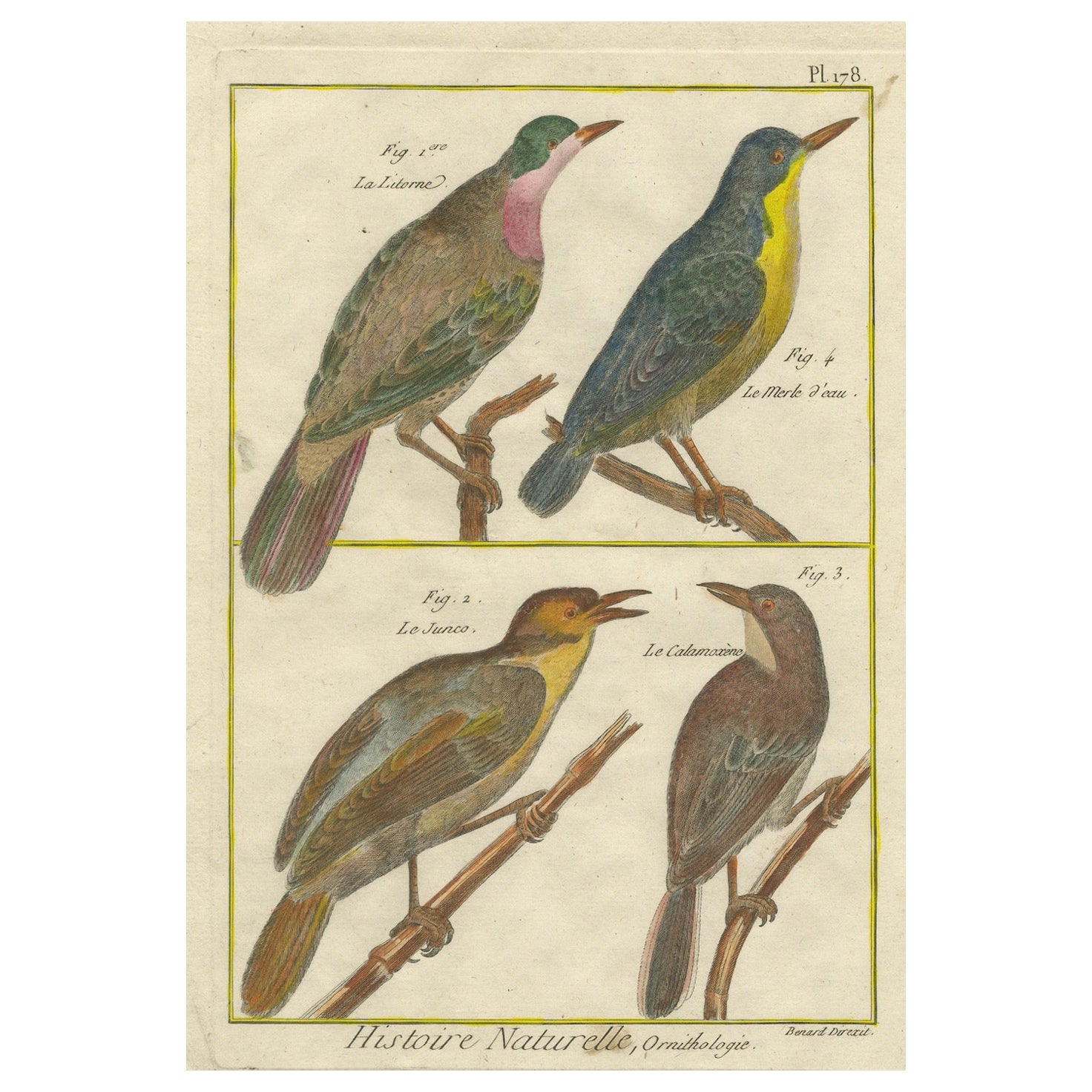
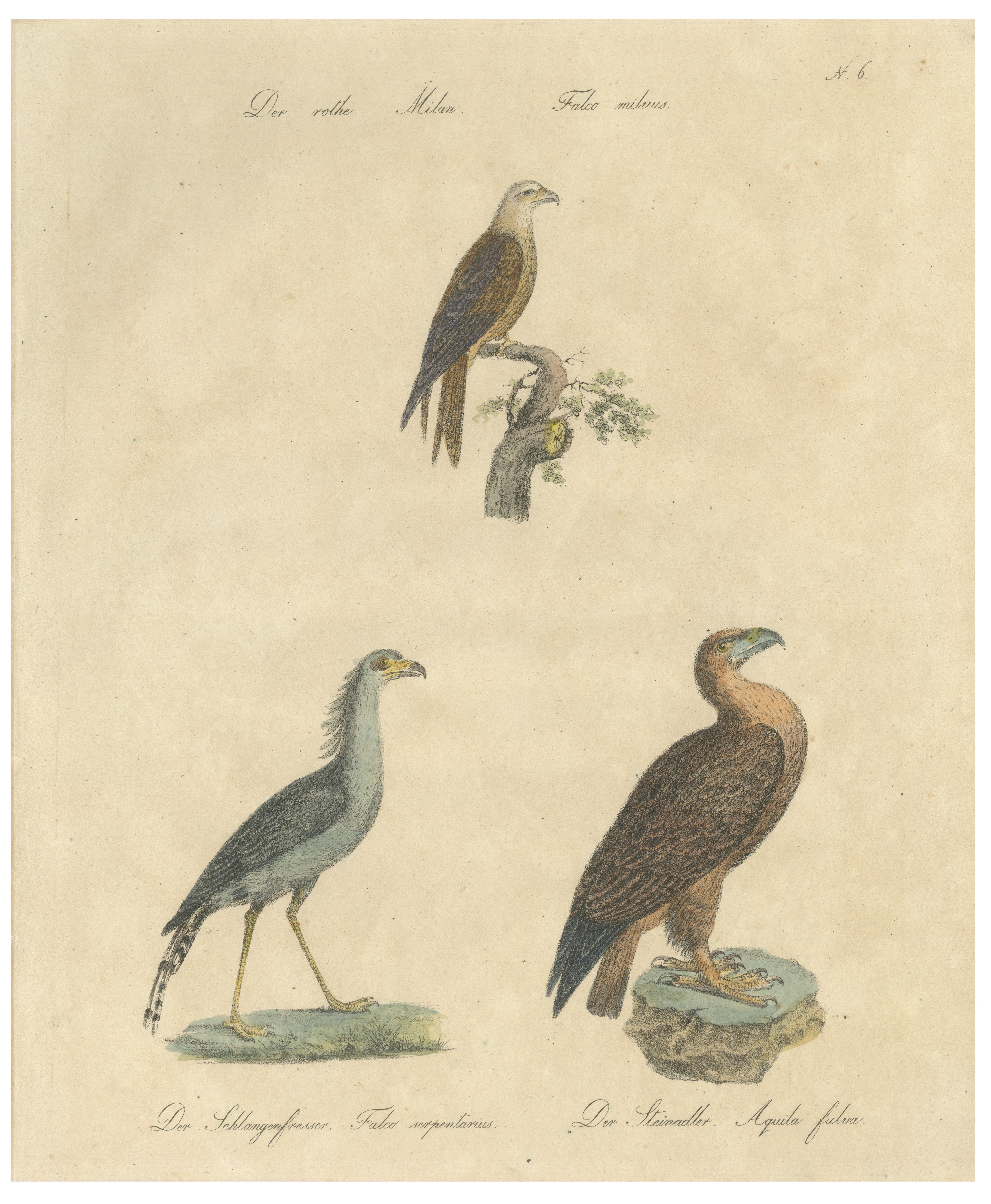
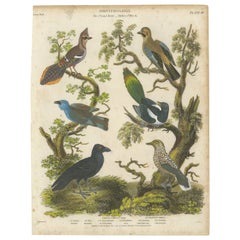
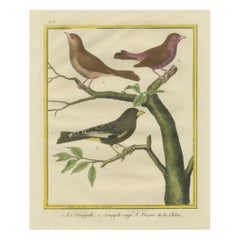
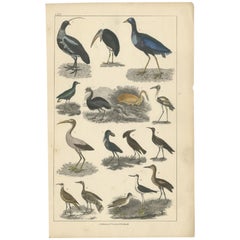
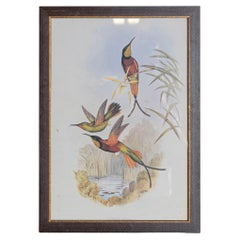
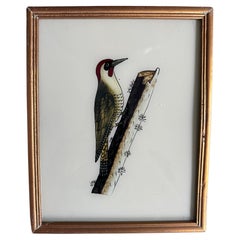
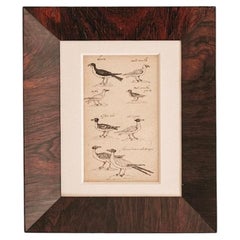
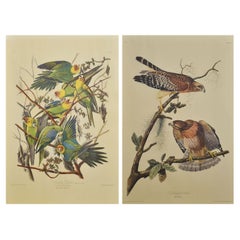
These hand-colored engravings depict various bird species from Georges-Louis Leclerc, Comte de Buffon’s monumental work *Histoire Naturelle, Générale et Particulière* (Natural History, General and Particular), published in the 18th century. The specific plates come from the ornithological section, *Histoire Naturelle des Oiseaux*, which appeared between 1770 and 1783. Buffon’s publications were among the most influential natural history works of their time, and the bird illustrations remain admired for their detail, accuracy, and elegance.
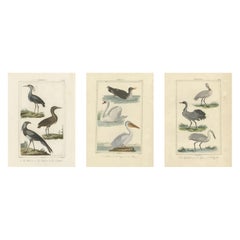
The engravings presented here are three separate plates, each showing multiple bird species in characteristic poses and naturalistic settings.
First Print (Pl. 88):
1. Le Héron (The Heron) – A tall wading bird with gray plumage, long legs, and a pointed beak, shown standing near water.
2. Le Butor (The Bittern) – A stout marsh bird with brown streaked feathers, blending into reed habitats.
3. Le Secretaire (The Secretary Bird) – A distinctive African raptor with crane-like legs, long tail feathers, and a head crest.
Second Print (Pl. 105):
1. L’Albatros (The Albatross) – A great seabird with long wings, depicted floating at sea.
2. Le Cygne (The Swan) – An elegant white swan with an orange beak, shown swimming gracefully.
3. Le Pélican (The Pelican) – A large bird with its characteristic throat pouch, standing near the water’s edge.
Third Print (Pl. 96):
1. La Spatule (The Spoonbill) – Recognizable by its flat, spoon-shaped bill, with pale plumage.
2. La Grue (The Crane) – A tall gray bird with black wing tips and a red crown.
3. L’Aigrette (The Egret) – A slender white bird with plumes, standing by the water.
Each species is carefully rendered to reflect both its anatomy and typical environment. Herons, bitterns, cranes, spoonbills, and egrets are marshland and wetland birds, while swans and pelicans inhabit freshwater lakes and coastal areas. The albatross is a truly oceanic...
Category
Antique Late 18th Century French Prints