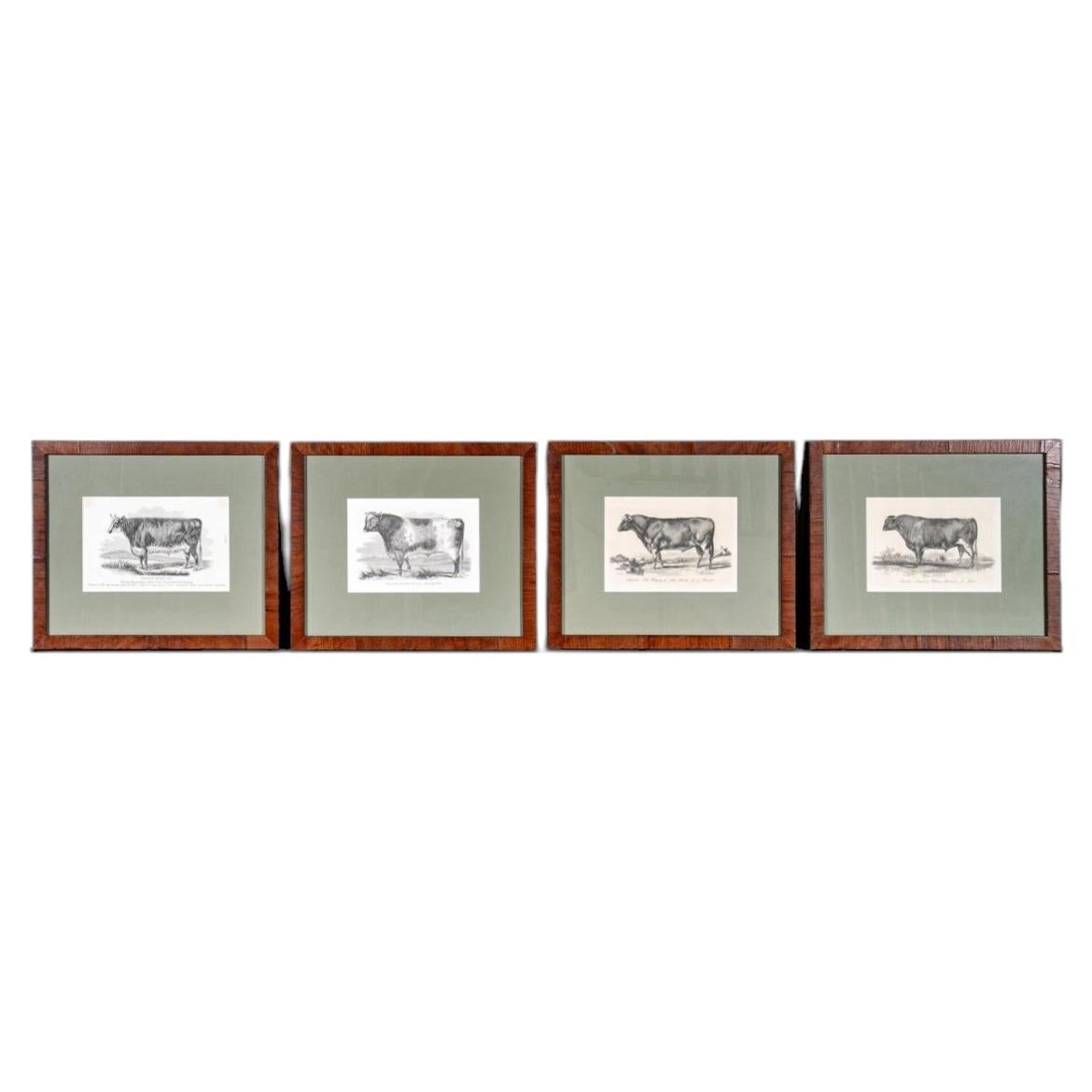
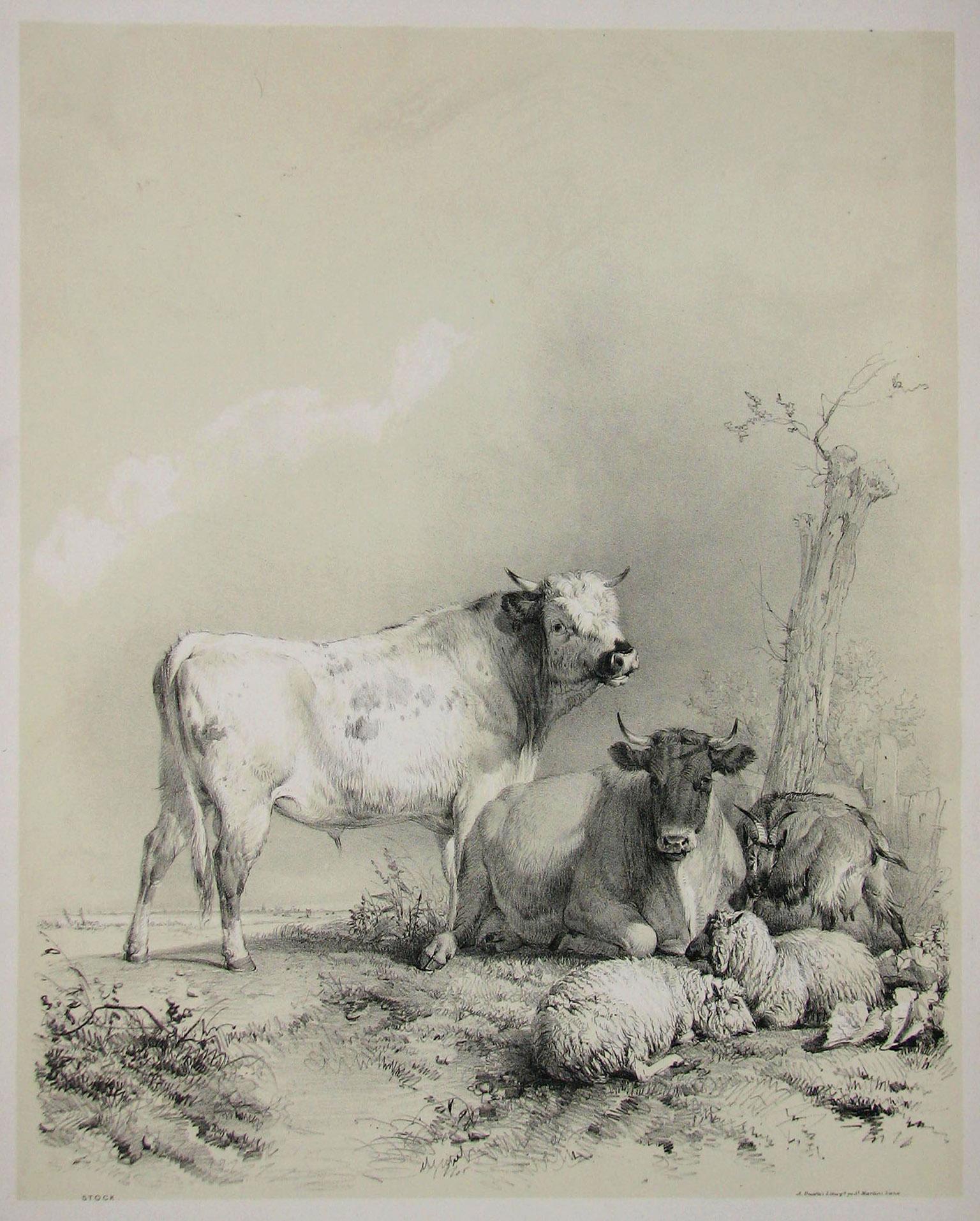
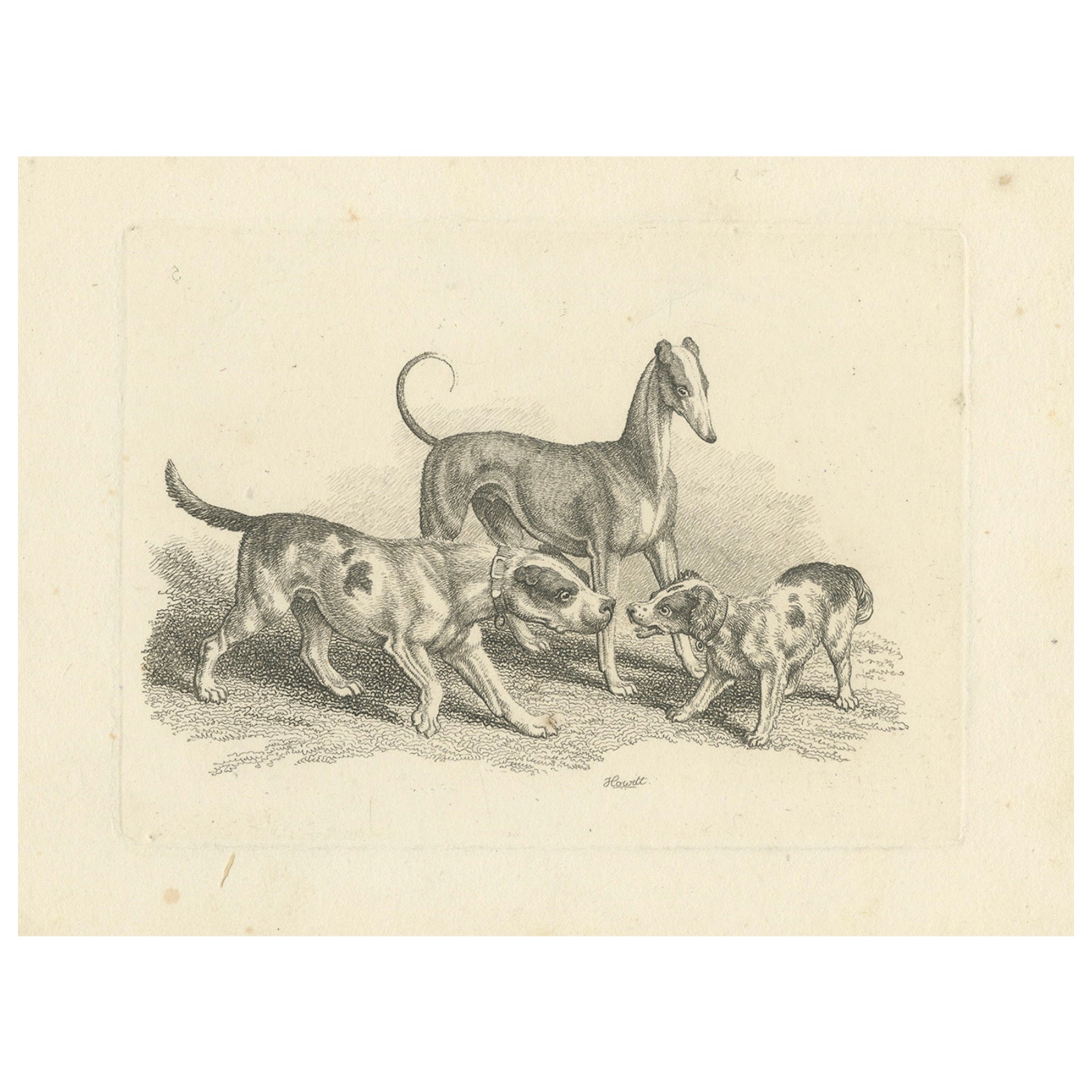
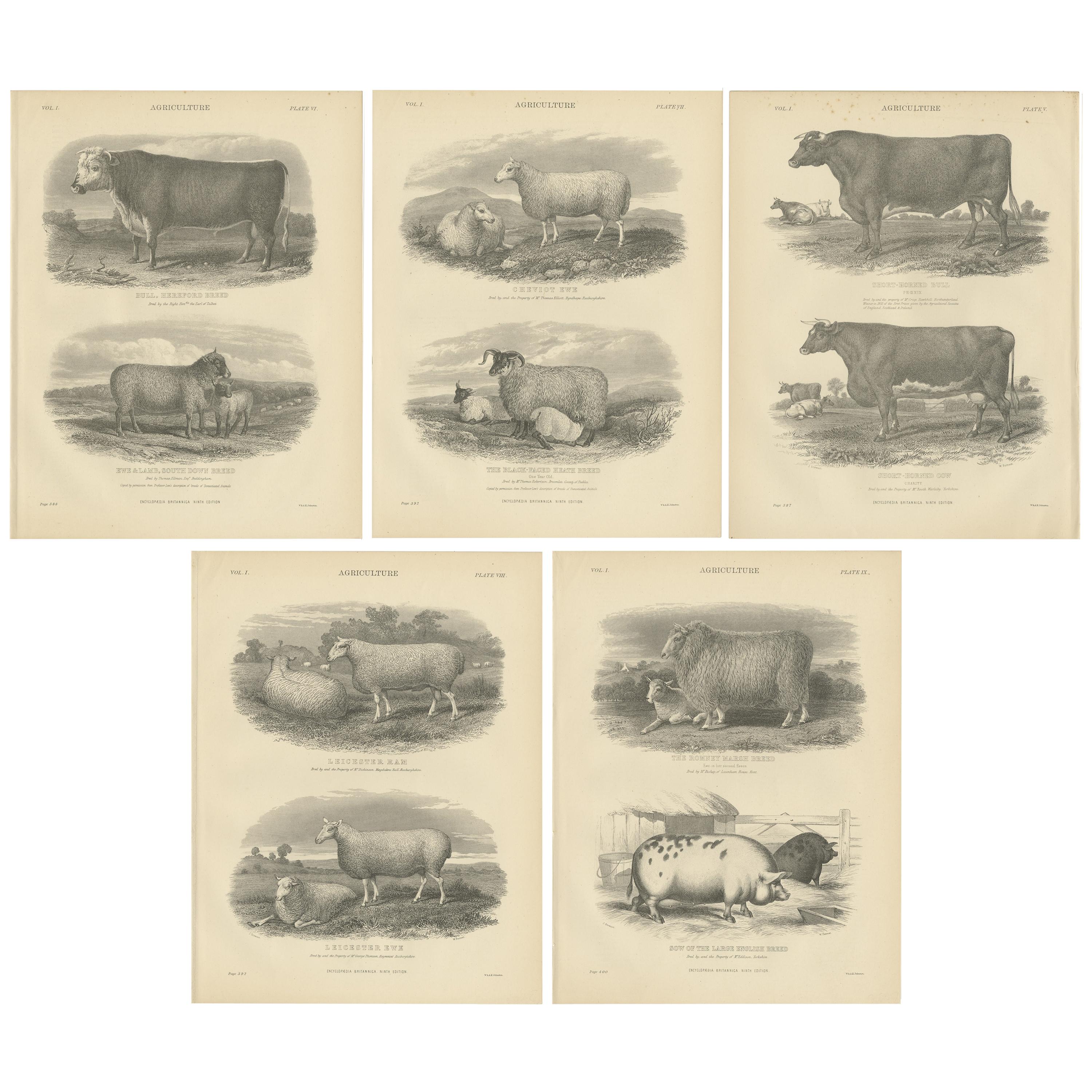
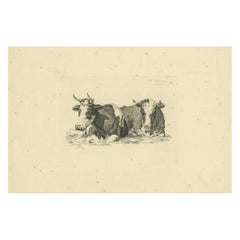
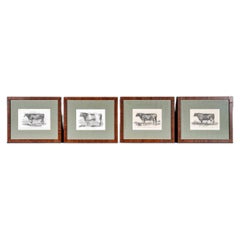
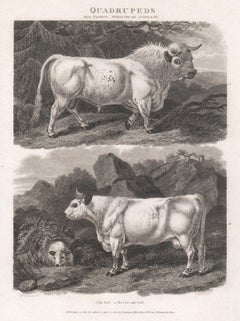
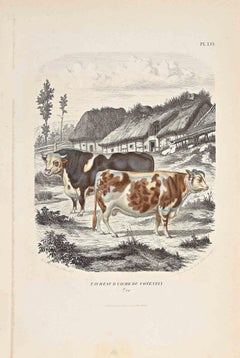
The print by Anthony Oberman features a detailed study of four cow heads. Here’s a thorough description of the etching:
Composition:
1. Cow Heads:
- The print showcases the heads of four cows, each meticulously detailed. The cows are closely grouped together, creating a tight composition that focuses on their facial features and expressions.
- The cow on the left has a calm expression with its head turned slightly to the right, while the cow next to it looks directly ahead with a similar serene demeanor.
- The third cow, positioned slightly behind the second, has a more prominent profile, its horns clearly visible.
- The fourth cow, on the right, has its head over a wooden fence, adding an element of depth and interaction with the environment.
Artistic Elements:
- Technique: Oberman's etching technique is evident in the fine lines and detailed textures of the cows’ fur and facial features. The play of light and shadow is skillfully rendered, giving the heads a three-dimensional appearance.
- Composition: The close-up view and the arrangement of the four cow heads create a balanced and engaging composition. The cows' heads form a cohesive group, drawing the viewer's eye across the print.
- Background: The background is kept simple and unobtrusive, ensuring that the focus remains on the cows. The presence of the wooden fence adds context to the rural setting.
Condition:
- The paper shows signs of aging, including slight yellowing and minor spots, typical for prints of this age.
- The edges of the paper are mostly intact, with some minor wear and small tears, particularly noticeable in the corners.
This technique allows for fine detail and intricate line work, which is evident in Oberman's detailed depiction of these sheep.
Anthony Oberman (1781-1845) was a Dutch artist known for his detailed paintings and etchings, primarily focusing on animals, landscapes, and still lifes. Born and baptized in Amsterdam, he studied at the Stadstekenacademie (drawing academy) and became a member of the Koninklijke Academie in Amsterdam in 1833.
Oberman's work is notable for its precision and attention to detail, particularly in his depictions of horses, which were popular among Amsterdam collectors. He also created portraits of horses for notable figures, such as the banker Adriaan van der Hoop, with some works now held in the Rijksmuseum in Amsterdam. In his later years, Oberman specialized more in painting flower and fruit pieces, reflecting a shift in his artistic focus.
His artworks have been sold at various auctions, with prices ranging from a few hundred to several thousand euros, depending on the piece. For example, his still life paintings have fetched significant sums at Sotheby's and Christie's, illustrating his continued recognition and appreciation in the art world.
Oberman's contributions to art, particularly his detailed studies of animals and rural scenes, have left a lasting impact, making his works valuable to collectors and art historians alike..