Antique Chinese Architecture & Landscape Engravings, Ferrario China Views 1815
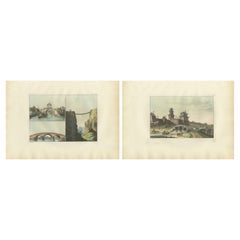
A refined pair of early nineteenth-century hand-coloured copperplate engravings from Giulio Ferrario’s celebrated publication Il Costume Antico e Moderno (Florence, 1815), presenting two distinct yet visually complementary views of Chinese architecture and landscape. These engravings reflect the European fascination with Chinese culture during the late Enlightenment and early Romantic periods, when travel accounts, missionary reports, and trade with Canton stimulated widespread interest in Chinese visual traditions.
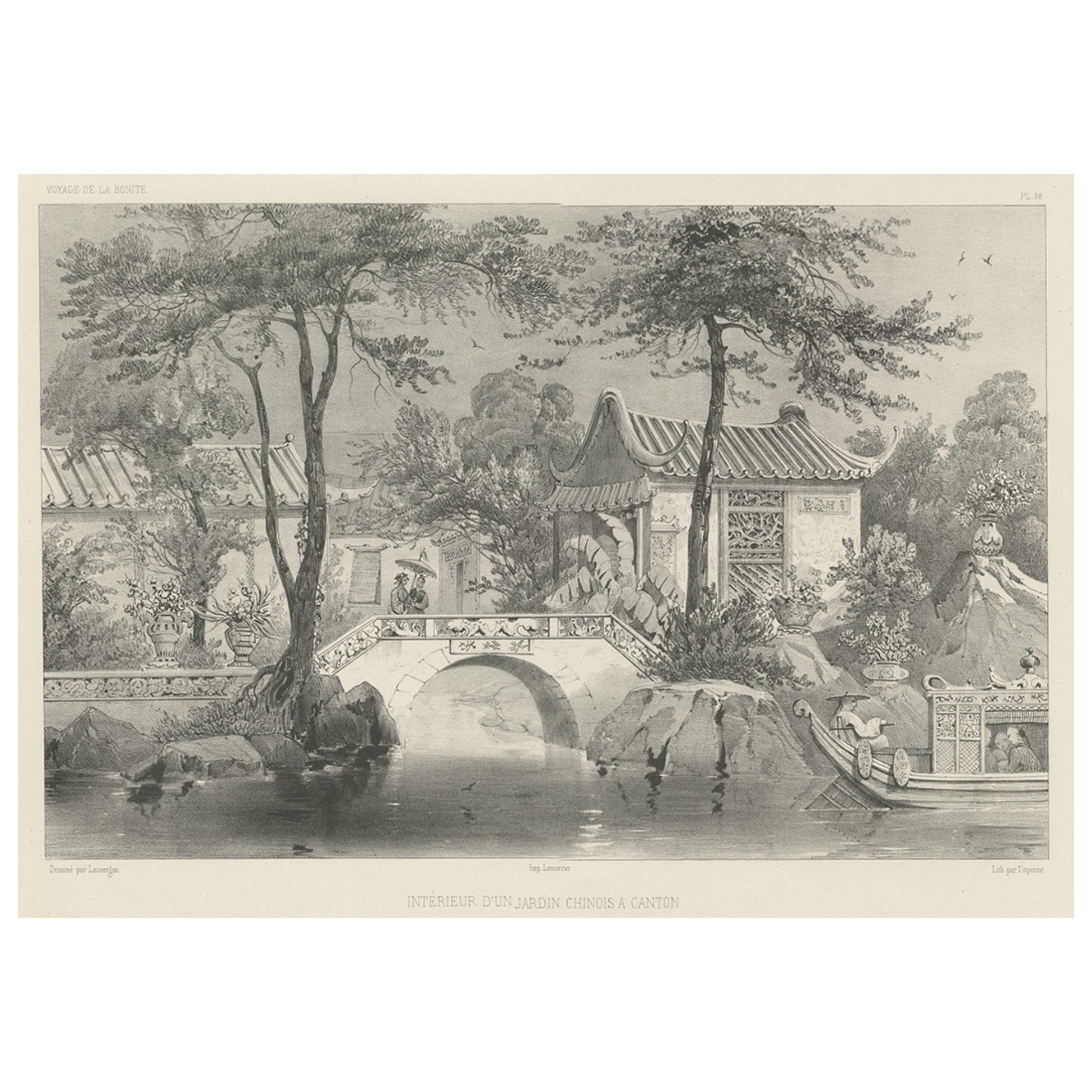
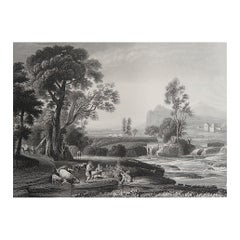
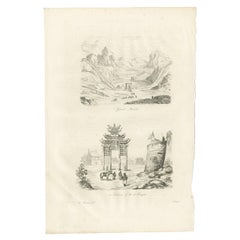
The first plate combines multiple architectural and landscape vignettes, including a monumental arched bridge with figures and vessels navigating beneath it, together with dramatic mountainous scenery connected by a suspended bridge. The composition offers a picturesque vision of China shaped through European imagination and documentary curiosity, merging scenic topography with architectural observation.
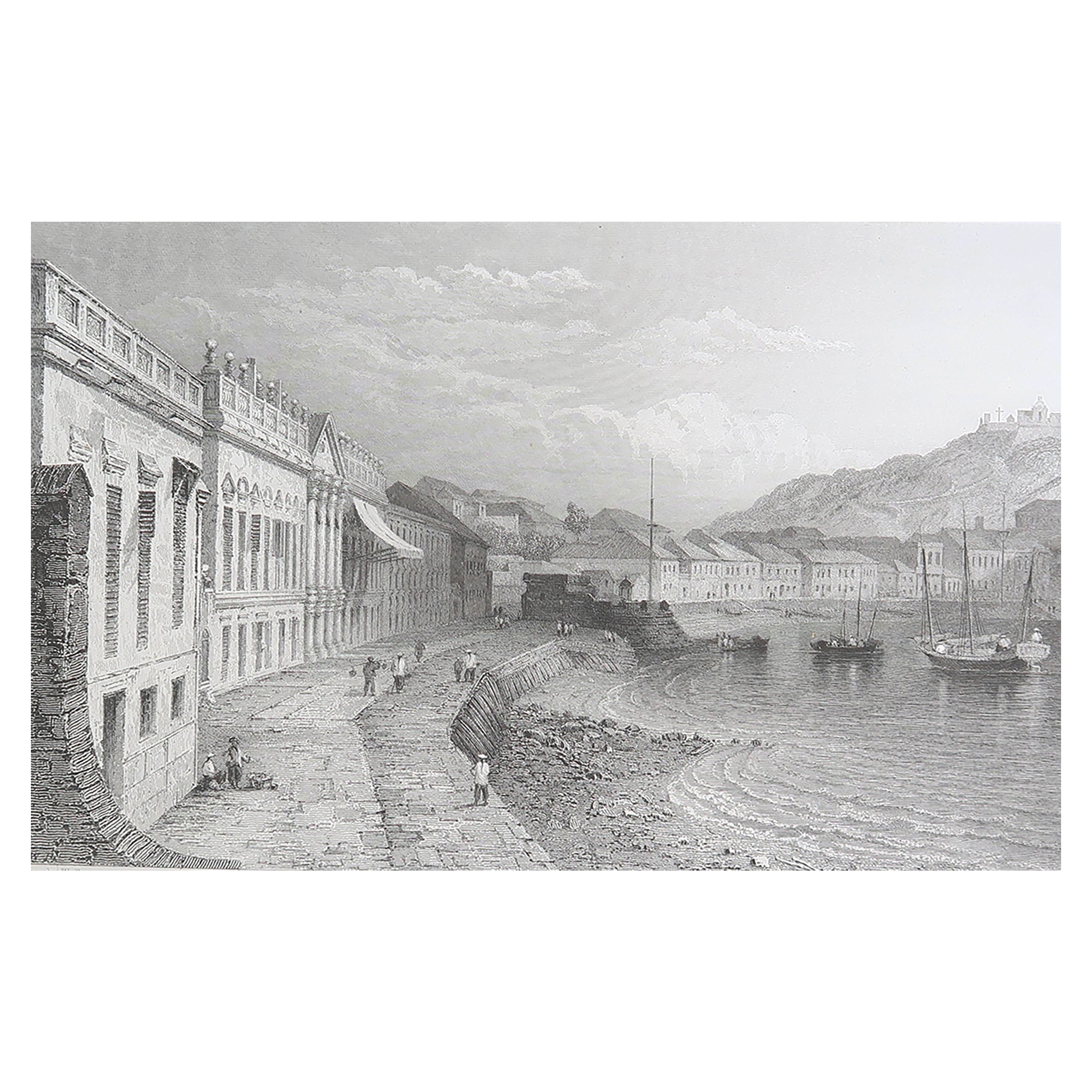
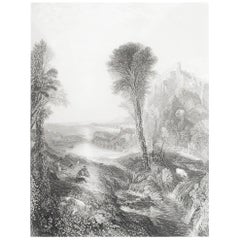
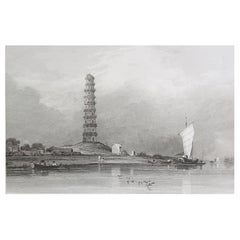
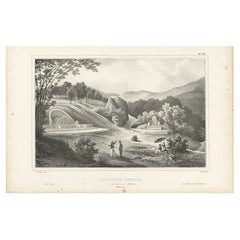
The companion engraving depicts a fortified riverside city with traditional pagoda towers, walls, and bridges spanning a canal or river, animated by figures, boats, and daily activity. The balanced composition and architectural clarity make it particularly appealing for collectors interested in early European interpretations of Chinese urban environments. This image is a hand-colored engraving depicting the Western Gate of Peking (Beijing), China, likely based on sketches made during the Macartney Embassy in 1793. Artist and Origin: The scene is based on drawings by William Alexander, a British artist who accompanied the embassy.
Historical Context: The embassy was the first British diplomatic mission to China, aiming to open trade relations.
Depicted Scene: It shows the city walls, a fortress structure, and a bridge over a waterway, illustrating daily life and military architecture of the time.
Both prints are engraved in a precise neoclassical line typical of early nineteenth-century Italian printmaking and enhanced with delicate contemporary hand-colouring. The palette remains soft and refined, allowing the architectural forms and spatial perspective to remain central.
Together they create a coherent decorative pairing: one emphasizing landscape and infrastructure, the other focusing on urban fortification and architectural identity.
Sets such as this appeal strongly to interior designers because they offer symmetry and narrative continuity when displayed together. Their horizontal format works particularly well in luxury interiors — especially in gallery-style arrangements or above consoles — where historical imagery adds cultural depth and refined visual texture. In a Jakarta/Kempinski-style luxury interior, these prints benefit from dark walnut frames with generous ivory mats, emphasizing the delicate colouring and historic character while maintaining a contemporary presentation.
Collectors value Ferrario plates for their combination of ethnographic curiosity, decorative quality, and early nineteenth-century European perspectives on Asia. As part of one of the most ambitious illustrated surveys of world cultures produced during the period, these engravings represent an intersection of art, travel history, and cross-cultural fascination.
Condition: Good antique condition consistent with age. Light age toning and minor handling marks to margins; plate impressions visible. Colours remain fresh and attractive.
Framing tips: Dark walnut or ebonized frame with wide warm ivory mat for museum presentation. The two prints display best hung side-by-side with equal spacing to create a balanced panoramic effect suitable for luxury interiors.
Technique: Hand-coloured copperplate engraving
Maker: Giulio Ferrario publication, Italy, 1815
Keywords:
Chinese architecture, antique China print...
Category
Antique Early 19th Century Italian Prints