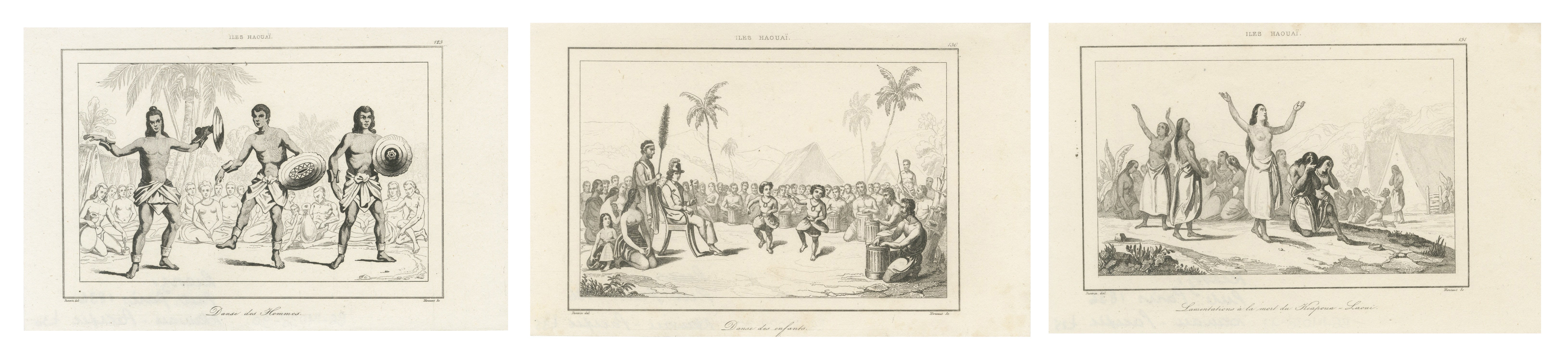
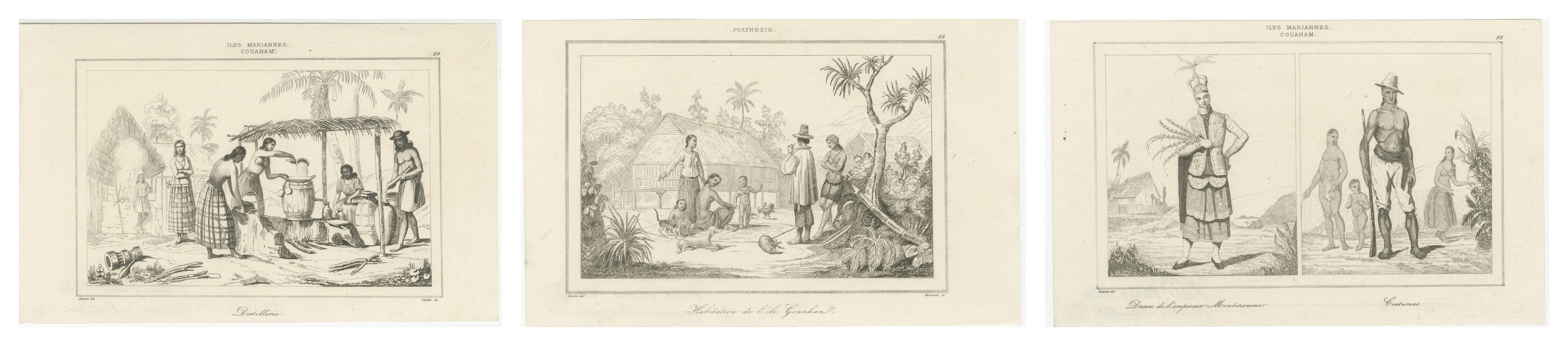
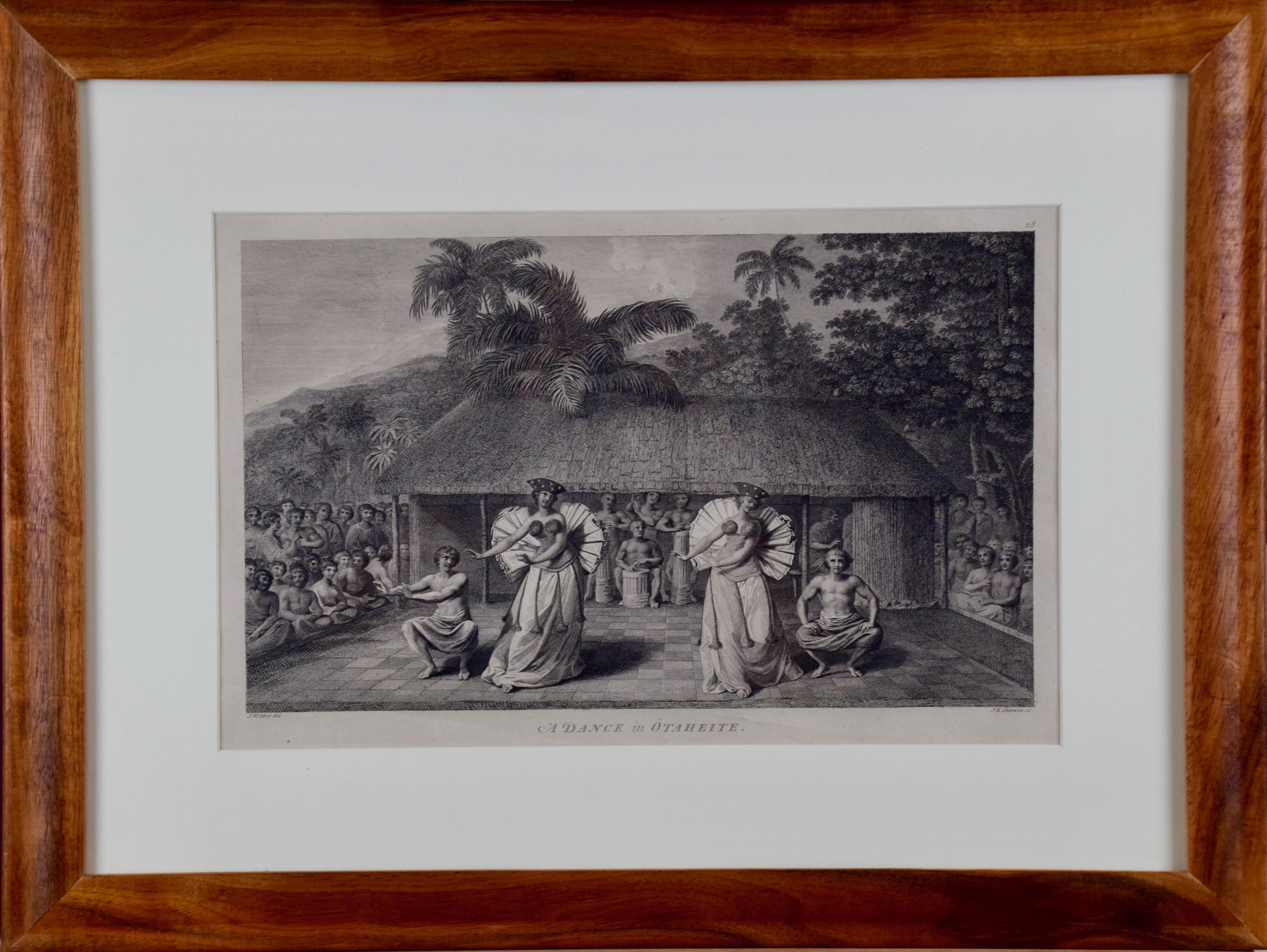
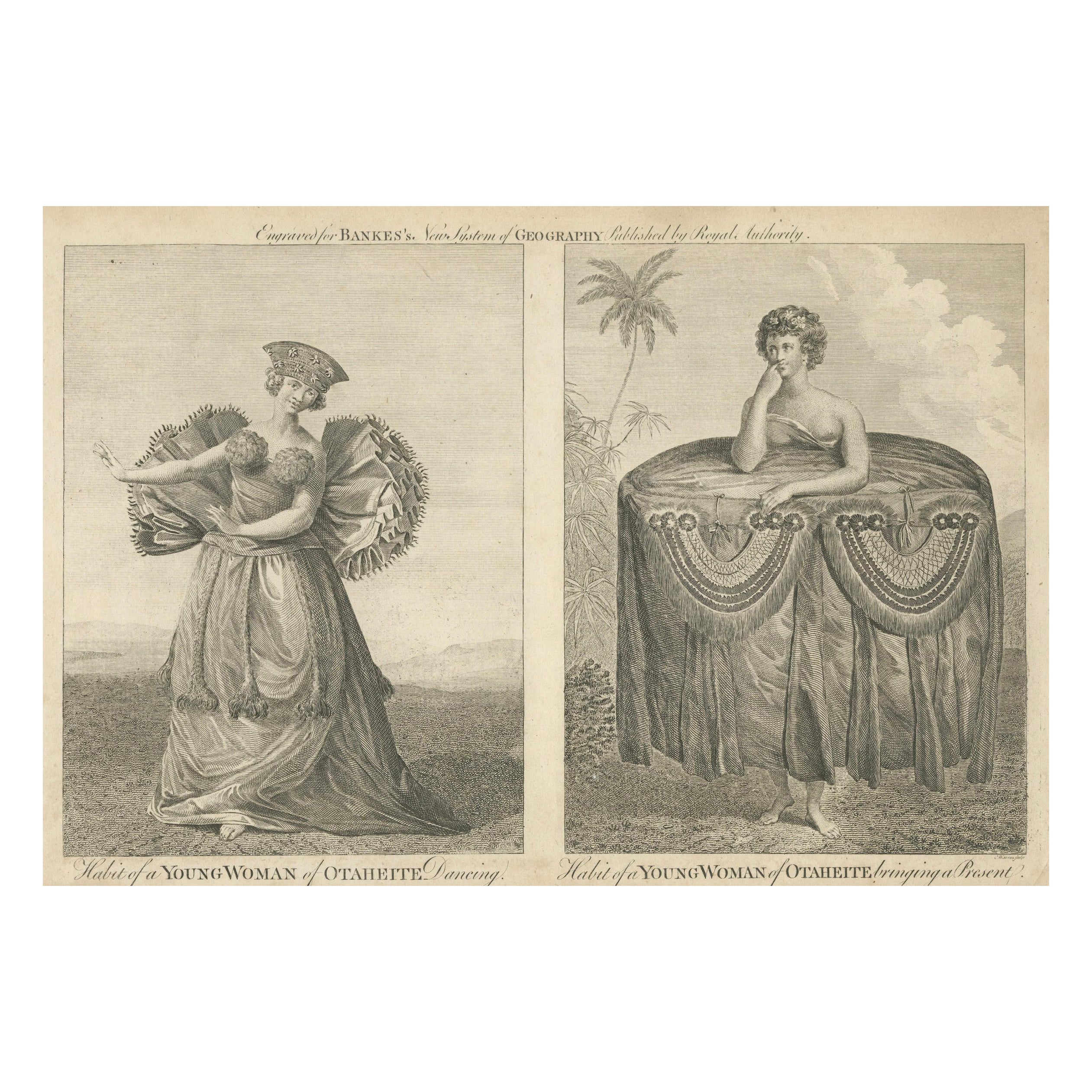
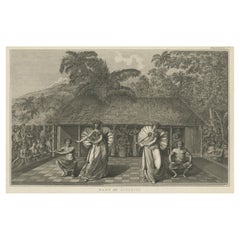
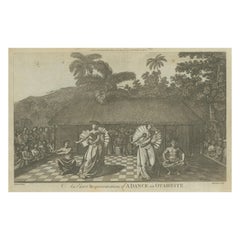
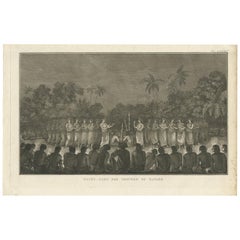
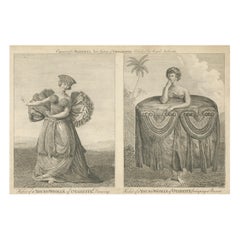
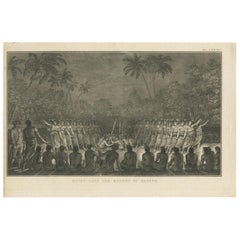
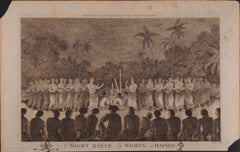
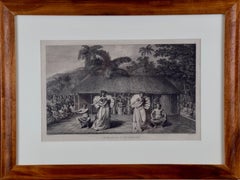
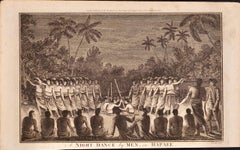
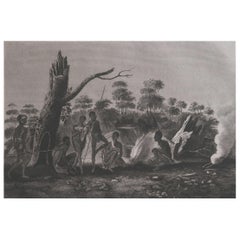
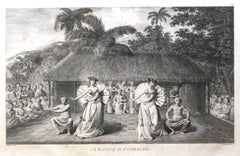
An antique engraving depicting a dance scene titled "An Exact Representation of a Dance in Otaheite," Otaheite being an archaic name for Tahiti in French Polynesia. This engraving would have been created as a part of a series to document the culture and life of the Tahitian people, likely observed by European explorers during one of the many voyages to the South Pacific in the 18th century.
In the foreground, there are central figures engaged in a dance, wearing traditional Polynesian attire, which includes wraps around their waists and adornments that seem to represent status or a part of the dance costume. They are holding what appear to be fans, which may be part of the traditional dance. The dancers' poses suggest movement and a performance aspect to the scene.
Behind the dancers, we can see a group of musicians providing the accompaniment, playing drums, which indicates the importance of music and rhythm in the dance. To the right, there is an audience of seated individuals, likely members of the community, watching the performance.
The background of the scene includes thatched huts and a lush landscape with palm trees, depicting a typical village setting in Tahiti. The checkerboard pattern on the ground where the dance takes place is notable, as it adds a sense of structure to the scene.
This image would have been intended for a European audience unfamiliar with Tahitian culture and would have served as a visual record of the encounters between European explorers and the peoples of the Pacific Islands.
The engraving you've uploaded, titled "An Exact Representation of a Dance in Otaheite," is likely from a work documenting the voyages of Captain James Cook, given the style and subject matter. Captain Cook made three voyages to the Pacific Ocean during the 18th century, and his encounters with the peoples of the Pacific, including those of Tahiti (Otaheite), were extensively recorded and published.
The engravings from Cook's voyages were made by artists who accompanied him, such as John Webber on his third voyage, or were based on sketches made by other crew members. These images were then published in the official accounts of the voyages. The most notable of these accounts is "A Voyage to the Pacific Ocean" undertaken during Cook's third voyage from 1776 to 1780, which was published in the years following his death in 1779.
Another possible source for this engraving could be from the accounts of Joseph Banks. Banks was a naturalist who joined Cook on his first voyage (1768-1771) aboard the HMS Endeavour and was responsible for extensive collections and descriptions of Pacific cultures. His collections and later works also included illustrations and engravings of the scenes and peoples encountered.
Given that the engraving is labeled as "London Published as the Act directs by Alexr. Hogg at the Kings Arms...
Category
Antique 1780s Prints