Title: Seljuk Geometric Door Designs of Konya, Islamic Architecture, Raymond 1924
Description:
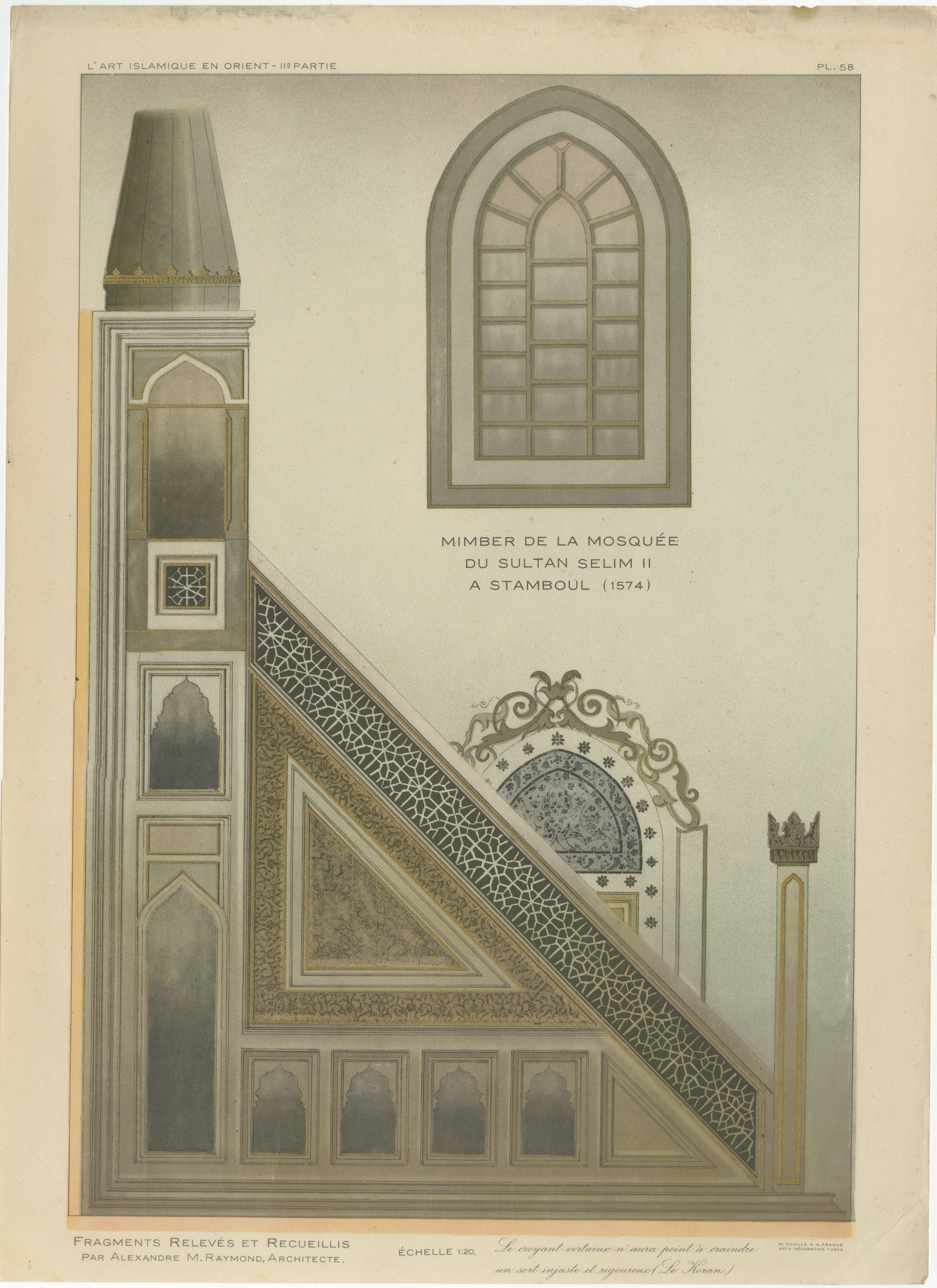
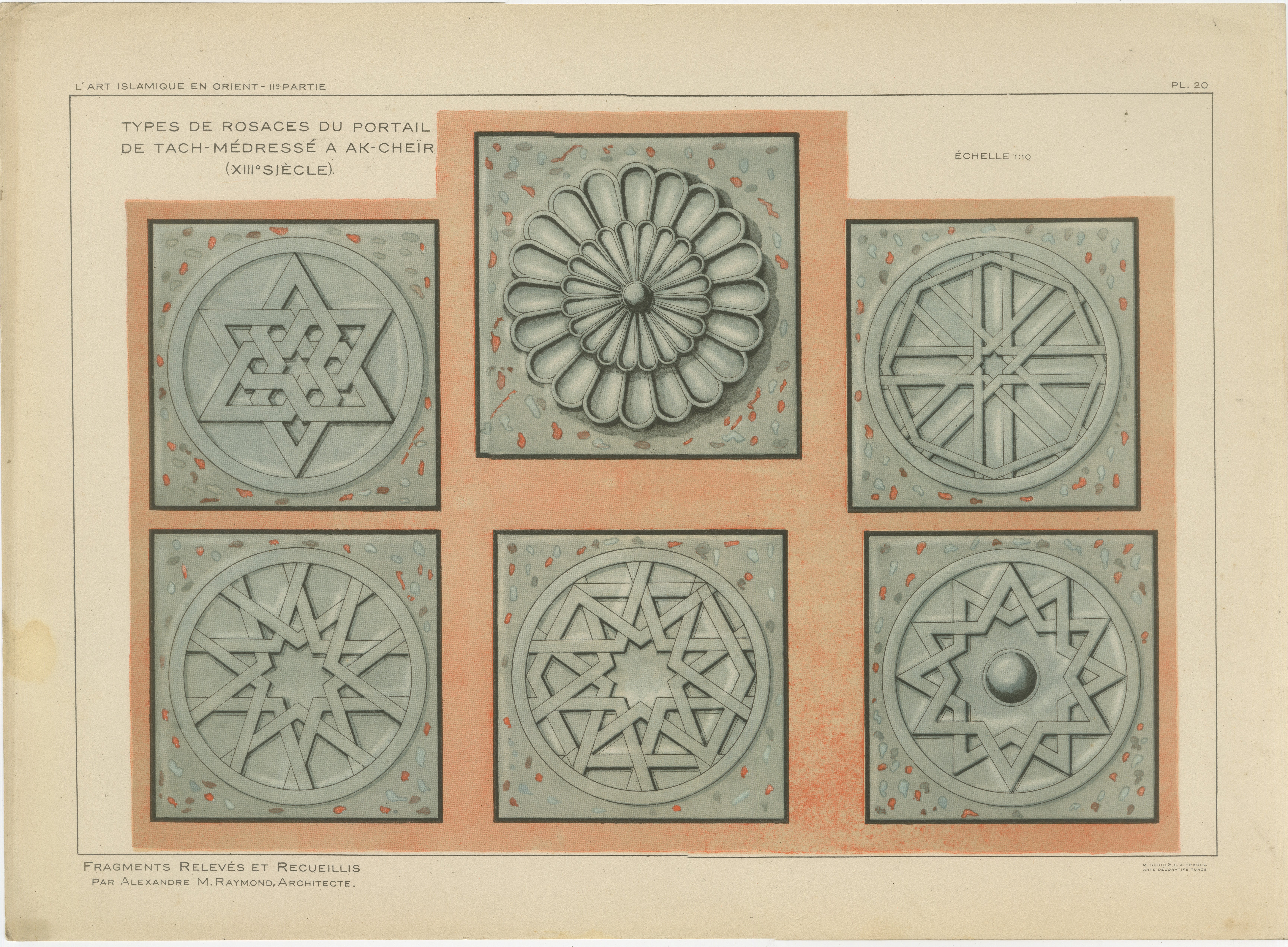
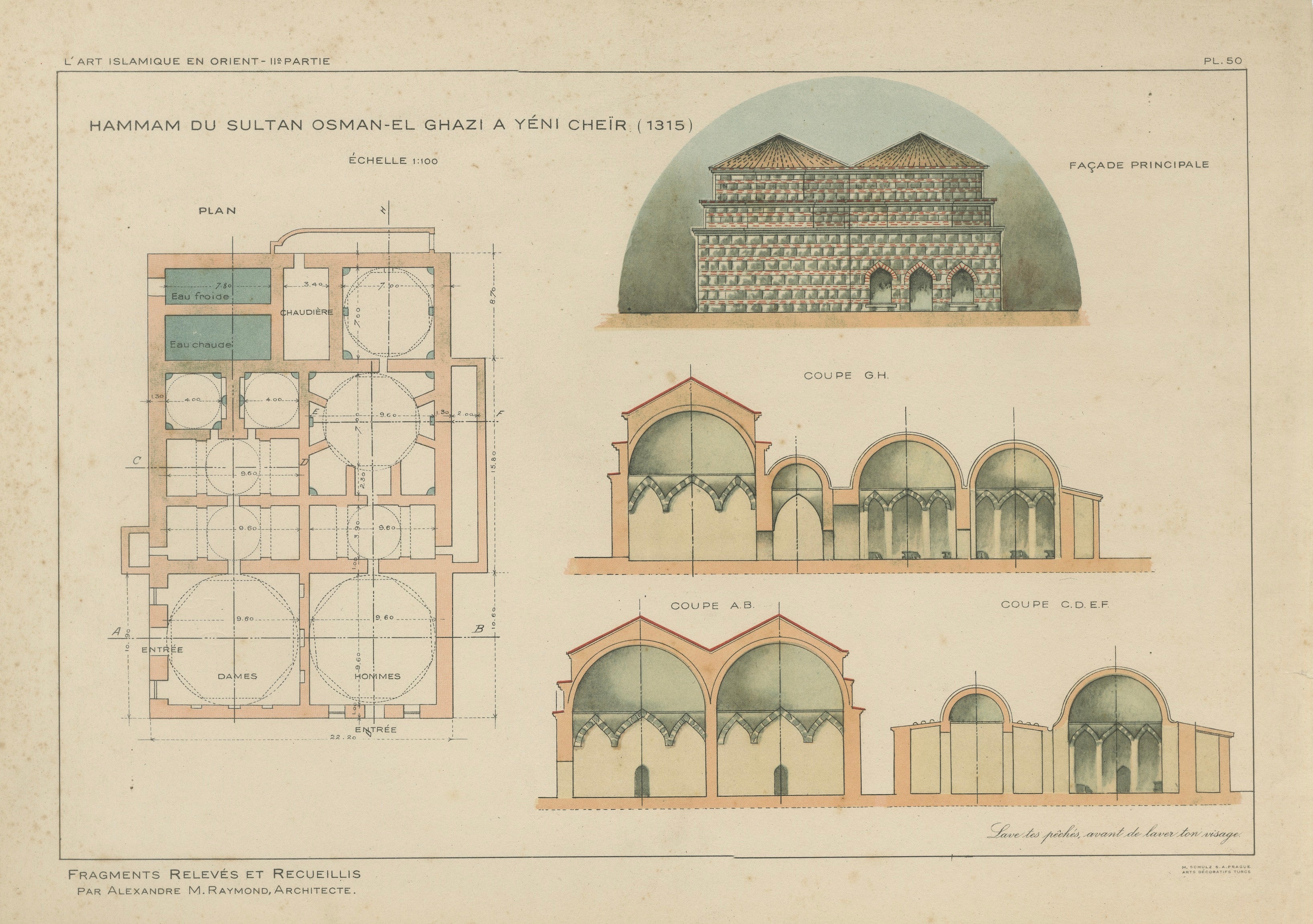
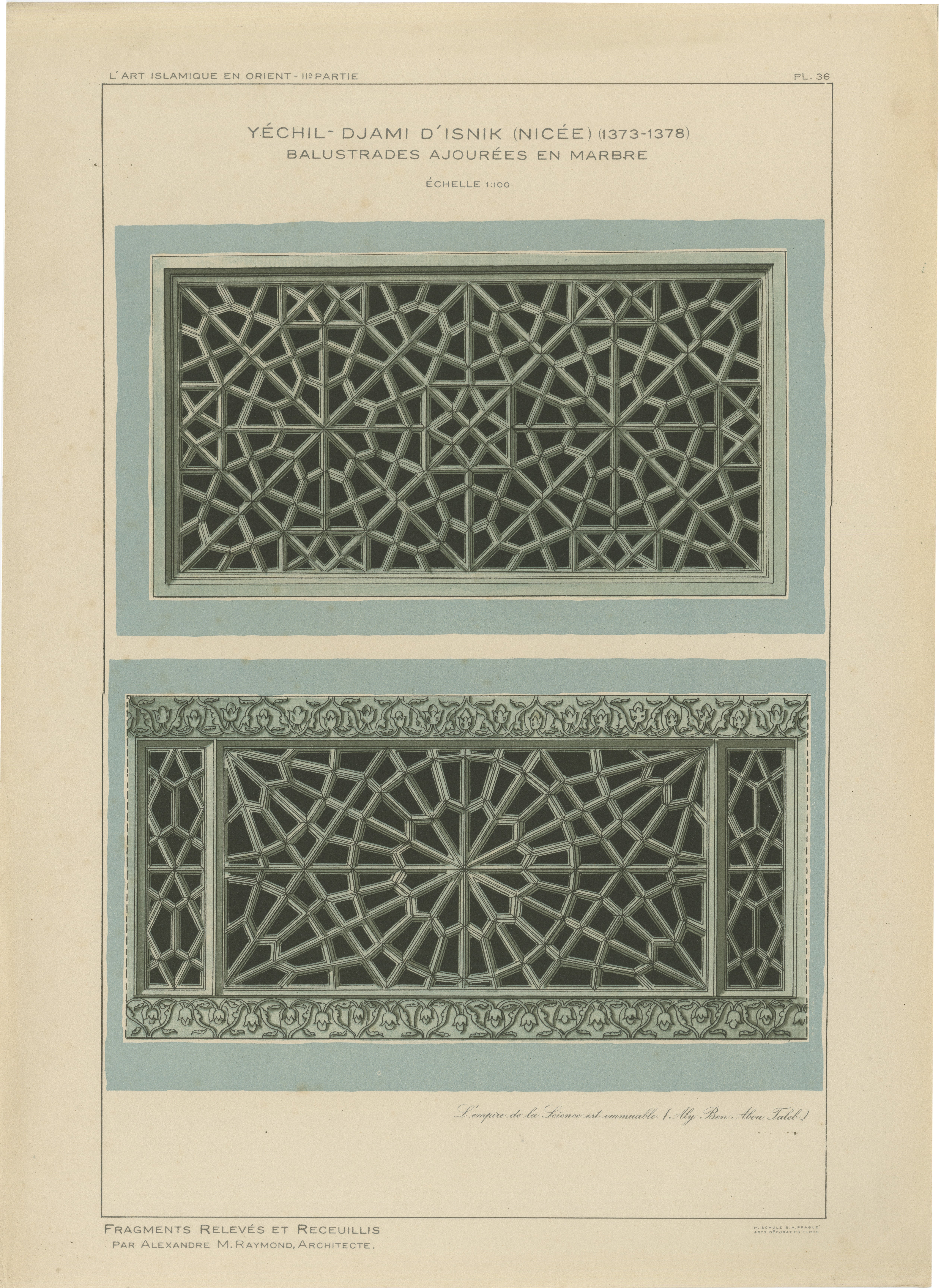
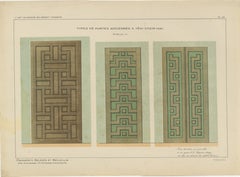
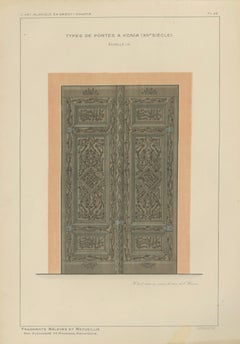
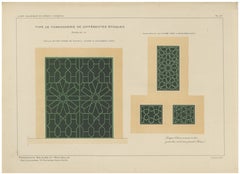
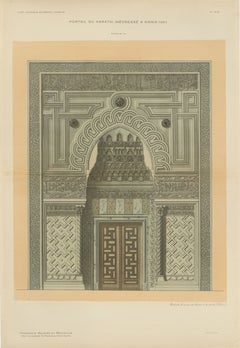
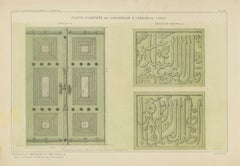
An original color lithographic architectural plate from Alexandre M. Raymond's celebrated 1924 publication L'Art Islamique en Orient – IIe Partie: Fragments d'Architecture Religieuse et Civile. This elegant sheet illustrates two monumental door designs recorded in Konya (Konia), the historic Seljuk capital of Anatolia, and dates the original examples to the thirteenth century.
Rendered at a scale of 1:10, the composition presents a remarkable study of medieval Islamic woodworking and geometric ornament. The left-hand pair of doors features elaborate interlaced star patterns composed of overlapping polygons and hexagrams, while the right-hand example employs a disciplined honeycomb arrangement based on repeating hexagonal forms. Together they demonstrate the mathematical precision and visual harmony that characterize Seljuk decorative traditions.
Konya served as the capital of the Sultanate of Rum and became one of the foremost artistic centers of the medieval Islamic world. The city's mosques, madrasas, caravanserais, and mausoleums fostered a sophisticated architectural language in which geometry, proportion, and craftsmanship conveyed both beauty and spiritual order. These door designs exemplify that tradition, transforming functional architectural elements into works of abstract art.
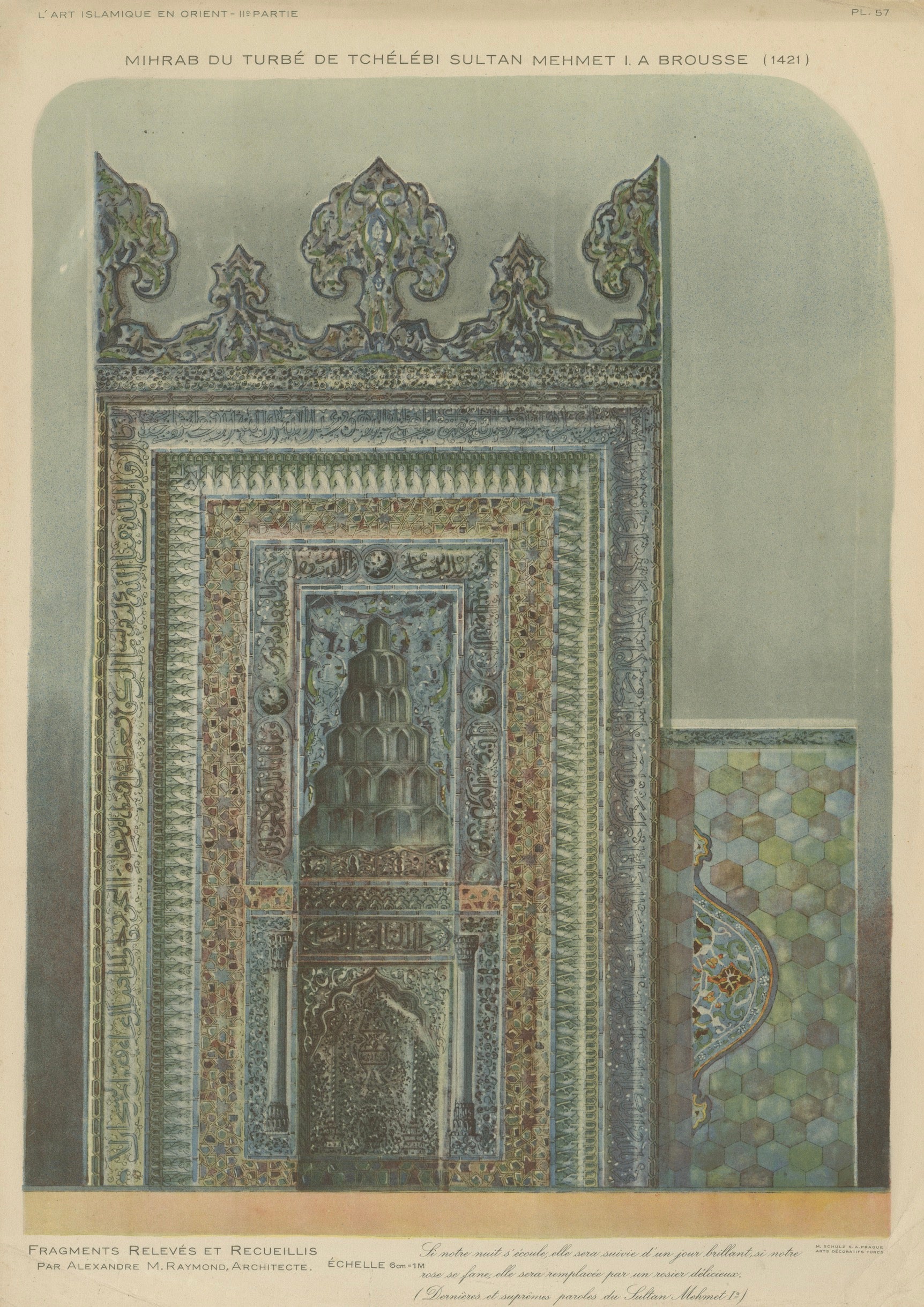
French architect and Orientalist Alexandre Marc Raymond (1872–1941), born in Constantinople, devoted decades to documenting the architectural heritage of Anatolia and the former Ottoman lands. His monumental folios, printed in Prague by M. Schulz and issued through the Librairie Raymond in Pera, remain among the most important visual records of Islamic architecture produced during the early twentieth century. The second volume alone contains approximately sixty color plates depicting portals, windows, ironwork, doors, fountains, and decorative details from monuments throughout Turkey.
The restrained palette of sage green, warm terracotta, and cream lends the sheet a refined decorative quality that complements both contemporary and traditional interiors. Beyond its scholarly significance, the print stands as a striking example of early twentieth-century architectural illustration and the enduring fascination with Islamic geometric design.
This is an original antique print from 1924 and not a modern reproduction. It is sold unframed.
Condition:
Good antique condition consistent with age. General age toning, scattered foxing, and minor spotting in the margins, with light handling wear at the edges. The image remains fresh, clean, and highly decorative.
Framing Recommendations:
Sold unframed. This architectural study displays beautifully in a dark walnut, ebonized, or bronze-toned frame with a generous ivory museum mat. The subtle colors and geometric forms suit both minimalist contemporary interiors and collections devoted to Islamic, Middle Eastern, or architectural art.
Technique: Color lithograph
Maker: Alexandre M. Raymond, France/Constantinople, 1924
Keywords:
Alexandre Raymond, L Art Islamique en Orient, Konya doors, Konia architecture, Seljuk doors, Islamic architecture, Islamic ornament, geometric design, Anatolian art, Turkish architecture, medieval Turkey, Sultanate of Rum, Islamic woodwork, architectural lithograph, antique Islamic print, geometric patterns, Islamic geometry, star motifs, hexagonal patterns, orientalism, architectural study, Konya Seljuk art, Islamic decorative arts, original antique print, color lithograph, architectural history, Middle Eastern art, Ottoman studies, French architect, M Schulz Prague, 1924 print, unframed antique print, museum quality print, Islamic interior design, Seljuk craftsmanship, sacred architecture, decorative geometry, historical architecture.