Title: "Civilian Costume at the End of the 15th Century"
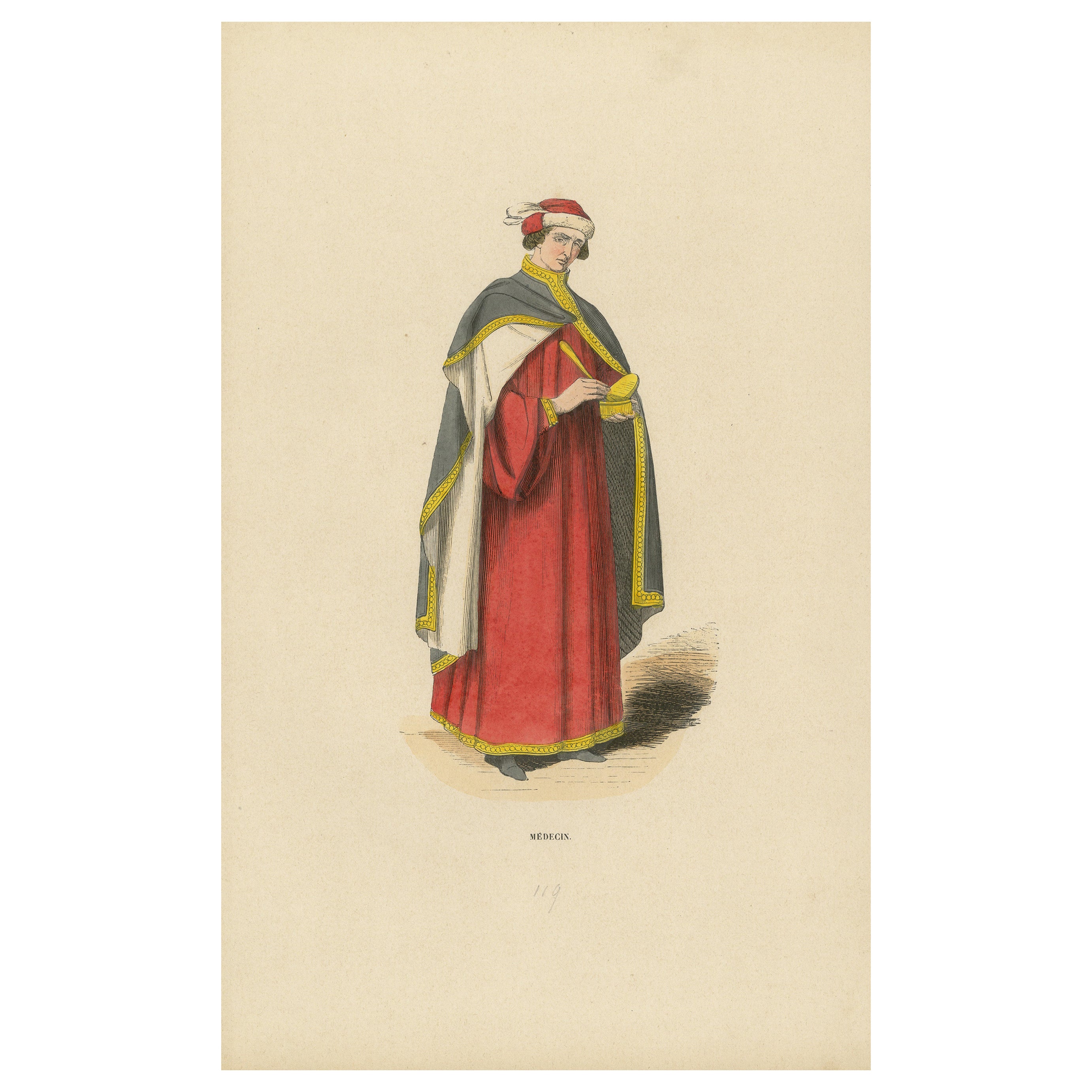
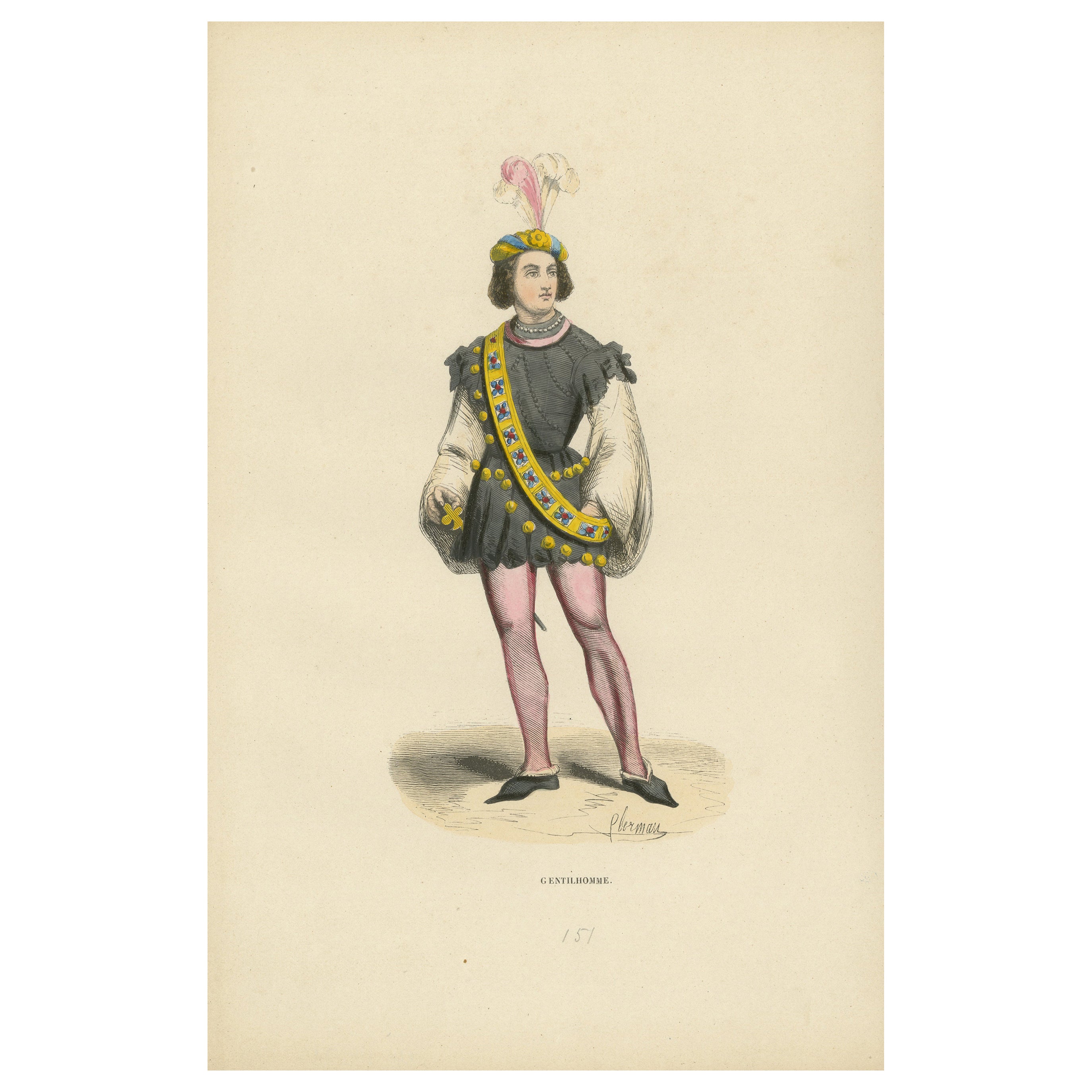
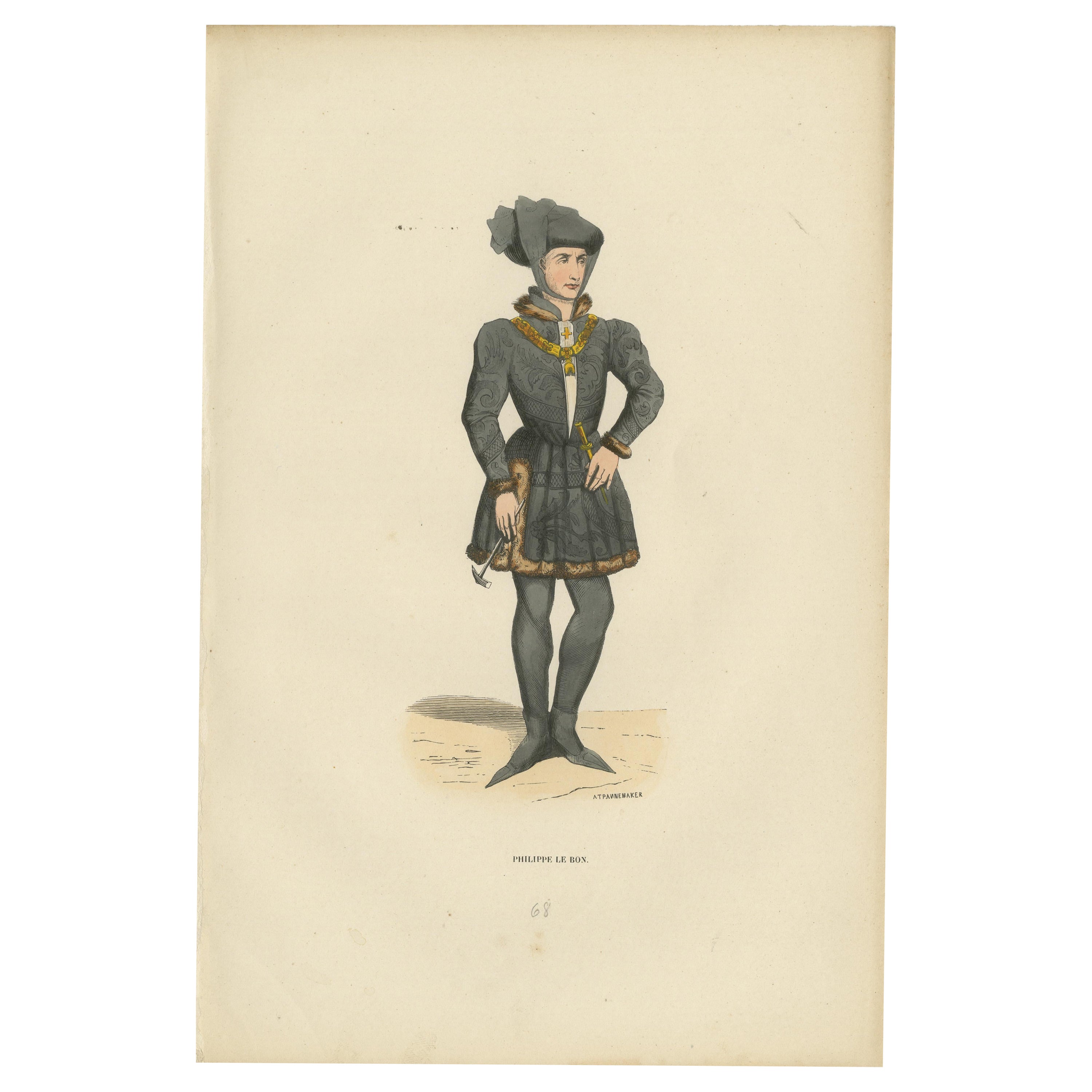
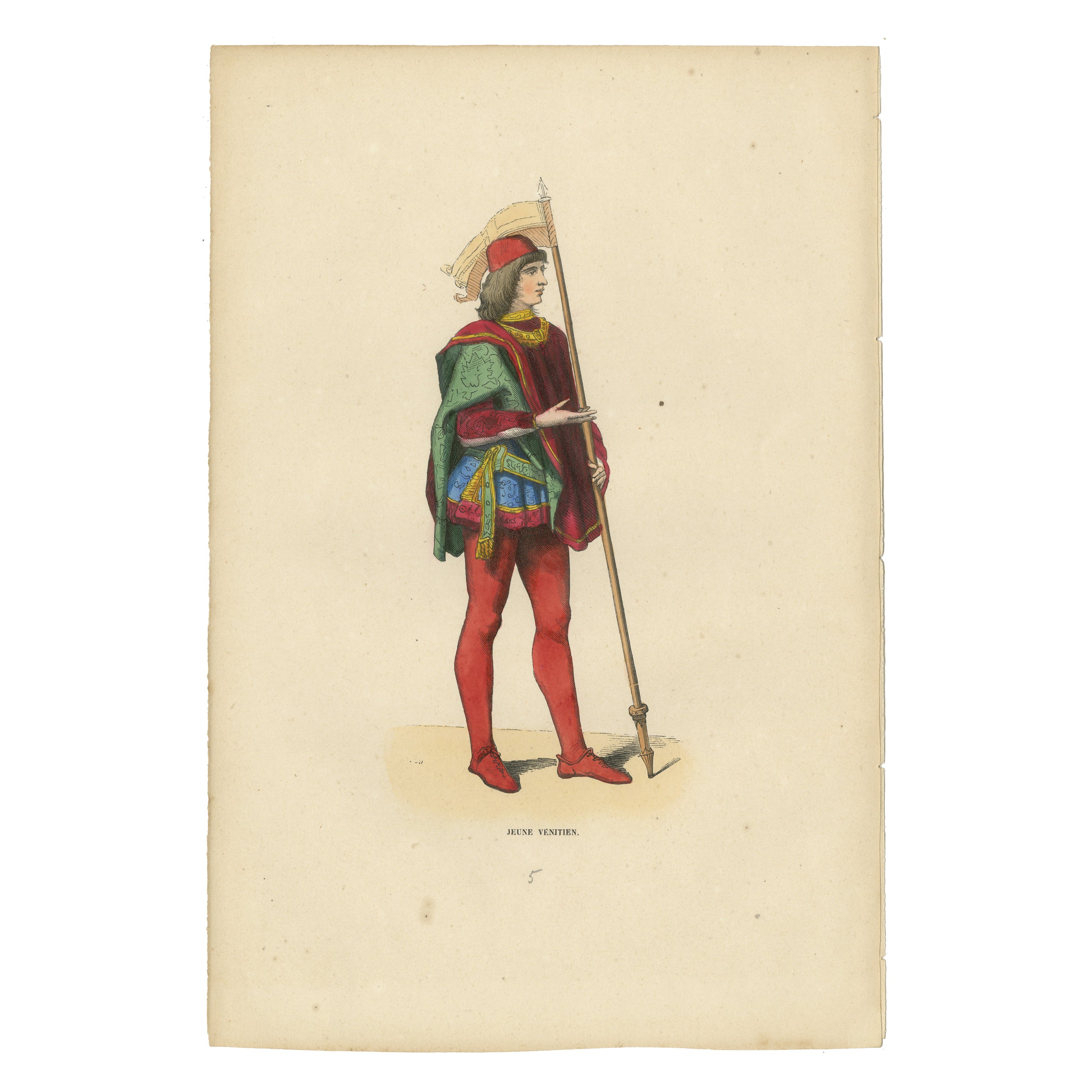
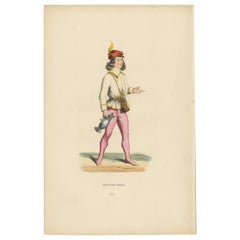
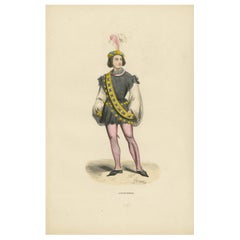
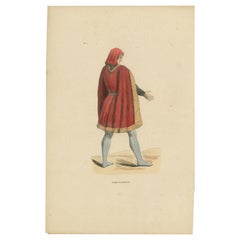
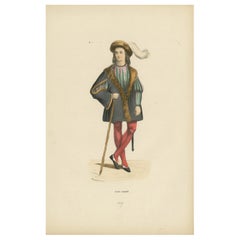
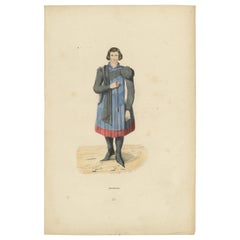
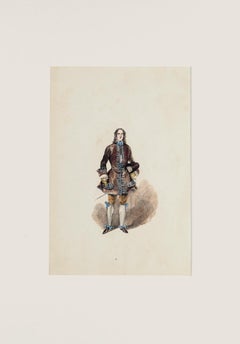
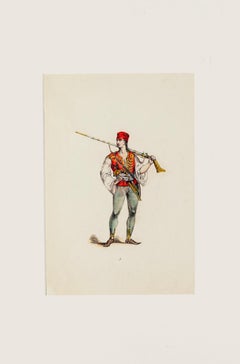
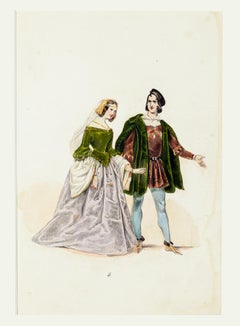
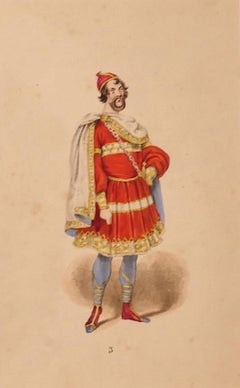
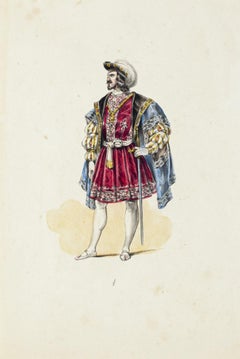
Description: The image is a print from a series the "Costume du Moyen Age" dated 1847, and titled "Costume Civil de la Fin du XVe Siècle," which translates to "Civilian Costume at the End of the 15th Century." It showcases a man of status, possibly a noble or a wealthy burgher, standing in a poised and confident manner.
He is attired in an ornate cloak covered in a complex pattern of fleur-de-lis and cross motifs, indicative of wealth and possibly a connection to royalty or high social rank. The cloak is open at the front to reveal a blue doublet with a belt, and he wears red hose—a fashion staple of the late medieval period. His footwear is also red, which stands out against the more subdued tones of his outfit.
On his head, he sports a fur-trimmed hat, adding to the luxuriousness of his attire. In one hand, he holds a long staff, which serves as both a walking aid and a symbol of authority. His other hand rests on the hilt of a dagger, further indicating his readiness to defend his status or engage in the political or civic matters of his time.
The artist has skillfully rendered the textiles and accessories with great care, emphasizing the fashion and social cues of the late 15th-century European society.
The colors have a nice glow over them. Historically, egg whites, known as glair, and sometimes egg yolk were indeed used in illumination and painting, particularly in manuscripts, to give colors a brighter appearance and to add a sheen or gloss to the work. This technique was quite common during the Middle Ages...
Category
Antique 1840s Prints