West Lyn Waterfall at Lynmouth Devon, Romantic English Landscape Lithograph
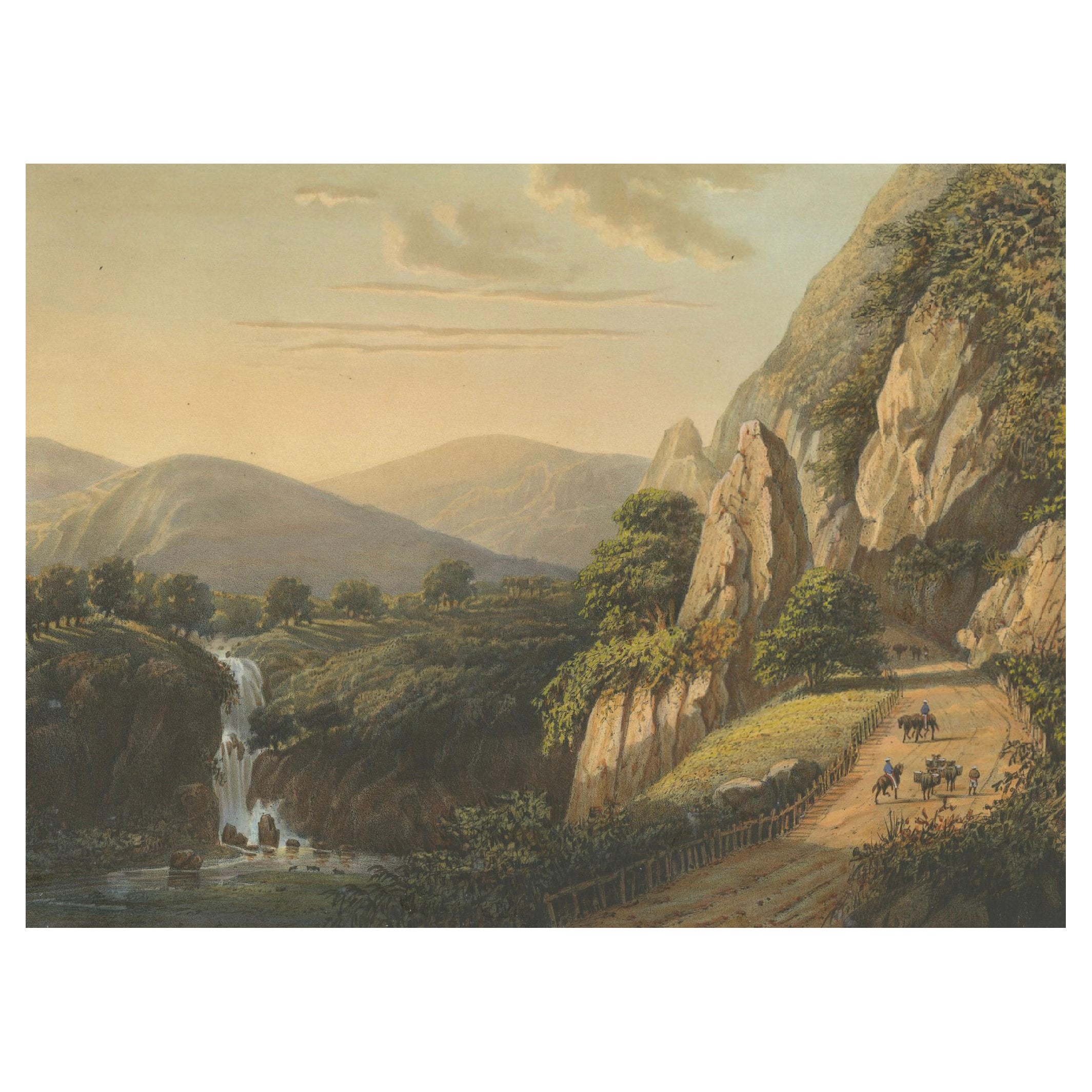
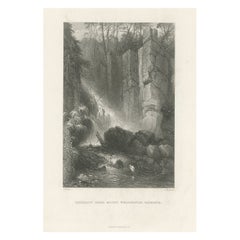
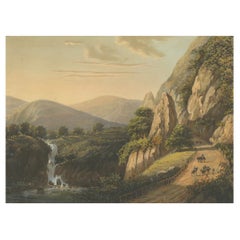
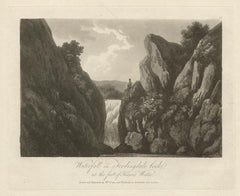
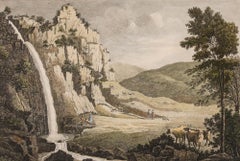
This atmospheric early nineteenth-century lithograph titled “The West Lyn, Lynmouth – Devon” depicts the dramatic waterfall and rocky gorge of the West Lyn River near the coastal village of Lynmouth in North Devon, England. The scene captures the rugged natural beauty of the area, where water descends through a narrow rocky valley surrounded by steep cliffs, dense vegetation, and wild landscape typical of the Exmoor region.
The print is after a drawing by the English landscape artist Thomas Hewitt Williams, who was known for his picturesque views of Devon and the surrounding countryside. His works often focused on dramatic natural scenery and were part of a broader Romantic fascination with untamed landscapes during the early nineteenth century. Williams’ compositions emphasize strong contrasts between rock formations, flowing water, and vegetation, creating a sense of depth and natural drama.
The lithograph was drawn, printed, and published by George Rowe of Cheltenham, whose address at 9 Clarence Street appears on the sheet. Rowe was an important regional lithographer and publisher active during the early nineteenth century. He produced numerous scenic views of Britain, especially landscapes of the West Country, which were popular among travelers exploring the picturesque scenery of Devon and Somerset.
During this period the Lynmouth and Lynton area became widely admired for its spectacular valleys and coastal scenery. The rivers East Lyn and West Lyn carve deep wooded gorges through the hills before reaching the Bristol Channel, creating dramatic waterfalls and rocky ravines that attracted artists, tourists, and writers throughout the nineteenth century. Such views were frequently reproduced as prints that visitors could purchase as souvenirs of their travels.
The composition focuses on the waterfall tumbling through the rocky ravine, framed by steep cliffs and trees that cling to the edges of the gorge. The artist carefully renders the textures of the rocks and foliage using fine tonal shading characteristic of early lithographic landscape prints. The result is a powerful yet balanced depiction of one of Devon’s most famous natural landmarks.
Today this print stands as an appealing example of early British topographical lithography and reflects the Romantic era’s admiration for dramatic natural scenery.
This original antique print is offered unframed, allowing the buyer full freedom of framing choice.
Condition report:
Good condition with light age toning and scattered foxing mainly visible in the margins, typical for prints of this age. The image remains clear with strong tonal contrast.
Framing tips:
This print frames beautifully in a dark walnut or ebonized frame with a generous ivory or warm cream mat. A classic museum-style presentation enhances the dramatic landscape and highlights the delicate tonal gradations of the lithograph.
Technique: Lithograph
Maker: George Rowe, Cheltenham, England, circa 1821
Keywords:
antique lithograph, West Lyn Lynmouth Devon print, Devon waterfall landscape, Thomas Hewitt Williams landscape, George Rowe Cheltenham print, English romantic landscape, Lynmouth waterfall print, Devon scenic view, early British lithograph, Exmoor landscape artwork, English countryside waterfall, nineteenth century topographical print, Devonshire scenery print, collectible antique landscape print