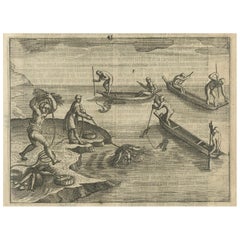
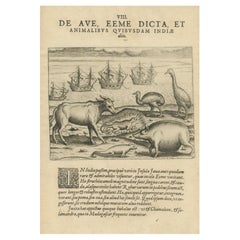
Original Antique engraving by Theodore De Bry from 'Pars Quarta Indiae Orientalis...,' 1601, with descriptive latin text below the image.
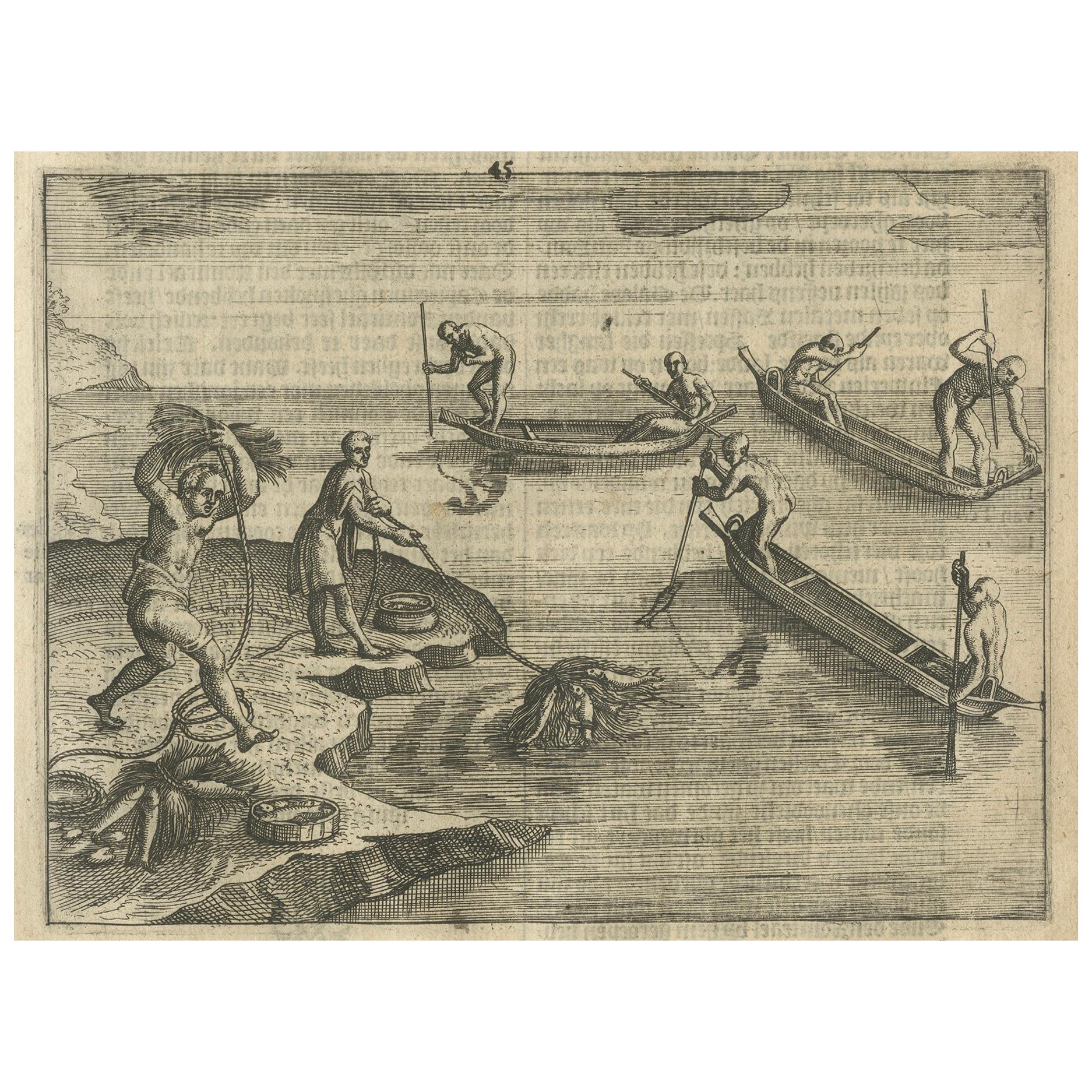
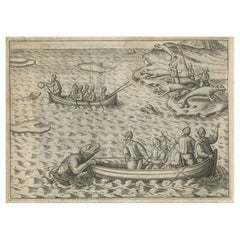
This 1601 engraving presents an intriguing scene of marine harvest, depicting the industrious efforts of local inhabitants of Saint Mary's Island (probably Île Sainte-Marie, off the coast of Madagascar) in capturing sea creatures, which appear to be whales ('cetos' could refer to large sea animals, generally whales). The engraving shows several boats and individuals engaging in various activities related to the hunt. Some are actively pursuing the creatures, others are in the water, and a group is seen onshore, tending to a beached animal.
In the foreground, a prominent whale is beached with several figures around it. One figure seems to be securing a rope around the whale's head, while another gestures as if in conversation or directing the activity. Onshore, to the left, stands a figure who appears to be in a leadership or observational role, overseeing the scene. The background features the sea dotted with boats and figures, some of whom are in the water, possibly swimming or in distress.
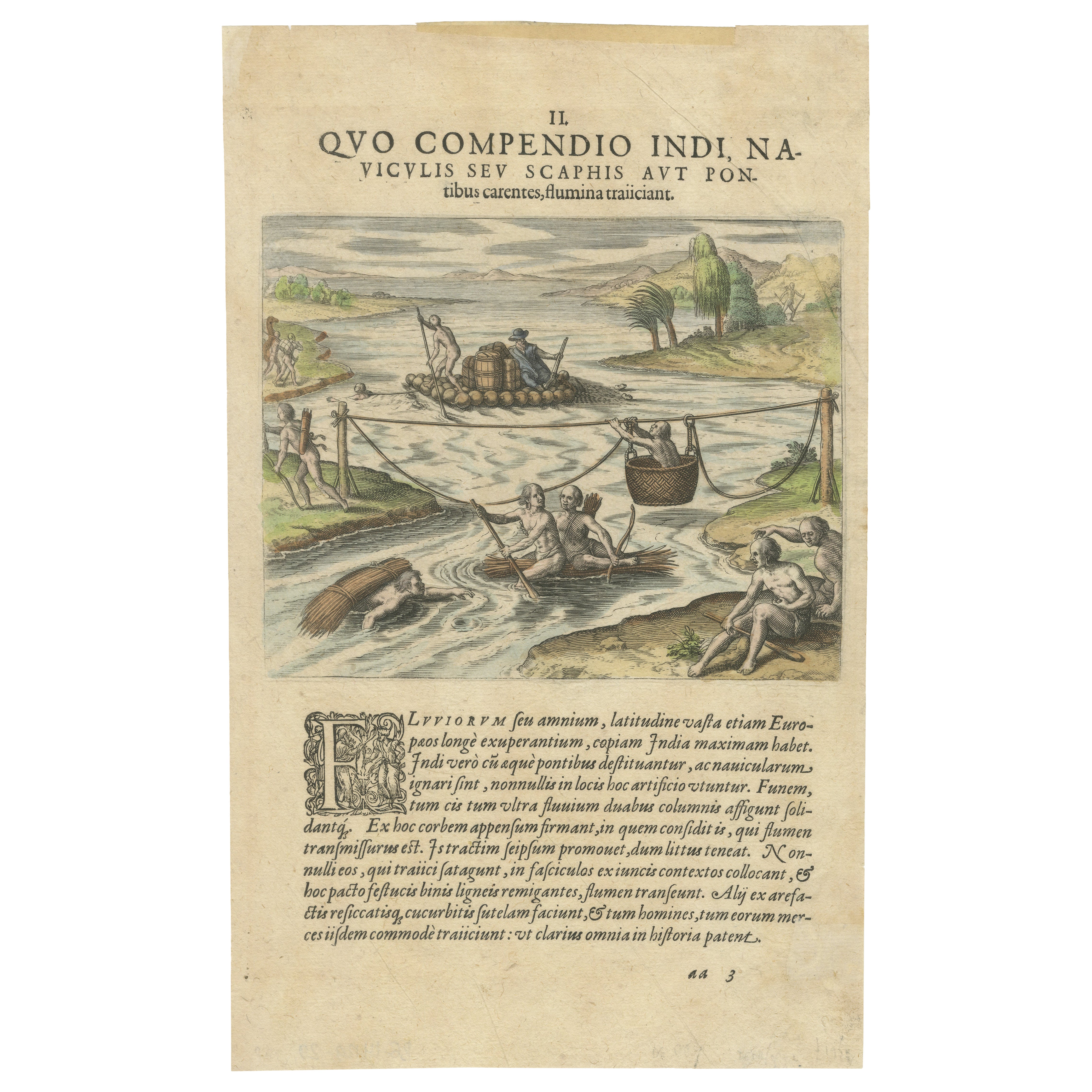
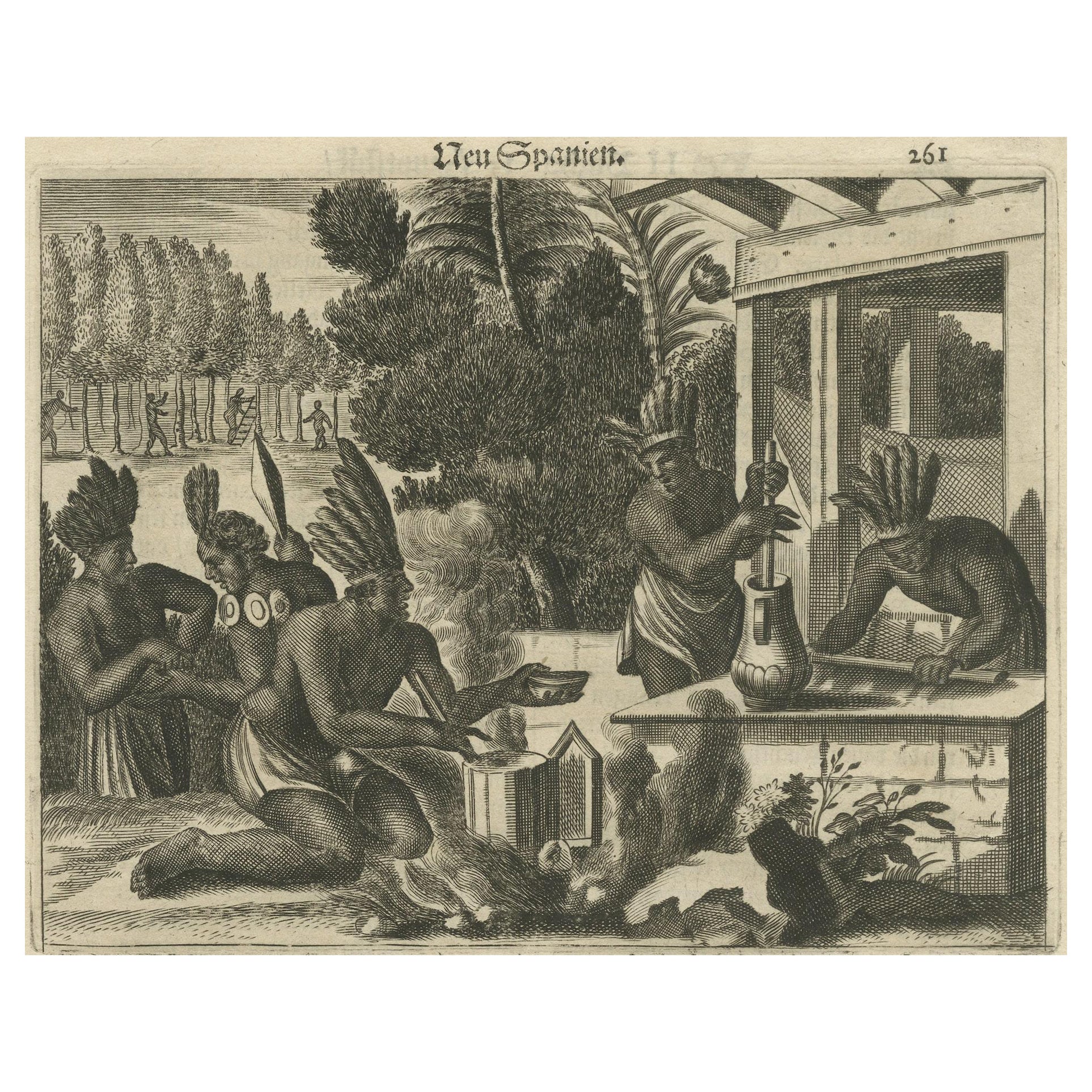
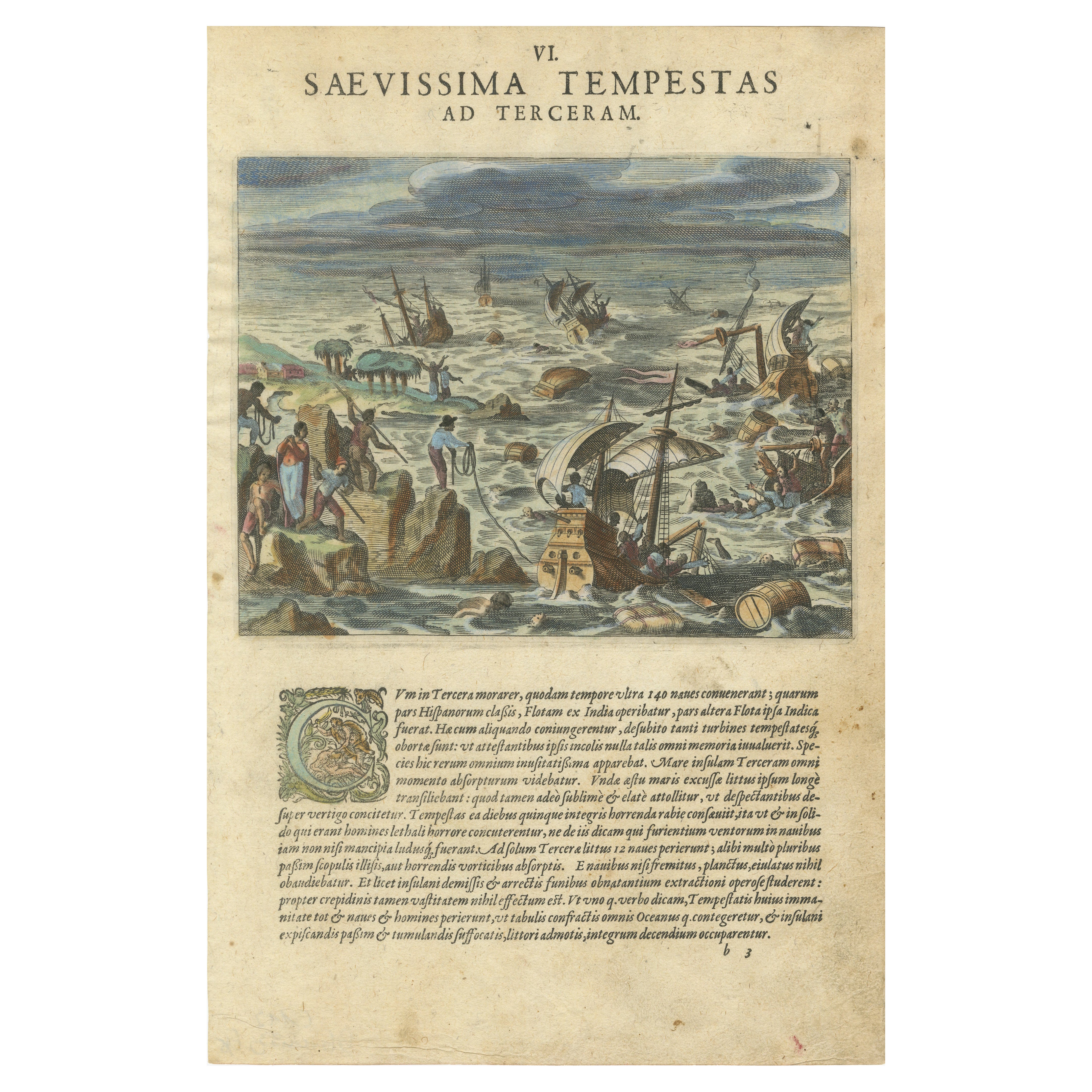
The technique of the engraving is detailed and precise, typical of the period, offering a rich depiction of the event. The scene is framed by a textual header in Latin, which likely provides context or commentary on the scene depicted, common in works intended for an educated European audience of the time. This print is a part of a larger collection that aimed to document the discoveries of new lands and their practices, flora, and fauna, bringing the vast and varied world to the European readers of the era.
This piece forms part of a larger corpus of works produced under the supervision of the de Bry family, a lineage of renowned engravers and publishers based in Frankfurt. Initiated by Theodore de Bry in 1590, this series aimed to visually document the epoch of European global exploration and the encounters with the natural world that ensued.
The engraving is a page from Part IV of de Bry's "Petits Voyages," which narrates significant expeditions to the East Indies, including those led by Jan Juygen van Linschoten and Cornelis de Houtman between 1595-97, as well as the journey by Jacob van Neck and Wybrandt van Warwijck in 1598-99. These works were not merely artistic endeavors but also ethnographic records, showcasing indigenous peoples, fauna, flora, and the diverse riches of lands like India, Madagascar, and the East Indies.
Though Theodore de Bry began this ambitious project, it was continued posthumously by his family and later completed by his son-in-law, Matthaus Merian, in 1644. This particular engraving, rich in detail and drama, offers a window into the perilous and wondrous experiences of early explorers, and the ways in which these moments were captured and communicated to a European audience hungry for knowledge of the wider world.