Salta e passa al contenuto principale
Caricamento del video
Vuoi altre immagini o video?
Richiedi altre immagini o video al venditore
1 di 18

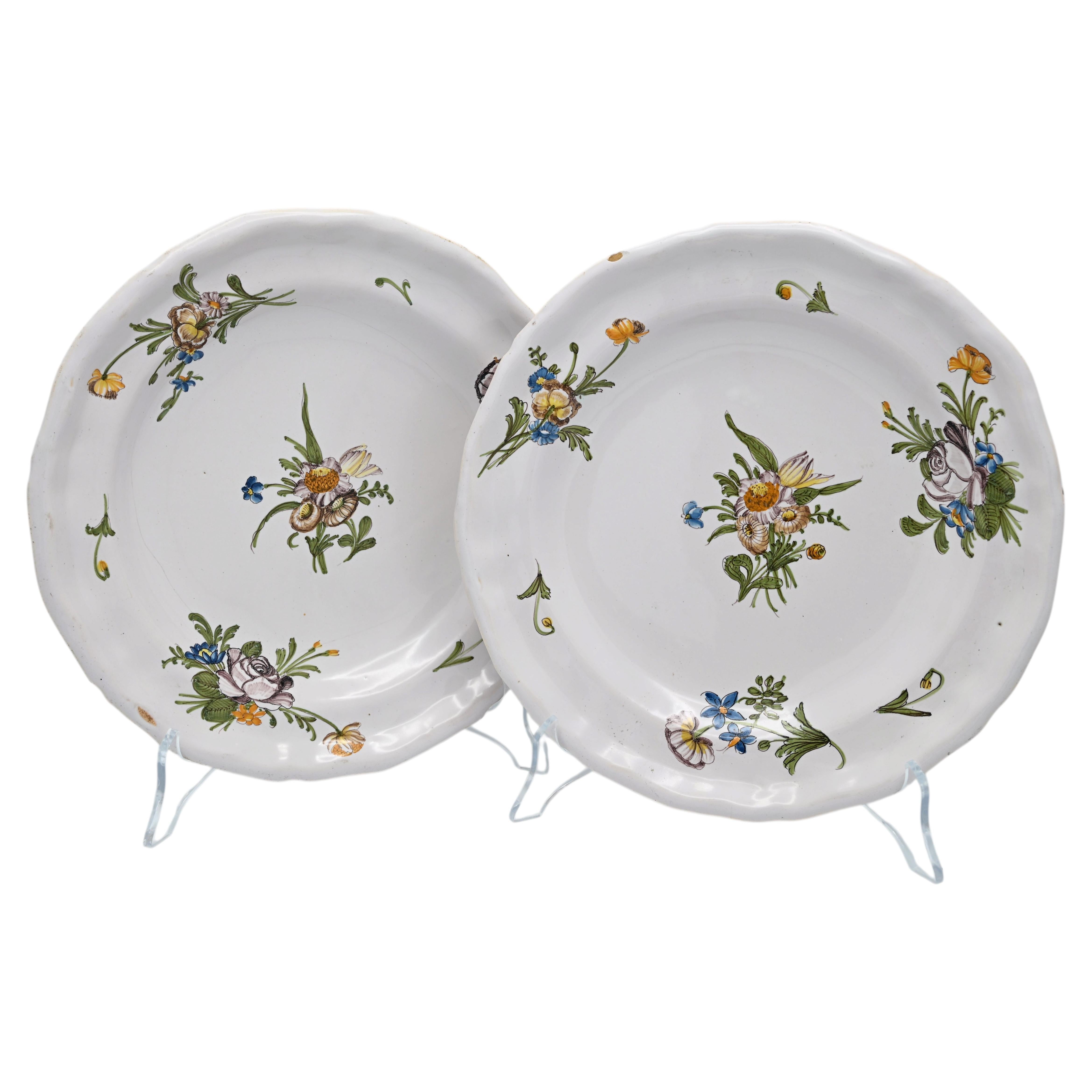
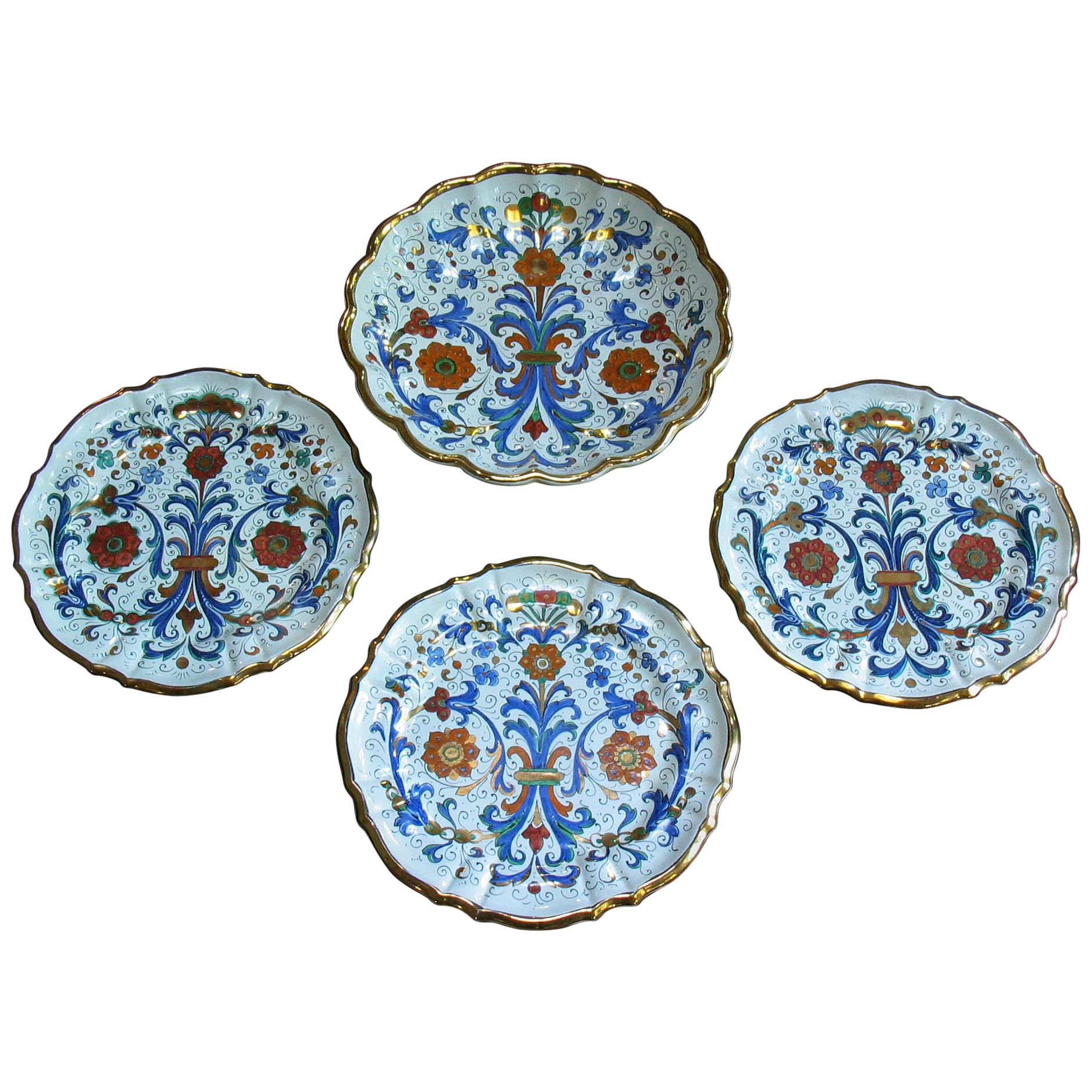
Three Dishes, Antonio Maria Coppellotti Factory, Lodi, Italy, Circa 1745

2500 €per set|IVA inclusa

Informazioni sull’articolo

Pair of round dishes and a small oval tray Antonio Maria Coppellotti factory Lodi, circa 1745 High fire polychrome maiolica Dishes size: diameter 9.44 in, height 0.78 in (24 cm, 2 cm) Weight: 0.66 lb each (300 g) Tray size: 9.44 in x 8.26 in x height 0.78 in (24 x 21 x 2 cm) Weight: 0.66 lb (300 g) State of conservation: the two round dishes are intact except for slight flaking in the glaze and wear. The tray shows a clean break restored with antiquarian restoration on the front, but legible on the reverse. The three dishes have a traditional shape without a support ring, with a short, barely sloping brim and a mixtilinear profile. The rim is wavy, ribbed, and striped with two thin parallel lines of iron-red orange color with an additional thin wavy blue line on the tray. The decoration is made using a high fire technique and is polychrome with a thick, creamy-white glaze with a few pinpoints. The decoration of groups of little flowers starts from two broad tufts of lanceolate leaves and spreads in symmetrical fronds reaching the brim and extending to the middle of the well. In the center of the oval plate there is a small asterisk. A close comparison comes to us from an oval tray which bears, on the verso, the initials AMC. It is now preserved in the collections of the Museo d’Arti Applicate at the Castello Sforzesco in Milan (R. Ausenda, ed., Musei e Gallerie di Milano. Musei e Gallerie di Milano. Museo d’Arti Applicate. Le ceramiche. Tomo secondo, Milan 2000, p. 190, no. 230). The presence of the mark in the comparison specimen confirms the attribution of these elegant creations to high fired “ferrosi” (with iron color) foils that characterize a specific production of works on forms typical of the Lodi production in the first half of the 18th century. Other comparison specimens are published in monographic repertories. These include an unusual coffee pot with a Middle Eastern oriental form which was exhibited at the Poldi Pezzoli Museum in the celebrated 1964 exhibition. Also recognizable from the same exhibition are a tureen and a sugar bowl, all consistent in decorative choice (G. Gregorietti Museo Poldi Pezzoli, Maioliche di Lodi, Milano e Pavia (catal.), Milan 1964, no. 46). More unusual in morphology and ornamentation are a coffee pot and a jug in which the decoration is associated with the depiction of a “castelletto,” a theme which was often used in Lombard ceramic production in general (Felice Ferrari, La ceramica di Lodi, Lodi 2003, pp. 118, 119; nn. 33-34, and M. L. Gelmini, Maioliche lodigiane del '700, Milan 1995, pp. 102-103; nn. 83-87). The three dishes are certainly works of the Lodi manufacture by Antonio Maria Coppellotti, as they adhere to all of its compositional standards. The painting expertise of the decorators from Lodi, especially in color control, set a standard: the red, sourced from now-depleted Eastern quarries and known as "bolo armeno", was carefully managed during firing. This was achieved by applying a thin brushstroke of enamel over the sections affected by the chromatic range. This technique helped contain the "boiling" of the color during firing, resulting in remarkable outcomes where the relief and red-orange color characterize the production. The earliest records of the Coppellotti family as a family of potters come from archival documents which, between 1639 and 1641, testify to the official application, by a certain Giovanni Coppellotti, to the relevant authorities for permission to open a maiolica factory in Lodi. The factory, located near the church of San Filippo seems to have been immediately quite successful. However, it was only in 1679, when the management of the factory passed to Antonio Giovanni Maria Coppellotti – the son or perhaps grandson of the original Giovanni - that the production reached the peak of success and became an example for the main Italian manufactures of the time, especially those in Veneto and Liguria. The activity continued under the direction of Anton Maria Junior until about 1750, to resume, after a brief interruption, with Bassano Coppellotti in collaboration with a number of other directors, including G. Moroni, Giulio Berinzaghi and, from 1771, the Pedrinazzi. Finally, in 1787, a new municipal ordinance ordered the definitive closure of the factory due to financial difficulties. The maiolica produced during the initial period are characterized by the use of a thick, velvety enamel and have ornaments ranging from monochrome turquoise with Italian (ruins, castles, flowers) and French motifs ("rabeschi", ramage), to decorations in the manner of Chinese porcelain and oriental inspiration. Of particular importance are ornaments of Baroque fruit which show the amazing relief effects produced by using the red tone called "Armenian bolus". This great variety of decorations appeared between 1735 and 1740 by which time, alongside the production of turquoise monochrome, polychromy with high fire technique was firmly established. The brand precisely identifying the maiolica of this factory is rare and uses a woven "AMC" monogram. It was sometimes done in different colors and was sometimes accompanied by the names of the painters and modelers of the manufacture. Bibliography: C. Baroni, La maiolica antica di Lodi, in “Archivio storico lombardo” LVIII, 1930, pp. 448 s., 455-457; A. Minghetti, I ceramisti italiani, Roma 1946, p. 129; S. Levy, Maioliche settecentesche lombarde e venete, Milano 1962, pp. 15-17, tavv. 121-150; G. Gregorietti Museo Poldi Pezzoli, Maioliche di Lodi, Milano e Pavia (catal.), Milano 1964, pp. 15 s., con ill.; A. Novasconi - S. Ferrari - S. Corvi, La ceramica lodigiana, Milano 1964, pp. 23, 27, 34-36, 47, ill. pp. 53-121; O. G. C. Sciolla, Museo civico di Lodi, Bologna 1977, pp. VIII s.; tavv. pp. 72-76, 78; M. L. Gelmini, Maioliche lodigiane del ‘700, Milano 1995, pp. 102-103; nn. 83-87 R. Ausenda, a cura di, Musei e Gallerie di Milano. Museo d’Arti Applicate. Le ceramiche. Tomo secondo, Milano 2000, p. 190, n. 230; Felice Ferrari, La ceramica di Lodi, Lodi 2003, pp. 118-127.
  • Attribuito a:
    Antonio Maria Coppellotti (Fabbricante)
  • Dimensioni:
    Altezza: 2 cm (0,79 in)Diametro: 24 cm (9,45 in)
  • Venduto come:
    Set di 3
  • Stile:
    Rococò (Del periodo)
  • Materiali e tecniche:
  • Luogo di origine:
  • Periodo:
  • Data di produzione:
    Circa 1745
  • Condizioni:
    Riparato: The tray shows a clean break restored with antiquarian restoration on the front, but legible on the reverse. Lievi danni strutturali. The two round dishes are intact except for slight flaking in the glaze and wear. The tray shows a clean break restored with antiquarian restoration on the front, but legible on the reverse.
  • Località del venditore:
    Milano, IT
  • Numero di riferimento:
    1stDibs: LU4352245004542

Altro da questo venditore

Mostra tutto
Two Small Italian Dishes Antonio Maria Coppellotti Manufacture, Lodi, Circa 1740

Two Small Italian Dishes Antonio Maria Coppellotti Manufacture, Lodi, Circa 1740

DiAntonio Maria Coppellotti

Two small dishes Antonio Maria Coppellotti Manufacture Lodi, Circa 1740 High fire polychrome maiolica They measure: diameter 7.08 in(18 cm) Weight: 0.37 lb (170 g) State of conservat...

Categoria

Di antiquariato/d’epoca, 1740s, Italian, Barocco, Ceramiche

Materiali

Maiolica

Quattro piatti antichi italiani, Antonio Ferretti, Lodi, 1770-1780 ca.

Quattro piatti antichi italiani, Antonio Ferretti, Lodi, 1770-1780 ca.

DiAntonio Ferretti

Assortimento di 4 piatti con bordo intrecciato Antonio Ferretti Produzione Lodi, circa 1770-1780 Maiolica policroma decorata "a piccolo fuoco". Misure: 14 x 10 pollici (35,5 ...

Categoria

Di antiquariato/d’epoca, Anni 1770, Italiano, Neoclassico, Ceramiche

Materiali

Maiolica

Piatti antichi in maiolica Pasquale Rubati, Milano Circa 1770-1780

Piatti antichi in maiolica Pasquale Rubati, Milano Circa 1770-1780

DiPasquale Rubati

Cinque piatti ovali in maiolica con bordo forato Produzione di Pasquale Rubati Milano, 1770-1780 Tre piccoli piatti ovali da 26 cm x 19,5 cm (10,23 in x 7,67 in) Due grandi piatti ov...

Categoria

Di antiquariato/d’epoca, Anni 1770, Italiano, Rococò, Ceramiche

Materiali

Maiolica

Two Ancient Maiolica Pot Mustard Set, Milan, 1745-1788 Circa

Two Ancient Maiolica Pot Mustard Set, Milan, 1745-1788 Circa

DiFelice Clerici

Two pot mustard set Felice Clerici or Pasquale Rubati Factory Milan, 1745-1788 Circa Maiolica polychrome decorated “a piccolo fuoco” (third fire) It measures: 3.94 in in height x...

Categoria

Di antiquariato/d’epoca, 18th Century and Earlier, Italian, Rococò, Cera...

Materiali

Maiolica

Antichi piatti in maiolica con fiori, manifattura lombarda, 1770-1780 Circa

Antichi piatti in maiolica con fiori, manifattura lombarda, 1770-1780 Circa

Assortimento di piatti Manifattura lombarda 1770 - 1780 circa Maiolica policroma decorata "a piccolo fuoco". Due piatti grandi: diametro di 37,5 cm; peso di 2,07 kg. Sette piatt...

Categoria

Di antiquariato/d’epoca, Anni 1770, Italiano, Rococò, Ceramiche

Materiali

Maiolica

Centrotavola in maiolica italiano del XVIII secolo Bassano Venezia, 1750 circa

Centrotavola in maiolica italiano del XVIII secolo Bassano Venezia, 1750 circa

Centrotavola in maiolica Fabbrica di Pasquale Antonibon Nove di Bassano, Venezia, 1740-1770. Misure: 1,85 pollici x 19,21 pollici x 15,27 pollici 4,7 cm X 48,8 cm X 38,8 cm. lb 5,29...

Categoria

Di antiquariato/d’epoca, Anni 1750, Italiano, Barocco, Ceramiche

Materiali

Maiolica

Ti potrebbe interessare anche

Piatti di Maiolica Italiana 1770 Decoro Al Garofano Manifattura Ferniani Faenza

Piatti di Maiolica Italiana 1770 Decoro Al Garofano Manifattura Ferniani Faenza

DiFerniani Factory

Coppia Di Piatti In Maiolica italiana XVIII secolo Con Decoro Al Garofano Manifattura Ferniani Faenza dipinti in policromia, nei toni del blu, bruno, giallo, rosso, arancio e verde. ...

Categoria

Di antiquariato/d’epoca, 1770s, Italian, Barocco, Delft e Faïence

Materiali

Maiolica

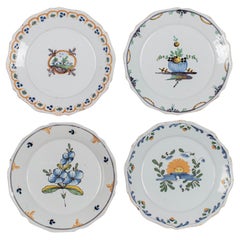
Set di quattro piatti francesi in maiolica del XVIII secolo, dipinti a mano, 1780 circa

Set di quattro piatti francesi in maiolica del XVIII secolo, dipinti a mano, 1780 circa

Un set di quattro piatti in maiolica francese del XVIII secolo con decorazioni primitive dipinte a mano da artisti diversi. In condizioni variabili, con scheggiature e perdite di sma...

Categoria

Di antiquariato/d’epoca, Fine XVIII secolo, Stile provenzale, Delft e Fa...

Materiali

Faenza

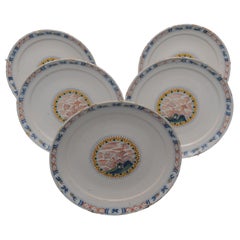
Delft  - Set di 5 piatti policromi Chinoiserie del XVIII secolo

Delft - Set di 5 piatti policromi Chinoiserie del XVIII secolo

DiDelft

Set di cinque piatti in ceramica della metà del XVIII secolo con decorazione a cineserie di un pagode. Non segnato. Condit: alcune scheggiature e usura sul bordo

Categoria

Di antiquariato/d’epoca, Inizio XVIII secolo, Olandese, Cineserie, Delft...

Materiali

Cotto, Delft, Faenza

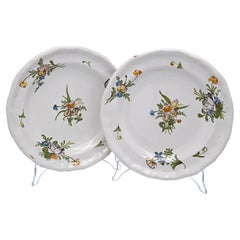
Servizio antico di piatti policromi in maiolica francese, Montpellier, XVIII secolo

Servizio antico di piatti policromi in maiolica francese, Montpellier, XVIII secolo

DiVeuve Perrin Factory

Servizio di due piatti in maiolica di Montpellier del XVIII secolo, Francia, CIRCA 1770. I piatti in terracotta smaltata a stagno sono dipinti a mano con smalti policromi e presenta...

Categoria

Di antiquariato/d’epoca, XVIII secolo, Francese, Rococò, Delft e Faïence

Materiali

Cotto, Faenza, Maiolica

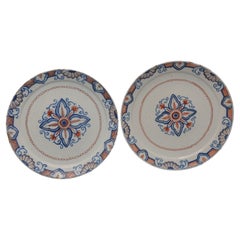
Piatti antichi in ceramica di Delft del XVIII secolo, opera di Johannes van Lockhorst

Piatti antichi in ceramica di Delft del XVIII secolo, opera di Johannes van Lockhorst

DiDe Klaauw

Eccellente coppia di piatti Delftware della metà del XVIII secolo con una rara decorazione geometrica di un fiore stilizzato con volute fogliate. Bordo ornato da volute di fogliame ...

Categoria

Di antiquariato/d’epoca, Inizio XVIII secolo, Olandese, Cineserie, Delft...

Materiali

Cotto, Delft, Faenza

Grande Piatto In Maiolica Italiana Manifattura Antonibon Decoro Alla Frutta 1750

Grande Piatto In Maiolica Italiana Manifattura Antonibon Decoro Alla Frutta 1750

DiGiovanni Battista Antonibon

Grande Piatto In Maiolica Della Manifattura Antonibon Con Decoro Alla Frutta 1750 Circa in ottimo stato di conservazione di forma ovale con i bordi mistilinei, reca al centro una dec...

Categoria

Di antiquariato/d’epoca, Mid-18th Century, Italian, Barocco, Centrotavola

Materiali

Maiolica