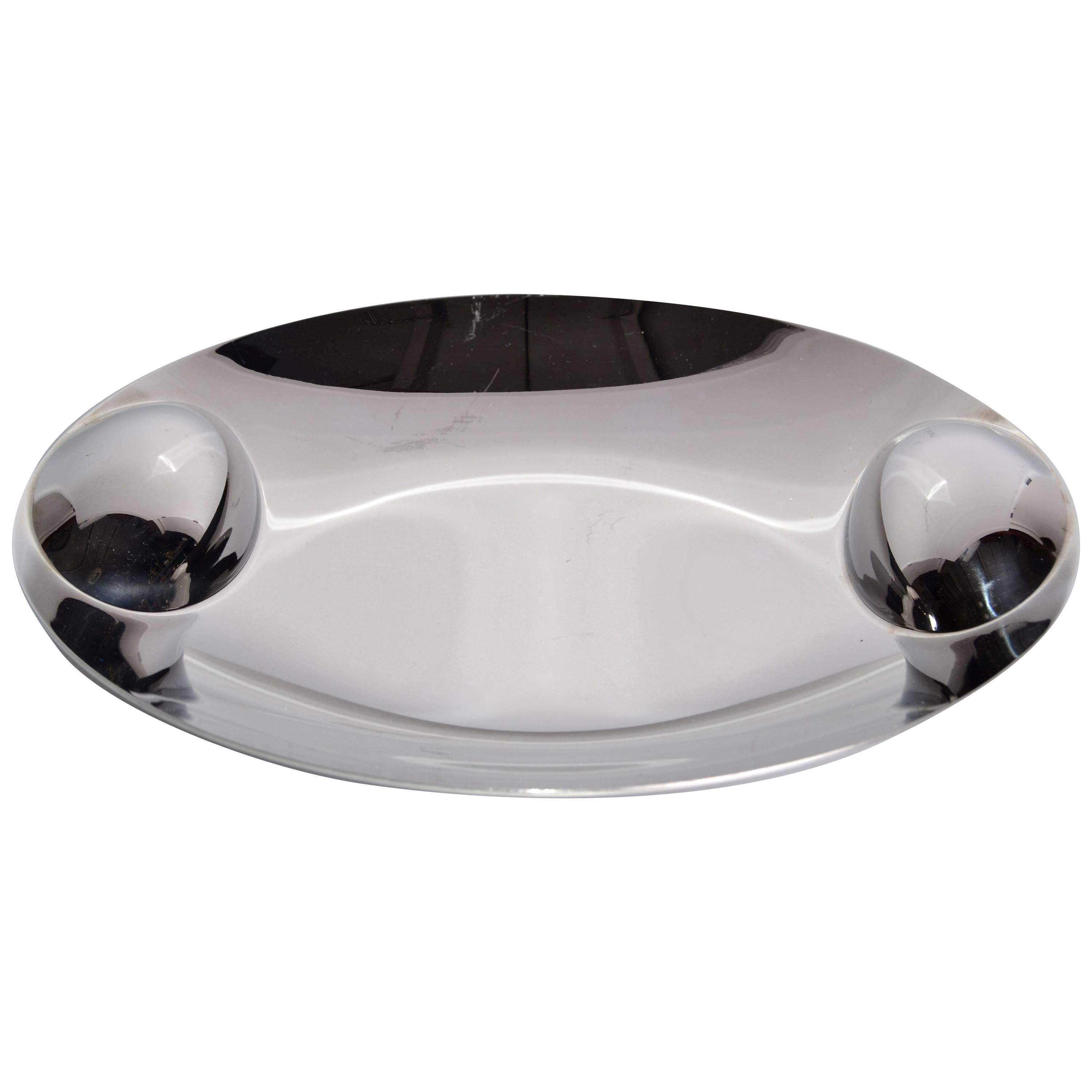
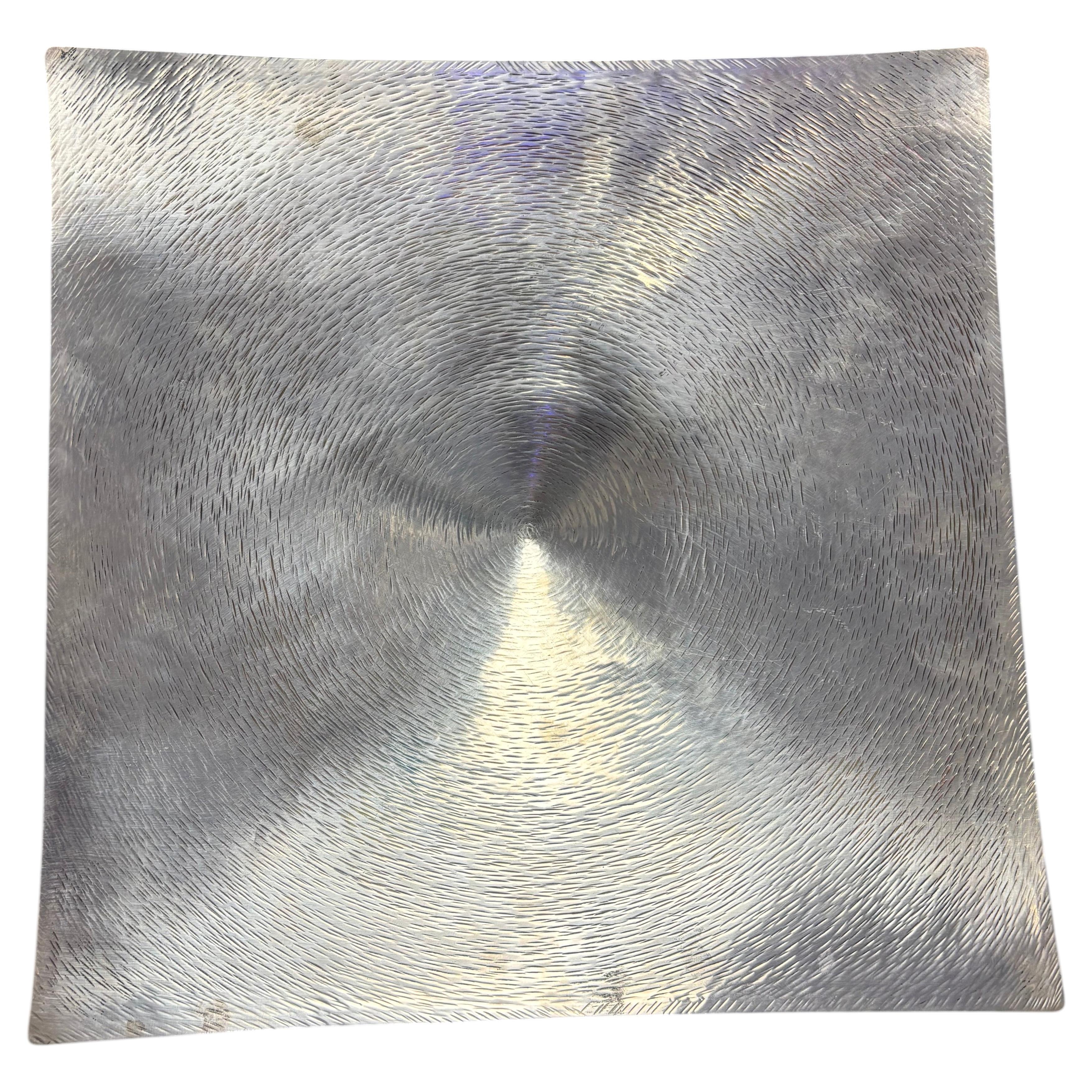
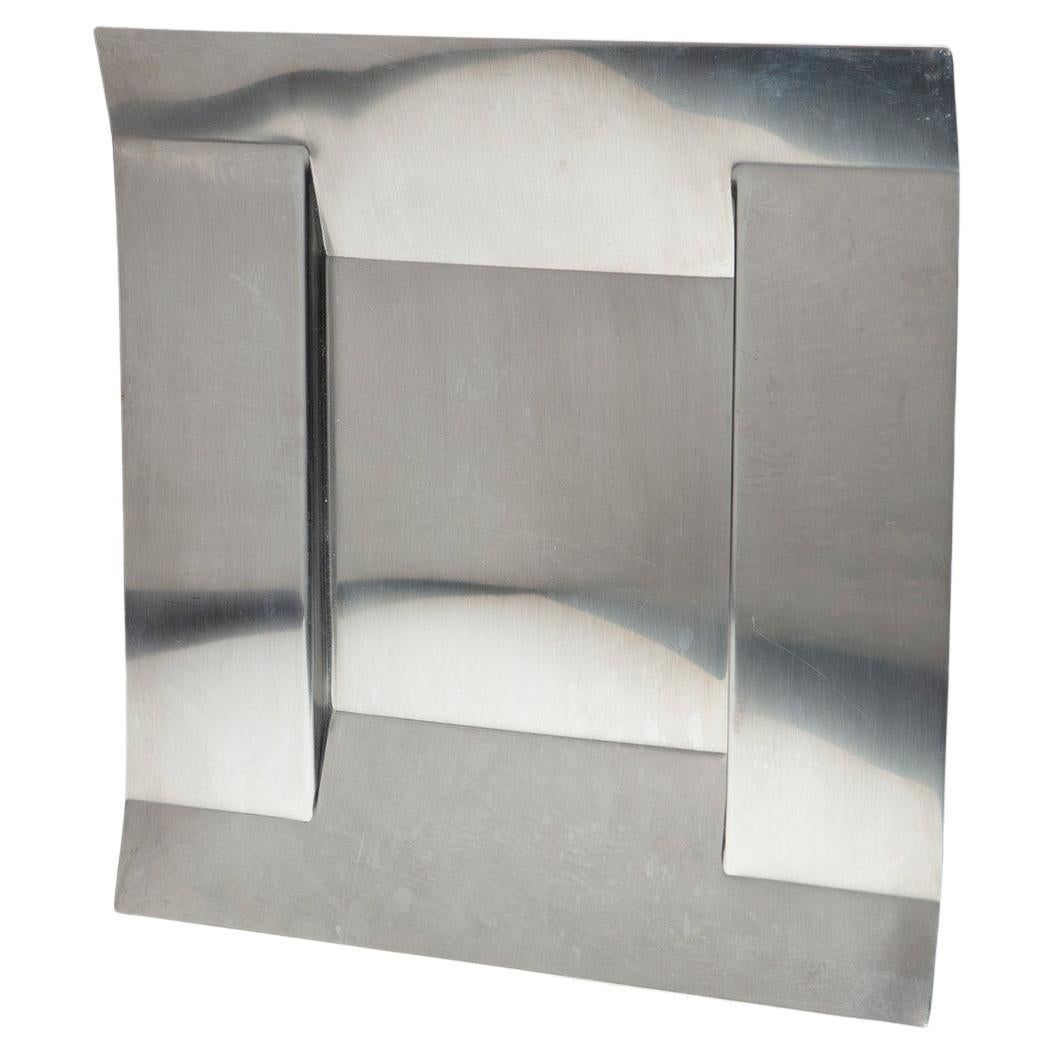
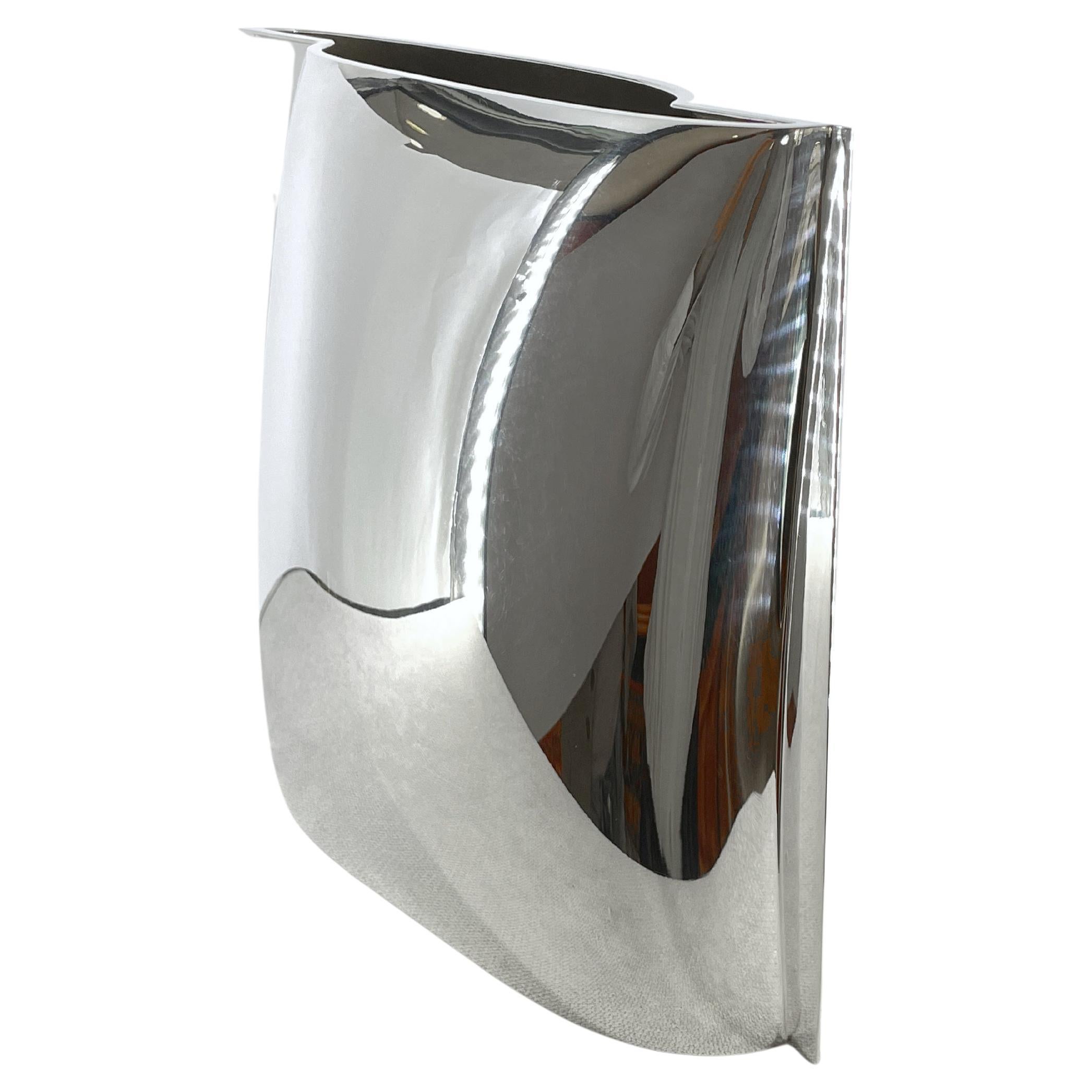
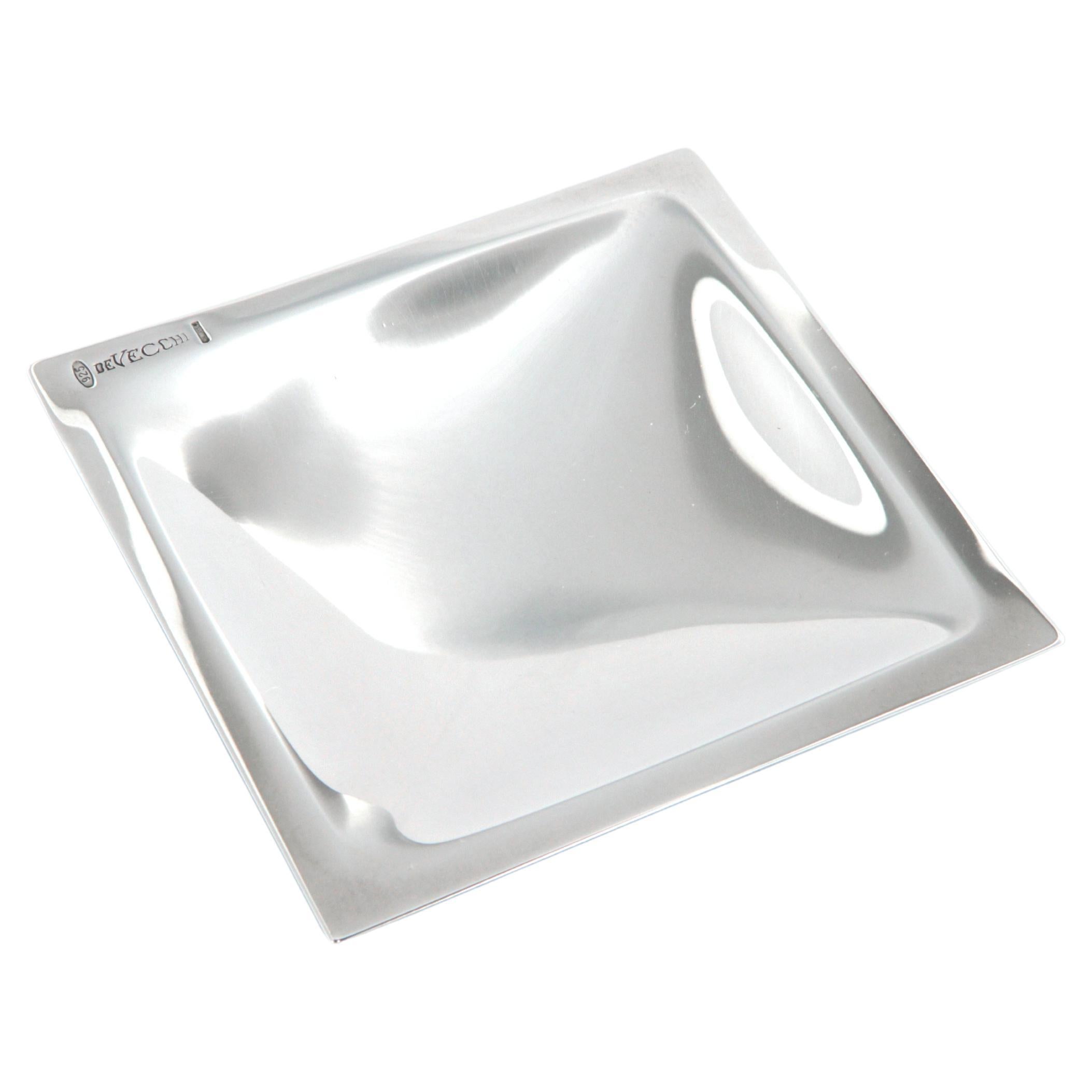
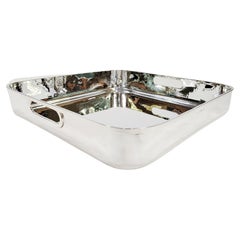
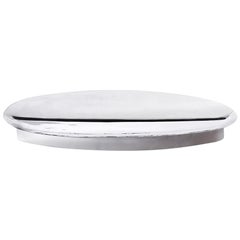
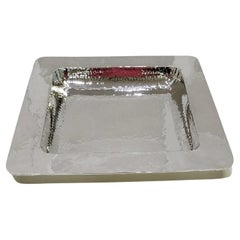
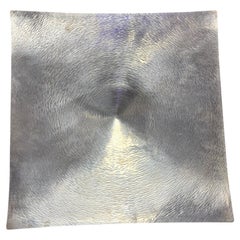
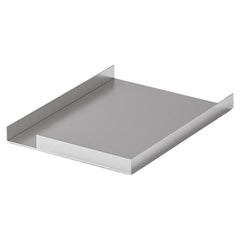
Taj De Vecchi Milan 1935 Taj tray in 925 sterling silver
Measures 30.5 x 30.5 cm
Height 2 cm
Weight 920 g
Reference ATT07
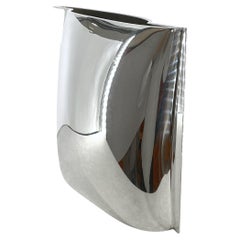
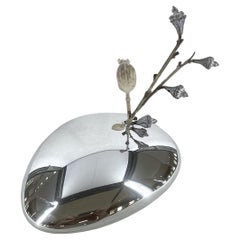
The Taj tray, an iconic piece in which concavity and convexity coexist in the same object.
A design element produced in a limited edition.
The "Taj Basket," as it was called by Gabriele De Vecchi in 1990, belongs to the family of curved and deformed mirrors to achieve the restitution of a process of distorted and moving reflected images in relation to the movement between the beholder, user, and moves around the concrete object.
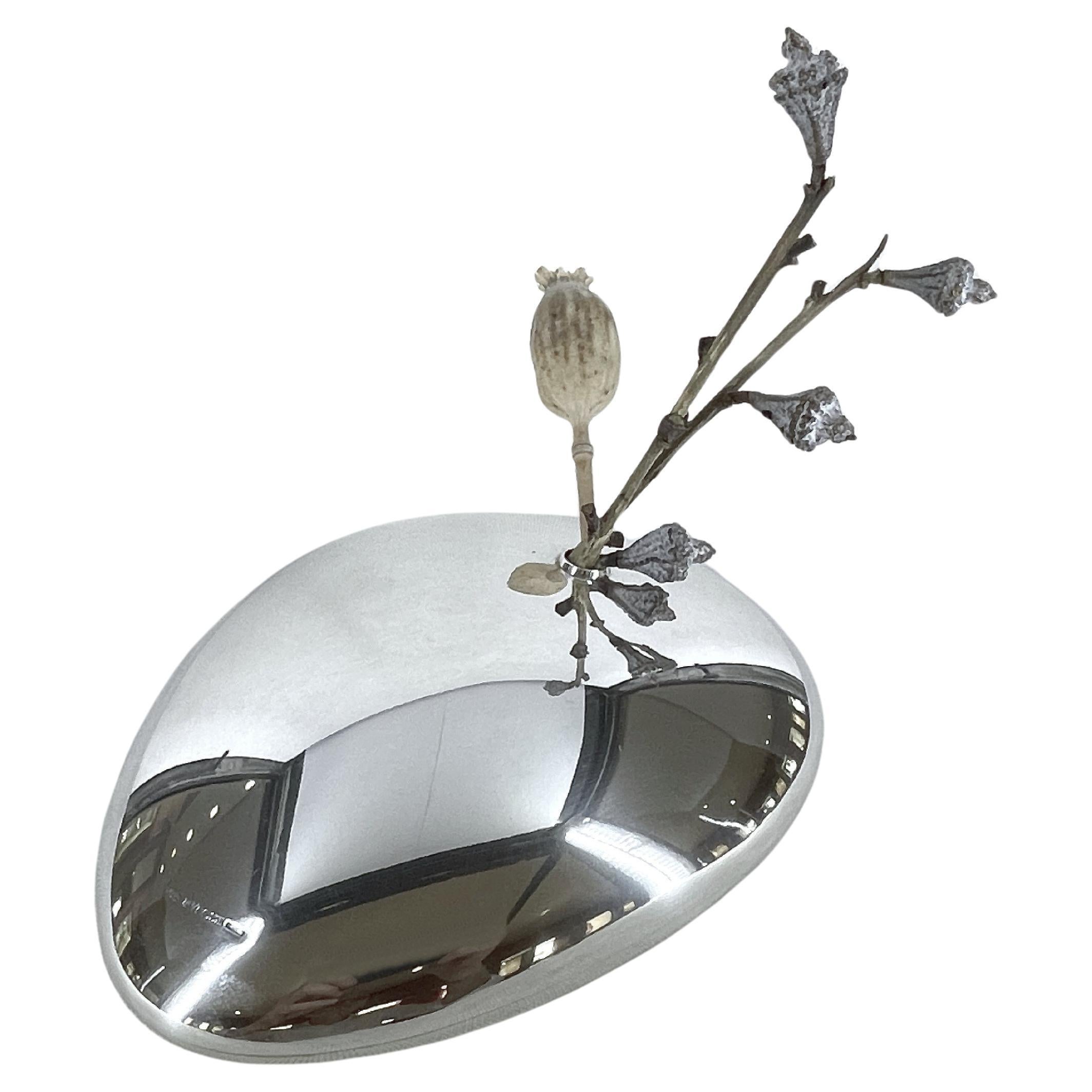
Designed at first as a centerpiece tray where the concave areas become containers and at the same time stability supports on the other side, it becomes a real sculpture, a hanging work, a reflective painting.
Silver is a mirror. Images of the environment are reflected on the surface of the object, making the perception of form ambiguous. To design silver is not simply to design a form, but a medium for reflected images that can release the infinite and unpredictable expressive richness of the material.
De Vecchi has been innovating the silver tradition for years, through the creation of its own design language, based on the reflective characteristics of the material.
Objects have emerged over the years that reflect light, reflect their surroundings, so that the succession of mirror images makes the objects mobile, constantly changing.
The more than eighty years of activity are studded with awards; from prizes at the Milan Triennale, to mentions at the Compasso d'Oro. De Vecchi has taken part in the most important design exhibitions and reviews in Italy and abroad. In 1997 a major monographic exhibition at the Milan Triennale entitled 'The Language of Mirrors' reconstructed the research activities of the company and its protagonists.
The silversmith workshop, Atelier De Vecchi, was founded by Piero De Vecchi in 1935. A sculptor and printmaker, at a young age he took part in Futurism whose constant quest for dynamism he shared, which he conveyed in his production.
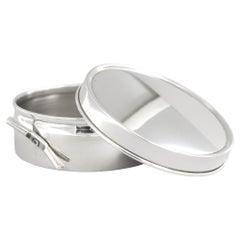
His works were exhibited in the most important national and International museums: from the Milan Triennale to the Moma in New York, which awarded him the Diploma of Honor for an aluminum Thermos, an aluminum "Picnic Service," and for the T8 silver candelabra. With the T8, Piero De Vecchi completely changes the classic structure of a candelabra: a single element that winds in a fluid form through space.
In 1962 his son, Gabriele, succeeded his father at the helm of the company "inside silver." From then on, Gabriele transferred the wiles and rigors of research into the reflective qualities of this material to the interior of silver, studying the relationship between object and environment, what led to the creation of the De Vecchi style now recognized and appreciated worldwide.
In 2010 De Vecchi was acquired by the jewelry company Vhernier, which was born
in Valenza, which shares with De Vecchi the same love for design, the highest Italian quality and craftsmanship.
In May 2024, the luxury group Richemont acquired the Maison Vhernier; De Vecchi Milano 1935 should therefore now be in J. Rupert's group.
2025 an important date, De Vecchi Milan 1935 turns 80 years old.