Art by Medium: Enamel

to
90
280
138
136
119
355
Overall Width
to
Overall Height
to
6
147
874
1
12
5
20
31
44
417
264
85
40
21
9
7
6
5
3
2
2
299
195
193
137
78
73
44
43
25
22
22
21
20
18
16
16
15
14
13
12
11
11
11
7,464
187,588
99,538
82,268
79,587
43
34
30
25
24
113
171
654
273
Medium: Enamel
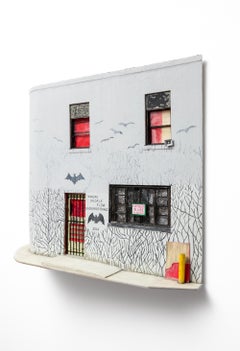
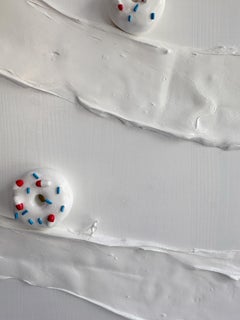
"The Apocalypse Now" Hyperrealistic Miniature Building Wall-Mounted Sculpture

"The Apocalypse Now" Hyperrealistic Miniature Building Wall-Mounted Sculpture

By Drew Leshko

Located in Philadelphia, PA

This piece titled "The Apocalypse Now" is original artwork made from paper, basswood, plaster, acrylic, enamel, watercolor, wire, pvc, pins, pastel, inkjet prints by Drew Leshko. Thi...

Category

21st Century and Contemporary Contemporary Art by Medium: Enamel

Materials

Metal, Enamel, Wire

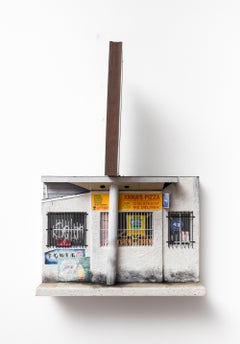
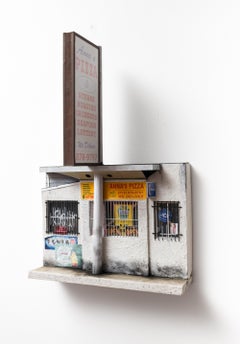
"Anna's Pizza" Miniature Hyper-detailed Storefront in Wood, Plasterm and Paper

"Anna's Pizza" Miniature Hyper-detailed Storefront in Wood, Plasterm and Paper

By Drew Leshko

Located in Philadelphia, PA

This piece titled "Anna's Pizza" is original artwork made from paper, basswood, plaster, acrylic, enamel, watercolor, wire, pvc, pins, pastel, inkjet prints by Drew Leshko. This piec...

Category

21st Century and Contemporary Contemporary Art by Medium: Enamel

Materials

Metal, Enamel, Wire

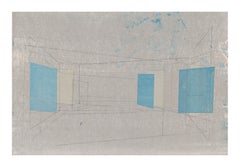
Here and There #4
Here and There #4

Here and There #4

By Kate Shepherd

Located in Houston, TX

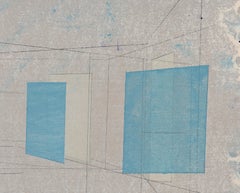
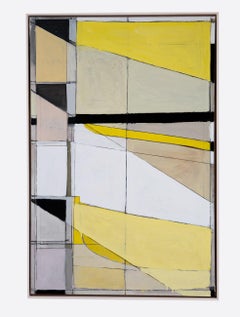
Kate Shepherd Here and There #4, 2020 Enamel and transfer on paper 12 1/2 x 19 inches

Category

21st Century and Contemporary Abstract Geometric Art by Medium: Enamel

Materials

Enamel

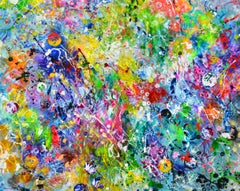
"Gifts from Heaven" Abstract Mixed Media Painting 48 x 96" inch by Yoram Katz

"Gifts from Heaven" Abstract Mixed Media Painting 48 x 96" inch by Yoram Katz

By Yoram Katz

Located in Culver City, CA

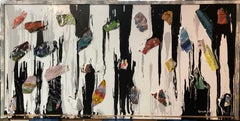
"Gifts from Heaven" Abstract Mixed Media Painting 48 x 96" inch by Yoram Katz Medium: Oil, Acrylic and Enamel on Board Comes in frame Size framed: 50 x 98 in ABOUT THE ARTIST: Bor...

Category

21st Century and Contemporary Abstract Art by Medium: Enamel

Materials

Enamel

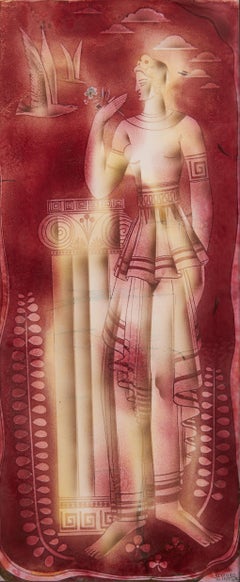
Helen of Troy, Early 20th Century Enamel, Cleveland School Artist

Helen of Troy, Early 20th Century Enamel, Cleveland School Artist

Located in Beachwood, OH

Edward Winter (American, 1908-1976) Helen of Troy, 1938 Enamel Signed and dated lower right 43 x 18 inches 44.5 x 19.5 inches, framed Exhibited: Cleveland Museum of Art, May Show 19...

Category

1930s Art by Medium: Enamel

Materials

Enamel

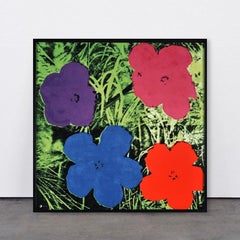
Flowers, After Andy Warhol -Pop Art, Enamel on porcelain, Contemporary, Edition

Flowers, After Andy Warhol -Pop Art, Enamel on porcelain, Contemporary, Edition

By Andy Warhol

Located in Zug, CH

Andy Warhol Flowers, 1980 Enamel on porcelain Edition of 49 51 x 51 x 2 cm (20 x 20 x 0.7 in) In wooden box. Screenprint on porcelain in wooden frame signed in the glazing, numbered on label verso In mind condition. The piece is offered unframed. Throughout art history, the flower and its symbolism have been a subject matter for many renowned artists. Andy Warhol explored the qualities of the flower image through his Pop Art prism in the Flower series of 1964, thus creating cartoon-like symbols that would be instantly recognised. The 1964 Flower series became one of his most iconic and successful works.
 Based on a discovered photograph of hibiscus blossoms, Warhol drenched the flowers’ floppy shapes with a variation of vibrant colours, transforming them into psychedelic indoor décor. Playing with traditional art historical themes, Andy Warhol gave a particular twist to this historically accepted symbol of life. The electric colours of his flowers, drawn from a darker and rich undergrowth background might be the indicator of an extreme vision of life, a life lived on the edge. Andy Warhol (1928-1987) was an American artist, a leading figure of the Pop Art movement. ​Using a variety of media materials from photographs up to computer-generated art, Warhol's works explore the relationship between artistic expression, celebrity, culture and advertisement that flourished by the 1960s. Emerging from the poverty and obscurity of an Eastern European immigrant family in Pittsburgh, Warhol became a charismatic magnet for bohemian New York. In 1960, he began to produce his first canvases depicting Popeye and Dick Tracy. After Marilyn Monroe’s death in August 1962, he started working from snapshots of the star’s already legendary face, which had been widely distributed by the world’s press. His choice of subjects clearly relates to an obsession with demise – his Marilyns, his Ten Lizies (created when the actress Elizabeth Taylor was seriously ill), and also his Elvis. Part of the “Death and Disaster” series, Andy Warhol´s...

Category

20th Century Pop Art Art by Medium: Enamel

Materials

Enamel

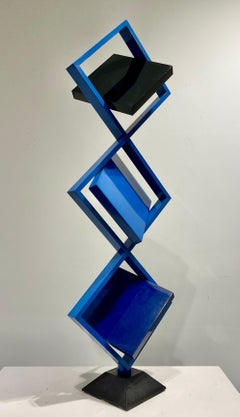
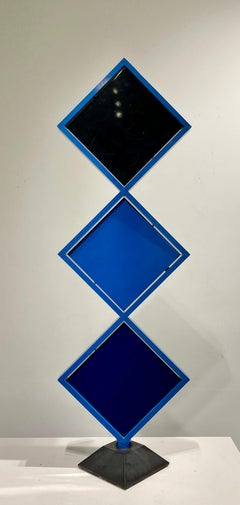
"Kinetic Sculpture" Roger Phillips, 1985 Rotating Blue Constructivist Sculpture

"Kinetic Sculpture" Roger Phillips, 1985 Rotating Blue Constructivist Sculpture

By Roger Phillips

Located in New York, NY

Roger Phillips Kinetic Sculpture Painted iron and aluminum on walnut plinth base 44 1/2 inches high x 13 inches wide x 7 3/4 inches deep oger Phillips was born in New York City in ...

Category

1980s Constructivist Art by Medium: Enamel

Materials

Enamel, Iron

Perched on the Tree of Life - Abstract Figurative Large Wall Sculpture

Perched on the Tree of Life - Abstract Figurative Large Wall Sculpture

By Jennyfer Stratman

Located in Los Angeles, CA

There is a metaphorical interplay between the natural imagery international artist, Jennyfer Stratman, uses and its multiple meanings. While the human figure features strongly, it is the essence of the body that is important to her, not the representation. Particularly, the artist imagines trees and branches as a figurative link between the natural environment and our physical presence. The implied internal landscape of the body can also be reflected in how our surroundings from birth affect our sense of identity. By exploring landscapes of the body and mind, she also hopes to comment on the larger picture of our impact on the natural world. This exquisite bronze sculpture is meant to be installed as a wall hanging that sits 3 inches away from the wall. The sculpture and its many pieces can be installed and displayed in several arrangements. As displayed, this sculpture measures 77 inches high and 58 inches wide. It is signed by Stratman on the front. Free local Los Angeles delivery and installation. Affordable Continental U.S. and International shipping available. A certificate of authenticity issued by the art gallery is included. Stratman grew up in Phoenix, Arizona. In 1992 she commenced her studies at Arizona State University majoring in visual arts and art education. Stratman entered academia as a ceramicist. With each passing semester, the scale of her creations expanded and the material limitations of working with clay ultimately led her to the university foundry. This opened a door into another world of creative possibilities, profoundly changing her artistic direction. She replaced fired clay with larger-scale bronze, steel, and mixed media sculptures yet retained a delicacy, intimacy, and intricacy imbued from the ceramic process. Today she is a full-time established artist with studios operating in Phoenix, Arizona and Melbourne, Australia. Her time is divided between the two countries with each location informing and influencing the creative process. She has exhibited in 31 solo exhibitions and over 100 group exhibitions nationally and internationally. Her indoor and outdoor sculptures are held in public and private collections in countries including the United States, Australia, Canada, Hong Kong, Singapore, Taiwan, Israel, England, and Europe. Artplex Gallery has been representing and exhibiting Jennyfer Stratman's original artworks in Los Angeles since 2021, presenting her impressive works to an international collector base around the globe. The gallery has been a 1stdibs partner since 2014 with consistently excellent reviews from clients worldwide. The gallery exhibits a well-curated selection of original artworks beyond the ordinary from established and emerging international artists with diverse backgrounds at high standards. Artplex Gallery is known to provide accurate descriptions, images, reliable services, communication, and delivery. The gallery's commitment to customer satisfaction means that clients can invest in art with confidence, knowing they have a reputable and established art gallery backing their acquisition. Artplex Gallery prioritizes our clients' peace of mind by ensuring a seamless and worry-free art-buying experience. REPRESENTATION Artplex Gallery, Los Angeles, USA SOLO EXHIBITIONS 2023 Solo Exhibition, Grace Renee Gallery, Carefree, Arizona 2021 “Natural Connections”, Manyung Gallery, Melbourne, Australia 2020 “Celestial Forms”, Manyung Gallery, Melbourne, Australia 2019 “Solo Exhibition”, Grace Renee Gallery, Carefree, AZ 2018 “The Etheral Garden”, Manyung Gallery, Melbourne, Australia “The Gravity Between Us”, Calvin Charles Gallery, Scottsdale, AZ 2017 “Tree Within Me”, Avran Fine Art, Laguna, CA 2016 “Constellation”, Manyung Gallery, Melbourne, Australia “Cultivating The Wild”, Calvin Charles Gallery, Scottsdale, AZ 2015 “Connection”, Mirada Fine Art, Denver, CO “Transformation”, Contemporary Fine Arts Gallery, La Jolla, CA 2014 “Cultivating Memory”, Michele Mariaud Gallery, NYC “Connected Elements”, Calvin Charles Gallery, Scottsdale AZ 2013 “Interconnection”, Contemporary Fine Arts Gallery, La Jolla, CA 2012 “Internal Landscapes”, Mirada Fine Art, Denver, CO 2011 “Reflective Landscapes”, Stockroom, Kyneton, Australia “Propagated Reflections”, Calvin Charles Gallery, Scottsdale,AZ 2010 “Hybrid”, GF Contemporary, Santa Fe, NM GROUP EXHIBITIONS 2023 Nature Art Soiree, Manyung Gallery, Melbourne Australia Affordable Art Fair Sydney, Manyung Gallery, Sydney Australia 2022 Affordable Art Fair Melbourne, Manyung Gallery, Melbourne, Australia CHAOS Theory 22, Legend City Studios, Pheonix, Arizona Endings And Beginnings, Modified Arts, Pheonix, Arizona Skies of Fruitful Nights, Artplex Gallery, Los Angeles, California 2021 Every Artist Ever Ten Year Anniversary Show, Stockroom Gallery, Melbourne, Australia CHAOS Theory 21, Legend City Studios, Pheonix, Arizona 2020 Affordable Online Art Fair, Manyung Gallery, Worldwide 2019 Portland on the Park Collection Exhibition, Phoenix, Arizona CHAOS Theory 20, Legend City Studios, Phoenix, Arizona Loreto Spring Art, Marryatville, South Australia Toorak Village Festival of Sculpture, Melbourne, Australia 2018 Carmody Foundation Grant Recipient, Phoenix, Arizona CHAOS Theory 19, Legend City Studios, Phoenix, Arizona Affordable Art Fair Hong Kong, with TAG Fine Arts, Hong Kong Toorak Village Festival of Sculpture 2018, Toorak, Victoria Affordable Art Fair New York, with TAG Fine Arts, New York Battersea Art Fair, TAG Fine Arts, London, England 2017 Affordable Art Fair Singapore, TAG Fine Arts, Singapore Choice Cuts, The Lodge Art...

Category

21st Century and Contemporary Contemporary Art by Medium: Enamel

Materials

Metal, Bronze, Enamel

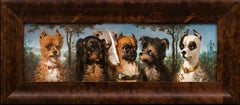
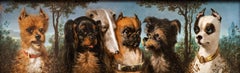
Very Rare Portrait of 6 Dogs on Enamelled Ceramic by Maison Pichenot-Loebnitz

Very Rare Portrait of 6 Dogs on Enamelled Ceramic by Maison Pichenot-Loebnitz

Located in SANTA FE, NM

Very Rare Portrait of 6 Dogs on Enameled Ceramic Maison Pichenot-Loebnitz Enamels, ceramic France, ca. 1875. 25 x 8 (31 x 13 framed) inches This rectangular panel made of enameled c...

Category

1870s Art Nouveau Art by Medium: Enamel

Materials

Enamel

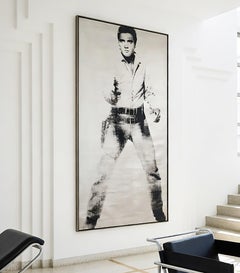
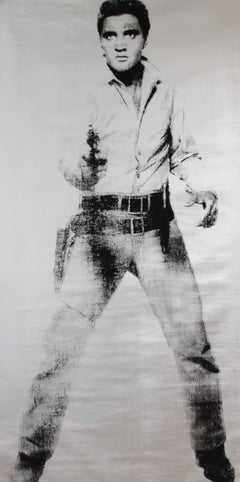
"Elvis", Denied Andy Warhol Silver & Black Pop Art Painting by Charles Lutz

"Elvis", Denied Andy Warhol Silver & Black Pop Art Painting by Charles Lutz

By Charles Lutz

Located in Brooklyn, NY

Elvis, Metallic Silver and Black Full Length Silkscreen Painting by Charles Lutz Silkscreen and silver enamel painted on vintage 1960's era linen with Artist's Denied stamp of the Andy Warhol Art Authentication Board. 82" x 40" inches 2010 Lutz's 2007 ''Warhol Denied'' series gained international attention by calling into question the importance of originality or lack thereof in the work of Andy Warhol. The authentication/denial process of the [[Andy Warhol Art Authentication Board]] was used to create value by submitting recreations of Warhol works for judgment with the full intention for the works to be formally marked "DENIED". The final product of the conceptual project being "officially denied" "Warhol" paintings authored by Lutz. Based on the full-length Elvis Presley paintings by Pop Artist Andy Warhol in 1964, this is likely one of his most iconic images, next to Campbell's Soup Cans and portraits of Jackie Kennedy, Marilyn Monroe, Liz Taylor, and Marlon Brando. This is the rarest of the Elvis works from the series, as Lutz sourced a vintage roll of 1960's primed artist linen which was used for this one Elvis. The silkscreen, like Warhol's embraced imperfections, like the slight double image printing of the Elvis image. Lutz received his BFA in Painting and Art History from Pratt Institute and studied Human Dissection and Anatomy at Columbia University, New York. Lutz's work deals with perceptions and value structures, specifically the idea of the transference of values. Lutz's most recently presented an installation of new sculptures dealing with consumerism at Frank Lloyd Wright's Fallingwater House in 2022. Lutz's 2007 Warhol Denied series received international attention calling into question the importance of originality in a work of art. The valuation process (authentication or denial) of the Andy Warhol Art Authentication Board was used by the artist to create value by submitting recreations of Warhol works for judgment, with the full intention for the works to be formally marked "DENIED" of their authenticity. The final product of this conceptual project is "Officially DENIED" "Warhol" paintings authored by Lutz. Later in 2013, Lutz went on to do one of his largest public installations to date. At the 100th Anniversary of Marcel Duchamp's groundbreaking and controversial Armory Show, Lutz was asked by the curator of Armory Focus: USA and former Director of The Andy Warhol Museum, Eric Shiner to create a site-specific installation representing the US. The installation "Babel" (based on Pieter Bruegel's famous painting) consisted of 1500 cardboard replicas of Warhol's Brillo Box (Stockholm Type) stacked 20 ft tall. All 1500 boxes were then given to the public freely, debasing the Brillo Box as an art commodity by removing its value, in addition to debasing its willing consumers. Elvis was "the greatest cultural force in the Twentieth Century. He introduced the beat to everything, and he changed everything - music, language, clothes, it's a whole new social revolution." Leonard Bernstein in: Exh. Cat., Boston, The Institute of Contemporary Art and traveling, Elvis + Marilyn 2 x Immortal, 1994-97, p. 9. Andy Warhol "quite simply changed how we all see the world around us." Kynaston McShine in: Exh. Cat., New York, Museum of Modern Art (and traveling), Andy Warhol: Retrospective, 1996, p. 13. In the summer of 1963 Elvis Presley was just twenty-eight years old but already a legend of his time. During the preceding seven years - since Heartbreak Hotel became the biggest-selling record of 1956 - he had recorded seventeen number-one singles and seven number-one albums; starred in eleven films, countless national TV appearances, tours, and live performances; earned tens of millions of dollars; and was instantly recognized across the globe. The undisputed King of Rock and Roll, Elvis was the biggest star alive: a cultural phenomenon of mythic proportions apparently no longer confined to the man alone. As the eminent composer Leonard Bernstein put it, Elvis was "the greatest cultural force in the Twentieth Century. He introduced the beat to everything, and he changed everything - music, language, clothes, it's a whole new social revolution." (Exh. Cat., Boston, The Institute of Contemporary Art (and traveling), Elvis + Marilyn 2 x Immortal, 1994, p. 9). In the summer of 1963 Andy Warhol was thirty-four years old and transforming the parameters of visual culture in America. The focus of his signature silkscreen was leveled at subjects he brilliantly perceived as the most important concerns of day to day contemporary life. By appropriating the visual vernacular of consumer culture and multiplying readymade images gleaned from newspapers, magazines and advertising, he turned a mirror onto the contradictions behind quotidian existence. Above all else he was obsessed with themes of celebrity and death, executing intensely multifaceted and complex works in series that continue to resound with universal relevance. His unprecedented practice re-presented how society viewed itself, simultaneously reinforcing and radically undermining the collective psychology of popular culture. He epitomized the tide of change that swept through the 1960s and, as Kynaston McShine has concisely stated, "He quite simply changed how we all see the world around us." (Exh. Cat., New York, Museum of Modern Art (and traveling), Andy Warhol: Retrospective, 1996, p. 13). Thus in the summer of 1963 there could not have been a more perfect alignment of artist and subject than Warhol and Elvis. Perhaps the most famous depiction of the biggest superstar by the original superstar artist, Double Elvis is a historic paradigm of Pop Art from a breath-taking moment in Art History. With devastating immediacy and efficiency, Warhol's canvas seduces our view with a stunning aesthetic and confronts our experience with a sophisticated array of thematic content. Not only is there all of Elvis, man and legend, but we are also presented with the specter of death, staring at us down the barrel of a gun; and the lone cowboy, confronting the great frontier and the American dream. The spray painted silver screen denotes the glamour and glory of cinema, the artificiality of fantasy, and the idea of a mirror that reveals our own reality back to us. At the same time, Warhol's replication of Elvis' image as a double stands as metaphor for the means and effects of mass-media and its inherent potential to manipulate and condition. These thematic strata function in simultaneous concert to deliver a work of phenomenal conceptual brilliance. The portrait of a man, the portrait of a country, and the portrait of a time, Double Elvis is an indisputable icon for our age. The source image was a publicity still for the movie Flaming Star, starring Presley as the character Pacer Burton and directed by Don Siegel in 1960. The film was originally intended as a vehicle for Marlon Brando and produced by David Weisbart, who had made James Dean's Rebel Without a Cause in 1955. It was the first of two Twentieth Century Fox productions Presley was contracted to by his manager Colonel Tom Parker, determined to make the singer a movie star. For the compulsive movie-fan Warhol, the sheer power of Elvis wielding a revolver as the reluctant gunslinger presented the zenith of subject matter: ultimate celebrity invested with the ultimate power to issue death. Warhol's Elvis is physically larger than life and wears the expression that catapulted him into a million hearts: inexplicably and all at once fearful and resolute; vulnerable and predatory; innocent and explicit. It is the look of David Halberstam's observation that "Elvis Presley was an American original, the rebel as mother's boy, alternately sweet and sullen, ready on demand to be either respectable or rebellious." (Exh. Cat., Boston, Op. Cit.). Indeed, amidst Warhol's art there is only one other subject whose character so ethereally defies categorization and who so acutely conflated total fame with the inevitability of mortality. In Warhol's work, only Elvis and Marilyn harness a pictorial magnetism of mythic proportions. With Marilyn Monroe, whom Warhol depicted immediately after her premature death in August 1962, he discovered a memento mori to unite the obsessions driving his career: glamour, beauty, fame, and death. As a star of the silver screen and the definitive international sex symbol, Marilyn epitomized the unattainable essence of superstardom that Warhol craved. Just as there was no question in 1963, there remains still none today that the male equivalent to Marilyn is Elvis. However, despite his famous 1968 adage, "If you want to know all about Andy Warhol, just look at the surface of my paintings" Warhol's fascination held purpose far beyond mere idolization. As Rainer Crone explained in 1970, Warhol was interested in movie stars above all else because they were "people who could justifiably be seen as the nearest thing to representatives of mass culture." (Rainer Crone, Andy Warhol, New York, 1970, p. 22). Warhol was singularly drawn to the idols of Elvis and Marilyn, as he was to Marlon Brando and Liz Taylor, because he implicitly understood the concurrence between the projection of their image and the projection of their brand. Some years after the present work he wrote, "In the early days of film, fans used to idolize a whole star - they would take one star and love everything about that star...So you should always have a product that's not just 'you.' An actress should count up her plays and movies and a model should count up her photographs and a writer should count up his words and an artist should count up his pictures so you always know exactly what you're worth, and you don't get stuck thinking your product is you and your fame, and your aura." (Andy Warhol, The Philosophy of Andy Warhol (From A to B and Back Again), San Diego, New York and London, 1977, p. 86). The film stars of the late 1950s and early 1960s that most obsessed Warhol embodied tectonic shifts in wider cultural and societal values. In 1971 John Coplans argued that Warhol was transfixed by the subject of Elvis, and to a lesser degree by Marlon Brando and James Dean, because they were "authentically creative, and not merely products of Hollywood's fantasy or commercialism. All three had originative lives, and therefore are strong personalities; all three raised - at one level or another - important questions as to the quality of life in America and the nature of its freedoms. Implicit in their attitude is a condemnation of society and its ways; they project an image of the necessity for the individual to search for his own future, not passively, but aggressively, with commitment and passion." (John Coplans, "Andy Warhol and Elvis Presley," Studio International, vol. 181, no. 930, February 1971, pp. 51-52). However, while Warhol unquestionably adored these idols as transformative heralds, the suggestion that his paintings of Elvis are uncritical of a generated public image issued for mass consumption fails to appreciate the acuity of his specific re-presentation of the King. As with Marilyn, Liz and Marlon, Warhol instinctively understood the Elvis brand as an industrialized construct, designed for mass consumption like a Coca-Cola bottle or Campbell's Soup Can, and radically revealed it as a precisely composed non-reality. Of course Elvis offered Warhol the biggest brand of all, and he accentuates this by choosing a manifestly contrived version of Elvis-the-film-star, rather than the raw genius of Elvis as performing Rock n' Roll pioneer. A few months prior to the present work he had silkscreened Elvis' brooding visage in a small cycle of works based on a simple headshot, including Red Elvis, but the absence of context in these works minimizes the critical potency that is so present in Double Elvis. With Double Elvis we are confronted by a figure so familiar to us, yet playing a role relating to violence and death that is entirely at odds with the associations entrenched with the singer's renowned love songs. Although we may think this version of Elvis makes sense, it is the overwhelming power of the totemic cipher of the Elvis legend that means we might not even question why he is pointing a gun rather than a guitar. Thus Warhol interrogates the limits of the popular visual vernacular, posing vital questions of collective perception and cognition in contemporary society. The notion that this self-determinedly iconic painting shows an artificial paradigm is compounded by Warhol's enlistment of a reflective metallic surface, a treatment he reserved for his most important portraits of Elvis, Marilyn, Marlon and Liz. Here the synthetic chemical silver paint becomes allegory for the manufacture of the Elvis product, and directly anticipates the artist's 1968 statement: "Everything is sort of artificial. I don't know where the artificial stops and the real starts. The artificial fascinates me, the bright and shiny..." (Artist quoted in Exh. Cat., Stockholm, Moderna Museet and traveling, Andy Warhol, 1968, n.p.). At the same time, the shiny silver paint of Double Elvis unquestionably denotes the glamour of the silver screen and the attractive fantasies of cinema. At exactly this time in the summer of 1963 Warhol bought his first movie camera and produced his first films such as Sleep, Kiss and Tarzan and Jane Regained. Although the absence of plot or narrative convention in these movies was a purposely anti-Hollywood gesture, the unattainability of classic movie stardom still held profound allure and resonance for Warhol. He remained a celebrity and film fanatic, and it was exactly this addiction that so qualifies his sensational critique of the industry machinations behind the stars he adored. Double Elvis was executed less than eighteen months after he had created 32 Campbell's Soup Cans for his immortal show at the Ferus Gallery, Los Angeles in July and August 1962, and which is famously housed in the Museum of Modern Art, New York. In the intervening period he had produced the series Dollar Bills, Coca-Cola Bottles, Suicides, Disasters, and Silver Electric Chairs, all in addition to the portrait cycles of Marilyn and Liz. This explosive outpouring of astonishing artistic invention stands as definitive testament to Warhol's aptitude to seize the most potent images of his time. He recognized that not only the product itself, but also the means of consumption - in this case society's abandoned deification of Elvis - was symptomatic of a new mode of existence. As Heiner Bastian has precisely summated: "the aura of utterly affirmative idolization already stands as a stereotype of a 'consumer-goods style' expression of an American way of life and of the mass-media culture of a nation." (Exh. Cat., Berlin, Neue Nationalgalerie (and traveling), Andy Warhol: Retrospective, 2001, p. 28). For Warhol, the act of image replication and multiplication anaesthetized the effect of the subject, and while he had undermined the potency of wealth in 200 One Dollar Bills, and cheated the terror of death by electric chair in Silver Disaster # 6, the proliferation of Elvis here emasculates a prefabricated version of character authenticity. Here the cinematic quality of variety within unity is apparent in the degrees to which Presley's arm and gun become less visible to the left of the canvas. The sense of movement is further enhanced by a sense of receding depth as the viewer is presented with the ghost like repetition of the figure in the left of the canvas, a 'jump effect' in the screening process that would be replicated in the multiple Elvis paintings. The seriality of the image heightens the sense of a moving image, displayed for us like the unwinding of a reel of film. Elvis was central to Warhol's legendary solo exhibition organized by Irving Blum at the Ferus Gallery in the Fall of 1963 - the show having been conceived around the Elvis paintings since at least May of that year. A well-known installation photograph shows the present work prominently presented among the constant reel of canvases, designed to fill the space as a filmic diorama. While the Elvis canvases...

Category

21st Century and Contemporary Pop Art Art by Medium: Enamel
Materials

Enamel

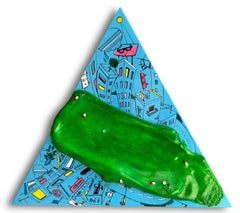
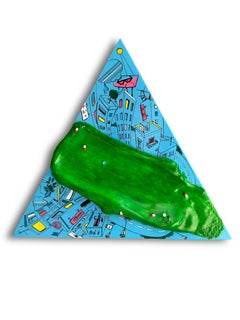
SAFE IN THE MIDDLE – Mixed Media Triangular Relief with Urban Drawing and Green

SAFE IN THE MIDDLE – Mixed Media Triangular Relief with Urban Drawing and Green

By Vera Vizzi

Located in FISTERRA, ES

SAFE IN THE MIDDLE is a mixed media wall sculpture by Vera Vizzi that juxtaposes urban sketching with organic relief. Executed in foam clay, acrylic paint and enamel on a 34 × 40 × 3...

Category

2010s Street Art Art by Medium: Enamel

Materials

Enamel

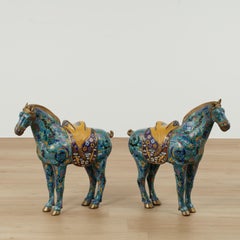
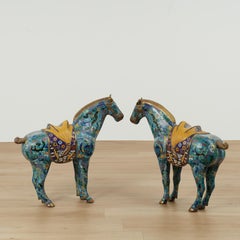
Pair of Vintage Chinese Cloisonne Horses

Pair of Vintage Chinese Cloisonne Horses

Located in Palm Beach, FL

Striking pair of Chinese cloisonne or enamel on brass horses crafted in classic form featuring colorful Symbolic, floral and geometric designs on an alluring blue background. Left: ...

Category

20th Century Folk Art Art by Medium: Enamel

Materials

Brass, Enamel

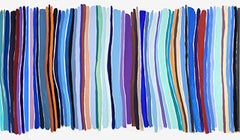
Chord Blue
Chord Blue

Chord Blue

By John Platt

Located in Westport, CT

This is a diptych (each half is 24 x 36 inches) and was created by John Platt, a Brooklyn artist who studied at the Boston Museum of Fine Arts and has exhibited extensively in New Yo...

Category

2010s Abstract Art by Medium: Enamel

Materials

Enamel

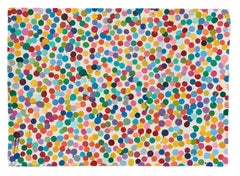
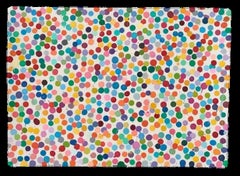
The Currency

The Currency

By Damien Hirst

Located in London, GB

Damien Hirst The Currency 8321, 2021 Enamel paint on paper 20 x 30 cm 7.8 x 11.8 inches Damien Hirst, a poster boy for the Young British Artists who rose to prominence in late 1980s...

Category

2010s Contemporary Art by Medium: Enamel

Materials

Enamel

Side-By-Side II

Side-By-Side II

By Adam Umbach

Located in Greenwich, CT

American, b. 1986 Adam Umbach was born in Chicago, and currently lives and works in Brooklyn, New York. After being inspired from an early age by the modern masters collection at the Art Institute of Chicago, he received his BFA in painting from the University of Wisconsin. He has exhibited his large-scale paintings nationally in Cavalier Ebanks...

Category

2010s Contemporary Art by Medium: Enamel

Materials

Enamel

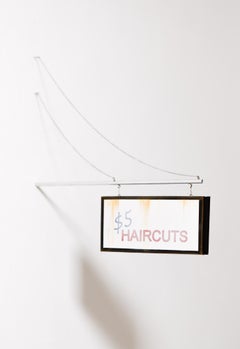
"$5 Haircut" Miniature Wall-Hanging Storefront Sign by Drew Leshko

"$5 Haircut" Miniature Wall-Hanging Storefront Sign by Drew Leshko

By Drew Leshko

Located in Philadelphia, PA

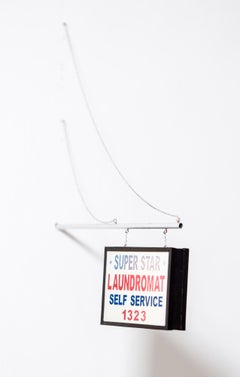
This piece titled "$5 Haircuts" is original artwork made from paper, inkjet print, enamel, wire, chain, aluminum tube, and pastel by Drew Leshko. This piece measures 10"h x .75"w x 8...

Category

21st Century and Contemporary Contemporary Art by Medium: Enamel

Materials

Metal, Enamel, Wire

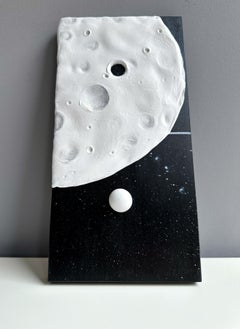
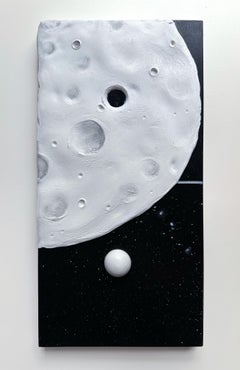
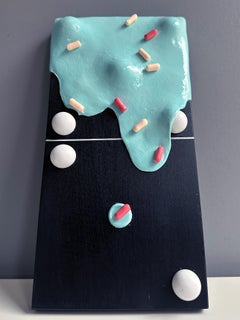
Celestial Moon Wall Relief from the Domino Series on Black Panel

Celestial Moon Wall Relief from the Domino Series on Black Panel

By Vera Vizzi

Located in FISTERRA, ES

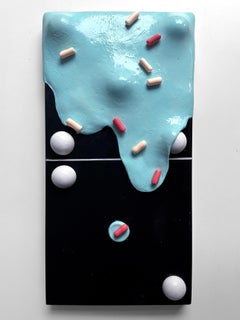
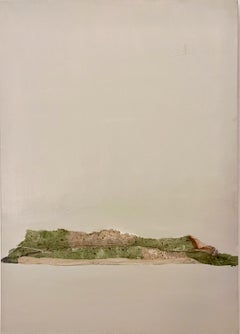
Celestial moon wall relief from the Domino Series combining sculptural texture, cratered surface, and monochrome contrast on a black panel. This vertical mixed media wall sculpture ...

Category

2010s Contemporary Art by Medium: Enamel

Materials

Enamel

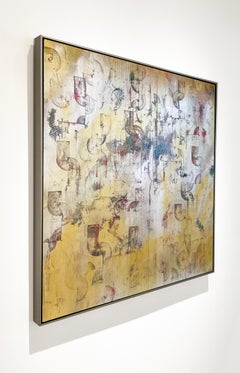
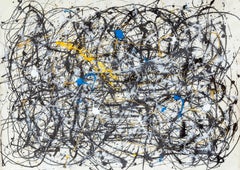
JP #1, Large Abstract Expressionist Painting by William Hewes

JP #1, Large Abstract Expressionist Painting by William Hewes

By William Hewes

Located in Long Island City, NY

A large, dramatic abstract oil painting by Contemporary artist Bill Hewes. William (Bill) Hewes is an American self-taught artist. Hewes was born in Easthampton, Massachusetts in 1957. Before becoming an artist in 2012 Hewes worked in the building trades for 40 years and often uses the skills learned from his tradesman work within his artwork. Hewes paints in the Action/Drip style, even building his own spinning table...

Category

2010s Abstract Expressionist Art by Medium: Enamel

Materials

Enamel

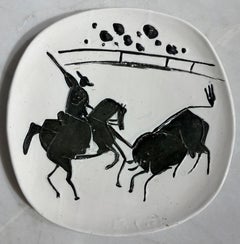
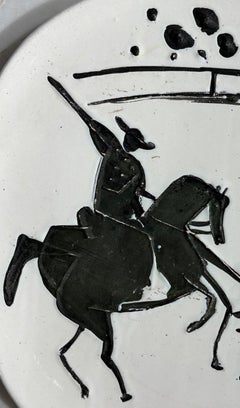
Pablo Picasso " Picador and Bull" Earthenware

Pablo Picasso " Picador and Bull" Earthenware

By Pablo Picasso

Located in Los Angeles, CA

Pablo Picasso 1881-1973 (Spanish) Round-square plate “Picador and bull” Model created on September 25, 1953. Diameter 25 cm Original proof in white earthenware and oxidized pa...

Category

1950s Art by Medium: Enamel

Materials

Enamel

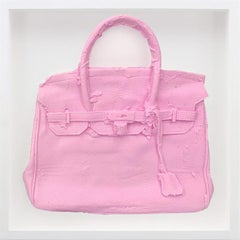
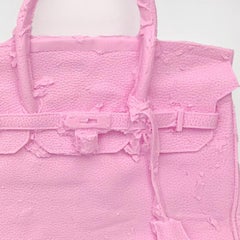
Homemade Hermes Birkin Bag ( Pink ) 2015 by Shelter Serra

Homemade Hermes Birkin Bag ( Pink ) 2015 by Shelter Serra

By Shelter Serra

Located in Brooklyn, NY

Homemade Hermes Birkin Bag ( Kelly Green ) 2015, 15”x14.5”x1.5” inches unframed, 18.75 "x 18.75 x 2.5 framed Cast Resin, Edition of 15 Also available in Kelly Green, White, Gold and Silver. The frame is a white shadow box frame with plexiglass. The Homemade Hermes Birkin Bag is a sculpture that celebrates the beauty, and status, that the docents of fashion have bestowed upon coveted objects and accessories as such. In a Duchampian gesture of representation, the artist has created an object that has been “elevated to uselessness”, yet reveals much about our society’s infatuation with consumption and materialism. Cast in resin the sculpture becomes an apropos trope of our time, a perfect conversation starter. Shelter Serra’s paintings, sculptures, and drawings explore mass consumption and cultural identity. He juxtaposes subject matters that are both common and recognizable: a Campbell's Soup Can, a copper plated baseball hat, and a Hermes Birkin bag...

Category

21st Century and Contemporary Contemporary Art by Medium: Enamel

Materials

Enamel

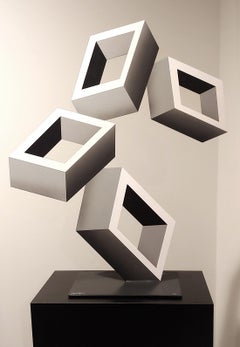
"4 White Boxes Illusion Sculpture"

"4 White Boxes Illusion Sculpture"

By Sanseviero

Located in Southampton, NY

Only 4 sculptures by Sanseviero remain available for the Summer season here in the Hamptons . We have sold 40 sculptures (See the image with all 40 sold sculptures.) This is one of those 4 sculptures. Now is the time to purchase one of the last 4 sculptures still available before the end of the Hamptons Summer season. We are pleased to offer "4 White Boxes illusion sculpture...

Category

2010s Contemporary Art by Medium: Enamel

Materials

Metal, Enamel

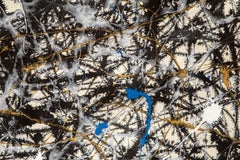
Number 30, Large Abstract Expressionist Acrylic Painting by William Hewes

Number 30, Large Abstract Expressionist Acrylic Painting by William Hewes

By William Hewes

Located in Long Island City, NY

A large, dramatic abstract oil painting by Contemporary artist Bill Hewes. William (Bill) Hewes is an American self-taught artist. Hewes was born in Easthampton, Massachusetts in 1957. Before becoming an artist in 2012 Hewes worked in the building trades for 40 years and often uses the skills learned from his tradesman work within his artwork. Hewes paints in the Action/Drip style, even building his own spinning table...

Category

2010s Abstract Expressionist Art by Medium: Enamel

Materials

Enamel

"The Clock" Abstract Painting 72 x 48 inch by Yoram Katz

"The Clock" Abstract Painting 72 x 48 inch by Yoram Katz

By Yoram Katz

Located in Culver City, CA

"The Clock" Abstract Painting 72 x 48 inch by Yoram Katz Medium: Acrylic and Enamel on Canvas ABOUT THE ARTIST: Born in Israel. Graduated from the Bazelel Art Academy in Jerusalem...

Category

21st Century and Contemporary Abstract Expressionist Art by Medium: Enamel

Materials

Enamel

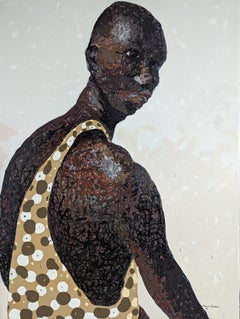
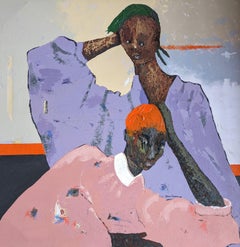
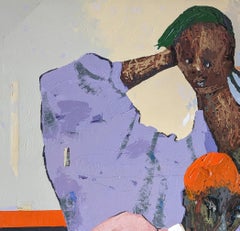
Living for the Now 1 - 21st Century, Contemporary, Figurative, Neo-Expressionism

Living for the Now 1 - 21st Century, Contemporary, Figurative, Neo-Expressionism

By Dennis Onofua

Located in Ibadan, Oyo

Shipping Procedure Ships in a well-protected tube from Nigeria This work is unique, not a print or other type of copy. Accompanied by a Certificate of Authenticity (Issued by the Gal...

Category

21st Century and Contemporary Contemporary Art by Medium: Enamel

Materials

Enamel

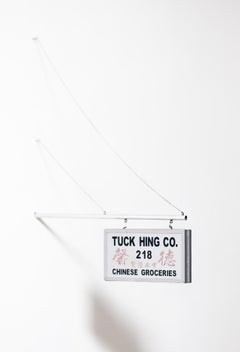
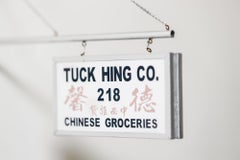
Tuck Hing Co. Sculpture, Contemporary, Paper & Enamel, 21st Century

Tuck Hing Co. Sculpture, Contemporary, Paper & Enamel, 21st Century

By Drew Leshko

Located in Philadelphia, PA

This piece titled "Tuck Hing Co." is original artwork made from paper, inkjet print, enamel, wire, chain, aluminum tube, and pastel by Drew Leshko. This piece measures 8"h x 0.75"w x...

Category

21st Century and Contemporary Contemporary Art by Medium: Enamel

Materials

Metal, Enamel, Wire

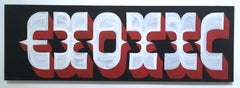
Exotic, 2019

Exotic, 2019

Located in Jersey City, NJ

"Exotic," 2019. Enamel on panel, sign painting, black, white, and red. Hand lettering

Category

2010s Contemporary Art by Medium: Enamel

Materials

Enamel

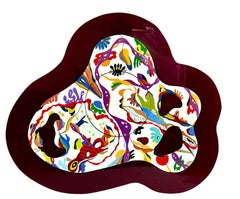
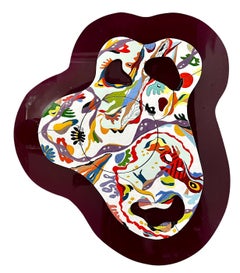
Italian Surrealist Colorful Metal Enamel Plaque Painting Wall Hanging Art Luigi

Italian Surrealist Colorful Metal Enamel Plaque Painting Wall Hanging Art Luigi

Located in Surfside, FL

Biomorphic Surrealism. Signed Luigi, Enamel on metal (probably copper). Mounted to a plexi or acrylic purple mounting. I am assuming it is Italian as it is signed Luigi but it might ...

Category

20th Century Surrealist Art by Medium: Enamel

Materials

Enamel

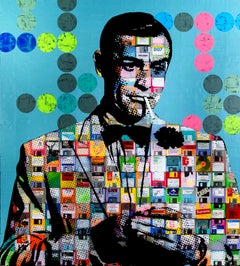
Bond James Bond v2.1

Bond James Bond v2.1

Located in New York, NY

Oil & Enamel Painted Silkscreen on Recycled Floppy Discs. Mounted on Custom built Panel. Sean Connery as James Bond. About the artist: Taylor Smith ...

Category

2010s Pop Art Art by Medium: Enamel
Materials

Enamel

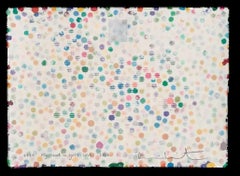
My Heart Is Your Soul

My Heart Is Your Soul

By Damien Hirst

Located in London, GB

2016 Enamel paint on handmade paper 20 x 30 cm Hand signed, dated and titled by Damien Hirst Mint condition, framed in the Heni prescribed frame Damien Hirst (born 1965) rose to pro...

Category

2010s Contemporary Art by Medium: Enamel

Materials

Enamel

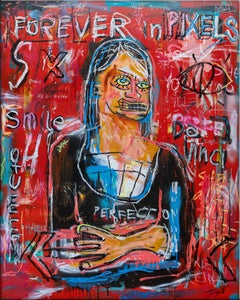
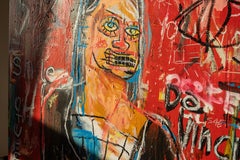
"Mona Lisa, Gioconda"  - Tag: basquiat style

"Mona Lisa, Gioconda" - Tag: basquiat style

By Diego Tirigall

Located in OIA, ES

This bold reinterpretation of Leonardo da Vinci’s Mona Lisa comes from Diego Tirigall, an artist whose rise in the contemporary art world is garnering significant attention. Drawing ...

Category

2010s Street Art Art by Medium: Enamel
Materials

Enamel

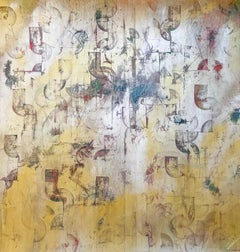
Blue Harmony
Blue Harmony

Blue Harmony

By RETNA

Located in West Hollywood, CA

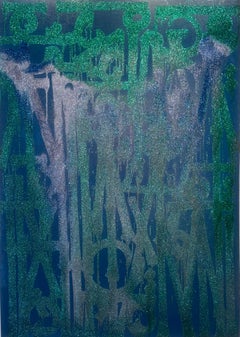
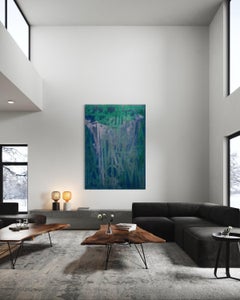
"Blue Harmony" by RETNA is a striking example of contemporary urban calligraphy, rendered in radiant shades of blue with shimmering enamel and crystalline. This 2025 mixed media pain...

Category

21st Century and Contemporary Street Art Art by Medium: Enamel
Materials

Enamel
Enamel art for sale on 1stDibs.
Find a wide variety of authentic Enamel art available on 1stDibs. While artists have worked in this medium across a range of time periods, art made with this material during the 21st Century is especially popular. If you’re looking to add art created with this material to introduce a provocative pop of color and texture to an otherwise neutral space in your home, the works available on 1stDibs include elements of blue, red, orange, purple and other colors. There are many well-known artists whose body of work includes ceramic sculptures. Popular artists on 1stDibs associated with pieces like this include Drew Leshko, Bruce Murphy, Scott Troxel, and Michael Kalish. Frequently made by artists working in the Contemporary, Abstract, all of these pieces for sale are unique and many will draw the attention of guests in your home. Not every interior allows for large Enamel art, so small editions measuring 0.01 inches across are also available