Video Loading
Want more images or videos?
Request additional images or videos from the seller
1 of 21

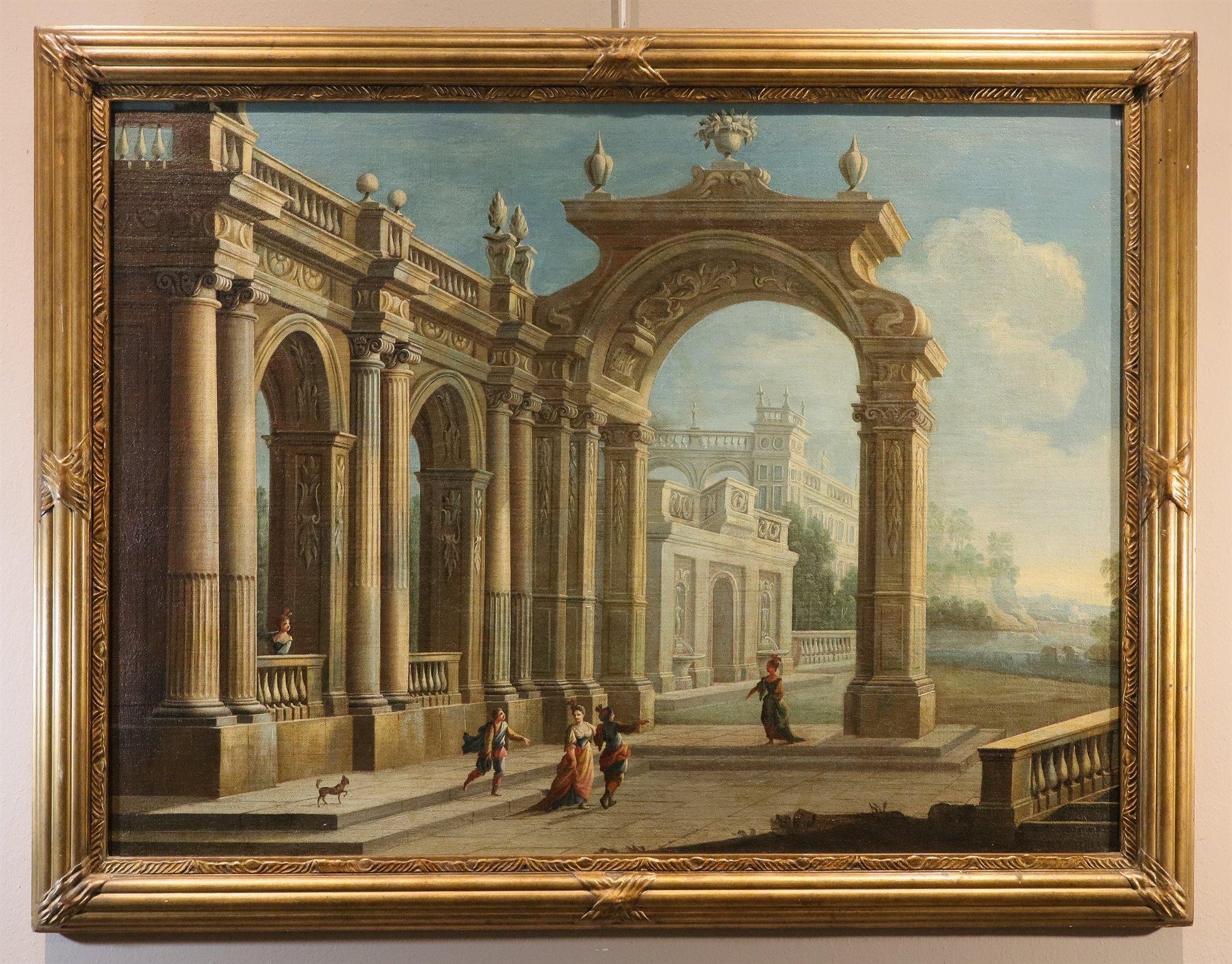
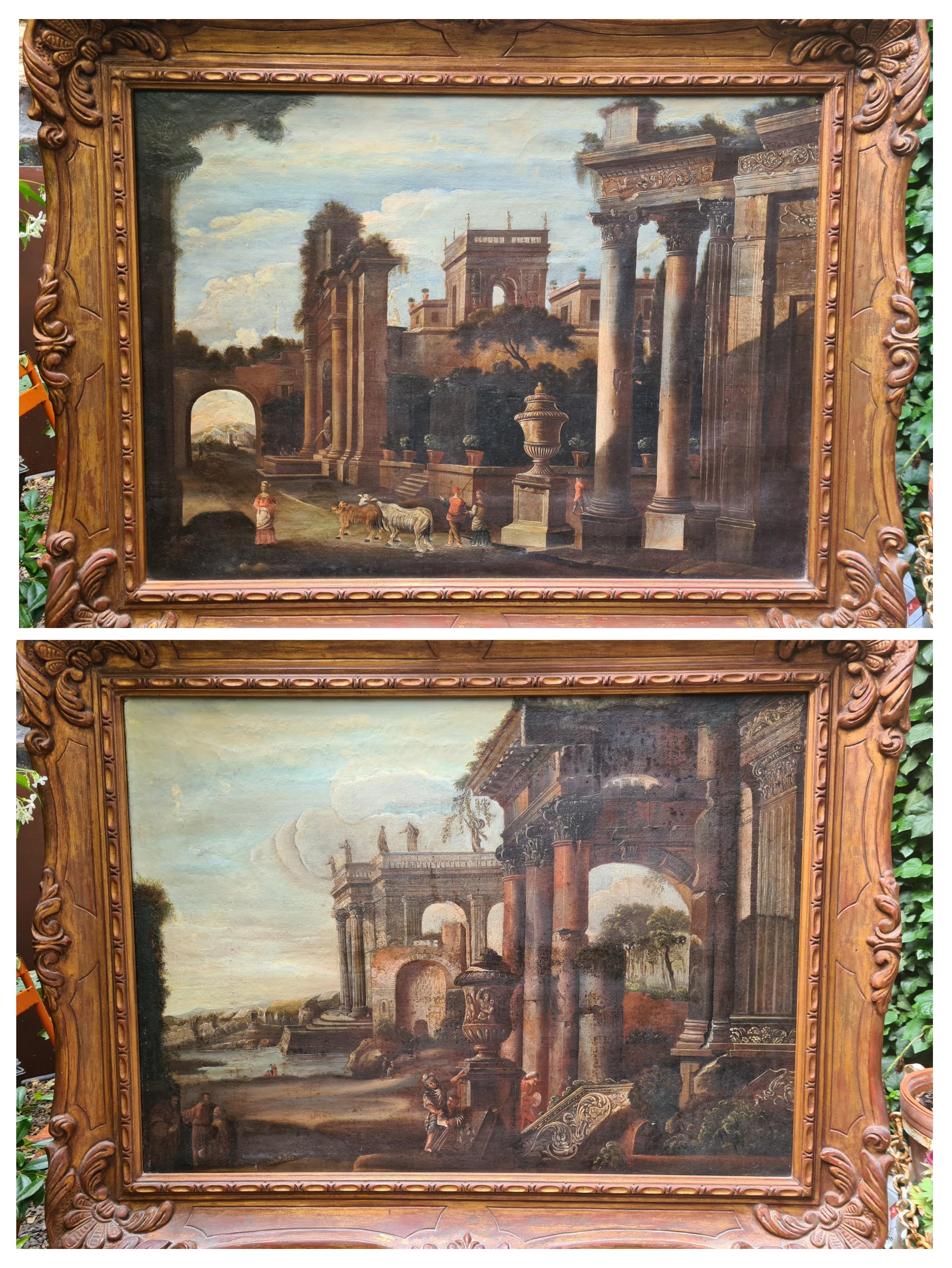
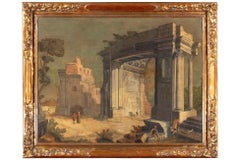
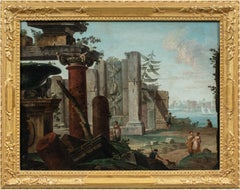
Grand Tour 18th Century Veduta Capriccio Painting, After Gennaro Greco

$8,996.78
$11,232.2620% Off
£6,644.10
£8,293.2220% Off
€7,600
€9,50020% Off
CA$12,476.79
CA$15,602.1920% Off
A$12,553.22
A$15,671.4620% Off
CHF 7,286.31
CHF 9,086.7520% Off
MX$152,989.80
MX$191,208.1120% Off
NOK 84,102.91
NOK 105,159.7220% Off
SEK 86,300.89
SEK 107,899.3420% Off
DKK 57,943.92
DKK 72,436.7620% Off

About the Item

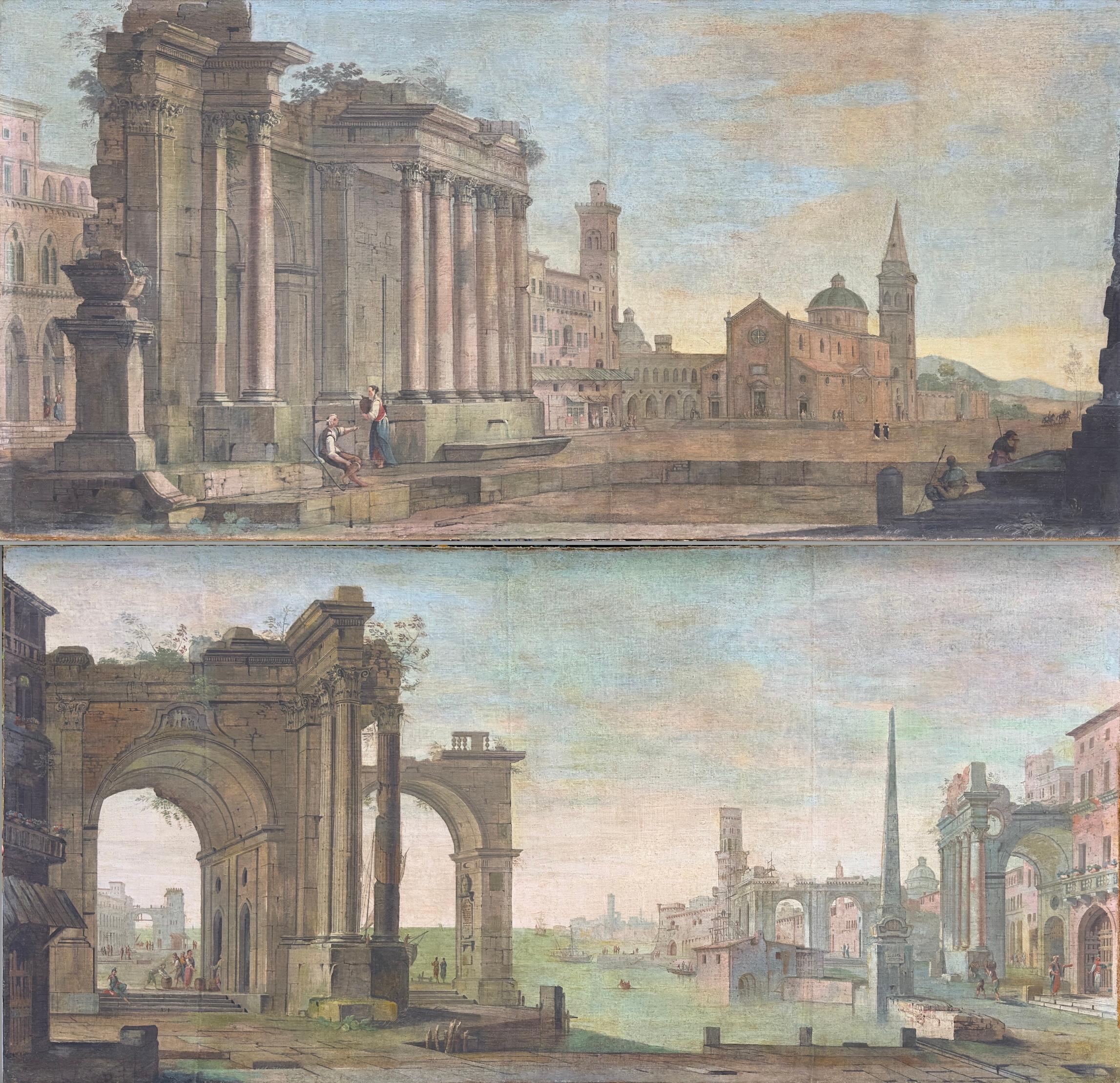
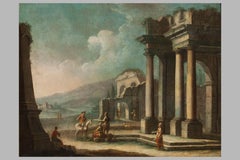
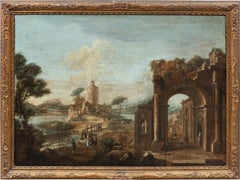
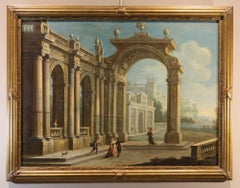
A fine, large 18th century veduta capriccio scene with temple ruins after Gennaro Greco from the circle of Pietro Cappelli. The painting is presented in a more modern carved gilt wood frame. The pair to this painting is also available on 1stdibs reference LU1430214555712. Provenance: A Private English collection by descent. This large eighteenth-century Italian oil on canvas painting is a fine example of architectural fantasy. It is a work of excellent quality. Although the decorations of ancient buildings and sculptures are imaginary, they are designed to charm rather than describe. The ruins are animated by colourful characters. The artist's ability to use perspective and the skillful rendering of building materials, such as the realistic marbles of the columns, make this painting a tour de force. It is a magnificent large scale veduta capriccio scene with temple ruins, animals and figures socialising. Fantastic detail of statuary, idealised landscapes, costumes and of course the buildings themselves. Very much in the 'Grand Tour' style these fantastic works would have graced an important collection and will be a valuable and imposing addition to any interior or collection. Gennaro Greco also known as "Il Mascacotta" (1663–1714) was an Italian architectural painter who was active in Naples during the late Baroque period. He is known for his architectural paintings, capricci, compositions with ruins, as well as his vedute. His vedute fall mostly in the category of the so-called vedute ideate which represent closely observed views of completely imaginary landscapes. Pietro Capelli trained under Francesco Solimena and worked in his native Naples in the early 18th century. Mainly a painter of quadrature, he also painted landscapes. Capriccio scenes such as these, which combined architecture with landscape and genre figures, often required artists to collaborate according to their specialties, the figures and animals in this pair of scenes may have been completed by a different hand to the architectural ruins. Pietro Capelli or Pietro Cappelli (born circa 1700, died 1724 or 1727[ was an Italian painter of the Rococo, active in his native city of Naples. He trained under Francesco Solimena. He was active in quadratura, but also painted capricci and canvases with landscapes. He was a rival of Leonardo Coccorante. His father, Giuseppe Capelli, was a scenic designer at the Teatro San Bartolomeo in Naples. His brother, Giuseppe Cappelli (or Capelli) was a painter in Rome of scenographic decoration (theatrical decorations). Grossi states that he was so full of imagination, and fast at painting, that he did not even sketch beforehand for his works. In painting, a capriccio is an architectural fantasy, placing together buildings, archaeological ruins and other architectural elements in fictional and often fantastical combinations. These paintings may also include staffage (figures). This style of painting was introduced in the Renaissance and continued into the Baroque. By the late 18th century the term had expanded to mean any image with an equivalent degree of fantasy, for example as used in the titles of print series by Giovanni Battista Tiepolo and Goya, both of whom focus on figures rather than architecture.
  • Dimensions:
    Height: 35.44 in (90 cm)Width: 45.67 in (116 cm)Depth: 3.55 in (9 cm)
  • Medium:
  • Movement & Style:
  • Circle Of:
    Pietro Cappelli (1700 - 1724, Italian)
  • Period:
  • Condition:
    Extensive areas of old restoration. These paintings were restored and relined at the beginning of the 20th Century and it is from this time that the frames date.
  • Gallery Location:
    Cotignac, FR
  • Reference Number:
    Seller: LG/Cappellivache1stDibs: LU1430214555672

More From This Seller

View All
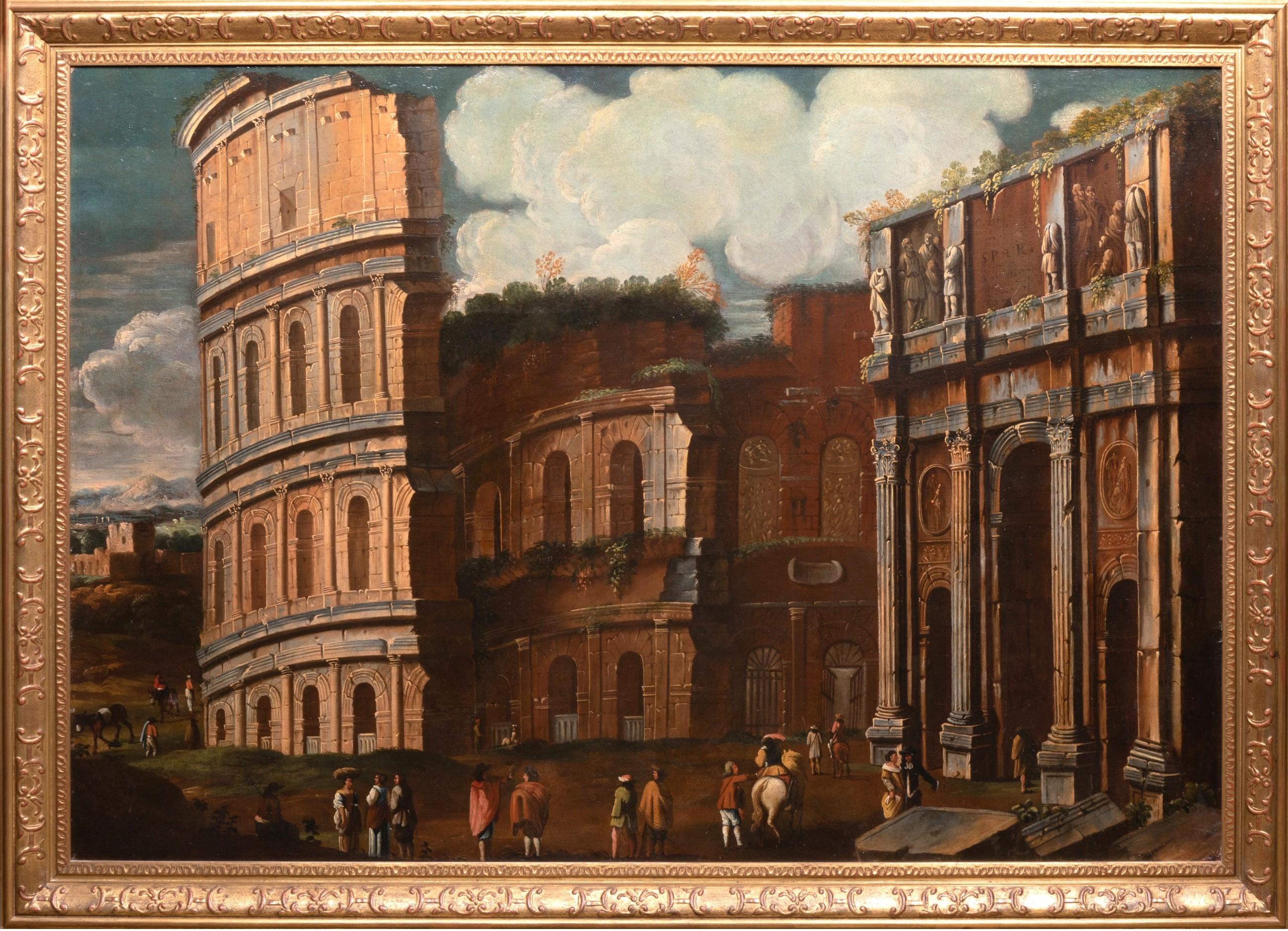
Large Grand Tour 18th Century Capriccio Painting Roman Ruins after Gennaro Greco

Large Grand Tour 18th Century Capriccio Painting Roman Ruins after Gennaro Greco

By Pietro Cappelli

Located in Cotignac, FR

A fine, large 18th century veduta capriccio scene with temple ruins after Gennaro Greco from the circle of Pietro Cappelli. The painting is presented in a more modern carved gilt woo...

Category

18th Century Baroque Landscape Paintings

Materials

Canvas, Oil

Pair of Grand Tour 18th Century Veduta Capriccio Paintings, After Gennaro Greco

Pair of Grand Tour 18th Century Veduta Capriccio Paintings, After Gennaro Greco

By Pietro Cappelli

Located in Cotignac, FR

A large pair of 18th century veduta capriccio scenes with temple ruins after Gennaro Greco from the circle of Pietro Cappelli. The paintings are presented in more modern carved gilt ...

Category

18th Century Baroque Landscape Paintings

Materials

Canvas, Oil

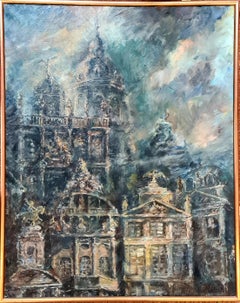
Baroque Buildings Oil Painting on Canvas, Late 20th Century, 94x75 cm

Baroque Buildings Oil Painting on Canvas, Late 20th Century, 94x75 cm

Located in Cotignac, FR

Large scale Baroque fantasy oil on canvas of monumental classical buildings and statuary by Alain Menghini. The painting is signed bottom right and is presented in a p[lain gilt wood...

Category

Late 20th Century Baroque Landscape Paintings

Materials

Canvas, Oil

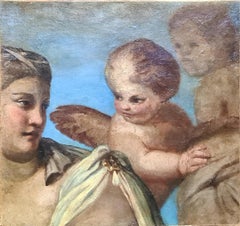
Cherubs and Beauty, Romantic Oil Painting on Canvas, 18th Century

Cherubs and Beauty, Romantic Oil Painting on Canvas, 18th Century

Located in Cotignac, FR

I8th century allegorical oil on canvas, a female figure and cherubs. The work is not signed and is probably an overdoor or trumeau from a larger decorative room scheme. It is present...

Category

18th Century Romantic Figurative Paintings

Materials

Oil, Canvas

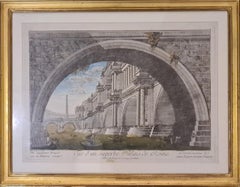
Piranesi, Hand Coloured Period Engraving, Vue d'un Superb Palais de Rome

Piranesi, Hand Coloured Period Engraving, Vue d'un Superb Palais de Rome

By Giovanni Battista Piranesi

Located in Cotignac, FR

A fine hand coloured 18th Century engraving after the original by Piranesi (Rome 1743), published by Danisy, Paris. Presented in period gold leaf frame, under glass. Piranesi was born in Venice, in the parish of S. Moisè where he was baptised. His father was a stonemason. His brother Andrea introduced him to Latin literature and ancient Greco-Roman civilization, and later he was apprenticed under his uncle, Matteo Lucchesi, who was a leading architect in Magistrato delle Acque, the state organization responsible for engineering and restoring historical buildings. From 1740, he had an opportunity to work in Rome as a draughtsman for Marco Foscarini, the Venetian ambassador of the new Pope Benedict XIV. He resided in the Palazzo Venezia and studied under Giuseppe Vasi, who introduced him to the art of etching and engraving of the city and its monuments. Giuseppe Vasi found Piranesi's talent was much greater than that of a mere engraver. According to Legrand, Vasi told Piranesi that "you are too much of a painter, my friend, to be an engraver." After his studies with Vasi, he collaborated with pupils of the French Academy in Rome to produce a series of vedute (views) of the city; his first work was Prima parte di Architettura e Prospettive (1743), followed in 1745 by Varie Vedute di Roma Antica e Moderna. From 1743 to 1747, he was mainly in Venice where, according to some sources, he often visited Giovanni Battista Tiepolo, a leading artist in Venice. It was Tiepolo who expanded the restrictive conventions of reproductive, topographical and antiquarian engravings. He then returned to Rome, where he opened a workshop in Via del Corso. In 1748–1774, he created an important series of vedute of the city which established his fame. In the meantime Piranesi devoted himself to the measurement of many of the ancient buildings: this led to the publication of Le Antichità Romane de' tempo della prima Repubblica e dei primi imperatori ("Roman Antiquities of the Time of the First Republic...

Category

Late 18th Century Baroque Landscape Prints

Materials

Paper, Ink, Watercolor
You May Also Like

18th Century by Antonio Stom Architectural Capriccio Oil on Canvas_

18th Century by Antonio Stom Architectural Capriccio Oil on Canvas_

By Antonio Stom

Located in Milano, Lombardia

Antonio Stom (Venice, Italy, c. 1688 - 1734) Title: Architectural Capriccio Medium: Oil on canvas Dimensions: without frame 88 x 113 cm - with frame 106 x 132 cm Carved, sculpted and...

Category

Early 18th Century Old Masters Landscape Paintings

Materials

Canvas, Cotton Canvas, Oil

18th Century By Giovanni Domenico Gambone Pair of Capricci Oil on Canvas

18th Century By Giovanni Domenico Gambone Pair of Capricci Oil on Canvas

Located in Milano, Lombardia

Giovanni Domenico Gambone (1720 - 1793) Title: Pair of Capricci Medium: Oil on canvas Dimensions: without frame 85 x 112 cm - with frame 97 x 124 cm Not signed The price is intended for the couple of paintings. Expertise by Professor Giancarlo Sestieri, art historian This pair of paintings by Giovanni Domenico Gambone (1720 – 1793) depicts an architectural capriccio with archaeological ruins and people who interact with each other. In one of the two artworks we can easily see a man on a horse...

Category

Mid-18th Century Old Masters Landscape Paintings

Materials

Canvas, Oil

Antonio Joli (Venetian painter) - 18th century landscape painting - Architecture

Antonio Joli (Venetian painter) - 18th century landscape painting - Architecture

Located in Varmo, IT

Antonio Joli (Modena 1700 - Naples 1777) - Architectural Capriccio with Ruins and Figures. 54 x 69 cm (without frame) - 74 x 89 cm (with frame). Oil on canvas, in a carved and gild...

Category

Late 18th Century Rococo Figurative Paintings

Materials

Canvas, Oil