1930s Paintings

to
342
370
385
481
282
161
Overall Width
to
Overall Height
to
2,127
6,646
43,455
122,107
775
721
1,341
1,680
1,643
2,353
3,023
3,502
3,341
3,357
1,063
408
303
152
77
49
44
20
4
4
2
2
885
757
33
915
497
349
256
171
135
134
129
111
78
77
72
67
62
53
53
50
48
45
42
1,582
1,346
703
684
265
61
23
21
18
17
1,230
130
1,087
591
Period: 1930s
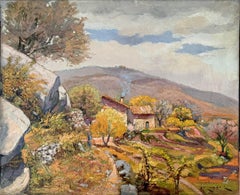
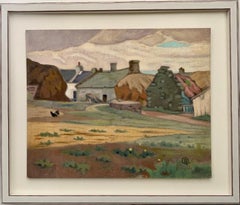
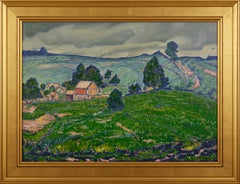
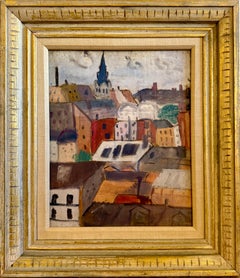
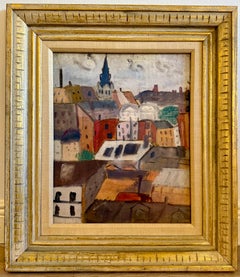
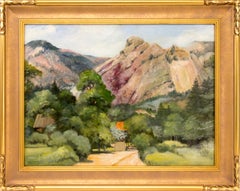
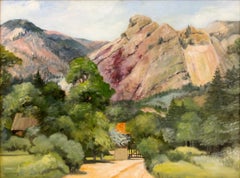
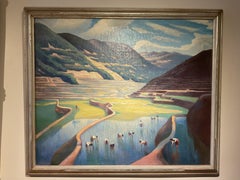
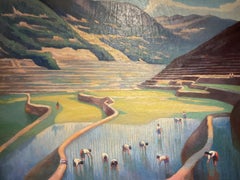
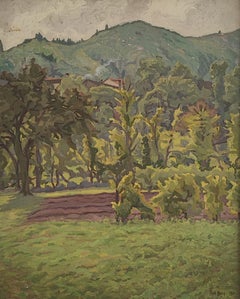
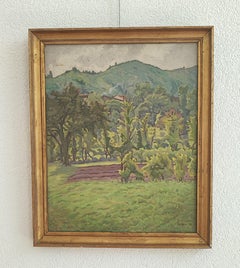
Hillside in Galilee
Hillside in Galilee

Hillside in Galilee

By Arieh Allweil

Located in North Clarendon, VT

Fantastic estate find, Hillside in Galilee by Arieh Allweil. A beautiful expressionist painting by an exceptional artist. Oil on board, signed lower right, 15" x 11" painting, 20" x ...

Category

Expressionist 1930s Paintings

Materials

Oil

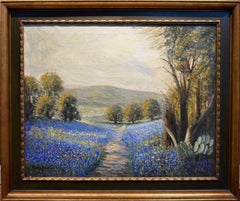
"Bluebonnet"  Texas Wildflowers

"Bluebonnet" Texas Wildflowers

By Rolla Taylor

Located in San Antonio, TX

Rolla Taylor (1872-1970) San Antonio Artist Image Size: 24 x 30 Frame Size: 30.25 x 36.5 Medium: Oil on Canvas Circa 1920s/30s "Bluebonnets" Biography Rolla Taylor (187...

Category

Impressionist 1930s Paintings

Materials

Oil

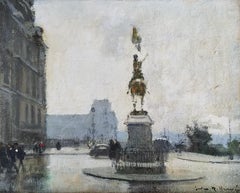
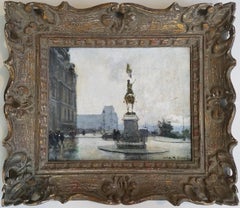
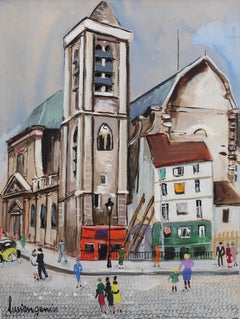
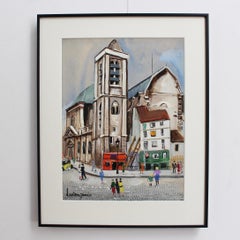
"Place Jeanne D'Arc, Paris, " Jules Herve, French Impressionism, Cityscape Street

"Place Jeanne D'Arc, Paris, " Jules Herve, French Impressionism, Cityscape Street

By Jules René Hervé

Located in New York, NY

Jules Herve (French, 1887 - 1981) Place Jeanne D'Arc, Paris, circa 1930 Oil on canvas 8 3/4 x 10 3/4 inches Signed lower right; signed on the reverse Jules Rene Herve, an impression...

Category

Impressionist 1930s Paintings

Materials

Canvas, Oil

Landscape with Farmhouse and Figure, Oil on Canvas, Signed, 1940s

Landscape with Farmhouse and Figure, Oil on Canvas, Signed, 1940s

Located in Sitges, Barcelona

Title: Landscape with Farmhouse and Figure Author: Vicente Rincón Garrido (Fuentes de Ebro, 1892 – Barcelona, 1958) Technique: Oil on canvas Dimensions: 60 x 73 cm (23.6 x 28.7 in) S...

Category

Impressionist 1930s Paintings

Materials

Oil, Canvas

Harbor Scene With Sailboats Seascape

Harbor Scene With Sailboats Seascape

By Emile Albert Gruppe

Located in Lake Worth Beach, FL

Harbor Scene With Sailboats Seascape Signed lower left, canvas 20x20, about 1930-40. Emile Albert Gruppé was born 1896 in Rochester, New York. He lived the early years of his life in...

Category

Impressionist 1930s Paintings

Materials

Cotton Canvas, Oil

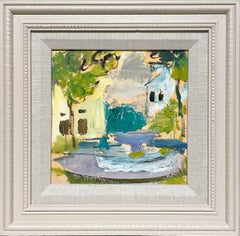
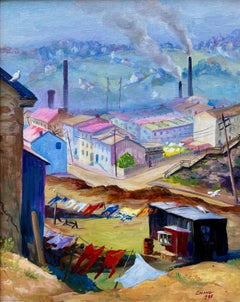
Manayunk Fountain & Silverwood Sts

Manayunk Fountain & Silverwood Sts

By Florence Prince Ewing

Located in Los Angeles, CA

Manayunk Fountain & Silverwood Sts, 1938, oil on canvas board, signed and dated lower right, titled and dated verso, 20 x 16 inches Although Florence Prince Ewing’s paintings ex...

Category

American Modern 1930s Paintings

Materials

Oil, Canvas, Board

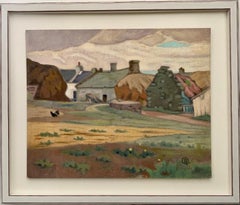
Mid 20th century Impressionist, French landscape with cottage

Mid 20th century Impressionist, French landscape with cottage

Located in Woodbury, CT

Mid-20th century Impressionist scene, French landscape with cottage The painter was active around the middle of the 20th century, painting landscapes, portraits, and city scenes. ...

Category

Impressionist 1930s Paintings

Materials

Oil, Board

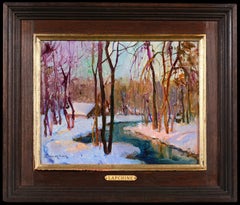
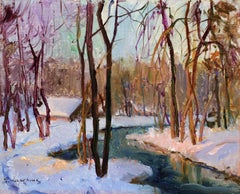
Winter - Russia - Impressionist River Landscape Oil Painting by Georges Lapchine

Winter - Russia - Impressionist River Landscape Oil Painting by Georges Lapchine

By Georges Lapchine

Located in Marlow, Buckinghamshire

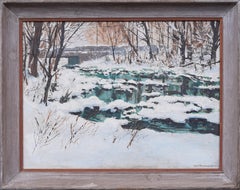
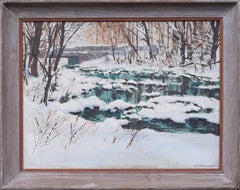
Signed impressionist landscape oil on canvas circa 1930 by Russian painter Georges Lapchine. This beautiful piece depicts a river running through a snow covered landscape which is sp...

Category

Impressionist 1930s Paintings

Materials

Oil, Canvas

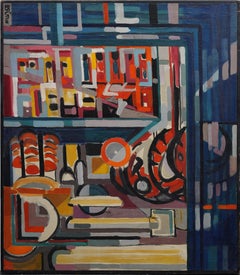
Antique American Large Signed Abstract Expressionist Modern Art  Oil Painting

Antique American Large Signed Abstract Expressionist Modern Art Oil Painting

Located in Buffalo, NY

Antique American abstract expressionist painting. Oil on canvas. Framed. Signed. Measuring: 37 by 43 inches overall, and 36 by 42 painting alone. In excellent original condition. ...

Category

Abstract Expressionist 1930s Paintings

Materials

Canvas, Oil

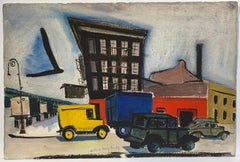
North on West Street (West Side Highway NYC Cityscape)

North on West Street (West Side Highway NYC Cityscape)

By De Hirsch Margules

Located in Wilton Manors, FL

De Hirsh Margules (1899-1965). North on West Street , 1939. Watercolor on Arches wove paper. Signed and dated in pencil by artist lower margin. Sheet measures 15 x 22 inches. Framed measurement: 27 x 34 inched. Incredibly vibrant and saturated color with no fading or toning of sheet. Provenance: Babcock Galleries, NYC De Hirsh Margules (1899–1965) was a Romanian-American "abstract realist" painter who crossed paths with many major American artistic and intellectual figures of the first half of the 20th century. Elaine de Kooning said that he was "[w]idely recognized as one of the most gifted and erudite watercolorists in the country". The New York Times critic Howard Devree stated in 1938 that "Margules uses color in a breath-taking manner. A keen observer, he eliminates scrupulously without distortion of his material." Devree later called Margules "one of our most daring experimentalists in the medium" Margules was also a well-known participant in the bohemian culture of New York City's Greenwich Village, where he was widely known as the "Baron" of Greenwich Village.[1] The New York Times described him as "one of Greenwich Village's best-known personalities" and "one of the best known and most buoyant characters about Greenwich Village. Early Life De Hirsh Margules was born in 1899 in the Romanian city of Iași (also known as Iasse, Jassy, or Jasse). When Margules was 10 weeks old, his family immigrated to New York City. Both of his parents were active in the Yiddish theater, His father was Yekutiel "Edward" Margules, a "renowned Jewish actor-impresario and founder of the Yiddish stage." Margules' mother, Rosa, thirty-nine years younger than his father, was an actress in the Yiddish theater and later in vaudeville. Although Margules appeared as a child actor with the Adler Family[11] and Bertha Kalich, his sister, Annette Margules, somewhat dubiously continued in family theater and vaudeville tradition, creating the blackface role of the lightly-clad Tondelayo (a part later played on film Hedy Lamarr) in Earl Carroll's 1924 Broadway exoticist hit, White Cargo. Annette herself faced stereotyping as an exotic flower: writing about her publicist Charles Bouchert stated that "Romania produces a stormy, temperamental type of woman---a type admirably fitted to portray emotion." His brother Samuel became a noted magician who appeared under the name "Rami-Sami." Samuel later became a lawyer, representing magician Horace Goldin, among others. A family portrait including a young De Hirsh, a portrait of Rosa and Annette together, and individual photos of Rosa and Edward can be found on the Museum of the City of New York website. At around age 9 or 10, Margules took art classes with the Boys Club on East Tenth Street, and his first taste of exhibition was at a student art show presented by the club. By age 11, he had won a city-wide prize (a box camera) at a children's art show presented by the department store Wanamakers. As a young teenager, Margules was already displaying a characteristic kindness and loyalty. Upon hearing that two friends (one of them was author Alexander King), were in trouble for breaking a school microscope, the nearly broke Margules gave them five dollars to repair the microscope . Margules had to approach a wealthy man that Margules had once saved on the subway from a heart attack. Margules didn't reveal the source of the five dollars to King until twenty-five years later. In his late teens, Margules studied for a couple of months in Pittsburgh with Edwin Randby, a follower of Western painter Frederic Remington. Thereafter he pursued a two-year course of studies in architecture, design and decoration at the New York Evening School of Art and Design, while working as a clerk during the day at Stern's Department Store. He was encouraged in these artistic pursuits by his neighbor, the painter Benno Greenstein (who later went by the name of Benjamin Benno). Artistic career In 1922, Margules began work as a police reporter for the City News Association of New York .Margules then considered himself something of an expert on art, and the painter Myron Lechay is said to have responded to some unsolicited analysis of his work with the remark "Since you seem to know so much about it, why don't you paint yourself?" This led to study with Lechay and a flurry of painting. Margules' first show was in 1922 at Jane Heap's Little Review Gallery. Thereafter Margules began to participate in shows with a group including Stuart Davis, Jan Matulka, Buckminster Fuller (exhibiting depictions of his "Dymaxion house") in a gallery run by art-lover and restaurateur Romany Marie on the floor above her cafe. Jane Heap, left, with Mina Loy and Ezra Pound During the 1920s, Margules traveled outside of the country a number of times. In 1922, with the intent of reaching Bali, he took a job as a "'wiper on a tramp steamer where [he] played nursemaid to the engine." He reached Rotterdam before he turned back. He would return to Rotterdam shortly thereafter. In 1927, Margules took a lengthy leave of absence from his day job as a police reporter in order to travel to Paris, where he "set up a studio in Montmartre's Place du Tertre, on the top floor of an almost deserted hotel, a shabby establishment, lacking both heat and running water." He studied at the Louvre and traveled to paint landscapes in provincial France and North Africa. Margules also joined the "Noctambulist" movement and experimented with painting and showing his artwork in low light.Jonathan Cott wrote that: the painter De Hirsch Margulies sat on the quays of the Seine and painted pictures in the dark. In fact, the first exhibition of these paintings, which could be seen only in a darkened room, took place in [ Walter Lowenfels'] Paris apartment. Elaine de Kooning remarked that studying the works of the Noctambulists confirmed Margules' "direction toward the use of primary colors for perverse effects of heavy shadow." It was also in Paris that Margules initially conceived his idea of "Time Painting", where a painting is divided into sectors, each representing a different time of day, with color choices meant to evoke that time of day. In Paris, his social circle included Lowenfels, photographer Berenice Abbott, publisher Jane Heap, composer George Anthiel, sculptor Thelma Wood, painter André Favory, writer Norman Douglas, writer and editor George Davis, composer and writer Max Ewing, and writer Michael Fraenkel. Upon his return to New York in 1929, Margules attended an exhibition of John Marin's paintings. While at the exhibition, he "launched into an eloquent explanation of Marin to two nearby women", and was overheard by an impressed Alfred Stieglitz. The famous photographer and art promoter invited Margules to dine with his wife, the artist Georgia O'Keeffe, and his assistant, painter Emil Zoler. Stieglitz thereafter became a friend and mentor to Margules, becoming for him "what Socrates was to his friends." Alfred Stieglitz Stieglitz introduced Margules to John Marin, who quickly became the most important painterly influence upon Margules. Elaine de Kooning later noted that Margules was "indebted to Marin and through Marin to Cézanne for his initial conceptual approach - for his constructions of scenes with no negative elements, for skies that loom with the impact of mountains." Margules himself said that Marin was his "father and ... academy." The admiration was by no means unreciprocated: Marin said that Margules was "an art lover with abounding faith and sincerity, with much intelligence and quick seeing." Stieglitz also introduced Margules to many other artistic and intellectual figures in New York. With the encouragement of Alfred Stieglitz, Margules in 1936 opened a two-room gallery at 43 West 8th Street called "Another Place." Over the following two years there were fourteen solo exhibitions by Margules and others, and the gallery was well-respected by the press. It was in this gallery that the painter James Lechay, Myron's brother, exhibited his first painting. In 1936, Margules first saw recognition by major art museums when both the Museum of Modern Art and the Museum of Fine Arts, Boston purchased his works. In 1942, Margules gave up working as a police reporter, and apparently dedicated himself thereafter solely to an artistic vocation. "The Baron of Greenwich Village"[edit] Margules made his mark not only as an artist, but also as an outsized personality known throughout Greenwich Village and beyond. To local residents, Margules was known as the "Baron", after Baron Maurice de Hirsch, a prominent German Jewish philanthropist. Margules was easily recognizable by the beret he routinely wore over his long hair. Writer Charles Norman said that he "dressed with a flair for sloppiness." He was said to "know everybody" in Greenwich Village, to the extent that when the novelist and poet Maxwell Bodenheim was murdered, Margules was the first one the police sought to identify the body. Margules' letters show him interacting with art world figures such as Sacha Kolin, John Marin and Alfred Stieglitz, as well as with prominent figures outside the art world such as polymath Buckminster Fuller and writer Henry Miller. Most of his friends and acquaintances found Margules a generous and voluble man, given to broadly emotionally expressive gestures and acts of kindness and loyalty. In 1929, he exhibited an example of this loyalty and fellow-feeling when he appeared in court to fight what the wrongful commitment of his friend, writer and sculptor Alfred Dreyfuss, who appeared to have been a victim of an illicit attempt to block an inheritance. The Greenwich Village chronicler Charles Norman described the bone-crushing hugs that Margules would routinely bestow on his friends and acquaintances, and speaks of the "persuasive theatricality" that Margules seemed to have inherited from his actor parents. Norman also wrote about Margules' routine acts of kindness, taking in homeless artists, constantly feeding his friends and providing the salvatory loan where needed. Norman also notes that Margules was blessed with a loud and good voice, and was apt to sing an operatic air without provocation. The writer and television personality Alexander King said I think the outstanding characteristics of my friend's personality are affirmation, emphasis, and overemphasis. He chooses to express himself predominantly in superlatives and the gestures which accompany his utterances are sometimes dangerous to life and limb. Of the bystanders, I mean. King also spoke with affectionate amusement about Margules' pride in his cooking, speaking of how "if he should ever invite you to dinner, he may serve you a hamburger with onions, in his kitchen-living room, with such an air of gastronomic protocol, such mysterious hints and ogliing innuendoes, as if César Ritz and Brillat-Savarin had sneaked out, only a moment before, with his secret recipe in their pockets." Margules was such a memorable New York personality that comic book writer Alvin Schwartz imagined him at the Sixth Avenue Cafeteria in a risible yet poignant debate with Clark Kent about whether Superman had the ability to stop Hitler. Margules' entrenchment in the Greenwich Village milieu can be seen in a photograph from Fred McDarrah's "Beat Generation Album" of a January 13, 1961 writers' and poets' meeting to discuss "The Funeral of the Beat Generation", in Robert Cordier [fr]'s railroad flat at 85 Christopher Street. Among the people in the same photograph are Shel Silverstein...

Category

American Modern 1930s Paintings

Materials

Watercolor, Rag Paper

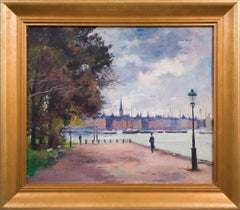
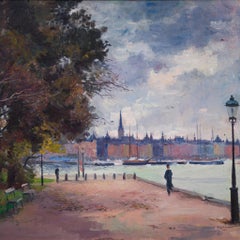
Impressionistic View over Strandvägen, Stockholm

Impressionistic View over Strandvägen, Stockholm

Located in Stockholm, SE

This painting by Bernhard Oscarsson (1894-1977) is a captivating visual narrative of Stockholm's serene beauty. Oscarsson, a student of Caleb Althin's painting school and the Royal S...

Category

Impressionist 1930s Paintings

Materials

Canvas, Oil

Refreshment and Intermission

Refreshment and Intermission

Located in Los Angeles, CA

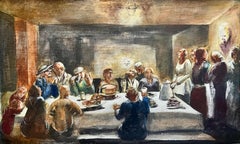
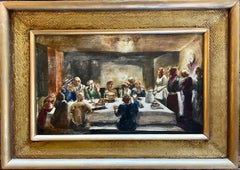
This painting is part of our exhibition America Coast to Coast: Artists of the 1930s Refreshment and Intermission, tempera on board, 11 x 19 inches, c. 1930/40s, signed lower middle, exhibited at Groom's one person show at Closson’s Gallery, Cincinnati, OH, March, 1943 (see The Cincinnati Enquirer, March 7, 1943, section 3, p. 4); provenance includes a private Ohio collection; presented in a period gold painted frame About the Painting Refreshment and Intermission is part of a series of paintings of Amish subjects Grooms started in 1938 based on his travels in Pennsylvania. These tempera works reflect the Regionalist impulse to paint local scenes far away from big cities. Focusing on both people and landscape, Grooms' compositions tell the stories of the uniquely American experience of the Amish. “Grooms paints the Amish people with as much understanding of type and appreciation of the plastic quality as any artist who has approached this challenging subject," noted the art critic for The Cincinnati Inquirer when reviewing Grooms' solo exhibition at Closson' Gallery, "In his current show, ‘Refreshment and Intermission,’ is a case in point. Here the absorbed concentration of people eating is described without an ounce of sentimentality. He has made the most of the interest between groups and of the conversations, both humorous and serious. The work has the quaint simplicity of a Lord’s Supper...

Category

American Modern 1930s Paintings

Materials

Tempera

1930's Modernist Oil Painting Paris Rooftops Hazel Guggenheim Mckinley Fauvist

1930's Modernist Oil Painting Paris Rooftops Hazel Guggenheim Mckinley Fauvist

By Hazel Guggenheim McKinley

Located in Surfside, FL

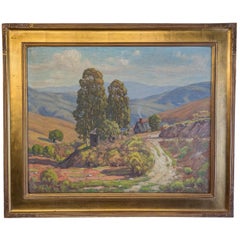
Hazel Guggenheim King-Farlow McKinley (American, London, New Orleans, 1903-1995), "Paris Rooftops" c. 1930 Oil paint on wood panel Attributed, dated and titled verso (I am not sure in whose hand not signed by the artist herself). Dimensions H.- 18 in., W.- 15 in., Framed- H.- 26 1/2 in., W.- 23 in. Provenance: From an estate New Orleans, Louisiana. Hazel Guggenheim King-Farlow McKinley (born Barbara Hazel Guggenheim; April 30, 1903 – June 10, 1995) was an American painter, art collector, and art benefactor. Hazel Guggenheim was born in New York City to Benjamin Guggenheim and Fleurette (Seligman) Guggenheim. The marriage united two wealthy German-Jewish families. Born into the well-known Guggenheim family, a niece of Solomon Guggenheim who founded the Guggenheim Museum, she grew up in New York, alongside her sisters Benita Guggenheim and Marguerite Peggy Guggenheim who would become the influential gallery proprietor, art collector, museum founder, and midwife to the Abstract Expressionism art movement. Her father Benjamin gave up much of his financial interest in the family's mining business to start his own business in Paris. With his business failing, in 1912 he set out to return to the United States in time for McKinley's ninth birthday on the Titanic. Following the shipwreck, he drowned aged 46; his body was not recovered. McKinley inherited $450,000. She later inherited money on the deaths of her mother, and of her older sister, Benita, who died in childbirth. The loss of her father haunted McKinley for the rest of her life, and in 1969 she recorded "In Memoriam, Titanic Lifeboat Blues." McKinley began painting as a teenager and was a prolific artist throughout her life. When she fled New York for Paris at age 19 she studied at the Sorbonne and became part of 1920's bohemian Paris, France, where she was taught by key modernism artists of the time. Her primary mediums were ink, water color, tempera, and crayon. Some of her work is hand signed and some is not. In 1928 her sister Peggy moved to London and mar­ried the British writer John Holmes. In 1931, McKinley married the Englishman Denys King-Farlow. They settled in Sussex, UK, and had two children, John King-Farlow, who became a philosopher and poet, and Barbara Benita King-Farlow, who became an artist in her own right. In 1938 Peggy opened Guggenheim Jeune, a London gallery of mod­ern art, starring Wassily Kandinsky, Henry Moore, Salvador dali, Constantin Brancusi, Max Ernst, Pablo Pic­asso and Jean Miro with whom they socialized. Whilst living in the south of England with Denys King-Farlow in the 1930s, McKinley was influenced by a group of avant-garde artists, and had her first solo exhibition in London in April 1937 at the Coolings Gallery. She received instruction from British artists Rowland Suddaby, Raymond Coxon, and Edna Ginesi, becoming associated with the London Group and the Euston Road School. She painted primarily in watercolor. Her work included still-life, portraits, townscapes and landscapes. Although her first work was done in a "slightly plain palette," her later work in the 1930s brightened, sometimes falling within the realm of fauvism. "Under the influence of the Surrealist artists, Hazel's paintings after the 1930's became freer, though her work was far more whimsical and humorous than many artists more closely associated with the surrealism movement." In 1939 McKinley fled Europe due to the impending war and returned to the US, living mostly in California. She took brief art lessons from her sister Peggy's one-time husband Max Ernst and much later attended several summer schools taught by muralist and renowned teacher Xavier Gonzalez. In her life in the United States and abroad, McKinley met many prominent artists of the Paris, London, and New York art scenes including Jackson Pollock. McKinley continued to paint, and ran a small gallery of her own in the late 1950s and early 1960s in West Cornwall, Connecticut. One show at her gallery featured the works of British and Irish painters including Rowland Suddaby, Frank Beteson, Tom Nisbett, and Patrick Swift. McKinley showed two of her own works in the same exhibit, a watercolor painted at Positano, Italy and one painted at the Tuileries, Paris. Another featured work was a surrealistic water color portrait of McKinley by London artist Mervyn Peake. McKinley exhibited her work both in Europe and the United States throughout her long career, mostly at smaller venues. An incomplete listing of her exhibits and museum acquisitions of her work include: Berkshire Museum, the Galerie Raymond Duncan in Paris, Stendahl Galleries, the Jake Zeitlin Gallery, the Montgomery Museum of Fine Art, the Artists' Own Gallery in London, the Manchester City Art Gallery, and Santa Fe Art Museum. McKinley's work was only once included in a show by her sister Peggy. In 1943 McKinley was selected to exhibit a painting in Peggy's infamous show Exhibition by 31 Women in her New York gallery Art of This Century. The exhibition was radical at the time for being one of the first all-woman exhibitions, as well as showing only abstract or Surrealist works. The Exhibition by 31 Women was conceived by Peggy Guggenheim in collaboration with Marcel Duchamp, who is usually credited with suggesting the idea. The participating artists were selected by a jury that included André Breton, Max Ernst Duchamp, and Guggenheim. Advice was sought from Alfred H. Barr Jr., first director of the Museum of Modern Art in New York, who provided Guggenheim with five names, of which three were included in the exhibition, Suzy Frelinghuysen, Irene Rice Pereira, and Esphyr Slobodkina. Those already known to Guggenheim through their partners included Xenia Cage, wife of the composer John Cage, Frida Kahlo, wife of Diego Rivera, who was noted for his frescoes, Sophie Taeuber-Arp, wife of the sculptor, Hans Jean Arp, and Jacqueline Lamba, ex-wife of the surrealist André Breton. Guggenheim’s sister, Hazel Guggenheim McKinley and her daughter, Pegeen Vail Guggenheim exhibited. Also in the exhibition was the burlesque dancer, Gypsy Rose Lee, another friend of Guggenheim, who was possibly included more to help publicise the event than for her artistic skills. Other artists were friends of Guggenheim or of Max Ernst. One, Dorothea Tanning, was Ernst's lover, leading Guggenheim to say: "I realized that I should have only had thirty women in the show". Only one artist is known to have refused the invitation to submit works, Georgia O'Keeffe, who reportedly responded that she wished to be identified as a painter, and not singled out because of her gender. In the late 1950s, McKinley moved back to Europe for a while, before returning to the United States in 1969. She lived in New Orleans until her death in 1995. On her death, her only living son, John King-Farlow, wrote a poem in his mother's honor, entitled "Eulogy For My Mother (Hazel Guggenheim McKinley, Artist)." A short obituary distributed by the Associated Press noted she was a member of the illustrious New York Guggenheim family, that she was determined to make a name for herself as an artist, that her art works were shown in museums in the United States and Europe, and were in the collections of such celebrities as Greer Garson, Benny Goodman, and Jason Robards. In 1998 after her death, one of her paintings was exhibited in Peggy Guggenheim's Venice home museum the Palazzo Venier dei Leoni. Guggenheim’s work in various media and her connections to influential artists and collectors provide glimpses into the complex tapestry of the art world in the first half of the 20th century. In her later life she settled in New Orleans, where she continued painting, exhibiting, and studying art into her eighties at Newcomb College, New Orleans. She was part of a regional art scene that included Ida Kohlmeyer, George Rodrigue, Noel Rockmore and Hunt Slonem. Towards the end of her life while confined to bed, her last works were colored pen drawings and sketches. McKinley collected major contemporary artworks and she donated many of these works to public institutions. She donated over 15 works to Wakefield Art Gallery, UK, in the 1930s, and in 1938 presented the painting Cossacks...

Category

Modern 1930s Paintings
Materials

Oil, Panel

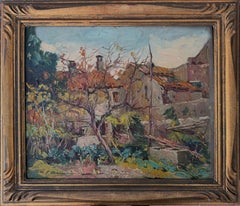
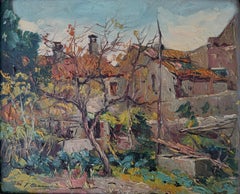
Mid-Century Catalan Farmhouse Oil Painting Mediterranean Rustic Landscape

Mid-Century Catalan Farmhouse Oil Painting Mediterranean Rustic Landscape

By Joan Asensio Marine

Located in Sitges, Barcelona

Artist: Joaquín Asensio Mariné (Barcelona, 1890 – 1961) Title: Catalan Farmhouse with Garden and Bare Trees Medium: Oil on panel Dimensions (unframed): 38 × 46 cm (14.96 × 18.11 in) Dimensions (framed): 52 × 60 cm (20.47 × 23.62 in) Signature: Signed lower left Period: Mid-20th Century Condition: Very good condition. Stable pictorial layer with well-preserved original impasto and no visible losses. Frame condition: Period gilt wooden frame with minor wear consistent with age. Presented: Sold with its current frame. Original oil painting by Catalan artist Joaquín Asensio Mariné, depicting a traditional Catalan farmhouse surrounded by a vegetable garden and winter trees. The composition is built with energetic, textured brushwork and visible impasto, giving the surface strong material presence and movement. The artist employs a rich Mediterranean palette of ochres, greens and blue-grey tones, capturing the rustic architecture and intimate atmosphere of rural Catalonia. Asensio Mariné constructs the scene with expressive confidence, balancing structural solidity in the buildings with freer gestural treatment in the vegetation and sky. The thick paint application enhances the tactile quality of the work, making it visually dynamic and highly decorative. Mid-century Catalan rural landscapes remain particularly appreciated by collectors for their authenticity, regional character and timeless Mediterranean appeal. An attractive and characterful example of 20th-century Spanish landscape painting. Joaquín Asensio Mariné (Barcelona, 1890 – 1961) was a Catalan painter known for his Mediterranean landscapes, rural architecture and traditional countryside scenes. Active in Barcelona during the first half of the 20th century, he exhibited in galleries such as Sala Rovira and Galería Jaimes. His work sits between traditional realism and a restrained impressionist language, characterized by textured brushwork and a luminous Mediterranean palette. His rural compositions share affinities with the broader tradition of Spanish landscape painting associated with artists such as Joaquín Sorolla, Eliseu Meifrèn and the Catalan post-impressionist school, while maintaining a distinctly regional character. Today his works are appreciated by collectors of mid-century Spanish and Mediterranean painting for their authenticity, decorative strength and connection to Catalan artistic heritage. Mid Century Painting Mediterranean Landscape Catalan Landscape Spanish Landscape Painting Rustic Farmhouse Art...

Category

Impressionist 1930s Paintings

Materials

Oil

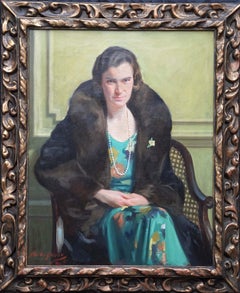
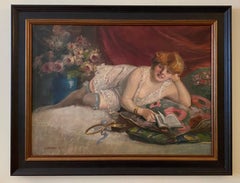
Relaxing

Richard GeigerRelaxing, 1930

$1,625Sale Price|50% Off

Relaxing

By Richard Geiger

Located in Los Angeles, CA

RICHARD GEIGER "RELAXING" OIL ON CANVAS, SIGNED HUNGARIAN, C.1930 28 X 39 INCHES FRAMED 36.5 X 46 INCHES Richard Geiger 1870-1945 Richard Geiger was born in Vienna and first studied at the Vienna Art Institute with the academic painter Christian Ludwig Von Griepenkerl and, subsequently, in Paris with Francois Flameng...

Category

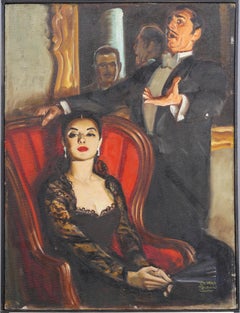
Art Deco 1930s Paintings

Materials

Canvas, Oil

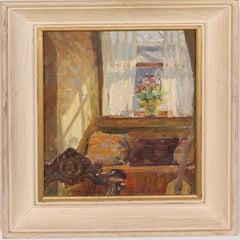
Artist Studio "Sunlight Through the Window" American Impressionist Oil Painting

Artist Studio "Sunlight Through the Window" American Impressionist Oil Painting

By Claire Shuttleworth

Located in Buffalo, NY

This original oil painting, dated 1930, offers a rare and charming interior view of "Minglestreams," the summer home and studio of renowned artist Claire Shuttleworth in Chippawa, On...

Category

American Impressionist 1930s Paintings

Materials

Oil, Board

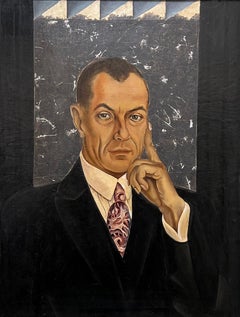
Portrait of J. L. David (Portrait)

Portrait of J. L. David (Portrait)

Located in Los Angeles, CA

Portrait of J. L. David (Portrait), c. 1930, oil on canvas adhered to board, apparently unsigned, 26 x 20 inches, exhibited: 1) Fourth Annual State-Wide Exhibition, Santa Cruz Art Le...

Category

American Modern 1930s Paintings

Materials

Canvas, Oil, Board

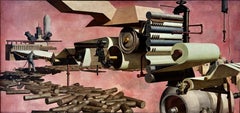
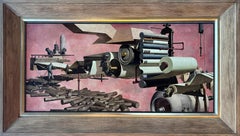
"Paper Making" WPA Industrial Mid-Century American Scene Social Realism Workers

"Paper Making" WPA Industrial Mid-Century American Scene Social Realism Workers

Located in New York, NY

"Paper Making" WPA Industrial Mid-Century American Scene Social Realism Workers Douglas Crockwell (1904-1968) "Paper Making" 19 x 39 inches Oil on board, c. 1936 Signed verso Framed: 28 x 47 Provenance: Estate of the Artist BIO Spencer Douglass Crockwell was born into a comfortable middle class household on April 29, 1904 in Columbus, Ohio. His father, Charles Roland Crockwell, was a mining engineer; his mother, Cora, was the daughter of an Iowa attorney. He became a commercial artist and experimental filmmaker who spent a good part of his career creating illustrations and advertisements for the Saturday Evening Post. In 1907 the Crockwell family moved to St. Louis, Missouri, where he graduated from high school and then attended from Washington University. Initially he studied engineering, but soon switched to business. While still an undergraduate, Crockwell took courses at the St. Louis School of Fine Arts and quickly realized that he wanted to be an artist. After graduating from Washington University in 1926, Crockwell continued to study at the St. Louis School of Fine Arts until 1929. The following year he relocated to Chicago and continued his studies at the American Academy of Art. In 1930 and 1931 he studied in Europe on a Traveling Fellowship. In 1932 Douglass Crockwell moved to Glens Falls, New York, which was to be his home for the remainder of his life. The following year he married Margaret Braman. They had three children, a son Douglass and two daughters, Johanna and Margaret. During the depression he created murals and posters for the Works Progress Administration including Post Office murals in White River junction, Vermont; Endicott, New York; and Macon, Mississippi. In 1934 he painted Paper Workers, Finch Pruyn & Co. (the leading Glens Falls, New York company) for the WPA. In the 1930s Crockwell developed an interest in experimental animated films that occupied him for the rest of his life. In 1936 and 1937, he collaborated with David Smith, a sculptor, to create surrealist films. Because of his interest in experimental films, his output of paintings was limited to just twenty to forty illustrations a year during this time. Crockwell painted his first of many Saturday Evening Post cover in 1933. He also worked for Life, Look, and Esquire, and numerous national advertisers including Friskies dog food, Welch’s Grape Juice, Republic Steel...

Category

American Modern 1930s Paintings

Materials

Oil, Board

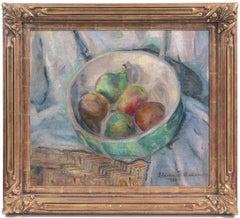
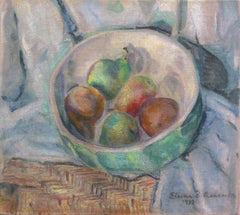
'Still Life of Pears', Carlisle, Philadelphia, Post-Impressionist Woman Artist

'Still Life of Pears', Carlisle, Philadelphia, Post-Impressionist Woman Artist

By Eleida Bosler Ashcraft

Located in Santa Cruz, CA

Signed lower right, 'Eleida Ashcraft' for Eleida Bosler Ashcraft (American, 1875-1940) and dated 1931/2. Framed dimensions: 23.5 H x 2.5 D x 25.25 H inches Displayed in a carved 22kt...

Category

1930s Paintings

Materials

Canvas, Oil

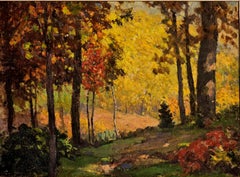
Fall in the Mountain Valley

Fall in the Mountain Valley

Located in North Clarendon, VT

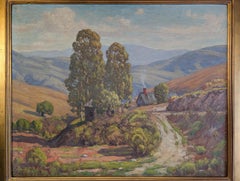
Beautiful American School impressionist piece, unsigned, oil on board. Likely 1920-1940. Painted by a talented artist with wonderful composition and brushwork. 10" x 14" sight, 16.2...

Category

American Impressionist 1930s Paintings

Materials

Oil

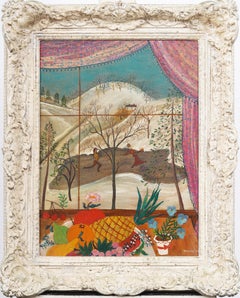
American School Signed Modernist Trompe L'Oeil Still Life Winter Skating Scene

American School Signed Modernist Trompe L'Oeil Still Life Winter Skating Scene

Located in Buffalo, NY

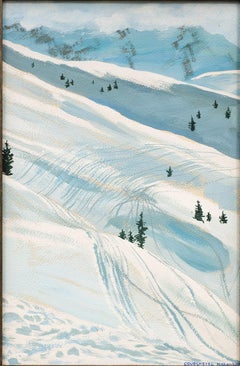
Antique American modernist winter landscape oil painting. Oil on board. Signed. Framed. Measuring: 26 by 20 inches overall, and 20 by 15 painting alone. Excellent condition, ready t...

Category

Modern 1930s Paintings
Materials

Oil

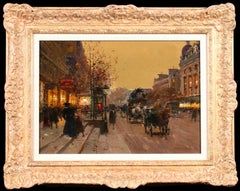
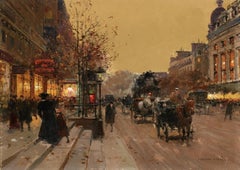
Boulevard Bonne Nouvelle - Impressionist Cityscape Oil by Edouard Leon Cortes

Boulevard Bonne Nouvelle - Impressionist Cityscape Oil by Edouard Leon Cortes

By Édouard Leon Cortès

Located in Marlow, Buckinghamshire

Signed and titled oil on canvas figures in cityscape circa 1930 by sought after French impressionist painter Edouard Cortes. The work depicts a bustling evening street sccene on the...

Category

Impressionist 1930s Paintings

Materials

Canvas, Oil

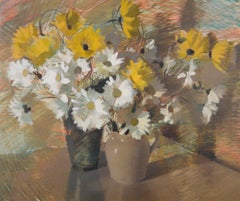
Sunflowers - Antique English Impressionist Still Life Flowers Oil Painting

Sunflowers - Antique English Impressionist Still Life Flowers Oil Painting

Located in Sevenoaks, GB

A beautiful early 20th century English impressionist oil on canvas still life depicting sunflowers in a cream jug, by John Sweet. This important work was exhibited at the Royal Acad...

Category

Impressionist 1930s Paintings

Materials

Canvas, Oil

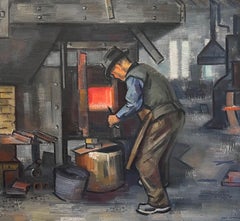
Blacksmith (Untitled)

Blacksmith (Untitled)

By Erle Loran

Located in Los Angeles, CA

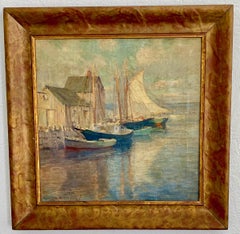
Blacksmith (Untitled), 1936, oil on canvas, signed and dated lower right, 28 x 30 inches Erle Loran was an influential American painter, art historian, and educator, renowned for h...

Category

American Modern 1930s Paintings
Materials

Canvas, Oil

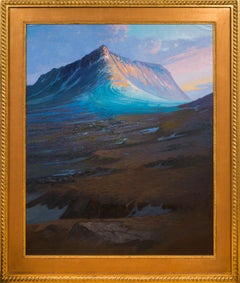
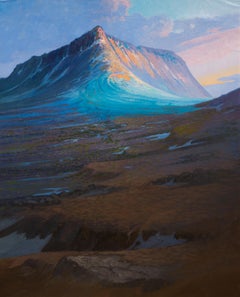
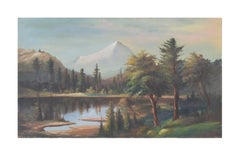
Mount Hood From Clear Lake, Early 20th Century Large-Scale Panoramic Landscape

Mount Hood From Clear Lake, Early 20th Century Large-Scale Panoramic Landscape

By William Lemos

Located in Soquel, CA

Mount Hood From Clear Lake, Early 20th Century Large-Scale Panoramic Landscape Large-scale panoramic oil painting landscape of Mount Hood from Clear Lake by William M. Lemos (Ameri...

Category

Hudson River School 1930s Paintings

Materials

Stretcher Bars, Linen, Oil

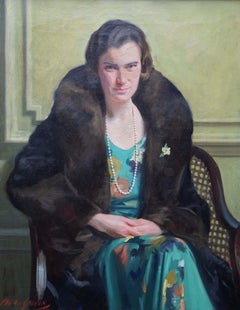
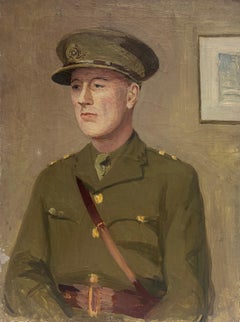
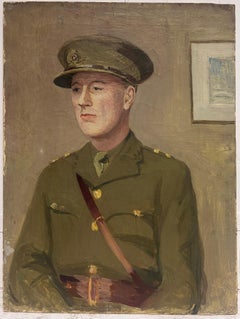
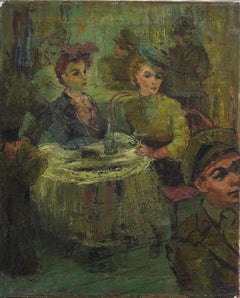
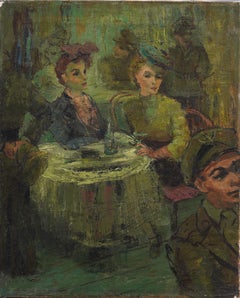
Portrait of WW11 British Army Officer Soldier Antique English Oil Painting

Portrait of WW11 British Army Officer Soldier Antique English Oil Painting

Located in Cirencester, Gloucestershire

The Army Officer *see notes below by Kathleen Emily Temple-Bird (British 1879 - 1962) oil painting on canvas , unframed canvas: 24 x 18 inches condition: very good, minor surface scu...

Category

English School 1930s Paintings

Materials

Oil, Canvas

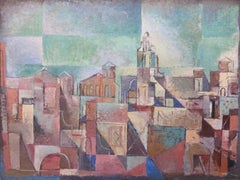
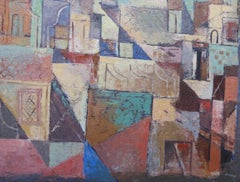
Italian City (Cubist cityscape)

Italian City (Cubist cityscape)

Located in Wilton Manors, FL

Karl Drerup (1904-2000). Italian City, c.1930. Oil on masonite panel, 24 x 32 inches; 34 x 42 in custom frame. Signed lower right. Minor conservation to loss in margins. Price on request Biography: Born in Borghorst, Germany in 1904, Karl Drerup earned a Master’s Degree in graphic arts working under Hans Meid...

Category

Cubist 1930s Paintings

Materials

Oil, Panel

Downtown New York

Downtown New York

Located in Los Angeles, CA

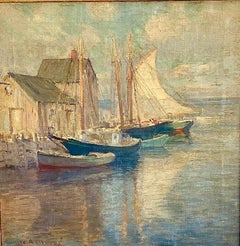
Downtown New York, c. 1930s, oil on canvas, signed lower right, 10 x 12 inches; label verso reads: "Harry Dix / Title Downtown New York / Medium Oil" Harry Dix was a 20th-century p...

Category

American Modern 1930s Paintings
Materials
Canvas, Oil