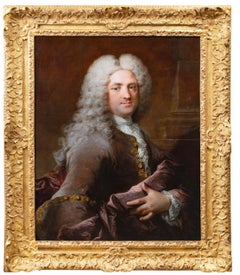
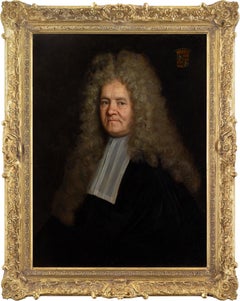
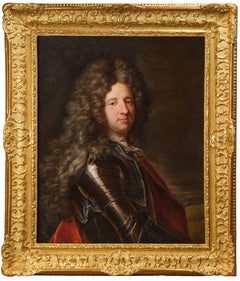
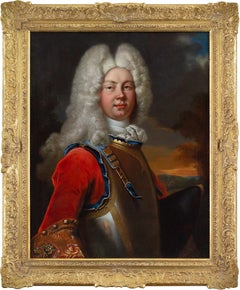
Want more images or videos?
Request additional images or videos from the seller
1 of 11

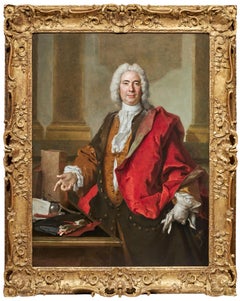
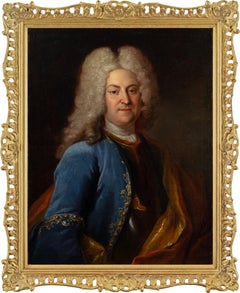
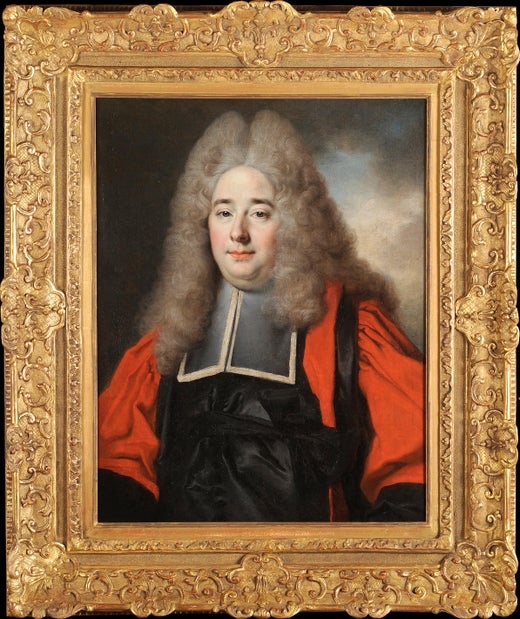
Nicolas de Largillière
Portrait of Louis-Urbain Le Peletier, Master of requests

Circa 1710

$41,181.36
£30,492.74
€42,000VAT Included
CA$57,359.79
A$58,356.17
CHF 33,443.92
MX$702,644.53
NOK 390,897.62
SEK 392,613.15
DKK 266,889.58

About the Item

Nicolas de LARGILLIERRE (Paris 1656 - 1746) Portrait of Louis-Urbain Le Peletier, Marquis de Rosanbo, Master of Requests (1662-1730) Oil on canvas H. 75 cm; L. 60 cm Unsigned Provenance: Pierres (Berry) family at least during the 20th century. The lineage between the Pierres and the Le Peletier descendants has not been found. Related work: Half-legged portrait kept at the Palace of Versailles. Son of a Parisian hatter, Nicolas de Largillièrre moved to Antwerp at the age of three, with his parents. After a stay of around twenty months in London, in 1665-1666, he was placed in the workshop of the Antwerp painter Antoon Goubau (1616-1698), specialized in bambochades. Quickly collaborating with the works of his master, who let him paint piles of fruits and vegetables, Largillièrre perfected his education through contact with the works of Pierre-Paul Rubens and his entourage. A second stay in London, between 1675 and 1679, allowed him to deepen his knowledge of Flemish still lifes and to adopt the manner of Van Dyck. After Sir Peter Leley (1618-1698), first painter to King Charles II, had entrusted him with some restoration work on paintings by the portraitist, Largillièrre assisted the Italian painter Antonio Verrio (1639-1670) with the decorations of the royal apartments at Windsor Castle. Despite protective measures taken towards Verrio and his team (including a certain “Nicholas de Lauzellier” behind whom we must understand Largillière), the persecutions targeting Catholics encouraged the French painter to leave England to settle in Paris. Introduced to the powerful Charles Le Brun (1619-1690), the success of the portraitist was immediate: approved at the Royal Academy of Painting and Sculpture on March 6, 1683, Largillièrre was received there on March 30, 1686 upon presentation of the famous Portrait of Charles Le Brun (Paris, Louvre Museum). Private orders then poured in, bringing in their wake official orders, notably from the aldermen of the City of Paris. At the same time, the portraitist had a brilliant teaching career within the Academy, since he was successively appointed professor in 1705, rector in 1722, chancellor in 1733, then director from 1738 to 1742. It was not until the following year, at an advanced age, that Largillièrre put down his brushes for good. Nicolas de Largillièrre was at the turn of the 18th century, with his rival Hyacinthe Rigaud (1659-1743), the most famous portrait painter in France. The interest that his work arouses today among the public as well as art lovers and historians responds perfectly to its past popularity. His corpus consists of several hundred portraits, religious subjects, still lifes and rare drawings, mainly from academies. Throughout his career and even today, the artist continues to fascinate. Coming from a great parliamentary lineage, Louis II Le Peletier (1662-1730) was a magistrate from a powerful Parisian royal family. Son of Claude Le Peletier, controller general of finances under the reign of Louis The artist's typical complexion, with rosy cheeks, plump and touching faces with their large eyes are even more charming details. The critic Antoine-Joseph Dezallier d'Argenville (1680-1765) wrote about him in the third volume of the Summary of the Lives of the Most Famous Painters, published in 1752: "We find in his works a fresh brush, a light and spiritual touch, an abundant genius, a correct drawing, admirable heads and hands, skillfully thrown draperies... How he worked very quickly and that he did not torment his colors they still retain a freshness, a liveliness and a softness worthy of Van Dyck.”
  • Creator:
    Nicolas de Largillière (1656 - 1746, French)
  • Creation Year:
    Circa 1710
  • Dimensions:
    Height: 29.53 in (75 cm)Width: 23.63 in (60 cm)
  • Medium:
  • Movement & Style:
  • Period:
    1710-1719
  • Condition:
  • Gallery Location:
    BELEYMAS, FR
  • Reference Number:
    1stDibs: LU1857218212682

More From This Seller

View All
Presumed artist self-portrait

Presumed artist self-portrait

Located in BELEYMAS, FR

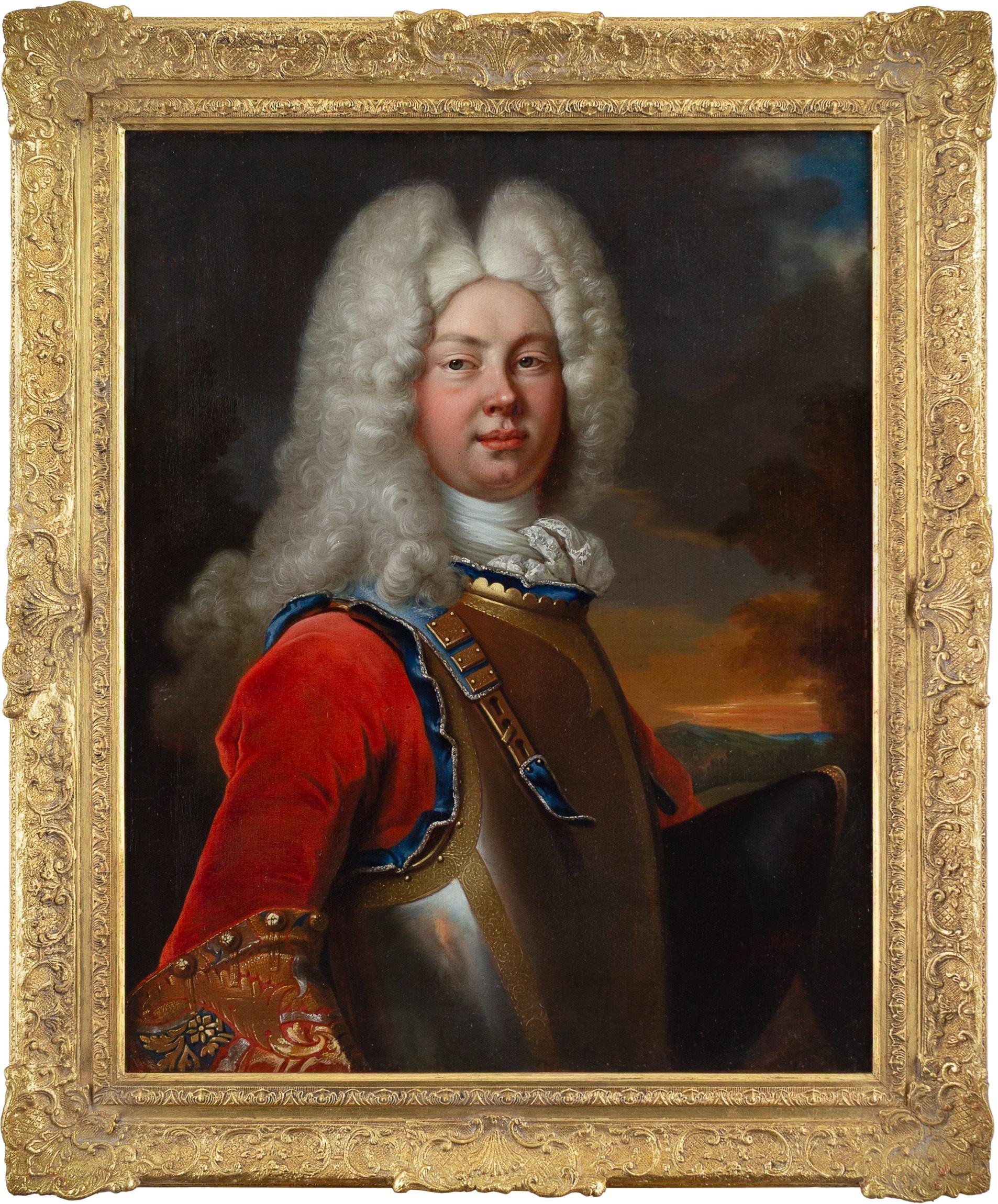
Louis-Gabriel BLANCHET (Versailles, 1701 – Rome, 1772) Presumed self-portrait of the artist Oil on canvas H. 73 cm; W. 60 cm Circa 1730 Originally presented in a Restoration period frame with a "Mignard" cartouche, this beautiful painting initially appeared to us as a work from northern Italy. However, it exuded a rather French form of refinement, suggesting that its artist may have assimilated a dual influence from both sides of the Alps. We thank our colleague and friend Philippe Mendès for spontaneously and judiciously "bringing out" the name of Louis-Gabriel Blanchet, a Romanized French portraitist, whose spirit and stylistic characteristics we clearly recognize here. Blanchet's "French" years, before his final departure for Rome in 1728, following his winning of the second Grand Prix for painting after Subleyras in 1727, are extremely poorly documented. His father, Gabriel, was valet to Blouin, himself Louis XIV's first valet at the time. According to Thierry Lefrançois, Blanchet was one of the few students of Nicolas Bertin (1667-1736), whose studio he is said to have joined in the early 1720s. At a baptism on March 24, 1724, where he was godfather, he is mentioned as a painter in the picture store of the Duke of Antin, the director of buildings between 1708 and 1736. At this time, he was probably already married to Jeanne Quément, with whom he had a daughter also named Jeanne, who would marry Nicolas Aviet, the son of a valet in the queen's wardrobe, in Versailles in 1738. When Blanchet arrived in Rome in October 1728, he was accompanied by Subleyras, Trémolières, and Slodtz. He enjoyed the goodwill of Vleughels, the director of the Académie de France, which had been based at the Palazzo Mancini since 1725, even though the latter was not always kind to our resident. From 1732, he was under the protection of the Duke of Saint-Aignan when he took up his post as ambassador to Rome. Along with Slodtz and Subleyras, they formed a trio of friends, joined by Joseph Vernet shortly after his arrival in Rome in 1734. Slodtz and Blanchet, on the occasion of Subleyras's marriage in 1739, were there to attest that their friend was not bound by any marital commitment, and Blanchet was a witness at Vernet's wedding in 1745. It is most likely from these early years in Rome that our portrait of the artist dates, the expression and turn of his face irresistibly reminiscent of a self-portrait. The still relatively youthful features may correspond to Blanchet's thirty-something years, and the fluffy wig was still fashionable at this time. The painting fits well with the depiction of a young painter wanting to display both the beginnings of success and a certain simplicity or restraint. A slight smile expresses a form of assurance in this man with a gentle, sincere gaze and a face radiating a keen sense of wit. We find here the air of intimacy present in almost all of Blanchet's portraits, even those from the 1750s and 1760s, as well as an almost complicity with the viewer. The spirit of the painting is quite close to that of the presumed portrait of Bouchardon (painted around 1730) and the portrait of Pannini, painted in 1736, but it possesses a more natural quality, notably thanks to the absence of decorum. Our work exhibits the characteristics of Blanchet's paintings: elegance, luminosity (especially in the whites), vibrant and refined colors (here, the harmony of the garnet of the garment and the slate blue of the background, whose uniformity is tempered by a very sketched landscape and a grove of greenery), light complexions, rather rosy cheekbones, often full lips, and rather tight framing. According to the Academy's rules, Blanchet's stay should have ended in the spring of 1732, but, for reasons unknown, he remained in the Eternal City until his death, as did his friend Subleyras, with whom he shared accommodation until the late 1730s. The latter regularly called upon him to collaborate on his paintings, such as The Meal at Simon's. Through Saint-Aignan's intervention, Blanchet was employed in the late 1730s by the Stuart princely family, then exiled in Italy. He notably produced copies (now lost) after Liotard of the portraits of Charles Edward and Henry Benedict, the sons of James III Stuart. The latter also commissioned three other portraits (now in the National Portrait Gallery in London), whose more formal character contrasts with the intimate spirit of Blanchet's portraits. Blanchet frequented English painters, such as the landscape painter Richard Wilson, and studied with the Scottish portraitist Katherine Read...

Category

1730s French School Portrait Paintings
Materials

Oil, Canvas

Portrait of a man during French Revolution

Portrait of a man during French Revolution

Located in BELEYMAS, FR

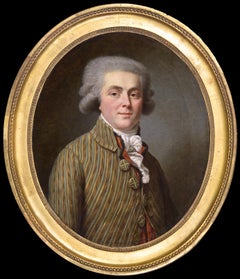
Antoine VESTIER, attributed to (Avallon, 1740 - Paris, 1824) Portrait of a man under the Revolution Oil on canvas H. 46 cm; L. 37 cm Circa 1793-95 This beautiful unsigned portrait i...

Category

1790s French School Figurative Paintings

Materials

Canvas, Oil

Cardinal Mazarin portrait

Cardinal Mazarin portrait

Located in BELEYMAS, FR

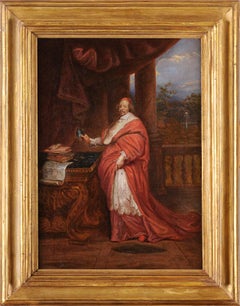
French School circa 1645 Portrait of Cardinal Mazarin - Sketch Oil on canvas H. 41.5 cm; W. 27 cm Provenance: Collection of the Reverend Georges Downing Bowles (1789-1863) Would ...

Category

1640s French School Portrait Paintings
Materials

Canvas, Oil

Portrait of a man in armor

Portrait of a man in armor

Located in BELEYMAS, FR

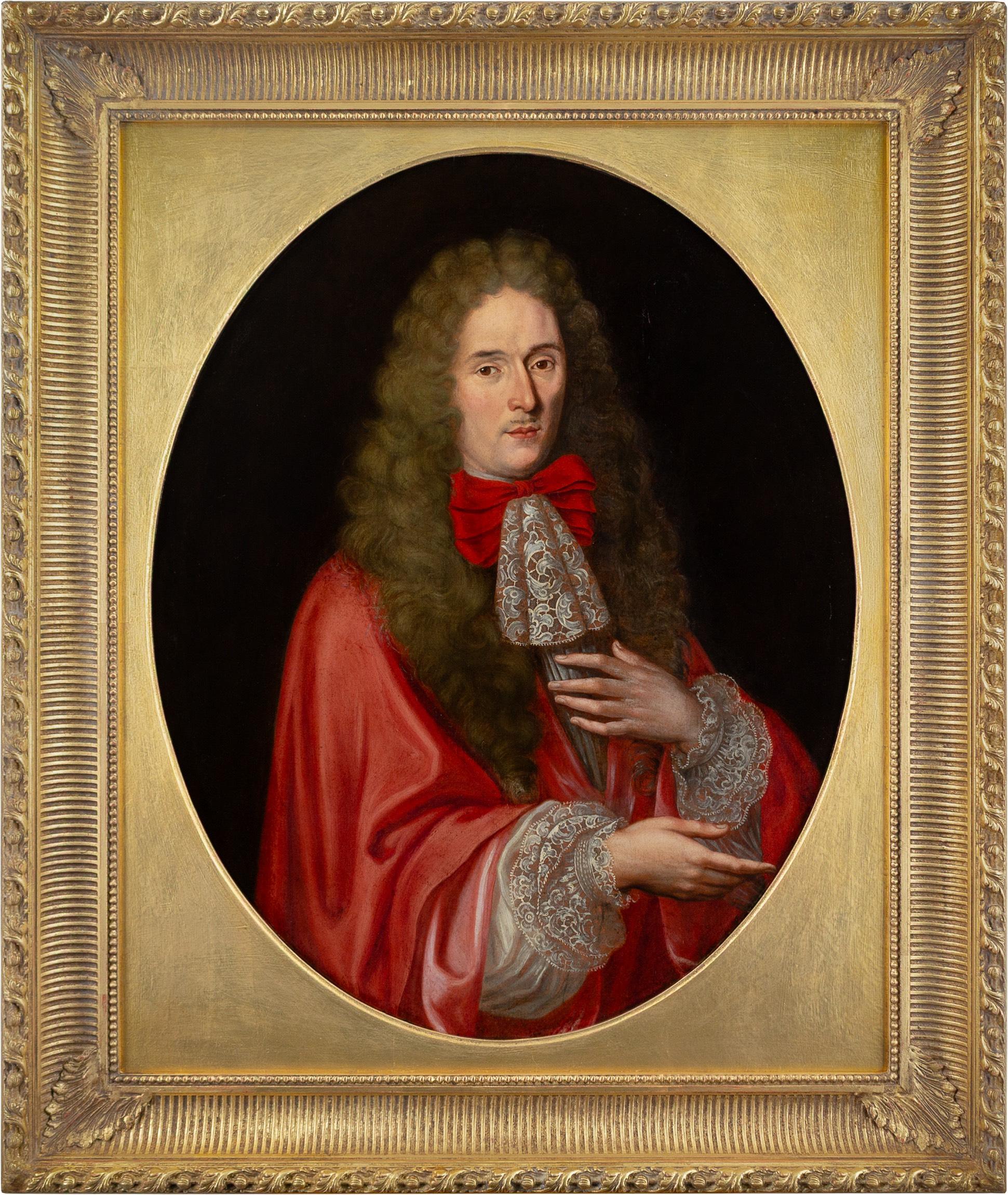
Attributed to Jacques DUMONT aka DUMONT LE ROMAIN (Paris 1701 - 1781) Presumed portrait of Louis-Joseph de Formanoir (?-1732) Oil on canvas H. 91.5 cm; L. 73 cm Signed on the helmet:...

Category

1750s French School Portrait Paintings
Materials

Canvas, Oil

Men portrait

Men portrait

Located in BELEYMAS, FR

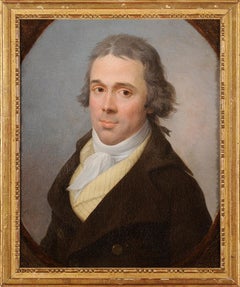
Jean François Marie Bellier (Paris 1745 – Paris 1836) Portrait of a Man Oil on oval canvas laid flat H. 45 cm; W. 55 cm Signed on the left Circa 1790 Jean François Marie Bellier occ...

Category

1790s French School Portrait Paintings
Materials

Canvas, Oil

You May Also Like

Portrait of Monsieur Aubert, a ceremonial portrait by Nicolas de Largillière

Portrait of Monsieur Aubert, a ceremonial portrait by Nicolas de Largillière

By Nicolas de Largillière

Located in PARIS, FR

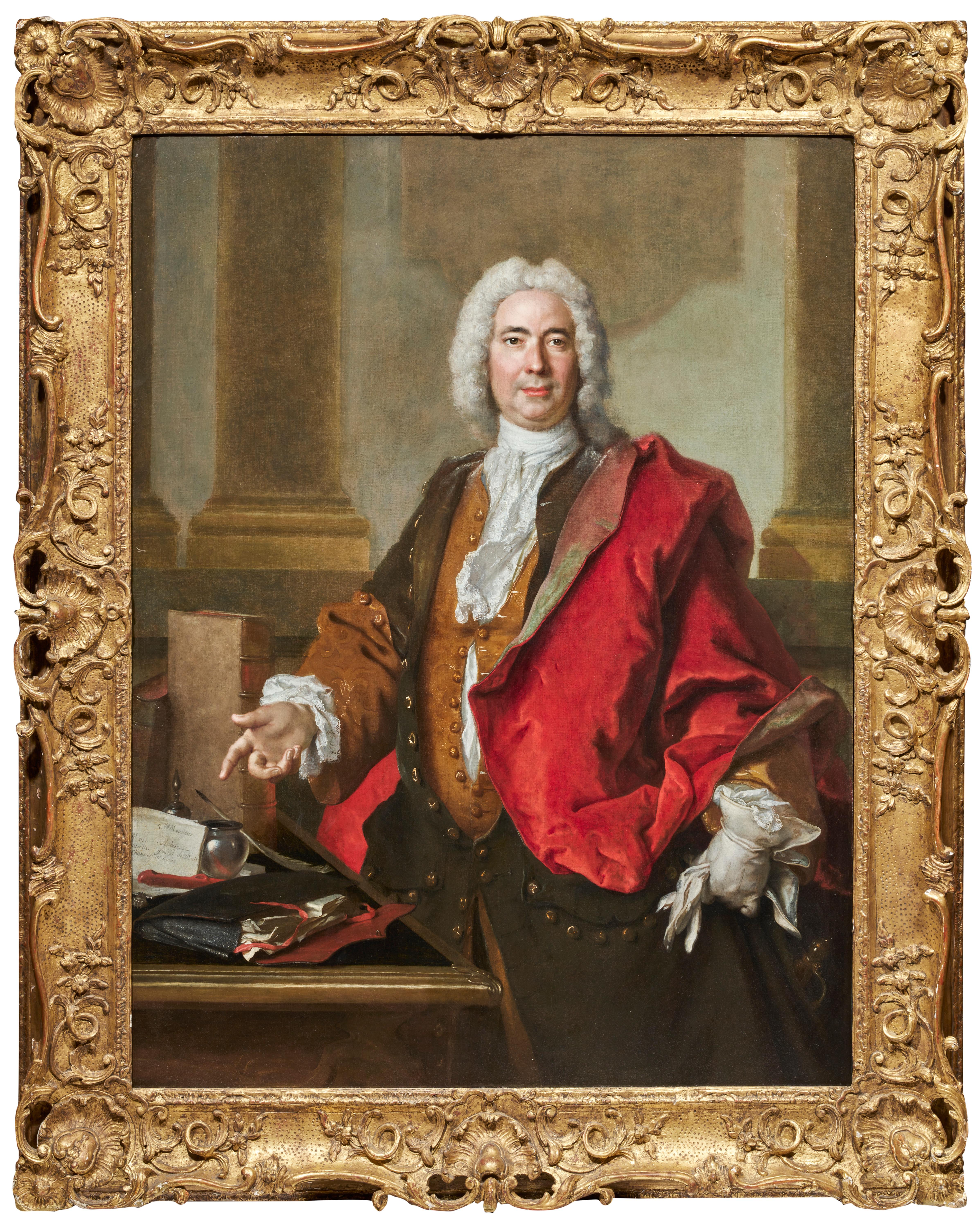
Provenance : Arnold S. Kirkeby (1901-1962) Donated by Arnold S. Kirkeby to the Los Angeles County Museum of Art in 1955, where it remained until its sale at Sotheby's, New York on January 10, 1991, lot 82. Christie's, London, July 7, 2010, lot 186, where it was purchased after the sale by the executors of the will of the late Edmund de Rothschild (1916-2009) for display at Exbury House The Trustees of Exbury House Literature : R. Brown, Bulletin of the Art Division, Los Angeles County Museum, VIII, 1957, pp.8-9, no. 4; S. Schaefer and P. Husco, European Paintings and Sculpture in the Los Angeles County Museum of Art (Los Angeles, 1987), p. 53 (illustrated and dated c. 1735) This sumptuous ceremonial portrait, executed around 1725-1730, depicts Monsieur Aubert, the French General Comptroller of Bridges and Roadways, as we learn from a letter on the desk beside our model. The virtuoso treatment of the fabrics, the authoritative yet confident pose, the vigorous treatment of the two hands, are representative of Largillière's talent, here at the peak of his art as portraitist. The portrait also has a rather extraordinary provenance: donated by Arnold S. Kirkeby, an American hotel magnate and real estate developer, it was exhibited during almost forty years in the collections of the Los Angeles County Museum, before being acquired in 2010 by the executors of Edmund de Rothschild's will to adorn his former home Exbury House (Hampshire), where it remained until its sale in 2022. 1. Nicolas de Largillière, a great European portraitist Nicolas de Largillière (or Largillierre), one of Europe's premier painters of portraits, history paintings, and still lifes during the late seventeenth century and the first four decades of the eighteenth, was born in Paris in 1656. He was the son of a hatmaker and merchant who moved with his family to Antwerp in 1659. As a boy of nine, he traveled for the first time to London in the company of an associate of his father. After returning to Antwerp more than a year later, his artistic gifts were recognized and his father apprenticed him to Antoni Goubau (1616-1698), a painter genre scenes and landscapes. Something of a prodigy, he was admitted to the painters' Guild of Saint Luke when he was only seventeen. In 1675 he made a second trip to London, where he was employed at Windsor Castle and worked as a restorer under the direction of Italian painter and decorator Antonio Verrio (c. 1639-1707), who brought him to the attention of King Charles II (r. 1660-1685). At this time Largillière painted several still life paintings in the manner of the Dutch and Flemish masters. Thereafter he practiced this branch of painting with consummate skill, a talent that allowed him to make brilliant use of flowers, fruit, and animals in some of his most ambitious portraits and contemporary history pictures. In 1679 Largillière settled in Paris, where he specialized in baroque portraiture in the grand manner of Peter Paul Rubens (1577-1640), Anthony van Dyck (1599-1641), and Peter Lely (1618-1680). The Flemish battle painter Adam Frans van der Meulen (1631 or 1632-1690) introduced him to Charles Le Brun (1619-1690) who, as First Painter to King Louis XIV (r. 1643-1715) and director of the Académie royale de peinture et de sculpture, was the predominant figure in France's official art establishment. Upon his acceptance as a candidate for admission to the Académie, he agreed to execute as his diploma picture a large portrait of Le Brun (completed 1686, Paris, Musée du Louvre, eight photo in the gallery) seated in his studio surrounded by the accoutrements of his art and an oil study for the ceiling of Galerie des Glaces at Versailles. In 1686, Largillière made a final trip to England, where he painted portraits of the newly crowned king, James II (r. 1685-1688) (Greenwich, National Maritime Museum) and his consort Mary of Modena...

Category

1720s Old Masters Portrait Paintings

Materials

Oil

Portrait of a French Prince, studio of Hyacinthe Rigaud c. 1710, Paris, 18th c.

Portrait of a French Prince, studio of Hyacinthe Rigaud c. 1710, Paris, 18th c.

By Hyacinthe Rigaud

Located in PARIS, FR

Portrait of Marc de Beauvau, Prince of Craon Studio of Hyacinthe Rigaud (1659–1743), circa 1710 Oil on canvas, not signed, dimensions: h. 80 cm, w. 63 cm Finely carved gilded wooden...

Category

Early 18th Century Old Masters Portrait Paintings

Materials

Canvas, Oil

Portrait of Frédéric III De Saxe-Gotha-Altenbour, 18th-century Oil Painting

Portrait of Frédéric III De Saxe-Gotha-Altenbour, 18th-century Oil Painting

By Nicolas de Largillière

Located in Cheltenham, GB

This early 18th-century oil painting by an artist working in the circle of Nicolas De Largillière (1656-1746) depicts Frédéric III, Duke of Saxe-Gotha-Altenbourg (1699-1772), shown h...

Category

1730s Rococo Portrait Paintings

Materials

Canvas, Oil

Early 18th-Century French Rococo Oil Painting, Portrait of a Baron

Early 18th-Century French Rococo Oil Painting, Portrait of a Baron

Located in Cheltenham, GB

This sumptuous early 18th-century portrait by leading French artist Louis de Silvestre (1675-1760) depicts Baron Pierre de Gaultier, a nobleman and diplomat active during the final y...

Category

Early 18th Century Rococo Portrait Paintings

Materials

Canvas, Oil