Want more images or videos?
Request additional images or videos from the seller
1 of 11

Unknown
Cardinal Mazarin portrait

Circa 1645

$17,611.06
£13,116.74
€18,000VAT Included
CA$24,732.54
A$25,090.36
CHF 14,271.18
MX$304,822.01
NOK 167,839.75
SEK 168,421.53
DKK 114,395.42

About the Item

French School circa 1645 Portrait of Cardinal Mazarin - Sketch Oil on canvas H. 41.5 cm; W. 27 cm Provenance: Collection of the Reverend Georges Downing Bowles (1789-1863) Would the Grand Siècle have been so great without the action of this Italian renowned for his political finesse, his outrageous enrichment and his fabulous collection, but whose tenacity, talents as a war leader and unfailing devotion to a State that was not his are often forgotten? In one of the most troubled periods in our history, Giulio Raimondo Mazzarini (Pescina, Abruzzo, 1602– Vincennes, 1661), who became Cardinal Mazarin, was able to restore the power of France against the Habsburgs of Spain and Austria, and defend the throne of the young king whose godfather he was against the machinations of the high aristocracy and the parliaments. Our sketch does not correspond to any of the works known to date representing Mazarin. However, it prefigures an ambitious and, to say the least, solemn portrait. Mazarin, - whose features, although suggested, are easily identifiable -, poses here as a statesman more than a man of the Church. His voluminous scarlet silk cloak (the cappa magna), a billowing flow of fabric bubbling with complex folds, enriched with an ermine hood, redoubles its importance and erects it as a monument to power. Regarding Champaigne's portraits of Richelieu, Bernard Dorival noted that it was extremely rare for a prelate to be depicted standing: the seated position was the dominant convention at the beginning of the 17th century. Our bozzetto adopts the majestic formula used by Champaigne to paint Richelieu full-length. It even reproduces the detail of the cardinal's left hand pulling up his cope to reveal the white of his robe (a detail visible on a preparatory red chalk preserved at the BNF and in the version belonging to the National Gallery). The decoration is of the same type: heavy hangings, columns and balustrade opening onto a garden. However, Champaigne's Richelieu occupies almost entirely the space of his portraits, while our Mazarin is somewhat lost in the height of his palace. On the other hand, while Richelieu holds a barrette, Mazarin, in his right hand, ostentatiously presents a medallion depicting the frail silhouette of a crowned king, that of Louis XIV, called to reign at the age of fourteen. On a console are placed a geographical map, disparate notebooks, - perhaps the famous small notebooks used daily by the cardinal, although they do not resemble those preserved by the BNF -, as well as other miniatures. So many distinctive signs of a strategic minister proclaiming his loyalty to the king, more than of a minister of the faith. We note the presence of an imposing gilded console with a heavy scrolled base. This rich console, combined with the majesty of the pose and the cardinal's purple, serves to stage a power that has reached its zenith. If our bozzetto had resulted in a painting, it would have displayed a far greater pomp than the portraits known today. Mazarin could have had this sumptuous Baroque piece of furniture, which occupies a large space in the composition, imported from Italy. But based on a hunch by Jean-Claude Boyer, another hypothesis presents itself, which would explain the console: could our portrait project not be by an Italian hand, perhaps painted at the request of some member of Mazarin's family, anxious to honor the uncle who had made the fortune of the dynasty? It could, as such, be slightly retrospective. Unless it was a commission interrupted by the cardinal's death. Or perhaps the aborted attempt of a courtier painter anxious to position himself? So many questions, along with that of its attribution, that we will leave open while awaiting new elements. For the moment, we offer a rare testimony on the statesman who allowed the advent of the reign of Louis XIV. An element of provenance is indicated to us thanks to a collection label affixed to the back. This bears the arms of the Reverend Georges Downing Bowles, who died in London in 1863 and who owned a fairly large collection of portraits of illustrious men. Nearly thirty works from this collection were bequeathed by the reverend in 1850 to the Worcestershire Museum. We find there portraits of English and French kings, portraits of philosophers such as Erasmus, etc. Our canvas, considered at the time to be a portrait of Richelieu (as evidenced by the rest of the engraving on the back of the work), has left no trace as to its journey to reach us today.
  • Creation Year:
    Circa 1645
  • Dimensions:
    Height: 16.34 in (41.5 cm)Width: 10.63 in (27 cm)
  • Medium:
  • Movement & Style:
  • Period:
    1640-1649
  • Condition:
  • Gallery Location:
    BELEYMAS, FR
  • Reference Number:
    1stDibs: LU1857216017832

More From This Seller

View All
Presumed artist self-portrait

Presumed artist self-portrait

Located in BELEYMAS, FR

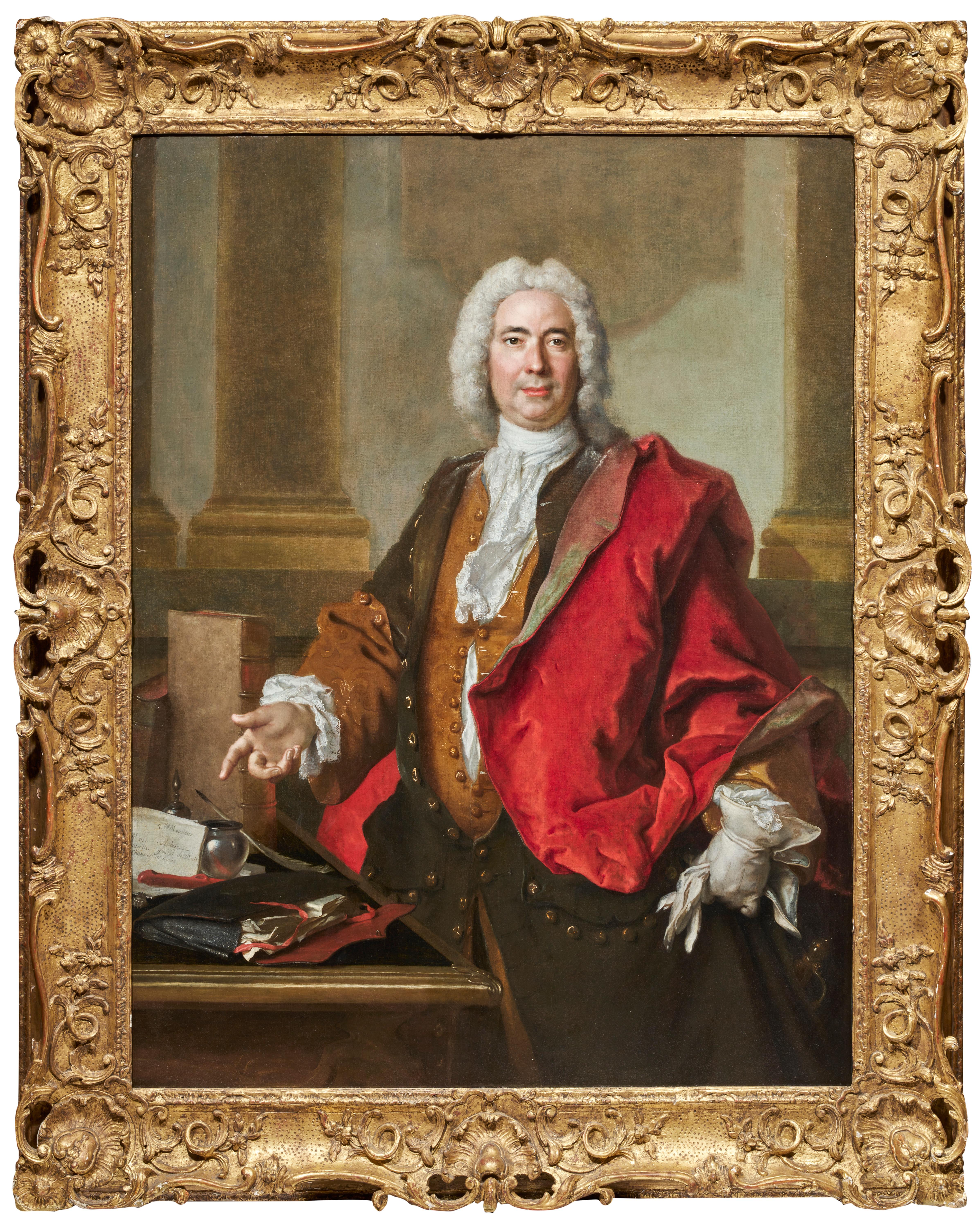
Louis-Gabriel BLANCHET (Versailles, 1701 – Rome, 1772) Presumed self-portrait of the artist Oil on canvas H. 73 cm; W. 60 cm Circa 1730 Originally presented in a Restoration period frame with a "Mignard" cartouche, this beautiful painting initially appeared to us as a work from northern Italy. However, it exuded a rather French form of refinement, suggesting that its artist may have assimilated a dual influence from both sides of the Alps. We thank our colleague and friend Philippe Mendès for spontaneously and judiciously "bringing out" the name of Louis-Gabriel Blanchet, a Romanized French portraitist, whose spirit and stylistic characteristics we clearly recognize here. Blanchet's "French" years, before his final departure for Rome in 1728, following his winning of the second Grand Prix for painting after Subleyras in 1727, are extremely poorly documented. His father, Gabriel, was valet to Blouin, himself Louis XIV's first valet at the time. According to Thierry Lefrançois, Blanchet was one of the few students of Nicolas Bertin (1667-1736), whose studio he is said to have joined in the early 1720s. At a baptism on March 24, 1724, where he was godfather, he is mentioned as a painter in the picture store of the Duke of Antin, the director of buildings between 1708 and 1736. At this time, he was probably already married to Jeanne Quément, with whom he had a daughter also named Jeanne, who would marry Nicolas Aviet, the son of a valet in the queen's wardrobe, in Versailles in 1738. When Blanchet arrived in Rome in October 1728, he was accompanied by Subleyras, Trémolières, and Slodtz. He enjoyed the goodwill of Vleughels, the director of the Académie de France, which had been based at the Palazzo Mancini since 1725, even though the latter was not always kind to our resident. From 1732, he was under the protection of the Duke of Saint-Aignan when he took up his post as ambassador to Rome. Along with Slodtz and Subleyras, they formed a trio of friends, joined by Joseph Vernet shortly after his arrival in Rome in 1734. Slodtz and Blanchet, on the occasion of Subleyras's marriage in 1739, were there to attest that their friend was not bound by any marital commitment, and Blanchet was a witness at Vernet's wedding in 1745. It is most likely from these early years in Rome that our portrait of the artist dates, the expression and turn of his face irresistibly reminiscent of a self-portrait. The still relatively youthful features may correspond to Blanchet's thirty-something years, and the fluffy wig was still fashionable at this time. The painting fits well with the depiction of a young painter wanting to display both the beginnings of success and a certain simplicity or restraint. A slight smile expresses a form of assurance in this man with a gentle, sincere gaze and a face radiating a keen sense of wit. We find here the air of intimacy present in almost all of Blanchet's portraits, even those from the 1750s and 1760s, as well as an almost complicity with the viewer. The spirit of the painting is quite close to that of the presumed portrait of Bouchardon (painted around 1730) and the portrait of Pannini, painted in 1736, but it possesses a more natural quality, notably thanks to the absence of decorum. Our work exhibits the characteristics of Blanchet's paintings: elegance, luminosity (especially in the whites), vibrant and refined colors (here, the harmony of the garnet of the garment and the slate blue of the background, whose uniformity is tempered by a very sketched landscape and a grove of greenery), light complexions, rather rosy cheekbones, often full lips, and rather tight framing. According to the Academy's rules, Blanchet's stay should have ended in the spring of 1732, but, for reasons unknown, he remained in the Eternal City until his death, as did his friend Subleyras, with whom he shared accommodation until the late 1730s. The latter regularly called upon him to collaborate on his paintings, such as The Meal at Simon's. Through Saint-Aignan's intervention, Blanchet was employed in the late 1730s by the Stuart princely family, then exiled in Italy. He notably produced copies (now lost) after Liotard of the portraits of Charles Edward and Henry Benedict, the sons of James III Stuart. The latter also commissioned three other portraits (now in the National Portrait Gallery in London), whose more formal character contrasts with the intimate spirit of Blanchet's portraits. Blanchet frequented English painters, such as the landscape painter Richard Wilson, and studied with the Scottish portraitist Katherine Read...

Category

1730s French School Portrait Paintings
Materials

Oil, Canvas

Men portrait

Men portrait

Located in BELEYMAS, FR

Jean François Marie Bellier (Paris 1745 – Paris 1836) Portrait of a Man Oil on oval canvas laid flat H. 45 cm; W. 55 cm Signed on the left Circa 1790 Jean François Marie Bellier occ...

Category

1790s French School Portrait Paintings
Materials

Canvas, Oil

Portrait of Louis-Urbain Le Peletier, Master of requests

Portrait of Louis-Urbain Le Peletier, Master of requests

By Nicolas de Largillière

Located in BELEYMAS, FR

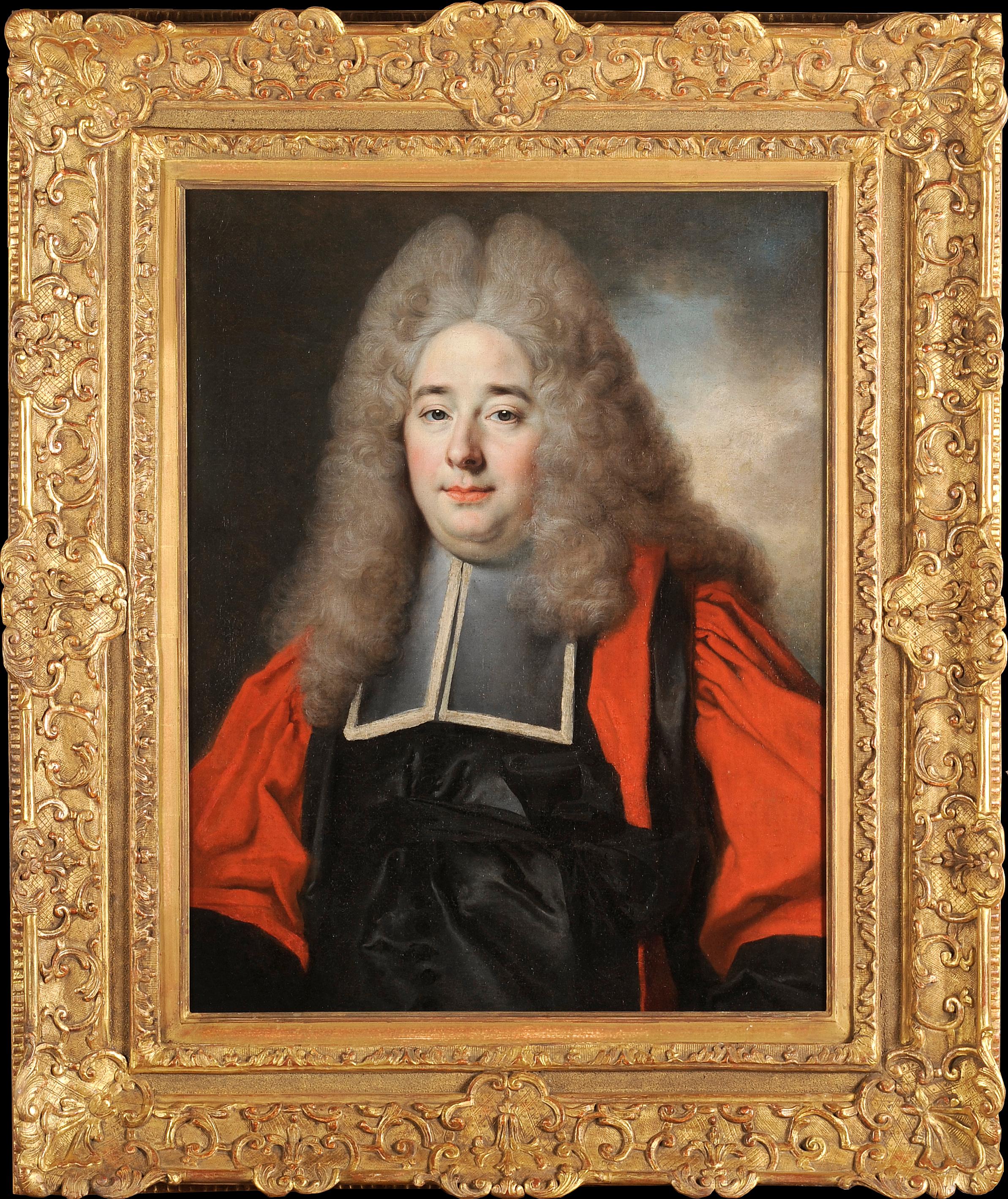
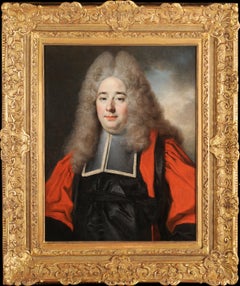
Nicolas de LARGILLIERRE (Paris 1656 - 1746) Portrait of Louis-Urbain Le Peletier, Marquis de Rosanbo, Master of Requests (1662-1730) Oil on canvas H. 75 cm; L. 60 cm Unsigned Proven...

Category

1710s French School Portrait Paintings
Materials

Canvas, Oil

Portrait of a man in armor

Portrait of a man in armor

Located in BELEYMAS, FR

Attributed to Jacques DUMONT aka DUMONT LE ROMAIN (Paris 1701 - 1781) Presumed portrait of Louis-Joseph de Formanoir (?-1732) Oil on canvas H. 91.5 cm; L. 73 cm Signed on the helmet:...

Category

1750s French School Portrait Paintings

Materials

Canvas, Oil

Portrait of a couple

Portrait of a couple

Located in BELEYMAS, FR

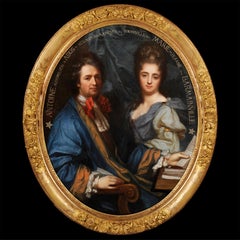
Jean-Baptiste SANTERRE (Magny en Véxins 1651 - Paris 1717) Portrait of a couple Oil on original oval canvas H. 115 cm; L. 90 cm (140 x 115 cm with frame) Around 1695 Jean-Baptiste S...

Category

1690s French School Portrait Paintings
Materials

Canvas, Oil

You May Also Like

Portrait of Pierre Seriziat

Portrait of Pierre Seriziat

Located in Douglas, Isle of Man

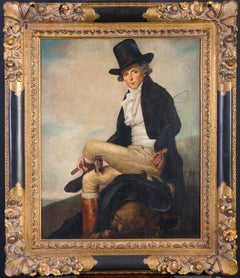
Copy of a Portrait of Pierre Seriziat by Jacques Louis David which was painted in 1795 , David 1748-1825, this picture is a direct copy by an artist by the name of F. Hamilton. There...

Category

Late 20th Century Portrait Paintings

Materials

Canvas, Oil, C Print

Armand Emmanuel du Plessis, 5th Duke of Richelieu

Armand Emmanuel du Plessis, 5th Duke of Richelieu

Located in London, GB

Oil on canvas Image size: 10 x 7 1/2 inches (25.5 x 19 cm) Contemporary gilt frame This painting is a copy of Thomas Lawrence’s 1822 portrait of Armand Emmanuel du Plessis, Duke of ...

Category

19th Century English School Portrait Paintings
Materials

Canvas, Oil

A Portrait of a Gentleman, thought to be Moses Diego Lopez Pereira

A Portrait of a Gentleman, thought to be Moses Diego Lopez Pereira

Located in London, GB

Austrian School, 18th Century A Portrait of a Gentleman, thought to be Moses Diego Lopez Pereira, 1st Baron d’Aguilar, in an elaborate coat and a powdered wig Oil on canvas Provena...

Category

18th Century Paintings

Materials

Canvas, Oil

Portrait of a Venetian Nobleman

Portrait of a Venetian Nobleman

Located in Douglas, Isle of Man

Attributed to, Alessandro Longhi 1733-1813, Longhi was a prominent Venetian portrait painter, printmaker, and biographer. The son of the famous genre painter Pietro Longhi, he is known for his detailed oil portraits of the Venetian aristocracy and his valuable book on contemporary Venetian painters. Longhi early life and training : Born: Alessandro Longhi was born on June 12, 1733, in Venice. He received his initial training from his father, Pietro Longhi. He later studied under Giuseppe Nogari, a respected portraitist in Venice during the 18th century, and was elected to the Venetian Academy in 1759. Longhi specialized in portraiture, primarily depicting the nobles and officials of the Republic of Venice. His paintings are a valuable record of the social and political structure of 18th-century Venice. Rococo aesthetic: Working in the Rococo style, he was adept at capturing the elegance and social status of his subjects. He paid meticulous attention to the elaborate robes, wigs, and emblems of office that signified his subjects' power. While his official state portraits could be stiff and formal, his portraits of less noble patrons demonstrated a greater sense of realism and psychological insight. Longhi was also an accomplished printmaker, particularly in etching. His etching technique showed an awareness of Rembrandt's work, and he used this skill to reproduce his and his father's paintings. In 1762, he published Compendio delle vite de' pittori veneziani istorici più rinomati del presente secolo, a biographical dictionary of contemporary Venetian painters that is still an important resource for art historians. Longhi illustrated the book with etched portraits of the artists. The portrait of Carlo Goldoni: One of his most celebrated paintings is his portrait of the Venetian playwright and librettist Carlo Goldoni. For his election to the Venetian Academy, he painted this allegory, which features a personified figure of Painting. His known portraits include Portrait of a Lady (Uffizi Gallery, Florence), Portrait of a Musician, and various portraits of Venetian nobles and officials. I have included further albeit identical biographies of Alessandro Longhi. Alessandro Longhi (born June 12, 1733, Venice—died 1813, Venice) was a painter, etcher, and biographer of Venetian artists, and was the most important Venetian portrait painter of his day. The son of the painter Pietro Longhi, he was given his first training by his father, who quite soon put him to study under the portrait painter Giuseppe Nogari. In 1759 he was elected a member of the Venetian academy, for which he painted one of his rare allegorical pictures, “Painting and Merit.” In 1762 Longhi issued his book Compendio delle Vite de’ Pittori Veneziani Istorici piu rinomati del presente secolo con sui ritratti dal naturale delineati ed indisi, one of the most important source books for the history of Venetian 18th-century painting. Both portraits and text were printed from plates he etched. Longhi’s facilely rendered portraits are largely generalized likenesses lacking any acuity of character observation. He mainly portrayed the leading Venetian luminaries and dignitaries of his day in a style that drew upon his father’s Rococo manner and 16th-century traditions of Venetian Renaissance portraiture. The personal details available for the painter Alessandro Longhi are limited, but his biography is intertwined with that of his family and the city of Venice. He was the son of a successful painter, which set his artistic path, and is known for creating sensitive and realistic portraits that captured the social atmosphere of 18th-century Venice. Alessandro was born in Venice in 1733 to the celebrated genre painter Pietro Longhi. He received his early training from his father before studying under another prominent portraitist, Giuseppe Nogari. A contrast to his father: While his father was known for painting scenes of everyday Venetian life, Alessandro focused almost exclusively on portraiture. His skill enabled him to capture the intimate psychology and character of his subjects, a quality especially evident in his portraits of less noble patrons. Election to the academy: In 1759, Alessandro was elected to the Accademia dei Pittori, the Venetian Academy of Painting. His election solidified his reputation as a master of the Rococo style. Beyond painting, Longhi was an accomplished printmaker, primarily producing etchings that reproduced his own works and those of his father. In 1762, he published the Compendio delle vite de' pittori veneziani, a collection of biographies of contemporary Venetian painters, which is an important historical resource. He became a prominent portraitist for Venice's upper class, including nobles and state officials. His official state portraits featured grand, full-length depictions of his subjects in their elaborate robes and emblems of office. Emphasis on realism: In contrast to the stylized nature of official portraits, Alessandro was praised for the "reality" he captured in works featuring common people. For example, his 1760 portrait of an innkeeper was celebrated for its realistic subject matter and "nuova maniera" (new manner). The art historian Olimpia Theodoli noted that Longhi's etching technique showed he had a firsthand knowledge of Rembrandt's work. Among his more famous works are a sensitive portrait of playwright Carlo Goldoni and the painting Portrait of a Wine Butler. He also produced religious and allegorical works, including paintings of the "Apostles" for the church of San Pantalon in Venice. This painting has been carefully conserved and the frame also, the frame looks to be original to the picture but we have no way of confirming this but we believe it to be so. 18th Century Italian portraits...

Category

Mid-18th Century Portrait Paintings

Materials

Canvas, Oil