Want more images or videos?
Request additional images or videos from the seller
1 of 6

Pierre Mignard
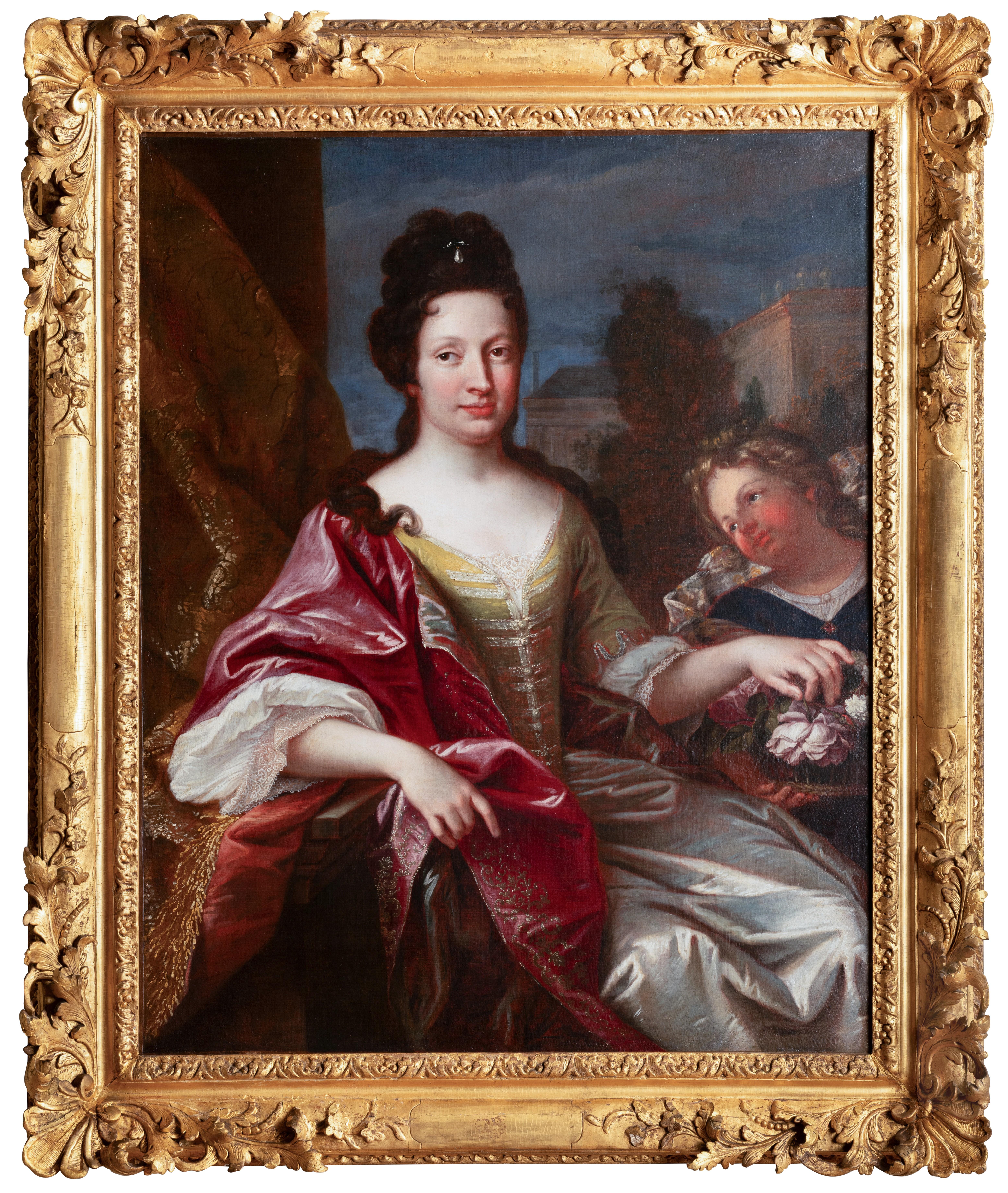
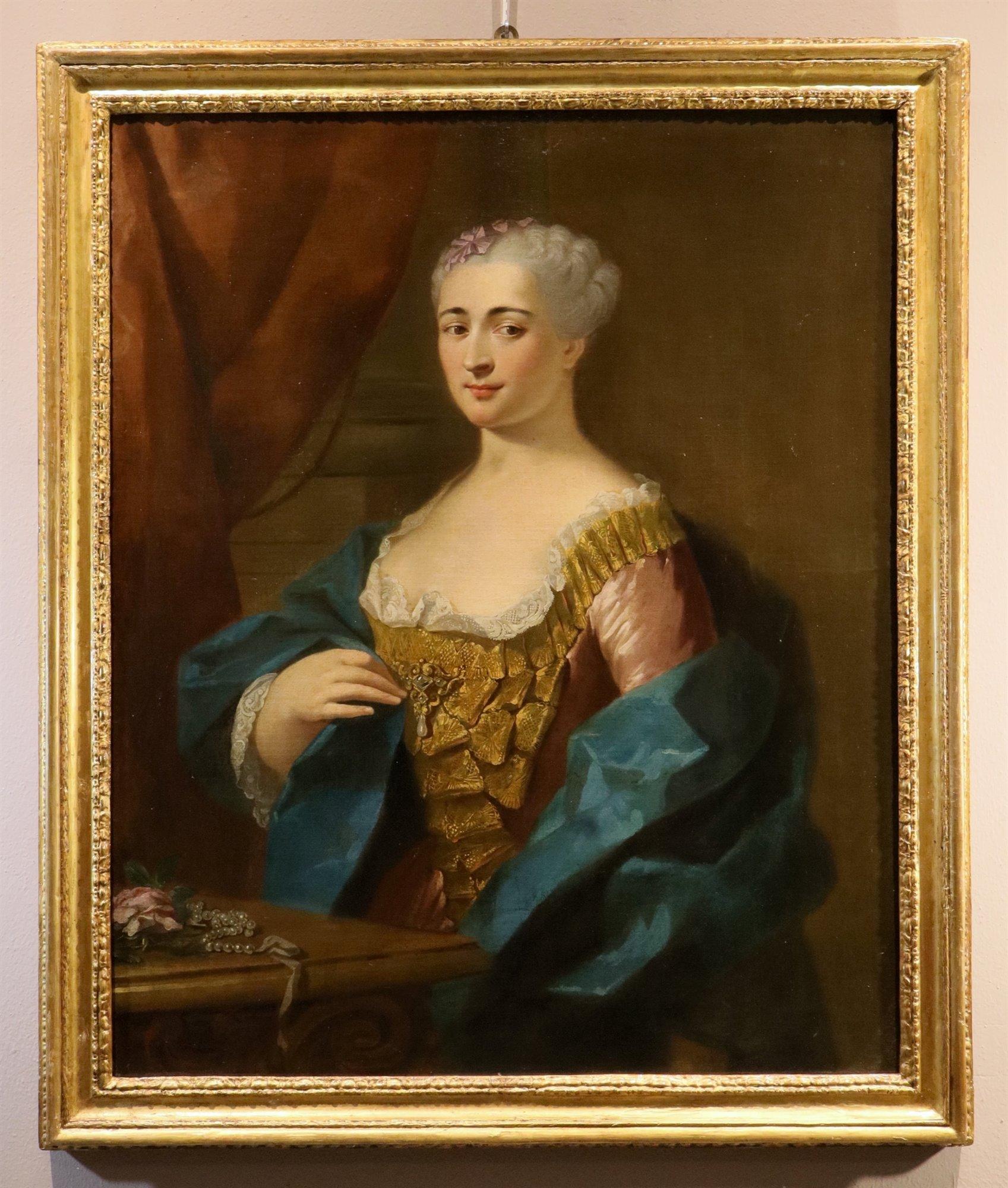
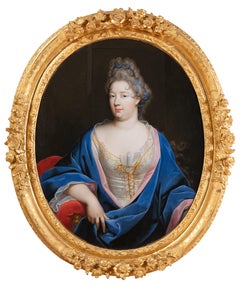
Portrait of Marie Thérèse de Bourbon, Princess of Conti

$49,368.75
£35,715
€42,620.04
CA$68,452.14
A$69,526.46
CHF 40,066.10
MX$839,429.06
NOK 465,405.68
SEK 469,288.78
DKK 318,598.77

About the Item

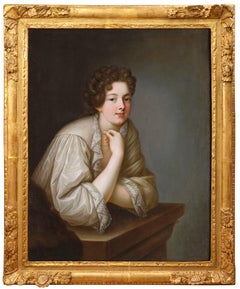
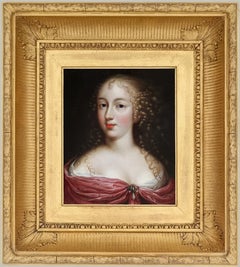
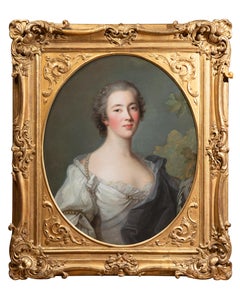
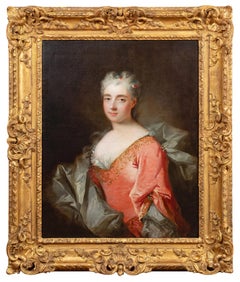
Pierre Mignard French 1612-1695 Portrait of Marie Thérèse de Bourbon, Princess of Conti Oil on canvas, unsigned Image size: 37 2/3 x 29 inches (95.5 x 73.5 cm) Gilt frame Provenance: Chateau de le Seilleraye This striking portrait bears issimilar to a late 17th century work depicting Marie Thérèse de Bourbon, Princess of Conti (1666-1732) by Pierre Mignard. The work employs the same dress and pose, and the visage of the sitter is incredibly similar to the one in our collection. For this reason, we have identified the sitter as the Princess of Conti herself. The centrally seated and slightly turned figure was a common compositional choice in portraits known to be painted by Mignard. A late 17th century engraving by Nicholas de Larmessin attributes a strikingly similar portrait of Marie Thérèse de Bourbon to Mignard. Marie Thérèse de Bourbon Marie Thérèse de Bourbon was born on the 1st of February 1666 in Paris, the daughter of Henri-Jules de Bourbon, prince de Condé and the Duke of Bourbon, and Anne Henriette of the Palatinate. Her heritage found her a descendent of the House of Bourbon, English royalty, and the House of Nassau. She was initially intended to marry the Italian Prince of Carignan, but instead was wed to François Louis, Prince of Conti, a prominent French aristocrat with ties to the French royal family. Whilst Marie Thérèse was known to be deeply enamored by her husband, it was also well-known around court that he had multiple affairs with both men and women. Marie Thérèse was known for her quiet personality and had a strained relationship with her children. Many at court took pity upon her and the embarrassment her husband was seen as causing her. She lived quietly between the various Conti residences, and was a very pious Catholic. After her husband was offered the Crown of Poland by King Louis XIV in 1697, Marie Thérèse became the presumed Queen of Poland. Her husband travelled to survey his potential new kingdom, only to find that the election had not fallen in his favour and that Augustus II had been elected King instead. He returned to France, and died a decade later of syphilis. After her husband’s death, Marie Thérèse began to renovate the Parisian home of the Conti family. She also purchased land on the Rue de Bourbon to design a new hôtel particulier, but sold the half-built mansion to her sister in 1718. Marie Thérèse passed away in February of 1732 at the Hôtel de Conti, likely as a result of syphilis contracted from her husband. Her children forged several alliances through marriage to prominent French noble families, eventually rendering Marie Thérèse related to Louis Phillipe, King of the French, as his great-great-grandmother. As a result, Marie Thérèse is an ancestor of many of Europe’s monarchs from the 19th and 20th centuries. Pierre Mignard Pierre Mignard was born in Troyes, France, in 1612, to a family of artisans. He trained under Jean Boucher in Bourges and copied Mannerist works from local noble houses. He then studied under Simon Vouet in the most acclaimed studio of the era, before leaving for Rome in 1635. He would stay here for over two decades, eventually becoming known as ‘Mignard le Romaine’. Whilst in Rome, he worked on religious commissions, particularly altarpieces and paintings of the Madonna and Child. These depictions of the Madonna were so beloved that they eventually became known as ‘mignardises’. In Italy, he also developed an interest in portraiture and painted a number of portraits of popes, cardinals, and Italian nobles. As well as Rome, Mignard travelled to Bologna, Mantua, Venice, Parma and Florence. As his reputation grew, he was eventually summoned back to Paris in 1657 by Cardinal Mazarin, where he grew in popularity as a portraitist. Mignard was favoured by King Louis XIV, and became a rival to the Premier Peintre du Roi, Charles Le Brun. A bitter rivalry ensued, with Mignard going as far as to refuse entry to the Royal Academy whilst Le Brun was its director, and instead founding a rival guild. Upon Le Brun’s death in 1690, Mignard succeeded him as Premier Peintre and as the Director of the Royal Academy. As one of the King’s favoured artists, Mignard enjoyed patronage from a number of prominent French nobles and intellectuals. Mignard died in 1695 in Paris, just as he was about to begin work on the cupola of Les Invalides. His works can be found in the Courtauld, the Harvard University Art Museums, the Hermitage Museum, the Louvre, the National Portrait Gallery, Versailles, and the National Gallery. His most famous commission is undoubtedly the cupola for the Val-de-Grâce, a fresco representing Paradise - fresco technique was rare outside of Italy.
  • Creator:
    Pierre Mignard (1612 - 1695, French)
  • Dimensions:
    Height: 37.66 in (95.66 cm)Width: 29 in (73.66 cm)
  • Medium:
  • Period:
  • Condition:
  • Gallery Location:
    London, GB
  • Reference Number:
    1stDibs: LU52417809772

More From This Seller

View All
Portrait of a Lady, 17th Century Flemish Oil Old Masters

Portrait of a Lady, 17th Century Flemish Oil Old Masters

By Jacob Huysmans

Located in London, GB

Jacob Huysmans Flemish 1633 - 1696 Portrait of a Lady Oil on canvas Image size: 49 x 40 ¼ inches Gilt frame Huysmans was born in Antwerp and came to England during the reign of Charles II where he became one of the fashionable painters of the court.. The diarist Samual Pepys noted the artist as capable of a more exact likeness than Lely. Certainly the diarist records that by August 1664 in the circle of Queen Catherine...

Category

17th Century Old Masters Portrait Paintings

Materials

Canvas, Oil, Acrylic

Portrait of Ann Austen, English School Oil Painting, Mid-18th Century

Portrait of Ann Austen, English School Oil Painting, Mid-18th Century

By Bartholomew Dandridge

Located in London, GB

Signed 'BDandridge/ pinxit' lower left Provenance By descent through the sitter's family to The Collection of R. W. Vivian-Neal of Poundisford Park, Somerset, from whom acquired by ...

Category

Mid-18th Century English School Portrait Paintings

Materials

Oil, Canvas

Portrait of Lady Mansfield of Ringwood

Portrait of Lady Mansfield of Ringwood

By Thomas Hudson

Located in London, GB

Portrait of Lady Mansfield of Ringwood Oil on Canvas, unsigned Image size: 25 x 30 inches (63 x 76 cm) Original carved & gilded frame Provenance Descended through the Family Estate Born in Poland in 1760 to the 2nd Earl of Mansfield and his wife, Elizabeth Mary Murray would later come under the care of her uncle, William Murray (1st Earl of Mansfield) at Kenwood House in Hampstead. David Murray (2nd Earl of Mansfield) was set to inherit the title and full wealth of his uncle, including Kenwood House. Lady Mansfield’s second cousin would soon join her at Kenwood, where they would be raised together and featured in multiple portraits of the time. Her younger sister, Henrietta, is seen in a separate portrait done by Thomas Hudson as well. At the age of 25 she married George Finch-Hatton, an English aristocrat and politician who sat in the House of Commons from 1772-1784. Gazing out at the viewer, Lady Mansfield wears a decorated dress, with an abundance of pearls and lace, and a transparent gold lined veil surrounding her right shoulder. The excess of luxurious fabric matches another Hudson portrait of another Lady Mansfield, with the lace detailing and complementary bodice. The depiction of this Lady Mansfield epitomizes the style of portraiture in the 18th century, such as the styles Hudson’s pupils Joshua Reynolds, Joseph Wright, and Peter Toms. From Hudson’s travels to the Low Countries and Italy, he no doubt brought back artistic inspiration from the international pieces he encountered. Thomas Hudson Hudson was a celebrated 18th century portrait painter. Born in Devon in 1701 he studied under the artist Jonathan Richardson and married his daughter, against Richardson’s wishes. He had many artistic friends including William Hogarth and Francis Hayman and travelled with them in Europe in 1748. He also visited Italy with the sculptor Louis-François Roubiliac in 1752. Hudson’s style of portraiture proved so successful that for a decade from 1745 to 1755 he was London’s most popular portrait painter and made a fortune painting the cream of London society and members of the Royal Family. He was also a talented teacher, perhaps too good, as subsequently a number of his former assistants overtook him in popularity including the artist Joshua Reynolds. Hudson retired in the late 1750’s and died in Twickenham in 1779. His most notable works include portraits of King George II and George Friedrich Handel and his “Portrait of a Nobleman in Van Dyck dress.” Many of Hudson’s works may be seen in art galleries. These include the National Portrait Gallery, the National Maritime Museum, the Tate Gallery, the Foundling Museum and the Bristol City Museum and Art Gallery. His works are also in Museums across the world...

Category

18th Century English School Paintings

Materials

Canvas, Oil

Portrait of a Lady, Old Masters 18th Century Oil

Portrait of a Lady, Old Masters 18th Century Oil

By Thomas Hudson

Located in London, GB

Thomas Hudson 1701 – 1779 Portrait of a Lady Oil on canvas Image size: 30 x 25 inches Original carved giltwood frame Hudson had many assistants, and employed the specialist drapery ...

Category

18th Century Old Masters Portrait Paintings

Materials

Canvas, Oil

Portrait of a Lady - Late 18th Century European Pastel

Portrait of a Lady - Late 18th Century European Pastel

Located in London, GB

European School Late 18th Century Portrait of a Lady Pastel on paper, mounted on canvas Image size: 28 x 23 inches Contemporary style frame Provenance: Ernst Museum Auction This pastel portrait of a lady dates from the late eighteenth century. She is pictured in a white muslin dress...

Category

Late 18th Century Portrait Drawings and Watercolors

Materials

Pastel, Laid Paper

Portrait of Lady Mansfield of Ringwood

Portrait of Lady Mansfield of Ringwood

By Thomas Hudson

Located in London, GB

Portrait of Lady Mansfield of Ringwood Oil on Canvas, unsigned Image size: 25 x 30 inches (63 x 76 cm) Original carved & gilded frame Provenance Descended through the Family Estate ...

Category

18th Century English School Paintings

Materials

Canvas, Oil

You May Also Like

18th c. French Portrait of a Lady by Jean Ranc (1674 - 1735), Paris circa 1700

18th c. French Portrait of a Lady by Jean Ranc (1674 - 1735), Paris circa 1700

Located in PARIS, FR

Portrait of a Lady with carnations By Jean Ranc (Montpellier 1674 - Madrid 1735), circa 1700 Oil on canvas in oval shape, Dimensions: h. 35.82, w. 28.34 in. Period Louis XIV giltwood and carved frame with laurel leaves. Framed dimensions: h. 42.52 in, w. 33.85 in. Provenance: Collection of the Marquis de Bailleul at the Château d'Angerville-Bailleul (before 1942). To be included in the catalog raisonné of the artist by Stephane Perreau Important portrait of a young woman depicted half-length turned three-quarters, her face looking at the viewer. Dressed in a brick red velvet dress, an elegant blue scarf envelops her figure. Hair styled “a la Fontange”, her powdered hair is raised and tied at the back with a red ribbon, several curly locks escape from her bun and fall on her back and shoulders. The perfectly oval face with regular features dominated by her straight nose is softened by her gray eyes with slightly lowered lids. The red tinged skin tones on the cheeks and cheekbones color the face and make the portrait come alive. The young woman is portrayed standing near a pot of carnations. Her strongly lighted figure stands out against an architectural background of columns. The artist's palette is made of contrasts opposing warm to cold hues. The icy electric blue contrasts with the fiery brick red, the hair powdered with white accentuates even more the flush of the cheeks. The left arm bent at the elbow, extending the open hand with slightly bent fingers in the foreground brings depth to the composition. Our portrait, an interesting testimony in the corpus of works of the painter, is part of his youthful period, around 1700-1705. The former belonging of this portrait to the Marquis de Bailleul reinforces the remarkable character of our painting. The portrait has been examined by Stéphane Perreau, specialist of Jean Ranc and will be included in the catalog raisonné currently being written, under number P. 43. The notice edited by Mr Perreau is below: "Painted around 1700-1705, this portrait of a woman is directly inherited from Hyacinthe Rigaud, the master of Jean Ranc (the hand turned over the front, in a watch...

Category

Early 18th Century Old Masters Portrait Paintings

Materials

Canvas, Oil

Portrait of a Duchess of Humières, French late 17th century, circle of J.F. Voet

Portrait of a Duchess of Humières, French late 17th century, circle of J.F. Voet

Located in PARIS, FR

Portrait of Anne-Louise-Julie de Crevant, Duchess of Humières French School, late 17th century, circa 1685 (unsigned) Circle of Jacob Ferdinand Voet (Antwerp 1639 – Paris 1689) Oil ...

Category

Late 17th Century Old Masters Portrait Paintings

Materials

Canvas, Oil

Portrait of Philadelphia Parker later Mrs Stephen Piper c.1690-1695 oil on panel

Portrait of Philadelphia Parker later Mrs Stephen Piper c.1690-1695 oil on panel

By Pierre Mignard

Located in London, GB

This exquisite late seventeenth-century portrait is a beautifully preserved example of the small-scale courtly cabinet likeness: intimate in format, jewel-like in finish, and unusual...

Category

17th Century Old Masters Portrait Paintings

Materials

Oil, Wood Panel

Portrait of marquise de Flavacourt, mistress of Louis XV of France, 18th c. 1740

Portrait of marquise de Flavacourt, mistress of Louis XV of France, 18th c. 1740

By Jean-Marc Nattier

Located in PARIS, FR

Portrait of Hortense-Félicité de Mailly-Nesle, Marquise de Flavacourt (1715-1799) Studio of Jean-Marc Nattier (Paris, 1685 - 1766), no visible signature Mid-18th century French Schoo...

Category

Mid-18th Century Old Masters Portrait Paintings

Materials

Canvas, Oil