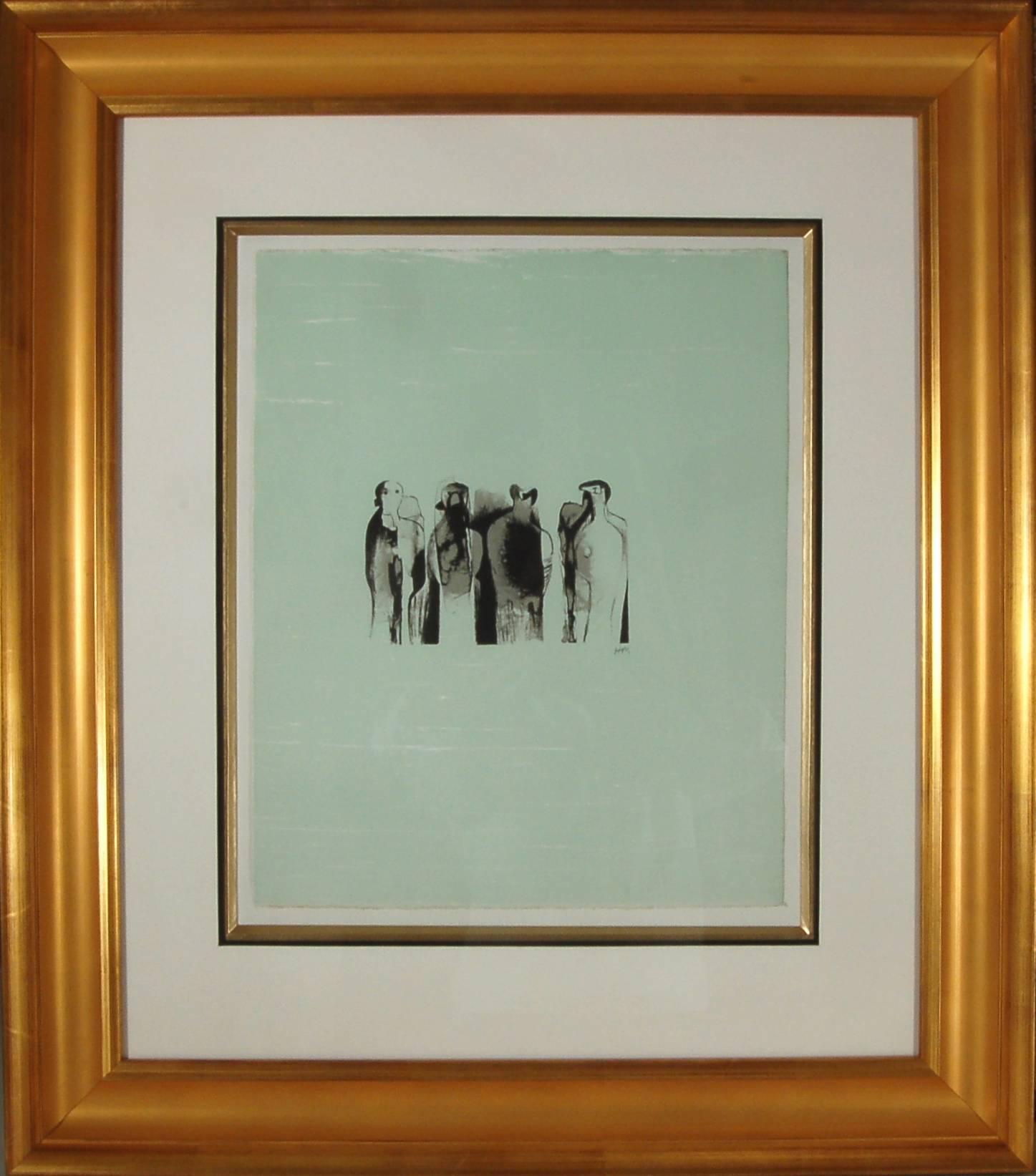
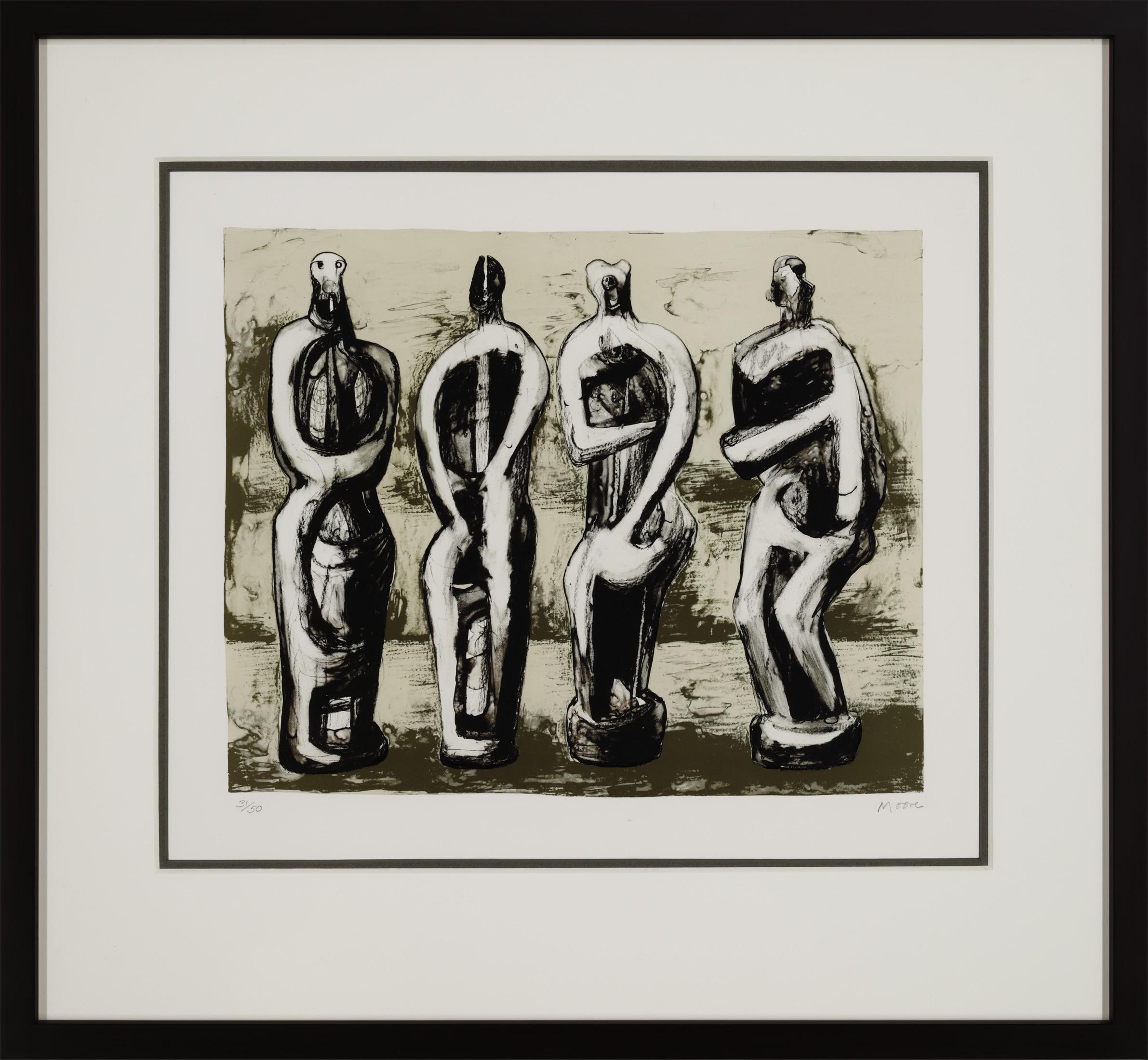
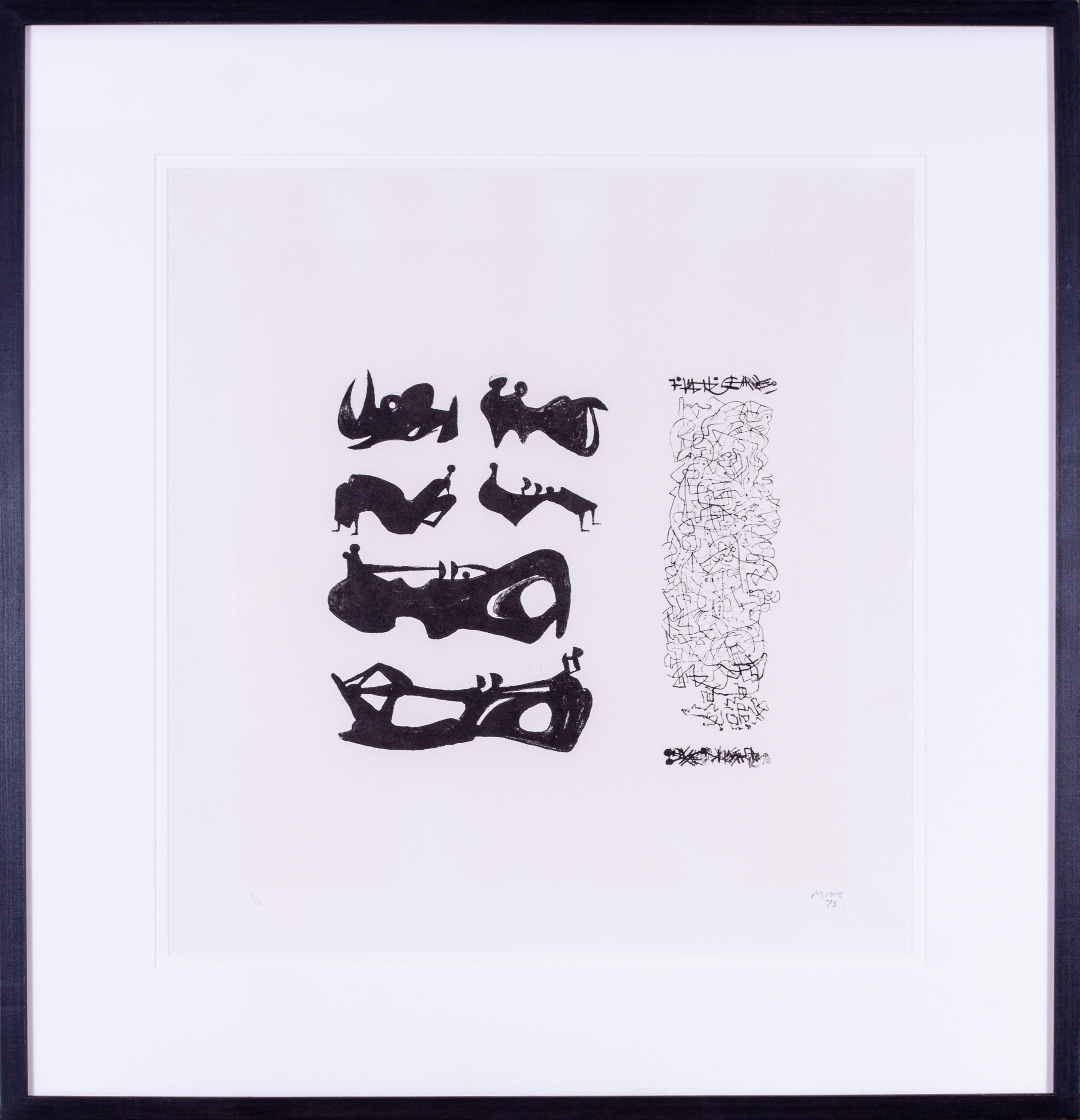
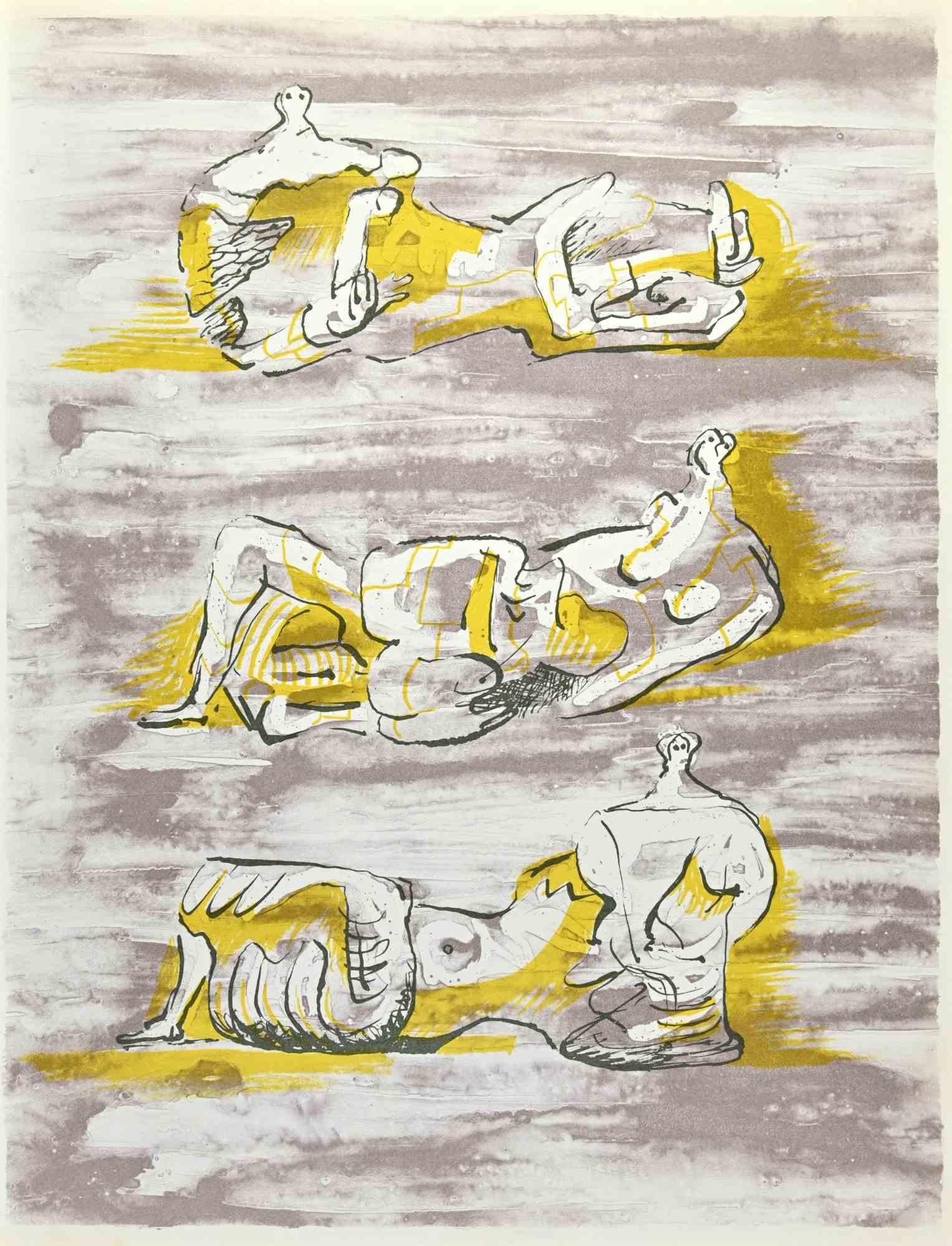
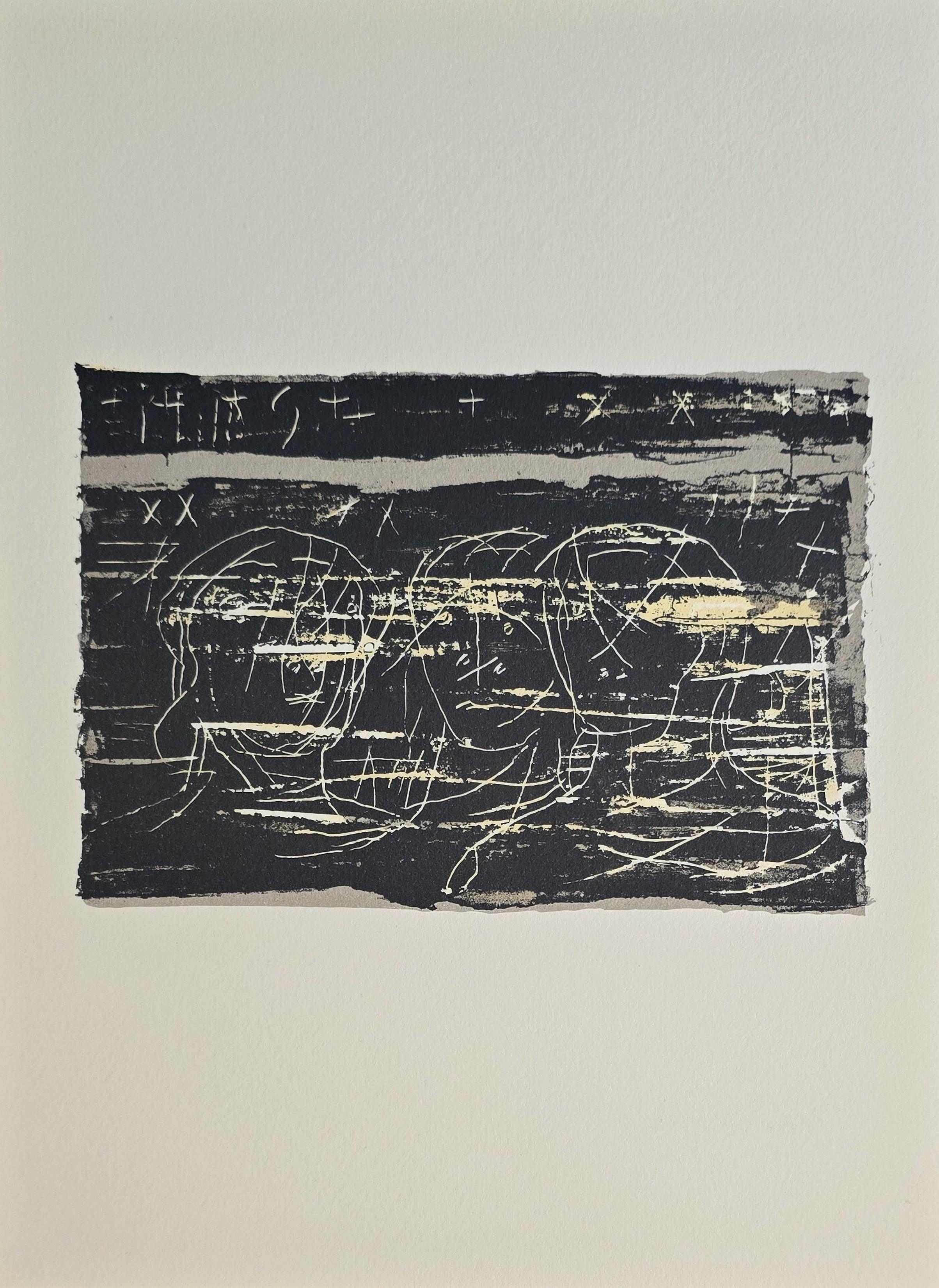
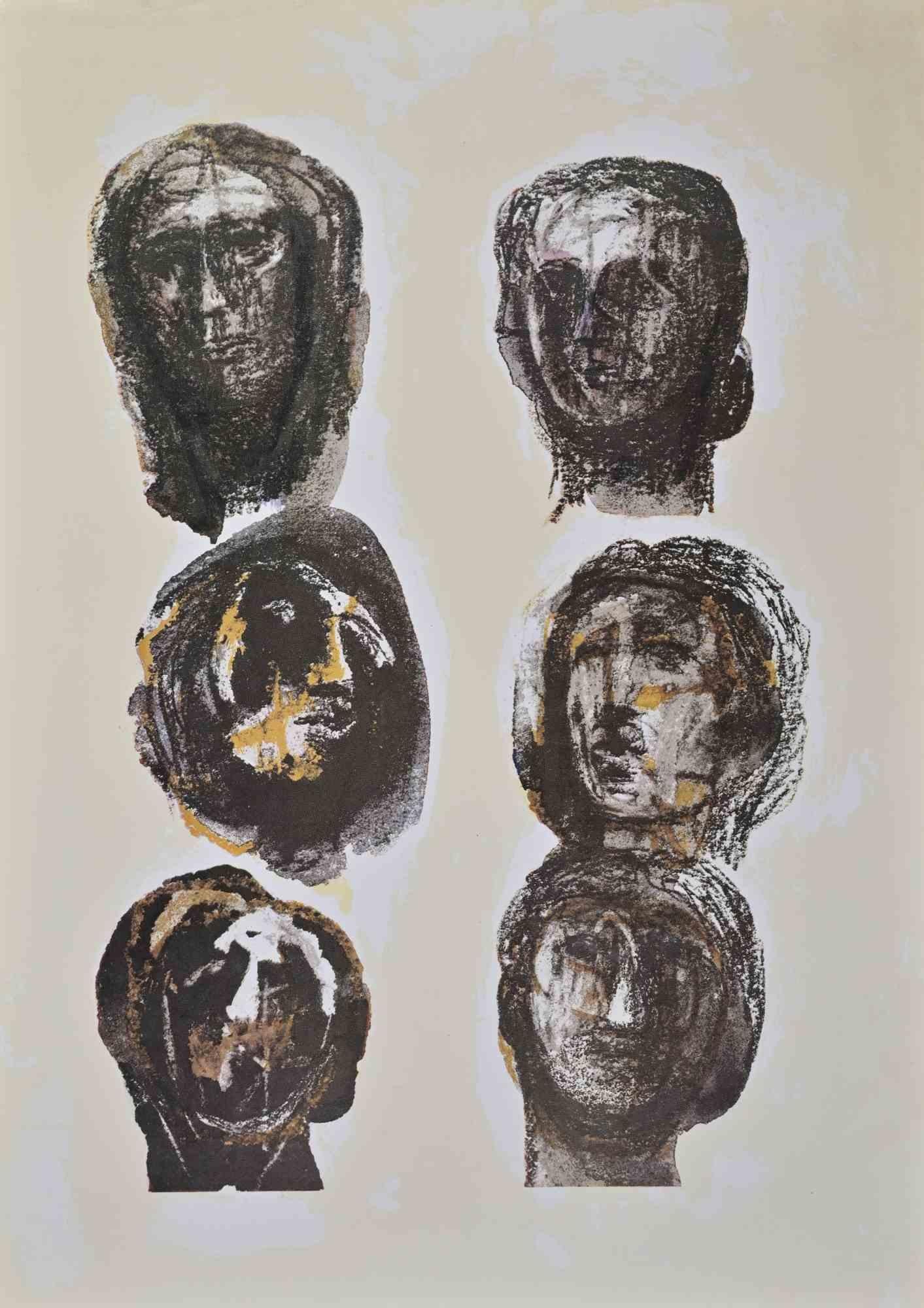
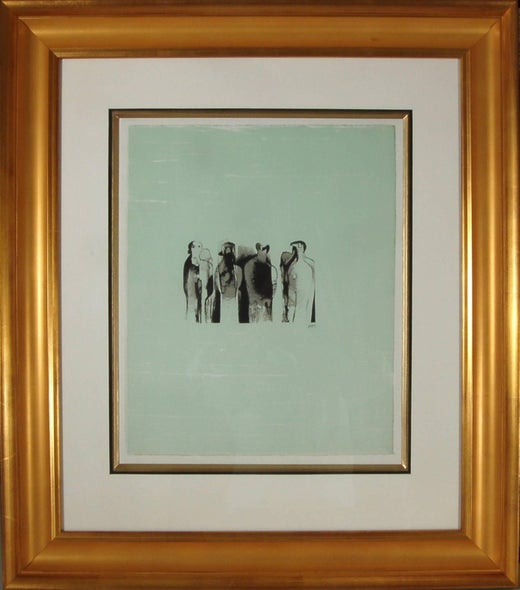
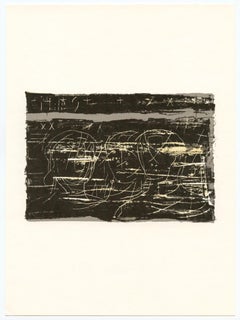
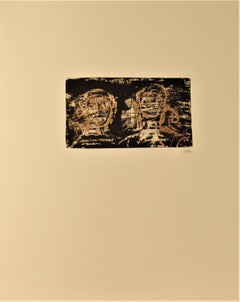
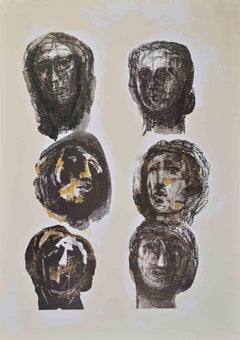
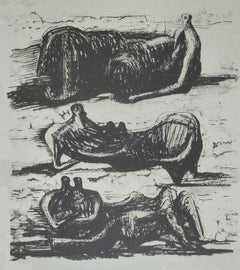
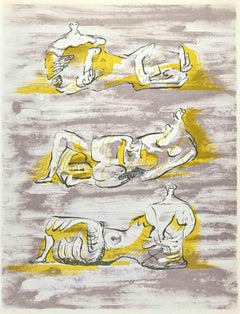
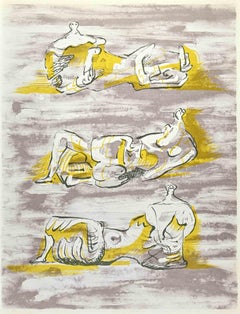
This exquisite lithograph by Henry Moore (1898–1986), titled Three Heads (Three Heads), from the album Ediciones Poligrafa, Barcelona - Redfern Gallery, London, originates from the 1979 edition published by Ediciones Poligrafa, Barcelona, in collaboration with Redfern Gallery, London; printed by La Poligrafa, S.A., Barcelona, October 23, 1979. This artwork reflects Moore’s mastery of form and human expression, where simplified contours and sculptural line evoke the enduring themes of identity, presence, and the universal human condition.
Executed as a lithograph on velin d'Arches paper. 10 x 7.5 inches, overall; 4 x 6 inches, image. Unsigned and unnumbered as issued. The edition exemplifies the refined craftsmanship of La Poligrafa atelier, one of the most important print workshops in postwar Spain.
Artwork Details:
Artist: Henry Moore (1898–1986)
Title: Three Heads (Three Heads), from Ediciones Poligrafa, Barcelona - Redfern Gallery, London, 1979
Medium: Lithograph on velin d'Arches paper
Dimensions: 10 x 7.5 inches, overall; 4 x 6 inches, image
Inscription: Unsigned and unnumbered as issued
Date: 1979
Publisher: Ediciones Poligrafa, Barcelona, in collaboration with Redfern Gallery, London
Printer: La Poligrafa, S.A., Barcelona
Catalogue raisonne reference: Moore, Henry, et al. Henry Moore: Catalogue of Graphic Work, 1931 1972. Gerald Cramer, 1973, illustration, CGM 376.
Condition: Well preserved, consistent with age and medium
Provenance: From Ediciones Poligrafa, Barcelona - Redfern Gallery, London, 1979
Notes:
Excerpted from the album, This album has been published for the exhibition of artists who have worked for Ediciones Poligrafa, Barcelona, at the Redfern Gallery, 20 Cork Street, London W. 1, from December 4th, 1979, to January 31st, 1980. This album was finished in Barcelona on 23rd October 1979 on the presses of La Poligrafa, S.A. The English edition for the Redfern Gallery has been limited to M examples. There is also a deluxe edition with a portfolio containing a selection of the lithographs with full margins, 37 1/2 x 27 cm., specially made for this album, signed and limited to C examples. Ediciones Poligrafa, Barcelona - Redfern Gallery, London
About the Publication:
Ediciones Poligrafa, Barcelona - Redfern Gallery, London, published in 1979, represents a significant collaborative exhibition album produced to accompany an international presentation of artists associated with Ediciones Poligrafa, one of Spain’s most influential postwar publishing houses. Conceived as both a documentation of artistic production and a collectible portfolio, the album brought together works by leading contemporary artists whose practices reflected the dynamic evolution of European abstraction and printmaking in the late twentieth century. Produced at the renowned La Poligrafa workshop in Barcelona, the publication exemplifies the high technical standards and collaborative spirit that defined Spanish printmaking during this period. Issued in conjunction with the exhibition at the Redfern Gallery in London, the album underscores the growing international dialogue between Spanish and British art institutions, while serving as a testament to the role of publishers and print ateliers in disseminating modern and contemporary art across cultural boundaries.
About the Artist:
Henry Moore (1898–1986) was a British sculptor, draftsman, and modernist pioneer whose monumental bronzes and organic abstractions revolutionized 20th century sculpture and made him one of the most influential artists of his time. Renowned for his reclining figures, mother and child compositions, and pierced biomorphic forms inspired by nature, Moore transformed traditional carving into a universal language of rhythm, balance, and humanity. Born in Castleford, Yorkshire, he studied at the Leeds School of Art and the Royal College of Art in London, absorbing the influences of classical sculpture, African and Pre Columbian art, and the radical innovations of the European avant garde. Inspired by Pablo Picasso’s Cubist fragmentation of form, Joan Miro’s lyrical biomorphism, Wassily Kandinsky’s spiritual abstraction, and Constantin Brancusi’s purity of shape, Moore developed a style rooted in the harmony between mass and void, structure and space. During the interwar years, he became part of an international circle that included Alexander Calder, Alberto Giacometti, Salvador Dali, Marcel Duchamp, and Man Ray, artists who, like Moore, expanded art’s boundaries through abstraction, surrealism, and conceptual experimentation. Like Calder, Moore explored balance and movement; like Giacometti, he sought the spiritual essence of humanity; and like Dali and Duchamp, he challenged perception and redefined modern form. His sculptures, carved in stone or cast in bronze, evoke both ancient and modern sensibilities, forms that appear to breathe with natural vitality while engaging directly with their surrounding landscapes. Moore’s Shelter Drawings (1940–41), created during the London Blitz, revealed his deep empathy for the human condition, marking a pivotal moment in his exploration of resilience and vulnerability. By the mid 20th century, Moore’s monumental bronzes had become landmarks around the world, from the Lincoln Center in New York to the UNESCO headquarters in Paris, embodying timeless symbols of endurance, renewal, and unity. His synthesis of organic abstraction and humanism influenced generations of sculptors including Barbara Hepworth, Isamu Noguchi, Eduardo Paolozzi, Antony Gormley, Anish Kapoor, and Rachel Whiteread. Like Kandinsky and Miro, he believed abstraction could transcend culture and time, while like Duchamp and Man Ray, he embraced experimentation as a pathway to new truths. Moore’s works, housed in major collections including the Museum of Modern Art in New York, the Tate in London, the Guggenheim Museum, and the Art Institute of Chicago, continue to define the landscape of modern sculpture for their elegance, power, and emotional depth. Standing alongside Pablo Picasso, Alexander Calder, Alberto Giacometti, Salvador Dali, Joan Miro, Wassily Kandinsky, Marcel Duchamp, and Man Ray, Henry Moore remains a cornerstone of modern art, a sculptor whose vision united nature, form, and spirit into a universal language of beauty and meaning. His highest auction record was achieved by Reclining Figure: Festival (1951), which sold for 33100000 USD at Christies London on June 30, 2016, reaffirming Henry Moore’s enduring legacy as one of the most visionary, influential, and collectible sculptors in the history of modern art.
Henry Moore Three Heads 1979 lithograph Poligrafa Redfern Gallery modernist print Moore collectible lithograph.