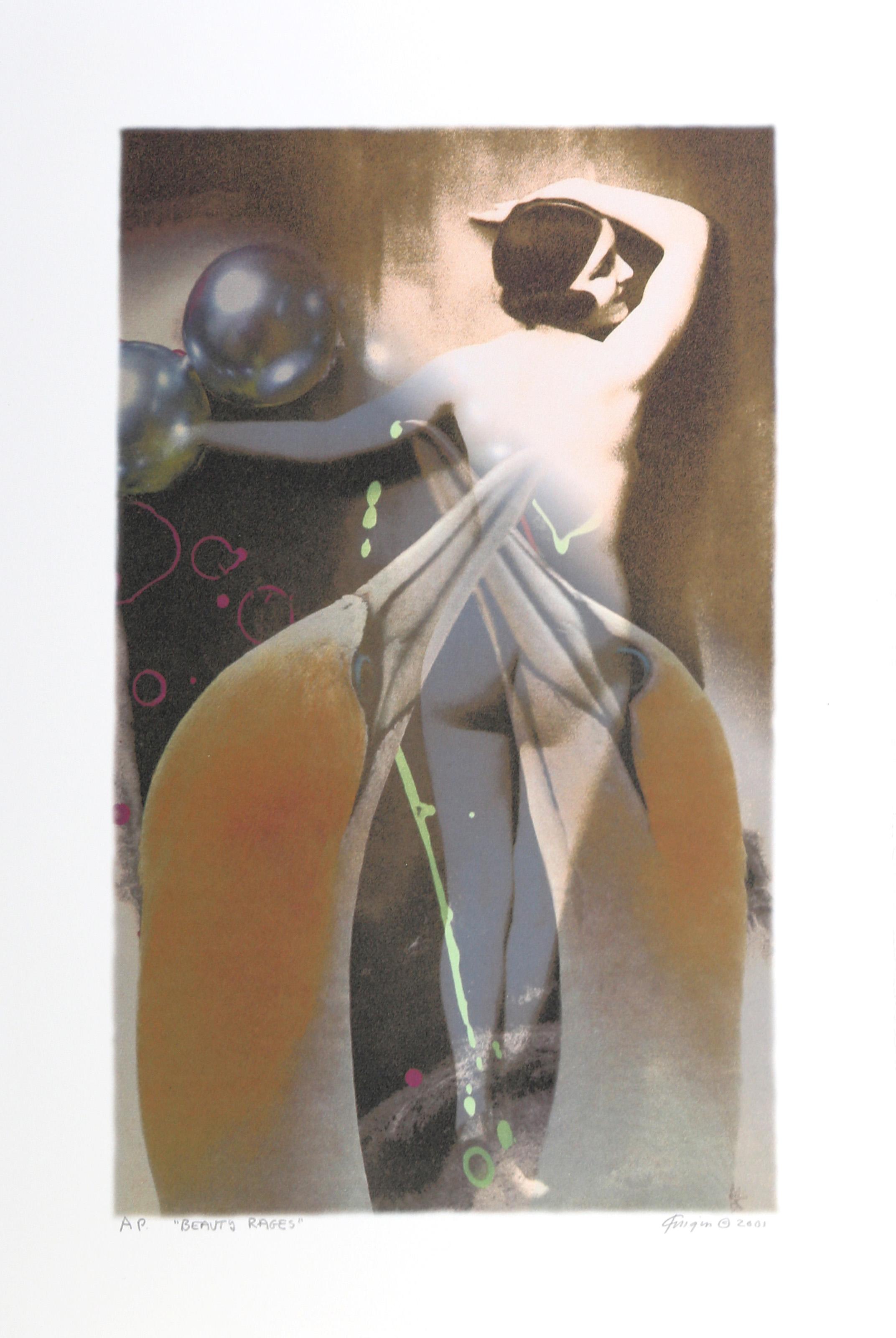
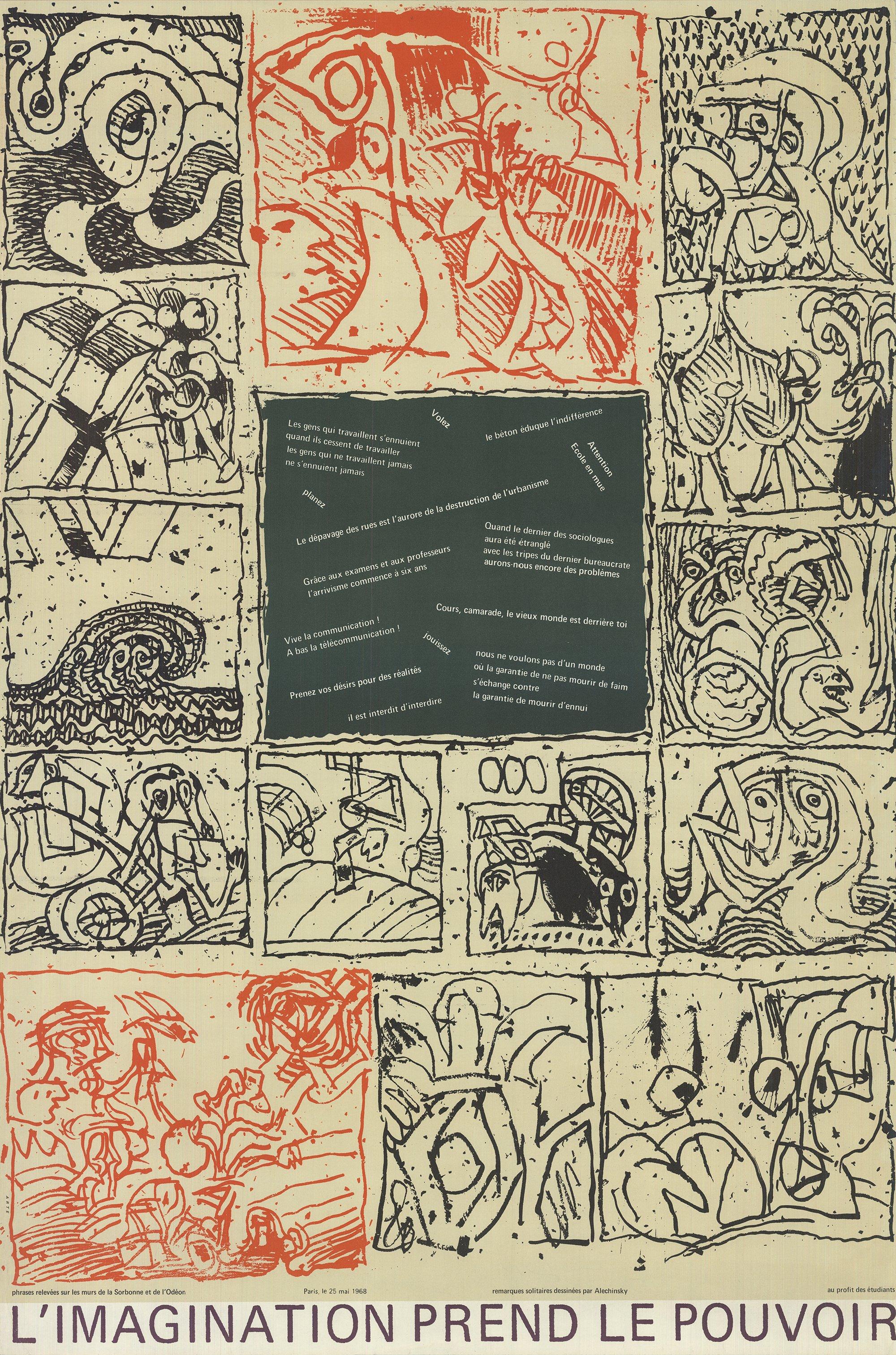
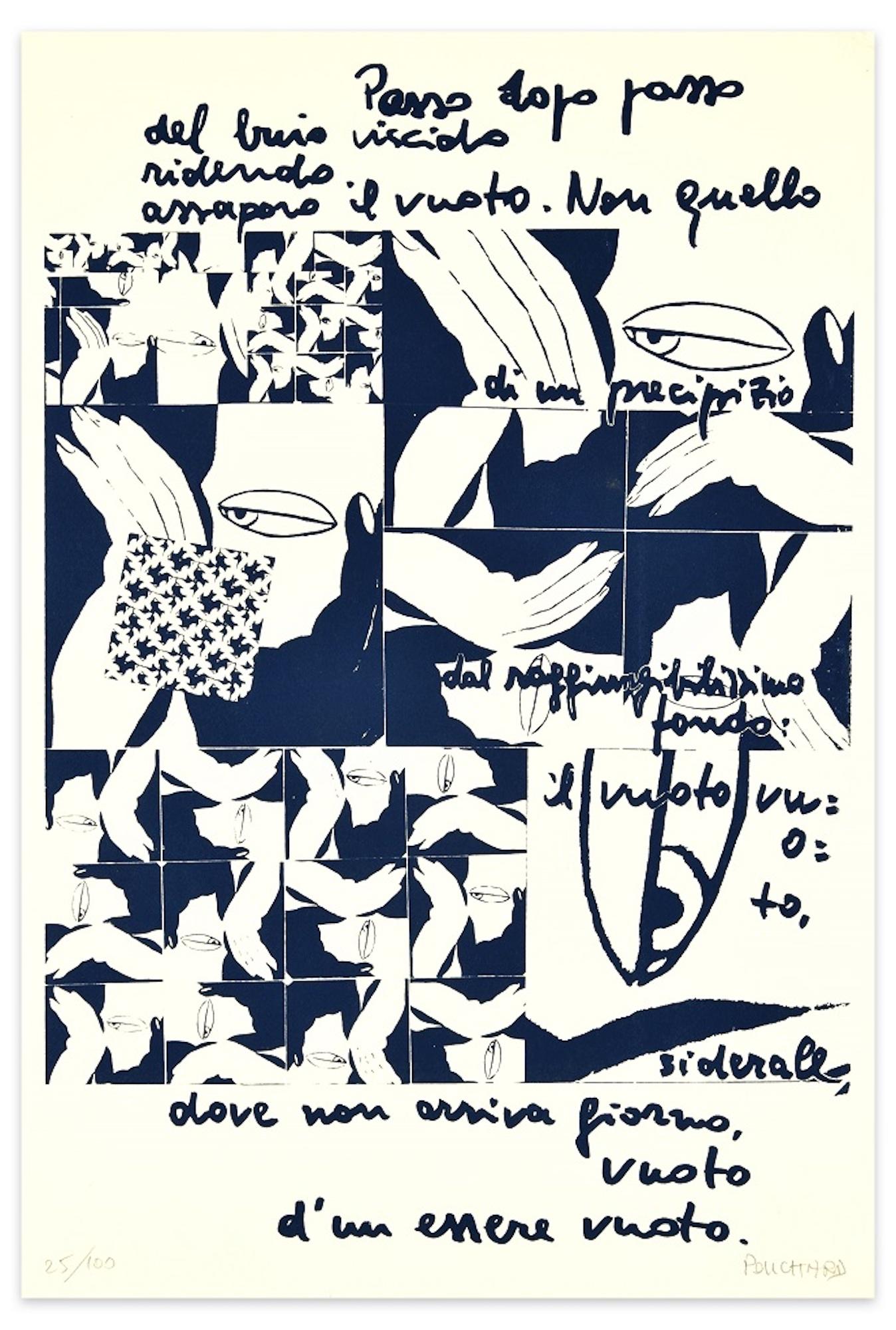
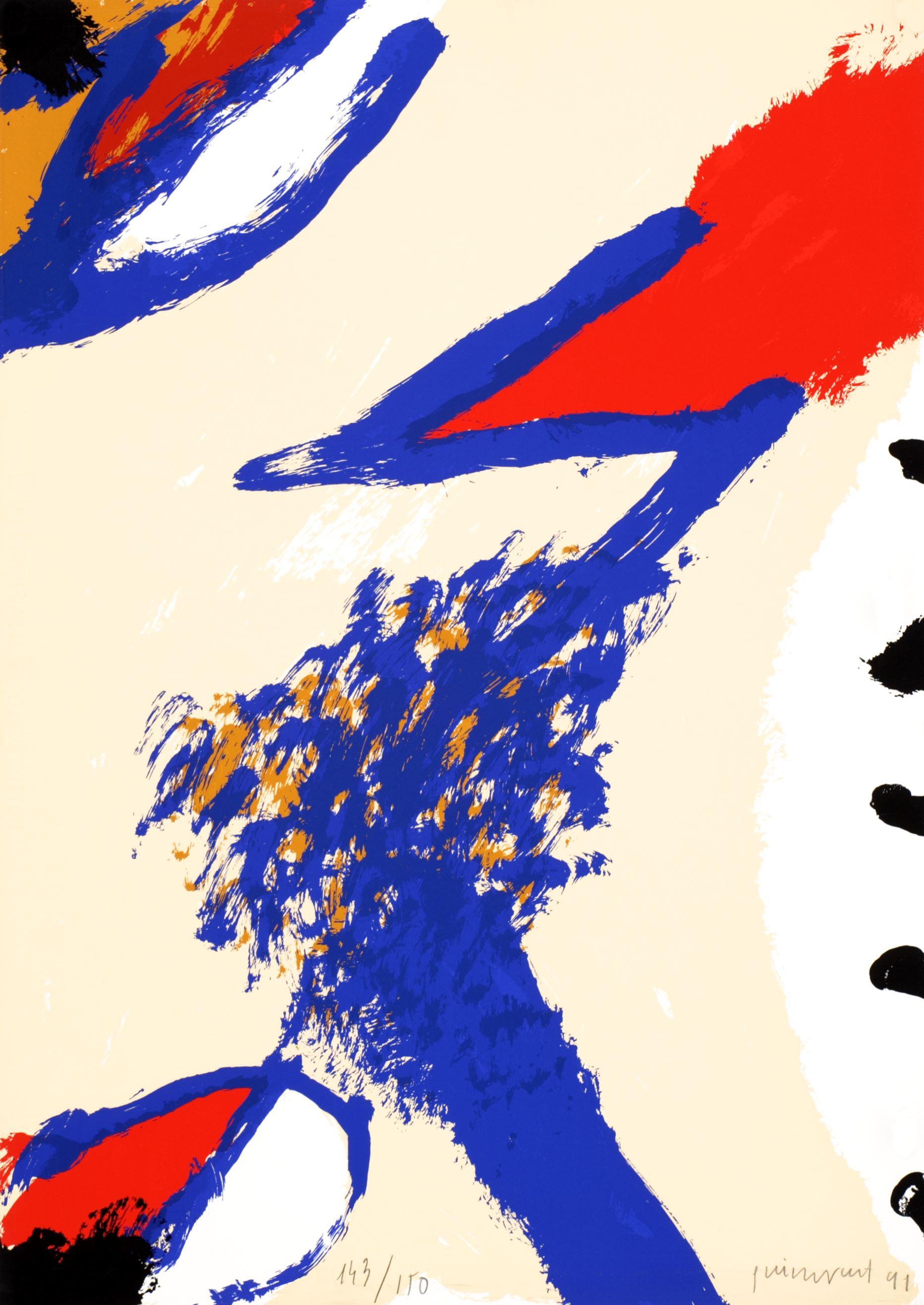
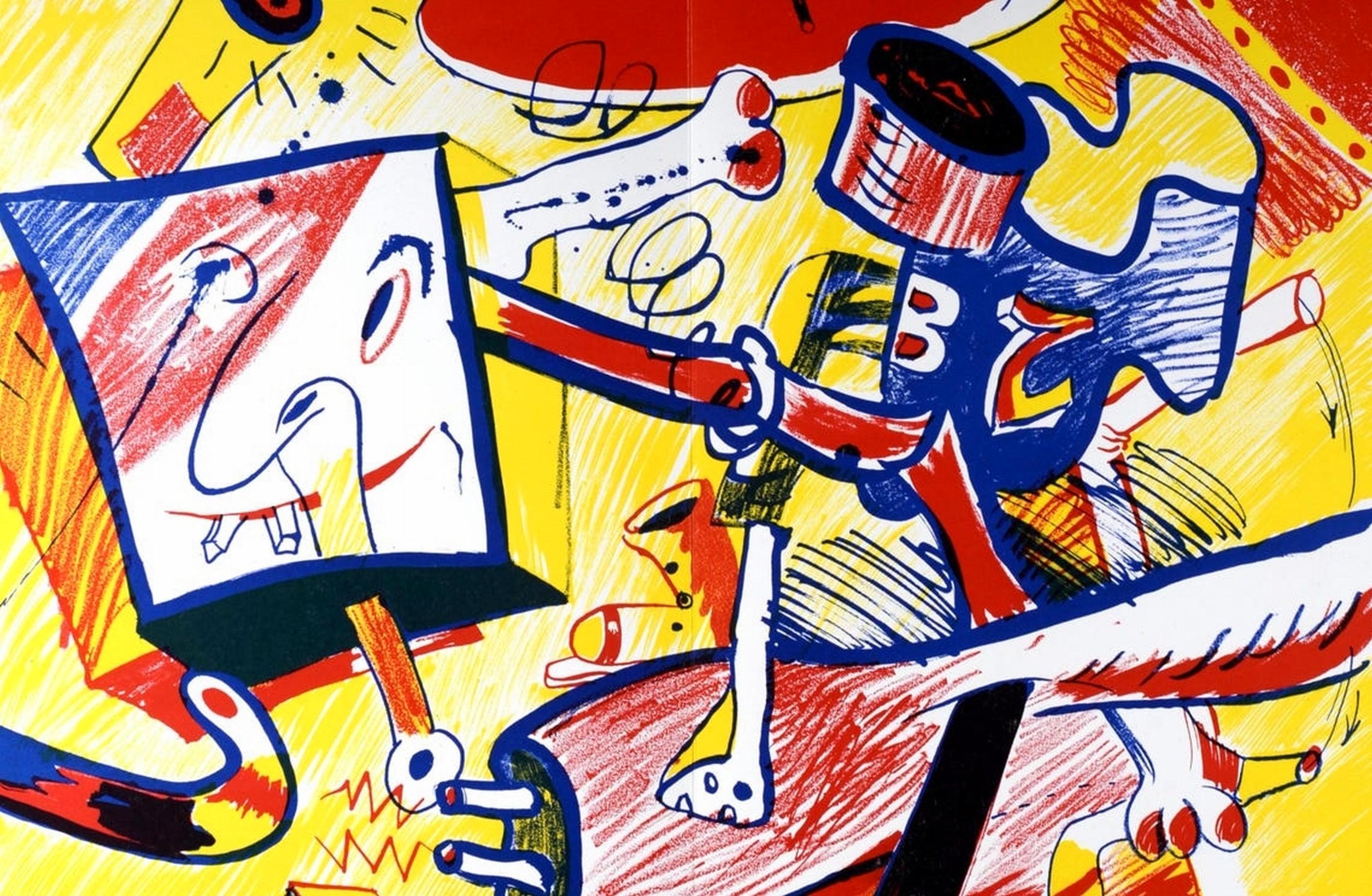
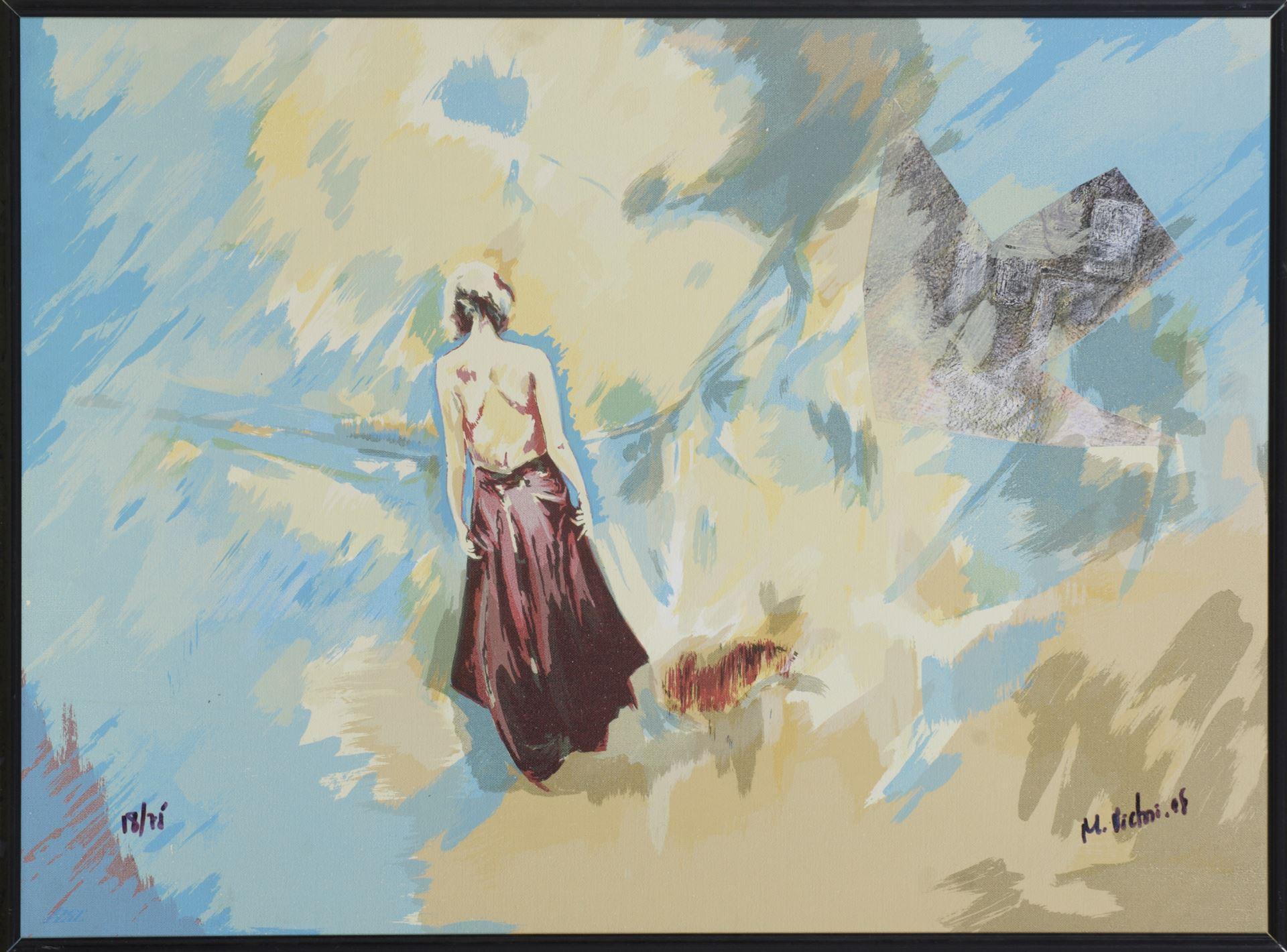
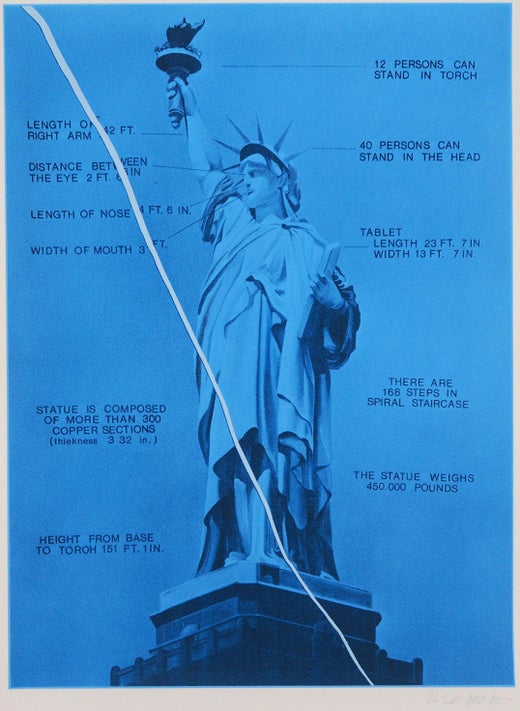
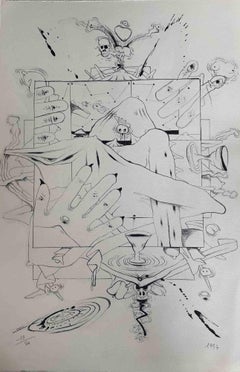
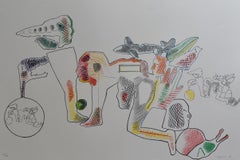
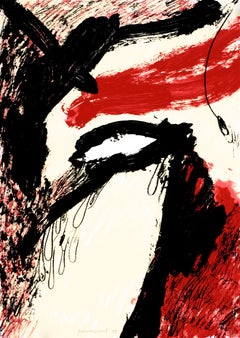
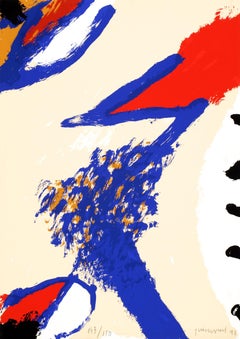
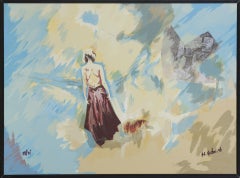
This exquisite silkscreen by Jacques Monory (1924–2018), titled Adieu ma folie (Farewell My Madness), originates from the historic 1982 folio Derriere le Miroir, No. 250, Hommage a Aime et Marguerite Maeght (Tribute to Aime and Marguerite Maeght). Published by Maeght Editeur, Paris, under the direction of Aime Maeght, and printed by Imprimerie Moderne du Lion, Paris, this composition reflects Monory’s cool, cinematic vision—imbued with melancholy, narrative tension, and the fragmented lyricism that defines his art. In Adieu ma folie, Monory translates emotion and memory into a dreamlike image of stillness and mystery, capturing both the intimacy and alienation of modern life.
Executed on velin paper, this silkscreen measures 15 x 22 inches (38.1 x 55.9 cm), with centerfold, as issued. As issued, it is unsigned and unnumbered, consistent with the authorized publication format. The edition reflects Monory’s distinctive fusion of realism and abstraction, exemplifying his place among the most innovative and influential European artists of the late 20th century.
Artwork Details:
Artist: Jacques Monory (1924–2018)
Title: Adieu ma folie (Farewell My Madness), from Derriere le Miroir, No. 250, Hommage a Aime et Marguerite Maeght (Tribute to Aime and Marguerite Maeght), 1982
Medium: Silkscreen on velin paper
Dimensions: 15 x 22 inches (38.1 x 55.9 cm), with centerfold, as issued
Inscription: Unsigned and unnumbered, as issued
Date: 1982
Publisher: Maeght Editeur, Paris
Printer: Imprimerie Moderne du Lion, Paris
Condition: Well preserved, consistent with age and medium
Provenance: From the 1982 folio Derriere le Miroir, No. 250, published by Maeght Editeur, Paris
Notes:
Excerpted from the folio (translated from French): This special issue of Derriere le Miroir was designed and defined by Aime Maeght in the fall of 1980. He envisioned its publication as a celebration with which artists and writers published since 1946 were to be associated. He also chose Francois Chapon, president of the Reverdy Committee, to write the presentation. This Derriere le Miroir number 250 took the form, after its disappearance on September 5, 1981, of a tribute to Aime Maeght and his wife Marguerite Maeght who died four years earlier. 24 artists agreed to create an original graphic work for this issue which includes the general table of all issues as well as excerpts from texts by 32 writers. Finished printing on June 2, 1982 on the presses of l’Imprimerie Moderne du Lion in Paris. CL examples were printed on velin d’Arches, numbered from I to CL, and some non-commercial examples constituting the original edition.
About the Publication:
Derriere le Miroir (translated as “Behind the Mirror”) was an iconic French art periodical published from 1946 to 1982 by Maeght Editeur, one of the most influential art publishers of the 20th century. Founded by Aime Maeght in Paris, the publication was conceived as a visual and literary collaboration between leading modern artists, poets, and critics. Each issue functioned as both an exhibition catalogue and a work of art in itself—featuring original lithographs printed directly from the artists’ stones or plates, alongside essays, poems, and critical commentary. Over the course of 36 years, Derriere le Miroir produced more than 250 issues and showcased an extraordinary roster of artists including Henri Matisse, Marc Chagall, Joan Miro, Georges Braque, Alexander Calder, Fernand Leger, Pierre Bonnard, Alberto Giacometti, Eduardo Chillida, Ellsworth Kelly, Francis Bacon, Paul Rebeyrolle, Claude Garache, Antoni Tapies, Bram van Velde, Pierre Alechinsky, Pol Bury, Shusaku Arakawa, Gerard Titus-Carmel, and Panayiotis Vassilakis Takis. Printed in the ateliers of Mourlot, Arte, and Imprimerie Moderne du Lion, the periodical set new standards for quality in color lithography, combining fine art printing with elegant typography and poetic text. Beyond its visual brilliance, Derriere le Miroir also became a cultural chronicle of postwar European modernism. Each issue coincided with exhibitions held at Galerie Maeght, providing a collectible and widely accessible record of groundbreaking shows. Its integration of image, text, and philosophy created a dialogue between art and literature that elevated the modern art book to new aesthetic heights. Today, Derriere le Miroir remains one of the most sought-after and historically significant art publications, prized by collectors and scholars alike for its craftsmanship, influence, and its role in defining the visual language of 20th-century modernism. The Maeght Foundation in Saint-Paul-de-Vence continues to honor this legacy through exhibitions and archival preservation of the series, affirming Derriere le Miroir’s enduring place in the history of modern art and fine art publishing.
About the Artist:
Jacques Monory (1924–2018) was a French painter, filmmaker, and printmaker celebrated for his cinematic, blue-toned paintings that explore memory, violence, and the fragmentation of modern life. A leading figure of the European Pop Art movement, Monory developed a striking visual language drawn from photography, film, and mass media, transforming scenes of suspense and melancholy into cool, dreamlike narratives. His refined use of monochrome blues and photographic realism placed him in dialogue with the great innovators of modern art—Pablo Picasso, Henri Matisse, Alexander Calder, Marc Chagall, Salvador Dali, Joan Miro, Georges Braque, Wassily Kandinsky, Marcel Duchamp, and Man Ray—whose explorations of color, form, and perception paved the way for his distinctive neo-figurative style. Monory’s work bridges surrealism, pop culture, and existential reflection, earning him major exhibitions worldwide and inclusion in prestigious museum collections such as the Centre Pompidou, the Musée d’Art Moderne de Paris, and the Tate. The highest price ever paid for a Jacques Monory artwork at auction is approximately $715,000 USD, achieved in 2021 at Artcurial Paris for Le Meurtre No. 10 (1968).
Jacques Monory lithograph, Monory Adieu ma folie, Monory Derriere le Miroir, Monory Maeght Editeur Paris, Monory Imprimerie Moderne du Lion, Monory 1982 edition, Monory French Pop Art, Monory cinematic realism, Monory abstraction, Monory collectible Silkscreen, Monory Maeght Paris publication.