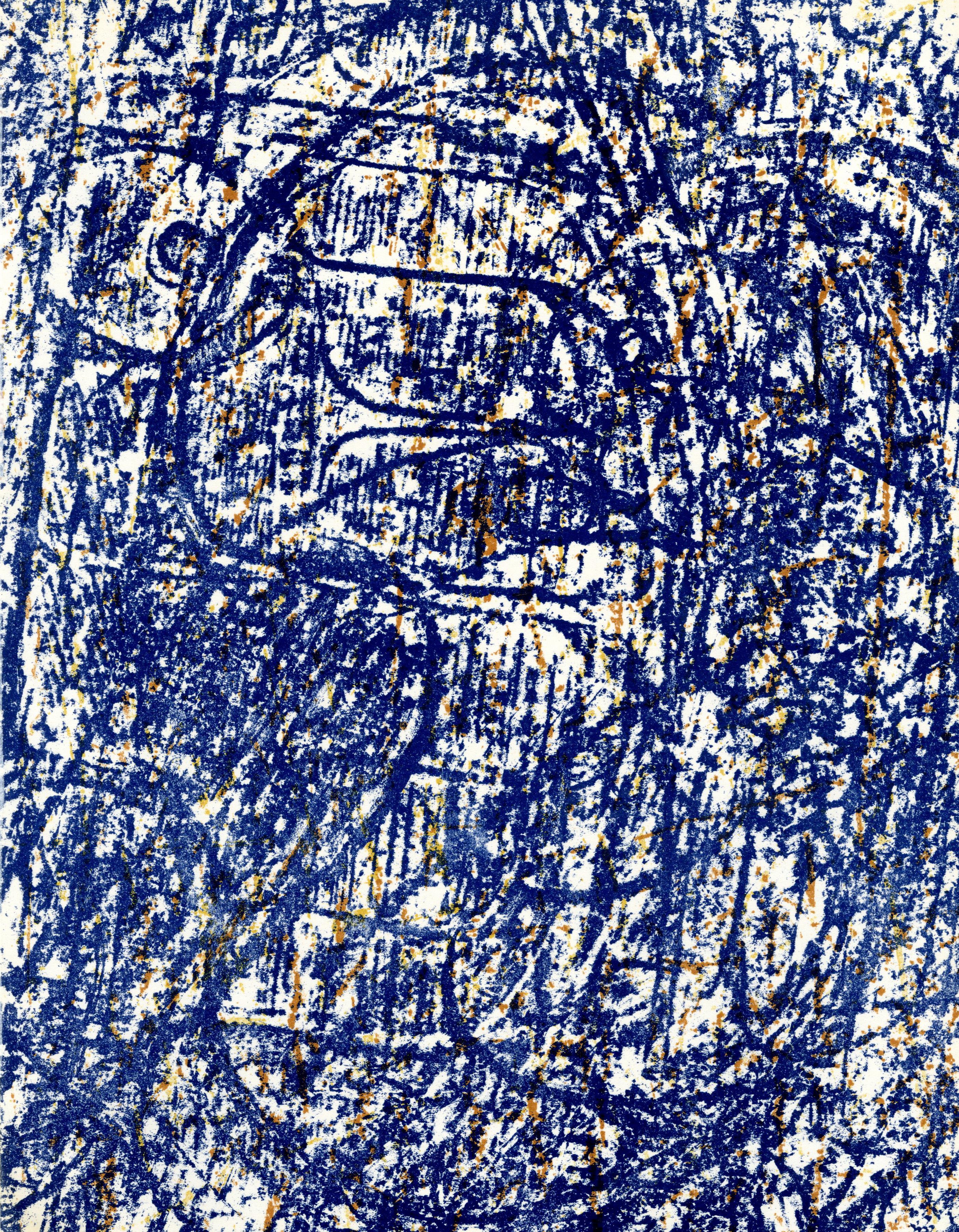
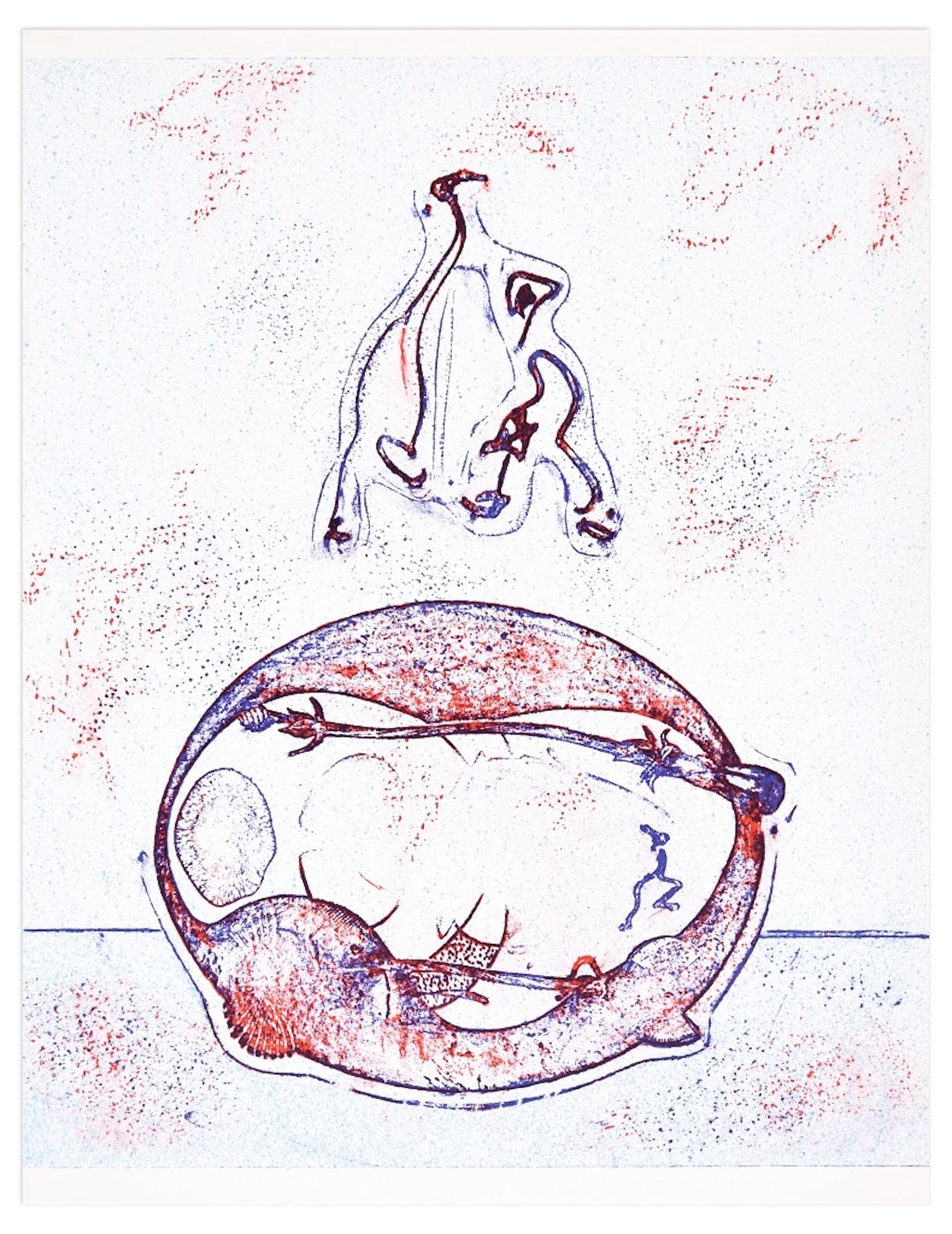
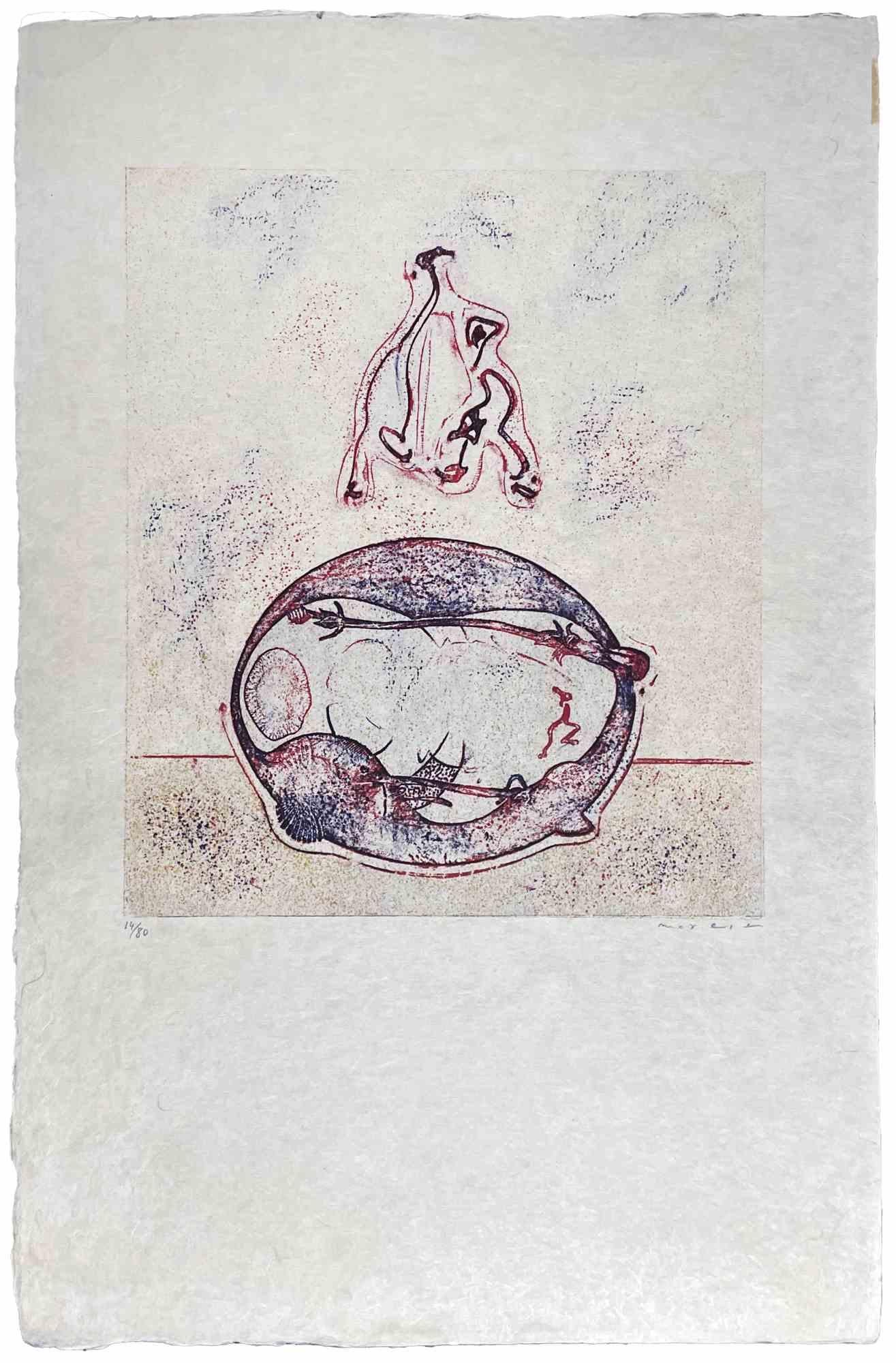
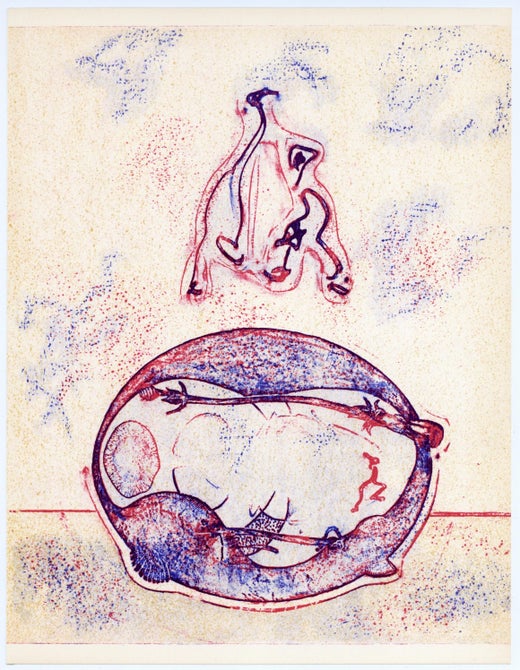
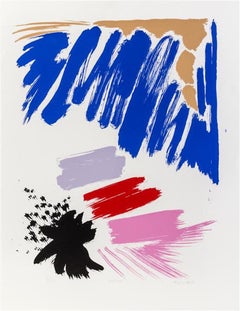
Night Star
By Friedel Dzubas
Located in New York, NY
Signed, numbered, and titled in pencil Screenprint 32.37 x 19.12 inches Edition of 25 of 90
Category
1980s Abstract Prints
Materials
Screen
1969
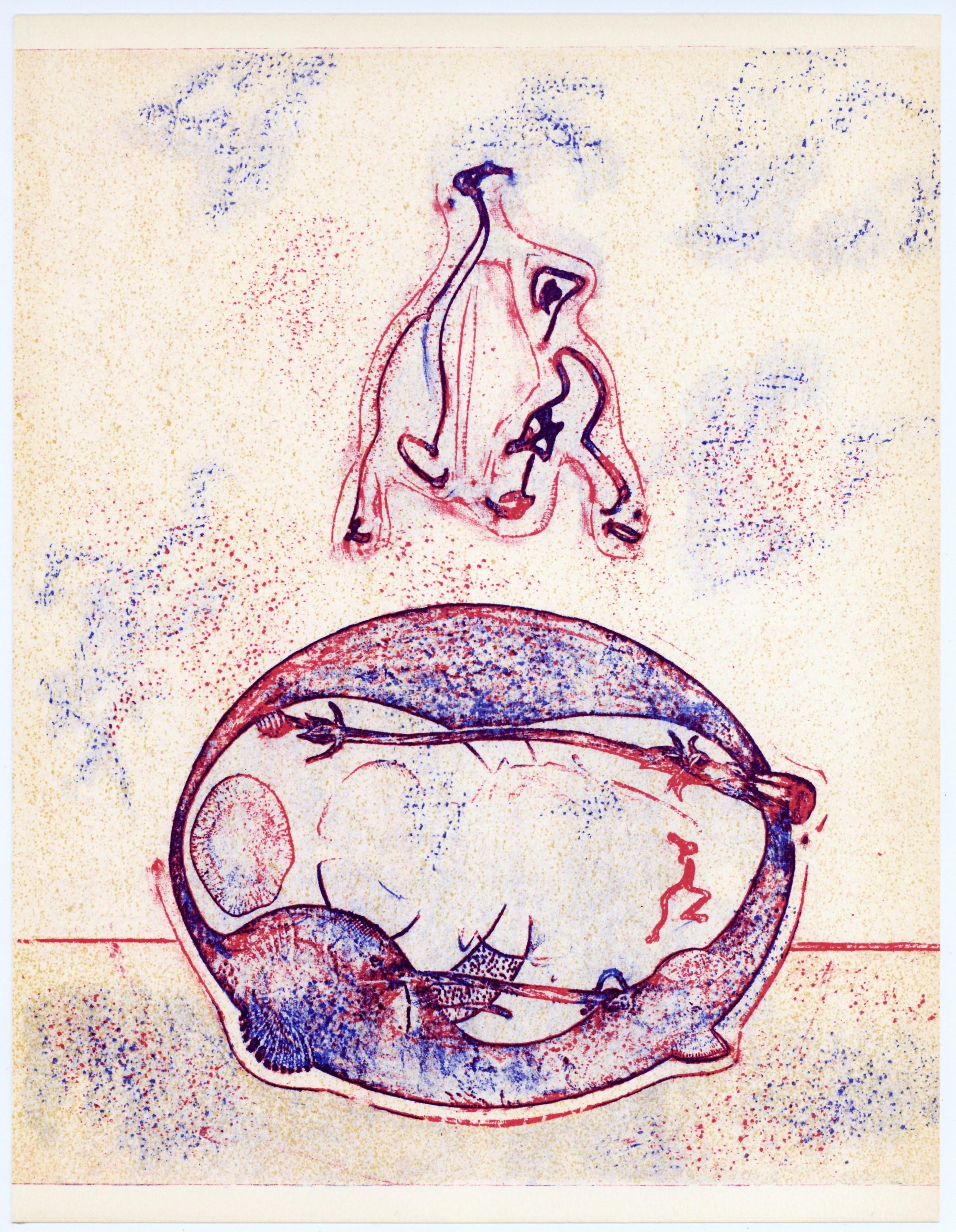
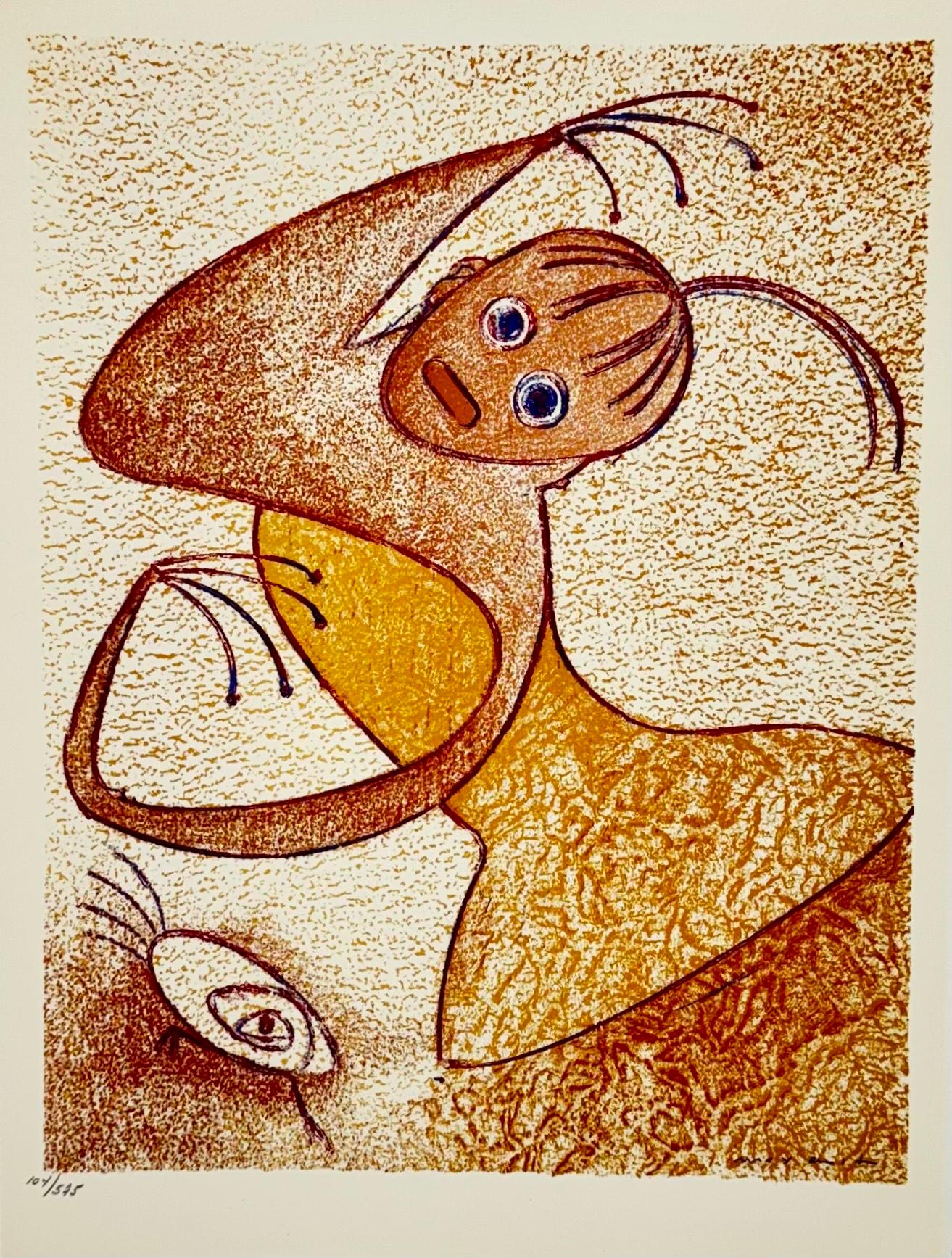
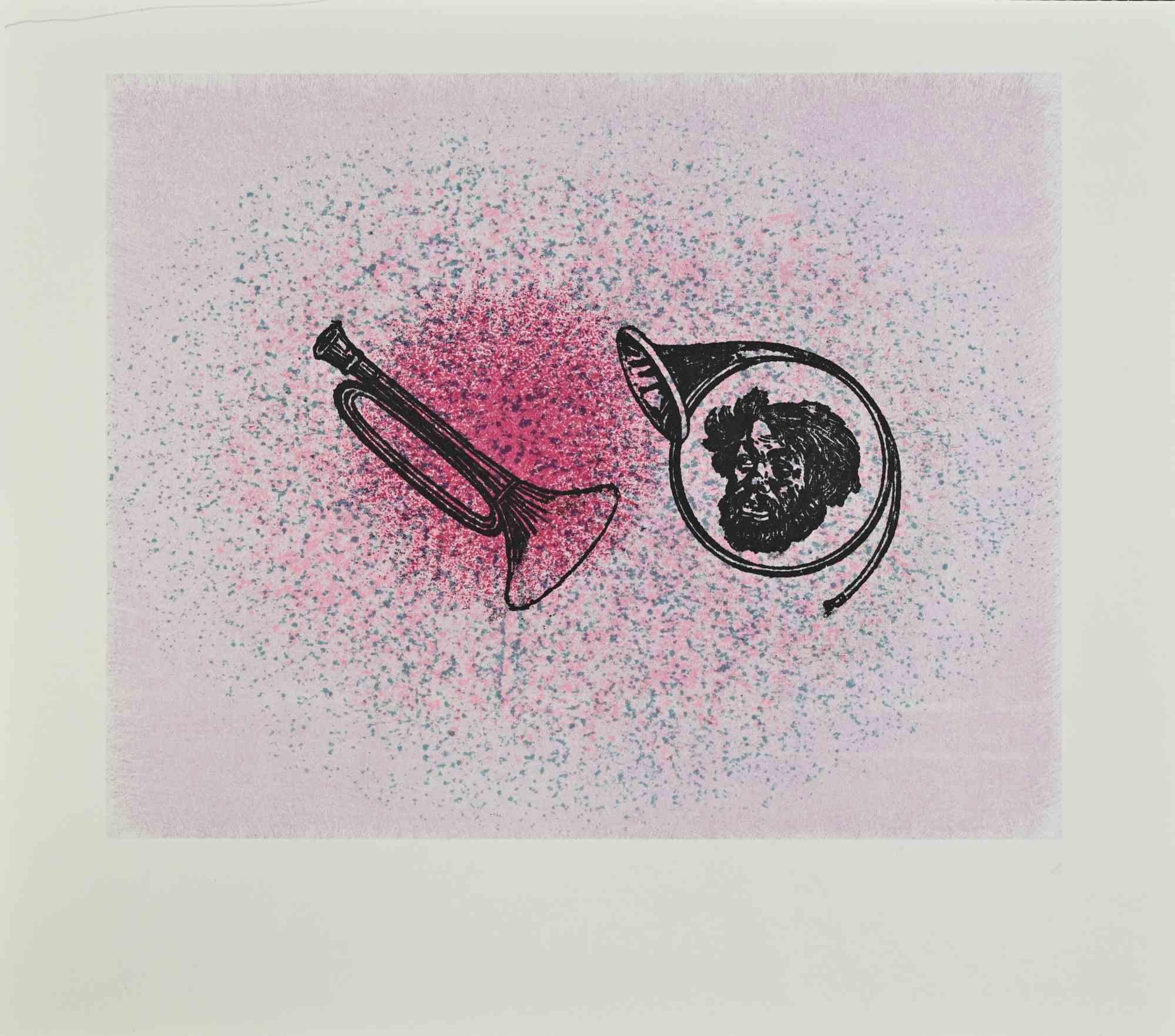
Born in Germany in 1891, later naturalized as an American, then a French citizen, Max Ernst was a pioneer in the Dada and Surrealist movements, the boundaries of which he pushed with his unconventional methods of printmaking, drawing and collage.
Ernst had no formal art training — and that may have been his greatest asset. He produced his first work following four years serving in World War I. At the time, he was in Cologne, Germany, working closely with fellow Dada pioneers Jean Arp and Johannes Baargeld. His output during this period consisted largely of collages, which allowed him to represent the shards, rubble and explosions from his traumatic wartime experience.
In 1922, Ernst moved to France, where he soon became affiliated with Surrealism, the avant-garde art movement taking shape in Paris. Alongside Man Ray, Joan Miró and a couple of others, Ernst was among the first visual artists to experiment with imagery and techniques associated with Surrealism.
Ernst’s greatest contribution to the Surrealist movement was his invention of frottage (French for “rubbing”), wherein an artist rubs a pencil or crayon over a paper atop a textured surface, and later grattage (French for “scraping”), where a similar technique is applied with paint. Both methods showcase Ernst’s fascination with the unconscious and serendipitous elements of artistic creation, a theme that connected the Dadaists and the Surrealists. Ernst had deep knowledge of psychoanalysis and Sigmund Freud’s dream theories, which were big influences on Surrealists. He was among the first Surrealists to use Freud’s work to examine his own creative impulses. He also published a series of books of his collages, all of which were deeply symbolic and often philosophical.
When Germany occupied France during World War II, Ernst escaped to America with the help of patron and collector Peggy Guggenheim, whom he married in 1941. While living in New York, Ernst’s work and techniques proved instrumental in inspiring the early development of Abstract Expressionism — influencing Robert Motherwell and Jackson Pollock in particular. He later moved to Sedona, Arizona, where he lived with his fourth wife, Dorothea Tanning, a fellow Surrealist and prolific visual artist and poet.
While Ernst and Tanning are largely responsible for Sedona’s reputation as an artist colony, they relocated to France in the 1950s and remained until Ernst’s death in Paris in 1976.
Find original Max Ernst art on 1stDibs.
Night Star
By Friedel Dzubas
Located in New York, NY
Signed, numbered, and titled in pencil Screenprint 32.37 x 19.12 inches Edition of 25 of 90
Screen
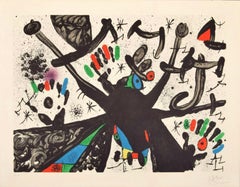
Untitled (Joan Prats)
By Joan Miró
Located in New York, NY
Signed and numbered lithograph on Guarro paper.
Lithograph
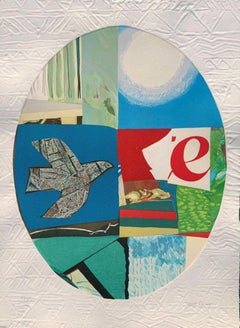
Abstract Oval Composition with Birds and Other Images
By Max Papart
Located in New York, NY
Abstract Oval Composition with Birds and Other Images Signed and numbered in pencil Etching with carborundum
Etching
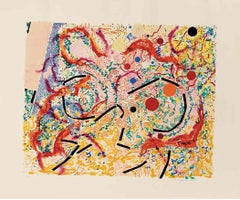
Vertigo
By Nancy Graves
Located in New York, NY
Signed and numbered in pencil with studio blindstamp Color screenprint on Arches Cover paper 29.75 x 35.5 inches
Screen
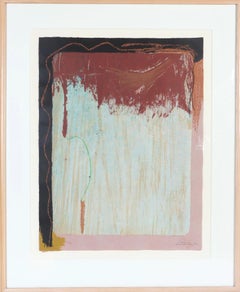
Tribal Sign
By Helen Frankenthaler
Located in New York, NY
Tribal Sign, 1987 Signed and dated in pencil with publisher's blindstamp Eleven color lithograph on mauve TGL handmade paper Sheet: 24 x 18.5 inches Frame: 33 x 27 inches Edition 25 ...
Color, Lithograph
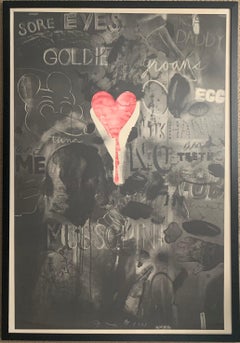
Picabia II (Forgot)
By Jim Dine
Located in New York, NY
Offset lithograph, using a single zinc plate, with collage in colors printed from a watercolor on Hodgkinson mould paper Signed, numbered, and dated on recto
Lithograph
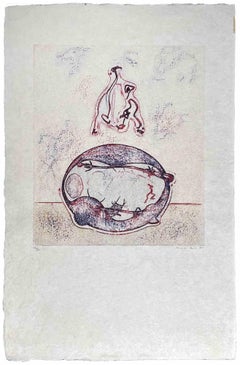
Après Moi le XXème Siècle - Lithograph by Max Ernst - 1971
By Max Ernst
Located in Roma, IT
Après moi is an artwork reazlized by Max Ernst as deluxe edition for the Art Magazine XXème Siècle. Lithograph on japanese paper, 1971. Edition 14/80. Hand signed and numbered. 29 x...
Lithograph
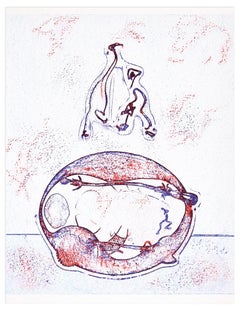
Après-moi le XX° siècle - Original Lithograph by Max Ernst - 1971
By Max Ernst
Located in Roma, IT
Après-moi Le XX Siècle is an original artwork realized by Max Ernst in 1971. Original colored lithograph. Very good conditions. This lithograph is from the second issue, which wa...
Lithograph
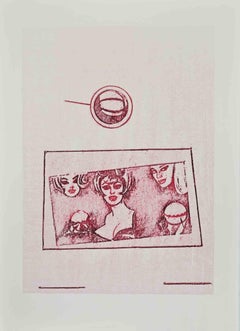
The Soldier's Ballad - Lithograph by Max Ernst - 1972
By Max Ernst
Located in Roma, IT
The Soldier's Ballad is a contemporary artwork realized by Max Ernst in 1972. Mixed colored lithograph on Arches Paper. Edited by Manus Presse, Stuttgart 1972. Not signed and not ...
Lithograph
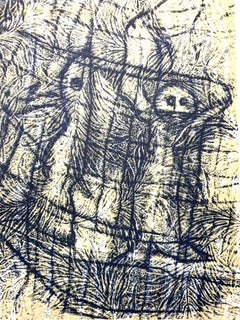
Max Ernst - Composition - Original Lithograph
By Max Ernst
Located in Collonge Bellerive, Geneve, CH
Max Ernst - Composition - Original Lithograph 1958 Dimensions: 32 x 24 cm XXe siècle Unsigned and unnumbered, as issued Max Ernst was born in Bruhl, a place near Cologne, in Germany. He was raised in a strict Catholic family, and both of his parents were disciplinarians who were dedicated to training their children into God-fearing and talented individuals. Although his father was deaf, Ernst learned so much from him, particularly when it comes to painting. In fact, much of his early years were lived under the inspiration of his father who was also a teacher. He was the one who introduced painting to Ernst at an early age. In 1914, Ernst attended the University of Bonn where he studied philosophy. However, he eventually dropped out of school because he was more interested in the arts. He claimed that his primary sources of interest included anything that had something to do with painting. Moreover, he became fascinated with psychology, among other subjects in school. Primarily, Ernst's love for painting was the main reason why he became deeply interested with this craft and decided to pursue it later on in his life. During his early years, he became familiar with the works of some of the greatest artists of all time including Claude Monet, Paul Cezanne and Vincent van Gogh. He was also drawn to themes such as fantasy and dream imagery, which were among the common subjects of the works of Giorgio de Chirico. During World War I, Ernst was forced to join the German Army, and he became a part of the artillery division that exposed him greatly to the drama of warfare. A soldier in the War, Ernst emerged deeply traumatized and highly critical of western culture. These charged sentiments directly fed into his vision of the modern world as irrational, an idea that became the basis of his artwork. Ernst's artistic vision, along with his humor and verve come through strongly in his Dada and Surrealists works; Ernst was a pioneer of both movements. It was Ernst's memories of the war and his childhood that helps him create absurd, yet interesting scenes in his artworks. Soon, he took his passion for the arts seriously when he returned to Germany after the war. With Jean Arp, a poet and artist, Ernst formed a group for artists in Cologne. He also developed a close relationship with fellow artists in Paris who propagated Avant-Garde artworks. In 1919, Ernst started creating some of his first collages, where he made use of various materials including illustrated catalogs and some manuals that produced a somewhat futuristic image. His unique masterpieces allowed Ernst to create his very own world of dreams and fantasy, which eventually helped heal his personal issues and trauma. In addition to painting and creating collages, Ernst also edited some journals. He also made a few sculptures that were rather queer in appearance. In 1920s, influenced by the writings of psychologist Sigmund Freud, the literary, intellectual, and artistic movement called Surrealism sought a revolution against the constraints of the rational mind; and by extension, they saw the rules of a society as oppressive. Surrealism also embraces a Marxist ideology that demands an orthodox approach to history as a product of the material interaction of collective interests, and many renown Surrealism artists later on became 20th century Counterculture symbols such as Marxist Che Guevara. In 1922 Ernst moved to Paris, where the surrealists were gathering around Andre Breton. In 1923 Ernst finished Men Shall Know Nothing of This, known as the first Surrealist painting. Ernst was one of the first artists who apply The Interpretation of Dreams by Freud to investigate his deep psyche in order to explore the source of his own creativity. While turning inwards unto himself, Ernst was also tapping into the universal unconscious with its common dream imagery. Despite his strange styles, Ernst gained quite a reputation that earned him some followers throughout his life. He even helped shape the trend of American art during the mid-century, thanks to his brilliant and extraordinary ideas that were unlike those of other artists during his time. Ernst also became friends with Peggy Guggenheim, which inspired him to develop close ties with the abstract expressionists. When Ernst lived in Sedona, he became deeply fascinated with the Southwest Native American navajo art. In fact, the technique used in this artwork inspired him and paved the way for him to create paintings that depicted this style. Thus, Ernst became a main figure of this art technique, including the rituals and spiritual traditions included in this form of art. Pollock, aside from the other younger generations of abstract expressionists, was also inspired by sand painting of the Southwest...
Lithograph
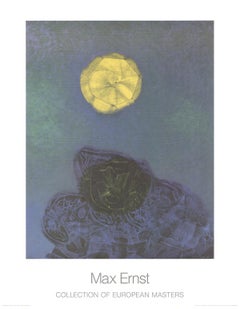
Max Ernst 'Ursachen Der Sonne, The Sun' 1989- Surrealist Vintage
By Max Ernst
Located in Brooklyn, NY
This rare exhibition poster features Max Ernst's Ursachen ("Causes"), part of the acclaimed "Collection of European Masters" series published by Achenbach Editions for the Kunstsamml...
Offset
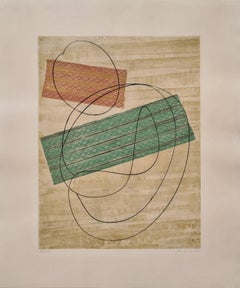
Wallpaper
By Max Ernst
Located in Paris, FR
Engraving, 1967 Handsigned by the artist in pencil and Annotated "Essay" Edition : 99 + HC Publisher : Georges Visat (Paris) Printer : Georges Visat (Par...
Engraving