Max Ernst Art

American, German, French, 1891-1976

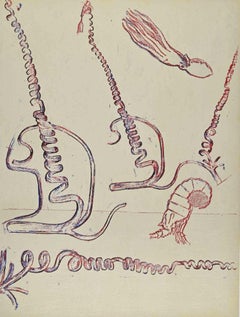
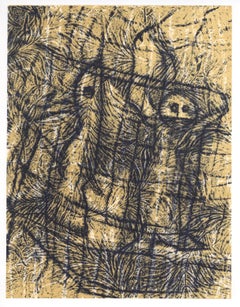
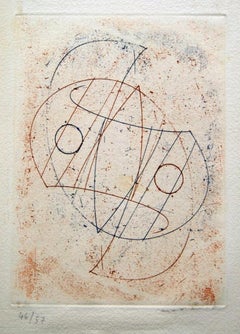
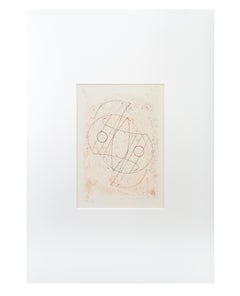
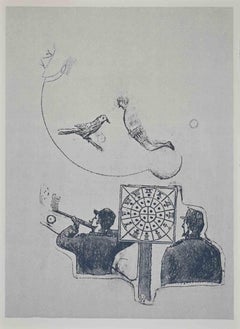
Born in Germany in 1891, later naturalized as an American, then a French citizen, Max Ernst was a pioneer in the Dada and Surrealist movements, the boundaries of which he pushed with his unconventional methods of printmaking, drawing and collage.

Ernst had no formal art training — and that may have been his greatest asset. He produced his first work following four years serving in World War I. At the time, he was in Cologne, Germany, working closely with fellow Dada pioneers Jean Arp and Johannes Baargeld. His output during this period consisted largely of collages, which allowed him to represent the shards, rubble and explosions from his traumatic wartime experience.

In 1922, Ernst moved to France, where he soon became affiliated with Surrealism, the avant-garde art movement taking shape in Paris. Alongside Man Ray, Joan Miró and a couple of others, Ernst was among the first visual artists to experiment with imagery and techniques associated with Surrealism.

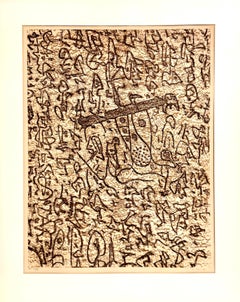
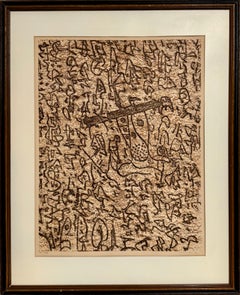
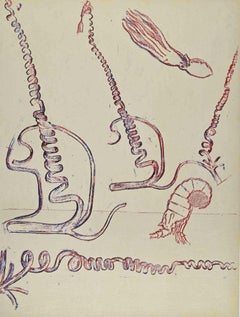
Ernst’s greatest contribution to the Surrealist movement was his invention of frottage (French for “rubbing”), wherein an artist rubs a pencil or crayon over a paper atop a textured surface, and later grattage (French for “scraping”), where a similar technique is applied with paint. Both methods showcase Ernst’s fascination with the unconscious and serendipitous elements of artistic creation, a theme that connected the Dadaists and the Surrealists. Ernst had deep knowledge of psychoanalysis and Sigmund Freud’s dream theories, which were big influences on Surrealists. He was among the first Surrealists to use Freud’s work to examine his own creative impulses. He also published a series of books of his collages, all of which were deeply symbolic and often philosophical.

When Germany occupied France during World War II, Ernst escaped to America with the help of patron and collector Peggy Guggenheim, whom he married in 1941. While living in New York, Ernst’s work and techniques proved instrumental in inspiring the early development of Abstract Expressionism — influencing Robert Motherwell and Jackson Pollock in particular. He later moved to Sedona, Arizona, where he lived with his fourth wife, Dorothea Tanning, a fellow Surrealist and prolific visual artist and poet.

While Ernst and Tanning are largely responsible for Sedona’s reputation as an artist colony, they relocated to France in the 1950s and remained until Ernst’s death in Paris in 1976.

Find original Max Ernst art on 1stDibs.

to
40
114
40
25
1
Overall Width
to
Overall Height
to
1
179
3
8
3
9
38
115
138
26
7
1
155
25
74
52
45
26
22
12
10
9
9
9
7
7
7
6
6
6
5
5
5
5
137
15
12
4
3
185
11,047
2,850
2,494
1,432
5
76
109
71
Artist: Max Ernst
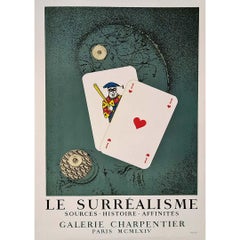
Max Ernst Dada Surrealist Hand Signed Lithograph Poster for a Jewish Museum

Max Ernst Dada Surrealist Hand Signed Lithograph Poster for a Jewish Museum

By Max Ernst

Located in Surfside, FL

Max Ernst (German, American, 1891-1976) Color lithograph Titled, "Poster For The Jewish Museum" 1966 Hand signed lower right Hand numbered HC I/XVII Dimensions: 34.75 x 28.5 sight 25 X 19.25 Max Ernst (German 1891 – 1976) was a German-born painter, sculptor, printmaker, graphic artist, and poet. A prolific artist, Ernst was a primary pioneer of the Dada movement and surrealism in Europe. He had no formal artistic training, but his experimental attitude toward the making of art resulted in his invention of frottage—a technique that uses pencil rubbings of textured objects and relief surfaces to create images—and grattage, an analogous technique in which paint is scraped across canvas to reveal the imprints of the objects placed beneath. Max Ernst showed for the first time in 1912 at the Galerie Feldman in Cologne. At the Sonderbund exhibition of that year in Cologne he saw the work of Paul Cezanne, Edvard Munch, Pablo Picasso, Paul Gauguin and Vincent van Gogh. In 1913 he met Guillaume Apollinaire and Robert Delaunay and traveled to Paris. Ernst participated that same year in the Erste deutsche Herbstsalon. In 1914 he met Jean Arp in Cologne who was to become a lifelong friend. In 1921 Ernst exhibited at the Galerie au Sans Pareil in Paris. He was involved in Surrealist activities in the early 1920s with Paul Eluard and André Breton. His work was exhibited that year together with that of the Das Junge Rheinland group, at Galerie Feldman in Cologne, and then in several group exhibitions in 1913. In his paintings of this period, Ernst adopted an ironic style that juxtaposed grotesque elements alongside Cubist and Expressionist motifs. Ernst fought in world war I. Several German Expressionist painters died in action during the war, among them August Macke and Franz Marc. In 1918, Ernst was demobilised and returned to Cologne. He soon married art history student Luise Straus, of Jewish ancestry, whom he had met in 1914. In 1919, he visited Paul Klee in Munich and studied paintings by Giorgio de Chirico. In the same year, inspired by de Chirico and mail-order catalogues, teaching-aide manuals and similar sources, he produced his first collage works (notably Fiat modes, a portfolio of lithographs), a technique which later dominated his artistic pursuits. Also in 1919, Ernst, social activist Johannes Theodor Baargeld and several colleagues founded the Cologne Dada group. In 1919–20, Ernst and Baargeld published various short-lived magazines such as Der Strom, die Schammade and organised Dada exhibitions. Ernst and Luise's son Ulrich Jimmy Ernst was born on 24 June 1920; he later would also become a painter. In 1921, he met Paul Éluard, who became a lifelong friend. Éluard bought two of Ernst's paintings (Celebes and Oedipus Rex) and selected six collages to illustrate his poetry collection Répétitions. A year later the two collaborated on Les malheurs des immortels and then with André Breton, whom Ernst met in 1921, on the magazine Littérature. Ernst developed a fascination with birds which was prevalent in his work. His alter ego in paintings, which he called Loplop, was a bird. He suggested that this alter-ego was an extension of himself stemming from an early confusion of birds and humans. In 1927, he married Marie-Berthe Aurenche and it is thought his relationship with her may have inspired the erotic subject matter of The Kiss and other works of that year. He collaborated with Joan Miro on designs for Sergei Diaghilev Ballet that same year. The following year the artist collaborated with Salvador Dali and the Surrealist Luis Bunuel on the film L'Age d'or. His first American show was held at the Julien Levy Gallery, New York, in 1932. In 1936 Ernst was represented in Fantastic Art, Dada, Surrealism at the Museum of Modern Art in New York. Ernst began to sculpt in 1934 and spent time with Alberto Giacometti. In 1938, the American heiress and artistic patron Peggy Guggenheim acquired a number of Max Ernst's works, which she displayed in her new gallery in London. Ernst and Guggenheim were married from 1942 to 1946. In September 1939, the outbreak of World War II caused Ernst, being German, to be interned as an "undesirable foreigner" in Camp des Milles, near Aix-en-Provence, along with fellow surrealist, Hans Bellmer, who had recently emigrated to Paris. He had been living with his lover and fellow surrealist painter, Leonora Carrington who, not knowing whether he would return, saw no option but to sell their house to repay their debts and leave for Spain. Thanks to the intercession of Paul Éluard and other friends, including the journalist Varian Fry, he was released a few weeks later. Soon after the German occupation of France, he was arrested again, this time by the Gestapo, but managed to escape to America with the help of Fry and Peggy Guggenheim, a member of a wealthy American art collecting family. Ernst and Peggy Guggenheim arrived in the United States in 1941 and were married at the end of the year. Along with other artists and friends (Marcel Duchamp and Marc Chagall) who had fled from the war and lived in New York City, Ernst helped inspire the development of abstract expressionism. His marriage to Guggenheim did not last. In October 1946 he married American surrealist painter Dorothea Tanning in a double ceremony with Man Ray and Juliet P. Browner in Beverly Hills, California. The couple made their home in Sedona, Arizona from 1946 to 1953. He and Tanning hosted intellectuals and European artists such as Henri Cartier-Bresson and Yves Tanguy. Sedona proved an inspiration for the artists and for Ernst, who compiled his book Beyond Painting and completed his sculptural masterpiece Capricorn while living in Sedona. As a result of the book and its publicity, Ernst began to achieve financial success. From the 1950s he lived mainly in France. In 1954 he was awarded the Grand Prize for painting at the Venice Biennale. In 2005, "Max Ernst: A Retrospective" opened at the Metropolitan Museum of Art. Contemporary artist tapestries have had their true believers. He produced a tapestry for Gloria Ross...

Category

1960s Surrealist Max Ernst Art

Materials

Lithograph

original lithograph

original lithograph

By Max Ernst

Located in Henderson, NV

Medium: original lithograph. Catalogue reference Spies/Leppien 202. Published in 1971 by XXe Siecle. Sheet size: 12 1/4 x 9 3/8 inches (310 x 238 mm). Not signed.

Category

1970s Surrealist Max Ernst Art

Materials

Lithograph

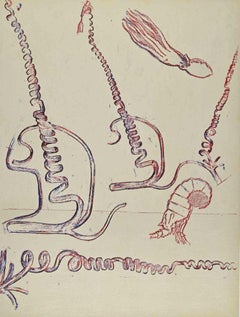
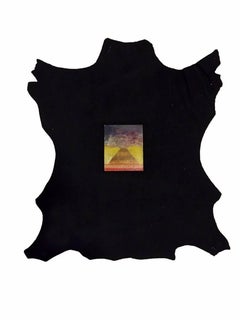
Une Pyramide en Colère, Micro-Painting on Leather by Max Ernst

Une Pyramide en Colère, Micro-Painting on Leather by Max Ernst

By Max Ernst

Located in Roma, IT

Micro picture, gouache on paper mounted on black leather. Belonging to the serie “Microbes”. Interestingly, it is unusually mounted on a black leather surface whose shape reminds th...

Category

1940s Surrealist Max Ernst Art

Materials

Leather, Gouache, Cardboard

Ficus Elastica - Original lithograph - Limited / 25 copies

Ficus Elastica - Original lithograph - Limited / 25 copies

By Max Ernst

Located in Paris, IDF

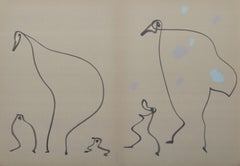
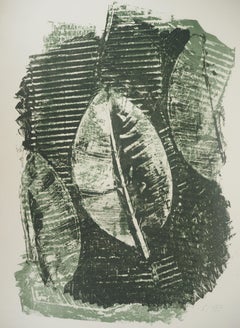
Max ERNST (1891-1976) Ficus Elastica, c. 1965 Original lithograph Unsigned Numbered / XXV copies On Japanese paper 57 x 42 cm INFORMATION: Edition produced by Lucien Treillard, pub...

Category

1960s Surrealist Max Ernst Art
Materials

Lithograph

Lithographie originale pour XXe Siecle, No. 20

Lithographie originale pour XXe Siecle, No. 20

By Max Ernst

Located in Fairlawn, OH

Lithographie originale pour XXe Siecle, No. 20 Color lithograph, 1962 Unsigned (as issued) From: XXe Siecle, No. 20, Christmas Publisher: G. di San Lazzaro, Paris. Printer: Mourlot? Large edition: c. 1500? Condition: Excellent/Mint usual glue on reverse from binding in book Image/Sheet size: 12 3/16 x 9 1/2 inches New series of XXe Siecle Back in Paris in 1949, Gualtieri di San Lazzaro resumed 20TH century publishing in 1951. It hosts many of the most important writers and art critics of the 1950s and 1960s, including Alain Bosquet , Genevieve Bonnefoi, Camille Bourniquel , Georges Borgeaud, Marcel Brion , Georges Boudaille, Jacques Brosse , Michel Butor , Jean Cassou , Denys Chevalier, Pierre Courthion, Hubert Damisch , Pierre Descargues, Bernard Dorival , Jacques Dupin , Mircea Eliade , Jean-Louis Ferrier , Pierre Francastel , André Frenaud , Roger Van Gindertael...

Category

1960s Abstract Max Ernst Art

Materials

Lithograph

Les Petits Soldats - Lithograph by Max Ernst - 1972

Les Petits Soldats - Lithograph by Max Ernst - 1972

By Max Ernst

Located in Roma, IT

The Soldier's Ballad is a contemporary artwork realized by Max Ernst in 1972. Mixed colored lithograph on Arches Paper. Edited by Manus Presse, Stuttgart 1972. Not signed and not ...

Category

1970s Modern Max Ernst Art

Materials

Lithograph

Composition, Feuilles éparses, Max Ernst

Composition, Feuilles éparses, Max Ernst

By Max Ernst

Located in Southampton, NY

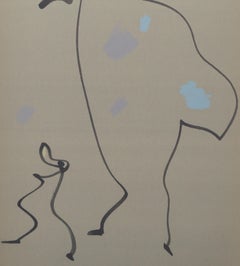
Etching on vélin cuve de Rives paper. Inscription: Unsigned and unnumbered, as issued. Good condition. Notes: From the folio, Feuilles éparses, 1965. Published and printed by Louis B...

Category

1960s Surrealist Max Ernst Art
Materials

Etching

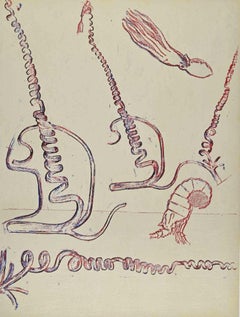
Monkey - Lithograph by Max Ernst - 1972

Monkey - Lithograph by Max Ernst - 1972

By Max Ernst

Located in Roma, IT

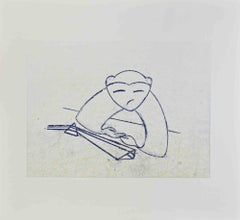
Monkey is a contemporary artwork realized by Max Ernst in 1972. Mixed colored lithograph on Arches Paper.  Edited by Manus Presse, Stuttgart 1972. Not signed and not numbered. Edi...

Category

1970s Surrealist Max Ernst Art

Materials

Lithograph

Composition (Spies/Leppien 218), La Ballade du Soldat, Max Ernst

Composition (Spies/Leppien 218), La Ballade du Soldat, Max Ernst

By Max Ernst

Located in Southampton, NY

Lithograph on vélin d'Arches paper. Unsigned and unnumbered, as issued. Good condition. Notes: From the folio, La Ballade du Soldat, 34 Lithographies Originales de Max Ernst, 1972. P...

Category

1970s Surrealist Max Ernst Art

Materials

Lithograph

Composition (Spies/Leppien 218), La Ballade du Soldat, Max Ernst

Composition (Spies/Leppien 218), La Ballade du Soldat, Max Ernst

By Max Ernst

Located in Southampton, NY

Lithograph on vélin d'Arches paper. Unsigned and unnumbered, as issued. Good condition. Notes: From the folio, La Ballade du Soldat, 34 Lithographies Originales de Max Ernst, 1972. P...

Category

1970s Surrealist Max Ernst Art

Materials

Lithograph

The Soldiers' Ballad - Lithograph by Max Ernst - 1972

The Soldiers' Ballad - Lithograph by Max Ernst - 1972

By Max Ernst

Located in Roma, IT

The Soldiers' Ballad is a contemporary artwork realized by Max Ernst in 1972. Mixed colored lithograph on Arches Paper Edited by Manus Presse, Stuttgart 1972. Not signed and not n...

Category

1970s Surrealist Max Ernst Art

Materials

Lithograph

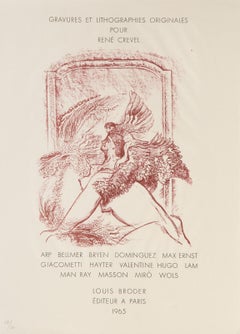
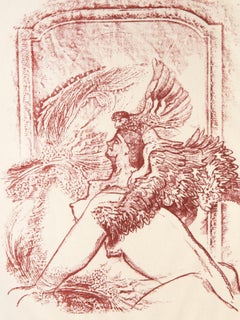
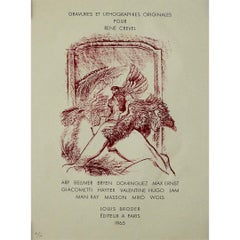
1965 original exhibition poster by Max Ernst for René Crevel

1965 original exhibition poster by Max Ernst for René Crevel

By Max Ernst

Located in PARIS, FR

In the vibrant art world of the 1960s, the 1965 exhibition poster by Max Ernst for the showcase "Gravures et Lithographies Originales pour René Crevel" stands out as a significant pi...

Category

1960s Max Ernst Art

Materials

Paper, Lithograph

Death is something like Cousin Cynthia (Spies/Leppien 13 IV), Max Ernst

Death is something like Cousin Cynthia (Spies/Leppien 13 IV), Max Ernst

By Max Ernst

Located in Southampton, NY

Photogram from a frottage in black in white on photosensitive paper. Inscription: Unsigned and unnumbered, as issued. Good Condition; never framed or matted. Notes: A photogram was a...

Category

1930s Surrealist Max Ernst Art

Materials

Photogram

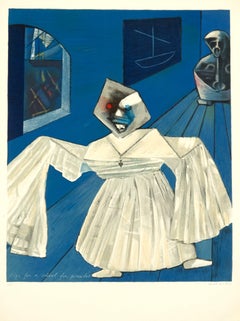
Sign for a School for Pirates by Max Ernst

Sign for a School for Pirates by Max Ernst

By Max Ernst

Located in New York, NY

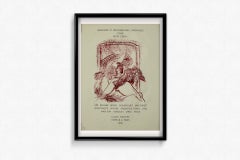
Artist: Max Ernst Medium: Original Lithograph, E.A. Signed, Edition of 125, 1965 Dimensions: 29 x 21.5 in, 73.66 x 54.61 cm

Category

1960s Max Ernst Art

Materials

Lithograph

Group Exhibition Poster, Surrealist Lithograph Poster by Max Ernst

Group Exhibition Poster, Surrealist Lithograph Poster by Max Ernst

By Max Ernst

Located in Long Island City, NY

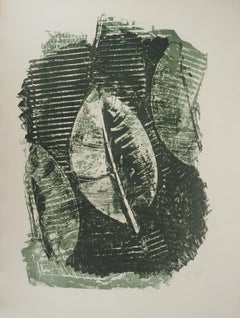
Max Ernst, German (1891 - 1976) - Group Exhibition Poster, Year: 1965, Medium: Lithograph Poster on MBM Arches, numbered in pencil lower left, Edition: 62/70, Size: 16.75 x 12 in. ...

Category

1960s Surrealist Max Ernst Art
Materials

Lithograph

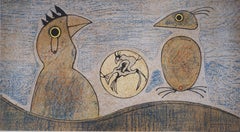
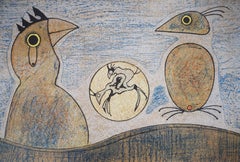
Surrealist Dream : Couple of Roosters - Original lithograph (Spies #p. 438)

Surrealist Dream : Couple of Roosters - Original lithograph (Spies #p. 438)

By Max Ernst

Located in Paris, IDF

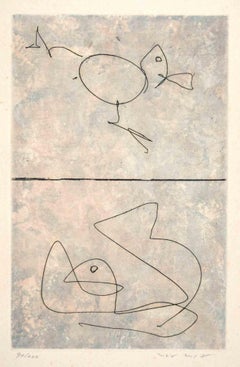
Max Ernst (1891-1976) Surrealist Dream : Couple of Roosters, 1970 Original color lithograph Printed signature in the plate On Arches vellum 33.5 × 61 cm (c. 13 x 24 in) REFERENCES...

Category

1970s Surrealist Max Ernst Art

Materials

Lithograph

Les Chiens Ont Soif XII, Surrealist Lithograph by Max Ernst

Les Chiens Ont Soif XII, Surrealist Lithograph by Max Ernst

By Max Ernst

Located in Long Island City, NY

Max Ernst, German (1891 - 1976) - Les Chiens Ont Soif XII, Portfolio: Les Chiens Ont Soif, Year: 1964, Medium: Lithograph, Edition: 165/320, Size: 17 x 24.5 in. (43.18 x 62.23 c...

Category

1960s Surrealist Max Ernst Art
Materials

Lithograph

Max Ernst, After Me, from XXe siecle, 1971

Max Ernst, After Me, from XXe siecle, 1971

By Max Ernst

Located in Southampton, NY

This exquisite lithograph by Max Ernst (1891–1976), titled Apres-moi (After Me), from the album XXe siecle, numero special hors abonnement, Hommage a Max Ernst, originates from the 1...

Category

1970s Surrealist Max Ernst Art
Materials

Lithograph

"Mr Knife, Miss Fork"

"Mr Knife, Miss Fork"

By Max Ernst

Located in Henderson, NV

Medium: gelatin silver print (photogram). Printed in 1931 and published in Paris for the journal Arts et Metiers Graphiques. A photogram was an experimental technique conceived by Ma...

Category

1930s Surrealist Max Ernst Art
Materials

Photogram

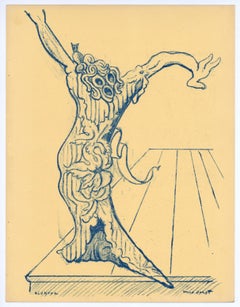
"Elektra" original lithograph

"Elektra" original lithograph

By Max Ernst

Located in Henderson, NV

Medium: original lithograph. This impression was printed in 1939 for the art revue XXe Siecle (issue number 5-6) and published by San Lazzaro. A later edition was also published by X...

Category

1930s Surrealist Max Ernst Art
Materials

Lithograph

Pink Composition - Lithograph by Max Ernst - 1974

Pink Composition - Lithograph by Max Ernst - 1974

By Max Ernst

Located in Roma, IT

Color lithograph realized by Max Ernst in 1974. Not signed. as issued. Printed by  Atelier Pierre Chave in Vence, France. Excellent condition.  This lithograph was realized  by th...

Category

1970s Surrealist Max Ernst Art
Materials

Lithograph

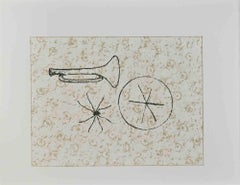
"Un chant d'amour" original lithograph

"Un chant d'amour" original lithograph

By Max Ernst

Located in Henderson, NV

Medium: original lithograph. Catalogue reference Spies/Leppien 71. Printed in 1958 for the art revue XXe Siecle (issue number 11) and published in Paris by San Lazzaro. Sheet size: 1...

Category

1950s Surrealist Max Ernst Art
Materials

Lithograph

Pink Composition - Lithograph by Max Ernst - 1974

Pink Composition - Lithograph by Max Ernst - 1974

By Max Ernst

Located in Roma, IT

Color lithograph realized by Max Ernst in 1974. Not signed. as issued. Printed by  Atelier Pierre Chave in Vence, France. Excellent condition.  This lithograph was realized  by th...

Category

1970s Surrealist Max Ernst Art
Materials

Lithograph

Pink Composition - Lithograph by Max Ernst - 1974

Pink Composition - Lithograph by Max Ernst - 1974

By Max Ernst

Located in Roma, IT

Color lithograph realized by Max Ernst in 1974. Not signed. as issued. Printed by  Atelier Pierre Chave in Vence, France. Excellent condition.  This lithograph was realized  by th...

Category

1970s Surrealist Max Ernst Art
Materials

Lithograph

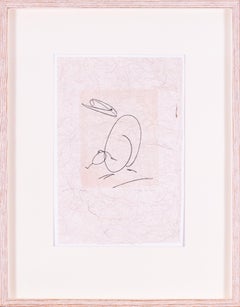
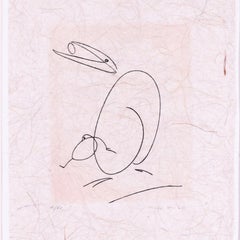
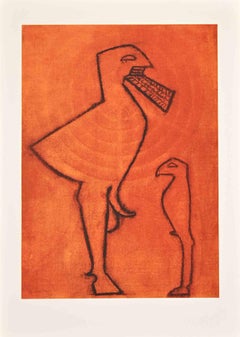
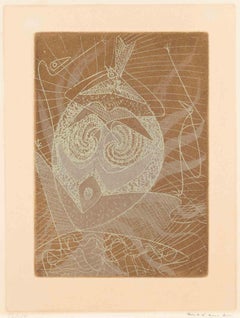
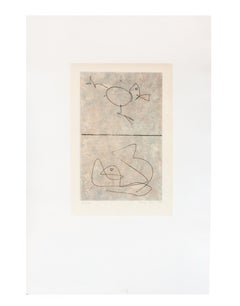
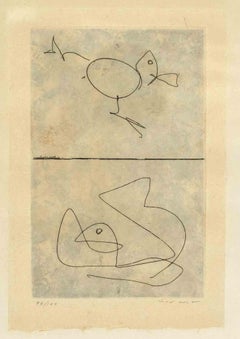
Max Ernst etching 'L’Oiseau Mere', numbered and signed, German

Max Ernst etching 'L’Oiseau Mere', numbered and signed, German

By Max Ernst

Located in Petworth, West Sussex

Max Ernst (German, 1891 – 1976) L’Oiseau Mere (The Mother Bird) An etching and aquatint on Japan paper Numbered and signed ‘4/60 Max Ernst’ (under the plate) The plate measurements: ...

Category

20th Century Modern Max Ernst Art

Materials

Etching, Aquatint

Composition (Spies/Leppien 218), La Ballade du Soldat, Max Ernst

Composition (Spies/Leppien 218), La Ballade du Soldat, Max Ernst

By Max Ernst

Located in Southampton, NY

Lithograph on vélin d'Arches paper. Unsigned and unnumbered, as issued. Good condition. Notes: From the folio, La Ballade du Soldat, 34 Lithographies Originales de Max Ernst, 1972. P...

Category

1970s Surrealist Max Ernst Art
Materials

Lithograph

Max Ernst's Zodiaque Etching, Surrealist, Signed, 1971, Edition of 100

Max Ernst's Zodiaque Etching, Surrealist, Signed, 1971, Edition of 100

By Max Ernst

Located in Roma, IT

" Zodiaque " is an etching realized by Max Ernst in 1971. This print is hand signed and numbered. This is an edition of 100 prints. Reference: Catalogue Spies n. 144. Originally a ...

Category

1970s Surrealist Max Ernst Art
Materials

Etching

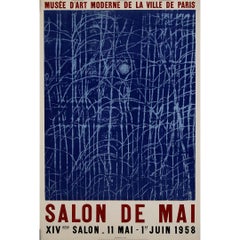
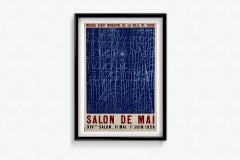
1958 original exhibition poster by Max Ernst for the Salon de Mai

1958 original exhibition poster by Max Ernst for the Salon de Mai

By Max Ernst

Located in PARIS, FR

This 1958 original exhibition poster, designed by Max Ernst for the Salon de Mai, features "La Forêt à l’Aube" (The Forest at Dawn)—a striking example of his surrealist and abstract ...

Category

1950s Max Ernst Art

Materials

Paper, Lithograph

1963 exhibition poster by Max Ernst - 18 dessins de poche - Paris

1963 exhibition poster by Max Ernst - 18 dessins de poche - Paris

By Max Ernst

Located in PARIS, FR

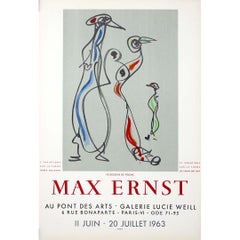
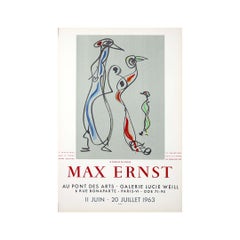
This elegant exhibition poster from 1963 announces a presentation of “18 dessins de poche” by Max Ernst, held at the Galerie Lucie Weill located near the Pont des Arts. The exhibitio...

Category

1960s Max Ernst Art

Materials

Paper, Lithograph

Pink Composition - Lithograph by Max Ernst - 1974

Pink Composition - Lithograph by Max Ernst - 1974

By Max Ernst

Located in Roma, IT

Color lithograph realized by Max Ernst in 1974. Not signed. as issued. Printed by  Atelier Pierre Chave in Vence, France. Excellent condition.  This lithograph was realized  by th...

Category

1970s Surrealist Max Ernst Art
Materials

Lithograph

Après-moi le XX° siècle - Original Lithograph by Max Ernst - 1971

Après-moi le XX° siècle - Original Lithograph by Max Ernst - 1971

By Max Ernst

Located in Roma, IT

Après-moi Le XX Siècle is an original artwork realized by Max Ernst in 1971. Original colored lithograph. Very good conditions. This lithograph is from the second issue, which wa...

Category

1970s Surrealist Max Ernst Art
Materials

Lithograph

The Soldier's Ballad - Lithograph by Max Ernst - 1972

The Soldier's Ballad - Lithograph by Max Ernst - 1972

By Max Ernst

Located in Roma, IT

The Soldier's Ballad is a contemporary artwork realized by Max Ernst in 1972. Mixed colored lithograph on Arches Paper Edited by Manus Presse, Stuttgart 1972. Not signed and not n...

Category

1970s Surrealist Max Ernst Art
Materials

Lithograph

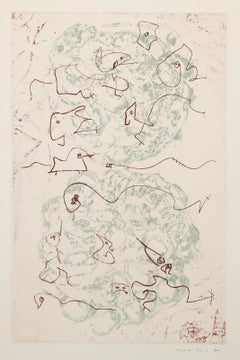
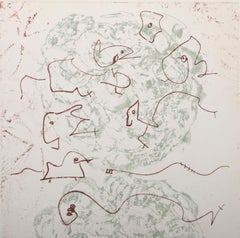
Pink Composition - Lithograph by Max Ernst - 1974

Pink Composition - Lithograph by Max Ernst - 1974

By Max Ernst

Located in Roma, IT

Color lithograph realized by Max Ernst in 1974. Not signed. as issued. Printed by  Atelier Pierre Chave in Vence, France. Excellent condition.  This lithograph was realized  by th...

Category

1970s Surrealist Max Ernst Art
Materials

Lithograph

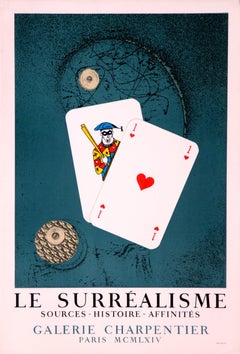
Sept Microbes - Rare Book - 1953

Sept Microbes - Rare Book - 1953

By Max Ernst

Located in Roma, IT

Edition of 1100 copies. Copy on Marais une fleur paper. Includes 31 colorful, scale reproductions of original works by Ernst. French language. Binding partially detached. Very good c...

Category

1950s Surrealist Max Ernst Art
Materials

Paper

La Femme 100 Têtes - Rare Book Illustrated by Max Ernst - 1929

La Femme 100 Têtes - Rare Book Illustrated by Max Ernst - 1929

By Max Ernst

Located in Roma, IT

La Femme 100 Têtes is an original modern rare book illustrated by Max Ernst (1891 - 1976) in 1929, and extraordinary first example of conceptual art Original first edition. Publish...

Category

1920s Surrealist Max Ernst Art
Materials

Paper, Mixed Media

Wunderhorn Lithograph, Surrealist Style, Signed 68/69, 1970s

Wunderhorn Lithograph, Surrealist Style, Signed 68/69, 1970s

By Max Ernst

Located in Roma, IT

Wunderhorn is an artwork realized by Max Ernst, Lewis Carrolls,1970. Lithograph on Japon Paper, igned and numbered 68/69. Printed and published by Manues Press (Embossing Stamp). ...

Category

1970s Surrealist Max Ernst Art
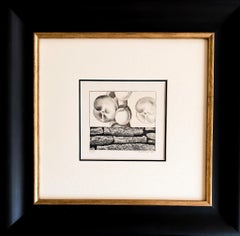
Materials

Lithograph

Max Ernst, Homage to San Lazzaro, from San Lazzaro et ses Amis, 1975

Max Ernst, Homage to San Lazzaro, from San Lazzaro et ses Amis, 1975

By Max Ernst

Located in Southampton, NY

This exquisite lithograph by Max Ernst (1891–1976), titled Hommage a San Lazzaro (Homage to San Lazzaro), from the album San Lazzaro et ses Amis, Hommage au fondateur de la revue XXe...

Category

1970s Constructivist Max Ernst Art
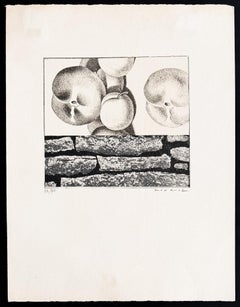
Materials

Lithograph

The Soldier's Ballad - Lithograph by Max Ernst - 1972

The Soldier's Ballad - Lithograph by Max Ernst - 1972

By Max Ernst

Located in Roma, IT

The Soldier's Ballad is a contemporary artwork realized by Max Ernst in 1972. Mixed colored lithograph on Arches Paper. Edited by Manus Presse, Stuttgart 1972. Not signed and not ...

Category

1970s Modern Max Ernst Art
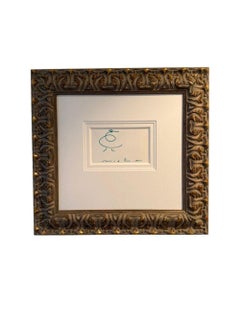
Materials

Lithograph

Pink Composition - Lithograph by Max Ernst - 1974

Pink Composition - Lithograph by Max Ernst - 1974

By Max Ernst

Located in Roma, IT

Color lithograph realized by Max Ernst in 1974. Not signed. as issued. Printed by  Atelier Pierre Chave in Vence, France. Excellent condition.  This lithograph was realized  by th...

Category

1970s Surrealist Max Ernst Art
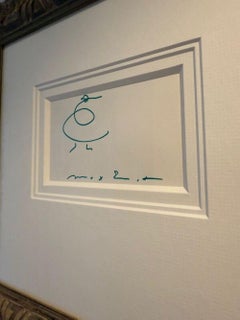
Materials

Lithograph

Pink Composition - Lithograph by Max Ernst - 1974

Pink Composition - Lithograph by Max Ernst - 1974

By Max Ernst

Located in Roma, IT

Color lithograph realized by Max Ernst in 1974. Not signed. as issued. Printed by  Atelier Pierre Chave in Vence, France. Excellent condition.  This lithograph was realized  by th...

Category

1970s Surrealist Max Ernst Art
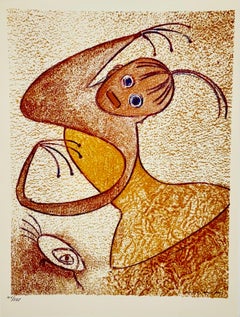
Materials

Lithograph

Max Ernst, A Song of Love, from XXe Siecle, 1958

Max Ernst, A Song of Love, from XXe Siecle, 1958

By Max Ernst

Located in Southampton, NY

This exquisite lithograph by Max Ernst (1891–1976), titled Un chant damour (A Song of Love), from the album XXe Siecle, Nouvelle serie, No. 11 (double), Noel 1958, originates from the 1958 edition published by Societe Internationale dArt XXe Siecle, Paris, under the direction of Gualtieri di San Lazzaro, editeur, Paris, and printed by Mourlot Freres, Paris, 1958. This work reflects Ernsts mature Surrealist language, merging dream, myth, and poetic abstraction into a visionary composition. Executed as a lithograph on velin paper, this work measures 12.5 x 9.75 inches. Unsigned and unnumbered as issued. The edition exemplifies the superb craftsmanship of Mourlot Freres, Paris Artwork Details: Artist: Max Ernst (1891–1976) Title: Un chant damour (A Song of Love) Medium: Lithograph on velin paper Dimensions: 12.5 x 9.75 inches (31.75 x 24.77 cm) Inscription: Unsigned and unnumbered as issued Date: 1958 Publisher: Societe Internationale dArt XXe Siecle, Paris, under the direction of Gualtieri di San Lazzaro, editeur, Paris Printer: Mourlot Freres, Paris Catalogue Raisonne Reference: Ernst, Max, et al. Max Ernst: Graphische Welten: Die Sammlung Schneppenheim. DuMont, 2003, illustration 71C Condition: Well preserved, consistent with age and medium Provenance: From the album XXe Siecle, Nouvelle serie, No. 11 (double), Noel 1958, published by Societe Internationale dArt XXe Siecle, Paris; printed by Mourlot Freres, Paris, 1958 About the Publication: Gualtieri di San Lazzaros XXe Siecle (Twentieth Century) was one of the most influential art journals of the modern era, founded in Paris in 1938 as a platform for the greatest painters, sculptors, and writers of the 20th century. San Lazzaro, a visionary editor, critic, and champion of modernism, believed that art and literature should coexist as expressions of a shared human imagination. Under his direction, XXe Siecle became a cultural bridge between Europe and the wider world, publishing special issues devoted to leading figures such as Picasso, Matisse, Chagall, Braque, Calder, Miro, Kandinsky, and Leger. Each edition combined essays by renowned critics and poets with original lithographs and woodcuts printed by the foremost ateliers of Paris, Milan, and New York, including Mourlot, Curwen, and Amilcare Pizzi, creating a uniquely rich dialogue between text and image. The 1960 issue, XXe Siecle, Nouvelle serie, No. 14, showcased Daphnis et Chloe, one of Chagalls most celebrated lithographic subjects, coinciding with his work on the monumental suite of lithographs inspired by the same pastoral tale, published by Teriade. Through this publication, San Lazzaro further cemented Chagalls reputation as the modern poet of color and love, uniting myth, nature, and emotion in visual form. Today, XXe Siecle remains an essential record of 20th century modernism, celebrated for its seamless integration of fine art, literature, and design. About the Artist: Max Ernst (1891–1976) was a German-French painter, sculptor, printmaker, and poet whose groundbreaking imagination and experimental techniques made him one of the most revolutionary figures of 20th century art. A founding member of both Dada and Surrealism, Ernst dismantled traditional notions of art through chance, dream imagery, and psychological exploration, transforming painting, sculpture, and collage into instruments of the unconscious mind. Born in Bruhl, Germany, he studied philosophy and psychology at the University of Bonn before rejecting academic convention to pursue art, inspired by the Symbolists, Cubists, and the early abstractions of Pablo Picasso and Wassily Kandinsky. His traumatic experience serving in World War I left him disillusioned with logic and order, propelling him toward the Dada movement in Cologne in 1919, where he began creating his seminal collages that fused scientific diagrams and Victorian engravings into surreal dreamscapes. By 1922, Ernst had moved to Paris and joined a circle of avant garde luminaries that included Picasso, Alexander Calder, Alberto Giacometti, Salvador Dali, Joan Miro, Marcel Duchamp, Man Ray, and Andre Breton, each of whom shared his fascination with the irrational and the unseen. Ernsts invention of frottage (rubbing) and grattage (scraping) revolutionized modern painting, revealing textures and hidden images beneath the surface and allowing chance to become an active participant in creation. His visionary paintings such as The Elephant Celebes (1921), Two Children Are Threatened by a Nightingale (1924), and Europe After the Rain II (1940–42) blend myth, science, and dream into vast symbolic landscapes that remain among the defining masterpieces of Surrealism. A restless innovator, Ernst expanded into sculpture, crafting enigmatic totemic forms such as Capricorne (1948–1963) that bridged organic abstraction and surreal fantasy, echoing the fluid equilibrium of Calders mobiles and the conceptual wit of Duchamp. Fleeing Nazi occupied France during World War II, Ernst emigrated to the United States with the support of Peggy Guggenheim, whom he later married, influencing the emerging Abstract Expressionists among them Jackson Pollock, Robert Motherwell, and Willem de Kooning through his fusion of automatism, texture, and mythic narrative. Returning to Europe after the war, he continued to refine his poetic, alchemical approach to painting, blending chaos and order into cosmic landscapes that inspired later artists such as Anselm Kiefer, Robert Rauschenberg, Cy Twombly, and Kiki Smith. His work, housed in major museums including MoMA, the Tate, and the Centre Pompidou, stands as a testament to his belief that art could bridge the conscious and unconscious, the rational and the fantastic. Standing alongside Pablo Picasso, Alexander Calder, Alberto Giacometti, Salvador Dali, Joan Miro, Wassily Kandinsky, Marcel Duchamp, and Man Ray, Max Ernst remains a cornerstone of modern art an artist philosopher whose limitless curiosity reshaped visual language and influenced generations of creators. His highest auction record was achieved by Le roi jouant avec la reine (The King Playing with the Queen) (1944), which sold for approximately 24.4 million USD at Christies, New York, in November 2022, reaffirming Max Ernsts enduring legacy as one of the most visionary, provocative, and collectible masters of 20th century modernism. Max Ernst XXe Siecle 1958, Max Ernst lithograph...

Category

1950s Surrealist Max Ernst Art
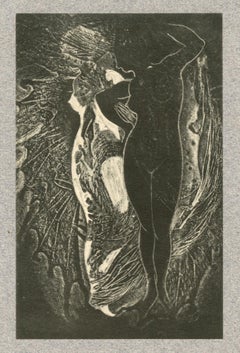
Materials

Lithograph

Pink Composition - Lithograph by Max Ernst - 1974

Pink Composition - Lithograph by Max Ernst - 1974

By Max Ernst

Located in Roma, IT

Color lithograph realized by Max Ernst in 1974. Not signed. as issued. Printed by  Atelier Pierre Chave in Vence, France. Excellent condition.  This lithograph was realized  by th...

Category

1970s Surrealist Max Ernst Art
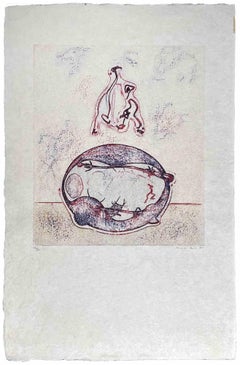
Materials

Lithograph

Composition (Spies/Leppien 218), La Ballade du Soldat, Max Ernst

Composition (Spies/Leppien 218), La Ballade du Soldat, Max Ernst

By Max Ernst

Located in Southampton, NY

Lithograph on vélin d'Arches paper. Unsigned and unnumbered, as issued. Good condition. Notes: From the folio, La Ballade du Soldat, 34 Lithographies Originales de Max Ernst, 1972. P...

Category

1970s Surrealist Max Ernst Art
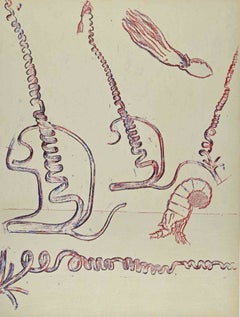
Materials

Lithograph

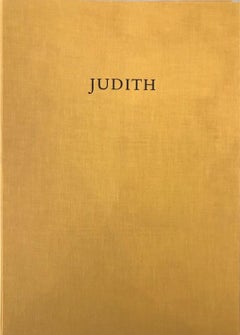
Through the Window  - Lithograph by Max Ernst - 1972

Through the Window - Lithograph by Max Ernst - 1972

By Max Ernst

Located in Roma, IT

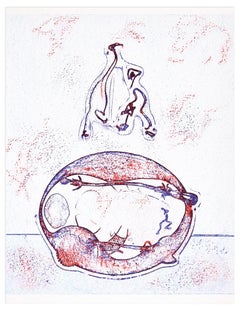
Through the Window is a lithograph on Arches paper realized by Max Ernst in 1972. Belongs to the suite "Judith". Limited edition of 500. Unsigned and unnumbered, as issued. Godd c...

Category

1970s Surrealist Max Ernst Art
Materials

Lithograph

The Soldier's Ballad - Lithograph by Max Ernst - 1972

The Soldier's Ballad - Lithograph by Max Ernst - 1972

By Max Ernst

Located in Roma, IT

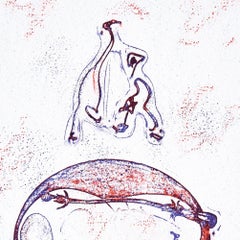
The Soldier's Ballad is a contemporary artwork realized by Max Ernst in 1972. Mixed colored lithograph on Arches Paper. Edited by Manus Presse, Stuttgart 1972. Not signed and not ...

Category

1970s Surrealist Max Ernst Art
Materials

Lithograph

Le Rêve d’une Petite Fille - Rare Book Illustrated by Max Ernst - 1930

Le Rêve d’une Petite Fille - Rare Book Illustrated by Max Ernst - 1930

By Max Ernst

Located in Roma, IT

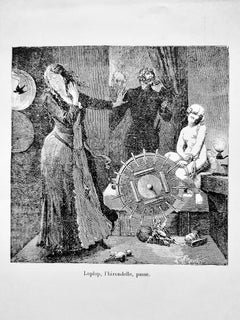
Le Rêve d’une Petite Fille qui voulut entrer au Carmel is an original modern rare book illustrated by Max Ernst (1891 - 1976) in 1930. Original first edition. Editions du Carrefour...

Category

1930s Surrealist Max Ernst Art
Materials

Paper, Mixed Media

Electra - Original lithograph

Electra - Original lithograph

By Max Ernst
Located in Paris, IDF

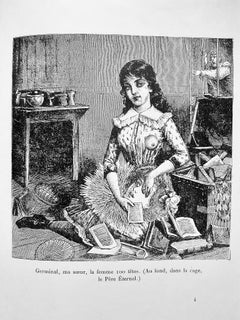
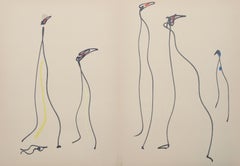
Max ERNST Electra Stone Lithograph Printed signature in the plate On cream vellum 31 x 24 cm (c. 12.5 x 10 inch) Excellent condition

Category

1950s Surrealist Max Ernst Art
Materials

Lithograph

A l’Intérieur de la Vue - Rare Book Illustrated by Max Ernst - 1948

A l’Intérieur de la Vue - Rare Book Illustrated by Max Ernst - 1948

By Max Ernst

Located in Roma, IT

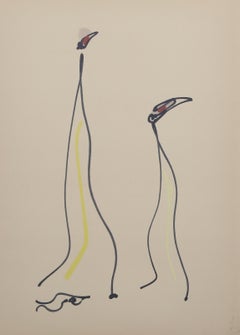
A l’Intérieur de la Vue is an original modern rare book written by Paul Éluard (Saint-Denis, 1895 – Charenton-le-Pont, 1952) and illustrated by Max Ernst (1891 - 1976) in 1948. Orig...

Category

1940s Surrealist Max Ernst Art
Materials

Paper, Mixed Media

The Soldier's Ballad - Lithograph by Max Ernst - 1972

The Soldier's Ballad - Lithograph by Max Ernst - 1972

By Max Ernst

Located in Roma, IT

The Soldier's Ballad is a contemporary artwork realized by Max Ernst in 1972. Mixed colored lithograph on Arches Paper. Edited by Manus Presse, Stuttgart 1972. Not signed and not ...

Category

1970s Surrealist Max Ernst Art
Materials

Lithograph

Composition with Blue Vase - Lithograph and stencil, 1958

Composition with Blue Vase - Lithograph and stencil, 1958

By Max Ernst

Located in Paris, IDF

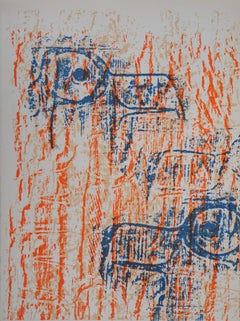
Max ERNST Composition with Blue Vase, 1958 Lithograph and stencil (Jacomet workshop) after a painting On wove paper 31 x 24 cm (c. 12 x 10 in) Edited by San Lazarro, 1958 Excellent...

Category

1950s Abstract Max Ernst Art

Materials

Lithograph, Stencil

Idols - Lithograph by Max Ernst - 1972

Idols - Lithograph by Max Ernst - 1972

By Max Ernst

Located in Roma, IT

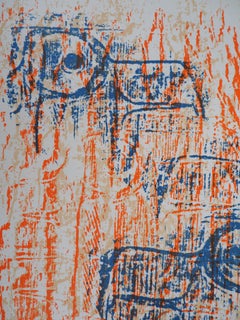
Idols is a lithograph on Arches paper realized by Max Ernst in 1972. Belongs to the suite "Judith". Limited edition of 500. Unsigned and unnumbered, as issued. Godd conditions. T...

Category

1970s Surrealist Max Ernst Art
Materials

Lithograph

The Soldier's Ballad - Lithograph by Max Ernst - 1972

The Soldier's Ballad - Lithograph by Max Ernst - 1972

By Max Ernst

Located in Roma, IT

The Soldier's Ballad is a contemporary artwork realized by Max Ernst in 1972. Mixed colored lithograph on Arches Paper. Edited by Manus Presse, Stuttgart 1972. Not signed and not ...

Category

1970s Surrealist Max Ernst Art
Materials

Lithograph

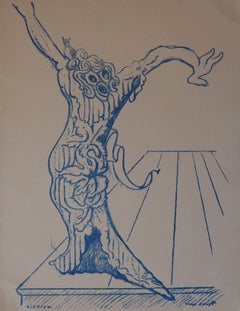
Birds - Original lithograph (Leppien/Spies #88)

Birds - Original lithograph (Leppien/Spies #88)

By Max Ernst

Located in Paris, IDF

Max ERNST Birds Original lithograph, 1963 on vellum 33 x 25 cm REFERENCES : Catalogue raisonné Leppien/Spies # 88 Excellent condition

Category

1960s Modern Max Ernst Art

Materials

Lithograph

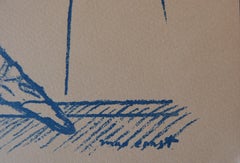
Après Moi le XXème Siècle - Lithograph by Max Ernst - 1971

Après Moi le XXème Siècle - Lithograph by Max Ernst - 1971

By Max Ernst

Located in Roma, IT

Après moi is an artwork reazlized by Max Ernst as deluxe edition for the Art Magazine XXème Siècle. Lithograph on japanese paper, 1971. Edition 14/80. Hand signed and numbered. 29 x...

Category

1970s Surrealist Max Ernst Art
Materials

Lithograph

Max Ernst art for sale on 1stDibs.

Find a wide variety of authentic Max Ernst art available for sale on 1stDibs. If you’re browsing the collection of art to introduce a pop of color in a neutral corner of your living room or bedroom, you can find work that includes elements of blue, orange, pink and other colors. You can also browse by medium to find art by Max Ernst in lithograph, etching, paper and more. Much of the original work by this artist or collective was created during the 20th century and is mostly associated with the Surrealist style. Not every interior allows for large Max Ernst art, so small editions measuring 5 inches across are available. Customers who are interested in this artist might also find the work of Théo Tobiasse, Man Ray, and Valton Tyler. Max Ernst art prices can differ depending upon medium, time period and other attributes. On 1stDibs, the price for these items starts at $100 and tops out at $140,371, while the average work can sell for $1,297.
Questions About Max Ernst Art
  • 1stDibs ExpertOctober 30, 2024
    How much Max Ernst paintings are worth depends on their size, history, condition and other factors. In 2023, his oil-on-panel piece Taya's Sun sold for more than $304,000 at auction. Ernst was a pioneer in the Dada and Surrealist movements, pushing their boundaries with his unconventional methods of printmaking, drawing and collage. If you own an Ernst, consider having a certified appraiser or experienced art dealer evaluate it. Explore a selection of Max Ernst art on 1stDibs.
  • 1stDibs ExpertJanuary 10, 2025
    The meaning of Ubu Imperator is literally "The Commander." Max Ernst painted the work in 1923. The piece is an example of Ernst's transition from a Dadaist to a Surrealist style. Experts have provided various interpretations of the work, including as a satire of power, as it shows a human-like top spinning in a desert landscape. On 1stDibs, find an assortment of Max Ernst art.
  • 1stDibs ExpertNovember 20, 2024
    Max Ernst contributed to Surrealism by pushing the boundaries of the movement with his unconventional methods of printmaking, drawing and collage. He invented frottage (French for “rubbing”), wherein an artist rubs a pencil or crayon over a paper atop a textured surface, and later grattage (French for “scraping”), where a similar technique is applied with paint. Both methods showcase Ernst’s fascination with the unconscious and serendipitous elements of artistic creation, a theme that resonated with the Dadaists and the Surrealists. Ernst had deep knowledge of psychoanalysis and Sigmund Freud’s dream theories, which were big influences on Surrealists. He was among the first Surrealists to use Freud’s work to examine his own creative impulses. He also published a series of books of his collages, all of which were deeply symbolic and often philosophical. Explore a selection of Max Ernst art on 1stDibs.
  • 1stDibs ExpertApril 26, 2024
    Max Ernst lived in several places during his life. He was born in Brühl, Germany, in 1881 and later moved to Bonn to attend the university located there. Then he settled in Cologne, not far from his birthplace. In 1922, Ernst moved to France, where he soon became affiliated with Surrealism, the avant-garde art movement taking shape in Paris. Alongside Man Ray, Joan Miró and others, Ernst was among the first visual artists to experiment with imagery and techniques associated with Surrealism. When Germany occupied France during World War II, Ernst escaped to America with the help of patron and collector Peggy Guggenheim, whom he married in 1941. While living in New York, Ernst's work and techniques proved instrumental in inspiring the early development of Abstract Expressionism. He later moved to Sedona, Arizona, where he lived with his fourth wife, Dorothea Tanning, a fellow Surrealist and prolific visual artist and poet. While Ernst and Tanning are largely responsible for Sedona's reputation as an artist colony, they relocated to France in the 1950s and remained there until Ernst's death in Paris in 1976. On 1stDibs, shop a collection of Max Ernst art.
  • 1stDibs ExpertMarch 13, 2024
    You can see Max Ernst paintings in many places around the world. The Max Ernst Museum Brühl des LVR in Brühl, Germany, is home to one of the largest exhibitions of his work. Other museums that have Max Ernst paintings in their permanent collections include the Museum of Modern Art in New York, New York; the San Francisco Museum of Modern Art in San Francisco, California; the Art Institute of Chicago in Chicago, Illinois and the Detroit Institute of Arts in Detroit, Michigan. Explore a range of Max Ernst art on 1stDibs.
  • 1stDibs ExpertOctober 15, 2024
    Max Ernst used Surrealism to process the traumas he experienced during World War I. His early works consisted largely of collages, which allowed him to represent the shards, rubble and explosions from his wartime experience. In 1922, Ernst moved to France, where he soon became affiliated with Surrealism, the avant-garde art movement taking shape in Paris. Alongside Man Ray, Joan Miró and others, Ernst was among the first visual artists to experiment with the imagery and techniques that became associated with Surrealist art. Ernst’s greatest contribution to the Surrealist movement is often considered his invention of frottage, wherein an artist rubs a pencil or crayon over a paper atop a textured surface, and later grattage, where a similar technique is applied with paint. Both methods showcase Ernst’s fascination with the unconscious and serendipitous elements of artistic creation, a theme that connected the Dadaists and the Surrealists. Explore a range of Max Ernst art on 1stDibs.