Nude Prints

to
235
823
1,278
1,133
Nude Prints For Sale
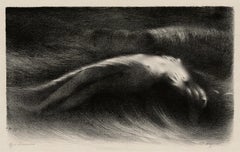
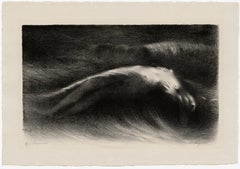
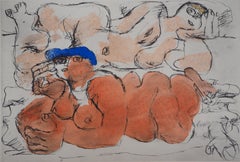
Feminaire II, Surrealist Etching by André Masson

Feminaire II, Surrealist Etching by André Masson

By André Masson

Located in Long Island City, NY

André Masson, French (1896 -1987) - Feminaire II, Year: 1951, Medium: Etching on wove paper, signed and numbered in pencil, Edition: 30, Image Size: 9.75 x 8 inches, Size: 14.25...

Category

1950s Surrealist Nude Prints

Materials

Etching

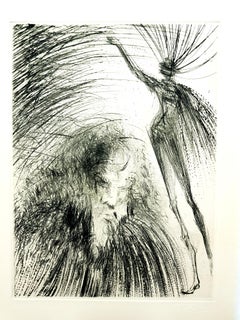
Salvador Dali - Old Faust - Original Etching

Salvador Dali - Old Faust - Original Etching

By Salvador Dalí­

Located in Collonge Bellerive, Geneve, CH

Salvador Dali - Old Faust - from "Faust" Original Etching Embossed signature From the edition of 731 Dimensions: 38,5 x 28,5 cm 1969 References : Field 69-1 / Michler & Lopsinger 305

Category

1960s Surrealist Nude Prints

Materials

Etching

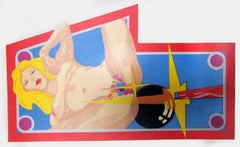
Hollywood Suite, Portfolio of 10 Pop Art Lithographs by Mel Ramos

Hollywood Suite, Portfolio of 10 Pop Art Lithographs by Mel Ramos

By Mel Ramos

Located in Long Island City, NY

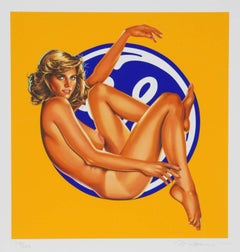
Artist: Mel Ramos, American (1935 - ) Title: Hollywood Suite Year: 2009 Medium: Suite of 10 Lithographs, each signed and numbered in pencil Edition: 30 Size: 20 in. x 16 in. (50.8 c...

Category

Early 2000s Pop Art Nude Prints

Materials

Lithograph

(Monument to Cezanne) original lithograph

(Monument to Cezanne) original lithograph

By Aristide Maillol

Located in Henderson, NV

Medium: original lithograph. Catalogue reference: Guerin 265. This lithograph was executed by Aristide Maillol in homage to Paul Cezanne. Printed in 1914 and published in Paris by Be...

Category

1910s Nude Prints

Materials

Lithograph

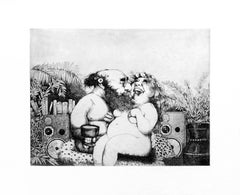
The Lovers, Caricature Etching by Charles Bragg

The Lovers, Caricature Etching by Charles Bragg

By Charles Bragg

Located in Long Island City, NY

A signed and numbered etching of a nude couple sitting outside and laughing. This black-and-white print is done in Bragg’s signature caricature style. The Lovers Charles Bragg, Amer...

Category

1970s Post-Modern Nude Prints

Materials

Etching

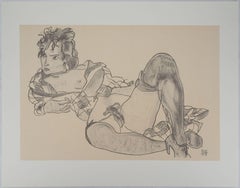
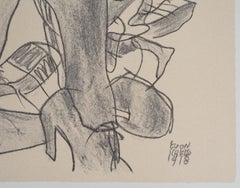
Reclining Nude - Lithograph (Kallir #2427)

Reclining Nude - Lithograph (Kallir #2427)

By Egon Schiele

Located in Paris, IDF

Egon SCHIELE (after) Reclining Nude Stone lithograph after a charcoal drawing of 1918 Printed signature in the plate On vellum 50 x 64 cm (c. 19.7 x 25 inches) REFERENCES : The o...

Category

Late 20th Century Modern Nude Prints

Materials

Lithograph

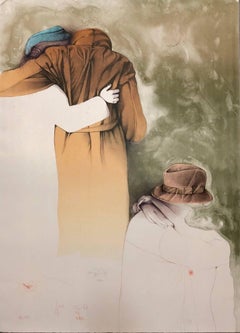
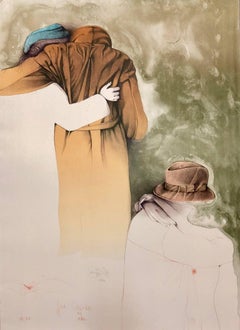
Al Quattro Large Surrealist Modernist Lithograph Embracing Couple

Al Quattro Large Surrealist Modernist Lithograph Embracing Couple

By Bruno Bruni

Located in Surfside, FL

Bruno Bruni senior (born 22 November 1935, in Gradara) is an Italian lithographer, graphic artist, painter and sculptor. He became commercially successful in the 1970s. In 1977, he won the International Senefeld award for Lithography. He has since become one of the most successful Italian artists in Germany and one of Germany's best known lithographers. Born in Gradara, in the Province of Pesaro and Urbino on the Adriatic Coast in 1935, the son of a railway attendant, Bruni started painting as a young boy. He was initially a pupil of [Giuliano Vanghi] ; from 1953 to 1959 he attended the Art Institute in Pesaro. He then moved to London, where he became interested in pop art. In 1960, after an exhibit of his work at London's John Whibley Gallery, and after meeting a girl from Hamburg, he moved there to live with her and enrolled at the Hochschule für bildende Künste Hamburg. He has lived in the city ever since and visits his hometown regularly. In 1961-1966 took a course at the Hamburg College of Fine Arts, where at that time taught artists Georg Gresko, Paul Wunderlich, Horst Janssen, Arnolfo Hausner, and art critic Hans Theodor Flemming. One of his teachers called Bruni Renato Guttuso. He studied in Milan. Along with several young authors Bruni founded in Hamburg group "COOP" - against the commercialization of art. In the 1970s, Bruno Bruni made a name for himself as a draftsman, lithographer, painter and sculptor in the international art world. Bearing stylistic similarities to the surrealist work of Michael Parkes and Leonor Fini. In 1977, he won the International Senefeld Competition for Lithography. He is influenced primarily by German expressionists like Otto Dix, George Grosz etc. and the Italian old masters . In particular, he is noted as one of the few lithographic artists "who paint all work directly onto the stone". He is especially known for his erotic female forms. He has said, "I cannot paint an abstract picture. If I had gone along with the trends I'd have disappeared long ago". He resides in a converted swimming pool, more than a century old, which serves as apartment, workplace and gallery. He sells his art through his wife's gallery in Hanover and is reputedly one of Germany's top earning artists. He is also a keen cook of Italian cuisine, and is a boxing fan and a close friend of former boxing champion Dariusz Michalczewski, for whom he used to cook for before matches. He has also cooked for Gerhard Schröder and has published a cooking book...

Category

1980s Surrealist Nude Prints

Materials

Lithograph

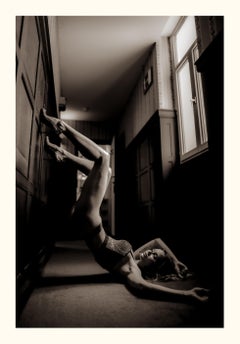
Room 3 - Collector Portfolio # 7 out 7 -  15 Fine Art Prints Nude photography

Room 3 - Collector Portfolio # 7 out 7 - 15 Fine Art Prints Nude photography

By Eric Ceccarini

Located in Brussels, BE

His series "Room" or "My carnival" evokes the fantasy of the mistress, fetishist eroticism, 5 to 7, free fantasy. Eric produces erotic art without ever biting into porn-chic always being more obsessed with aesthetics than with simulacrum. If he worships more than one of these predecessors who poured into more outrage, it is freely that he suggests to the imagination to imagine without capturing the fantasy of the viewer. The choice had been made of very high quality prints: cotton fiber base baryta paper without chlorine and high grammage (310 gr / m²), pigment inks. They carry on the back an authentication label signed by Eric Ceccarini The enhancement of this limited edition of 100 copies is ensured by the use of a unique high-quality box to keep the 12 fine art prints This is edition #1/100 Eric is a Belgian artist born in 1965. He gained a Degree in Photography from INFAC, Brussels in 1987. Since then he has been a fashion photographer working with many of the top houses. Elle, Marie-Claire, L'Oréal, Levi's, Coca Cola, Virgin, Saab, Delvaux, Lowe Lintas and Ogilvy are some of his clients. Among other distinctions, his photography for the Saab cabrio 9-3 campaign was awarded the Silver Lion at the Cannes International Advertising Festival. Eric is set apart from many of his colleagues by his way of shunning technical artifice and working in natural light. This results in soft, velvety, almost painterly images. Nowadays in his artistic works, he captures women's essence and soul, transcending mere physical representation. Eric's "AMNIOS" series of soul portraits- the model appear in suspended animation, as if they were about to born, and full of hidden secrets. This represents a new conceptual departure for Eric, who began as a fashion photographer, moving on to classic artistic nudes...

Category

2010s Contemporary Nude Prints

Materials

Archival Pigment, Rag Paper

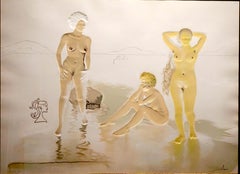
Three Graces of Cova d’or

Three Graces of Cova d’or

By Salvador Dalí­

Located in Hollywood, FL

ARTIST: Salvador Dali TITLE: Three Graces of Cova d'or MEDIUM: Etching with embossed verso SIGNED: Hand Signed PUBLISHER: Galerie des Quatre Mouvements EDITION NUMBER: 55/90 ME...

Category

1970s Surrealist Nude Prints

Materials

Etching

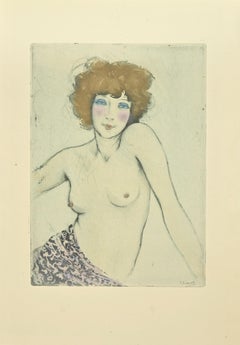
Nude - Etching by Edouard Chimot - 1930s

Nude - Etching by Edouard Chimot - 1930s

By Édouard Chimot

Located in Roma, IT

Nude is an etching realized by Edouard Chimot in the 1930s. Signed on the plate by the artist on the lower right corner. Good conditions. Édouard Chimot (26 November 1880 – 7 June...

Category

1930s Modern Nude Prints

Materials

Etching

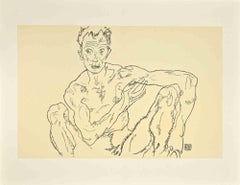
Crouching Male Nude (Self Portrait) - Lithograph - 2007

Crouching Male Nude (Self Portrait) - Lithograph - 2007

By Egon Schiele

Located in Roma, IT

Crouching Male Nude (Self-Portrait) is a beautiful lithograph from the portfolio " Erotica " by Egon Schiele. It is a reproduction of the homonym black crayon drawing, a self-portrai...

Category

Early 2000s Modern Nude Prints

Materials

Lithograph

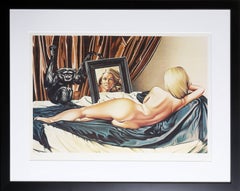
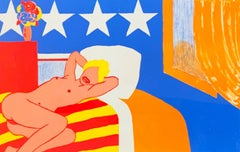
Velasquez Vision, Pop Art Nude Lithograph by Mel Ramos

Velasquez Vision, Pop Art Nude Lithograph by Mel Ramos

By Mel Ramos

Located in Long Island City, NY

Artist: Mel Ramos Title: Velazquez Vision Year: 1974 Medium: Lithograph, signed and numbered in pencil Edition: 245/250 Image Size: 16 x 23 inches Paper Size: 19.25 x 27 inches Fr...

Category

1970s Pop Art Nude Prints

Materials

Lithograph

pochoir

pochoir

By (after) Auguste Rodin

Located in Henderson, NV

Medium: pochoir (after the watercolor). Printed in 1944 at the Rene Kieffer atelier and published by Rombaldi in an edition of 300 for the "La Varende" portfolio. Size: 11 1/2 x 15 1...

Category

1940s Nude Prints

Materials

Lithograph, Stencil

Untitled Modernist Nude Etching, Signed, Circa 1930, Rare Impression

Untitled Modernist Nude Etching, Signed, Circa 1930, Rare Impression

Located in Myrtle Beach, SC

Russell T. Limbach, 'Untitled (Modernist Nude)', etching and aquatint, no known edition, c. 1930. Signed in pencil. A fine impression, on cream wove paper, with full margins (1 7/8 to 2 3/4 inches), in excellent condition. Extremely rare. Matted to museum standards, unframed. Image size 8 15/16 x 5 15/16 inches; sheet size 13 3/8 x 10 1/4 inches. Probably created when Limbach was in Paris (1928-1934), where he was exposed to modernist printmaking explorations at Stanley William Hayter’s 'Atelier 17'. ABOUT THE ARTIST Born in Massillon, Ohio, Russell Limbach...

Category

1930s American Modern Nude Prints

Materials

Etching

Gee Gee, Pop Art Lithograph by Mel Ramos

Gee Gee, Pop Art Lithograph by Mel Ramos

By Mel Ramos

Located in Long Island City, NY

Artist: Mel Ramos (American, b. 1935) Title: Gee Gee Year: 1997 Medium: Lithograph, signed and numbered in pencil Edition: 200 Image Size: 19 x 18.5 in. Size: 28.5 in. x 22 in....

Category

1990s Pop Art Nude Prints

Materials

Lithograph

"Lendas Africanas Da Bahia" from the suite.

"Lendas Africanas Da Bahia" from the suite.

Located in San Francisco, CA

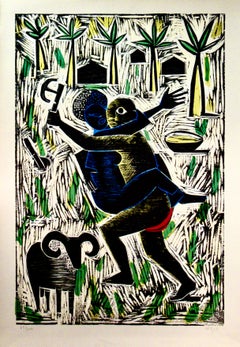
This artwork titled " Lendas Africanas Da Bahia" from the suite, 1978, is an original colors woodcut by renown Brazilian/Argentinian artist Hector Julio Paride Barnabo Carybe, 1911-1997. It is hand signed and numbered 83/200 in pencil by the artist. The Wood block mark (image) is 23.65 x 15.75 inches, sheet size is 26.75 x 19 inches. It is in excellent condition, has never been framed. It will be shipped in a 8 inches diameter heavy duty tube. About the artist: Héctor Julio Páride Bernabó (7 February 1911 – 2 October 1997) was an Argentine-Brazilian artist, researcher, writer, historian and journalist. His nickname and artistic name, Carybé, a type of piranha, comes from his time in the scouts. He died of heart failure after the meeting of a candomblé community's lay board of directors, the Cruz Santa Opô Afonjá Society, of which he was a member. Quick Facts Born, Died ... Carybé Born Héctor Julio Páride Bernabó 7 February 1911 Lanús, Argentina Died 2 October 1997 (aged 86) Salvador, Bahia, Brazil Nationality Brazilian Known for Painter, engraver, draughtsman, illustrator, potter, sculptor, mural painter, researcher, historian and journalist Close He produced thousands of works, including paintings, drawings, sculptures and sketches. He was an Obá de Xangô, an honorary position at Ilê Axé Opô Afonjá. Orixá Panels in the Afro-Brazilian Museum in Salvador Some of Carybé's work can be found in the Afro-Brazilian Museum in Salvador: 27 cedar panels representing different orixás or divinities of the Afro-Brazilian religion candomblé. Each panel shows a divinity with their associated implements and animal. The work was commissioned by the former Banco da Bahia S.A., now Banco BBM S.A., which originally installed them in its branch on Avenida Sete de Setembro in 1968. Murals at Miami International Airport American Airlines, Odebrecht and the Miami-Dade Aviation Department partnered to install two of Carybé's murals at Miami International Airport. They have been displayed in the American Airlines terminal at John F. Kennedy International Airport in New York since 1960. The 16.5 x 53-foot murals were accredited when Carybé won the first and the second prize in a contest of public art pieces for JFK airport. As its terminal at that airport was due for demolition, American Airlines donated the murals to Miami-Dade County, and Odebrecht invested in a project to remove, restore, transport and install the murals at Miami International Airport. The mural "Rejoicing and Festival of the Americas" portrays colorful scenes from popular festivals throughout the Americas, and "Discovery and Settlement of the West" depicts the pioneers’ journey into the American West. Carybé's Woodcuts in Gabriel García Márquez's Books Carybé illustrated four books by the Colombian writer Gabriel García Márquez, including One Hundred Years of Solitude, The Autumn of the Patriarch, Chronicle of a Death Foretold, and Love in the Time of Cholera "Carybé: um mestre da cultura baiana". ArqBahia Arquitetura, design, arte e lifestyle (in Brazilian Portuguese). 26 April 2023.. In particular, the woodcuts in One Hundred Years of Solitude are well-known for providing a visual image of the fictional town of Macondo, where the story takes place. The illustrations depict the colorful and winding houses, the railway bridge, and the hot and humid climate of the region, contributing to the reader's immersion in the story. Carybé's woodcuts are, therefore, an important part of Gabriel García Márquez's literary legacy, bringing a visual dimension to his stories that further enriches the reader's experience. Timeline 1911 — Birth in Lanús, Argentina. 1919 — Moved to Brazil. 1921 — The name Carybé is first given to him by the Clube do Flamengo scouts group, in Rio de Janeiro. 1925 — Beginning of his artistic endeavours, going to the pottery workshop of his elder brother, Arnaldo Bernabó, in Rio de Janeiro. 1927–1929 — Studies at the National School of Fine Arts, in Rio de Janeiro. 1930 — Worked for the newspaper Noticias Gráficas, in Buenos Aires, Argentina. 1935–1936 — Works with the writer Julio Cortázar and as a draughtsman for the El Diario newspaper. 1938 — Sent to Salvador by newspaper Prégon. 1939 — First collective exhibition, with the artist Clemente Moreau, at the Buenos Aires City Museum of Fine Arts, Argentina; illustrates the book Macumba, Relatos de la Tierra Verde, by Bernardo Kardon, published by Tiempo Nuestro. 1940 — Illustrates the book Macunaíma, by Mário de Andrade. 1941 — Draws the Esso Almanach, the payment for which allows him to set on a long journey through Uruguay, Brazil, Bolivia, and Argentina. 1941–1942 — Study trip around several South American countries. 1942 — Illustration for the book La Carreta by Henrique Amorim, published by El Ateneo (Buenos Aires, Argentina). 1943 — Together with Raul Brié, translates the book Macunaíma, by Mário de Andrade, into Spanish; produces the illustrations for the works Maracatu, Motivos Típicos y Carnavalescos, by Newton Freitas, published by Pigmaleon, Luna Muerta, by Manoel Castilla, published by Schapire, and Amores de Juventud, by Casanova Callabero; also publishes and illustrates Me voy al Norte, for the quarterly magazine Libertad Creadora; awarded First Prize by the Cámara Argentina del Libro (Argentine Book Council) for the illustration of the book Juvenília, by Miguel Cané (Buenos Aires, Argentina). 1944 — Illustrates the books The Complete Poetry of Walt Whitmann and A Cabana do Pai Tomás, both published by Schapire ; as well as and Los Quatro Gigantes del Alma by Mira y Lopez, Salvador BA; attends capoeira classes, visits candomblé meetings and makes drawings and paintings. 1945 — Does the illustrations for Daniel Defoe's Robinson Crusoe, for the Viau publishing house. 1946 — Helps in setting up the Tribuna da Imprensa newspaper, in Rio de Janeiro. 1947 — Works for the O Diário Carioca newspaper, in Rio de Janeiro. 1948 — Produces texts and illustrations for the book Ajtuss, Ediciones Botella al Mar (Buenos Aires, Argentina). 1949–1950 — Invited by Carlos Lacerda to work at the Tribuna da Imprensa, in Rio de Janeiro. 1950 — Invited by the Education Secretary Anísio Teixeira, moves to Bahia, and produces two panels for the Carneiro Ribeiro Education Center (Park School), in Salvador, Bahia. 1950–1997 — Settles in Salvador, Bahia. 1950–1960 — Actively participate in the plastic arts renewal movement, alongside Mário Cravo Júnior, Genaro de Carvalho, and Jenner Augusto. 1951 — Produces texts and illustrations for the works of the Coleção Recôncavo, published by Tipografia Beneditina and illustrations for the book, Bahia, Imagens da Terra e do Povo, by Odorico Tavares, published by José Olímpio in Rio de Janeiro; for the latter work he receives the gold medal at the 1st Biennial of Books and Graphic Arts. 1952 — Makes roughly 1,600 drawings for the scenes of the movie O Cangaceiro, by Lima Barreto; also works as the art director and as an extra on the film (São Paulo, SP). 1953 — Illustrations for the book A Borboleta Amarela, by Rubem Braga, published by José Olímpio (Rio de Janeiro, RJ). 1955 — Illustrates the work O Torso da Baiana, edited by the Modern Art Museum of Bahia. 1957 — Produces etchings, with original designs, for the special edition of Mário de Andrade's Macunaíma, published by the Sociedade dos 100 Bibliófilos do Brasil. 1958 — Makes an oil painting mural for the Petrobras Office in New York, USA; illustrates the book As Três Mulheres de Xangô, by Zora Seljan, published by Editora G. R. D. (Rio de Janeiro, RJ); Receives a scholarship grant in New York, USA. 1959 — Takes part in the competition for the New York International Airport panels project, in New York, USA, winning first and second prizes. 1961 — Illustrates the book Jubiabá, by Jorge Amado, published by Martins Fontes (São Paulo, SP). 1963 — Awarded the title of Honorary Citizen of Salvador, Bahia. 1965 — Illustrates A Muito Leal e Heróica Cidade de São Sebastião do Rio de Janeiro, published by Raymundo Castro Maya (Rio de Janeiro, RJ). 1966 — With Jorge Amado, co-authors Bahia, Boa Terra Bahia, published by Image (Rio de Janeiro, RJ); writes and illustrates the book Olha o Boi, published by Cultrix (São Paulo, SP). 1967 — Receives the Odorico Tavares Prize – Best Plastic Artist of 1967, in a competition ran by the state government to stimulate the development of plastic arts in Bahia; makes the Orixás Panels for the Banco da Bahia (currently at the UFBA Afro-Brazilian Museum) (Salvador, BA). 1968 — Illustrates the books Carta de Pero Vaz de Caminha ao Rei Dom Manuel, published by Sabiá (Rio de Janeiro) and Capoeira Angolana, by Waldeloir Rego, published by Itapoã (Bahia). 1969 — Produces the illustrations for the book Ninguém Escreve ao Coronel, by Gabriel Garcia Marquez, published by Sabiá (Rio de Janeiro, RJ). 1970 — Illustrates the books O Enterro do Diabo and Os Funerais de Mamãe Grande, published by Sabiá (Rio de Janeiro, RJ), Agotimé her Legend, by Judith Gleason, published by Grossman Publishers (New York, USA). 1971 — Illustrates the books One Hundred Years of Solitude, by Gabriel Garcia Marquez and A Casa Verde by Mario Vargas Llosa, both published by Sabiá (Rio de Janeiro, RJ); produces texts and illustrations for the book Candomblé da Bahia, published by Brunner (São Paulo, SP). 1973 — Illustrations for Gabriel Garcia Marquez's A Incrível e Triste História de Cândida Erendira e sua Avó Desalmada (Rio de Janeiro, RJ); paints the mural for the Legislative Assembly and the panel for the Bahia State Secretary of the Treasury. 1974 — Produces woodcuts for the book Visitações da Bahia, published by Onile. 1976 — Illustrates the book O Gato Malhado e a Andorinha Sinhá: uma história de amor, by Jorge Amado (Salvador, BA); receives the title of Knight of the Order of Merit of Bahia. 1977 — Certified with the Honor for Afro-Brazilian Cult Spiritual Merit, Xangô das Pedrinhas ao Obá de Xangô Carybé (Magé, RJ). 1978 — Makes the concrete sculpture Oxóssi, in the Catacumba Park; illustrates the book A Morte e a Morte de Quincas Berro D´Água, by Jorge Amado, published by Edições Alumbramento (Rio de Janeiro, RJ). 1979 — Produces woodcuts for the book Sete Lendas Africanas da Bahia, published by Onile. 1980 — Designs the costumes and scenery for the ballet Quincas Berro D´Água, at the Teatro Municipal in Rio de Janeiro. 1981 — Publication of the book Iconografia dos Deuses Africanos no Candomblé da Bahia (Ed. Raízes), following thirty years of research. 1982 — Receives the title of Honorary Doctor of the Federal University of Bahia. 1983 — Makes the panel for the Brazilian Embassy in Lagos, Nigeria. 1984 — Receives the Jerônimo Monteiro Commendation – Level of Knight (Espírito Santo); receives the Castro Alves Medal of Merit, granted by the UFBA Academy of Arts and Letters; makes the bronze sculpture Homenagem à mulher baiana (Homage to the Bahian woman), at the Iguatemi Shopping Center (Salvador, BA). 1985 — Designs the costumes and sets for the spectacle La Bohème, at the Castro Alves Theater; illustrates the book Lendas Africanas dos Orixás, by Pierre Verger, published by Currupio. 1992 — Illustrates the book O sumiço da santa: uma história de feitiçaria, by Jorge Amado (Rio de Janeiro, RJ). 1995 — Illustration of the book O uso das plantas na sociedade iorubá, by Pierre Verger (São Paulo, SP). 1996 — Making of the short film Capeta Carybé, by Agnaldo Siri Azevedo, adapted from the book O Capeta Carybé, by Jorge Amado, about the artist Carybé, who was born in Argentina and became the most Bahian of all Brazilians. 1997 — Illustration of the book Poesias de Castro Alves. Exhibitions ммIndividual Exhibitions: 1943 — Buenos Aires (Argentina) — First individual exhibition, at the Nordiska Gallery 1944 — Salta (Argentina) — at the Consejo General de Educacion 1945 — Salta (Argentina) — Amigos del Arte, Buenos Aires (Argentina) — Motivos de América, at the Amauta Gallery, Rio de Janeiro RJ — individual exhibition at the IAB/RJ 1947 — Salta (Argentina) — Agrupación Cultural Femenina 1950 — Salvador BA — First individual exhibit in Bahia, at the Bar Anjo Azul; São Paulo SP — MASP. 1952 — São Paulo SP — MAM/SP 1954 — Salvador BA — Oxumaré Gallery 1957 — New York (USA) — Bodley Gallery; Buenos Aires (Argentina) — Bonino Gallery * 1958 - New York (USA) — Bodley Gallery 1962 — Salvador BA - MAM/BA 1963 — Rio de Janeiro RJ — Bonino Gallery 1965 — Rio de Janeiro RJ — Bonino Gallery 1966 — São Paulo SP — Astrea Gallery 1967 — Rio de Janeiro RJ — Santa Rosa Gallery 1969 — London (England) — Varig Airlines 1970 — Rio de Janeiro RJ — Galeria da Praça 1971 — Rio de Janeiro RJ — MAM/RJ, São Paulo SP — A Galeria; Belo Horizonte MG, Brasília DF, Curitiba PR, Florianopolis SC, Porto Alegre RS, Rio de Janeiro RJ and São Paulo SP — The Orixás Panel (exhibition tour), at the Casa da Cultura in Belo Horizonte, MAM/DF, the Public Library of Paraná, the Legislative Assembly of Santa Catarina State, the Legislative Assembly of Rio Grande do Sul, MAM/RJ and MAM/SP 1972 — The Orixás Panel in Fortaleza CE — at the Ceará Federal University Art Museum, and in Recife PE — at the Santa Isabel Theater 1973 — São Paulo SP — A Galeria 1976 — Salvador BA — at the Church of the Nossa Senhora do Carmo Convent 1980 — São Paulo SP — A Galeria 1981 — Lisbon (Portugal) — Cassino Estoril 1982 — São Paulo SP — Renot Art Gallery, São Paulo SP — A Galeria 1983 — New York (USA) — Iconografia dos Deuses Africanos no Candomblé da Bahia, The Caribbean Cultural Center 1984 — Philadelphia (USA) — Art Institute of Philadelphia; Mexico — Museo Nacional de Las Culturas; São Paulo SP — Galeria de Arte André 1986 — Lisbon (Portugal) — Cassino Estoril; Salvador BA — As Artes de Carybé, Núcleo de Artes Desenbanco 1989 — Lisbon (Portugal) — Cassino Estoril; São Paulo SP — MASP 1995 — São Paulo SP — Documenta Galeria de Arte, São Paulo SP — Casa das Artes Galeria, Campinas SP — Galeria Croqui, Curitiba PR — Galeria de Arte Fraletti e Rubbo, Belo Horizonte MG — Nuance Galeria de Arte, Foz do Iguaçu PR — Ita Galeria de Arte, Porto Alegre RS — Bublitz Decaedro Galeria de Artes, Cuiabá MT — Só Vi Arte Galeria, Goiânia GO — Época Galeria de Arte, São Paulo SP — Artebela Galeria Arte Molduras, Fortaleza CE — Galeria Casa D'Arte, Salvador BA — Oxum Casa de Arte Collective Exhibitions: 1939 — Buenos Aires (Argentina) — Carybé and Clemente Moreau Exhibition, at the Museo Municipal de Belas Artes 1943 — Buenos Aires (Argentina) — 29th Salon de Acuarelistas y Grabadores — first prize 1946 — Buenos Aires (Argentina) — Drawings by Argentine Artists, at the Kraft Gallery 1948 — Washington (USA) — Artists of Argentina, at the Pan American Union Gallery 1949 — Buenos Aires (Argentina) — Carybé and Gertrudis Chale, at the Viau Gallery; Salvador BA — Bahian Showroom of Fine Arts, at the Hotel Bahia 1950 — Salvador BA — 2nd Bahian Showroom of Fine Arts; São Paulo SP — MAM/SP 1951 — São Paulo SP — 1st São Paulo Art Biennial, Trianon Pavilion. 1952 — Salvador BA — 3rd Bahian Showroom of Fine Arts, at Belvedere da Sé; São Paulo SP — MAM/SP 1953 — Recife PE — Mario Cravo Júnior and Carybé, at the Santa Isabel Theater; São Paulo SP — 2nd São Paulo Art Biennial, at MAM/SP 1954 — Salvador BA — 4th Bahian Showroom of Fine Arts, at the Hotel Bahia. — Bronze medal 1955 — São Paulo SP — 3rd São Paulo Art Biennial, at MAM/SP — first prize for drawing 1956 — Salvador BA — Modern Artists of Bahia, at the Oxumaré Gallery; Venice (Italy) — 28th Venice Biennial 1957 — Rio de Janeiro RJ — 6th National Modern Art Show — exemption from the jury; São Paulo SP — Artists from Bahia, at the MAM/SP 1958 — San Francisco (USA) — Works by Brazilian Artists, at the Fine Arts Museums of San Francisco, Washington and New York (USA) — Works by Brazilian Artists, at the Pan American Union and the MoMA 1959 — Seattle (USA) — 30th International Exhibition, at the Seattle Art Museum; Salvador BA — Modern Artists of Bahia, at the Dentistry School. 1961 — São Paulo SP — 6th São Paulo Art Biennial, at MAM/SP — special room 1963 — Lagos (Nigeria) — Brazilian Contemporary Artists, at the Nigerian Museum; São Paulo SP — 7th São Paulo Art Biennial Bienal, at the Fundação Bienal 1964 — Salvador BA — Christmas Exhibition, at the Galeria Querino 1966 — Baghdad (Iraq) — collective exhibition sponsored by the Calouste Gulbenkian Foundation; Madrid (Spain) — Artists of Bahia, at the Hispanic Culture Institute; Rome (Italy) — Piero Cartona Palace; Salvador BA — 1st National Biennial of Plastic Arts (Bienal da Bahia) — special room; Salvador BA — Draughtsmen of Bahia, at the Convivium Gallery 1967 — Salvador BA — Christmas Exhibition at the Panorama Art Gallery; São Paulo SP — Artists of Bahia, at the A Gallery 1968 — São Paulo SP — Bahian Artists, at the A Gallery 1969 — London (England) — Tryon Gallery; São Paulo SP — 1st Panorama of Current Brazilian Art at the MAM/SP; São Paulo SP — Carybé, Carlos Bastos...

Category

Late 20th Century Modern Nude Prints

Materials

Woodcut

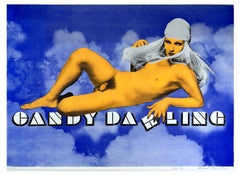
Candy Darling, nude, signed and dated

Candy Darling, nude, signed and dated

By Richard Bernstein

Located in Senoia, GA

Candy Darling, nude, 1970, 32.5 x 23” Hand-signed at the lower right 5/22/70 Richard Bernstein by the artist in pencil. Candy Darling was a transgender actress and Warhol superstar...

Category

1970s Modern Nude Prints

Materials

Screen

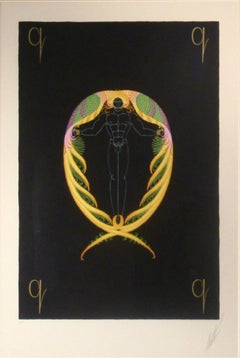
"Letter Q" From the suite "Alphabet"

"Letter Q" From the suite "Alphabet"

By Erté

Located in San Francisco, CA

This artwork titled "Letter Q" from the suite "Alphabet" 1976, is an original colors lithograph and serigraph on Wove paper by renown Russian/French artist Erte, AKA Romain de Tirtof...

Category

Late 20th Century Art Nouveau Nude Prints

Materials

Screen, Lithograph

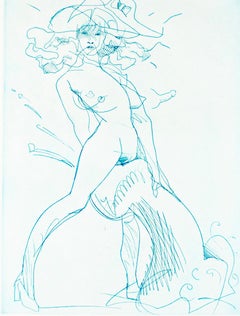
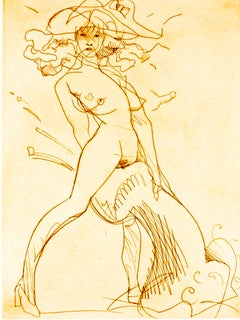
Figure and Phallus: erotic nude drawing of woman in heels in rainbow of colors

Figure and Phallus: erotic nude drawing of woman in heels in rainbow of colors

By Claes Oldenburg

Located in New York, NY

This etching features a nude woman in high heels. Whipping her head to the left, she gazes intently past the viewer through a wild tangle of tresses. A sunhat with a bow nearly floats off her head, a tongue-in-cheek nod to modesty. Taking a wide stance, she straddles a comically large phallus, which springs up eagerly from the ground like a plant. Unusually, this etching was drawn directly onto the plate from the artist’s imagination and not from a life model. This spontaneity is visible around the woman’s bust and arms, where Oldenburg sketched several variations of her anatomy, giving the impression of a figure in movement. Beside her left breast, Oldenburg extends this halo of lines by cheekily doodling a small, floating phallus. Paper 36 x 27.5 in. / 91.4 x 69.2 cm. Plate 23.5 x 17.7 in. / 59.7 x 45.1 cm. Etching in one color on white, thick, slightly textured Wookey Hole handmade paper watermarked with the artist’s signature. Signed by the artist and dated 1975 lower right in pencil. The edition of 60 includes ten prints in each of six different ink colors: Indigo blue, vermilion, mauve, burnt sienna, astral blue, and yellow-ochre. A copy of each color is available: this listing is for one copy in the color of your choice. As recorded in the artist’s unpublished notes: “In 1974 an ambitious project for a suite of large-scale etchings was hatched with Paul Cornwall-Jones, for production by Maurice Payne in Petersburg Press’s new Pembroke studios in London. The project would consist of meticulous transcriptions of a certain group of drawings...

Category

1970s Pop Art Nude Prints

Materials

Etching

Room 411 - Collector Portfolio # 2 out 7 - 12 Fine Art Prints Nude photography

Room 411 - Collector Portfolio # 2 out 7 - 12 Fine Art Prints Nude photography

By Eric Ceccarini

Located in Brussels, BE

His series "Room" or "My carnival" evokes the fantasy of the mistress, fetishist eroticism, 5 to 7, free fantasy. Eric produces erotic art without ever biting into porn-chic always being more obsessed with aesthetics than with simulacrum. If he worships more than one of these predecessors who poured into more outrage, it is freely that he suggests to the imagination to imagine without capturing the fantasy of the viewer. The choice had been made of very high quality prints: cotton fiber base baryta paper without chlorine and high grammage (310 gr / m²), pigment inks. They carry on the back an authentication label signed by Eric Ceccarini The enhancement of this limited edition of 100 copies is ensured by the use of a unique high-quality box to keep the prints Eric is a Belgian artist born in 1965. He gained a Degree in Photography from INFAC, Brussels in 1987. Since then he has been a fashion photographer working with many of the top houses. Elle, Marie-Claire, L'Oréal, Levi's, Coca Cola, Virgin, Saab, Delvaux, Lowe Lintas and Ogilvy are some of his clients. Among other distinctions, his photography for the Saab cabrio 9-3 campaign was awarded the Silver Lion at the Cannes International Advertising Festival. Eric is set apart from many of his colleagues by his way of shunning technical artifice and working in natural light. This results in soft, velvety, almost painterly images. Nowadays in his artistic works, he captures women's essence and soul, transcending mere physical representation. Eric's "AMNIOS" series of soul portraits- the model appear in suspended animation, as if they were about to born, and full of hidden secrets. This represents a new conceptual departure for Eric, who began as a fashion photographer, moving on to classic artistic nudes, now showing us the nude in the ethereal form. These forms are certainly beautiful, yet a membrane, whose function is unclear, separates them from us: is it to hide, or protect? In person, these works are monumental in scale, adding to their sense of restrained power. In the "NUDES" series, Eric uses only natural light, just as a traditional painter would do in their study. Using slow exposure speeds which allow the lens more time to capture each model's unique character, he reveals a sense of the sublime feminine, which borders on abstraction. Eric's nudes are the same, yet different. They are all beautiful, yet their differences and unique qualities are magnified. "NUDES" is a series that celebrates the human form. For "PAINTERS", Eric collaborates with a different painter for each photograph. More than 100 of them have been invited throughout Europe and the other continents. The artist paints the model in their own style, while Eric searches for attitudes, then he photographs the result. In this way, the Painters series represents a fusion of two artistic visions - something that's not always easy to achieve, yet this series epitomizes a sense of cohesion and dynamic ynchronicity. His work has been exhibited in Belgium, United Kingdom, France, Switzerland, The US , China, Singapore, The Netherlands, Germany, Spain… Current galleries where Eric is permanently resident: USA —— New-York city Galerie L’Atelier / Fremin Gallery Greenwich, Connecticut Galerie L’Atelier / Emmanuelle G...

Category

2010s Contemporary Nude Prints

Materials

Archival Pigment, Rag Paper

Limited Edition Daisy Print - Hand Signed Contemporary Art

Limited Edition Daisy Print - Hand Signed Contemporary Art

Located in London, London

artist: Anastasia Aureum limited edition, hand signed will be shipped rolled Collective exhibitions: 2024 preselection for the summer exhibition at the royal academy of Arts,Lond...

Category

21st Century and Contemporary Contemporary Nude Prints

Materials

Paper, Color, Digital

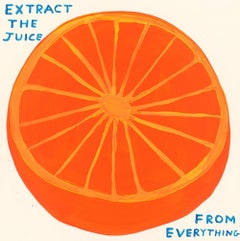
Extract The Juice
Extract The Juice

Extract The Juice

By David Shrigley

Located in London, GB

Extract The Juice 2023 12 colour screenprint with varnish overlay on Somerset Tub sized 410gsm paper 55 x 55 cm Edition of 125 Hand signed and numbered by David Shrigley Mint conditi...

Category

2010s Contemporary Nude Prints

Materials

Screen, Paper

Italian 1980s Ugo Attardi Signed Work on Paper Nude of Woman

Italian 1980s Ugo Attardi Signed Work on Paper Nude of Woman

By Ugo Attardi

Located in Roma, IT

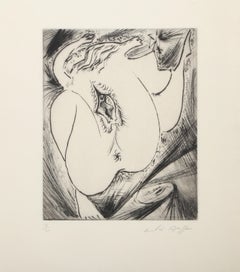
Italian 1980s Ugo Attardi Signed Work on Paper Nude of Woman A beautiful "Prova d'Artista" Pop Art-inspired graphic work by one of Italy's greatest modern artists, Ugo Attardi. It d...

Category

Late 20th Century Modern Nude Prints
Materials

Lithograph

"EROTIC II"
"EROTIC II"

"EROTIC II"

By Robert Bob Stanley

Located in New York, US

Signed by artist, Artist's Proof Silkscreen print on paper Bob Stanley (b. 1932 - d. 1997 New York, United States), an American painter renowned for his gritty depictions on canvas...

Category

1970s Pop Art Nude Prints

Materials

Paper

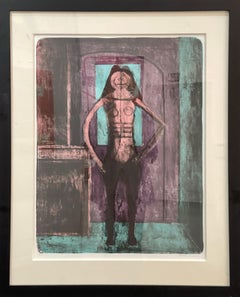
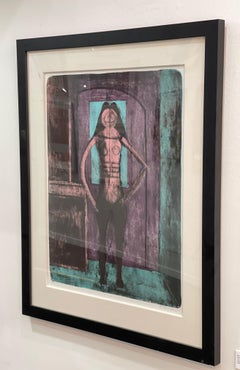
Femme au Collant Noir, 1969, (4/150)

Femme au Collant Noir, 1969, (4/150)

By Rufino Tamayo

Located in San Francisco, CA

Rufino Tamayo Femme au Collant Noir, 1969 Color lithograph Unframed dimensions: 27.50 x 21 in Framed dimensions: 37.625 x 30.75 Edition 4/150 This limited edition color lithograph i...

Category

1960s Abstract Nude Prints

Materials

Color, Lithograph

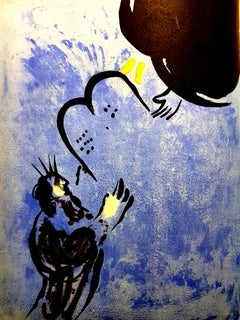
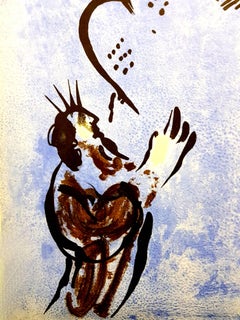
Marc Chagall - Moses - Original Lithograph

Marc Chagall - Moses - Original Lithograph

By Marc Chagall

Located in Collonge Bellerive, Geneve, CH

Marc Chagall, Original Lithograph depicting an instant of the Bible. Technique: Original lithograph in colours Year: 1956 Sizes: 35,5 x 26 cm / 14" x 10.2" (sheet) Published by: Éditions de la Revue Verve, Tériade, Paris Printed by: Atelier Mourlot, Paris Documentation / References: Mourlot, F., Chagall Lithograph [II] 1957-1962, A. Sauret, Monte Carlo 1963, nos. 234 and 257 Marc Chagall (born in 1887) Marc Chagall was born in Belarus in 1887 and developed an early interest in art. After studying painting, in 1907 he left Russia for Paris, where he lived in an artist colony on the city’s outskirts. Fusing his own personal, dreamlike imagery with hints of the fauvism and cubism popular in France at the time, Chagall created his most lasting work—including I and the Village (1911)—some of which would be featured in the Salon des Indépendants exhibitions. After returning to Vitebsk for a visit in 1914, the outbreak of WWI trapped Chagall in Russia. He returned to France in 1923 but was forced to flee the country and Nazi persecution during WWII. Finding asylum in the U.S., Chagall became involved in set and costume design before returning to France in 1948. In his later years, he experimented with new art forms and was commissioned to produce numerous large-scale works. Chagall died in St.-Paul-de-Vence in 1985. The Village Marc Chagall was born in a small Hassidic community on the outskirts of Vitebsk, Belarus, on July 7, 1887. His father was a fishmonger, and his mother ran a small sundries shop in the village. As a child, Chagall attended the Jewish elementary school, where he studied Hebrew and the Bible, before later attending the Russian public school. He began to learn the fundamentals of drawing during this time, but perhaps more importantly, he absorbed the world around him, storing away the imagery and themes that would feature largely in most of his later work. At age 19 Chagall enrolled at a private, all-Jewish art school and began his formal education in painting, studying briefly with portrait artist Yehuda Pen. However, he left the school after several months, moving to St. Petersburg in 1907 to study at the Imperial Society for the Protection of Fine Arts. The following year, he enrolled at the Svanseva School, studying with set designer Léon Bakst, whose work had been featured in Sergei Diaghilev's Ballets Russes. This early experience would prove important to Chagall’s later career as well. Despite this formal instruction, and the widespread popularity of realism in Russia at the time, Chagall was already establishing his own personal style, which featured a more dreamlike unreality and the people, places and imagery that were close to his heart. Some examples from this period are his Window Vitebsk (1908) and My Fianceé with Black Gloves (1909), which pictured Bella Rosenfeld, to whom he had recently become engaged. The Beehive Despite his romance with Bella, in 1911 an allowance from Russian parliament member and art patron Maxim Binaver enabled Chagall to move to Paris, France. After settling briefly in the Montparnasse neighborhood, Chagall moved further afield to an artist colony known as La Ruche (“The Beehive”), where he began to work side by side with abstract painters such as Amedeo Modigliani and Fernand Léger as well as the avant-garde poet Guillaume Apollinaire. At their urging, and under the influence of the wildly popular fauvism and cubism, Chagall lightened his palette and pushed his style ever further from reality. I and the Village (1911) and Homage to Apollinaire (1912) are among his early Parisian works, widely considered to be his most successful and representative period. Though his work stood stylistically apart from his cubist contemporaries, from 1912 to 1914 Chagall exhibited several paintings at the annual Salon des Indépendants exhibition, where works by the likes of Juan Gris, Marcel Duchamp and Robert Delaunay were causing a stir in the Paris art world. Chagall’s popularity began to spread beyond La Ruche, and in May 1914 he traveled to Berlin to help organize his first solo exhibition, at Der Sturm Gallery. Chagall remained in the city until the highly acclaimed show opened that June. He then returned to Vitebsk, unaware of the fateful events to come. War, Peace and Revolution In August 1914 the outbreak of World War I precluded Chagall’s plans to return to Paris. The conflict did little to stem the flow of his creative output, however, instead merely giving him direct access to the childhood scenes so essential to his work, as seen in paintings such as Jew in Green (1914) and Over Vitebsk (1914). His paintings from this period also occasionally featured images of the war’s impact on the region, as with Wounded Soldier (1914) and Marching (1915). But despite the hardships of life during wartime, this would also prove to be a joyful period for Chagall. In July 1915 he married Bella, and she gave birth to a daughter, Ida, the following year. Their appearance in works such as Birthday (1915), Bella and Ida by the Window (1917) and several of his “Lovers” paintings give a glimpse of the island of domestic bliss that was Chagall’s amidst the chaos. To avoid military service and stay with his new family, Chagall took a position as a clerk in the Ministry of War Economy in St. Petersburg. While there he began work on his autobiography and also immersed himself in the local art scene, befriending novelist Boris Pasternak, among others. He also exhibited his work in the city and soon gained considerable recognition. That notoriety would prove important in the aftermath of the 1917 Russian Revolution when he was appointed as the Commissar of Fine Arts in Vitebsk. In his new post, Chagall undertook various projects in the region, including the 1919 founding of the Academy of the Arts. Despite these endeavors, differences among his colleagues eventually disillusioned Chagall. In 1920 he relinquished his position and moved his family to Moscow, the post-revolution capital of Russia. In Moscow, Chagall was soon commissioned to create sets and costumes for various productions at the Moscow State Yiddish...

Category

1950s Modern Nude Prints
Materials

Lithograph

Nude Figure in Red
Nude Figure in Red

Nude Figure in Red

By Patricia A. Pearce

Located in Soquel, CA

Nude in Red, a collotype figure study by Patricia A. Pearce (American, b. 1948). Unframed. Signed "PP" on verso. Image: 8.5"H x 7.75"W. Patricia Pearce was a California artist and a...

Category

1980s Expressionist Nude Prints
Materials

Paper, Ink, Color

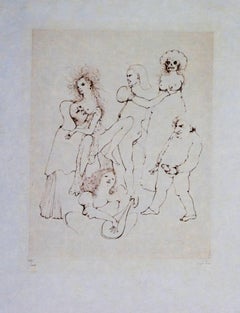
Leonor Fini Erotica I etching

Leonor Fini Erotica I etching

By Leonor Fini

Located in Paonia, CO

An etching by Leonor Fini depicting three men and three woman interacting in various ways and one of the woman sitting in the foreground is playing the lute. This is a signed limited edition etching numbering 68 out of 100. There is also a signature by the artist embossed in the paper just below the pencil signature. The paper is very fibrous and is deckle -edged. The paper size is 26 x 20.25 Image size 15.50 x 12.50. This original rare etching is in very good condition. Argentinian-born artist Leonor Fini (1907-1996) is considered one of the great female artists of the twentieth century. She moved to Paris in the early 1930’s where she spent most of her life and almost immediately formed friendships with Salvador Dali, Cartier- Bresson, Max Ernst and other intellectuals of the time. At twenty five she had her first one person show in Paris and was included in the 1936 pivotal exhibition at MOMA…Fantastic Art, Dada and Surrealism…..and that same year had an exhibition at a famous avant garde gallery in New York. Although Fini never considered herself a Surrealist she maintained close personal relationships with several members of the group. One can see how their ideology influenced her work but she remained firmly rooted in the tradition of Symbolism, Metaphysics and Italian and German Romanticism Her works can be found in most important collections of modern art around the world. Fini was renowned as a portraitist and as a painter of erotic sexual tensions with a mysterious atmosphere. She was adamant about being independent and not belonging to any one group. She lived life on her own terms and is sometimes referred to as …..the female Dali. She was also involved with designing for fashion and creating elaborate sets for opera and theatre. As a feminist she was definitely ahead of the times. She produced the first erotic male nude...

Category

1970s Surrealist Nude Prints
Materials
Etching