1 of 9

Ian Hornak
Ian Hornak, Forbidden Fruit, Circa 1963

Circa 1963

$1,996
$2,49520% Off
£1,502.31
£1,877.8920% Off
€1,757.61
€2,197.0120% Off
CA$2,822.90
CA$3,528.6320% Off
A$2,867.20
A$3,584.0120% Off
CHF 1,652.29
CHF 2,065.3620% Off
MX$34,617.25
MX$43,271.5620% Off
NOK 19,192.88
NOK 23,991.1120% Off
SEK 19,353.02
SEK 24,191.2720% Off
DKK 13,138.71
DKK 16,423.3820% Off

Follow Ian Hornak Prints and Multiples to receive alerts when new items arrive

About the Item

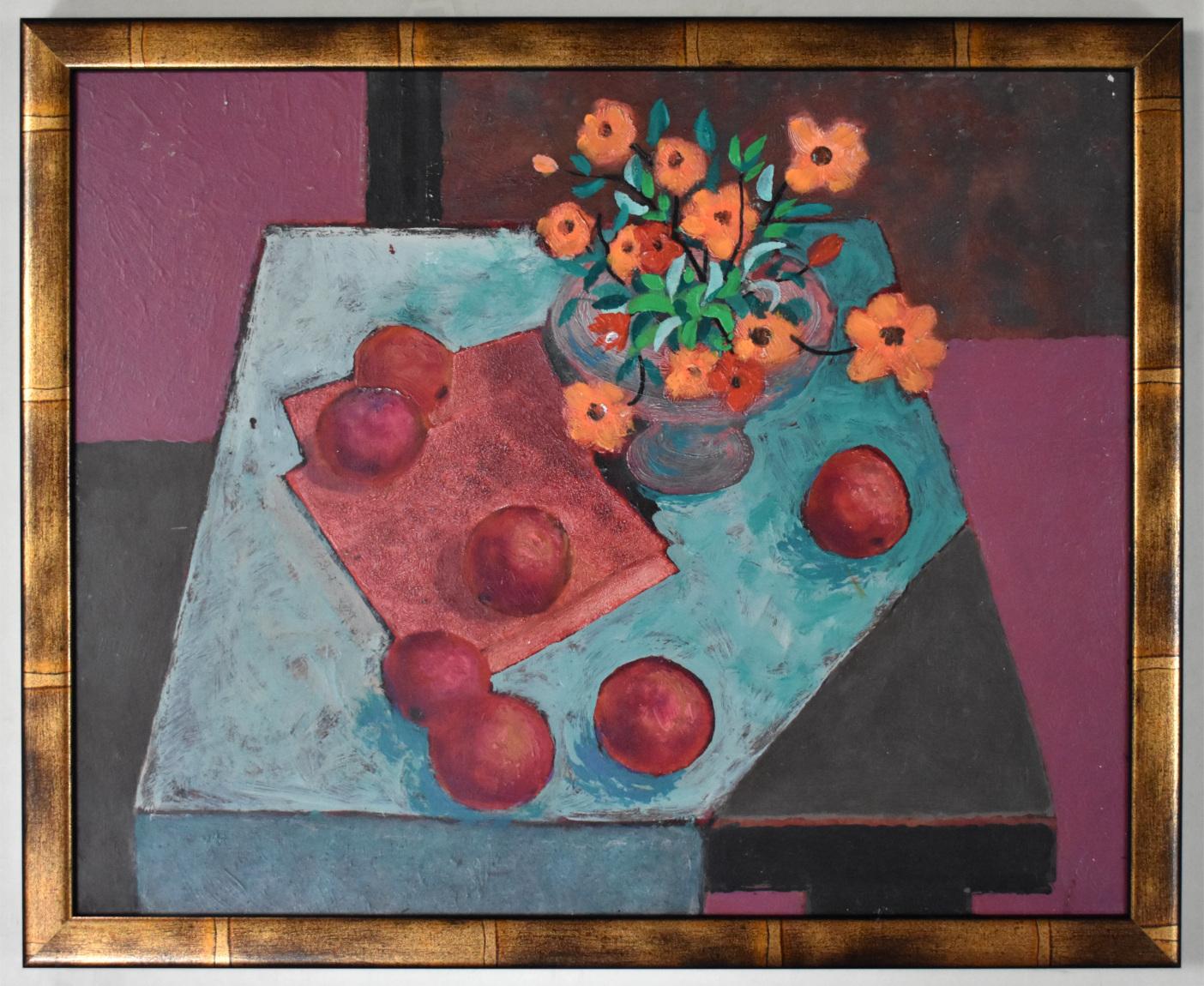
This exquisite woodcut by Ian Hornak (1944–2002), titled Forbidden Fruit, was executed circa 1963 during the artist’s undergraduate studies. Created during the formative years of Hornak’s artistic development, this striking composition demonstrates the young artist’s early fascination with symbolic imagery and the expressive possibilities of relief printmaking. Depicting a stylized flowering branch laden with fruit-like forms rendered in dramatic black, white, and brilliant accents of orange and yellow, the work evokes themes of temptation, fertility, and transformation. The title alludes to the biblical narrative of the Garden of Eden while simultaneously allowing for broader interpretations rooted in mythology and universal symbolism. The bold linear patterns and flattened forms reveal Hornak’s interest in decorative design and modernist abstraction, while his focus on organic subject matter anticipates the monumental botanical paintings that would define his mature career. Through the powerful contrasts characteristic of the woodcut medium, Hornak transforms a simple botanical motif into an image of extraordinary visual intensity and symbolic resonance. As one of the scarce surviving prints from the artist’s student years, Forbidden Fruit provides valuable insight into the origins of Hornak’s visual language and his enduring engagement with nature and allegory. Executed in woodcut on japon paper, the plate measures 19.75 x 11.25 inches (50.2 x 28.6 cm). Unsigned; estate stamped, verso. Artwork Details: Artist: Ian Hornak (1944–2002) Title: Forbidden Fruit Medium: Woodcut on japon paper Dimensions: 19.75 x 11.25 inches (50.2 x 28.6 cm) (plate size) Inscription: Unsigned; estate stamped, verso Edition: Approx. XXV Date: Circa 1963 Condition: Well preserved, consistent with age and medium Provenance: Estate of Ian Hornak, East Hampton, New York About the Artist: Ian Hornak (1944–2002) was an American painter, draughtsman, printmaker, and pioneering force in Photorealism and Hyperrealism whose extraordinary technical mastery, visionary imagination, and innovative approach to realism established him as one of the most distinctive and original artists of the late twentieth century. Widely recognized as a founding member of both the Photorealist and Hyperrealist movements, Hornak helped redefine the possibilities of contemporary realism by combining photographic precision with symbolism, romanticism, mythology, environmental awareness, art historical references, and metaphysical inquiry, creating a body of work that stands apart within postwar American art for both its visual brilliance and intellectual ambition. Born in Philadelphia and raised in Michigan before establishing his career in New York and East Hampton, Hornak emerged during one of the most transformative periods in modern art and developed a highly individual visual language that transcended conventional artistic categories. His artistic vision reflects an awareness of the revolutionary innovations introduced by Pablo Picasso, Alexander Calder, Alberto Giacometti, Salvador Dali, Joan Miro, Wassily Kandinsky, Marcel Duchamp, and Man Ray, while simultaneously drawing inspiration from the Hudson River School, particularly Frederic Edwin Church, Martin Johnson Heade, Thomas Cole, and Albert Bierstadt, as well as the spiritual landscapes of Caspar David Friedrich and the botanical precision of Dutch Golden Age masters. Through this extraordinary synthesis of influences, Hornak created a visual language that united scientific observation, photographic realism, romantic grandeur, allegorical symbolism, and philosophical reflection into a form entirely his own. During the late 1960s and early 1970s, Hornak emerged as one of the earliest artists associated with the newly developing Photorealist movement, producing panoramic landscapes of astonishing complexity and technical sophistication that challenged prevailing assumptions regarding realism and representation. These innovations earned widespread critical acclaim and positioned Hornak alongside major contemporaries such as Chuck Close, Richard Estes, Audrey Flack, Ralph Goings, Robert Bechtle, Malcolm Morley, Richard McLean, and Don Eddy, yet his work remained distinguished by its emotional resonance and symbolic depth. As his career evolved, Hornak increasingly moved beyond the concerns of mainstream Photorealism and developed a more personal and ambitious artistic vision, culminating in the monumental botanical and allegorical masterpieces of the 1980s and 1990s that many scholars regard as the pinnacle of his achievement. Throughout his career, Hornak was represented by influential galleries including Tibor de Nagy Gallery, Fischbach Gallery, Katharina Rich Perlow Gallery, and Armstrong Gallery, exhibiting extensively in New York and internationally. His work received praise from The New York Times, which described him as being “right at the top of romantically descriptive painters today.” Today, his paintings, drawings, and prints remain highly sought after by collectors who recognize their rarity, beauty, technical excellence, and historical importance, while his personal papers are preserved in the Smithsonian Institution’s Archives of American Art. His highest recorded sale was achieved in 2017, when Large Orchid Bouquet (1988) was sold in a private transaction conducted in association with the heir of the Ian Hornak estate to the Van Andel family, co-owners of Amway, for US$165,000 ($219,168.11 adjusted to 2025 dollars), underscoring the growing recognition of an artist whose significance within the history of American realism continues to expand. Ian Hornak woodcut, Forbidden Fruit, botanical print, biblical symbolism, undergraduate work, American printmaking, modernist woodcut, Photorealism pioneer, Hyperrealism, East Hampton estate.
  • Creator:
    Ian Hornak (1944 - 2002, American)
  • Creation Year:
    Circa 1963
  • Dimensions:
    Height: 19.75 in (50.17 cm)Width: 11.25 in (28.58 cm)
  • Medium:
  • Movement & Style:
  • Period:
  • Condition:
  • Gallery Location:
    Southampton, NY
  • Reference Number:
    1stDibs: LU1465218185752

You May Also Like

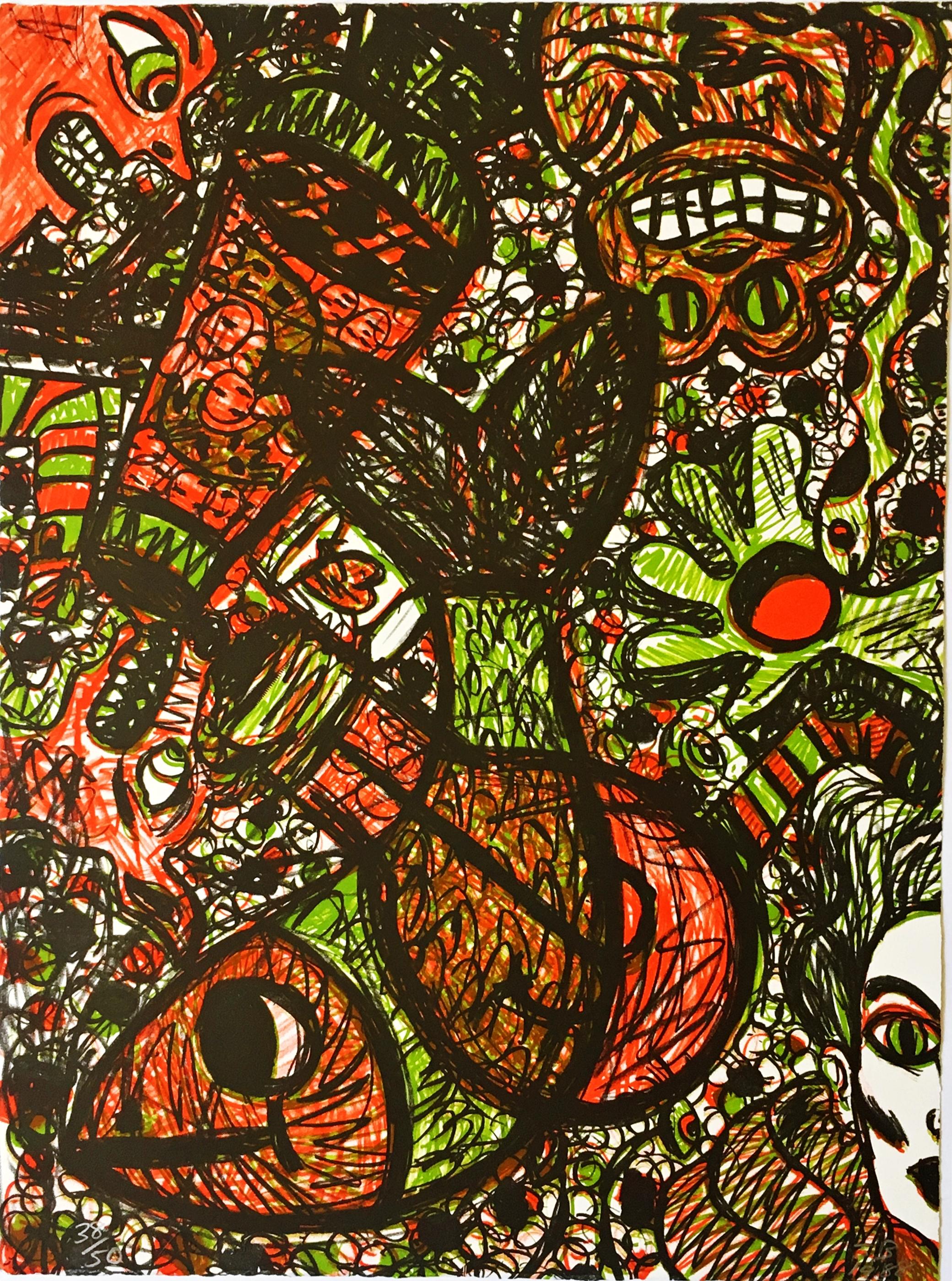
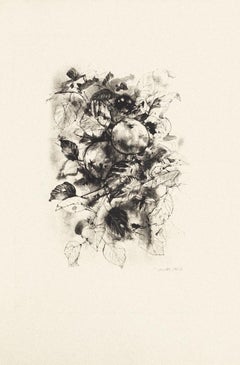
Tomato by Aaron Fink

Tomato by Aaron Fink

By Aaron Fink

Located in New York, NY

This original still life lithograph depicting a tomato was printed in 1993 from an edition of 100 in collaboration with Eric Mourlot. Artist Bio: Born in Boston, MA, Fink received ...

Category

1990s Expressionist Still-life Prints

Materials

Lithograph

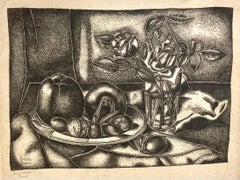
Pamela Bianco, Fruit Piece

Pamela Bianco, Fruit Piece

Located in New York, NY

Pamela Bianco achieve success as an artist in Britain while still a child. This accomplishment resulted in the family coming to the United States where ...

Category

1920s American Modern Still-life Prints

Materials

Lithograph

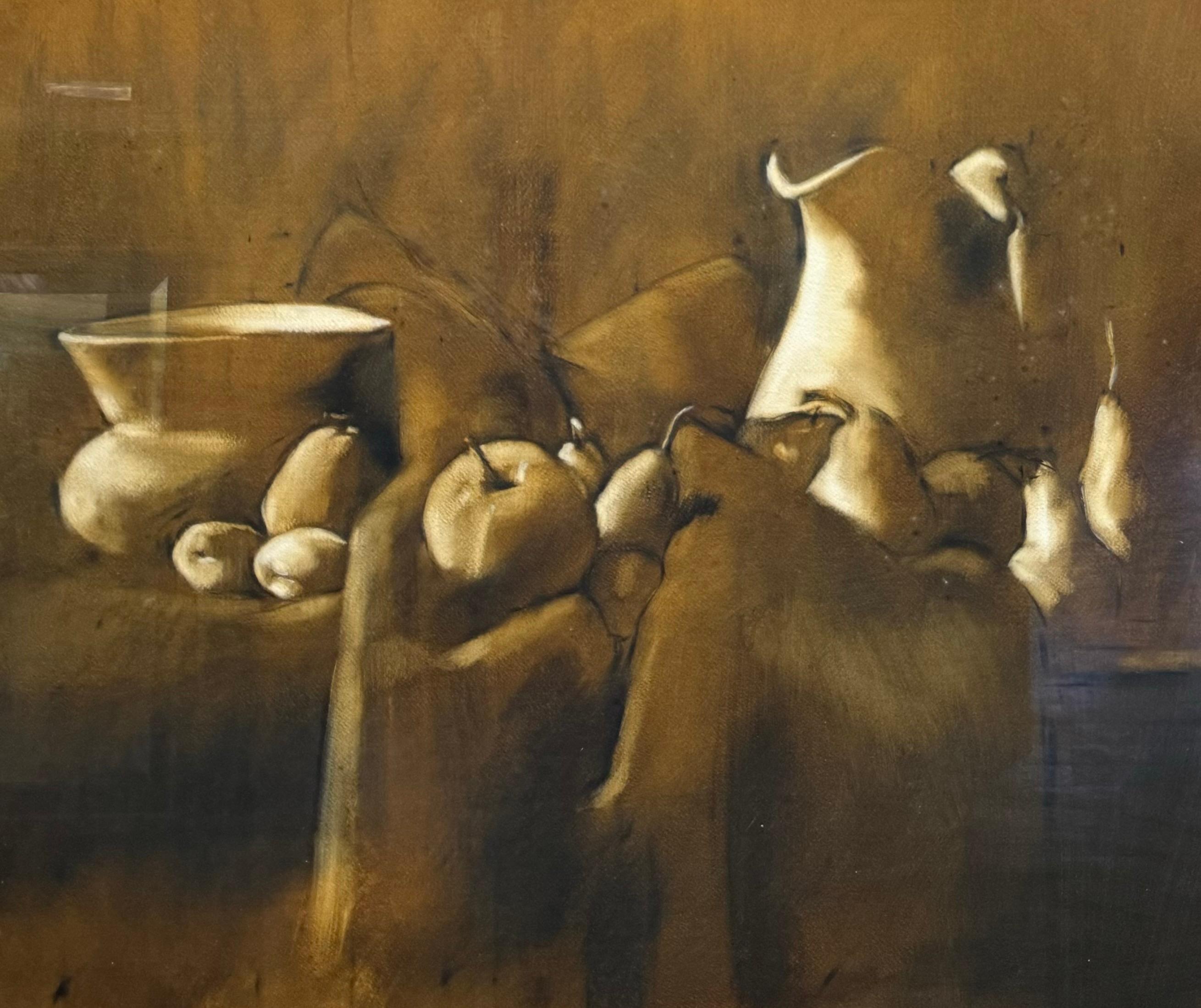
Fruit Etching by Michel Ciry, Modern Still Life, Signed, 1964

Fruit Etching by Michel Ciry, Modern Still Life, Signed, 1964

By Michel Ciry

Located in Roma, IT

Fruit is a black and white etching realized by the French artist Michel Ciry in 1964. Signed and dated on the lower right. Sheet dimensions: 57 x 38 cm. In good conditions. The a...

Category

1960s Modern Figurative Prints

Materials

Etching

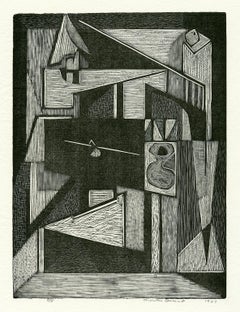
Still Life — Mid-century Modern

Still Life — Mid-century Modern

By Charles Quest

Located in Myrtle Beach, SC

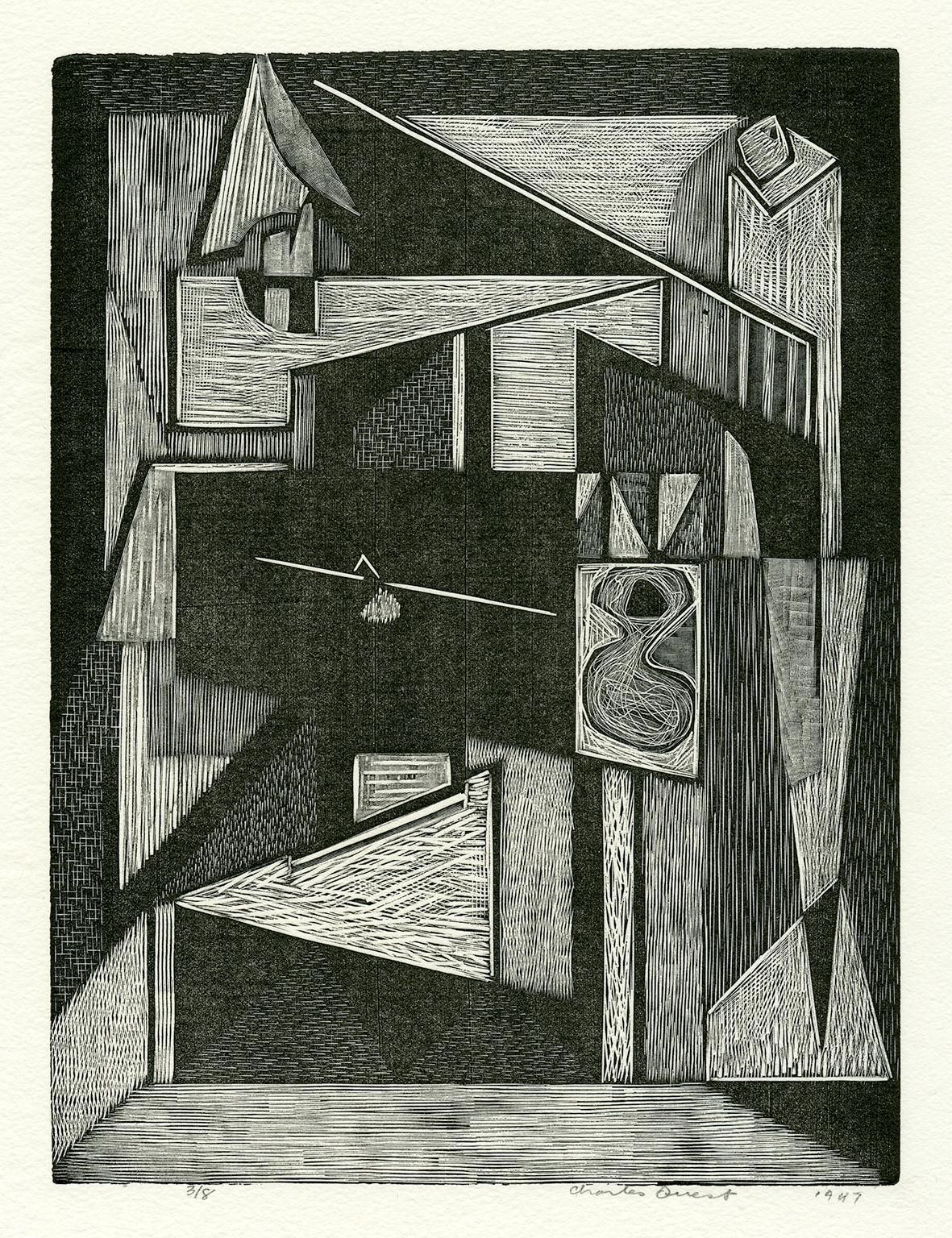
Charles Quest, 'Still Life', 1947, wood engraving, edition 8. Signed, dated, and numbered '3/8' in pencil. Titled and annotated 'wood engraving' in the bottom left margin. A fine impression, on off-white wove paper, with full margins (1 to 2 inches), in excellent condition. Scarce. Matted to museum standards, unframed. ABOUT THE ARTIST Charles Quest, painter, printmaker, and fine art instructor, worked in various mediums, including mosaic, stained glass, mural painting, and sculpture. Quest grew up in St. Louis, his talent evident as a teenager when he began copying the works of masters such as Michelangelo on his bedroom walls. He studied at the Washington University School of Fine Arts, where he later taught from 1944 to 1971. He traveled to Europe after his graduation in 1929 and studied at La Grande Chaumière and Academie Colarossi, Paris, continuing to draw inspiration from the works of the Old Masters. After returning to St. Louis, Quest received several commissions to paint murals in public buildings, schools, and churches, including one from Joseph Cardinal Ritter, to paint a replica of Velasquez's Crucifixion over the main altar of the Old Cathedral in St. Louis. Quest soon became interested in the woodcut medium, which he learned through his study of J. J. Lankes' A Woodcut Manual (1932) and Paul Landacre's articles in American Artist magazine ‘since no artists in St. Louis were working in wood’ at that time. Quest also revealed that for him, wood cutting and engraving were ‘more enjoyable than any other means of expression.’ In the late 1940s, his graphic works began attracting critical attention—several of his woodcuts won prizes and were acquired by major American and European museums. His wood engraving entitled ‘Lovers’ was included in the American Federation of Art's traveling print exhibition in 1947. Two years later, Quest's two prize-winning prints, ‘Still Life with Grindstone’ and ‘Break Forth into Singing’, were exhibited in major American museums in a traveling show organized by the Philadelphia Print Club. His work was included in the Chicago Art Institute's exhibition, ‘Woodcut Through Six Centuries’, and the print ‘Still Life with Vise’ was purchased by the Museum of Modern Art in New York. In 1951 he was invited by artist-Curator Jacob Kainen to exhibit thirty wood engravings and color woodcuts in a one-person show at the Smithsonian's National Museum (now known as the American History Museum). Kainen's press release praised the ‘technical refinement’ of Quest's work: ‘He obtains a great variety of textural effects through the use of the graver, and these dense or transparent grays are set off against whites or blacks to achieve sparkling results. His work has the handsome qualities characteristic of the craftsman and designer.’ At the time of the Smithsonian exhibition, Quest's work was represented by three New York galleries in addition to one in his home town. He had won 38 prizes, and his prints were in the collections of the Library of Congress, the Chicago Art Institute, the Metropolitan Museum, and the Philadelphia Museum of Art. In cooperation with the Art in Embassies program, his color woodcuts were displayed at the American Embassy in Paris in 1951. Recognition at home came in 1955 with his first solo exhibition in St. Louis. Press coverage of the show heralded the ‘growth of graphic arts toward rivaling painting and sculpture as a major independent medium’. An exhibition of his prints at the Bethesda Art Gallery in 1983 attracted Curator Emeritus Joseph A. Haller, S.J., who began purchasing his work for Georgetown University's collection. In 1990 Georgetown University Library's Special Collections Division was the recipient of a large body of Quest's work, including prints, drawings, paintings, sculpture, stained glass, and his archive of correspondence and professional memorabilia. These extensive holdings, including some 260 of his fine prints, provide a rich opportunity for further study and appreciation of this versatile and not-to-be-forgotten mid-Western American artist...

Category

1940s American Modern Abstract Prints

Materials

Woodcut

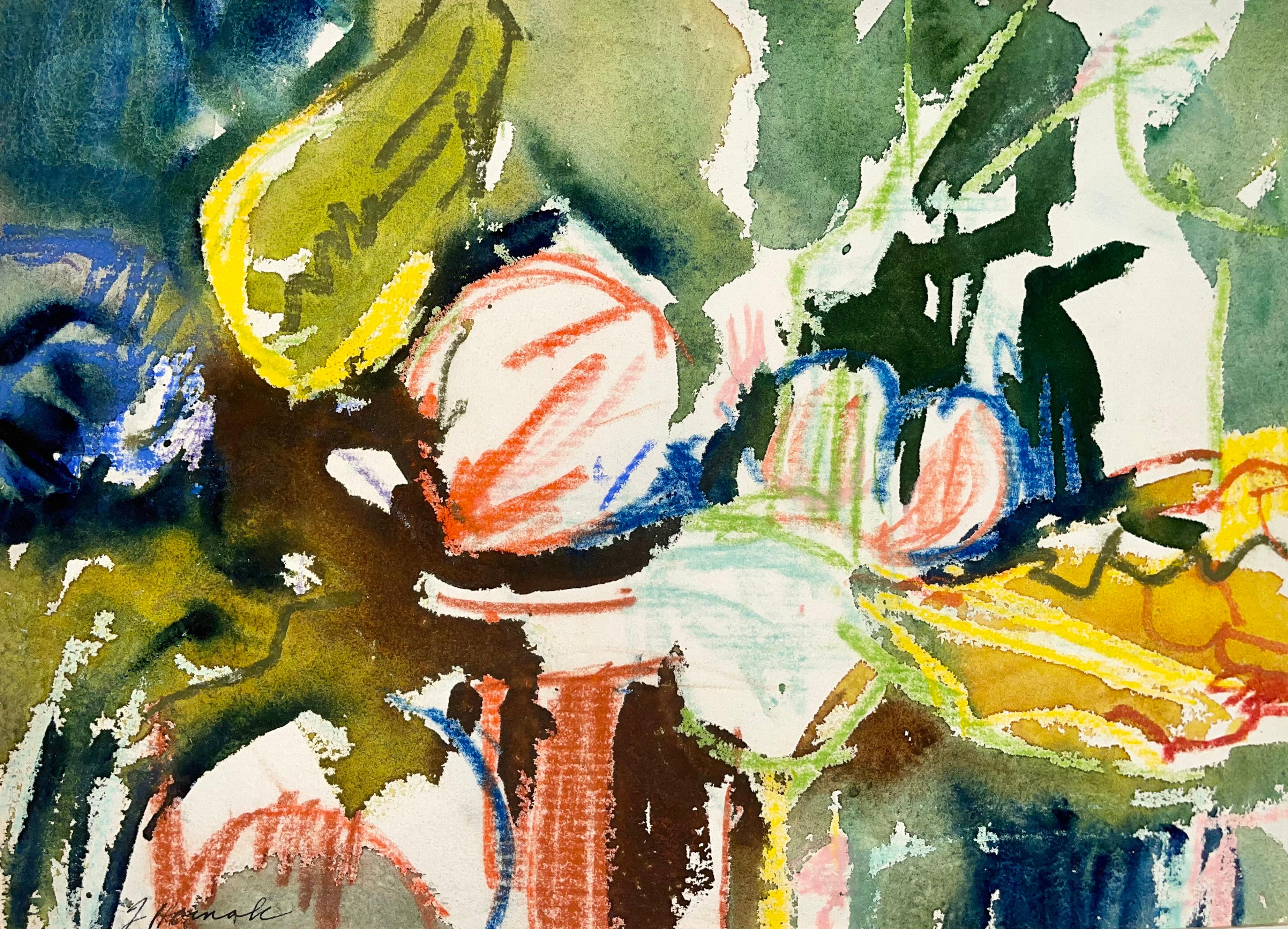
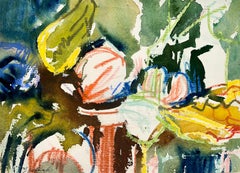
Untitled (Abstract Still Life with Flowers and Fruit)

Untitled (Abstract Still Life with Flowers and Fruit)

By Ian Hornak

Located in Fairfield, CT

Artist: Ian Hornak (1944-2002) Title: Untitled (Abstract Still Life with Flowers and Fruit) Year: 1963 Medium: Watercolor on heavy archival paper Size: 11.5 x 15 inches Condition: Go...

Category

1960s Impressionist Interior Paintings

Materials

Watercolor