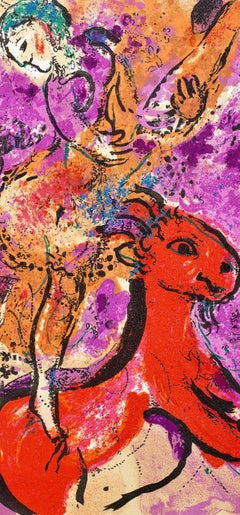
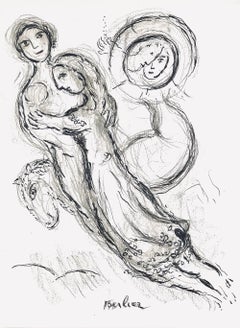
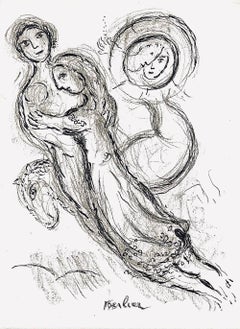
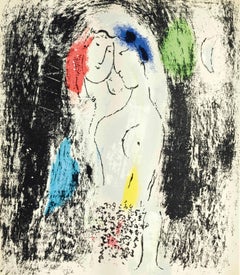
Expressionist Prints and Multiples

EXPRESSIONIST STYLE

While “expressionist” is used to describe any art that avoids naturalism and instead employs a bold use of flattened forms and intense brushwork, Expressionist art formally describes early-20th-century work from Europe that drew on Symbolism and confronted issues such as urbanization and capitalism. Expressionist artists experimented in paintings and prints with skewed perspectives, abstraction and unconventional, bright colors to portray how isolating and anxious the world felt rather than how it appeared. 

Between 1905 and 1920, Austrian and German artists, in particular, were inspired by Postimpressionists such as Paul Gauguin and Vincent van Gogh in their efforts to strive for a new authenticity in their work. In its geometric patterns and decorative details, Expressionist art was also marked by eclectic sources like German and Russian folk art as well as tribal art from Africa and Oceania, which the movement’s practitioners witnessed at museums and world’s fairs.

Groups of artists came together to share and promote the themes now associated with Expressionism, such as Die Brücke (The Bridge) in Dresden, which included Erich Heckel, Ernst Ludwig Kirchner and Karl Schmidt-Rottluff and investigated alienation and the dissolution of society in vivid color. In Munich, Der Blaue Reiter (The Blue Rider), a group led by Wassily Kandinsky and Franz Marc, instilled Expressionism with a search for spiritual truths. In his iconic painting The Scream, prolific Norwegian painter Edvard Munch conveyed emotional turmoil through his depiction of environmental elements, such as the threatening sky.

Expressionism shifted around the outbreak of World War I, with artists using more elements of the grotesque in reaction to the escalation of unrest and violence. Printmaking was especially popular, as it allowed artists to widely disseminate works that grappled with social and political issues amid this time of upheaval. Although the art movement ended with the rise of Nazi Germany, where Expressionist creators were labeled “degenerate,” the radical ideas of these artists would influence Neo-Expressionism that emerged in the late 1970s with painters like Jean-Michel Basquiat and Francesco Clemente.

​​Find a collection of authentic Expressionist paintings, sculptures, prints and more art on 1stDibs.

to
598
895
338
242
77
39
Overall Width
to
Overall Height
to
20,756
19,774
10,565
6,043
5,271
2,691
1,609
1,359
942
900
493
383
185
302
51
50
46
42
1
29
1,459
109
91
112
292
45
22
91
311
125
149
35
1
1,078
496
14
754
430
343
305
274
223
159
130
103
49
44
36
33
31
31
29
23
22
19
18
869
306
216
98
66
143
229
1,307
248
Style: Expressionist
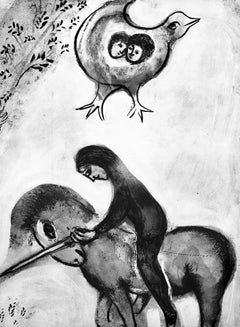
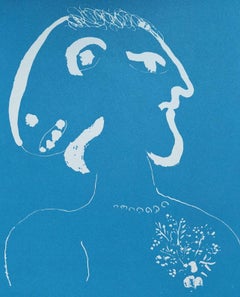
Marc Chagall, Paradise II, from Drawings for the Bible, 1960

Marc Chagall, Paradise II, from Drawings for the Bible, 1960

By Marc Chagall

Located in Southampton, NY

This exquisite lithograph by Marc Chagall (1887–1985), titled Paradise II (Paradise II), from Marc Chagall, Dessins Pour La Bible (Drawings for the Bible), Verve: Revue Artistique et...

Category

1960s Expressionist Prints and Multiples

Materials

Lithograph

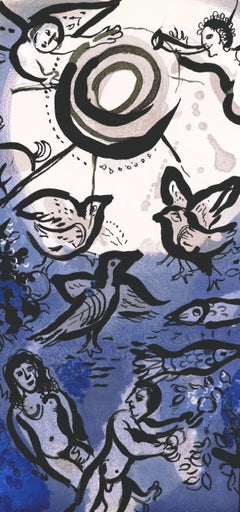
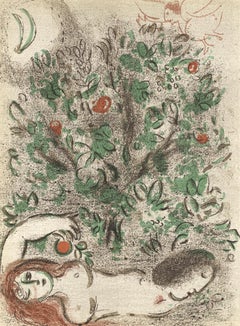
Marc Chagall, Paradise I, from Drawings for the Bible, 1960

Marc Chagall, Paradise I, from Drawings for the Bible, 1960

By Marc Chagall

Located in Southampton, NY

This exquisite lithograph by Marc Chagall (1887–1985), titled Paradise I (Paradise I), from Marc Chagall, Dessins Pour La Bible (Drawings for the Bible), Verve: Revue Artistique et Litteraire, Vol. X, No. 37-38, originates from the July 29, 1960 issue published by Editions de la revue Verve, Paris, under the direction of Teriade, Editeur, Paris, and printed by Mourlot Freres, Paris, 1960. This visionary composition reflects Chagall’s poetic interpretation of the biblical paradise, evoking a realm of harmony, innocence, and divine presence through his luminous color and dreamlike symbolism. The flowing forms and radiant imagery convey a sense of spiritual unity and transcendence, capturing the timeless serenity and mystical beauty of Eden within Chagall’s distinctive visual language. Infused with movement and lyricism, the work transforms sacred narrative into a meditative vision of paradise and the enduring connection between humanity and the divine. The piece forms part of Chagall’s celebrated series of lithographs and drawings created for Dessins Pour La Bible, a monumental project uniting art, scripture, and mysticism in one of the artist’s most important achievements. Executed as a lithograph on velin du Marais paper, this work measures 14 x 10.5 inches (35.56 x 26.67 cm). Unsigned and unnumbered as issued. The edition exemplifies the superb craftsmanship of the Mourlot Freres atelier, renowned for its collaborations with the greatest modern masters of the 20th century. Artwork Details: Artist: Marc Chagall (1887–1985) Title: Paradise I (Paradise I), from Marc Chagall, Dessins Pour La Bible (Drawings for the Bible), Verve: Revue Artistique et Litteraire, Vol. X, No. 37-38, July 29, 1960 Medium: Lithograph on velin du Marais paper Dimensions: 14 x 10.5 inches (35.56 x 26.67 cm) Inscription: Unsigned and unnumbered as issued Date: 1960 Publisher: Editions de la revue Verve, Paris, under the direction of Teriade, Editeur, Paris Printer: Mourlot Freres, Paris Catalogue raisonne references: Chagall, Marc, et al. Chagall Lithographe. Andre Sauret, 1960-1986, illustration 230-276. Cramer, Patrick, and Meret Meyer. Marc Chagall: Catalogue Raisonne des Livres Illustres. P. Cramer ed., 1995, illustration 42. Condition: Well preserved, consistent with age and medium Provenance: From Marc Chagall, Dessins Pour La Bible (Drawings for the Bible), Verve: Revue Artistique et Litteraire, Vol. X, No. 37-38, published by Editions de la revue Verve, Paris, 1960 Notes: Excerpted from the folio (translated from French), This double issue of Verve includes the drawings that Marc Chagall executed in 1958 and 1959 on biblical themes that he had not generally dealt with in his illustration for the Bible, engraved with etching and which were included in issue 33/34 of Verve. This album has 96 renderings in black and 24 color litbographies as well as the cover that were specially made for this album. It was completed printing on July 29, 1960 by Draeger Freres for black gravures and by Mourlot Freres for color lithography. About the Publication: Marc Chagall, Dessins Pour La Bible (Drawings for the Bible), published as Verve Vol. X, No. 37-38 on July 29, 1960, represents a significant continuation and expansion of Chagall’s profound engagement with biblical imagery and spiritual narrative. Conceived and directed by the visionary publisher Teriade, the publication builds upon the earlier Verve issue devoted to Chagall’s Bible illustrations by presenting a new body of work executed in 1958 and 1959, exploring themes and episodes that had not been fully addressed in the initial series. Printed in Paris by Draeger Freres for black gravures and Mourlot Freres for color lithography, the edition demonstrates an exceptional level of technical refinement and artistic collaboration. The publication includes an extensive suite of ninety six black reproductions and twenty four color lithographs, as well as specially created cover imagery, reflecting Chagall’s continued innovation in translating sacred themes into graphic form. As part of the broader tradition of Verve, one of the most important artistic and literary publications of the twentieth century, this issue exemplifies the fusion of text, image, and craftsmanship at the highest level. Today, Verve Vol. X, No. 37-38 stands as a major achievement within Chagall’s graphic oeuvre, reaffirming his role as one of the foremost interpreters of biblical narrative in modern art. About the Artist: Marc Chagall (1887–1985) was a Belarus-born French painter, printmaker, and designer whose visionary imagination, radiant color, and deeply poetic symbolism made him one of the most beloved and influential artists of the 20th century. Rooted in the imagery of his Jewish heritage and the memories of his childhood in Vitebsk, Chagall’s art wove together themes of faith, love, folklore, and fantasy with a dreamlike modern sensibility. His unique style merging elements of Cubism, Fauvism, Expressionism, and Surrealism defied categorization, transforming ordinary scenes into lyrical meditations on memory and emotion. Influenced by Russian icon painting, medieval religious art, and the modern innovations of artists such as Pablo Picasso, Henri Matisse, and Georges Braque, Chagall developed a profoundly personal visual language filled with floating figures, vibrant animals, musicians, and lovers that symbolized the transcendent power of imagination and love. During his early years in Paris, he became an integral part of the Ecole de Paris circle, forming friendships with Amedeo Modigliani, Fernand Leger, and Sonia Delaunay, and his creative spirit resonated with that of his peers and successors Alexander Calder, Alberto Giacometti, Salvador Dali, Joan Miro, Wassily Kandinsky, Marcel Duchamp, and Man Ray, artists who sought to push the boundaries of perception, emotion, and form. Over a prolific career that spanned painting, printmaking, stained glass, ceramics, and stage design, Chagall brought an unparalleled poetic sensibility to modern art, infusing even the most abstract subjects with human warmth and spiritual depth. His works are held in the most prestigious museums around the world, including the Museum of Modern Art, the Centre Pompidou, the Tate, and the Guggenheim, where they continue to inspire generations of artists and collectors. The highest price ever paid for a Marc Chagall artwork is approximately 28.5 million USD, achieved in 2017 at Sotheby’s New York for Les Amoureux (1928). Marc Chagall Paradise...

Category

1960s Expressionist Prints and Multiples

Materials

Lithograph

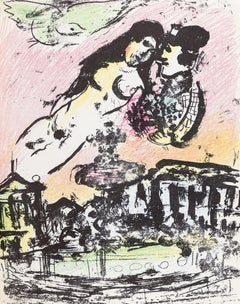
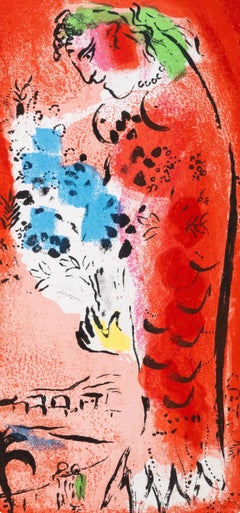
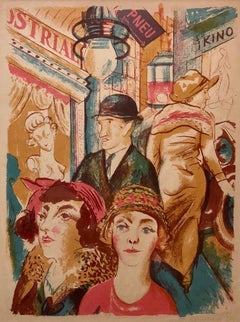
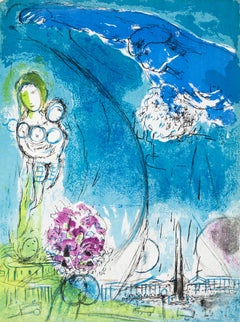
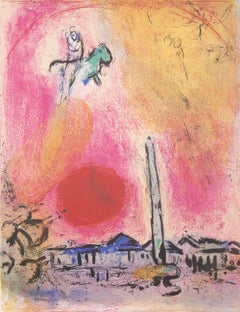
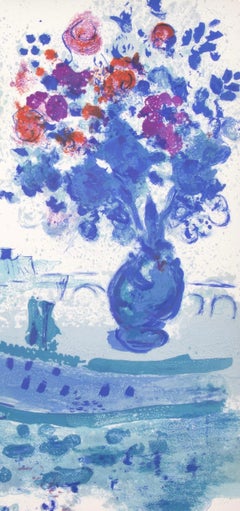
Marc Chagall, Place de la Concorde, from Views of Paris, 1963

Marc Chagall, Place de la Concorde, from Views of Paris, 1963

By Marc Chagall

Located in Southampton, NY

This exquisite lithograph by Marc Chagall (1887–1985), titled Place de la Concorde (Place de la Concorde), from Regards Sur Paris (Views of Paris), originates from the January 22, 19...

Category

1960s Expressionist Prints and Multiples

Materials

Lithograph

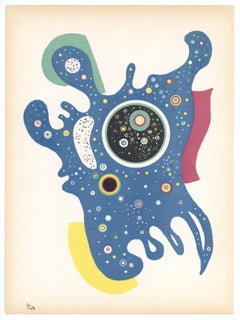
"Stars" original lithograph

"Stars" original lithograph

By Wassily Kandinsky

Located in Henderson, NV

Medium: original lithograph. Printed in 1938 and published in Paris by Teriade for the art revue Verve (volume 1, number 2). Kandinsky was invited to contribute an original compositi...

Category

1930s Expressionist Prints and Multiples

Materials

Lithograph

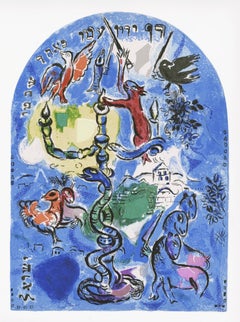
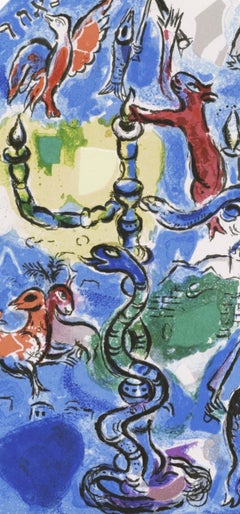
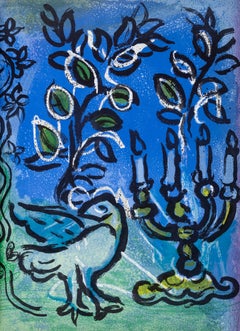
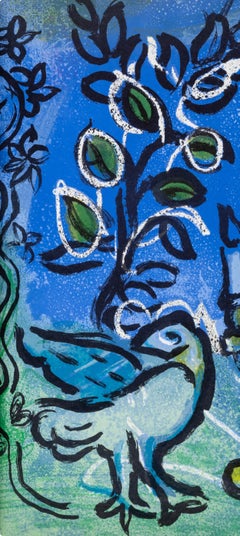
Marc Chagall, The Candelabrum, from The Jerusalem Windows, 1962

Marc Chagall, The Candelabrum, from The Jerusalem Windows, 1962

By Marc Chagall

Located in Southampton, NY

This exquisite lithograph by Marc Chagall (1887–1985), titled Le Chandelier (The Candelabrum), from the album Marc Chagall, The Jerusalem Windows, originates from the 1962 edition pu...

Category

1960s Expressionist Prints and Multiples

Materials

Lithograph

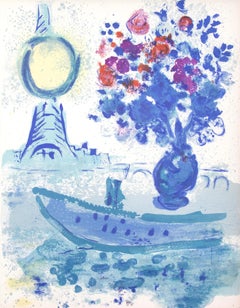
Marc Chagall, Excursion Boat with Bouquet, from Views of Paris, 1963

Marc Chagall, Excursion Boat with Bouquet, from Views of Paris, 1963

By Marc Chagall

Located in Southampton, NY

This exquisite lithograph by Marc Chagall (1887–1985), titled Bateau-Mouche au Bouquet (Excursion Boat with Bouquet), from Regards Sur Paris (Views of Paris), originates from the Jan...

Category

1960s Expressionist Prints and Multiples

Materials

Lithograph

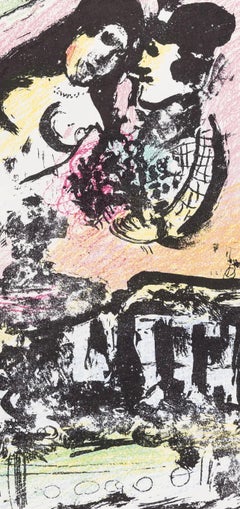
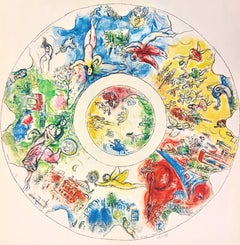
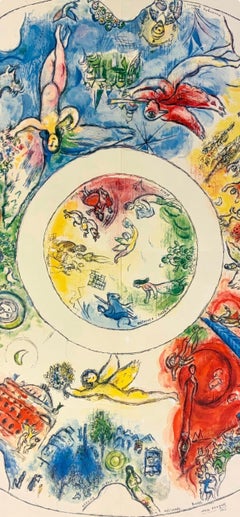
Marc Chagall, The Ceiling of the Paris Opera, 1965 (after)

Marc Chagall, The Ceiling of the Paris Opera, 1965 (after)

By Marc Chagall

Located in Southampton, NY

This exquisite lithograph after Marc Chagall (1887–1985), titled Le Plafond de l’Opera de Paris (The Ceiling of the Paris Opera), from the album Le plafond de l’Opera de Paris par Ma...

Category

1960s Expressionist Prints and Multiples

Materials

Lithograph

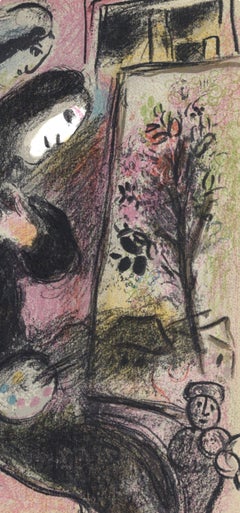
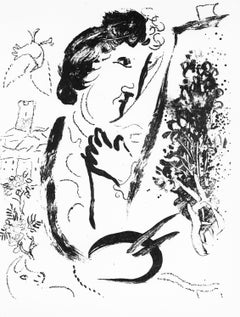
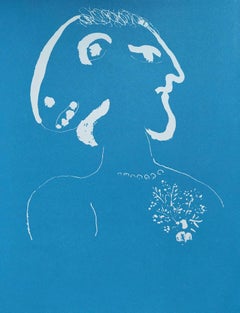
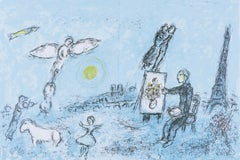
Marc Chagall, Inspiration, from Chagall Lithographer II, 1963

Marc Chagall, Inspiration, from Chagall Lithographer II, 1963

By Marc Chagall

Located in Southampton, NY

This exquisite lithograph by Marc Chagall (1887–1985), titled L'Inspire (Inspiration), from Chagall Lithographe II (Chagall Lithographer II), originates from the September 1963 issue...

Category

1960s Expressionist Prints and Multiples

Materials

Lithograph

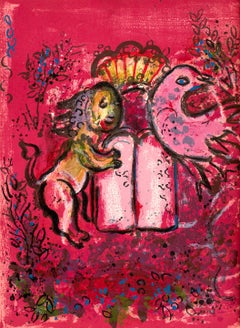
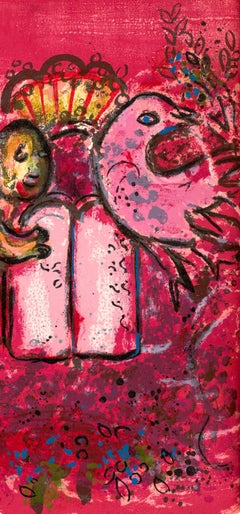
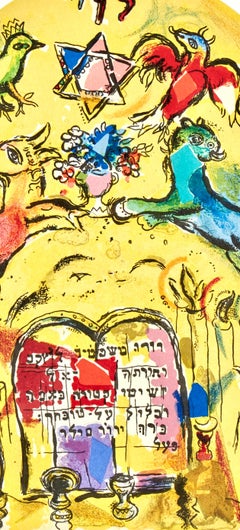
Marc Chagall, The Lion of Judah and the Tablets of the Law, 1962

Marc Chagall, The Lion of Judah and the Tablets of the Law, 1962

By Marc Chagall

Located in Southampton, NY

This exquisite lithograph by Marc Chagall (1887–1985), titled Le lion de Juda et les Tables de la Loi (The Lion of Judah and the Tablets of the Law), from the album Marc Chagall, The...

Category

1960s Expressionist Prints and Multiples

Materials

Lithograph

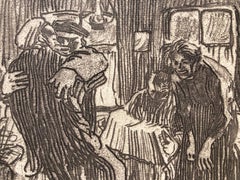
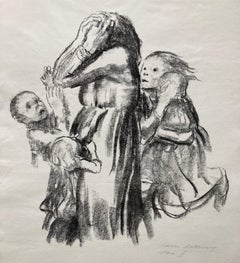
HAMBURGER KNIEPPE
HAMBURGER KNIEPPE

HAMBURGER KNIEPPE

By Käthe Kollwitz

Located in Santa Monica, CA

KATHE KOLLWITZ (1867-1945) HAMBURGER KNIEPPE, 1901) (K.58 IIIb) Soft Ground Etching, Plate 9 ¾ x 8 ¼ sheet 10 ½ x 13 ¾. With the von de Becke blind stamp in the lower right. Prin...

Category

Early 1900s Expressionist Prints and Multiples

Materials

Etching

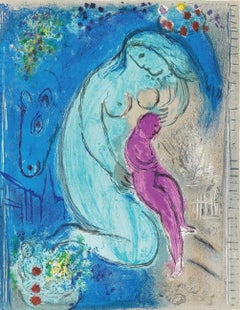
Marc Chagall, Flower Quay, from Derriere le miroir, 1954

Marc Chagall, Flower Quay, from Derriere le miroir, 1954

By Marc Chagall

Located in Southampton, NY

This exquisite lithograph by Marc Chagall (1887–1985), titled Quai de fleurs (Flower Quay), from the folio Derriere le miroir, No. 67–68, originates from the 1954 edition published b...

Category

1950s Expressionist Prints and Multiples

Materials

Lithograph

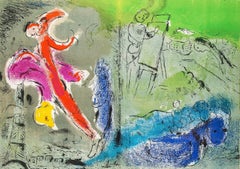
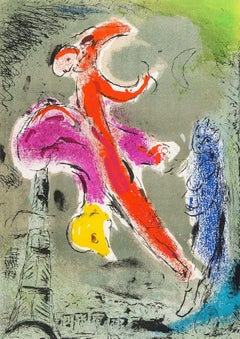
Marc Chagall, Vision of Paris, from Verve, Revue Artistique, 1953

Marc Chagall, Vision of Paris, from Verve, Revue Artistique, 1953

By Marc Chagall

Located in Southampton, NY

This exquisite lithograph by Marc Chagall (1887–1985), titled Vision de Paris (Vision of Paris), from Verve, Revue Artistique et Litteraire, Vol. VII, No. 27–28, originates from the ...

Category

1950s Expressionist Prints and Multiples

Materials

Lithograph

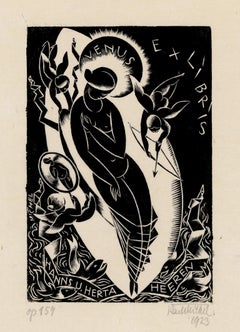
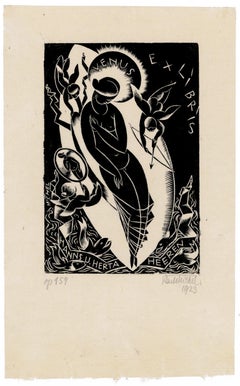
'Venus'  — German Expressionism

'Venus' — German Expressionism

By Karl Michel

Located in Myrtle Beach, SC

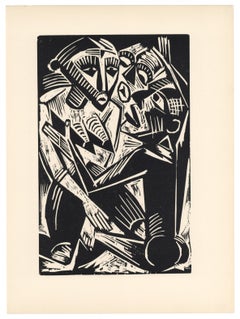
Karl Michel, 'Venus, Ex Libris - Hanns U. Herta Heeren', woodcut, 1923, edition not stated but small. Signed, dated, and numbered 'op.154' in pencil. Signed in the block, lower left. A fine impression, on cream Japan paper, with full margins (15/16 to 2 11/16 inches), in good condition. Printed by the artist. Matted to museum standards (unframed). . Translation: Venus Ex Libris for Hanns and Herta Heeren. Image size 5 15/16 x 4 inches (156 x 102 mm); sheet size 9 5/8 x 6 inches (245 x 152 mm). ABOUT THE ARTIST Karl Michel (1889-1984) was a noted graphic designer and expressionist printmaker during Germany's pre-Nazi Weimar Republic (1919-1933). Michel’s work was the subject of a feature article in the influential German graphic design magazine Das Plakat (The Poster) in 1920. An anti-war advocate, Michel created a suite of 12 wood engravings depicting his impressions of the humanitarian toll of WWII entitled ‘Humanitas’ (Humanity). The German publishing house Greifenverlag published the series in a reduced folio of unsigned prints. Michel’s graphic work is held in the permanent collections of the Auckland War Memorial Museum (New Zealand), Frederikshavn Kunstmuseum & Exlibrissamling (Denmark), Museum of Applied Arts (Budapest), The Robert Gore Rifkind Center for German Expressionist Studies at the Los Angeles County Museum of Art, and the German Expressionism...

Category

1920s Expressionist Prints and Multiples

Materials

Woodcut

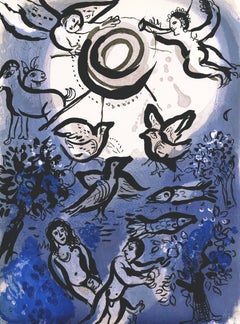
Marc Chagall, The Creation, from Drawings for the Bible, 1960

Marc Chagall, The Creation, from Drawings for the Bible, 1960

By Marc Chagall

Located in Southampton, NY

This exquisite lithograph by Marc Chagall (1887–1985), titled Creation (The Creation), from Marc Chagall, Dessins Pour La Bible (Drawings for the Bible), Verve: Revue Artistique et Litteraire, Vol. X, No. 37-38, originates from the July 29, 1960 issue published by Editions de la revue Verve, Paris, under the direction of Teriade, Editeur, Paris, and printed by Mourlot Freres, Paris, 1960. This visionary composition depicts the divine act of creation, evoking the genesis of light, life, and spirit through Chagall’s radiant imagination and poetic symbolism. The flowing forms and luminous harmonies reflect the unity between the divine and the natural world, a theme central to Chagall’s lifelong spiritual vision. Infused with movement and transcendence, the work transforms the biblical narrative into a lyrical meditation on the origin of existence and the creative essence of faith. The piece forms part of Chagall’s celebrated series of lithographs and drawings created for Dessins Pour La Bible, a monumental project uniting art, scripture, and mysticism in one of the artist’s most important achievements. Executed as a lithograph on velin du Marais paper, this work measures 14 x 10.5 inches (35.56 x 26.67 cm). Unsigned and unnumbered as issued. The edition exemplifies the superb craftsmanship of the Mourlot Freres atelier, renowned for its collaborations with the greatest modern masters of the 20th century. Artwork Details: Artist: Marc Chagall (1887–1985) Title: Creation (The Creation), from Marc Chagall, Dessins Pour La Bible (Drawings for the Bible), Verve: Revue Artistique et Litteraire, Vol. X, No. 37-38, July 29, 1960 Medium: Lithograph on velin du Marais paper Dimensions: 14 x 10.5 inches (35.56 x 26.67 cm) Inscription: Unsigned and unnumbered as issued Date: 1960 Publisher: Editions de la revue Verve, Paris, under the direction of Teriade, Editeur, Paris Printer: Mourlot Freres, Paris Catalogue raisonne references: Chagall, Marc, et al. Chagall Lithographe. Andre Sauret, 1960-1986, illustration 230-276. Cramer, Patrick, and Meret Meyer. Marc Chagall: Catalogue Raisonne des Livres Illustres. P. Cramer ed., 1995, illustration 42. Condition: Well preserved, consistent with age and medium Provenance: From Marc Chagall, Dessins Pour La Bible (Drawings for the Bible), Verve: Revue Artistique et Litteraire, Vol. X, No. 37-38, published by Editions de la revue Verve, Paris, 1960 Notes: Excerpted from the folio (translated from French), This double issue of Verve includes the drawings that Marc Chagall executed in 1958 and 1959 on biblical themes that he had not generally dealt with in his illustration for the Bible, engraved with etching and which were included in issue 33/34 of Verve. This album has 96 renderings in black and 24 color litbographies as well as the cover that were specially made for this album. It was completed printing on July 29, 1960 by Draeger Freres for black gravures and by Mourlot Freres for color lithography. About the Publication: Marc Chagall, Dessins Pour La Bible (Drawings for the Bible), published as Verve Vol. X, No. 37-38 on July 29, 1960, represents a significant continuation and expansion of Chagall’s profound engagement with biblical imagery and spiritual narrative. Conceived and directed by the visionary publisher Teriade, the publication builds upon the earlier Verve issue devoted to Chagall’s Bible illustrations by presenting a new body of work executed in 1958 and 1959, exploring themes and episodes that had not been fully addressed in the initial series. Printed in Paris by Draeger Freres for heliogravure and Mourlot Freres for lithography, the edition demonstrates an exceptional level of technical refinement and artistic collaboration. The publication includes an extensive suite of ninety six black reproductions and twenty four color lithographs, as well as specially created cover imagery, reflecting Chagall’s continued innovation in translating sacred themes into graphic form. As part of the broader tradition of Verve, one of the most important artistic and literary publications of the twentieth century, this issue exemplifies the fusion of text, image, and craftsmanship at the highest level. Today, Verve Vol. X, No. 37-38 stands as a major achievement within Chagall’s graphic oeuvre, reaffirming his role as one of the foremost interpreters of biblical narrative in modern art. About the Artist: Marc Chagall (1887–1985) was a Belarus-born French painter, printmaker, and designer whose visionary imagination, radiant color, and deeply poetic symbolism made him one of the most beloved and influential artists of the 20th century. Rooted in the imagery of his Jewish heritage and the memories of his childhood in Vitebsk, Chagall’s art wove together themes of faith, love, folklore, and fantasy with a dreamlike modern sensibility. His unique style merging elements of Cubism, Fauvism, Expressionism, and Surrealism defied categorization, transforming ordinary scenes into lyrical meditations on memory and emotion. Influenced by Russian icon painting, medieval religious art, and the modern innovations of artists such as Pablo Picasso, Henri Matisse, and Georges Braque, Chagall developed a profoundly personal visual language filled with floating figures, vibrant animals, musicians, and lovers that symbolized the transcendent power of imagination and love. During his early years in Paris, he became an integral part of the Ecole de Paris circle, forming friendships with Amedeo Modigliani, Fernand Leger, and Sonia Delaunay, and his creative spirit resonated with that of his peers and successors Alexander Calder, Alberto Giacometti, Salvador Dali, Joan Miro, Wassily Kandinsky, Marcel Duchamp, and Man Ray, artists who sought to push the boundaries of perception, emotion, and form. Over a prolific career that spanned painting, printmaking, stained glass, ceramics, and stage design, Chagall brought an unparalleled poetic sensibility to modern art, infusing even the most abstract subjects with human warmth and spiritual depth. His works are held in the most prestigious museums around the world, including the Museum of Modern Art, the Centre Pompidou, the Tate, and the Guggenheim, where they continue to inspire generations of artists and collectors. The highest price ever paid for a Marc Chagall artwork is approximately 28.5 million USD, achieved in 2017 at Sotheby’s New York for Les Amoureux (1928). Marc Chagall Creation...

Category

1960s Expressionist Prints and Multiples

Materials

Lithograph

GEFALLEN (Killed in Action)

GEFALLEN (Killed in Action)

By Käthe Kollwitz

Located in Santa Monica, CA

KATHE KOLLWITZ (1867-1945) GEFALLEN (Killed in Action) 1920 (Klipstein 153 (1st state, a of c of 2 states) Lithograph on laid paper. Image 16 ¼ x 15 ¼ inches, Large Full Sheet, 25 ½...

Category

1920s Expressionist Prints and Multiples

Materials

Lithograph

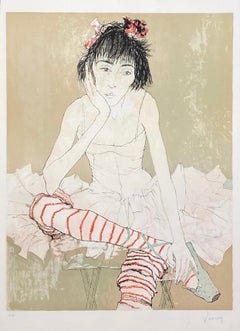
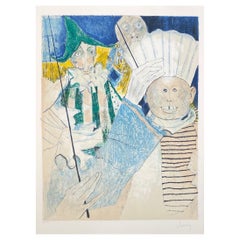
Sophie aux bas rouges, 1993, original lithograph by Jean Jansem

Sophie aux bas rouges, 1993, original lithograph by Jean Jansem

By Jean Jansem

Located in Les Acacias GE, GE

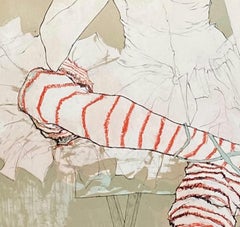
Jean Jansem (1920-2013) Sophie aux bas rouges, 1993 Lithographie sur papier Arches, justifiée E/A Signée en bas à droite 66 x 50 cm / 76 x 56 cm Bibliographie: CR Jansem, 2000, n°...

Category

Late 20th Century Expressionist Prints and Multiples

Materials

Lithograph

"Woman Desired by Man" original woodcut

"Woman Desired by Man" original woodcut

By Max Pechstein

Located in Henderson, NV

Medium: original woodcut. Printed in 1920 for the Deutsche Graphiker der Gegenwart portfolio, and published in Leipzig by Klinkhardt & Biermann in an edition of 500. Catalogue re...

Category

1920s Expressionist Prints and Multiples

Materials

Woodcut

Marc Chagall, Angel of Paradise, from Drawings for the Bible, 1956

Marc Chagall, Angel of Paradise, from Drawings for the Bible, 1956

By Marc Chagall

Located in Southampton, NY

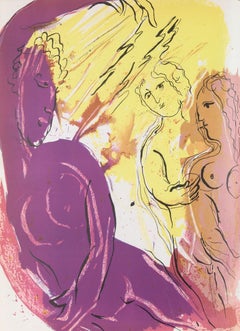
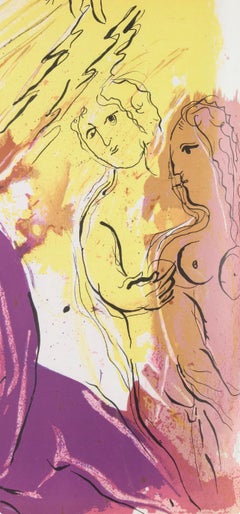
This exquisite lithograph by Marc Chagall (1887–1985), titled Ange du Paradis (Angel of Paradise), from Marc Chagall, Dessins Pour La Bible (Drawings for the Bible), Verve: Revue Art...

Category

1950s Expressionist Prints and Multiples

Materials

Lithograph

Marc Chagall, Eve Cursed by God, from Drawings for the Bible, 1960

Marc Chagall, Eve Cursed by God, from Drawings for the Bible, 1960

By Marc Chagall

Located in Southampton, NY

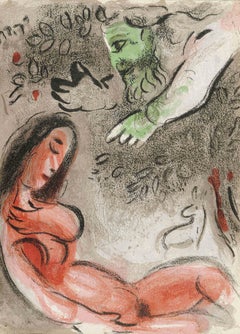
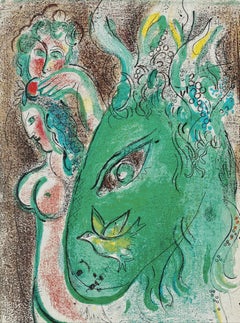
This exquisite lithograph by Marc Chagall (1887–1985), titled Eve maudite par Dieu (Eve Cursed by God), from Marc Chagall, Dessins Pour La Bible (Drawings for the Bible), Verve: Revue Artistique et Litteraire, Vol. X, No. 37-38, originates from the July 29, 1960 issue published by Editions de la revue Verve, Paris, under the direction of Teriade, Editeur, Paris, and printed by Mourlot Freres, Paris, 1960. This visionary composition reflects Chagall’s poetic interpretation of the biblical moment of divine judgment following the Fall, evoking themes of transgression, consequence, and spiritual awakening through his luminous color and dreamlike symbolism. The flowing forms and expressive imagery convey a sense of tension and emotional gravity, capturing Eve’s moment of reckoning and its enduring resonance within Chagall’s distinctive visual language. Infused with movement and lyricism, the work transforms sacred narrative into a meditative vision of loss, accountability, and the origins of human suffering. The piece forms part of Chagall’s celebrated series of lithographs and drawings created for Dessins Pour La Bible, a monumental project uniting art, scripture, and mysticism in one of the artist’s most important achievements. Executed as a lithograph on velin du Marais paper, this work measures 14 x 10.5 inches (35.56 x 26.67 cm). Unsigned and unnumbered as issued. The edition exemplifies the superb craftsmanship of the Mourlot Freres atelier, renowned for its collaborations with the greatest modern masters of the 20th century. Artwork Details: Artist: Marc Chagall (1887–1985) Title: Eve maudite par Dieu (Eve Cursed by God), from Marc Chagall, Dessins Pour La Bible (Drawings for the Bible), Verve: Revue Artistique et Litteraire, Vol. X, No. 37-38, July 29, 1960 Medium: Lithograph on velin du Marais paper Dimensions: 14 x 10.5 inches (35.56 x 26.67 cm) Inscription: Unsigned and unnumbered as issued Date: 1960 Publisher: Editions de la revue Verve, Paris, under the direction of Teriade, Editeur, Paris Printer: Mourlot Freres, Paris Catalogue raisonne references: Chagall, Marc, et al. Chagall Lithographe. Andre Sauret, 1960-1986, illustration 230-276. Cramer, Patrick, and Meret Meyer. Marc Chagall: Catalogue Raisonne des Livres Illustres. P. Cramer ed., 1995, illustration 42. Condition: Well preserved, consistent with age and medium Provenance: From Marc Chagall, Dessins Pour La Bible (Drawings for the Bible), Verve: Revue Artistique et Litteraire, Vol. X, No. 37-38, published by Editions de la revue Verve, Paris, 1960 Notes: Excerpted from the folio (translated from French), This double issue of Verve includes the drawings that Marc Chagall executed in 1958 and 1959 on biblical themes that he had not generally dealt with in his illustration for the Bible, engraved with etching and which were included in issue 33/34 of Verve. This album has 96 renderings in black and 24 color litbographies as well as the cover that were specially made for this album. It was completed printing on July 29, 1960 by Draeger Freres for black gravures and by Mourlot Freres for color lithography. About the Publication: Marc Chagall, Dessins Pour La Bible (Drawings for the Bible), published as Verve Vol. X, No. 37-38 on July 29, 1960, represents a significant continuation and expansion of Chagall’s profound engagement with biblical imagery and spiritual narrative. Conceived and directed by the visionary publisher Teriade, the publication builds upon the earlier Verve issue devoted to Chagall’s Bible illustrations by presenting a new body of work executed in 1958 and 1959, exploring themes and episodes that had not been fully addressed in the initial series. Printed in Paris by Draeger Freres for black gravures and Mourlot Freres for color lithography, the edition demonstrates an exceptional level of technical refinement and artistic collaboration. The publication includes an extensive suite of ninety six black reproductions and twenty four color lithographs, as well as specially created cover imagery, reflecting Chagall’s continued innovation in translating sacred themes into graphic form. As part of the broader tradition of Verve, one of the most important artistic and literary publications of the twentieth century, this issue exemplifies the fusion of text, image, and craftsmanship at the highest level. Today, Verve Vol. X, No. 37-38 stands as a major achievement within Chagall’s graphic oeuvre, reaffirming his role as one of the foremost interpreters of biblical narrative in modern art. About the Artist: Marc Chagall (1887–1985) was a Belarus-born French painter, printmaker, and designer whose visionary imagination, radiant color, and deeply poetic symbolism made him one of the most beloved and influential artists of the 20th century. Rooted in the imagery of his Jewish heritage and the memories of his childhood in Vitebsk, Chagall’s art wove together themes of faith, love, folklore, and fantasy with a dreamlike modern sensibility. His unique style merging elements of Cubism, Fauvism, Expressionism, and Surrealism defied categorization, transforming ordinary scenes into lyrical meditations on memory and emotion. Influenced by Russian icon painting, medieval religious art, and the modern innovations of artists such as Pablo Picasso, Henri Matisse, and Georges Braque, Chagall developed a profoundly personal visual language filled with floating figures, vibrant animals, musicians, and lovers that symbolized the transcendent power of imagination and love. During his early years in Paris, he became an integral part of the Ecole de Paris circle, forming friendships with Amedeo Modigliani, Fernand Leger, and Sonia Delaunay, and his creative spirit resonated with that of his peers and successors Alexander Calder, Alberto Giacometti, Salvador Dali, Joan Miro, Wassily Kandinsky, Marcel Duchamp, and Man Ray, artists who sought to push the boundaries of perception, emotion, and form. Over a prolific career that spanned painting, printmaking, stained glass, ceramics, and stage design, Chagall brought an unparalleled poetic sensibility to modern art, infusing even the most abstract subjects with human warmth and spiritual depth. His works are held in the most prestigious museums around the world, including the Museum of Modern Art, the Centre Pompidou, the Tate, and the Guggenheim, where they continue to inspire generations of artists and collectors. The highest price ever paid for a Marc Chagall artwork is approximately 28.5 million USD, achieved in 2017 at Sotheby’s New York for Les Amoureux (1928). Marc Chagall Eve...

Category

1960s Expressionist Prints and Multiples
Materials

Lithograph

La balance romaine, 1986, original lithograph by Jean Jansem, handsigned

La balance romaine, 1986, original lithograph by Jean Jansem, handsigned

By Jean Jansem

Located in Les Acacias GE, GE

Jean Jansem (1920-2013) La balance romaine, 1986 Lithographie sur papier Japon Signée en bas à droite et justifiée Hors Commerce 50 x 65 cm / 54 x 76 cm Très rare exemplaire D'un...

Category

Late 20th Century Expressionist Prints and Multiples

Materials

Lithograph

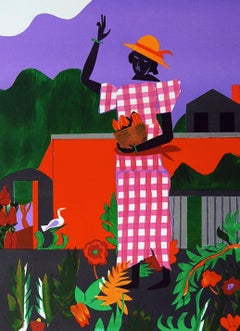
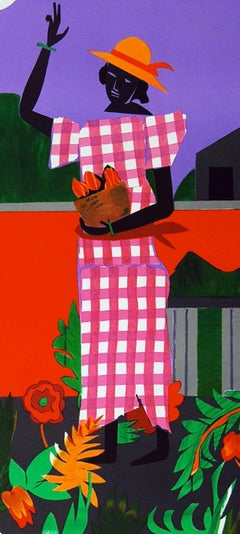
Girl in the Garden (Gelburd/Rosenberg 62), Romare Bearden

Girl in the Garden (Gelburd/Rosenberg 62), Romare Bearden

By Romare Bearden

Located in Fairfield, CT

Artist: Romare Bearden (1911-1988) Title: Girl in the Garden (Gelburd/Rosenberg 62) Year: 1979 Medium: Lithograph on vélin d’Arches paper Edition: 33/150, plus proofs Size: 28.75 x 2...

Category

1970s Expressionist Prints and Multiples

Materials

Lithograph

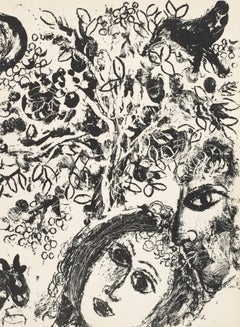
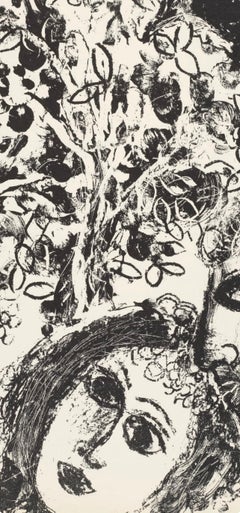
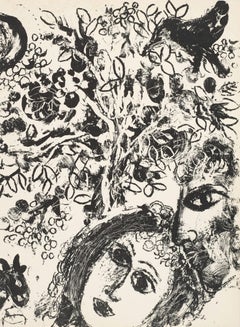
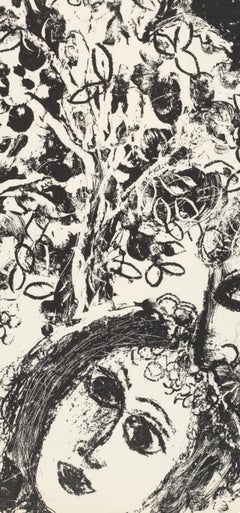
Marc Chagall, Couple Before the Tree, from The Lithographs of Chagall I, 1960

Marc Chagall, Couple Before the Tree, from The Lithographs of Chagall I, 1960

By Marc Chagall

Located in Southampton, NY

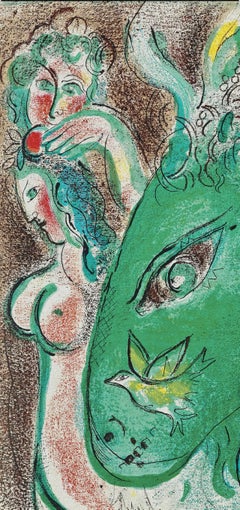
This exquisite lithograph by Marc Chagall (1887–1985), titled Couple devant l’arbre (Couple Before the Tree), from The Lithographs of Chagall I, originates from the October 1960 issue published by Andre Sauret, Editeur, Monte Carlo, and George Braziller, Editeur, New York, and printed by Mourlot Freres, Paris, 1960. This visionary composition reflects Chagall’s mastery of the lithographic medium, embodying his poetic imagination through fluid line, expressive form, and a luminous sense of movement. The work conveys the artist’s unique ability to merge memory, symbolism, and emotion into a cohesive visual language, transforming even the simplest subject into a deeply evocative and dreamlike image. Infused with lyricism and spiritual resonance, the composition exemplifies Chagall’s enduring exploration of identity, mythology, and the transcendent power of art. The piece forms part of The Lithographs of Chagall I, a landmark publication that documents and celebrates the artist’s achievements in lithography, offering insight into one of the most significant aspects of his graphic oeuvre. Executed as a lithograph on velin paper, this work measures 12.5 x 9.625 inches (31.75 x 24.45 cm). Unsigned and unnumbered as issued. The edition exemplifies the superb craftsmanship of the Mourlot Freres atelier, renowned for its collaborations with the greatest modern masters of the 20th century. Artwork Details: Artist: Marc Chagall (1887–1985) Title: Couple devant l’arbre (Couple Before the Tree), from The Lithographs of Chagall I Medium: Lithograph on velin paper Dimensions: 12.5 x 9.625 inches (31.75 x 24.45 cm) Inscription: Unsigned and unnumbered as issued Date: 1960 Publisher: Andre Sauret, Editeur, Monte Carlo, and George Braziller, Editeur, New York Printer: Mourlot Freres, Paris Catalogue raisonne references: Chagall, Marc, et al. Chagall Lithographe. Andre Sauret, 1960-1986, illustration 281-292. Cramer, Patrick, and Meret Meyer. Marc Chagall: Catalogue Raisonne des Livres Illustres. P. Cramer ed., 1995, illustration 43. Condition: Well preserved, consistent with age and medium Provenance: From The Lithographs of Chagall I, published by Andre Sauret, Editeur, Monte Carlo, and George Braziller, Editeur, New York, 1960 Notes: Excerpted from the album, This album, which was designed and compiled by Fernand Mourlot and Andre Sauret, was finished in October 1960. The reproductions were printed on the presses of Draeger Freres, and the original lithographs on the presses of Mourlot Freres. The Imprimerie Nationale de France is responsible for the typography. There exists a special edition, in French, of this album composed of C examples on velin d’Arches numbered from I to C, and including two original lithographs, in a limited edition of C examples, numbered and signed by the artist, and a series, with margins, of the twelve original lithographs contained in this album. About the Publication: The Lithographs of Chagall I, published in October 1960 by Andre Sauret, Editeur in Monte Carlo, George Braziller, Editeur in New York and printed by Mourlot Freres, represents a foundational survey of Marc Chagall’s lithographic production. Conceived in close collaboration with master printer Fernand Mourlot, the publication serves as both a catalogue and a celebration of the artist’s exploration of lithography from the late 1940s through the 1950s. It documents the technical and artistic evolution of Chagall’s printmaking, highlighting the innovative approaches he developed in partnership with the Mourlot atelier, whose expertise allowed for the translation of his painterly vision into the lithographic medium with extraordinary fidelity. The publication includes numerous reproductions alongside original lithographs, offering a comprehensive overview of themes central to Chagall’s work, including biblical narratives, folklore, and personal symbolism. Widely regarded as an essential reference in the study of Chagall’s graphic oeuvre, Chagall Lithographe I stands as a testament to the enduring collaboration between artist and printer, and to the importance of lithography within the broader trajectory of 20th century modern art. About the Artist: Marc Chagall (1887–1985) was a Belarus-born French painter, printmaker, and designer whose visionary imagination, radiant color, and deeply poetic symbolism made him one of the most beloved and influential artists of the 20th century. Rooted in the imagery of his Jewish heritage and the memories of his childhood in Vitebsk, Chagall’s art wove together themes of faith, love, folklore, and fantasy with a dreamlike modern sensibility. His unique style—merging elements of Cubism, Fauvism, Expressionism, and Surrealism—defied categorization, transforming ordinary scenes into lyrical meditations on memory and emotion. Influenced by Russian icon painting, medieval religious art, and the modern innovations of artists such as Pablo Picasso, Henri Matisse, and Georges Braque, Chagall developed a profoundly personal visual language filled with floating figures, vibrant animals, musicians, and lovers that symbolized the transcendent power of imagination and love. During his early years in Paris, he became an integral part of the Ecole de Paris circle, forming friendships with Amedeo Modigliani, Fernand Leger, and Sonia Delaunay, and his creative spirit resonated with that of his peers and successors—Alexander Calder, Alberto Giacometti, Salvador Dali, Joan Miro, Wassily Kandinsky, Marcel Duchamp, and Man Ray—artists who, like Chagall, sought to push the boundaries of perception, emotion, and form. Over a prolific career that spanned painting, printmaking, stained glass, ceramics, and stage design, Chagall brought an unparalleled poetic sensibility to modern art, infusing even the most abstract subjects with human warmth and spiritual depth. His works are held in the most prestigious museums around the world, including the Museum of Modern Art, the Centre Pompidou, the Tate, and the Guggenheim, where they continue to inspire generations of artists and collectors. The highest price ever paid for a Marc Chagall artwork is approximately $28.5 million USD, achieved in 2017 at Sotheby’s New York for Les Amoureux (1928). Marc Chagall Couple...

Category

1960s Expressionist Prints and Multiples
Materials

Lithograph

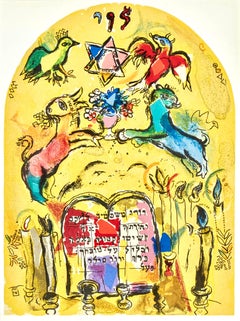
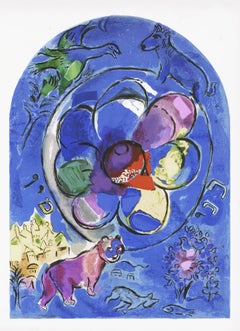
Marc Chagall, The Tribe of Levi, from XXe siecle, 1983 (after)

Marc Chagall, The Tribe of Levi, from XXe siecle, 1983 (after)

By Marc Chagall

Located in Southampton, NY

This exquisite lithograph after Marc Chagall (1887–1985), titled La Tribu de Levi (The Tribe of Levi), from the special issue of the XXe Siecle Review, Chagall in Jerusalem, originat...

Category

1980s Expressionist Prints and Multiples
Materials

Lithograph

Marc Chagall, Untitled, from The Lithographs of Chagall, 1974

Marc Chagall, Untitled, from The Lithographs of Chagall, 1974

By Marc Chagall

Located in Southampton, NY

This exquisite lithograph by Marc Chagall (1887–1985), titled Sans titre (Untitled), from the album The Lithographs of Chagall, Volume IV, originates from the 1974 edition published ...

Category

1970s Expressionist Prints and Multiples
Materials

Lithograph

"Raskolnikow" original linocut

"Raskolnikow" original linocut

Located in Henderson, NV

Medium: original linoleum cut. Printed in 1920 for Das Kunstblatt, and published in Berlin by Verlag Gustav Kiepenheuer. Image size: 6 1/4 x 4 1/4 inches (160 x 105mm). Sheet size: 1...

Category

1920s Expressionist Prints and Multiples
Materials

Linocut

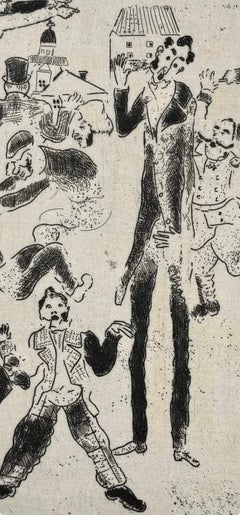
Marc Chagall, The Orgy Degenerates into a Brawl, from Dead Souls, 1923–1927

Marc Chagall, The Orgy Degenerates into a Brawl, from Dead Souls, 1923–1927

By Marc Chagall

Located in Southampton, NY

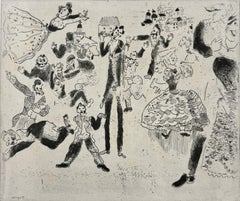
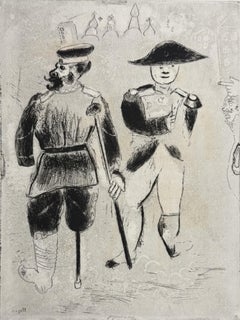
This exquisite etching by Marc Chagall (1887–1985), titled L'orgie degenere en rixe (The Orgy Degenerates into a Brawl), originates from the celebrated folio Nicolas Gogol, Les Ames ...

Category

1920s Expressionist Prints and Multiples
Materials

Etching

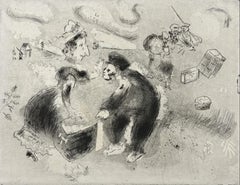
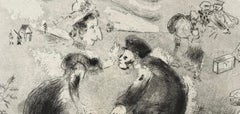
Marc Chagall, Tchitchikov the Customs Officer, from Dead Souls, 1923–1927

Marc Chagall, Tchitchikov the Customs Officer, from Dead Souls, 1923–1927

By Marc Chagall

Located in Southampton, NY

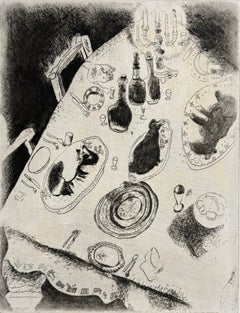
This exquisite etching by Marc Chagall (1887–1985), titled Tchitchikov douanier (Tchitchikov the Customs Officer), originates from the celebrated folio Nicolas Gogol, Les Ames mortes...

Category

1920s Expressionist Prints and Multiples
Materials

Etching

Marc Chagall, Romeo and Juliet, The Ceiling of the Paris Opera, 1965 (after)

Marc Chagall, Romeo and Juliet, The Ceiling of the Paris Opera, 1965 (after)

By Marc Chagall

Located in Southampton, NY

This exquisite lithograph after Marc Chagall (1887–1985), titled Romeo et Juliette (Romeo and Juliet), from the album Le plafond de l’Opera de Paris par Marc Chagall (The Ceiling of the Paris Opera by Marc Chagall), originates from the 1965 edition published by Andre Sauret, Editeur, Monte Carlo, rendered by Charles Sorlier, Paris, and printed by Mourlot Freres, Paris, October 6, 1965. This romantic and luminous composition pays homage to Charles Gounod’s opera Romeo et Juliette, one of the works celebrated in Chagall’s magnificent ceiling design for the Palais Garnier. Romeo et Juliette radiates with the tenderness, tragedy, and transcendent beauty of Shakespeare’s tale, reimagined through Chagall’s poetic symbolism and vivid color. Floating lovers, celestial forms, and musical motifs intertwine in a lyrical vision of eternal love and harmony, reflecting the artist’s lifelong fascination with the union of art, music, and emotion. The composition captures the very spirit of Gounod’s music—lyrical, passionate, and filled with grace. Executed as a lithograph on velin paper, this work measures 13 x 9.5 inches (33.02 x 24.13 cm). Unsigned and unnumbered as issued. The edition exemplifies the technical mastery of the Mourlot Freres atelier and the enduring collaboration between Marc Chagall and Charles Sorlier. Artwork Details: Artist: After Marc Chagall (1887–1985) Title: Romeo et Juliette (Romeo and Juliet), from Le plafond de l’Opera de Paris par Marc Chagall (The Ceiling of the Paris Opera by Marc Chagall) Medium: Lithograph on velin paper Dimensions: 13 x 9.5 inches (33.02 x 24.13 cm) Inscription: Unsigned and unnumbered as issued Date: 1965 Publisher: Andre Sauret, Editeur, Monte Carlo Rendered by: Charles Sorlier, Paris Printer: Mourlot Freres, Paris Catalogue raisonne references: Cain, Julien, and Fernand Mourlot. Chagall Lithographe III, 1962–1968. Andre Sauret, Editeur, 1969, illustration 434. Cramer, Patrick, and Meret Meyer. Marc Chagall: Catalogue Raisonne Des Livres Illustres. P. Cramer ed., 1995, illustration 61. Condition: Well preserved, consistent with age and medium Provenance: From the album Le plafond de l’Opera de Paris par Marc Chagall (The Ceiling of the Paris Opera by Marc Chagall), published by Andre Sauret, Editeur, Monte Carlo, October 6, 1965, in an edition of V̅ Notes: Excerpted from the album, This work could not have been made without the valuable collaboration of Madame Marc Chagall to whom we extend our warmest thanks. This work, made by Andre Sauret, was completed to print on October 6, 1965 on the presses of l’imprimerie du Lion in Paris. Jacques Lassaigne’s texts were composed by hand in Romain du Roi in the workshops of l’imprimerie nationale. The VI color lithographies and all the black and white drawings were set on stone by Charles Sorlier, based on Marc Chagall’s original models. The original lithography and color lithographs were drawn on the presses of Mourlot Freres. The binding is by Maurice Busenhart in Lausanne. About the Publication: Le plafond de l’Opera de Paris par Marc Chagall (The Ceiling of the Paris Opera by Marc Chagall), published in October 1965 by Andre Sauret, Editeur, Monte Carlo, commemorates one of the most ambitious and celebrated artistic commissions of the 20th century. Created under the direction of Charles Sorlier, the album documents Chagall’s magnificent ceiling design for the Palais Garnier in Paris, unveiled in 1964. The publication includes color lithographs based on the artist’s preparatory studies and painted maquettes, executed with exceptional fidelity by Mourlot Freres. Chagall’s ceiling—divided into segments representing musical masters such as Mozart, Wagner, Berlioz, Ravel, and Debussy—blends myth, music, and emotion into a vibrant celestial composition. The album captures this visionary synthesis through luminous lithography, allowing viewers to experience the grandeur and intimacy of the artist’s monumental work. Produced with the collaboration of Madame Marc Chagall, Charles Sorlier, and Fernand Mourlot, and printed with the precision and artistry for which Andre Sauret’s editions were renowned, this publication stands as both a tribute to Chagall’s genius and a celebration of French art’s enduring dialogue between tradition, innovation, and the divine. About the Artist: Marc Chagall (1887–1985) was a Belarus-born French painter, printmaker, and designer whose visionary imagination, radiant color, and deeply poetic symbolism made him one of the most beloved and influential artists of the 20th century. Rooted in the imagery of his Jewish heritage and the memories of his childhood in Vitebsk, Chagall’s art wove together themes of faith, love, folklore, and fantasy with a dreamlike modern sensibility. His unique style—merging elements of Cubism, Fauvism, Expressionism, and Surrealism—defied categorization, transforming ordinary scenes into lyrical meditations on memory and emotion. Influenced by Russian icon painting, medieval religious art, and the modern innovations of artists such as Pablo Picasso, Henri Matisse, and Georges Braque, Chagall developed a profoundly personal visual language filled with floating figures, vibrant animals, musicians, and lovers that symbolized the transcendent power of imagination and love. During his early years in Paris, he became an integral part of the Ecole de Paris circle, forming friendships with Amedeo Modigliani, Fernand Leger, and Sonia Delaunay, and his creative spirit resonated with that of his peers and successors—Alexander Calder, Alberto Giacometti, Salvador Dali, Joan Miro, Wassily Kandinsky, Marcel Duchamp, and Man Ray—artists who, like Chagall, sought to push the boundaries of perception, emotion, and form. Over a prolific career that spanned painting, printmaking, stained glass, ceramics, and stage design, Chagall brought an unparalleled poetic sensibility to modern art, infusing even the most abstract subjects with human warmth and spiritual depth. His works are held in the most prestigious museums around the world, including the Museum of Modern Art, the Centre Pompidou, the Tate, and the Guggenheim, where they continue to inspire generations of artists and collectors. The highest price ever paid for a Marc Chagall artwork is approximately $28.5 million USD, achieved in 2017 at Sotheby’s New York for Les Amoureux (1928). Marc Chagall Romeo...

Category

1960s Expressionist Prints and Multiples
Materials

Lithograph

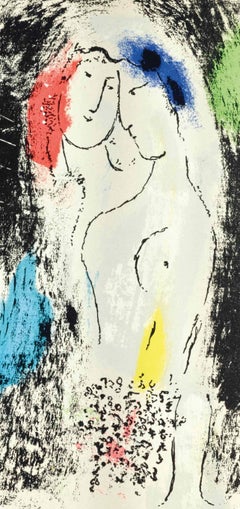
Marc Chagall, The Lovers in Gray, from Chagall, 1957

Marc Chagall, The Lovers in Gray, from Chagall, 1957

By Marc Chagall

Located in Southampton, NY

This exquisite lithograph by Marc Chagall (1887–1985), titled Les Amoureux au Gris (The Lovers in Gray), from the album Chagall, originates from the 1957 edition published by Maeght Editeur, Paris, and printed by Mourlot Freres, Paris, 1957. This intimate and poetic composition reveals Chagall’s enduring fascination with love as both a personal and universal theme. Les Amoureux au Gris presents two lovers tenderly united against a soft, monochromatic background, their forms gently intertwined in a suspended moment of emotion and serenity. The subdued palette of grays enhances the dreamlike atmosphere, evoking nostalgia and the quiet beauty of devotion. Through its delicate tonal harmonies and lyrical symbolism, the work exemplifies Chagall’s belief that love transcends time, space, and circumstance—a central tenet that defines his artistic legacy. Executed as a lithograph on velin paper, this work measures 9.06 x 7.875 inches (23.01 x 20 cm). Unsigned and unnumbered as issued. The edition reflects the extraordinary craftsmanship of the Mourlot Freres atelier, renowned for its close collaboration with Chagall and for achieving unmatched brilliance and subtlety in color lithography. Artwork Details: Artist: Marc Chagall (1887–1985) Title: Les Amoureux au Gris (The Lovers in Gray), from Chagall, 1957 Medium: Lithograph on velin paper Dimensions: 9.06 x 7.875 inches (23.01 x 20 cm) Inscription: Unsigned and unnumbered as issued Date: 1957 Publisher: Maeght Editeur, Paris Printer: Mourlot Freres, Paris Catalogue raisonne references: Chagall, Marc, and Julien Cain. Chagall Lithographe. Andre Sauret, Editeur, 1960, illustration 194. Cramer, Patrick, and Meret Meyer. Marc Chagall: Catalogue Raisonne Des Livres Illustres. P. Cramer ed., 1995, illustration 34. Condition: Well preserved, consistent with age and medium Provenance: From the album Chagall, published by Maeght Editeur, Paris, 1957 Notes: Excerpted from the album (translated from French), This album was printed by Drager Freres in Montrouge on behalf of Maeght Editeur, 13, Rue de Teheran, Paris VIII. The original color lithographs were drawn by Mourlot Freres. The photographs of the works printed are of Y. Hervochon, M. Routhier, Draeger. Copyright 1957. About the Publication: The 1957 album Chagall, published by Maeght Editeur, Paris, and printed by Mourlot Freres, stands among the most celebrated collaborations between Marc Chagall and the great Parisian ateliers of the mid-20th century. The album features a series of color lithographs that capture Chagall’s poetic world of memory, faith, and love through luminous tones and expressive line. Each lithograph embodies the artist’s mastery of the medium, where the transparency of pigment and fluidity of form fuse into a language of visual music. Guided by the technical expertise of Mourlot Freres, these works convey Chagall’s painterly spontaneity and emotional depth with remarkable fidelity. The Maeght album remains a touchstone in modern printmaking, symbolizing the creative dialogue between artist, publisher, and master printer that defined the golden age of the French art book. About the Artist: Marc Chagall (1887–1985) was a Belarus-born French painter, printmaker, and designer whose visionary imagination, radiant color, and deeply poetic symbolism made him one of the most beloved and influential artists of the 20th century. Rooted in the imagery of his Jewish heritage and the memories of his childhood in Vitebsk, Chagall’s art wove together themes of faith, love, folklore, and fantasy with a dreamlike modern sensibility. His unique style—merging elements of Cubism, Fauvism, Expressionism, and Surrealism—defied categorization, transforming ordinary scenes into lyrical meditations on memory and emotion. Influenced by Russian icon painting, medieval religious art, and the modern innovations of artists such as Pablo Picasso, Henri Matisse, and Georges Braque, Chagall developed a profoundly personal visual language filled with floating figures, vibrant animals, musicians, and lovers that symbolized the transcendent power of imagination and love. During his early years in Paris, he became an integral part of the Ecole de Paris circle, forming friendships with Amedeo Modigliani, Fernand Leger, and Sonia Delaunay, and his creative spirit resonated with that of his peers and successors—Alexander Calder, Alberto Giacometti, Salvador Dali, Joan Miro, Wassily Kandinsky, Marcel Duchamp, and Man Ray—artists who, like Chagall, sought to push the boundaries of perception, emotion, and form. Over a prolific career that spanned painting, printmaking, stained glass, ceramics, and stage design, Chagall brought an unparalleled poetic sensibility to modern art, infusing even the most abstract subjects with human warmth and spiritual depth. His works are held in the most prestigious museums around the world, including the Museum of Modern Art, the Centre Pompidou, the Tate, and the Guggenheim, where they continue to inspire generations of artists and collectors. The highest price ever paid for a Marc Chagall artwork is approximately $28.5 million USD, achieved in 2017 at Sotheby’s New York for Les Amoureux (1928). Marc Chagall Les Amoureux...

Category

1950s Expressionist Prints and Multiples
Materials

Lithograph

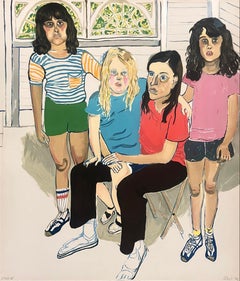
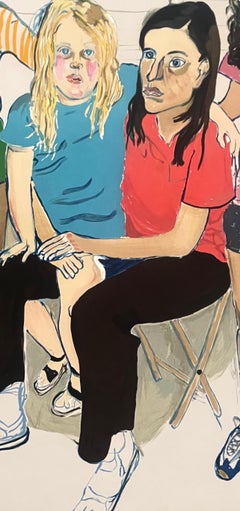
The Family, Alice Neel

The Family, Alice Neel

By Alice Neel

Located in Fairfield, CT

Artist: Alice Neel (1900-1984) Title: The Family Year: 1982 Medium: Lithograph on Arches paper Edition: 170/175, plus proofs Size: 31.25 x 27 inches Condition: Excellent Inscription:...

Category

1980s Expressionist Prints and Multiples
Materials

Lithograph

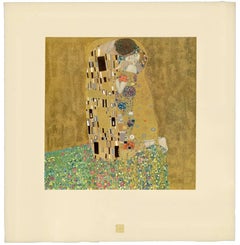
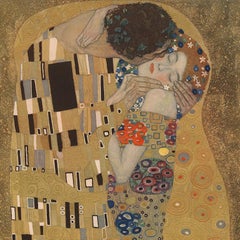
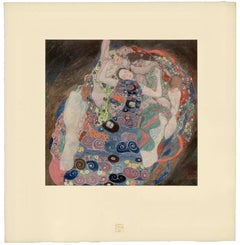
H.O. Miethke Das Werk folio "The Kiss" collotype print

H.O. Miethke Das Werk folio "The Kiss" collotype print

The Kiss, no. 1 from the fifth installment of Das Werk Gustav Klimts Undoubtedly Klimt’s best known and most reproduced images, this printed version of The Kiss is the only one with which Klimt was directly involved. Unveiled at Vienna’s Kunstschau 1908, and saved for the fifth and final delivery of Das Werk, The Kiss marks a triumph in Klimt’s career and represents a culmination of many themes in his oeuvre up to that point. After all of the controversy surrounding the State’s prior rejection of the University murals commissioned from Klimt, the Ministry of Education reversed their policy toward the artist with a show of wholehearted support by purchasing for the Osterreichische Galerie BelvedereThe Kiss while it still hung in the Kunstschau exhibit. Considered in relation to the eight multicolored collotypes which preceded its print debut in the Das Werk portfolio, The Kiss literally embraces all which came before it. The golden seaweed dangling in tresses from the lovers’ feet harkens back to Water Snakes I and II. The bed of flowers evokes the settings Klimt created in both The Golden Knight and The Sunflower. In fact, this image sprung out of a particularly happy summer spent in the company of Klimt’s lover, Emilie Floge...

Category

Early 1900s Expressionist Prints and Multiples
Materials

Handmade Paper

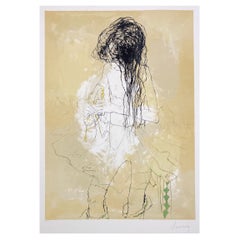
Petite danseuse aux cheveux défaits, 1991, original lithograph by Jean Jansem

Petite danseuse aux cheveux défaits, 1991, original lithograph by Jean Jansem

By Jean Jansem

Located in Les Acacias GE, GE

Jean Jansem (1920-2013) Petite danseuse aux cheveux défaits, 1991 Lithographie sur papier Arches Signée en bas à droite et justifiée en bas à droite 66 x 47 cm / 76 x 54 cm Imprime...

Category

Late 20th Century Expressionist Prints and Multiples
Materials

Lithograph

Marc Chagall, On the Road, from Dead Souls, 1923–1927

Marc Chagall, On the Road, from Dead Souls, 1923–1927

By Marc Chagall

Located in Southampton, NY

This exquisite etching by Marc Chagall (1887–1985), titled En chemin (On the Road), originates from the celebrated folio Nicolas Gogol, Les Ames mortes, Eaux-fortes originales de Mar...

Category

1920s Expressionist Prints and Multiples
Materials

Etching

'The Garden' — Celebrated Contemporary African American Artist

'The Garden' — Celebrated Contemporary African American Artist

By Margo Humphrey

Located in Myrtle Beach, SC

Margo Humphrey, 'The Garden (Adam and Eve)', reductive color woodcut, 1989. Signed, dated, and annotated 'A/P' in pencil. Signed and dated in the image, lower right. A fine, richly-inked, artist's proof impression, with fresh, vivid colors, on BFK Rives, heavy, off-white wove paper; the full sheet with margins (1 to 1 3/8 inches), in excellent condition. Archivally sleeved, unmatted. Scarce. Image size 27 1/4 x 39 1/8 inches (692 x 994 mm); sheet size 29 1/2 x 42 inches (749 x 1,067 mm). ABOUT THIS WORK "Humphrey continued to reinterpret stories from the Bible with African American figures. In 1989 she published the woodcut print 'The Garden' at Magnolia Editions in Oakland, CA. For this rare foray into relief printmaking, she employed the reductive method, which uses only one block that is successively carved for each color segment, reducing the block with each cutting. Technically challenging, this lush and elaborate print is a testament to Humphrey’s skills as a printmaker. A youthful Adam and Eve are depicted in a luxuriant tropical landscape. Here, Humphrey chooses not to include the traditional symbols of humanity’s downfall but instead portrays them as being protected by angels in an atmosphere of idyllic bounty. ...Although Humphrey challenges traditional representation of Christian themes, her images are not iconoclastic but present a broader, more inclusive engagement with religious spirituality." — Adrienne L. Childs, 'Margo Humphrey, The David C. Driskell Series of African American Art: Volume VII,' Pomegranate Communications, Inc., 2009, page 71. ABOUT THE ARTIST American printmaker, illustrator, and art teacher Margo Humphrey was born in Oakland, California, in 1942. She earned a BFA in Painting and Printmaking from the California College of Arts and Crafts and a Master of Fine Arts degree in Printmaking from Stanford University. Humphrey began teaching in 1973 at the University of California Santa Cruz and has since taught at the University of Texas at San Antonio, the San Francisco Art Institute, and the School of the Art Institute of Chicago. She has also taught at the University of the South Pacific in Suva, Fiji; Yaba Technological Institute of Fine Art, Ekoi Island, Nigeria; the University of Benin in Benin City, Nigeria; the Margaret Trowell School of Fine Art in Kampala, Uganda, and the Fine Art School of the National Gallery of Art, Harare, Zimbabwe. In 1989, she was appointed Department Head of Printmaking at the University of Maryland in College Park. Humphrey has worked in lithography, monoprint, and woodcut with significant printmaking ateliers, including the Rutgers Center for Innovative Print and Paper, the Bob Blackburn Printmaking Workshop, and the Tamarind Institute in New Mexico. She was one of the earliest African-American woman artists to distinguish herself as a lithographer in a highly technical, male-dominated profession and was the first to have her prints published by Tamarind in 1974. Humphrey’s imagery combines historical perspective, autobiography, and fantasy to illuminate her experience as an African American woman. Bold, saturated color, animated figures, and syncopated rhythmic arrangements are hallmarks of Humphrey's oeuvre. Though Humphrey labels her distinctive style "sophisticated naive," the narrative complexity and technical skill of her works attest to her artistic virtuosity. Joyful, expressive, and at times humorous, her works offer engaging commentary on the presumptions of American culture and myth while embracing her personal vision of authenticity and spirituality. She developed her 1987 work The Last Bar-B-Que, a vividly colored transformation of the Last Supper, following a three-year period during which she examined portrayals of the iconic subject by artists from Pietro Lorenzetti to Emil Nolde. Her narrative work The Garden, a monumentally scaled reductive woodcut, is a further example of an archetypal subject—Adam and Eve in the Garden of Eden—debunked and rendered with fresh, life-affirming vibrancy. Since her first solo exhibition in 1965, Humphrey’s works have been exhibited internationally. They are held in major institutions, including the Museum of Modern Art, The Smithsonian American Art Museum, the Philadelphia Museum of Art, the Hampton University Museum, the Victoria and Albert Museum (London), the Museum of Modern Art, Rio de Janeiro, and the National Gallery of Modern Art, Lagos. In 1996, she was invited to be part of the World Printmaking Survey at the Museum of Modern Art, New York. In 2011, Hampton University Museum mounted a 45-year retrospective of Humphrey’s work Her Story: Margo Humphrey Lithographs and Works on Paper, jointly curated by Robert E. Steele, executive director of the David Driskell...

Category

1980s Expressionist Prints and Multiples
Materials

Woodcut

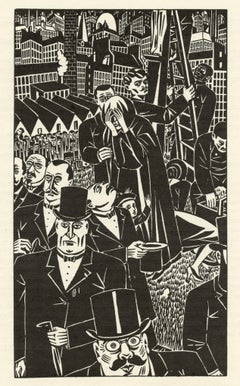
(after) Frans Masereel "Le Calvaire"

(after) Frans Masereel "Le Calvaire"

By Frans Masereel

Located in Henderson, NV

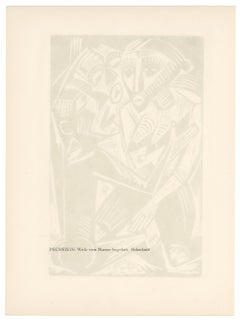
Medium: collotype (after the woodcut). Printed in 1925 and published in Paris by Albert Morance for "L'Art d'Aujourd'hui", and now very scarce. Image size: 8 x 4 3/4 inches (205 x 11...

Category

1920s Expressionist Prints and Multiples
Materials

Photogravure

Les Acadiens, 1993, original lithograph by Jean Jansem, handsigned and numbered

Les Acadiens, 1993, original lithograph by Jean Jansem, handsigned and numbered

By Jean Jansem

Located in Les Acacias GE, GE

Jean Jansem (1920-2013) Les acadiens, 1993 Lithographie sur papier Arches, justifiée E/A 16/30 Signée en bas à droite 65,5 x 50 cm / 76 x 56 cm Bibliographie: CR Jansem, 2000, n°9...

Category

Late 20th Century Expressionist Prints and Multiples
Materials

Lithograph

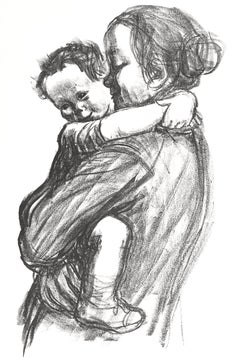
Kathe Kollwitz, Mother with Child, from Ten Lithographs, 1941 (after)

Kathe Kollwitz, Mother with Child, from Ten Lithographs, 1941 (after)

By Käthe Kollwitz

Located in Southampton, NY

This exquisite lithograph after Kathe Kollwitz (1867–1945), titled Mutter mit Kind (Mother with Child), from the folio Kathe Kollwitz, Ten Lithographs, originates from the 1941 edition published by Henry C. Kleemann, New York, and Curt Valentin, New York; printed by Duenewald Printing Corporation, New York. The composition reflects Kollwitz’s profound engagement with themes of maternal protection, tenderness, and human vulnerability, rendered with stark emotional intensity and a powerful graphic economy that underscores her enduring social message. Executed as a lithograph on velin paper, this work measures 19 x 16 inches (48.26 x 40.64 cm), overall; 13 x 10.5 inches (33.02 x 26.67 cm), image. Unsigned and unnumbered as issued. Artwork Details: Artist: After Kathe Kollwitz (1867–1945) Title: Mutter mit Kind (Mother with Child), from Kathe Kollwitz, Ten Lithographs Medium: Lithograph on velin paper Dimensions: 19 x 16 inches (48.26 x 40.64 cm), overall; 13 x 10.5 inches (33.02 x 26.67 cm), image Inscription: Unsigned and unnumbered as issued Date: 1941 Publisher: Henry C. Kleemann, New York, and Curt Valentin, New York Printer: Duenewald Printing Corporation, New York Condition: Well preserved, consistent with age and medium Provenance: From the folio Kathe Kollwitz, Ten Lithographs, 1941 About the Publication: Kathe Kollwitz, Ten Lithographs, published in New York in 1941 by Henry C. Kleemann in collaboration with Curt Valentin, represents an important early American presentation of Kollwitz’s graphic work at a time when her reputation was expanding internationally. Issued during the turbulence of the Second World War and following the suppression of her work in Germany under the Nazi regime, the folio played a crucial role in introducing her imagery to a broader audience outside Europe. The publication gathers a selection of her most powerful lithographic compositions, emphasizing her mastery of tonal contrast, expressive line, and psychological depth. Produced with careful attention to print quality by Duenewald Printing Corporation, the edition reflects the continued transmission of European modernist printmaking traditions into the American context, serving both as a document of artistic excellence and as a vehicle for the preservation and dissemination of Kollwitz’s humanistic vision. About the Artist: Kathe Kollwitz (1867–1945) was a German draughtsman, printmaker, and sculptor whose profoundly moving imagery, exceptional technical mastery, and unwavering social conscience established her as one of the most important and influential artists of the twentieth century, widely recognized as a master of modern printmaking and one of the most powerful visual chroniclers of human suffering, war, and social injustice. Born in Konigsberg, East Prussia, into a progressive and intellectually engaged family, Kollwitz was encouraged from an early age to pursue art and developed a deep awareness of social inequality that would shape her entire career, studying in Berlin and Munich at a time when women were largely excluded from formal academies while mastering drawing and graphic techniques with extraordinary discipline. Her breakthrough came with the monumental graphic cycle A Weavers’ Revolt (1893–1897), followed by The Peasants’ War (1901–1908), works that combined complex narrative structure with extraordinary technical command in etching, aquatint, and lithography, establishing her reputation as one of Europe’s leading graphic artists. Throughout her career, Kollwitz remained committed to portraying the lives of workers, mothers, and victims of poverty and conflict with unflinching honesty, creating compositions defined by bold, sculptural line, dense shadow, and unparalleled psychological depth that conveyed grief, resilience, and dignity. Working during a period transformed by the radical innovations of Pablo Picasso, Alexander Calder, Alberto Giacometti, Salvador Dali, Joan Miro, Wassily Kandinsky, Marcel Duchamp, and Man Ray, Kollwitz maintained a resolutely figurative and human-centered approach, aligning more closely with German Expressionism and artists such as Ernst Barlach, Max Liebermann, and Edvard Munch, whose emotional intensity and symbolic treatment of the human figure profoundly shaped her artistic language. Her later work, particularly the woodcut cycle War (1922–1923), stands among the most powerful anti-war statements in the history of art, reflecting both personal tragedy, including the death of her son in World War I, and a universal condemnation of violence and loss. In addition to her prints, Kollwitz created deeply moving sculptures that extended her exploration of grief and maternal protection into three dimensions, reinforcing her status as a multidisciplinary artist of exceptional range. She achieved significant recognition during her lifetime, becoming the first woman elected to the Prussian Academy of Arts, though her work was later condemned by the Nazi regime as degenerate, leading to her forced resignation and the removal of her works from public collections, yet her reputation expanded internationally after World War II and she is now regarded as a central figure in modern art. Her influence has been profound and far-reaching, shaping later artists including Francis Bacon, Anselm Kiefer, Leon Golub, Kiki Smith, and numerous contemporary figurative and socially engaged artists who continue to explore themes of trauma, memory, and human vulnerability. Today her works are held in major museum collections worldwide, including the Kathe Kollwitz Museum in Berlin, the Museum of Modern Art in New York, the British Museum in London, and the Art Institute of Chicago, and remain highly sought after by collectors for their emotional intensity and historical significance. The highest auction record for a work by Kathe Kollwitz is held by her sculpture Mutter mit totem Sohn (Mother with Dead Son), which achieved approximately 1.2 million EUR at auction, confirming her enduring importance. Kathe Kollwitz Mutter mit Kind 1941 lithograph German Expressionism social realism print.

Category

1940s Expressionist Prints and Multiples
Materials

Lithograph

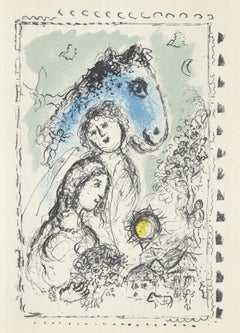
Marc Chagall, Blue Horse with Couple, from Derriere le Miroir, 1982

Marc Chagall, Blue Horse with Couple, from Derriere le Miroir, 1982

By Marc Chagall

Located in Southampton, NY

This exquisite lithograph by Marc Chagall (1887–1985), titled Cheval bleu au couple (Blue Horse with Couple), originates from the historic 1982 folio Derriere le Miroir, No. 250, Hommage a Aime et Marguerite Maeght (Tribute to Aime and Marguerite Maeght). Published by Maeght Editeur, Paris, under the direction of Aime Maeght, and printed by Imprimerie Moderne du Lion, Paris, this vibrant composition reflects Chagall’s lyrical fusion of color, dream, and devotion. In Cheval bleu au couple, ethereal figures and a radiant blue horse float within a luminous space of poetic imagination, evoking love, memory, and transcendence. The image captures the artist’s timeless ability to unite fantasy and emotion within the expressive language of modernism. Executed on velin paper, this lithograph measures 15 x 11 inches (38.1 x 27.9 cm). As issued, it is unsigned and unnumbered, consistent with the authorized publication format. The edition exemplifies Chagall’s mastery of color lithography and his lifelong exploration of faith, folklore, and the human spirit. Artwork Details: Artist: Marc Chagall (1887–1985) Title: Cheval bleu au couple (Blue Horse with Couple), from Derriere le Miroir, No. 250, Hommage a Aime et Marguerite Maeght (Tribute to Aime and Marguerite Maeght), 1982 Medium: Lithograph on velin paper Dimensions: 15 x 11 inches (38.1 x 27.9 cm) Inscription: Unsigned and unnumbered, as issued Date: 1982 Publisher: Maeght Editeur, Paris Printer: Imprimerie Moderne du Lion, Paris Catalogue raisonne references: Chagall, Marc, et al. Chagall Lithographe VI, 1980–1985. Andre Sauret, Editeur, 1986, illustration 993. Cramer, Patrick, and Meret Meyer. Marc Chagall: Catalogue Raisonne Des Livres Illustres. P. Cramer ed., 1995, illustration 113. Condition: Well preserved, consistent with age and medium Provenance: From the 1982 folio Derriere le Miroir, No. 250, published by Maeght Editeur, Paris Notes: Excerpted from the folio (translated from French), This special issue of Derriere le Miroir was designed and defined by Aime Maeght in the fall of 1980. He envisioned its publication as a celebration with which artists and writers published since 1946 were to be associated. He also chose Francois Chapon, president of the Reverdy Committee, to write the presentation. This Derriere le Miroir number 250 took the form, after its disappearance on September 5, 1981, of a tribute to Aime Maeght and his wife Marguerite Maeght who died four years earlier. 24 artists agreed to create an original graphic work for this issue which includes the general table of all issues as well as excerpts from texts by 32 writers. Finished printing on June 2, 1982 on the presses of the l'Imprimerie moderne du Lion in Paris. CL examples were printed on velin d'Arches, numbered from I to CL, and some non-commercial examples constituting the original edition. About the Publication: Derriere le Miroir (translated as "Behind the Mirror") was an iconic French art periodical published from 1946 to 1982 by Maeght Editeur, one of the most influential art publishers of the 20th century. Founded by Aime Maeght in Paris, the publication was conceived as a visual and literary collaboration between leading modern artists, poets, and critics. Each issue functioned as both an exhibition catalogue and a work of art in itself—featuring original lithographs printed directly from the artists' stones or plates, alongside essays, poems, and critical commentary. Over the course of 36 years, Derriere le Miroir produced more than 250 issues and showcased an extraordinary roster of artists including Henri Matisse, Marc Chagall, Joan Miro, Georges Braque, Alexander Calder, Fernand Leger, Pierre Bonnard, Alberto Giacometti, Eduardo Chillida, Ellsworth Kelly, Francis Bacon, Paul Rebeyrolle, Claude Garache, Antoni Tapies, Bram van Velde, Pierre Alechinsky, Pol Bury, Shusaku Arakawa, and Gerard Titus-Carmel. Printed in the ateliers of Mourlot, Arte, and Imprimerie Moderne du Lion, the periodical set new standards for quality in color lithography, combining fine art printing with elegant typography and poetic text. Beyond its visual brilliance, Derriere le Miroir also became a cultural chronicle of postwar European modernism. Each issue coincided with exhibitions held at Galerie Maeght, providing a collectible and widely accessible record of groundbreaking shows. Its integration of image, text, and philosophy created a dialogue between art and literature that elevated the modern art book to new aesthetic heights. Today, Derriere le Miroir remains one of the most sought-after and historically significant art publications, prized by collectors and scholars alike for its craftsmanship, influence, and its role in defining the visual language of 20th-century modernism. The Maeght Foundation in Saint-Paul-de-Vence continues to honor this legacy through exhibitions and archival preservation of the series, affirming Derriere le Miroir's enduring place in the history of modern art and fine art publishing. About the Artist: Marc Chagall (1887–1985) was a Belarus-born French painter, printmaker, and designer whose visionary use of color and poetic symbolism made him one of the most beloved and influential artists of the 20th century. Rooted in the rich imagery of his Jewish heritage and childhood in Vitebsk, Chagall’s dreamlike compositions fused memory, folklore, faith, and romance with the expressive innovations of modern art. His work evolved alongside and in dialogue with the great modern masters—Pablo Picasso, Henri Matisse, Alexander Calder, Salvador Dali, Joan Miro, Georges Braque, Wassily Kandinsky, Marcel Duchamp, and Man Ray—artists who, like Chagall, redefined artistic language for a new century. Spanning painting, printmaking, stained glass, ceramics, stage design, and illustration, Chagall’s career reflected both his deep spirituality and his boundless imagination. His works are held in major museum collections worldwide, including the Museum of Modern Art, the Guggenheim, the Tate, and the Centre Pompidou. The highest price ever paid for a Marc Chagall artwork is approximately $28.5 million USD, achieved in 2017 at Sotheby’s New York for Les Amoureux (1928). Marc Chagall Cheval bleu au couple, Marc Chagall lithograph, Chagall Derriere le Miroir, Chagall Maeght...

Category

1980s Expressionist Prints and Multiples
Materials

Lithograph

Marc Chagall, Couple Before the Tree, from Chagall Lithographer I, 1960

Marc Chagall, Couple Before the Tree, from Chagall Lithographer I, 1960

By Marc Chagall

Located in Southampton, NY

This exquisite lithograph by Marc Chagall (1887–1985), titled Couple devant l’arbre (Couple Before the Tree), from Chagall Lithographe I (Chagall Lithographer I), originates from the October 1960 issue published by Andre Sauret, Editeur, Monte-Carlo, and printed by Mourlot Freres, Paris, 1960. This visionary composition reflects Chagall’s mastery of the lithographic medium, embodying his poetic imagination through fluid line, expressive form, and a luminous sense of movement. The work conveys the artist’s unique ability to merge memory, symbolism, and emotion into a cohesive visual language, transforming even the simplest subject into a deeply evocative and dreamlike image. Infused with lyricism and spiritual resonance, the composition exemplifies Chagall’s enduring exploration of identity, mythology, and the transcendent power of art. The piece forms part of Chagall Lithographe I, a landmark publication that documents and celebrates the artist’s achievements in lithography, offering insight into one of the most significant aspects of his graphic oeuvre. Executed as a lithograph on velin paper, this work measures 12.5 x 9.625 inches (31.75 x 24.45 cm). Unsigned and unnumbered as issued. The edition exemplifies the superb craftsmanship of the Mourlot Freres atelier, renowned for its collaborations with the greatest modern masters of the 20th century. Artwork Details: Artist: Marc Chagall (1887–1985) Title: Couple devant l’arbre (Couple Before the Tree), from Chagall Lithographe I (Chagall Lithographer I), October 1960 Medium: Lithograph on velin paper Dimensions: 12.5 x 9.625 inches (31.75 x 24.45 cm) Inscription: Unsigned and unnumbered as issued Date: 1960 Publisher: Andre Sauret, Editeur, Monte-Carlo Printer: Mourlot Freres, Paris Catalogue raisonne references: Chagall, Marc, et al. Chagall Lithographe. Andre Sauret, 1960-1986, illustration 281-292. Cramer, Patrick, and Meret Meyer. Marc Chagall: Catalogue Raisonne des Livres Illustres. P. Cramer ed., 1995, illustration 43. Condition: Well preserved, consistent with age and medium Provenance: From Chagall Lithographe I (Chagall Lithographer I), published by Andre Sauret, Editeur, Monte-Carlo, 1960 Notes: Excerpted from the album (translated from French), This work, which was designed and compiled by Fernand Mourlot and Andre Sauret, was finished in October 1960. The reproductions were printed on the presses of Draeger Freres, and the original lithographs on the presses of Mourlot Freres. The Imprimerie Nationale de France is responsible for the typography. Of this work it was shot, apart, CL examples on Grand Velin d'Arches, numbered to the press from I to CL, signed by the artist and the publisher, including, in addition, two original lithographs specially made for this separate draw. About the Publication: Chagall Lithographe I (Chagall Lithographer I), published in October 1960 by Andre Sauret in Monte-Carlo and printed by Mourlot Freres, represents a foundational survey of Marc Chagall’s lithographic production. Conceived in close collaboration with master printer Fernand Mourlot, the publication serves as both a catalogue and a celebration of the artist’s exploration of lithography from the late 1940s through the 1950s. It documents the technical and artistic evolution of Chagall’s printmaking, highlighting the innovative approaches he developed in partnership with the Mourlot atelier, whose expertise allowed for the translation of his painterly vision into the lithographic medium with extraordinary fidelity. The publication includes numerous reproductions alongside original lithographs, offering a comprehensive overview of themes central to Chagall’s work, including biblical narratives, folklore, and personal symbolism. Widely regarded as an essential reference in the study of Chagall’s graphic oeuvre, Chagall Lithographe I stands as a testament to the enduring collaboration between artist and printer, and to the importance of lithography within the broader trajectory of 20th century modern art. About the Artist: Marc Chagall (1887–1985) was a Belarus-born French painter, printmaker, and designer whose visionary imagination, radiant color, and deeply poetic symbolism made him one of the most beloved and influential artists of the 20th century. Rooted in the imagery of his Jewish heritage and the memories of his childhood in Vitebsk, Chagall’s art wove together themes of faith, love, folklore, and fantasy with a dreamlike modern sensibility. His unique style—merging elements of Cubism, Fauvism, Expressionism, and Surrealism—defied categorization, transforming ordinary scenes into lyrical meditations on memory and emotion. Influenced by Russian icon painting, medieval religious art, and the modern innovations of artists such as Pablo Picasso, Henri Matisse, and Georges Braque, Chagall developed a profoundly personal visual language filled with floating figures, vibrant animals, musicians, and lovers that symbolized the transcendent power of imagination and love. During his early years in Paris, he became an integral part of the Ecole de Paris circle, forming friendships with Amedeo Modigliani, Fernand Leger, and Sonia Delaunay, and his creative spirit resonated with that of his peers and successors—Alexander Calder, Alberto Giacometti, Salvador Dali, Joan Miro, Wassily Kandinsky, Marcel Duchamp, and Man Ray—artists who, like Chagall, sought to push the boundaries of perception, emotion, and form. Over a prolific career that spanned painting, printmaking, stained glass, ceramics, and stage design, Chagall brought an unparalleled poetic sensibility to modern art, infusing even the most abstract subjects with human warmth and spiritual depth. His works are held in the most prestigious museums around the world, including the Museum of Modern Art, the Centre Pompidou, the Tate, and the Guggenheim, where they continue to inspire generations of artists and collectors. The highest price ever paid for a Marc Chagall artwork is approximately $28.5 million USD, achieved in 2017 at Sotheby’s New York for Les Amoureux (1928). Marc Chagall Couple...

Category

1960s Expressionist Prints and Multiples
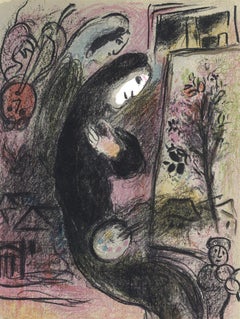
Materials

Lithograph

Expressionist prints and multiples for sale on 1stDibs.
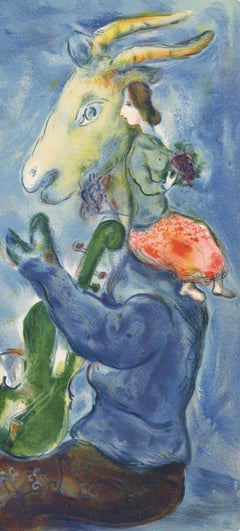
Find a wide variety of authentic Expressionist prints and multiples available for sale on 1stDibs. Works in this style were very popular during the 21st Century and Contemporary, but contemporary artists have continued to produce works inspired by this movement. If you’re looking to add prints and multiples created in this style to introduce contrast in an otherwise neutral space in your home, the works available on 1stDibs include elements of orange, blue, purple, green and other colors. Many Pop art paintings were created by popular artists on 1stDibs, including Marc Chagall, Corneille, Anna Ticho, and Sandro Chia. Frequently made by artists working with Lithograph, and Paper and other materials, all of these pieces for sale are unique and have attracted attention over the years. Not every interior allows for large Expressionist prints and multiples, so small editions measuring 3 inches across are also available. Prices for prints and multiples made by famous or emerging artists can differ depending on medium, time period and other attributes. On 1stDibs, the price for these items starts at $50 and tops out at $975,000, while the average work sells for $1,005.