1960s Sculptures

to
24
262
38
23
10
35
Overall Width
to
Overall Height
to
223
749
4,015
17,213
100
46
115
121
67
155
373
548
541
79
182
40
25
21
15
5
4
1
1
1
70
47
37
34
25
24
22
17
16
13
12
11
10
9
8
8
8
8
7
7
147
119
101
80
44
15
11
6
5
5
1
4
199
162
Period: 1960s
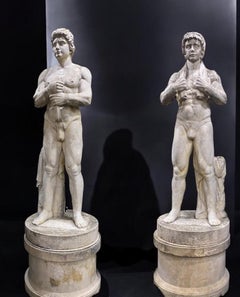
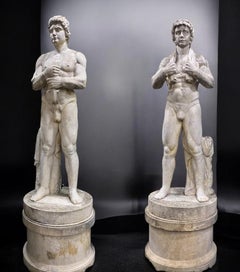
Monumental Italian Rationalist Marble Sculptures of Young Athletes

Monumental Italian Rationalist Marble Sculptures of Young Athletes

Located in Rome, IT

This monumental pair of sculptures in "Bardiglio" marble represent Greek Athletes figure , on a cylindrical base . Exaltation of the male strength and beauty, inspired by the trend i...

Category

Modern 1960s Sculptures

Materials

Marble

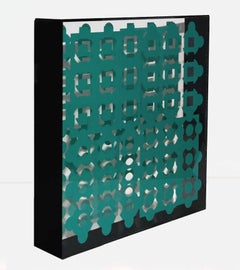
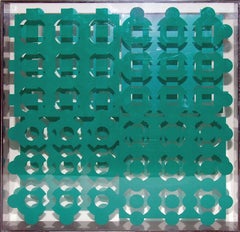
Helios, 1967
Helios, 1967

Helios, 1967

By Victor Vasarely

Located in Palo Alto, CA

This magnificent work by Victor Vasarely displays an intricate interplay of green optical figures against a clear background in a three-dimensional medium. It offers a fascinating vi...

Category

Op Art 1960s Sculptures

Materials

Plexiglass, Screen

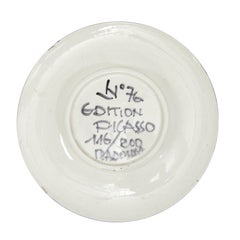
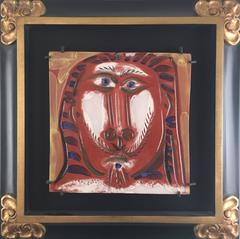
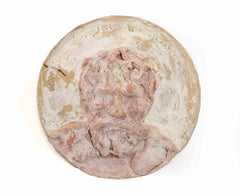
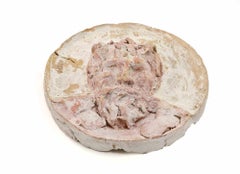
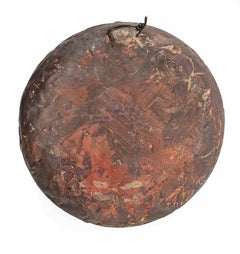
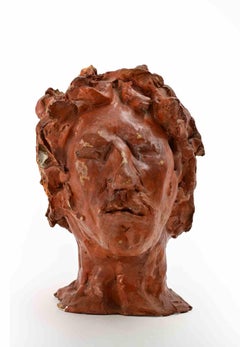
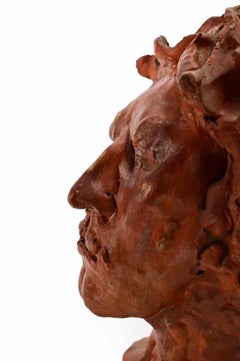
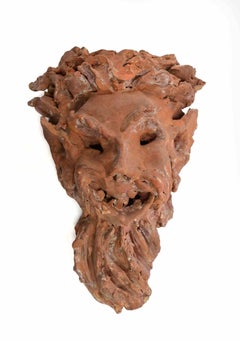
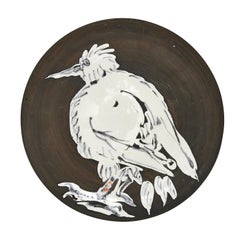
Pablo Picasso, "Man's Head with Long Hair", ceramic

Pablo Picasso, "Man's Head with Long Hair", ceramic

By Pablo Picasso

Located in Chatsworth, CA

This piece is an O.P. square plaque by Pablo Picasso, done from December 1968 to January 1969. It is made with red earthenware clay, engobe ground and engraving enhanced with oxides...

Category

Modern 1960s Sculptures

Materials

Ceramic

1960s Pop Art Unique Cast Aluminum Sculpture Cool Cat Bell Bottoms Americana

1960s Pop Art Unique Cast Aluminum Sculpture Cool Cat Bell Bottoms Americana

By William King (b.1925)

Located in Surfside, FL

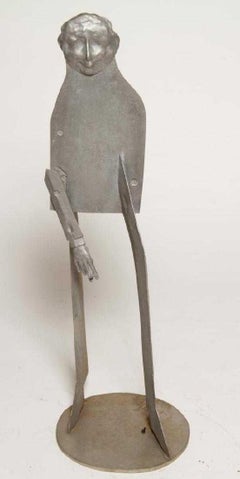
Mid-Century Modern cut steel sculpture depicting a man in bell bottom pants standing casually with a cigarette in his right hand, His left hand is in his back pocket, signed and dated, artist's monogram and cipher and "1968." This a unique piece. It is interesting in that it speaks of a transition, leading into the later aluminum public pieces that kind of defined his work in the 70's. According to his estate this is most probably cast and sheet aluminum. It might possibly be steel. William Dickey King was born in 1925 in Jacksonville, Florida and grew up in the Coconut Grove neighborhood of Miami. As a boy, William King made model airplanes and helped his father and older brother build furniture and boats. “I was 19, 20, my mother gave me a hundred bucks, says, ʻGet out of this state and don’t come back until you’re 65; there is nothing here for you,’ ” Bill King recalled in a video interview for the Smithsonian museum. He came to New York, where he attended the Cooper Union and began selling his early sculptures even before he graduated. He later studied with the sculptor Milton Hebald and traveled to Italy on a Fulbright grant. He was a contemporary, at the Cooper Union, of Alex Katz and Lois Dodd, his first wife, and remained close in many ways to their common aesthetic grounding, shared also with younger sculptors such as Red Grooms and Marisol Escobar. The hallmark of King’s early work was radical experiment keeping company with social connection and hedonism. The mix of big, important, innovative ideas and immediate, sensory, in-the-moment experience was a kind of visual jazz. For this was not just the time of Franz Kline’s big open defiant brushstrokes and Jackson Pollock’s all-over mists of intricately drooling line, but of Charlie Parker and Dizzy Gillespie. If we look at the works that King made in the early 1950s when he got back from his Fulbright to Italy we see free, experimental, open forms that take their cue from jazz as much as art in their fusion of virtuosity and cool.American sculptor King is most noted for his long-limbed figurative public art sculptures depicting people engaged in everyday activities such as reading or conversing. He created his busts and figures in a variety of materials, including clay, wood, metal, and textiles. Mr. King worked in clay, wood, bronze, vinyl, burlap and aluminum. He worked both big and small, from busts and toylike figures to large public art pieces depicting familiar human poses — a seated, cross-legged man reading; a Western couple (he in a cowboy hat, she in a long dress) holding hands; a tall man reaching down to tug along a recalcitrant little boy; a crowd of robotic-looking men walking in lock step. Mr. King’s work often reflected the times, taking on fashions and occasional politics. In the 1960s and 1970s, his work featuring African-American figures (including the activist Angela Davis, with hands cuffed behind her back) evoked his interest in civil rights. But for all its variation, what unified his work was a wry observer’s arched eyebrow, the pointed humor and witty rue of a fatalist. His figurative sculptures, often with long, spidery legs and an outlandishly skewed ratio of torso to appendages, use gestures and posture to suggest attitude and illustrate his own amusement with the unwieldiness of human physical equipment. His subjects included tennis players and gymnasts, dancers and musicians, and he managed to show appreciation of their physical gifts and comic delight at their contortions and costumery. His suit-wearing businessmen often appeared haughty or pompous; his other men could seem timid or perplexed or awkward. Oddly, or perhaps tellingly, he tended to depict women more reverentially, though in his portrayals of couples the fragility and tender comedy inherent in couplehood settled equally on both partners. His first solo exhibit took place in 1954 at the Alan Gallery in New York City. William Dicky King was elected to the American Academy of Arts and Letters in 2003, and in 2007 the International Sculpture Center honored him with the Lifetime Achievement in Contemporary Sculpture Award. Mr. King’s work is in the collections of the Metropolitan Museum of Art, Guggenheim Museum, Whitney Museum and the Museum of Modern Art in New York and the Hirshhorn Museum at the Smithsonian American Art Museum in Washington, among other places, and he had dozens of solo gallery shows in New York and elsewhere. Reviews of his exhibitions frequently began with the caveat that even though the work was funny, it was also serious, displaying superior technical skills, imaginative vision and the bolstering weight of a range of influences, from the ancient Etruscans to American folk art to 20th-century artists including Giacometti, Calder and Elie Nadelman. The New York Times critic Holland Cotter once described Mr. King’s sculpture as “comical-tragical-maniacal,” and “like Giacometti conceived by John Cheever.” From an article by David Cohen "In a career that ran in tandem with the hegemony of formal abstraction in sculpture, Bill King inevitably struggled with the prejudice that sculpture full of humanity and humor can’t be quite as serious as sculpture devoid of them. But the tide has clearly turned in ways that ought to work in King’s favor, with an increasing number of sculptors, fêted internationally, who are producing work that looks remarkably close in spirit, if not quite as regal in sheer mastery of form, as his own. When art historians of the future connect the dots of modern sculpture then artists like Franz West, Stephan Balkenhol, Huma Bhabha...

Category

Pop Art 1960s Sculptures
Materials

Metal

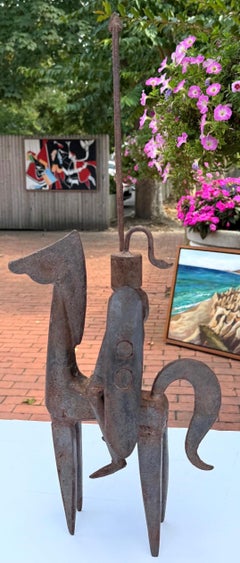
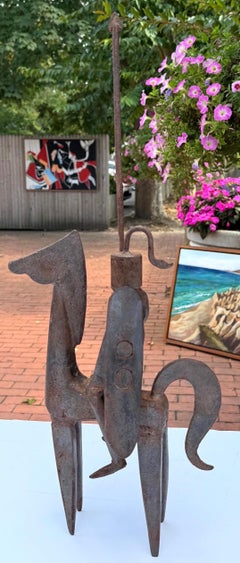
“Knight on Horseback”

“Knight on Horseback”

Located in Southampton, NY

Original handmade iron sculpture of a knight on horseback by the French sculptor Jean-Pierre Augier. Circa 1965. Condition is very good. Iron rust patina. Signed on tail with artist...

Category

Post-Modern 1960s Sculptures

Materials

Iron

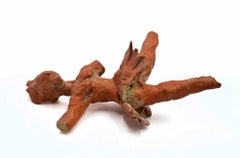
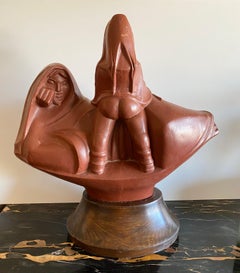
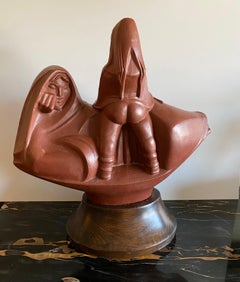
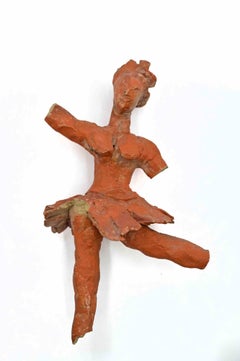
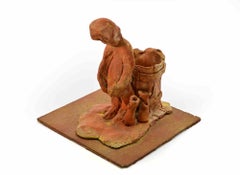
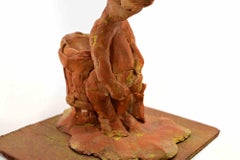
Flowers For Mother
Flowers For Mother

Flowers For Mother

By Albert Wein

Located in Los Angeles, CA

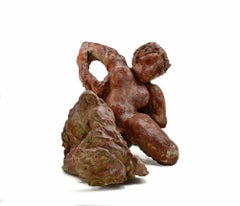
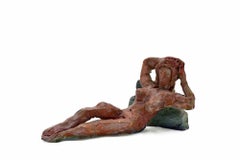
A terracotta figural group titled " Flowers For Mother" The marble version which won the Gold Medal at the National Academy of Design in New York in 1979 is featured in the Wein book...

Category

Modern 1960s Sculptures

Materials

Terracotta

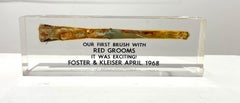
"Our First Brush With Red Grooms/ It Was Exciting!", Artist's actual paintbrush

"Our First Brush With Red Grooms/ It Was Exciting!", Artist's actual paintbrush

By Red Grooms

Located in New York, NY

Red Grooms "Our First Brush With Red Grooms/ It Was Exciting!", 1968 Paint brush with paint inside acrylic casing 11 × 3 1/2 × 2 inches Unframed This paint brush - with original pain...

Category

Pop Art 1960s Sculptures
Materials

Synthetic, Plastic, Mixed Media, Acrylic

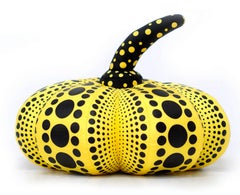
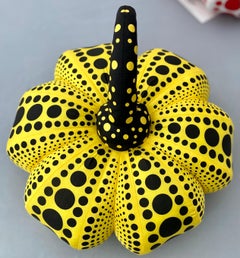
Kusama Plush Pumpkin (Kusama yellow & black pumpkin)

Kusama Plush Pumpkin (Kusama yellow & black pumpkin)

By Yayoi Kusama

Located in NEW YORK, NY

Yayoi Kusama Yellow & Black Pumpkin (plush): An iconic, vibrantly colored pop art piece - this large Kusama plush pumpkin features the universal polka dot patterns and bold colors fo...

Category

Contemporary 1960s Sculptures

Materials

Nylon

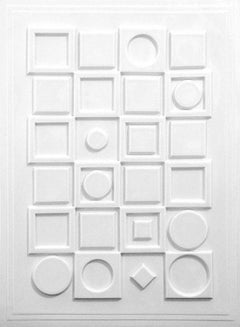
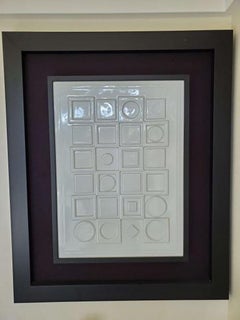
NB 11, 1968
NB 11, 1968

NB 11, 1968

By Victor Vasarely

Located in Palo Alto, CA

Victor Vasarely NB 11, 1968 is a glazed porcelain relief that is hand-signed by Victor Vasarely (Hungary, 1906 – France, 1997) on label affixed on verso.

Category

Op Art 1960s Sculptures
Materials

Porcelain

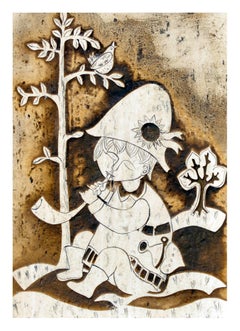
Mid Century Carved Marble Flute Player

Mid Century Carved Marble Flute Player

By Rodney Winfield

Located in Soquel, CA

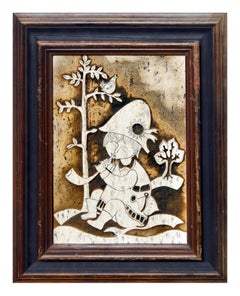
Mid Century carved marble flute player by Rodney Marshall Winfield (American, b. 1925). Presented in a rustic wooden frame. Unsigned. Image size: 14"H x 10"W. Framed: 20"H x 16"W. Wear to frame and age wear to marble. A painter in acrylic, designer in stain glass and silver, sculptor and long-time teacher, Rodney Winfield has had a diverse career. He was born in New York City. As a young man, he was artistically inclined and composed music, drew and painted, danced, wrote poetry and created sculpture. Choosing to focus on art, he enrolled in Cooper Union School in New York City. From 1953 to 1970, he was a stain-glass designer for Emil Frei...

Category

Folk Art 1960s Sculptures
Materials

Marble

"Bo Bro Bill"

"Bo Bro Bill"

By Charles Robert Searles

Located in Lambertville, NJ

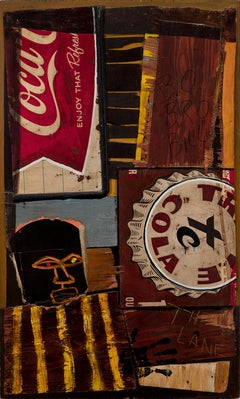
Jim's of Lambertville Fine Art Gallery is proud to present this piece by Charles Searles (1937 - 2004). Charles Searles was born in Philadelphia, PA and received his fine art educat...

Category

1960s Sculptures
Materials

Wood, Masonite, Mixed Media

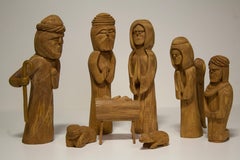
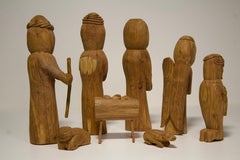
Nativity Scene By Leo Salazar Hand Carved Cedar Wood 1960s

Nativity Scene By Leo Salazar Hand Carved Cedar Wood 1960s

By Leo Salazar

Located in Detroit, MI

Nativity Scene with Blessed Mary, Kneeling Joseph, Angel, One Shepherd, One King, Manger, Baby Jesus, and Two Animals. The figures range in height from 18.5" to 12"; animals are 3" ...

Category

Modern 1960s Sculptures
Materials

Cedar

Read More

At Hosfelt Gallery, Bertoia Masterworks Complement Dynamic Contemporary Art

For nearly three decades, San Francisco–based Todd Hosfelt has curated against the grain — with a show on the legendary modernist Harry Bertoia the latest case in point.

This Weathered-Steel Sculpture Distills a Form of Protest into a Minimalist Monument

Part of Alejandro Vega Beuvrin’s “Barricada” series, the work is a subversive tribute to the street smarts of citizen activists.

How the Chunky, Funky Ceramics of 5 Mid-Century American Artists Balanced Out Slick Modernism

Get to know the innovators behind the pottery countercultural revolution.

Art Brings the Drama in These Intriguing 1stDibs 50 Spaces

The world’s top designers explain how they display art to elicit the natural (and supernatural) energy of home interiors.

Chryssa’s 1962 Neon Sculpture Was Way ahead of the Art-World Curve

By working with lettering, neon and Pop imagery, Chryssa pioneered several postmodern themes at a time when most male artists detested commercial mediums.

How to Spot a Fake KAWS Figure

KAWS art toys have developed an avid audience in recent decades, and as in any robust collectible market, counterfeiters have followed the mania. Of course, you don’t have to worry about that on 1stDibs, where all our sellers are highly vetted.

A Giant Wedding Cake Has Us Looking at Portuguese Tiles in a New Light

At Waddesdon Manor, artist Joana Vasconcelos has installed a three-tiered patisserie inspired by the narrative tile work of her homeland. We take a look at the cake sculpture and how Portuguese tiles have been used in architecture from the 17th century to today.

These Soft Sculptures Are Childhood Imaginary Friends Come to Life
Miami artist and designer Gabriela Noelle’s fantastical creations appeal to the Peter Pan in all of us.