American Modern Art

to
624
1,616
1,276
905
643
547
Overall Width
to
Overall Height
to
2
11
4,292
686
16
66
177
647
479
416
410
367
278
141
118,699
64,561
56,714
28,813
14,585
9,652
6,921
6,049
4,193
3,163
2,543
2,325
2,137
602
2,442
2,168
234
2,257
1,083
821
639
614
489
416
338
298
229
219
209
209
188
187
181
163
157
147
139
1,848
1,412
1,015
634
596
284
225
104
103
87
1,439
552
4,570
349
Style: American Modern
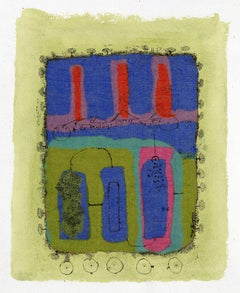
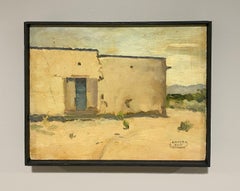
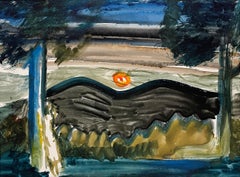
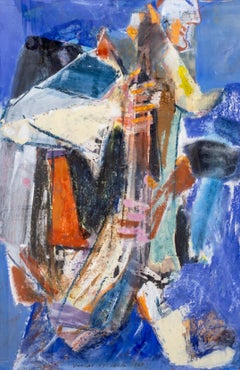
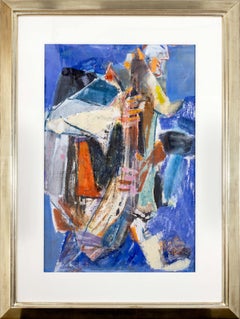
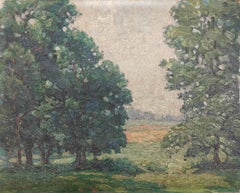
Trees in the Field, Mixed Media Painting, African American, American Modern 1967

Trees in the Field, Mixed Media Painting, African American, American Modern 1967

Located in Fairlawn, OH

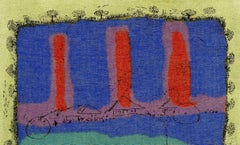
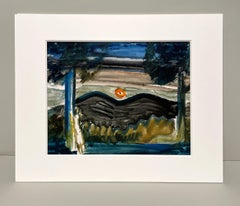
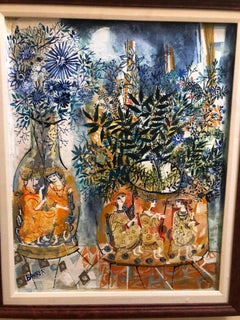
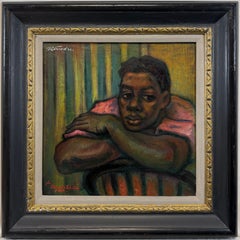
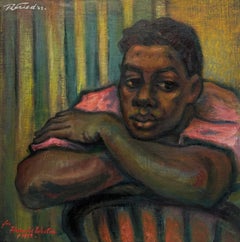
Trees in the Field Mixed meia on masonite panel, 1967 Signed on the right edge oif the image (see photo) One from a series of similar examples, all with caligraphic trees and figures surrounding the composition. Part of the late 1960’s Black Emergency Cultural Coalition along with Benny Andrews The Black Emergency Cultural Coalition Inc. (BECC) was organized in January 1969 by a group of African American artists in response to the Metropolitan Museum of Art's "Harlem on My Mind" exhibit, which omitted the contributions of African American painters and sculptors to the Harlem community. Members of this initial group that protested against the exhibit included several prominent African American artists, including Benny Andrews and Clifford R. Joseph, cofounders of the BECC. The primary goal of the group was to agitate for change in the major art museums in New York City for greater representation of African American artists and their work in these museums. Condition: Excellent Image size: 12 5/8 x 10 inches Board size: 20 x 16 inches Frame size: 21 x 17 inches Russ Thompson (Born 1922- Jamaica Part of the late 1960’s Black Emergency Cultural Coalition along with Benny Andrews The Black Emergency Cultural Coalition Inc. (BECC) was organized in January 1969 by a group of African American artists in response to the Metropolitan Museum of Art's "Harlem on My Mind" exhibit, which omitted the contributions of African American painters and sculptors to the Harlem community. Members of this initial group that protested against the exhibit included several prominent African American artists, including Benny Andrews and Clifford R. Joseph, cofounders of the BECC. The primary goal of the group was to agitate for change in the major art museums in New York City for greater representation of African American artists and their work in these museums. Studied: Pratt Inst.; Carlyle College; NY Sch. Mod. Photography Exhibited: MoMA; BM, 1968; Nordness Gals., NYC; Phila. Civic Center; Ruder & Finn FA, 1969; Smithsonian Inst.; Mount Holyoke College, 1969; BMFA, 1970; RISD, 1969; Mem. Art Gal., Rochester, NY, 1969; SFMA, 1969; Contemp. Arts Mus., Houston, TX, 1970; NJ State Mus., 1970; Roberson Center for the Arts & Sciences, Binghampton, NY, 1970; UC Santa Barbara, 1970; Plaza Hotel, NYC; Westchester Art Soc. Gal. (prize); Nassau Community College; Brooklyn Pub. Lib.; Allentown (PA) Art Festival; Quinnipiac College, CT; Parrish Art Mus.; NY State Pavillion; Huntington Township Art Lg. Awards: Mitchell College, CT; BM; Armonk Lib. Show Award; Bedford Hills Lib. Show Award. Sources: Cederholm, Afro-American Artists. Public Collections: Zimmerli Art Museum, Rutgers Museum of Fine Arts, Boston Brooklyn Museum Museum of Modern Art, New York Smithsonian American Art Museum Exhibitions: MOMA Brooklyn Museum, 1968 Nordness Galleries, NYC Smithsonian Institution Museum of Fine Arts, Boston, 1970 Rhode Island School of Design, 1969 San Francisco Museum of Art, 1969 Contemporary Arts Museum, Houston, 1970 Parrish Art Museum Courtesy of Afro-American Artist; a biographical directory THOMPSON, RUSS (Born Jamaica, 1922) Painter. Born in Kingston, Jamaica, 1922. Studied at the Pratt Institute; Carlyle College; New York School of Modern Photography. Works: Cloud Flowers ; My Breath Is One with the Clouds ; The Acrobats; Relatives; Thoreau; Clothes to the Body; America- Amer- ica; Hanging Garden; Poor Room, Rich Room; Epigram a Bromide; Passage, 1969 (wood, epoxy, iron). Exhibited: Museum of Modern Art; Brooklyn Museum Fence Show, 1968; Nordness Gal- leries, NY; Phila. Civic Center; Ruder & Finn Fine Arts, 1969; Smithsonian Institution; Mount Holyoke College, 1969; Boston Museum of Fine Arts, 1970; Rhode Island School of Design, 1969; Memorial Art Gallery, Rochester, NY, 1969; San Francisco Museum of Art, 1969; Contemporary Arts Museum, Houston, 1970; NJ State Museum, 1970; Roberson Center for the Arts & Sciences, Binghamton, NY, 1970; Art Galleries, Univ. of Cal. at Santa Barbara, 1970; Plaza Hotel, NYC; Westchester Art So- ciety Gallery; Nassau Community College; Brooklyn Public Library; Allentown (Pa.) Art Festival; Quinnipiac College; Parrish Art Mu- seum; NY State Pavillion; Huntington Town- ship Art League. Collections: Frederick Douglass Institute, Wash- ington, DC; Spiro & Levinson Corp.; Mr. William Haber; Mr. & Mrs. B. Friedman; Mr. & Mrs. Samuel J. Rosen; Mr. David Scribner; Unigraphic Corp.; Mr. Benny An- drews; Jeanne Paris; Mr. & Mrs. Joseph Strauss. Awards: Westchester Art Society; Mitchell College, Conn.; Brooklyn Museum; Armonk Library Show Award; Bedford Hills Library Show Award. Sources: Boston Museum of Fine Arts. Afro- American Artists: New York/ Boston, 1970; Nordness Galleries. 12 Afro-American Artists, 1969; Mount Holyoke College. Ten Afro- American Artists, 1969; Ghent, Henri. “The Community Art Gallery,” Art Gallery, April 1970; Paris, Jean. “Black Art Experience in Art,” Long Island Press, Jamaica, NY, June 14, 1970; Ruder & Finn Fine Arts. Contemporary Black Artists’, Brooklyn College. Afro-Amer- ican Artists: Since 1950, 1969; Walker, Roslyn. A Resource Guide to the Visual Arts of Afro- Americans, South Bend, Ind., 1971. NEW YORK (NY). Acts of Art, Inc. Rebuttal to Whitney Museum Exhibition: Black Artists in Rebuttal at Acts of Art Gallery. 1971. Unpag. (20 pp.) exhib. cat., 54 b&w illus., brief biogs. of 48 artists. The text consists of an unsigned foreword (probably by Nigel L. Jackson, director of Acts of Art); a reprint of Z. D. Allen's review of the exhibition, "Rebuttal to the Whitney," from Chelsea Clinton News (Apr. 15, 1971). The catalogue was published after the show opened. Artists included: Benny Andrews, James Belfon, Betty Blayton, Lynn (Chuck) Bowers, Vivian Browne, Calvin Burnett, Jo Butler, Robert Carter, Art Coppedge, Adger Cowans, Joseph Delaney, J. Brooks Dendy, III, James Denmark, Reginald Gammon, Moses Paul Groves, Lester Gunter, Byron Hall, William Charles Henderson, II, Leon Hicks, Nigel L. Jackson, Kenneth Vrook Johnson, Cliff Joseph, Philip Martin, Kenneth Matthews, Richard Mayhew, Dindga McCannon, Alexander S. McMath, Ademola Olugebefola, William Payne, James Phillips, Kenneth Radcliffe, Junius Redwood, Enid Richardson, Gregory Ridley, Jr., Haywood (Bill) Rivers, Donald J. Robertson, Philippe G. Smith, Ann Tanksley, Bob Thompson, Russell Thompson, Robert Threadgill, Lloyd Toone, Bennie White, Timothy Wilkins, Walter H. Williams, Ed Wilson, Frank W. Wimberley, Hale Woodruff. Sq. 8vo, stapled tan wraps, lettered in brown, illus. of wire sculpture by James Denmark.. BOSTON (MA). Museum of the National Center of Afro-American Artists. Afro-American Artists: New York and Boston. May 19-June 23, 1970. 92 pp. exhib. cat, 67 b&w illus. of work by 69 artists, exhib. checklist. Intro. by Edmund B. Gaither. Important early exhibition. Includes Emma Amos, Benny Andrews, Ellsworth Ausby, Malcolm Bailey, Ellen Banks, Romare Bearden, Robert Blackburn, Betty Blayton, Ronald Boutte, Lynn Bowers, Frank Bowling, Marvin Brown, Calvin Burnett, Dana C. Chandler, John Chandler, Barbara Chase-Riboud, Ed Clark, Eldzier Cortor, Ernest Crichlow, Emilio Cruz, Avel DeKnight, Henry DeLeon, Stanley Pinckney, James Denmark, Reginald Gammon, Felrath Hines, Alvin C. Hollingsworth, Bill Howell, Zell Ingram, Gerald Jackson, Daniel L. Johnson, Milton Johnson, Ben Jones, Lois Mailou Jones, Tonnie O. Jones, Cliff Joseph, Harriet Kennedy, Hughie Lee-Smith, Norman Lewis, Tom Lloyd, Al Loving, Richard Mayhew, Edward McCluney, Jr., Algernon Miller, Joe Overstreet, Louise Parks, Stanley Pinckney, Jerry Pinkney, John W. Rhoden, Bill Rivers, Mahler Ryder, Raymond Saunders, Thomas Sills, Al Smith, Vincent D. Smith, Richard Stroud, Alma Thomas, Bob Thompson, Lovett Thompson, Russ Thompson, Lloyd Toone, Luther Vann, Paul Waters...

Category

1960s American Modern Art
Materials

Mixed Media

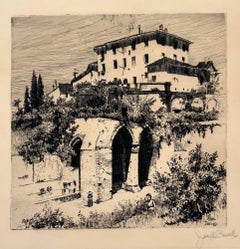
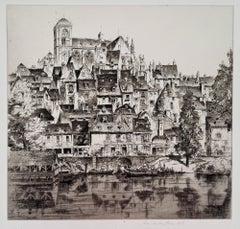
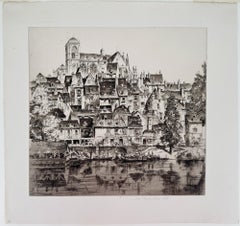
Fonte Nuova, Siena
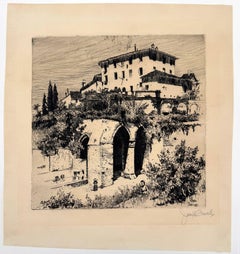
Fonte Nuova, Siena

Fonte Nuova, Siena

By Joseph Pennell

Located in Middletown, NY

Etching with drypoint on lightweight Japon paper, 9 3/4 x 9 7/8 inches ( 247 x 250 mm); sheet 14 x 12 3/4 inches (355 x 324 mm), full margins. Signed in pencil in the lower margin. I...

Category

Late 19th Century American Modern Art

Materials

Handmade Paper, Drypoint, Etching

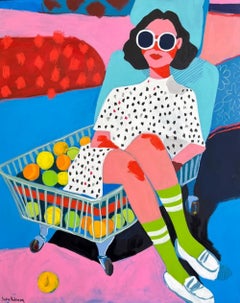
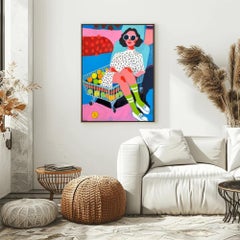
Woman with Shopping Cart

Woman with Shopping Cart

Located in Zofingen, AG

shipped in roll Acrylic painting of woman in sunglasses white dress black dots green socks sitting near shopping cart full of fruits Acrylic Painting on canvas One of a kind artwor...

Category

2010s American Modern Art

Materials

Canvas, Acrylic

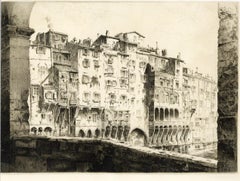
From the Ponte Vecchio, Florence

From the Ponte Vecchio, Florence

By John Taylor Arms

Located in Middletown, NY

Etching and aquatint on hand made F.J. Head & Co watermarked cream laid paper, full margins. Signed and dated in pencil, lower right margin. From the edition of 160 (from a total of ...

Category

1920s American Modern Art

Materials

Handmade Paper, Laid Paper, Etching, Aquatint

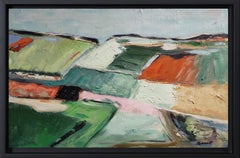
Green Landscape, Abstract Countryside, Fields, Modern, Contemporary, Oil, French

Green Landscape, Abstract Countryside, Fields, Modern, Contemporary, Oil, French

By SOPHIE DUMONT

Located in LANGRUNE-SUR-MER, FR

Green Landscape Oil on canvas, 2023 Unframed: 38 x 61 cm (15 x 24 in) Framed: approximately 45 x 68 cm (17.7 x 26.8 in) Black floater frame included. Ready to hang. This expressive...

Category

21st Century and Contemporary American Modern Art

Materials

Oil

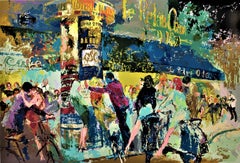
Left Bank Cafe, Paris

Left Bank Cafe, Paris

By LeRoy Neiman

Located in San Francisco, CA

This artwork titled "Left Bank Cafe, Paris" 1987 is an original color serigraph by noted American artist LeRoy Neiman, 1921-2012. It is hand signed and numbered H.C 166/175 in pencil by the artist. The image size is 26 x 38 inches, sheet size is 32.25 x 44 inches. With the blind stamp of the printer Styria Studio at the lower left corner margin. It is in excellent condition, two small pieces of hanging tape remain on the back. About the artist: Mr. Neiman's kinetic, quickly executed paintings and drawings, many of them published in Playboy, offered his fans gaudily colored visual reports on heavyweight boxing matches, Super Bowl games and Olympic contests, as well as social panoramas like the horse races at Deauville, France, and the Cannes Film Festival. Quite consciously, he cast himself in the mold of French Impressionists like Toulouse-Lautrec, Renoir and Degas, chroniclers of public life who found rich social material at racetracks, dance halls and cafes. Mr. Neiman often painted or sketched on live television. With the camera recording his progress at the sketchpad or easel, he interpreted the drama of Olympic Games and Super Bowls for an audience of millions. When Bobby Fischer and Boris Spassky faced off in Reykjavik, Iceland, to decide the world chess championship, Mr. Neiman was there, sketching. He was on hand to capture Federico Fellini directing "8 ½" and the Kirov Ballet performing in the Soviet Union. In popularity, Mr. Neiman rivaled American favorites like Norman Rockwell, Grandma Moses and Andrew Wyeth. A prolific one-man industry, he generated hundreds of paintings, drawings, watercolors, limited-edition serigraph prints and coffee-table books yearly, earning gross annual revenue in the tens of millions of dollars. Although he exhibited constantly and his work was included in the collections of dozens of museums around the world, critical respect eluded him. Mainstream art critics either ignored him completely or, if forced to consider his work, dismissed it with contempt as garish and superficial — magazine illustration with pretensions. Mr. Neiman professed not to care. Maybe the critics are right," he told American Artist magazine in 1995. "But what am I supposed to do about it — stop painting, change my work completely? I go back into the studio, and there I am at the easel again. I enjoy what I'm doing and feel good working. Other thoughts are just crowded out." His image suggested an artist well beyond the reach of criticism. A dandy and bon vivant, he cut an arresting figure with his luxuriant ear-to-ear mustache, white suits, flashy hats and Cuban cigars. "He quite intentionally invented himself as a flamboyant artist not unlike Salvador Dalí, in much the same way that I became Mr. Playboy in the late '50s," Hugh Hefner told Cigar Aficionado magazine in 1995. LeRoy Runquist was born on June 8, 1921, in St. Paul. His father, a railroad worker, deserted the family when LeRoy was quite young, and the boy took the surname of his stepfather. He showed a flair for art at an early age. While attending a local Roman Catholic school, he impressed schoolmates by drawing ink tattoos on their arms during recess. As a teenager, he earned money doing illustrations for local grocery stores. "I'd sketch a turkey, a cow, a fish, with the prices," he told Cigar Aficionado. "And then I had the good sense to draw the guy who owned the store. This gave me tremendous power as a kid." After being drafted into the Army in 1942, he served as a cook in the European theater but in his spare time painted risqué murals on the walls of kitchens and mess halls. The Army's Special Services Division, recognizing his talent, put him to work painting stage sets for Red Cross shows when he was stationed in Germany after the war. On leaving the military, he studied briefly at the St. Paul School of Art (now the Minnesota Museum of American Art) before enrolling in the School of the Art Institute of Chicago, where, after four years of study, he taught figure drawing and fashion illustration throughout the 1950s. When the janitor of the apartment building next door to his threw out half-empty cans of enamel house paint, Mr. Neiman found his métier. Experimenting with the new medium, he embraced a rapid style of applying paint to canvas imposed by the free-flowing quality of the house paint. While doing freelance fashion illustration for the Carson Pirie Scott department store in Chicago in the early 1950s, he became friendly with Mr. Hefner, a copywriter there who was on the verge of publishing the first issue of a men's magazine. In 1954, after five issues of Playboy had appeared, Mr. Neiman ran into Mr. Hefner and invited him to his apartment to see his paintings of boxers, strip clubs and restaurants. Mr. Hefner, impressed, showed the work to Playboy's art director, Art Paul, who commissioned an illustration for "Black Country," a story by Charles Beaumont about a jazz musician. Thus began a relationship that endured for more than half a century and established Mr. Neiman's reputation. In 1955, when Mr. Hefner decided that the party-jokes page needed visual interest, Mr. Neiman came up with the Femlin, a curvaceous brunette who cavorted across the page in thigh-high stockings, high-heeled shoes, opera gloves and nothing else. She appeared in every issue of the magazine thereafter. Three years later, Mr. Neiman devised a running feature, "Man at His Leisure." For the next 15 years, he went on assignment to glamour spots around the world, sending back visual reports on subjects as varied as the races at Royal Ascot, the dining room of the Tour d'Argent in Paris, the nude beaches of the Dalmatian coast, the running of the bulls at Pamplona and Carnaby Street in swinging London. He later produced more than 100 paintings and 2 murals for 18 of the Playboy clubs that opened around the world. "Playboy made the good life a reality for me and made it the subject matter of my paintings — not affluence and luxury as such, but joie de vivre itself," Mr. Neiman told V.I.P. magazine in 1962. Working in the same copywriting department at Carson Pirie Scott as Mr. Hefner was Janet Byrne, a student at the Art Institute. She and Mr. Neiman married in 1957. She survives him. A prolific artist, he generated dozens of paintings each year that routinely commanded five-figure prices. When Christie's auctioned off the Playboy archives in 2003, his 1969 painting Man at His Leisure: Le Mans sold for $107,550. Sales of the signed, limited-edition print versions of his paintings, published in editions of 250 to 500, became a lucrative business in itself after Knoedler Publishing, a wholesale operation, was created in 1975 to publish and distribute his serigraphs, etchings, books and posters. Mr. Neiman's most famous images came from the world of sports. His long association with the Olympics began with the Winter Games in Squaw Valley in 1960, and he went on to cover the games, on live television, in Munich in 1972, Montreal in 1976, Lake Placid in 1980, and Sarajevo and Los Angeles in 1984, using watercolor, ink or felt-tip marker to produce images with the dispatch of a courtroom sketch artist. At the 1978 and 1979 Super Bowls, he used a computerized electronic pen to portray the action for CBS. Although he was best known for scenes filled with people and incident, he also painted many portraits. Athletes predominated, with Muhammad Ali and Joe Namath among his more famous subjects, but he also painted Leonard Bernstein, the ballet dancer Suzanne Farrell...

Category

21st Century and Contemporary American Modern Art

Materials

Screen

Manayunk Fountain & Silverwood Sts

Manayunk Fountain & Silverwood Sts

By Florence Prince Ewing

Located in Los Angeles, CA

Manayunk Fountain & Silverwood Sts, 1938, oil on canvas board, signed and dated lower right, titled and dated verso, 20 x 16 inches Although Florence Prince Ewing’s paintings ex...

Category

1930s American Modern Art

Materials

Oil, Canvas, Board

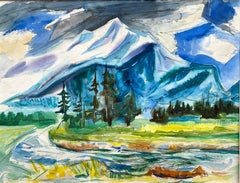
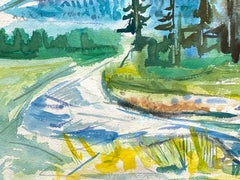
“Rocky Mountain Meadow”

“Rocky Mountain Meadow”

By Werner Drewes

Located in Southampton, NY

Original watercolor on archival paper of a Rocky Mountain Meadow by the well known American artist, Werner Drewes. Signed lower right. Titled and dated 1956 on verso of sheet. Con...

Category

1950s American Modern Art

Materials

Watercolor, Archival Paper

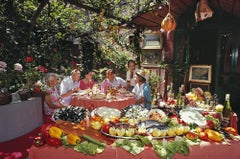
Lunch at La Pigna, 1980 - Italian Sicilian Portrait Lemon Trees on Capri

Lunch at La Pigna, 1980 - Italian Sicilian Portrait Lemon Trees on Capri

By Slim Aarons

Located in Brighton, GB

Lunch at La Pigna, 1980 - Italian Sicilian Portrait Lemon Trees on Capri by Slim Aarons 16 x 20" print. Limited Edition Estate Stamped Print. Edition of 150. Printed Later. Lunch a...

Category

20th Century American Modern Art

Materials

Photographic Paper, C Print, Color, Digital

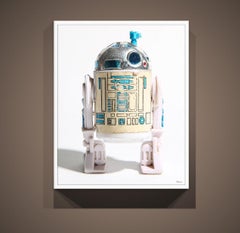
R2D2 30x40 First Release , Star Wars, Photography Pop Art, 70's Toys, Movie

R2D2 30x40 First Release , Star Wars, Photography Pop Art, 70's Toys, Movie

By Destro

Located in Los Angeles, CA

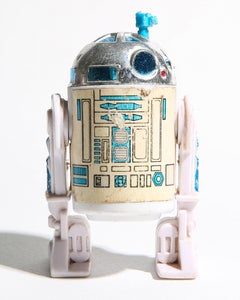
R2D2 from the original Kenner release of the Star Wars toys in May of 1977 This is pre release is the first release in the much anticipated series "The Toys" "They encapsulate an era...

Category

21st Century and Contemporary American Modern Art

Materials

Archival Pigment

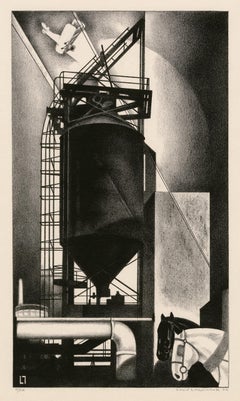
'Tanks #1' — American Precisionism

'Tanks #1' — American Precisionism

By Louis Lozowick

Located in Myrtle Beach, SC

Louis Lozowick, 'Tanks #1', lithograph, 1929, edition 50, Flint 39. Signed, titled, and numbered '11/50' in pencil. Signed with the artist's monogram in the stone, lower left. A superb, richly-inked impression, on cream wove paper, the full sheet with margins (3/4 to 1 7/8 inches), in excellent condition. Matted to museum standards. Image size 13 15/16 x 8 1/16 inches (355 x 204 mm), sheet size 15 3/4 x 11 1/4 inches (400 x 286 mm). Exhibited: 'The American Scene: Prints from Hopper to Pollock', Stephen Coppel, The British Museum, 2008. Literature: 'Prints and Their Creators, A World History', Carl Zigrosser, Crown Publishers Inc, 1974; 'American Lithographers...

Category

1920s American Modern Art

Materials

Lithograph

Gertrude Barrer Oil on Board

Gertrude Barrer Oil on Board

Located in San Francisco, CA

Gertrude Barrer: 1921-1992. Well listed American artist with auction records over $9500. She studied a the Arts Student League in the 1940s. More recently art historians have said s...

Category

20th Century American Modern Art

Materials

Oil

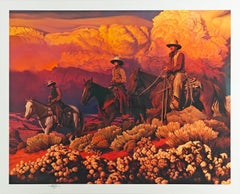
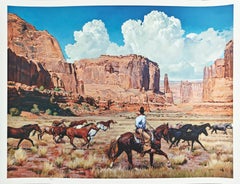
Big Sky Majesty

Big Sky Majesty

By Mark Maggiori

Located in Draper, UT

Archival pigment print on 300 GSM cotton rag fine art matte paper. Dimensions of 27x22 in. Released in 2021 from an edition of 673.

Category

2010s American Modern Art

Materials

Archival Paper

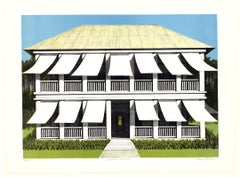
La Casa Vivienda
La Casa Vivienda

La Casa Vivienda

By Emilio Sanchez

Located in New York, NY

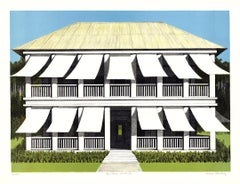
“LA CASA VIVENDA” Emilio Sanchez (1921-1999) created this color lithograph entitled “La Casa Vivenda” circa 1991. Image size 18.38 x 25 inches and the paper size 21.75 x 29.38 inches. Printed in an edition of 100 this impression is inscribed “70/100” - the 70th impression of 100. This impression is pencil signed in the lower right and inscribed in the lower left. “Best known for his architectural paintings and lithographs, Emilio Sanchez (1921-1999) explored the effects of light and shadow to emphasize the abstract geometry of his subjects. His artwork encompasses his Cuban heritage...

Category

1990s American Modern Art

Materials

Lithograph

“Sleeping Cat”
“Sleeping Cat”

“Sleeping Cat”

By William Zorach

Located in San Francisco, CA

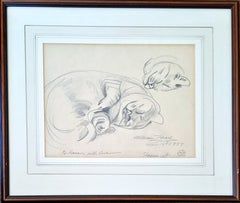
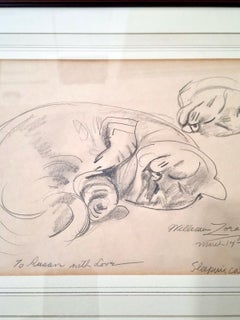
This original pencil sketch, titled "Sleeping Cat," is a work by the renowned American artist William Zorach (1887-1966). Dated March 14, 1959, and inscribed "To Susan with Love" den...

Category

1950s American Modern Art

Materials

Paper, Graphite

Farmhouse in Autumn, Early 20th Century Landscape by Florence Helena McGillivray

Farmhouse in Autumn, Early 20th Century Landscape by Florence Helena McGillivray

Located in Soquel, CA

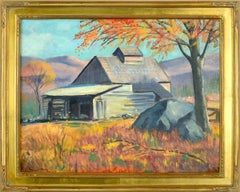
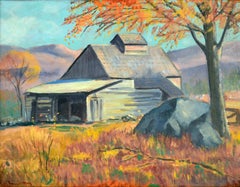
Farmhouse in Autumn, Early 20th Century Landscape by Florence Helena McGillivray A vibrant and colorful late 1920's landscape by Florence Helena McGillivray (Canadian, 1864-1938). This beautiful 1929 landscape depicts a quaint farmhouse in autumn, surrounded by a landscape full of fall foliage in goldenrod yellow, bright orange, and deep red, with soft purple hills receding into the distance. Signed "F. McGillivray" lower left. Displayed in a new Arts & Crafts style giltwood frame. Board size: 16"H x 20"W. Framed size: 19.25"H x 23.25"W x 1"D. McGillivray (1864–1938) garnered admiration for her modern landscape paintings, as well as for her mentorship of young artists, including Tom Thomson. She has been credited in some instances as an influence for what would later be known as the Group of Seven. A prolific sketcher and painter, Florence McGillivray...

Category

1920s American Modern Art

Materials

Oil, Canvas, Illustration Board

Little Mother, Young Black Girl Pushing Carriage through Town

Little Mother, Young Black Girl Pushing Carriage through Town

By Orville Bulman

Located in Grand Rapids, MI

Orville Bulman (American, 1904 - 1978 Signed: Bulman (Lower, Left) “ Little Mother ”, 1960 Oil on Canvas 14" x 18" Housed in a 2" Husar Frame with a 3/4" Linen liner and a Gold ...

Category

Mid-20th Century American Modern Art

Materials

Oil, Canvas

Con Ed Smokestack

Con Ed Smokestack

By Marina Stern

Located in Los Angeles, CA

This work is part of our exhibition Marina Stern Luminary, the first retrospective of the artist since 2007. Another example previously exhibited: An Exhibition of Recent Paintings ...

Category

Mid-20th Century American Modern Art

Materials

Lithograph

Refreshment and Intermission

Refreshment and Intermission

Located in Los Angeles, CA

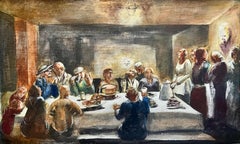
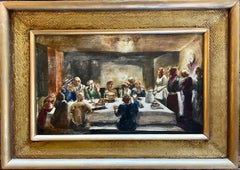
This painting is part of our exhibition America Coast to Coast: Artists of the 1930s Refreshment and Intermission, tempera on board, 11 x 19 inches, c. 1930/40s, signed lower middle, exhibited at Groom's one person show at Closson’s Gallery, Cincinnati, OH, March, 1943 (see The Cincinnati Enquirer, March 7, 1943, section 3, p. 4); provenance includes a private Ohio collection; presented in a period gold painted frame About the Painting Refreshment and Intermission is part of a series of paintings of Amish subjects Grooms started in 1938 based on his travels in Pennsylvania. These tempera works reflect the Regionalist impulse to paint local scenes far away from big cities. Focusing on both people and landscape, Grooms' compositions tell the stories of the uniquely American experience of the Amish. “Grooms paints the Amish people with as much understanding of type and appreciation of the plastic quality as any artist who has approached this challenging subject," noted the art critic for The Cincinnati Inquirer when reviewing Grooms' solo exhibition at Closson' Gallery, "In his current show, ‘Refreshment and Intermission,’ is a case in point. Here the absorbed concentration of people eating is described without an ounce of sentimentality. He has made the most of the interest between groups and of the conversations, both humorous and serious. The work has the quaint simplicity of a Lord’s Supper...

Category

1930s American Modern Art

Materials

Tempera

North on West Street (West Side Highway NYC Cityscape)

North on West Street (West Side Highway NYC Cityscape)

By De Hirsch Margules

Located in Wilton Manors, FL

De Hirsh Margules (1899-1965). North on West Street , 1939. Watercolor on Arches wove paper. Signed and dated in pencil by artist lower margin. Sheet measures 15 x 22 inches. Framed measurement: 27 x 34 inched. Incredibly vibrant and saturated color with no fading or toning of sheet. Provenance: Babcock Galleries, NYC De Hirsh Margules (1899–1965) was a Romanian-American "abstract realist" painter who crossed paths with many major American artistic and intellectual figures of the first half of the 20th century. Elaine de Kooning said that he was "[w]idely recognized as one of the most gifted and erudite watercolorists in the country". The New York Times critic Howard Devree stated in 1938 that "Margules uses color in a breath-taking manner. A keen observer, he eliminates scrupulously without distortion of his material." Devree later called Margules "one of our most daring experimentalists in the medium" Margules was also a well-known participant in the bohemian culture of New York City's Greenwich Village, where he was widely known as the "Baron" of Greenwich Village.[1] The New York Times described him as "one of Greenwich Village's best-known personalities" and "one of the best known and most buoyant characters about Greenwich Village. Early Life De Hirsh Margules was born in 1899 in the Romanian city of Iași (also known as Iasse, Jassy, or Jasse). When Margules was 10 weeks old, his family immigrated to New York City. Both of his parents were active in the Yiddish theater, His father was Yekutiel "Edward" Margules, a "renowned Jewish actor-impresario and founder of the Yiddish stage." Margules' mother, Rosa, thirty-nine years younger than his father, was an actress in the Yiddish theater and later in vaudeville. Although Margules appeared as a child actor with the Adler Family[11] and Bertha Kalich, his sister, Annette Margules, somewhat dubiously continued in family theater and vaudeville tradition, creating the blackface role of the lightly-clad Tondelayo (a part later played on film Hedy Lamarr) in Earl Carroll's 1924 Broadway exoticist hit, White Cargo. Annette herself faced stereotyping as an exotic flower: writing about her publicist Charles Bouchert stated that "Romania produces a stormy, temperamental type of woman---a type admirably fitted to portray emotion." His brother Samuel became a noted magician who appeared under the name "Rami-Sami." Samuel later became a lawyer, representing magician Horace Goldin, among others. A family portrait including a young De Hirsh, a portrait of Rosa and Annette together, and individual photos of Rosa and Edward can be found on the Museum of the City of New York website. At around age 9 or 10, Margules took art classes with the Boys Club on East Tenth Street, and his first taste of exhibition was at a student art show presented by the club. By age 11, he had won a city-wide prize (a box camera) at a children's art show presented by the department store Wanamakers. As a young teenager, Margules was already displaying a characteristic kindness and loyalty. Upon hearing that two friends (one of them was author Alexander King), were in trouble for breaking a school microscope, the nearly broke Margules gave them five dollars to repair the microscope . Margules had to approach a wealthy man that Margules had once saved on the subway from a heart attack. Margules didn't reveal the source of the five dollars to King until twenty-five years later. In his late teens, Margules studied for a couple of months in Pittsburgh with Edwin Randby, a follower of Western painter Frederic Remington. Thereafter he pursued a two-year course of studies in architecture, design and decoration at the New York Evening School of Art and Design, while working as a clerk during the day at Stern's Department Store. He was encouraged in these artistic pursuits by his neighbor, the painter Benno Greenstein (who later went by the name of Benjamin Benno). Artistic career In 1922, Margules began work as a police reporter for the City News Association of New York .Margules then considered himself something of an expert on art, and the painter Myron Lechay is said to have responded to some unsolicited analysis of his work with the remark "Since you seem to know so much about it, why don't you paint yourself?" This led to study with Lechay and a flurry of painting. Margules' first show was in 1922 at Jane Heap's Little Review Gallery. Thereafter Margules began to participate in shows with a group including Stuart Davis, Jan Matulka, Buckminster Fuller (exhibiting depictions of his "Dymaxion house") in a gallery run by art-lover and restaurateur Romany Marie on the floor above her cafe. Jane Heap, left, with Mina Loy and Ezra Pound During the 1920s, Margules traveled outside of the country a number of times. In 1922, with the intent of reaching Bali, he took a job as a "'wiper on a tramp steamer where [he] played nursemaid to the engine." He reached Rotterdam before he turned back. He would return to Rotterdam shortly thereafter. In 1927, Margules took a lengthy leave of absence from his day job as a police reporter in order to travel to Paris, where he "set up a studio in Montmartre's Place du Tertre, on the top floor of an almost deserted hotel, a shabby establishment, lacking both heat and running water." He studied at the Louvre and traveled to paint landscapes in provincial France and North Africa. Margules also joined the "Noctambulist" movement and experimented with painting and showing his artwork in low light.Jonathan Cott wrote that: the painter De Hirsch Margulies sat on the quays of the Seine and painted pictures in the dark. In fact, the first exhibition of these paintings, which could be seen only in a darkened room, took place in [ Walter Lowenfels'] Paris apartment. Elaine de Kooning remarked that studying the works of the Noctambulists confirmed Margules' "direction toward the use of primary colors for perverse effects of heavy shadow." It was also in Paris that Margules initially conceived his idea of "Time Painting", where a painting is divided into sectors, each representing a different time of day, with color choices meant to evoke that time of day. In Paris, his social circle included Lowenfels, photographer Berenice Abbott, publisher Jane Heap, composer George Anthiel, sculptor Thelma Wood, painter André Favory, writer Norman Douglas, writer and editor George Davis, composer and writer Max Ewing, and writer Michael Fraenkel. Upon his return to New York in 1929, Margules attended an exhibition of John Marin's paintings. While at the exhibition, he "launched into an eloquent explanation of Marin to two nearby women", and was overheard by an impressed Alfred Stieglitz. The famous photographer and art promoter invited Margules to dine with his wife, the artist Georgia O'Keeffe, and his assistant, painter Emil Zoler. Stieglitz thereafter became a friend and mentor to Margules, becoming for him "what Socrates was to his friends." Alfred Stieglitz Stieglitz introduced Margules to John Marin, who quickly became the most important painterly influence upon Margules. Elaine de Kooning later noted that Margules was "indebted to Marin and through Marin to Cézanne for his initial conceptual approach - for his constructions of scenes with no negative elements, for skies that loom with the impact of mountains." Margules himself said that Marin was his "father and ... academy." The admiration was by no means unreciprocated: Marin said that Margules was "an art lover with abounding faith and sincerity, with much intelligence and quick seeing." Stieglitz also introduced Margules to many other artistic and intellectual figures in New York. With the encouragement of Alfred Stieglitz, Margules in 1936 opened a two-room gallery at 43 West 8th Street called "Another Place." Over the following two years there were fourteen solo exhibitions by Margules and others, and the gallery was well-respected by the press. It was in this gallery that the painter James Lechay, Myron's brother, exhibited his first painting. In 1936, Margules first saw recognition by major art museums when both the Museum of Modern Art and the Museum of Fine Arts, Boston purchased his works. In 1942, Margules gave up working as a police reporter, and apparently dedicated himself thereafter solely to an artistic vocation. "The Baron of Greenwich Village"[edit] Margules made his mark not only as an artist, but also as an outsized personality known throughout Greenwich Village and beyond. To local residents, Margules was known as the "Baron", after Baron Maurice de Hirsch, a prominent German Jewish philanthropist. Margules was easily recognizable by the beret he routinely wore over his long hair. Writer Charles Norman said that he "dressed with a flair for sloppiness." He was said to "know everybody" in Greenwich Village, to the extent that when the novelist and poet Maxwell Bodenheim was murdered, Margules was the first one the police sought to identify the body. Margules' letters show him interacting with art world figures such as Sacha Kolin, John Marin and Alfred Stieglitz, as well as with prominent figures outside the art world such as polymath Buckminster Fuller and writer Henry Miller. Most of his friends and acquaintances found Margules a generous and voluble man, given to broadly emotionally expressive gestures and acts of kindness and loyalty. In 1929, he exhibited an example of this loyalty and fellow-feeling when he appeared in court to fight what the wrongful commitment of his friend, writer and sculptor Alfred Dreyfuss, who appeared to have been a victim of an illicit attempt to block an inheritance. The Greenwich Village chronicler Charles Norman described the bone-crushing hugs that Margules would routinely bestow on his friends and acquaintances, and speaks of the "persuasive theatricality" that Margules seemed to have inherited from his actor parents. Norman also wrote about Margules' routine acts of kindness, taking in homeless artists, constantly feeding his friends and providing the salvatory loan where needed. Norman also notes that Margules was blessed with a loud and good voice, and was apt to sing an operatic air without provocation. The writer and television personality Alexander King said I think the outstanding characteristics of my friend's personality are affirmation, emphasis, and overemphasis. He chooses to express himself predominantly in superlatives and the gestures which accompany his utterances are sometimes dangerous to life and limb. Of the bystanders, I mean. King also spoke with affectionate amusement about Margules' pride in his cooking, speaking of how "if he should ever invite you to dinner, he may serve you a hamburger with onions, in his kitchen-living room, with such an air of gastronomic protocol, such mysterious hints and ogliing innuendoes, as if César Ritz and Brillat-Savarin had sneaked out, only a moment before, with his secret recipe in their pockets." Margules was such a memorable New York personality that comic book writer Alvin Schwartz imagined him at the Sixth Avenue Cafeteria in a risible yet poignant debate with Clark Kent about whether Superman had the ability to stop Hitler. Margules' entrenchment in the Greenwich Village milieu can be seen in a photograph from Fred McDarrah's "Beat Generation Album" of a January 13, 1961 writers' and poets' meeting to discuss "The Funeral of the Beat Generation", in Robert Cordier [fr]'s railroad flat at 85 Christopher Street. Among the people in the same photograph are Shel Silverstein...

Category

1930s American Modern Art

Materials

Watercolor, Rag Paper

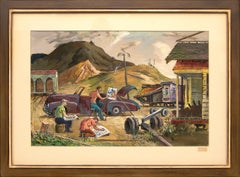
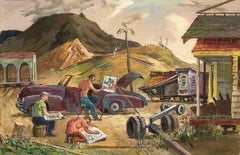
Frederick Shane Artists Sketching California 1940s Modernist Gouache

Frederick Shane Artists Sketching California 1940s Modernist Gouache

By Frederick Shane

Located in Denver, CO

A striking 1940s modernist gouache painting by Frederick Shane titled Artists Sketching (California), depicting three artists working outdoors against a sweeping mountainous landscap...

Category

1940s American Modern Art

Materials

Gouache

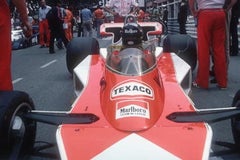
Monaco Grand Prix, 1973 - Monaco Grand Prix Formula One  James Hunt

Monaco Grand Prix, 1973 - Monaco Grand Prix Formula One James Hunt

By Slim Aarons

Located in Brighton, GB

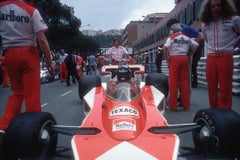
Monaco Grand Prix, 1973 - Monaco Grand Prix Formula One James Hunt by Slim Aarons 16 x 20" print. Limited Edition Estate Stamped Print. Edition of 150. Printed Later. 'Monaco Grand Prix' is a beautiful Limited Edition Estate Stamped Digital C-Type print from 20th Century photographer Slim Aarons. A unique view from the driver's height of Formula One Grand Prix...

Category

20th Century American Modern Art

Materials

Photographic Paper, C Print, Color, Digital

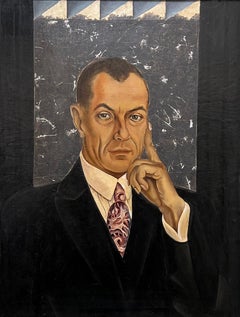
Portrait of J. L. David (Portrait)

Portrait of J. L. David (Portrait)

Located in Los Angeles, CA

Portrait of J. L. David (Portrait), c. 1930, oil on canvas adhered to board, apparently unsigned, 26 x 20 inches, exhibited: 1) Fourth Annual State-Wide Exhibition, Santa Cruz Art Le...

Category

1930s American Modern Art

Materials

Canvas, Oil, Board

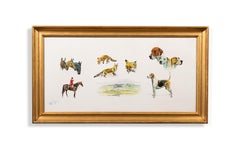
Hunting : The Necessary Ingredients

Hunting : The Necessary Ingredients

By Michael Lyne

Located in Stoke, Hampshire

Michael Lyne (1912-1989) The Necessary Ingredients Signed lower left Oil on canvas Canvas size - 20 x 40 in Framed size - 25 x 45 in 'The Necessary Ingredients' is a charming and c...

Category

20th Century American Modern Art

Materials

Oil

Atilt

Atilt

Located in Los Angeles, CA

Atilt, 1982, acrylic on canvas, 32 x 48 inches, signed and dated lower right, “Alfred P. Maurice 2725 A South Michigan Ave, Chicago, IL, 60616” inscribed verso, “ATILT” inscribed verso, “Maurice.018” inscribed on frame, exhibited: 1) Alfred P. Maurice Artist in the City Paintings 1979 - 1997, Archer Gallery of Clark College, Vancouver, WA, April 8 – April 30, 1997, #11, and 2) An Artful Life: Celebrating the Life of Creator, Teacher, and Collector Alfred Maurice...

Category

1980s American Modern Art

Materials

Canvas, Acrylic

The Remuda

The Remuda

By Mark Maggiori

Located in Draper, UT

Giclee print on 300 gsm archival cotton rag with dimensions of 30 x 40 in. Released in 2021 from an edition of 254. Signed and numbered by Mark Maggiori. Large format stunning print.

Category

2010s American Modern Art

Materials

Archival Paper

"Paper Making" WPA Industrial Mid-Century American Scene Social Realism Workers

"Paper Making" WPA Industrial Mid-Century American Scene Social Realism Workers

Located in New York, NY

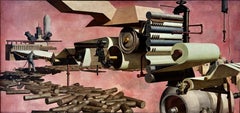
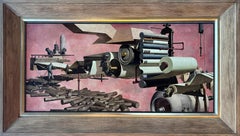
"Paper Making" WPA Industrial Mid-Century American Scene Social Realism Workers Douglas Crockwell (1904-1968) "Paper Making" 19 x 39 inches Oil on board, c. 1936 Signed verso Framed: 28 x 47 Provenance: Estate of the Artist BIO Spencer Douglass Crockwell was born into a comfortable middle class household on April 29, 1904 in Columbus, Ohio. His father, Charles Roland Crockwell, was a mining engineer; his mother, Cora, was the daughter of an Iowa attorney. He became a commercial artist and experimental filmmaker who spent a good part of his career creating illustrations and advertisements for the Saturday Evening Post. In 1907 the Crockwell family moved to St. Louis, Missouri, where he graduated from high school and then attended from Washington University. Initially he studied engineering, but soon switched to business. While still an undergraduate, Crockwell took courses at the St. Louis School of Fine Arts and quickly realized that he wanted to be an artist. After graduating from Washington University in 1926, Crockwell continued to study at the St. Louis School of Fine Arts until 1929. The following year he relocated to Chicago and continued his studies at the American Academy of Art. In 1930 and 1931 he studied in Europe on a Traveling Fellowship. In 1932 Douglass Crockwell moved to Glens Falls, New York, which was to be his home for the remainder of his life. The following year he married Margaret Braman. They had three children, a son Douglass and two daughters, Johanna and Margaret. During the depression he created murals and posters for the Works Progress Administration including Post Office murals in White River junction, Vermont; Endicott, New York; and Macon, Mississippi. In 1934 he painted Paper Workers, Finch Pruyn & Co. (the leading Glens Falls, New York company) for the WPA. In the 1930s Crockwell developed an interest in experimental animated films that occupied him for the rest of his life. In 1936 and 1937, he collaborated with David Smith, a sculptor, to create surrealist films. Because of his interest in experimental films, his output of paintings was limited to just twenty to forty illustrations a year during this time. Crockwell painted his first of many Saturday Evening Post cover in 1933. He also worked for Life, Look, and Esquire, and numerous national advertisers including Friskies dog food, Welch’s Grape Juice, Republic Steel...

Category

1930s American Modern Art

Materials

Oil, Board

Nocturnal NYC Skyline

Nocturnal NYC Skyline

Located in Los Angeles, CA

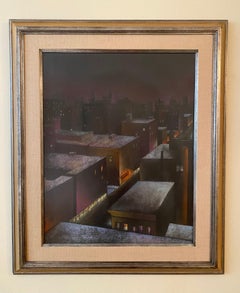
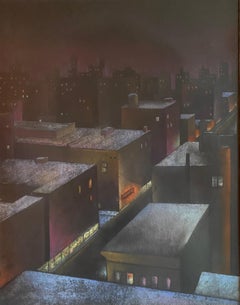
A modernist nocturnal cityscape done in 1938 by this somewhat obscure Artist. The work is pastel on paper and is handsomely framed under glass. Signed and dated 1938 lower right alon...

Category

1930s American Modern Art

Materials

Pastel

Cathedral de Saint Julien le Mans

Cathedral de Saint Julien le Mans

By John Taylor Arms

Located in Middletown, NY

Etching on antique cream laid paper with a deckle edge, 9 1/8 x 9 3/4 inches (232 x 248 mm); sheet 12 1/8 x 12 3/4 inches (307 x 323 mm), full margins. Signed and dated in pencil in ...

Category

Early 20th Century American Modern Art

Materials

Handmade Paper, Laid Paper, Etching

Blue Note
Blue Note

Blue Note

By Vaclav Vytlacil

Located in Missouri, MO

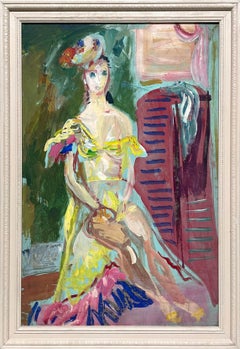
Framed Size: 50 1/4 x 38 inches Vaclav Vytlacil figurative abstraction, tempera on panel — "Blue Note" is a richly layered 1967 work that exemplifies the artist's signature synthesi...

Category

1960s American Modern Art
Materials

Tempera, Panel

American Modern art for sale on 1stDibs.
Find a wide variety of authentic American Modern art available for sale on 1stDibs. Works in this style were very popular during the 21st Century and Contemporary, but contemporary artists have continued to produce works inspired by this movement. If you’re looking to add art created in this style to introduce contrast in an otherwise neutral space in your home, the works available on 1stDibs include elements of blue, orange, purple, red and other colors. Many Pop art paintings were created by popular artists on 1stDibs, including Slim Aarons, Destro, Howard Schatz, and John Taylor Arms. Frequently made by artists working with Paint, and Oil Paint and other materials, all of these pieces for sale are unique and have attracted attention over the years. Not every interior allows for large American Modern art, so small editions measuring 0.25 inches across are also available.