Fauvist Art

to
519
583
188
175
83
68
Overall Width
to
Overall Height
to
10
942
145
16
15
27
38
200
239
73
116
47
33
118,300
64,561
56,657
28,661
14,576
9,635
6,907
6,037
4,168
3,158
2,541
2,323
2,138
601
602
460
31
278
215
151
111
72
51
43
35
35
33
30
28
26
23
21
20
19
17
17
16
467
416
264
191
186
32
28
18
17
17
226
40
768
327
Style: Fauvist
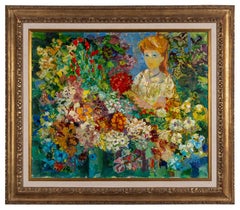
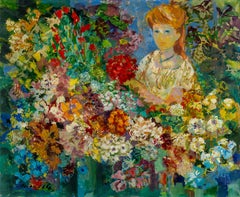
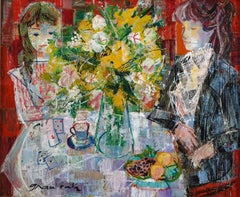
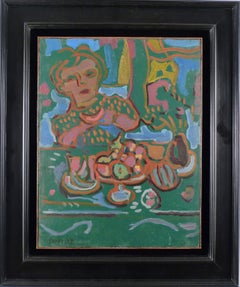
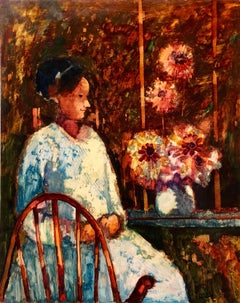
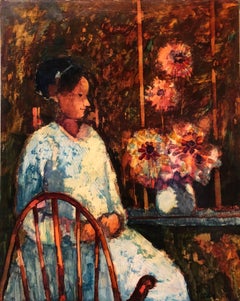
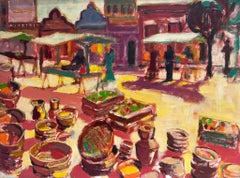
Marchande de Fleurs
Marchande de Fleurs

Marchande de Fleurs

By Emilio Grau Sala

Located in Sheffield, MA

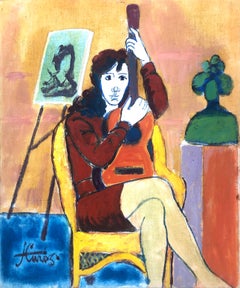
Emilio Grau-Sala Spanish, 1911-1975 Marchande de Fleurs Oil on Canvas 23 ¾ by 29 in, w/ frame 32 ½ by 37 ½ in Signed lower left Son of the draughtsman Juan Grau Miró, Grau Sala com...

Category

Mid-20th Century Fauvist Art

Materials

Oil

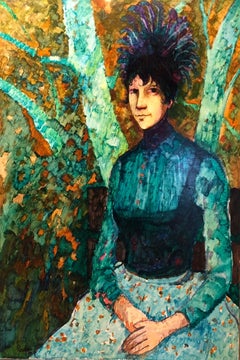
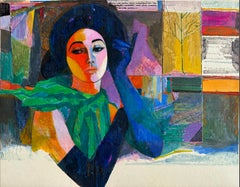
Modernist WILD THING Woman in Forest Oil Painting

Modernist WILD THING Woman in Forest Oil Painting

By Donald Roy Purdy

Located in Surfside, FL

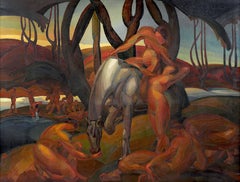
Genre: Modern Subject: Figures Medium: Oil Surface: Board Country: United States signed lower left Donald Roy Purdy is an American painter whose work evolved through a range of styl...

Category

20th Century Fauvist Art

Materials

Oil, Board

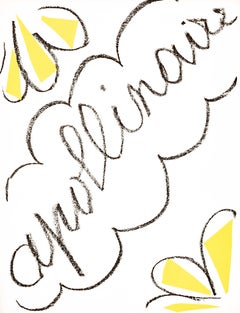
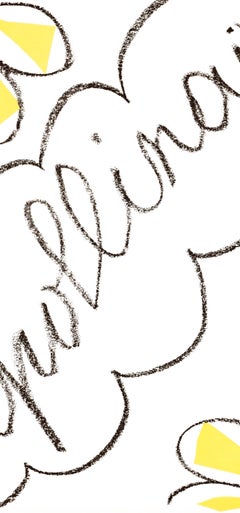
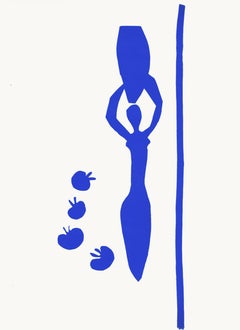
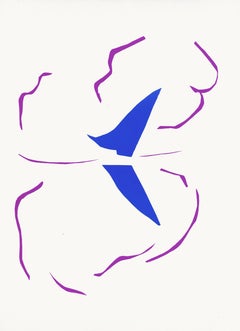
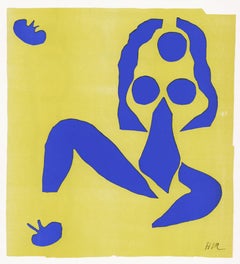
Henri Matisse, Untitled, from Apollinaire, 1952

Henri Matisse, Untitled, from Apollinaire, 1952

By Henri Matisse

Located in Southampton, NY

This exquisite lithograph by Henri Matisse (1869–1954), titled Sans titre (Untitled), from the album Apollinaire, Henri Matisse (Apollinaire, Henri Matisse), originates from the 1952...

Category

1950s Fauvist Art

Materials

Lithograph

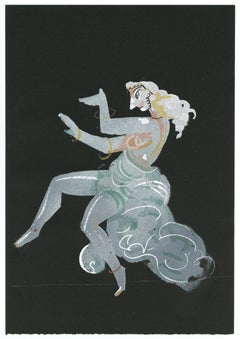
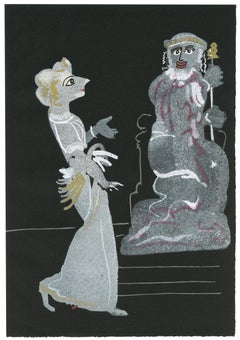
"Salomé" pochoir

"Salomé" pochoir

By (after) André Derain

Located in Henderson, NV

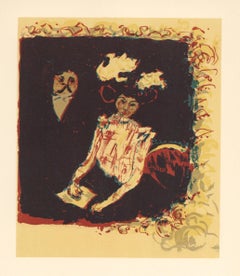
Medium: pochoir (after the gouache). This pochoir illustrates a scene from Oscar Wilde's "Salomé". It was printed in 1938 at the atelier Saudé of Paris and published by The Limited E...

Category

1930s Fauvist Art

Materials

Lithograph, Stencil

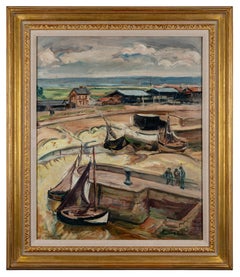
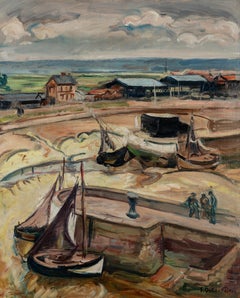
Vieux Bassin de Honfleur

Vieux Bassin de Honfleur

By Achille-Émile Othon Friesz

Located in Sheffield, MA

Achille-Emile Othon Friesz French, 1879-1949 Vieux Bassin de Honfleur Oil on canvas 23 ½ by 28 ¾ in, w/ frame 31 ⅜ by 36 ½ in Signed lower right Achille-Emile Othon Friesz, who lat...

Category

Early 20th Century Fauvist Art

Materials

Oil

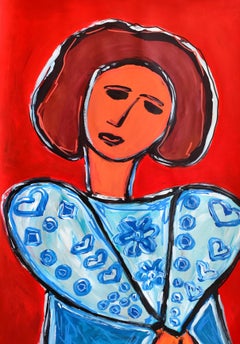
"Vibrant woman" Large-format woman's portrait painting inspired by Henri Matisse

"Vibrant woman" Large-format woman's portrait painting inspired by Henri Matisse

By Mougenot Natalya

Located in VÉNISSIEUX, FR

“Vibrant Woman” — 70 × 100 cm (27.6 × 39.4 inches) — is a contemporary figurative painting portraying a woman’s portrait, rendered in an expressive, intuitive style that blends eleme...

Category

2010s Fauvist Art

Materials

Paper, Acrylic

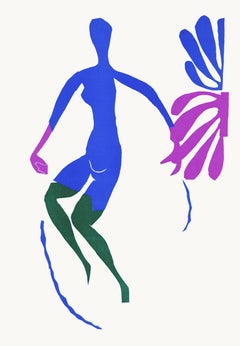
Henri Matisse, Lithograph VI, from Apollinaire, 1952

Henri Matisse, Lithograph VI, from Apollinaire, 1952

By Henri Matisse

Located in Southampton, NY

This exquisite lithograph by Henri Matisse (1869–1954), titled Lithographie VI (Lithograph VI), from the album Apollinaire, Henri Matisse (Apollinaire, Henri Matisse), originates fro...

Category

1950s Fauvist Art

Materials

Lithograph

"Salomé" pochoir

"Salomé" pochoir

By (after) André Derain

Located in Henderson, NV

Medium: pochoir (after the gouache). This pochoir illustrates a scene from Oscar Wilde's "Salomé". It was printed in 1938 at the atelier Saudé of Paris and published by The Limited E...

Category

1930s Fauvist Art

Materials

Lithograph, Stencil

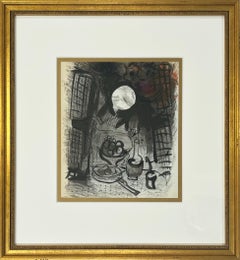
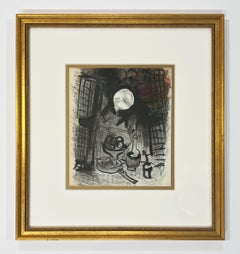
Brown Still Life from Chagall by Jacques Lassaigne

Brown Still Life from Chagall by Jacques Lassaigne

By Marc Chagall

Located in Washington, DC

Artist: Marc Chagall Medium: Lithograph Title: Brown Still Life Portfolio: Chagall by Jacques Lassaigne Year: 1957 Edition: 6,000 Framed Size: 13 3/4" x 15 1/2" Sheet Size: 9" x 7 3/...

Category

1950s Fauvist Art

Materials

Lithograph

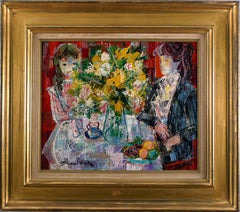
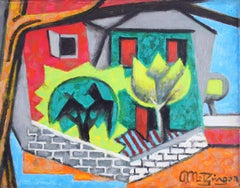
"Interieur aux Fleurs Jaunes" 20th Century Oil on Canvas by Emilio Grau Sala

"Interieur aux Fleurs Jaunes" 20th Century Oil on Canvas by Emilio Grau Sala

By Emilio Grau Sala

Located in Madrid, ES

EMILIO GRAU SALA Spanish, 1911 - 1975 INTERIEUR AUX FLEURS JAUNES signed "Grau Sala" (lower left) signed again, located, dated and titled "Grau Sala, Paris 61, Interieur aux fleurs jaunes" (on the reverse) oil on canvas 15 x 18-1/4 inches (38 x 46 cm.) framed: 23-1/2 x 26-1/2 (59.5 x 67 cm.) PROVENANCE Private Parisian Collection Interieur aux fleurs jaunes This interior with two female figures where also the plans made in different colors are drawing the composition. The abundant pictorial material distributed in geometric portions, gives life to the tablecloth and mother and daughter figures, in black and white colors of the jacket, while the black line takes care of the environments so as not to separate them. The fruit bowl and flowers give a cheerful touch with their pastel tones. Emilio Grau Sala came from a family of artists. He was born in Barcelona in 1911 and his father, a good cartoonist, had been one of the promoters of the "Salon des Humanistes" and made his exhibitions normally in "Sala Parés", Barcelona. His first works were exhibited at the Salon des Independents. In the years 1930-33 he had painted under the influence of Cubism, especially that of Torres García. It is from that time a painting of the port of Barcelona, ​​geometric and structural, which completely anticipated what would later be his work. His personality began fully painting watercolors and oils with a certain fantasy character, with a point of decorative instinct and themes full of naivety and grace. Romantic interiors, paddocks, port scenes, sailors, etc. Grau Sala was essentially a Mediterranean painter, son of post-impressionism and enriched with French painting of the last fifty years. Mediterranean because his work has the color and light of that land. He understood and assimilated impressionist painting very well, and for that reason he was never subject to the modules of a formulist realism, nor the sexigencias of the forms. In Paris he found the best environment to give us a fruitful and intense work, because he could use the expressive potential of French art to enrich it. All this made him a very esteemed artist everywhere where his work was known. He was also very often required to illustrate books and publications in Paris. Also his posters were very successful. He painted a large number of subjects, but perhaps the theme of horse racing is where you can see in a very clear way the joyful and optimistic life that was lived at that time. In this fabric there is an explosion of juicy and vivid colors full of ingenuity and simplicity in its composition. Only a teacher could turn the complicated into something simple and beautiful. Before this work we feel a deep emotion, the emotion of before starting a horse race. Joy and nervousness at the same time. Especially since it is a direct emotion. There are no intermediaries between our eyes and what the work intends to tell us. This is precisely what seduces and catches us of this painting. His works can be found in the Museums of the Villa de Paris, L'Ile de France Museum, at the Château de Sceaux, Honfleur Museum, La Rochelle Museum, Barcelona Museum...

Category

1960s Fauvist Art

Materials

Canvas, Oil

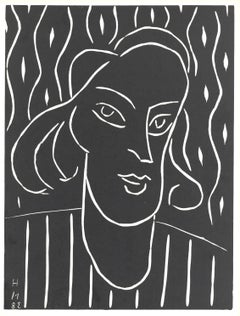
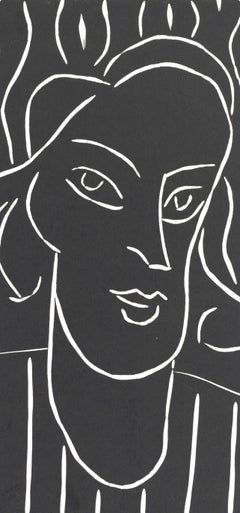
Henri Matisse, Teeny, from XXe siecle, 1938

Henri Matisse, Teeny, from XXe siecle, 1938

By Henri Matisse

Located in Southampton, NY

This exquisite linocut by Henri Matisse (1869–1954), titled Teeny, from the album XXe siecle, Chroniques du jour, 13 rue Valette (5e), Directeur G. di San Lazzaro, Sommaire du no. 4,...

Category

1930s Fauvist Art

Materials

Linocut

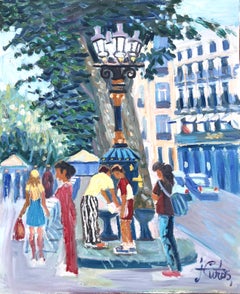
Francisco Bores, Sans titre

Francisco Bores, Sans titre

By Francisco Bores

Located in Madrid, ES

FRANCISCO BORES Spanish, 1898 - 1972 SANS TITRE signed and dated "Borès 42" (lower left) oil on panel 13-3/4 x 10-5/8 inches (35 x 27 cm.) framed: 19 x 15-3/4 inches (48 x 40 cm.) BIBLIOGRAPHY: Francisco Bores, Reasoned Catalogue, Volume I - Painting 1917-1944, Museo Nacional Centro de Arte Reina Sofía, Madrid, 2003, nº 1942 / 63, reproduced in p. 494 PROVENANCE Carmen Bores Collection, Francisco Bores daughter Private Collection, Madrid Francisco Bores López (Madrid, May 5, 1898 - Paris, May 10, 1972) was a Spanish painter of the so-called New School of Paris. His artistic training originated both in the Cecilio Pla painting academy, where he met Pancho Cossío, Manuel Ángeles Ortiz or Joaquín Peinado, and in the literary gatherings in Madrid related to ultraism. At this time he made engravings and woodcuts for a large number of magazines such as Horizonte, Cruz y Raya, Index, Revista de Occidente. In 1922 he participated in the National Exhibition of Fine Arts. In 1925 he participated in the first exhibition of the Iberian Artists Society. The limited success of this exhibition pushes him to go to Paris. In this city he shared a studio with the Spanish painter Pancho Cossío and also met Picasso and Juan Gris. In 1927 he held his first solo exhibition in Paris. From this moment on, Bores integrates himself into the Parisian artistic environment where he will live practically his entire life. In 1928, his first exhibition in a gallery in the United States, in 1930 he exhibited again, within a group exhibition at the Museum of Modern Art in New York. In the following years, he continued exhibiting in different galleries in Paris, such as the Georges Petit Gallery, the Bernheim Gallery and the Vavin Raspail Gallery. He also participates in several group exhibitions, highlighting the Exhibition of Contemporary Spanish Art...

Category

1940s Fauvist Art

Materials

Oil, Panel

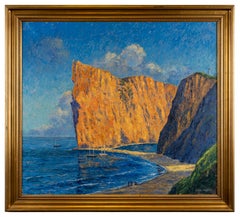
Low Tide
Low Tide

Low Tide

By Rupert Lovejoy

Located in Sheffield, MA

Rupert Scott Lovejoy American, 1885-1975 Low Tide Oil on canvas 32 ¼ by 36 ¼ in, w/ frame 37 ⅝ by 41 ¾ in Signed lower right Rupert Scott Lovejoy was born in Portland, Maine on 3 J...

Category

Mid-20th Century Fauvist Art

Materials

Oil

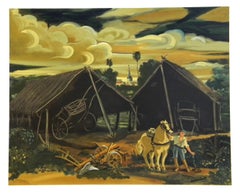
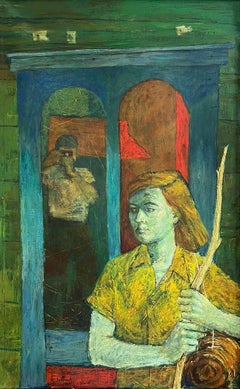
Crystal City -  Pushed Color Greens and Yellow

Crystal City - Pushed Color Greens and Yellow

Located in Miami, FL

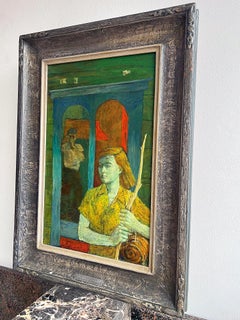
This is most likely a self-portrait. We see the artist in a reflection holding a small 1950s camera while his wife in the foreground holds a large bran...

Category

1950s Fauvist Art

Materials

Canvas, Oil

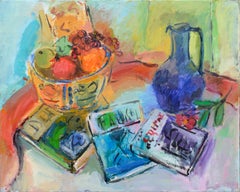
Fauvist Still Life with Fruit Basket and Books

Fauvist Still Life with Fruit Basket and Books

By Anthony Rappa

Located in Soquel, CA

A vibrant, colorful Fauvist still life by Monterey, California artist Anthony Rappa (American, 20th Century). Heavy, painterly paint application. Unsigned, from a collection of his w...

Category

1990s Fauvist Art

Materials

Canvas, Oil, Stretcher Bars

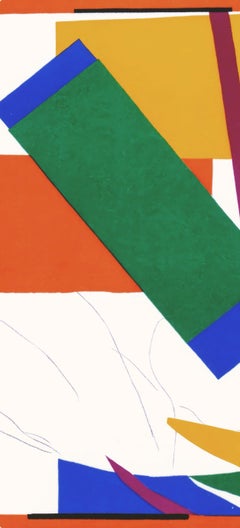
Henri Matisse, Christmas Night, from Last Works of Matisse, 1958 (after)

Henri Matisse, Christmas Night, from Last Works of Matisse, 1958 (after)

By Henri Matisse

Located in Southampton, NY

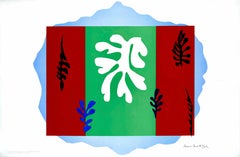
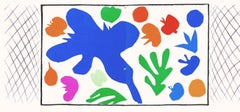
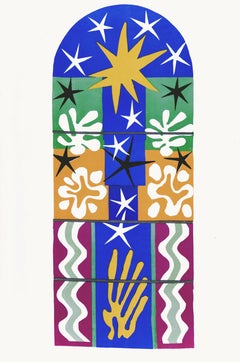
This exquisite lithograph after Henri Matisse (1869–1954), titled Nuit de Noel (Christmas Night), from Dernieres Oeuvres de Matisse 1950-1954 (Last Works of Matisse 1950-1954), Verve: Revue Artistique et Litteraire, Vol. IX, No. 35-36, originates from the July 28, 1958 issue published by Editions de la revue Verve, Paris, under the direction of Teriade, Editeur, Paris, and printed by Mourlot Freres, Paris, 1958. This visionary composition reflects Matisse’s late mastery of form and color, translating his celebrated cut-out aesthetic into the lithographic medium with remarkable clarity and vibrancy. Executed as a lithograph on velin du Marais paper, this work measures 14 x 10.5 inches (35.56 x 26.67 cm). Unsigned and unnumbered as issued. The edition exemplifies the superb craftsmanship of the Mourlot Freres atelier, renowned for its collaborations with the greatest modern masters of the 20th century. Artwork Details: Artist: After Henri Matisse (1869–1954) Title: Nuit de Noel (Christmas Night) Medium: Lithograph on velin du Marais paper Dimensions: 14 x 10.5 inches (35.56 x 26.67 cm) Inscription: Unsigned and unnumbered as issued Date: 1958 Publisher: Editions de la revue Verve, Paris, under the direction of Teriade, Editeur, Paris Printer: Mourlot Freres, Paris Catalogue raisonne references: Duthuit, Claude. Henri Matisse: Catalogue raisonne des ouvrages illustres. Editions Claude Duthuit, Paris, 1988, illustration 139. Condition: Well preserved, consistent with age and medium Provenance: From Dernieres Oeuvres de Matisse 1950-1954 (Last Works of Matisse 1950-1954), Verve: Revue Artistique et Litteraire, Vol. IX, No. 35-36, published by Editions de la revue Verve, Paris, 1958 Notes: Excerpted from the folio (translated from French), This double issue of VERVE is entirely devoted to the last works of Henri Matisse-1950-1954. These works, rendered in color litbography, were made by the artist, in gouache papers, cut with scissors and glued. They are accompanied by drawings executed during the same period or before. Matisse specially composed the cover of this album. Under his direction were drawn, during the year 1954, the first of these lithographic plates. The work was completed on July 28, 1958 by Mourlot Freres for lithography and by Master Printers Draeger Freres for heliogravures and typography. About the Publication: Dernieres Oeuvres de Matisse 1950-1954 (Last Works of Matisse 1950-1954), published as Verve Vol. IX, No. 35-36 on July 28, 1958, represents one of the most important posthumous tributes to Henri Matisse’s final period of artistic production. Conceived and directed by the visionary publisher Teriade, this issue of Verve is entirely dedicated to the works Matisse created between 1950 and 1954, a period defined by his pioneering cut-out technique. Produced in Paris with exceptional technical precision, the publication brings together color lithographs faithfully reproducing Matisse’s gouache cut-outs alongside a selection of drawings executed during the same period or earlier. The lithographs were printed by Mourlot Freres, while Draeger Freres oversaw the heliogravures and typography, ensuring the highest level of craftsmanship. The project was initiated under Matisse’s direct supervision in 1954, with the artist guiding the early stages of translation from original cut paper compositions into lithographic form. As part of the broader legacy of Verve, one of the most influential artistic and literary publications of the twentieth century, this issue stands as a monumental record of Matisse’s final innovations, preserving the essence of his late style and affirming his enduring impact on modern art. About the Artist: Henri Matisse (1869–1954) was a French painter, sculptor, draughtsman, and printmaker whose revolutionary vision redefined modern art through his daring use of color, line, and form. Celebrated as one of the greatest artists of the 20th century, Matisse led the Fauvist movement and devoted his life to the pursuit of balance, beauty, and emotional expression in visual art. His early works burst with vibrant hues and liberated brushwork, while his later “cut-out” compositions achieved a poetic simplicity that transformed the relationship between color and space. Deeply influenced by the work of Paul Cezanne, Vincent van Gogh, and Georges Seurat, as well as by the rhythmic patterns of Islamic art, Byzantine mosaics, and Japanese prints, Matisse forged a new visual language that celebrated joy, movement, and serenity. He was part of an extraordinary generation of artists who shaped the evolution of modernism, maintaining lifelong dialogue and friendly rivalry with contemporaries such as Pablo Picasso, Georges Braque, Marc Chagall, Andre Derain, Albert Marquet, and Raoul Dufy—peers who, like him, sought to expand the expressive potential of color and composition. Matisses influence extended across generations, inspiring modern and contemporary masters including Alexander Calder, Alberto Giacometti, Salvador Dali, Joan Miro, Wassily Kandinsky, Marcel Duchamp, and Man Ray, each of whom drew upon his fearless experimentation and refined visual harmony. His paintings, sculptures, and works on paper are held in the most prestigious museums in the world, including the Museum of Modern Art, the Centre Pompidou, the Tate, and the Hermitage Museum, where his art continues to symbolize the essence of creativity and human emotion. The highest price ever paid for a Henri Matisse artwork is approximately 80.8 million USD, achieved in 2018 at Christies New York for Odalisque couchee aux magnolias (1923). Henri Matisse Nuit de Noel...

Category

1950s Fauvist Art

Materials

Lithograph

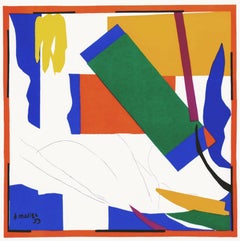
Henri Matisse, The Swimming Pool I, from Last Works of Matisse, 1958 (after)

Henri Matisse, The Swimming Pool I, from Last Works of Matisse, 1958 (after)

By Henri Matisse

Located in Southampton, NY

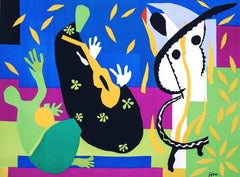
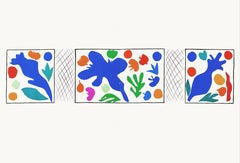
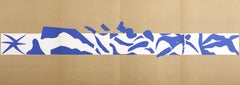
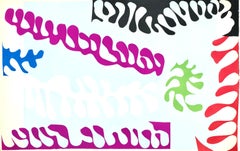
This exquisite lithograph after Henri Matisse (1869–1954), titled La Piscine I (The Swimming Pool I), from Dernieres Oeuvres de Matisse 1950-1954 (Last Works of Matisse 1950-1954), Verve: Revue Artistique et Litteraire, Vol. IX, No. 35-36, originates from the July 28, 1958 issue published by Editions de la revue Verve, Paris, under the direction of Teriade, Editeur, Paris, and printed by Mourlot Freres, Paris, 1958. This visionary composition reflects Matisse’s late mastery of form and color, translating his celebrated cut-out aesthetic into the lithographic medium with remarkable clarity and vibrancy. Executed as a lithograph on velin du Marais paper, this work measures 14 x 42 inches (35.56 x 106.68 cm), with trifold and stitch perforations as issued. Unsigned and unnumbered as issued. The edition exemplifies the superb craftsmanship of the Mourlot Freres atelier, renowned for its collaborations with the greatest modern masters of the 20th century. Artwork Details: Artist: After Henri Matisse (1869–1954) Title: La Piscine I (The Swimming Pool I) Medium: Lithograph on velin du Marais paper Dimensions: 14 x 42 inches (35.56 x 106.68 cm), with trifold and stitch perforations as issued Inscription: Unsigned and unnumbered as issued Date: 1958 Publisher: Editions de la revue Verve, Paris, under the direction of Teriade, Editeur, Paris Printer: Mourlot Freres, Paris Catalogue raisonne references: Duthuit, Claude. Henri Matisse: Catalogue raisonne des ouvrages illustres. Editions Claude Duthuit, Paris, 1988, illustration 139. Condition: Well preserved, consistent with age and medium Provenance: From Dernieres Oeuvres de Matisse 1950-1954 (Last Works of Matisse 1950-1954), Verve: Revue Artistique et Litteraire, Vol. IX, No. 35-36, published by Editions de la revue Verve, Paris, 1958 Notes: Excerpted from the folio (translated from French), This double issue of VERVE is entirely devoted to the last works of Henri Matisse-1950-1954. These works, rendered in color litbography, were made by the artist, in gouache papers, cut with scissors and glued. They are accompanied by drawings executed during the same period or before. Matisse specially composed the cover of this album. Under his direction were drawn, during the year 1954, the first of these lithographic plates. The work was completed on July 28, 1958 by Mourlot Freres for lithography and by Master Printers Draeger Freres for heliogravures and typography. About the Publication: Dernieres Oeuvres de Matisse 1950-1954 (Last Works of Matisse 1950-1954), published as Verve Vol. IX, No. 35-36 on July 28, 1958, represents one of the most important posthumous tributes to Henri Matisse’s final period of artistic production. Conceived and directed by the visionary publisher Teriade, this issue of Verve is entirely dedicated to the works Matisse created between 1950 and 1954, a period defined by his pioneering cut-out technique. Produced in Paris with exceptional technical precision, the publication brings together color lithographs faithfully reproducing Matisse’s gouache cut-outs alongside a selection of drawings executed during the same period or earlier. The lithographs were printed by Mourlot Freres, while Draeger Freres oversaw the heliogravures and typography, ensuring the highest level of craftsmanship. The project was initiated under Matisse’s direct supervision in 1954, with the artist guiding the early stages of translation from original cut paper compositions into lithographic form. As part of the broader legacy of Verve, one of the most influential artistic and literary publications of the twentieth century, this issue stands as a monumental record of Matisse’s final innovations, preserving the essence of his late style and affirming his enduring impact on modern art. About the Artist: Henri Matisse (1869–1954) was a French painter, sculptor, draughtsman, and printmaker whose revolutionary vision redefined modern art through his daring use of color, line, and form. Celebrated as one of the greatest artists of the 20th century, Matisse led the Fauvist movement and devoted his life to the pursuit of balance, beauty, and emotional expression in visual art. His early works burst with vibrant hues and liberated brushwork, while his later “cut-out” compositions achieved a poetic simplicity that transformed the relationship between color and space. Deeply influenced by the work of Paul Cezanne, Vincent van Gogh, and Georges Seurat, as well as by the rhythmic patterns of Islamic art, Byzantine mosaics, and Japanese prints, Matisse forged a new visual language that celebrated joy, movement, and serenity. He was part of an extraordinary generation of artists who shaped the evolution of modernism, maintaining lifelong dialogue and friendly rivalry with contemporaries such as Pablo Picasso, Georges Braque, Marc Chagall, Andre Derain, Albert Marquet, and Raoul Dufy—peers who, like him, sought to expand the expressive potential of color and composition. Matisses influence extended across generations, inspiring modern and contemporary masters including Alexander Calder, Alberto Giacometti, Salvador Dali, Joan Miro, Wassily Kandinsky, Marcel Duchamp, and Man Ray, each of whom drew upon his fearless experimentation and refined visual harmony. His paintings, sculptures, and works on paper are held in the most prestigious museums in the world, including the Museum of Modern Art, the Centre Pompidou, the Tate, and the Hermitage Museum, where his art continues to symbolize the essence of creativity and human emotion. The highest price ever paid for a Henri Matisse artwork is approximately 80.8 million USD, achieved in 2018 at Christies New York for Odalisque couchee aux magnolias (1923). Henri Matisse La Piscine...

Category

1950s Fauvist Art

Materials

Lithograph

Henri Matisse, Lithograph III, from Apollinaire, 1952

Henri Matisse, Lithograph III, from Apollinaire, 1952

By Henri Matisse

Located in Southampton, NY

This exquisite lithograph by Henri Matisse (1869–1954), titled Lithographie III (Lithograph III), from the album Apollinaire, Henri Matisse (Apollinaire, Henri Matisse), originates f...

Category

1950s Fauvist Art

Materials

Lithograph

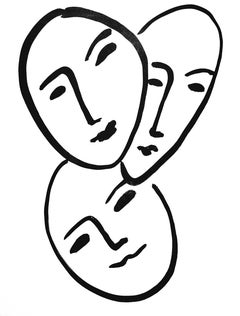
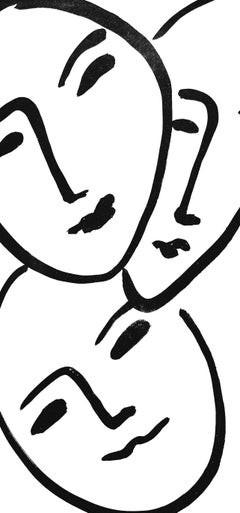
Henri Matisse, Three Heads. To Friendship, from Apollinaire, 1952

Henri Matisse, Three Heads. To Friendship, from Apollinaire, 1952

By Henri Matisse

Located in Southampton, NY

This exquisite aquatint by Henri Matisse (1869–1954), titled Trois têtes. A l'amitié (Three Heads. To Friendship), from the album Apollinaire, Henri Matisse (Apollinaire, Henri Matisse), originates from the 1952 edition published by Editions Raisons d'etre, Paris, and printed by Mourlot Freres, Paris, April 24, 1952. The work captures Matisses lyrical line and expressive minimalism, paying tribute to the French poet Guillaume Apollinaire through a synthesis of portraiture and calligraphic grace. Executed as an aquatint on velin a la forme des papeteries d'Arches paper, this work measures 12.99 x 9.84 inches (33 x 25 cm). Unsigned and unnumbered, as issued. The edition exemplifies the superior craftsmanship of Mourlot Freres, Paris. Artwork Details: Artist: Henri Matisse (1869–1954) Title: Trois têtes. A l'amitié (Three Heads. To Friendship), from the album Apollinaire, Henri Matisse (Apollinaire, Henri Matisse) Medium: Aquatint on velin a la forme des papeteries d'Arches paper Dimensions: 12.99 x 9.84 inches (33 x 25 cm) Inscription: Unsigned and unnumbered, as issued Date: 1952 Publisher: Editions Raisons d'etre, Paris Printer: Mourlot Freres, Paris Catalogue Raisonne Reference: Duthuit, Claude. Henri Matisse: Catalogue raisonne des ouvrages illustres. Editions Claude Duthuit, Paris, 1988, illustration 31. Condition: Well preserved, consistent with age and medium Provenance: From the album Apollinaire, Henri Matisse (Apollinaire, Henri Matisse), published by Editions Raisons d'etre, Paris; printed by Mourlot Freres, Paris, 1952 Notes: Excerpted from the album (translated from French), Printing of this album was finished on April, Twenty-Four, M.CM.LII for the Editions Raisons d'etre, 2 rue des Beaux-Arts in Paris, was produced by Fernand Mourlot, based on the models of Henri Matisse. The eight original lithographs were shot on the presses of Mourlot Freres who also printed the cover and case composed by the artist. The stones were erased after drawing. The text and letrins engraved by Henri Matisse were drawn by Coulouma S.A., printer in Paris. Justification of the draw— XXX examples on large velin d'Arches a la forme, signed by the author and the artist, accompanied by a series of original lithographs numbered from I to XXX; CCC examples on velin d'Arches a la forme numbered from XXXI to CCCXXX; XX examples of non-commerce collaborators numbered from I to XX and in addition a few nominative examples on Grand Velin. About the Publication: Apollinaire, Henri Matisse (Apollinaire, Henri Matisse), published by Editions Raisons d'etre, Paris, in 1952, stands among Matisses most intimate artist’s albums, conceived as a visual homage to the poet Guillaume Apollinaire, whose friendship and creative influence had profoundly shaped the avant-garde in the early 20th century. The album unites Matisses mastery of line with his reverence for literature, pairing portraits, decorative initials, and typographic designs engraved in his own hand. Printed by the esteemed atelier Mourlot Freres, the volume exemplifies the peak of French postwar printmaking, merging literary refinement with visual purity. Each print reveals Matisses poetic sensibility—his ability to render emotion through the economy of contour and rhythm. About the Artist: Henri Matisse (1869–1954) was a French painter, sculptor, draughtsman, and printmaker whose revolutionary vision redefined modern art through his daring use of color, line, and form. Celebrated as one of the greatest artists of the 20th century, Matisse led the Fauvist movement and devoted his life to the pursuit of balance, beauty, and emotional expression in visual art. His early works burst with vibrant hues and liberated brushwork, while his later “cut-out” compositions achieved a poetic simplicity that transformed the relationship between color and space. Deeply influenced by the work of Paul Cezanne, Vincent van Gogh, and Georges Seurat, as well as by the rhythmic patterns of Islamic art, Byzantine mosaics, and Japanese prints, Matisse forged a new visual language that celebrated joy, movement, and serenity. He was part of an extraordinary generation of artists who shaped the evolution of modernism, maintaining lifelong dialogue and friendly rivalry with contemporaries such as Pablo Picasso, Georges Braque, Marc Chagall, Andre Derain, Albert Marquet, and Raoul Dufy—peers who, like him, sought to expand the expressive potential of color and composition. Matisses influence extended across generations, inspiring modern and contemporary masters including Alexander Calder, Alberto Giacometti, Salvador Dali, Joan Miro, Wassily Kandinsky, Marcel Duchamp, and Man Ray, each of whom drew upon his fearless experimentation and refined visual harmony. His paintings, sculptures, and works on paper are held in the most prestigious museums in the world, including the Museum of Modern Art, the Centre Pompidou, the Tate, and the Hermitage Museum, where his art continues to symbolize the essence of creativity and human emotion. The highest price ever paid for a Henri Matisse artwork is approximately 80.8 million USD, achieved in 2018 at Christies New York for Odalisque couchee aux magnolias (1923). Henri Matisse Trois têtes. A l'amitié (Three Heads. To Friendship) Apollinaire, Henri Matisse (Apollinaire, Henri Matisse) 1952, Matisse Editions Raisons d'etre, Matisse Mourlot Freres, Matisse aquatint...

Category

1950s Fauvist Art
Materials

Aquatint

Fauvist art for sale on 1stDibs.
Find a wide variety of authentic Fauvist art available for sale on 1stDibs. Works in this style were very popular during the 21st Century and Contemporary, but contemporary artists have continued to produce works inspired by this movement. If you’re looking to add art created in this style to introduce contrast in an otherwise neutral space in your home, the works available on 1stDibs include elements of blue, orange, purple, green and other colors. Many Pop art paintings were created by popular artists on 1stDibs, including Charles Cobelle, (after) André Derain, Evelyne Ballestra, and (after) Pierre Bonnard. Frequently made by artists working with Paint, and Oil Paint and other materials, all of these pieces for sale are unique and have attracted attention over the years. Not every interior allows for large Fauvist art, so small editions measuring 3.94 inches across are also available. Prices for art made by famous or emerging artists can differ depending on medium, time period and other attributes. On 1stDibs, the price for these items starts at $1 and tops out at $2,835,000, while the average work sells for $1,532.