Japanese Warrior Screen

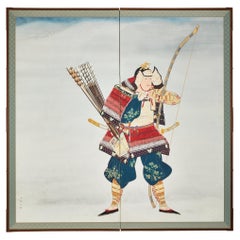
Japanese Two Panel Screen: Samurai Warrior

Japanese Two Panel Screen: Samurai Warrior

Located in Hudson, NY

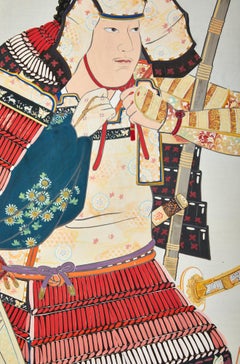
Standing portrait of a samurai, thought to be Heiji Shigemori. Startlingly similar to a painting exhibited in the 1928 Neiten exhibition. (See b/w image of screen that was shown at N...

Category

20th Century Japanese Paintings and Screens

Materials

Silk, Wood

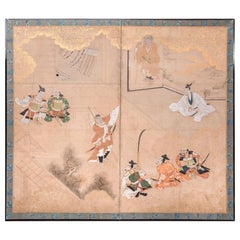
Japanese Two Panel Screen: Genpei Warriors

Japanese Two Panel Screen: Genpei Warriors

Located in Hudson, NY

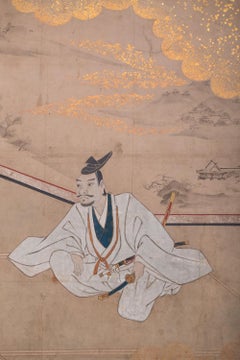
The Genpei War took place from 1180–1185, during which the Minamoto clan rebelled against the Taira clan for control of Japan. The two clans had a bitter rivalry for years, and the M...

Category

Antique Early 19th Century Japanese Edo Paintings and Screens

Materials

Gold Leaf

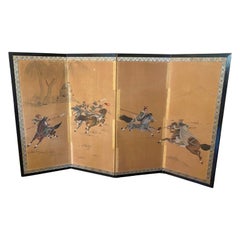
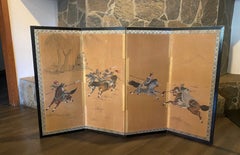
Japanese Chinese Asian Four Panel Folding Byobu Screen Samurai Warriors Battle

Japanese Chinese Asian Four Panel Folding Byobu Screen Samurai Warriors Battle

Located in Studio City, CA

A wonderful four-panel Japanese (or Chinese) Byobu folding screen featuring a battlefield landscape with warring samurai warriors engaged in a fierce fight.

Category

Mid-20th Century Japanese Showa Paintings and Screens

Materials

Wood, Paint, Paper

Recent Sales

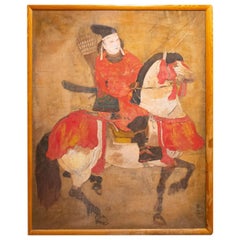
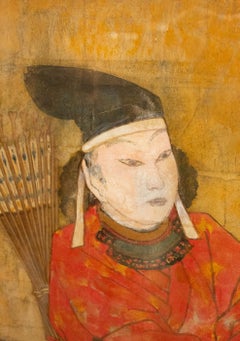
Edo Period, Early 19th Century, Painting of a Nobleman Warrior

Edo Period, Early 19th Century, Painting of a Nobleman Warrior

Located in Hudson, NY

Edo period, early 19th century, painting of a Nobleman Warrior, a 12th century Japanese subject of a Heike archer. Signature abstracted and unreadable. Comes framed.

Category

Antique Early 19th Century Japanese Edo Paintings and Screens

Materials

Paper

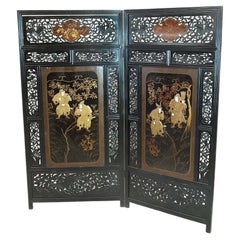
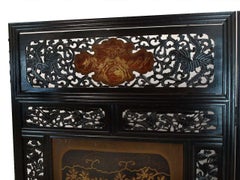
Japanese Lacquer Two Fold Samurai Warrior Screen

Japanese Lacquer Two Fold Samurai Warrior Screen

Located in Wilson, NC

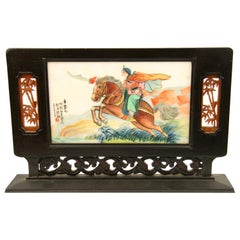
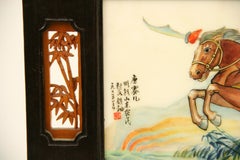
Japanese lacquer two fold samurai warrior screen, each side with reticulated carved panels encompassing the vertical panel featuring two warriors displayed in relief, they are surrou...

Category

Antique 1890s Japanese Screens and Room Dividers

Materials

Gold

People Also Browsed

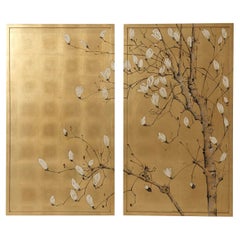
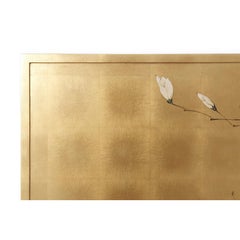
Set of Two Gilt Japanese Paintings

Set of Two Gilt Japanese Paintings

$5,514 / item

H 49.5 in W 56.25 in D 0.75 in

Set of Two Gilt Japanese Paintings

Located in Westwood, NJ

A set of two Japanese paintings, each with a hand gilt background depicting a Japanese Magnolia painted sans traverse across the two panels. The originals Japanese, circa 1900. Dime...

Category

21st Century and Contemporary Vietnamese Anglo-Japanese Paintings and Sc...

Materials

Wood, Giltwood

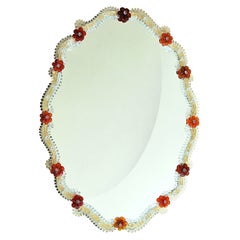
Rosso Glass Wall Mirror

Rosso Glass Wall Mirror

$2,895 / item

H 31.5 in W 23.63 in D 1.97 in

Rosso Glass Wall Mirror

By Specchi Veneziani

Located in Milan, IT

Crafted in the finest Murano tradition, this exquisite Venetian mirror is a true work of art. Assembled with crystal and gold elements, and adorned with red glass flowers, each piece...

Category

2010s Italian Renaissance Wall Mirrors

Materials

Glass

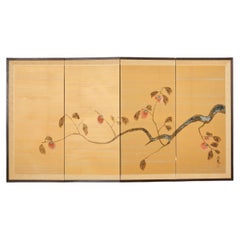
Japanese Showa Four Panel Screen Persimmon Branch in Snow

Japanese Showa Four Panel Screen Persimmon Branch in Snow

Located in Rio Vista, CA

Charming Japanese 20th century Showa period four-panel folding byobu screen depicting a fruiting persimmon branch over a dramatic gilt silk ground. The painting is executed in the Ni...

Category

20th Century Japanese Showa Paintings and Screens

Materials

Brass

Framed Antique Japanese Silk Embroidery Fukusa Textile Panel

Framed Antique Japanese Silk Embroidery Fukusa Textile Panel

Located in Atlanta, GA

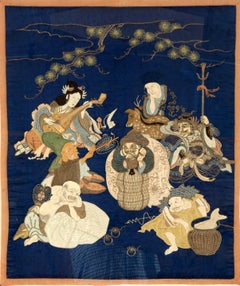
A Japanese Fukusa Panel with tassels displayed in a gilt frame circa Meiji Period. Fukusa is a traditional Japanese textile art used as a wrap for presenting gifts at important occas...

Category

Antique Late 19th Century Japanese Meiji Textiles

Materials

Silk, Wood

Antique Chinese Figural Black Lacquer Soapstone MOP Folding Screen Room Divider

Antique Chinese Figural Black Lacquer Soapstone MOP Folding Screen Room Divider

Located in Dayton, OH

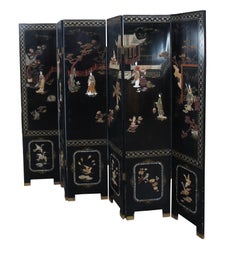
An Exquisite Mid 20th Century Chinoiserie Six Panel Folding Screen. Features a black lacquer frame decorated with a traditional oriental garden scene with raised soapstone figures a...

Category

Mid-20th Century Chinese Chinoiserie Screens and Room Dividers

Materials

Soapstone, Brass

Early 20th Century Japanese 6-Panel Gouache and Gold Leaf Painted Table Screen

Early 20th Century Japanese 6-Panel Gouache and Gold Leaf Painted Table Screen

Located in Morristown, NJ

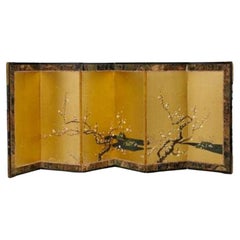
20th c., Showa period gouache and gold leaf Japanese screen. Depicting plum tree blossoms on a riverbank across 6 panels. Plum blossoms are often mentioned in Japanese poetry as a sy...

Category

20th Century Japanese Showa Paintings and Screens

Materials

Gold Leaf

Japanese Showa Four Panel Screen Pair of Karashishi Foo Dogs

Japanese Showa Four Panel Screen Pair of Karashishi Foo Dogs

Located in Rio Vista, CA

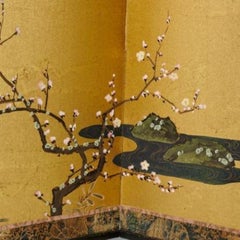
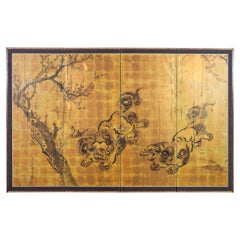
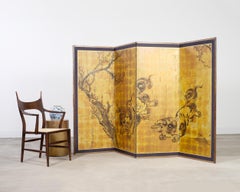
Fascinating Japanese Showa period four-panel folding byobu screen depicting a pair of Karashishi foo dogs or lions frolicking in a spring landscape amid flowering prunus after Matsum...

Category

20th Century Japanese Showa Paintings and Screens

Materials

Brass

B31 Japanese Antiques 2panels, paper, folding Screen with flower

B31 Japanese Antiques 2panels, paper, folding Screen with flower

Located in Niiza, JP

Material: paper on wooden frame One piece: W755×H1520mm×D15mm, Unfolded size: W1510mm Folded size: W755×H1520×D30mm, 5kg Packaging (sandwiched with 5-10mm plywood): 12cm x 83cm x 16...

Category

Antique 19th Century Japanese Paintings and Screens

Materials

Paper

Kiku to Hagi Byobu, Rinpa School Style, Edo Period.

Kiku to Hagi Byobu, Rinpa School Style, Edo Period.

$20,000

H 67.25 in W 147 in D 0.75 in

Kiku to Hagi Byobu, Rinpa School Style, Edo Period.

Located in Point Richmond, CA

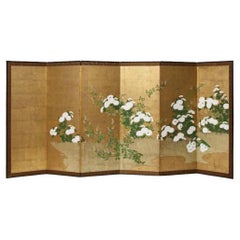
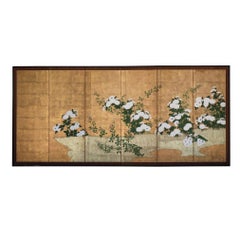
A Chrysanthemum and Bush Clover painting on gold leaf six-panel folding screen, painted with clusters of leafy green chrysanthemum plants with white blossoms having moriage relief p...

Category

Antique Early 1800s Japanese Edo Paintings and Screens

Materials

Gold Leaf

Japanese Edo Six-Panel Haboku Landscapes of Seasons

Japanese Edo Six-Panel Haboku Landscapes of Seasons

Located in Rio Vista, CA

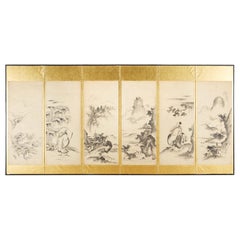
19th century Japanese Edo period six-panel screen painted in Haboku (splashed ink) style. Depicts Four Seasons landscape scenes with two portraits of Chinese sages. One sage is trave...

Category

Antique 19th Century Japanese Edo Paintings and Screens

Materials

Gold Leaf

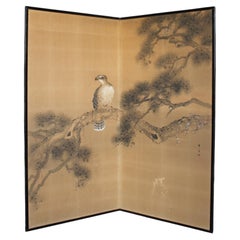
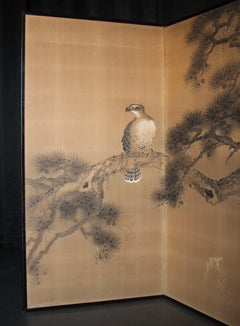
B127 Old Japanese 2panels Byobu, folding Screen, Hawk and Pine

B127 Old Japanese 2panels Byobu, folding Screen, Hawk and Pine

Located in Niiza, JP

Material: paper, wooden frame One piece: W760×H1510mm×D18mm Unfolded size: W1520mm Folded size: W760×H1510mm×D36mm, 4kg Packaging (sandwiched with 5-10mm plywood): 10cm x 80cm x 160c...

Category

20th Century Japanese Paintings and Screens

Materials

Paper

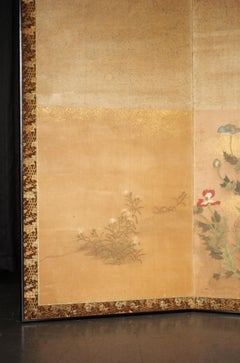
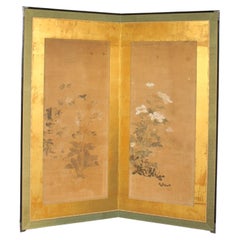
B122 Japanese Antiques 2panels Byobu, paper, folding Screen Autumn grasses

B122 Japanese Antiques 2panels Byobu, paper, folding Screen Autumn grasses

Located in Niiza, JP

Material: paper, fabric on wooden frame One piece: W820×H1730mm×D17mm Painting seet: W550× H1290mm Unfolded size: W1640mm Folded size: W820×H1730×D35mm, 6kg Packaging (sandwiched wit...

Category

Antique Early 19th Century Japanese Paintings and Screens

Materials

Cedar, Paper

Japanese Screen Painting, Circa 1700 'Tales of Ise' by Tosa Mitsusuke

Japanese Screen Painting, Circa 1700 'Tales of Ise' by Tosa Mitsusuke

By Tosa Mitsusuke 1

Located in Kyoto, JP

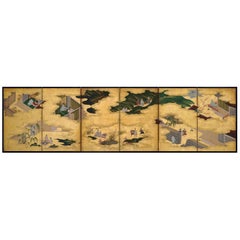
A six-fold Japanese screen by Tosa Mitsusuke (1675-1710), Japan 17th-18th century, Edo period. The signature reads Shoroku-i ge Tosa sa Konoe Shogen Mitsusuke Hiitsu. The seal is il...

Category

Antique Late 17th Century Japanese Edo Paintings and Screens

Materials

Gold Leaf

Japanese Edo Period Two-Panel Screen

Japanese Edo Period Two-Panel Screen

$6,500

H 66 in W 72 in D 1.5 in

Japanese Edo Period Two-Panel Screen

Located in Stamford, CT

A Japanese Edo Period two panel folding screen with white and brown hawks of ink and color on paper.

Category

Antique Mid-19th Century Japanese Edo Paintings and Screens

Materials

Paper

Circa 1925. Taisho era Japanese Nihonga Screen. Camellia & Bamboo.

Circa 1925. Taisho era Japanese Nihonga Screen. Camellia & Bamboo.

Located in Kyoto, JP

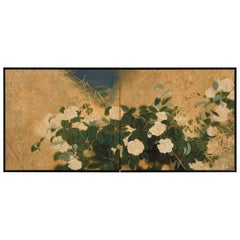
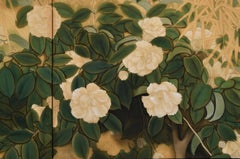
Anonymous Camellia & Bamboo Taisho era Two-panel Japanese Screen. Mineral pigment, gofun and ink on silk. A small Japanese Nihonga screen capturing a moment suspended in time whe...

Category

Early 20th Century Japanese Taisho Paintings and Screens

Materials

Silk

Pair of 18th Century Japanese Edo Screens of Chinese Immortals

Pair of 18th Century Japanese Edo Screens of Chinese Immortals

Located in Rio Vista, CA

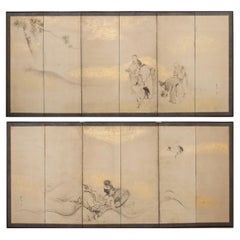
Mesmerizing pair of late 18th/early 19th century Japanese Edo period byobu screens by Shibata Gito (Japanese 1780-1819). The paintings depict Chinese immortals in a dreamy landscape....

Category

Antique 18th Century Japanese Edo Paintings and Screens

Materials

Silk, Wood, Paper

Get Updated with New Arrivals
Save "Japanese Warrior Screen", and we’ll notify you when there are new listings in this category.

Japanese Warrior Screen For Sale on 1stDibs

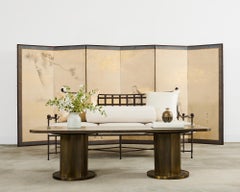
Find many varieties of an authentic Japanese warrior screen available at 1stDibs. Frequently made of wood, gold and metal, every Japanese warrior screen was constructed with great care. There are 15 variations of the antique or vintage Japanese warrior screen you’re looking for, while we also have 1 modern editions of this piece to choose from as well. There are many kinds of the Japanese warrior screen you’re looking for, from those produced as long ago as the 18th Century to those made as recently as the 21st Century. A Japanese warrior screen, designed in the folk art style, is generally a popular piece of furniture.
How Much is a Japanese Warrior Screen?

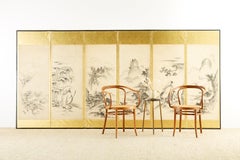
Prices for a Japanese warrior screen can differ depending upon size, time period and other attributes — at 1stDibs, they begin at $750 and can go as high as $85,000, while the average can fetch as much as $7,847.

Finding the Right Paintings-screens for You

Traditional Asian paintings were often created on scrolls and folding screens. Artisans made screens that could be folded up or spread out by connecting several panels using hinges. Today, antique Asian folding screens and paintings are sophisticated decorative accents that can serve as makeshift partitions to ensure privacy.
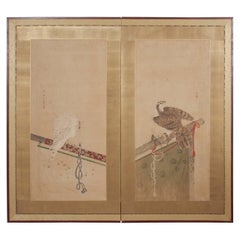
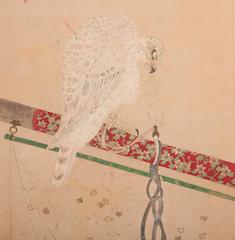
The original folding screens were created by Chinese artists. The earliest record of screens comes from the 2nd century B.C., and surviving examples date back to the Ming dynasty. Chinese painting utilizes many of the same tools as calligraphy — these screens were crafted from wood with painted panels featuring striking art or calligraphy that told cultural stories or represented nature and life in the area.

The practice was introduced to Japan, where paintings for screens were made on paper and silk, in the 8th century. These paintings frequently feature subjects such as landscapes, animals, flowers and Buddhist religious themes. Along with screens for tea ceremonies and dance backgrounds, there were screens for use in Shinto and Buddhist temples.

In the 17th century, screens began to be imported to Europe where their popularity grew. Coco Chanel famously collected Coromandel folding screens.

Traditional Asian paintings can make a tasteful addition to any wall, and screens can be used as decoration or, in the case of larger iterations, as an aesthetic way to divide a large room. Browse the selection of antique Asian paintings and screens from a variety of styles and eras on 1stDibs.