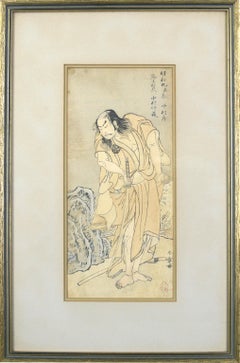
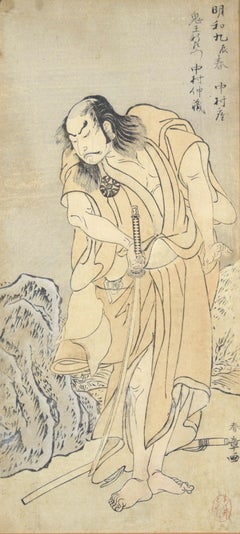
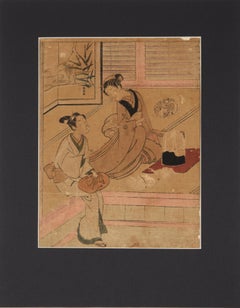
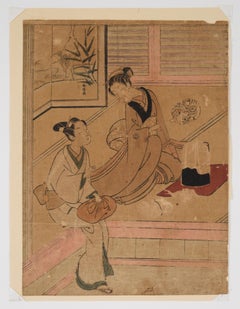
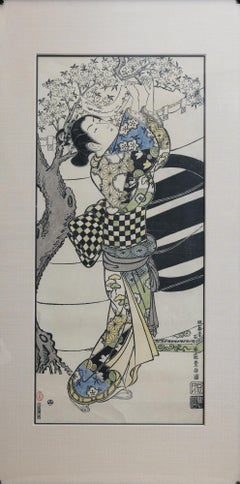
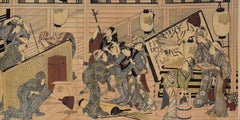
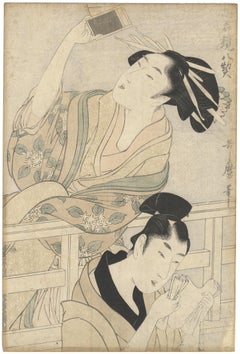
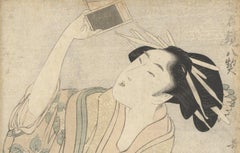
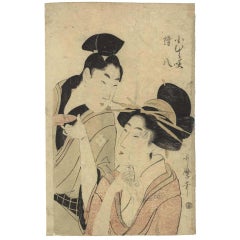
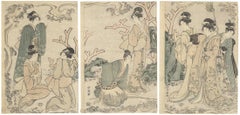
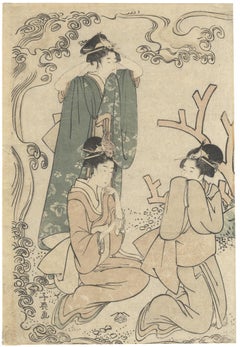
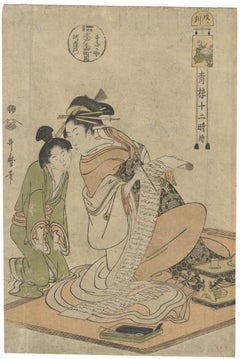
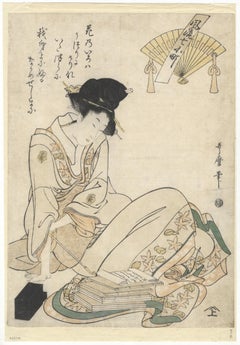
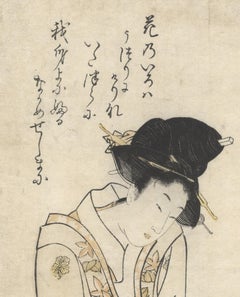
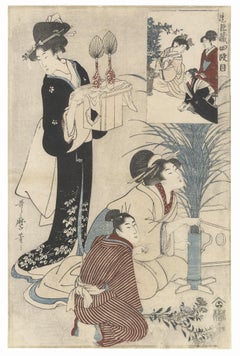
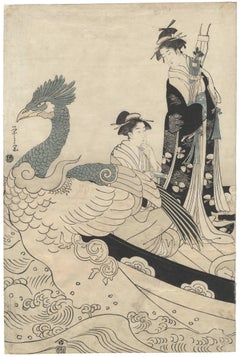
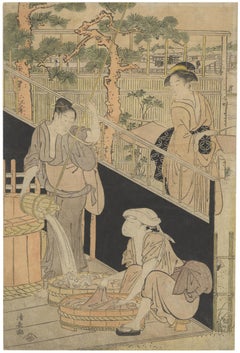
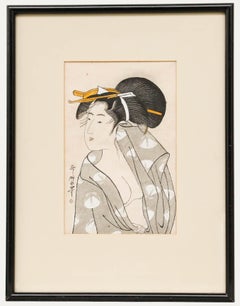
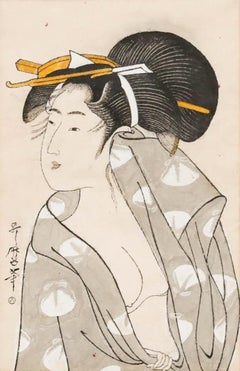
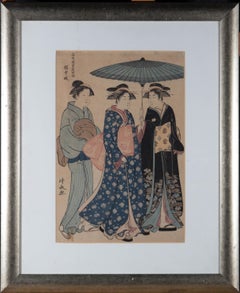
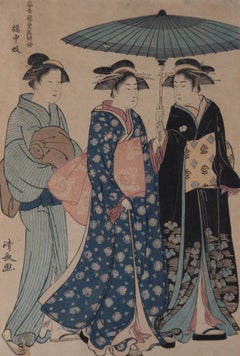
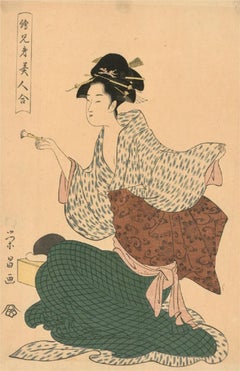
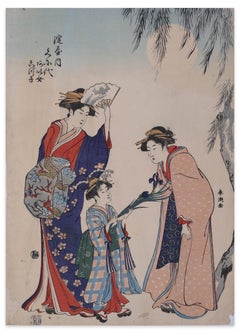
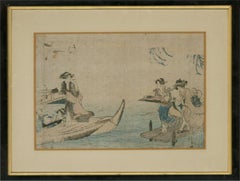
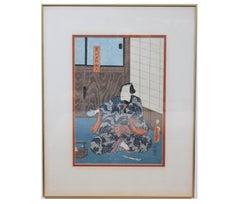
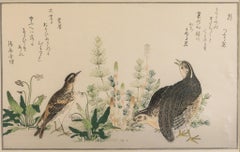
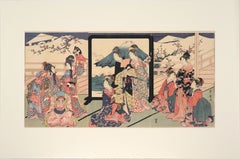
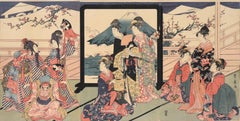
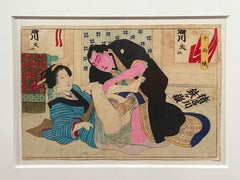
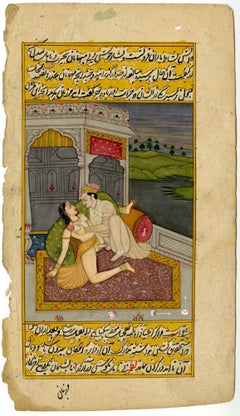
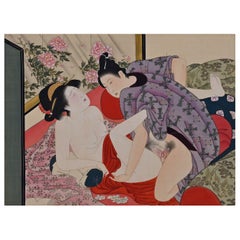
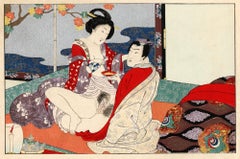
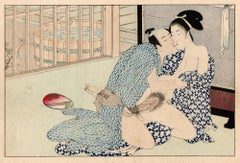
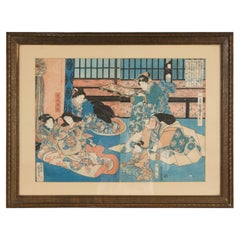
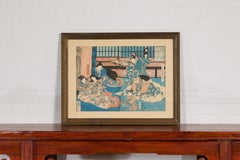
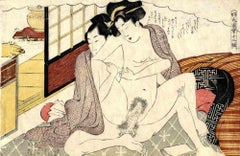
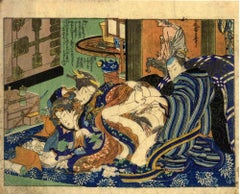
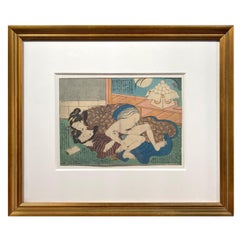
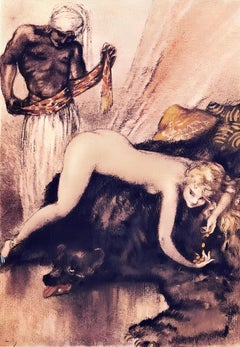
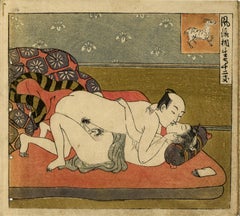
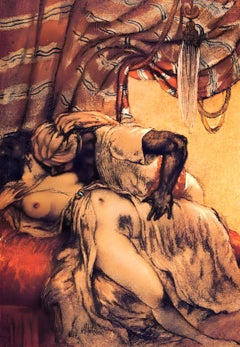
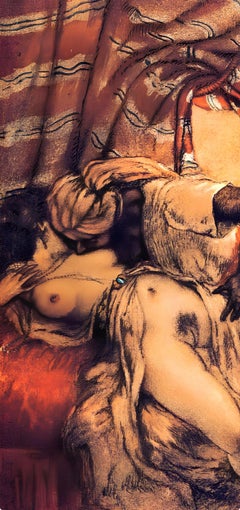
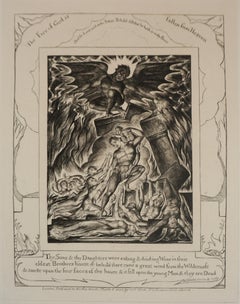
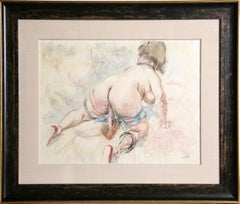
Surely you’ll find the exact japanese woodcuts 18th century you’re seeking on 1stDibs — we’ve got a vast assortment for sale. Finding the perfect japanese woodcuts 18th century may mean sifting through those created during different time periods — you can find an early version that dates to the 18th Century and a newer variation that were made as recently as the 18th Century. If you’re looking to add a japanese woodcuts 18th century to create new energy in an otherwise neutral space in your home, you can find a work on 1stDibs that features elements of
beige,
gray,
brown and more. There have been many interesting japanese woodcuts 18th century examples over the years, but those made by
Kitagawa Utamaro,
Torii Kiyonaga,
Eishi Chobunsai,
Katsukawa Shunshō and
Utagawa Kunisada (Toyokuni III) are often thought to be among the most thought-provoking. Artworks like these — often created in
woodcut print,
handmade paper and
paper — can elevate any room of your home. A large japanese woodcuts 18th century can prove too dominant for some spaces — a smaller japanese woodcuts 18th century, measuring 12.84 high and 9 wide, may better suit your needs.
The price for an artwork of this kind can differ depending upon size, time period and other attributes — a japanese woodcuts 18th century in our inventory may begin at $200 and can go as high as $10,290, while the average can fetch as much as $2,016.
Bring energy and an array of welcome colors and textures into your space by decorating with figurative fine-art prints and works on paper.
Figurative art stands in contrast to abstract art, which is more expressive than representational. The oldest-known work of figurative art is a figurative painting — specifically, a rock painting of an animal made over 40,000 years ago in Borneo. This remnant of a remote past has long faded, but its depiction of a cattle-like creature in elegant ocher markings endures.
Since then, figurative art has evolved significantly as it continues to represent the world, including a breadth of works on paper, including printmaking. This includes woodcuts, which are a type of relief print with perennial popularity among collectors. The artist carves into a block and applies ink to the raised surface, which is then pressed onto paper. There are also planographic prints, which use metal plates, stones or other flat surfaces as their base. The artist will often draw on the surface with grease crayon and then apply ink to those markings. Lithographs are a common version of planographic prints.
Figurative art printmaking was especially popular during the height of the Pop art movement, and this kind of work can be seen in artist Andy Warhol’s extensive use of photographic silkscreen printing. Everyday objects, logos and scenes were given a unique twist, whether in the style of a comic strip or in the use of neon colors.
Explore an impressive collection of figurative art prints for sale on 1stDibs and read about how to arrange your wall art.