Dorothy Gillespie Art

to
1
1
Overall Width
to
Overall Height
to
2
1
1
1
1
1
2
1
1
2
11,049
2,853
2,494
1,431
2
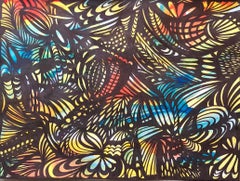
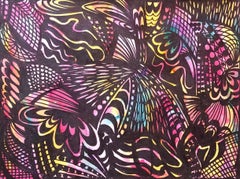
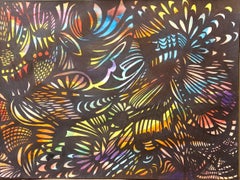
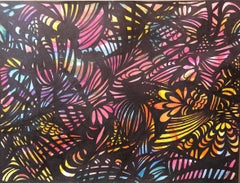
Artist: Dorothy Gillespie
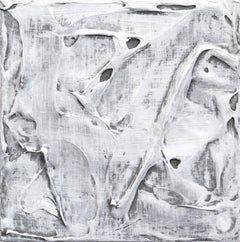
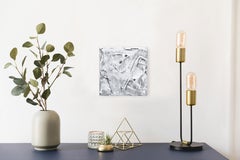
“Sculpture Metal”
“Sculpture Metal”

“Sculpture Metal”

By Dorothy Gillespie

Located in Warren, NJ

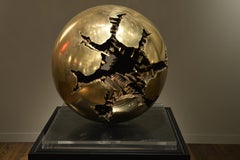
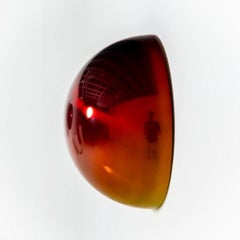
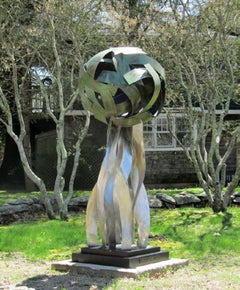
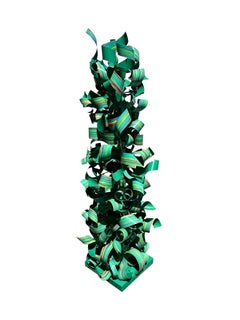
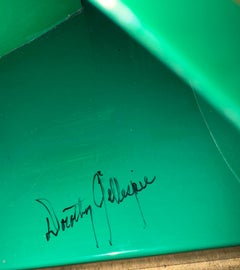
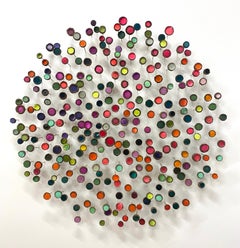
Dorothy Gillespie Sculpture Metal Signed And Numbered. In good condition measures 15x15

Category

21st Century and Contemporary Dorothy Gillespie Art

Materials

Metal

Related Items
Untitled: (Totem Pole) - Abstract Sculpture, c. 1960

Untitled: (Totem Pole) - Abstract Sculpture, c. 1960

By Elaine de Kooning

Located in Palm Desert, CA

A major figure in both the Abstract Expressionist and American Figurative Expressionist movements of the 1940s and 1950s, Elaine de Kooning's prolific output defied singular categorization. Her versatile styles explored the spectrum of realism to abstraction, resulting in a career characterized by intense expression and artistic boundary-pushing. A striking example of de Kooning's explosive creativity is Untitled (Totem Pole...

Category

1960s Abstract Expressionist Dorothy Gillespie Art

Materials

Canvas, Oil, Cardboard

My Joyful Heart - Lively Colorful Abstract 3-D Painted Weaving

My Joyful Heart - Lively Colorful Abstract 3-D Painted Weaving

By Shiri Phillips

Located in Los Angeles, CA

Impasto-painted strokes of bright colors are the framework of artist Shiri Phillips’ abstract artworks. Her paintings are flooded with texture through the layering of acrylic paint i...

Category

2010s Abstract Dorothy Gillespie Art

Materials

Wire

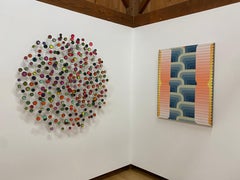
Bouquet - Colorful Acorns Wall Sculpture Neon Yellow Bright Pink Orange, 2022

Bouquet - Colorful Acorns Wall Sculpture Neon Yellow Bright Pink Orange, 2022

By Julie Maren

Located in Kent, CT

This contemporary sculptural wall installation is comprised of more than 275 individual acorn caps mounted on brass pins - each cap is filled with plaster and paint in bright hues of...

Category

2010s Contemporary Dorothy Gillespie Art

Materials

Brass

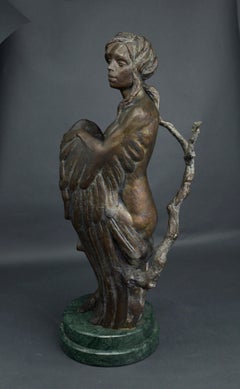
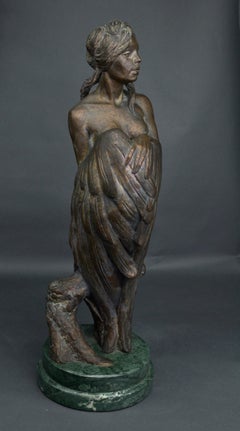
Syrene. By Victor Minko. Bronze. 50x24x15 cm

Syrene. By Victor Minko. Bronze. 50x24x15 cm

Located in Riga, LV

Viktor Mikhailovich Minko 1967 - Born in Smorgon, Belarus. 1996 - Graduated from the Belarusian Academy of Arts, Sculpture Department. 1996 - Soros Foundation Grand Prize. 2005 - "Go...

Category

Early 2000s Surrealist Dorothy Gillespie Art

Materials

Bronze

Forces of Nature 7  - Sculptural Abstract Minimalist Textural Artwork on Canvas

Forces of Nature 7 - Sculptural Abstract Minimalist Textural Artwork on Canvas

By Len Klikunas

Located in Los Angeles, CA

Len Klikunas creates sculptural minimalist artworks to modify experienced reality through visual perception. His original artwork is a mix of art and architecture, hovering between p...

Category

21st Century and Contemporary Abstract Dorothy Gillespie Art

Materials

Gesso, Mixed Media, Wood Panel

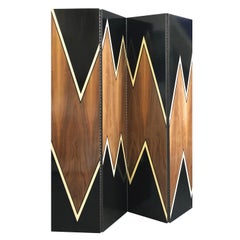
Volatility Screen, Contemporary Art Room Divider Walnut with Black, Teal, Ivory

Volatility Screen, Contemporary Art Room Divider Walnut with Black, Teal, Ivory

By Charles Lutz

Located in Brooklyn, NY

Volatility Screen Acrylic and oil on walnut veneered plywood in 4 parts, with aluminum and steel fittings. 4 panels each 16.25 x 72", overall 65 x 72" 2019 This substantial work b...

Category

21st Century and Contemporary Contemporary Dorothy Gillespie Art

Materials

Steel

Forces of Nature 4  - Sculptural Abstract Minimalist Textural Artwork on Canvas

Forces of Nature 4 - Sculptural Abstract Minimalist Textural Artwork on Canvas

By Len Klikunas

Located in Los Angeles, CA

Len Klikunas creates sculptural minimalist artworks to modify experienced reality through visual perception. His original artwork is a mix of art and architecture, hovering between p...

Category

21st Century and Contemporary Abstract Dorothy Gillespie Art

Materials

Canvas, Mixed Media

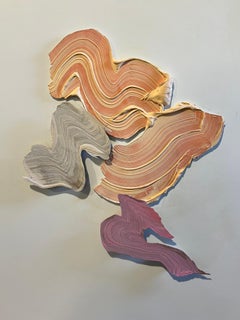
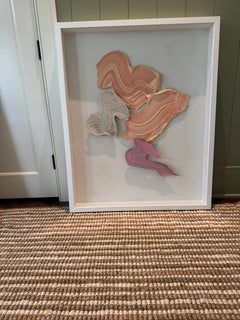
Silvan Abstract Painting, Enamel and Polymer on Wood Panel, 2010+

Silvan Abstract Painting, Enamel and Polymer on Wood Panel, 2010+

By Donald Martiny

Located in Westport, CT

This framed gestural work is by Donald Martiny. This signature piece is composed of enamel and polymer paint, cardboard, aluminum and wood on wood panel. He creates immediately froze...

Category

2010s Abstract Dorothy Gillespie Art

Materials

Enamel

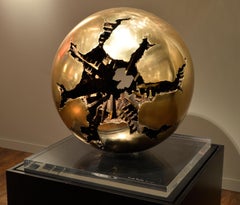
Sfera con perforazione

Arnaldo PomodoroSfera con perforazione, 1966

$582,771

H 23.63 in Dm 23.63 in

Sfera con perforazione

By Arnaldo Pomodoro

Located in London, GB

An exceptional example of Arnaldo Pomodoro’s iconic Sfera con Sfera series, — a pivotal period in the artist’s exploration of fractured geometric perfection. Signed, dated "'66," and...

Category

1960s Abstract Geometric Dorothy Gillespie Art

Materials

Bronze

Biography of a Drive-By: wall sculpture by Black African-American artist

Biography of a Drive-By: wall sculpture by Black African-American artist

By Richard J. Watson

Located in Bryn Mawr, PA

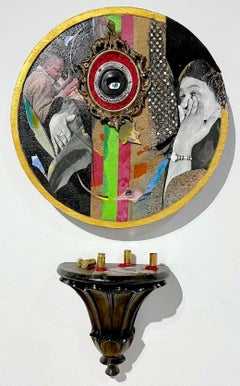
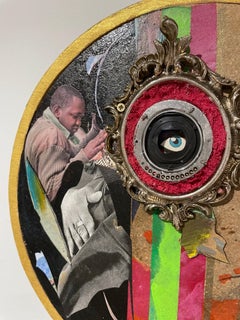
This is a two-part wall mounted painting / sculpture this integrates found objects and photographs into an acrylic painting on the top, and a wooden shelf with bullet casings and coins below. This is a conceptual, abstract work of art that is a powerful homage to lives lost through calculated gun violence in American cites. signed by the artist. PROVENANCE: Exhibited in "Portals + Revelations: Richard J. Watson," the African American Museum in Philadelphia, Oct 2021 - Mar 2022. "Most of my works are supported by memories of the past and suggested realities. Issues of social politics, ancestral references, and astral projections are presented with fragmented elements...

Category

2010s Abstract Dorothy Gillespie Art

Materials

Acrylic, Panel, Found Objects, Mixed Media

"SHADOWS DEEPEN SOFTLY" Abstract Wall Sculpture 16 x 8 x 16 in by Shawn Kolodny

"SHADOWS DEEPEN SOFTLY" Abstract Wall Sculpture 16 x 8 x 16 in by Shawn Kolodny

By Shawn Kolodny

Located in Culver City, CA

"SHADOWS DEEPEN SOFTLY" Abstract Wall Sculpture 16 x 8 x 16 in by Shawn Kolodny Medium: Stainless Steel & Automotive Paint Creating art to reflect the times we live in, Kolodny...

Category

21st Century and Contemporary Pop Art Dorothy Gillespie Art

Materials

Steel

Mandela

Hans Van de BovenkampMandela, 2014

$120,000

H 92 in W 49 in D 38 in

Mandela

By Hans Van de Bovenkamp

Located in Greenwich, CT

Dutch, b. 1938 Renowned for his monumental sculpture created primarily for open-air public locales, Hans Van de Bovenkamp has been described as an artist-mystic whose work -- with i...

Category

2010s Abstract Dorothy Gillespie Art

Materials

Bronze, Stainless Steel

Previously Available Items
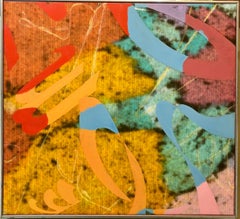
Colorful SYMBOLS & SOUNDS Abstract Expressionist Mixed Media Painting

Colorful SYMBOLS & SOUNDS Abstract Expressionist Mixed Media Painting

By Dorothy Gillespie

Located in Surfside, FL

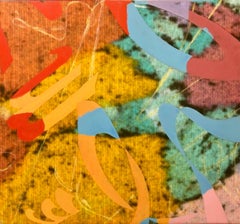
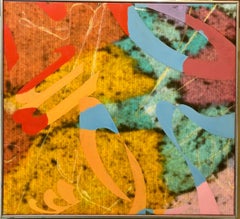
Not quite sure of the medium. it is a stretched canvas like material with overpainting and some sort of possible photo based process. it is a unique mixed media piece. Dorothy Gillespie (June 29, 1920 – September 30, 2012) was an American artist and sculptor who became known for her large and colorful abstract metal sculptures. Gillespie became best known for the aluminum sculptures she started to produce at the end of the 1970s. She would paint sheets of the metal, cut them into strips and connect the strips together to resemble cascades or starbursts of bright colored ribbon. The New York Times once summarized her work as “topsy-turvy, merrymaking fantasy,” and in another review declared, “The artist’s exuberant sculptures of colorful aluminum strips have earned her an international reputation.Her works are featured at her alma mater (Radford University) in Virginia, where she later returned to teach, as well as in New York (where she was artist in residence for the feminist Women's Interart Center), Wilmington, North Carolina and Florida. She enrolled both at Radford University near her hometown, and the Maryland Institute College of Art in Baltimore, Maryland. The director of the Maryland Institute, Hans Schuler, helped foster her career in fine art. On June 5, 1943, aged 23, Gillespie moved to New York City. There she took a job at the B. Altman department store as assistant art director. She also joined the Art Students League where she was exposed to new ideas about techniques, materials, and marketing. She also created works at Atelier 17 printmaking studio, where Stanley William Hayter encouraged to experiment with her own ideas. She and her husband, Bernard Israel, opened a restaurant and night club in Greenwich Village to support their family. She returned to making art in 1957, and worked at art full-time after they sold the nightclub in the 1970. In 1977 Gillespie gave her first lecture series at the New School for Social Research, and she would give others there until 1982. She taught at her alma mater as a Visiting Artist (1981-1983) and gave Radford University some of her work to begin its permanent art collection. Gillespie then served as Woodrow Wilson visiting Fellow (1985-1994), visiting many small private colleges to give public lectures and teach young artists. She returned to Radnor University to teach as Distinguished Professor of Art (1997–99).[8] She also hosted a radio program, the Dorothy Gillespie Show on Radio Station WHBI in New York from 1967-1973. Gillespie began moving away from realism and into the abstraction that marked her career. Gillespie returned to New York City in 1963 to continue her career. She maintained a studio through the 70s and advocate worked towards feminist goals in the art industry, picketing the Whitney Museum, helping to organize the Women's Interart Center, curating exhibitions of women's art, and writing articles raising awareness of her cause. Gillespie numbered among her acquaintances such art-world luminaries as Jackson Pollock, Lee Krasner, Alice Neel, Louise Nevelson and Georgia O’Keeffe. “She had amazing stories that unfortunately are gone,” her son said. During the 1960s, she built multimedia art installations that made political statements, such as 1965’s “Made in the USA,” that used blinking colored lights, mirrors, shadow boxes, rotating figures and tape recordings to convey a chaotic look at American commercial fads. The floor was strewn with real dollar bills, which visitors assumed were fake. By the 1980s, Gillespie's work had come to be known internationally. She completed many commissions for sculptures in public places, including Lincoln Center, Rockefeller Center and Walt Disney World Epcot Center in Orlando, Florida. Her work is in many collections across the United States, including the Delaware Museum, the Solomon R. Guggenheim Museum, and the National Museum of Women in the Arts. Her sculptures can also be found in the Frankfurt Museum in Germany and the Tel Aviv Museum in Israel. Group Shows Conceived and Curated by Dorothy Gillespie Women's Interart Center, New York, NY 1974 included: Betty Parsons, Elsie Asher, Alice Baber, Minna Citron, Nancy Spero, Seena Donneson, Alice Neel, Natalie Edgar, Dorothy Gillespie, and Anita Steckel...

Category

Early 2000s Abstract Expressionist Dorothy Gillespie Art

Materials

Mixed Media

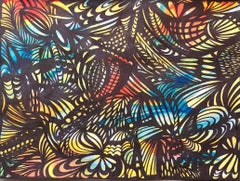
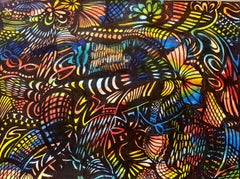
Veiled Series X , Abstract Expressionist Organic Drawing Watercolor Painting

Veiled Series X , Abstract Expressionist Organic Drawing Watercolor Painting

By Dorothy Gillespie

Located in Surfside, FL

Dorothy Gillespie (June 29, 1920 – September 30, 2012) was an American artist and sculptor who became known for her large and colorful abstract metal sculptures. Gillespie became best known for the aluminum sculptures she started to produce at the end of the 1970s. She would paint sheets of the metal, cut them into strips and connect the strips together to resemble cascades or starbursts of bright colored ribbon. The New York Times once summarized her work as “topsy-turvy, merrymaking fantasy,” and in another review declared, “The artist’s exuberant sculptures of colorful aluminum strips have earned her an international reputation.Her works are featured at her alma mater (Radford University) in Virginia, where she later returned to teach, as well as in New York (where she was artist in residence for the feminist Women's Interart Center), Wilmington, North Carolina and Florida. She enrolled both at Radford University near her hometown, and the Maryland Institute College of Art in Baltimore, Maryland. The director of the Maryland Institute, Hans Schuler, helped foster her career in fine art. On June 5, 1943, aged 23, Gillespie moved to New York City. There she took a job at the B. Altman department store as assistant art director. She also joined the Art Students League where she was exposed to new ideas about techniques, materials, and marketing. She also created works at Atelier 17 printmaking studio, where Stanley William Hayter encouraged to experiment with her own ideas. She and her husband, Bernard Israel, opened a restaurant and night club in Greenwich Village to support their family. She returned to making art in 1957, and worked at art full-time after they sold the nightclub in the 1970. In 1977 Gillespie gave her first lecture series at the New School for Social Research, and she would give others there until 1982. She taught at her alma mater as a Visiting Artist (1981-1983) and gave Radford University some of her work to begin its permanent art collection. Gillespie then served as Woodrow Wilson visiting Fellow (1985-1994), visiting many small private colleges to give public lectures and teach young artists. She returned to Radnor University to teach as Distinguished Professor of Art (1997–99).[8] She also hosted a radio program, the Dorothy Gillespie Show on Radio Station WHBI in New York from 1967-1973. Gillespie began moving away from realism and into the abstraction that marked her career. Gillespie returned to New York City in 1963 to continue her career. She maintained a studio through the 70s and advocate worked towards feminist goals in the art industry, picketing the Whitney Museum, helping to organize the Women's Interart Center, curating exhibitions of women's art, and writing articles raising awareness of her cause. Gillespie numbered among her acquaintances such art-world luminaries as Jackson Pollock, Lee Krasner, Alice Neel, Louise Nevelson and Georgia O’Keeffe. “She had amazing stories that unfortunately are gone,” her son said. During the 1960s, she built multimedia art installations that made political statements, such as 1965’s “Made in the USA,” that used blinking colored lights, mirrors, shadow boxes, rotating figures and tape recordings to convey a chaotic look at American commercial fads. The floor was strewn with real dollar bills, which visitors assumed were fake. By the 1980s, Gillespie's work had come to be known internationally. She completed many commissions for sculptures in public places, including Lincoln Center, Rockefeller Center and Walt Disney World Epcot Center in Orlando, Florida. Her work is in many collections across the United States, including the Delaware Museum, the Solomon R. Guggenheim Museum, and the National Museum of Women in the Arts. Her sculptures can also be found in the Frankfurt Museum in Germany and the Tel Aviv Museum in Israel. Group Shows Conceived and Curated by Dorothy Gillespie Women's Interart Center, New York, NY 1974 included: Betty Parsons, Elsie Asher, Alice Baber, Minna Citron, Nancy Spero, Seena Donneson, Alice Neel, Natalie Edgar, Dorothy Gillespie, and Anita Steckel...

Category

Early 2000s Abstract Expressionist Dorothy Gillespie Art

Materials

Paper, Ink, Watercolor, Permanent Marker
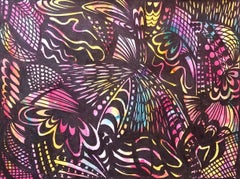
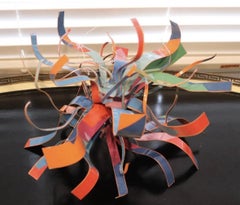
Veiled Series LX , Abstract Expressionist Organic Drawing Watercolor Painting

Veiled Series LX , Abstract Expressionist Organic Drawing Watercolor Painting

By Dorothy Gillespie

Located in Surfside, FL

Dorothy Gillespie (June 29, 1920 – September 30, 2012) was an American artist and sculptor who became known for her large and colorful abstract metal sculptures. Gillespie became best known for the aluminum sculptures she started to produce at the end of the 1970s. She would paint sheets of the metal, cut them into strips and connect the strips together to resemble cascades or starbursts of bright colored ribbon. The New York Times once summarized her work as “topsy-turvy, merrymaking fantasy,” and in another review declared, “The artist’s exuberant sculptures of colorful aluminum strips have earned her an international reputation.Her works are featured at her alma mater (Radford University) in Virginia, where she later returned to teach, as well as in New York (where she was artist in residence for the feminist Women's Interart Center), Wilmington, North Carolina and Florida. She enrolled both at Radford University near her hometown, and the Maryland Institute College of Art in Baltimore, Maryland. The director of the Maryland Institute, Hans Schuler, helped foster her career in fine art. On June 5, 1943, aged 23, Gillespie moved to New York City. There she took a job at the B. Altman department store as assistant art director. She also joined the Art Students League where she was exposed to new ideas about techniques, materials, and marketing. She also created works at Atelier 17 printmaking studio, where Stanley William Hayter encouraged to experiment with her own ideas. She and her husband, Bernard Israel, opened a restaurant and night club in Greenwich Village to support their family. She returned to making art in 1957, and worked at art full-time after they sold the nightclub in the 1970. In 1977 Gillespie gave her first lecture series at the New School for Social Research, and she would give others there until 1982. She taught at her alma mater as a Visiting Artist (1981-1983) and gave Radford University some of her work to begin its permanent art collection. Gillespie then served as Woodrow Wilson visiting Fellow (1985-1994), visiting many small private colleges to give public lectures and teach young artists. She returned to Radnor University to teach as Distinguished Professor of Art (1997–99).[8] She also hosted a radio program, the Dorothy Gillespie Show on Radio Station WHBI in New York from 1967-1973. Gillespie began moving away from realism and into the abstraction that marked her career. Gillespie returned to New York City in 1963 to continue her career. She maintained a studio through the 70s and advocate worked towards feminist goals in the art industry, picketing the Whitney Museum, helping to organize the Women's Interart Center, curating exhibitions of women's art, and writing articles raising awareness of her cause. Gillespie numbered among her acquaintances such art-world luminaries as Jackson Pollock, Lee Krasner, Alice Neel, Louise Nevelson and Georgia O’Keeffe. “She had amazing stories that unfortunately are gone,” her son said. During the 1960s, she built multimedia art installations that made political statements, such as 1965’s “Made in the USA,” that used blinking colored lights, mirrors, shadow boxes, rotating figures and tape recordings to convey a chaotic look at American commercial fads. The floor was strewn with real dollar bills, which visitors assumed were fake. By the 1980s, Gillespie's work had come to be known internationally. She completed many commissions for sculptures in public places, including Lincoln Center, Rockefeller Center and Walt Disney World Epcot Center in Orlando, Florida. Her work is in many collections across the United States, including the Delaware Museum, the Solomon R. Guggenheim Museum, and the National Museum of Women in the Arts. Her sculptures can also be found in the Frankfurt Museum in Germany and the Tel Aviv Museum in Israel. Group Shows Conceived and Curated by Dorothy Gillespie Women's Interart Center, New York, NY 1974 included: Betty Parsons, Elsie Asher, Alice Baber, Minna Citron, Nancy Spero, Seena Donneson, Alice Neel, Natalie Edgar, Dorothy Gillespie, and Anita Steckel...

Category

Early 2000s Abstract Expressionist Dorothy Gillespie Art

Materials

Paper, Ink, Watercolor, Permanent Marker
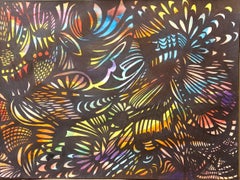
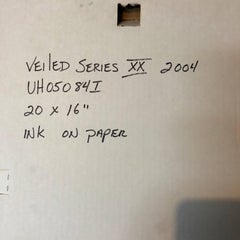
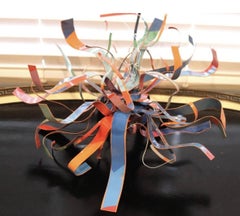
Veiled Series XX , Abstract Expressionist Organic Drawing Watercolor Painting

Veiled Series XX , Abstract Expressionist Organic Drawing Watercolor Painting

By Dorothy Gillespie

Located in Surfside, FL

Dorothy Gillespie (June 29, 1920 – September 30, 2012) was an American artist and sculptor who became known for her large and colorful abstract metal sculptures. Gillespie became best known for the aluminum sculptures she started to produce at the end of the 1970s. She would paint sheets of the metal, cut them into strips and connect the strips together to resemble cascades or starbursts of bright colored ribbon. The New York Times once summarized her work as “topsy-turvy, merrymaking fantasy,” and in another review declared, “The artist’s exuberant sculptures of colorful aluminum strips have earned her an international reputation.Her works are featured at her alma mater (Radford University) in Virginia, where she later returned to teach, as well as in New York (where she was artist in residence for the feminist Women's Interart Center), Wilmington, North Carolina and Florida. She enrolled both at Radford University near her hometown, and the Maryland Institute College of Art in Baltimore, Maryland. The director of the Maryland Institute, Hans Schuler, helped foster her career in fine art. On June 5, 1943, aged 23, Gillespie moved to New York City. There she took a job at the B. Altman department store as assistant art director. She also joined the Art Students League where she was exposed to new ideas about techniques, materials, and marketing. She also created works at Atelier 17 printmaking studio, where Stanley William Hayter encouraged to experiment with her own ideas. She and her husband, Bernard Israel, opened a restaurant and night club in Greenwich Village to support their family. She returned to making art in 1957, and worked at art full-time after they sold the nightclub in the 1970. In 1977 Gillespie gave her first lecture series at the New School for Social Research, and she would give others there until 1982. She taught at her alma mater as a Visiting Artist (1981-1983) and gave Radford University some of her work to begin its permanent art collection. Gillespie then served as Woodrow Wilson visiting Fellow (1985-1994), visiting many small private colleges to give public lectures and teach young artists. She returned to Radnor University to teach as Distinguished Professor of Art (1997–99).[8] She also hosted a radio program, the Dorothy Gillespie Show on Radio Station WHBI in New York from 1967-1973. Gillespie began moving away from realism and into the abstraction that marked her career. Gillespie returned to New York City in 1963 to continue her career. She maintained a studio through the 70s and advocate worked towards feminist goals in the art industry, picketing the Whitney Museum, helping to organize the Women's Interart Center, curating exhibitions of women's art, and writing articles raising awareness of her cause. Gillespie numbered among her acquaintances such art-world luminaries as Jackson Pollock, Lee Krasner, Alice Neel, Louise Nevelson and Georgia O’Keeffe. “She had amazing stories that unfortunately are gone,” her son said. During the 1960s, she built multimedia art installations that made political statements, such as 1965’s “Made in the USA,” that used blinking colored lights, mirrors, shadow boxes, rotating figures and tape recordings to convey a chaotic look at American commercial fads. The floor was strewn with real dollar bills, which visitors assumed were fake. By the 1980s, Gillespie's work had come to be known internationally. She completed many commissions for sculptures in public places, including Lincoln Center, Rockefeller Center and Walt Disney World Epcot Center in Orlando, Florida. Her work is in many collections across the United States, including the Delaware Museum, the Solomon R. Guggenheim Museum, and the National Museum of Women in the Arts. Her sculptures can also be found in the Frankfurt Museum in Germany and the Tel Aviv Museum in Israel. Group Shows Conceived and Curated by Dorothy Gillespie Women's Interart Center, New York, NY 1974 included: Betty Parsons, Elsie Asher, Alice Baber, Minna Citron, Nancy Spero, Seena Donneson, Alice Neel, Natalie Edgar, Dorothy Gillespie, and Anita Steckel...

Category

Early 2000s Abstract Expressionist Dorothy Gillespie Art

Materials

Paper, Ink, Watercolor, Permanent Marker
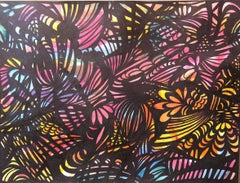
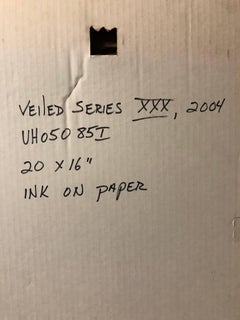
Veiled Series XXX, Abstract Expressionist Organic Drawing Watercolor Painting

Veiled Series XXX, Abstract Expressionist Organic Drawing Watercolor Painting

By Dorothy Gillespie

Located in Surfside, FL

Dorothy Gillespie (June 29, 1920 – September 30, 2012) was an American artist and sculptor who became known for her large and colorful abstract metal sculptures. Gillespie became best known for the aluminum sculptures she started to produce at the end of the 1970s. She would paint sheets of the metal, cut them into strips and connect the strips together to resemble cascades or starbursts of bright colored ribbon. The New York Times once summarized her work as “topsy-turvy, merrymaking fantasy,” and in another review declared, “The artist’s exuberant sculptures of colorful aluminum strips have earned her an international reputation.Her works are featured at her alma mater (Radford University) in Virginia, where she later returned to teach, as well as in New York (where she was artist in residence for the feminist Women's Interart Center), Wilmington, North Carolina and Florida. She enrolled both at Radford University near her hometown, and the Maryland Institute College of Art in Baltimore, Maryland. The director of the Maryland Institute, Hans Schuler, helped foster her career in fine art. On June 5, 1943, aged 23, Gillespie moved to New York City. There she took a job at the B. Altman department store as assistant art director. She also joined the Art Students League where she was exposed to new ideas about techniques, materials, and marketing. She also created works at Atelier 17 printmaking studio, where Stanley William Hayter encouraged to experiment with her own ideas. She and her husband, Bernard Israel, opened a restaurant and night club in Greenwich Village to support their family. She returned to making art in 1957, and worked at art full-time after they sold the nightclub in the 1970. In 1977 Gillespie gave her first lecture series at the New School for Social Research, and she would give others there until 1982. She taught at her alma mater as a Visiting Artist (1981-1983) and gave Radford University some of her work to begin its permanent art collection. Gillespie then served as Woodrow Wilson visiting Fellow (1985-1994), visiting many small private colleges to give public lectures and teach young artists. She returned to Radnor University to teach as Distinguished Professor of Art (1997–99).[8] She also hosted a radio program, the Dorothy Gillespie Show on Radio Station WHBI in New York from 1967-1973. Gillespie began moving away from realism and into the abstraction that marked her career. Gillespie returned to New York City in 1963 to continue her career. She maintained a studio through the 70s and advocate worked towards feminist goals in the art industry, picketing the Whitney Museum, helping to organize the Women's Interart Center, curating exhibitions of women's art, and writing articles raising awareness of her cause. Gillespie numbered among her acquaintances such art-world luminaries as Jackson Pollock, Lee Krasner, Alice Neel, Louise Nevelson and Georgia O’Keeffe. “She had amazing stories that unfortunately are gone,” her son said. During the 1960s, she built multimedia art installations that made political statements, such as 1965’s “Made in the USA,” that used blinking colored lights, mirrors, shadow boxes, rotating figures and tape recordings to convey a chaotic look at American commercial fads. The floor was strewn with real dollar bills, which visitors assumed were fake. By the 1980s, Gillespie's work had come to be known internationally. She completed many commissions for sculptures in public places, including Lincoln Center, Rockefeller Center and Walt Disney World Epcot Center in Orlando, Florida. Her work is in many collections across the United States, including the Delaware Museum, the Solomon R. Guggenheim Museum, and the National Museum of Women in the Arts. Her sculptures can also be found in the Frankfurt Museum in Germany and the Tel Aviv Museum in Israel. Group Shows Conceived and Curated by Dorothy Gillespie Women's Interart Center, New York, NY 1974 included: Betty Parsons, Elsie Asher, Alice Baber, Minna Citron, Nancy Spero, Seena Donneson, Alice Neel, Natalie Edgar, Dorothy Gillespie, and Anita Steckel...

Category

Early 2000s Abstract Expressionist Dorothy Gillespie Art

Materials

Paper, Ink, Watercolor, Permanent Marker
Veiled Series L, Abstract Expressionist Organic Drawing Watercolor Painting

Veiled Series L, Abstract Expressionist Organic Drawing Watercolor Painting

By Dorothy Gillespie

Located in Surfside, FL

Dorothy Gillespie (June 29, 1920 – September 30, 2012) was an American artist and sculptor who became known for her large and colorful abstract metal sculptures. Gillespie became best known for the aluminum sculptures she started to produce at the end of the 1970s. She would paint sheets of the metal, cut them into strips and connect the strips together to resemble cascades or starbursts of bright colored ribbon. The New York Times once summarized her work as “topsy-turvy, merrymaking fantasy,” and in another review declared, “The artist’s exuberant sculptures of colorful aluminum strips have earned her an international reputation.Her works are featured at her alma mater (Radford University) in Virginia, where she later returned to teach, as well as in New York (where she was artist in residence for the feminist Women's Interart Center), Wilmington, North Carolina and Florida. She enrolled both at Radford University near her hometown, and the Maryland Institute College of Art in Baltimore, Maryland. The director of the Maryland Institute, Hans Schuler, helped foster her career in fine art. On June 5, 1943, aged 23, Gillespie moved to New York City. There she took a job at the B. Altman department store as assistant art director. She also joined the Art Students League where she was exposed to new ideas about techniques, materials, and marketing. She also created works at Atelier 17 printmaking studio, where Stanley William Hayter encouraged to experiment with her own ideas. She and her husband, Bernard Israel, opened a restaurant and night club in Greenwich Village to support their family. She returned to making art in 1957, and worked at art full-time after they sold the nightclub in the 1970. In 1977 Gillespie gave her first lecture series at the New School for Social Research, and she would give others there until 1982. She taught at her alma mater as a Visiting Artist (1981-1983) and gave Radford University some of her work to begin its permanent art collection. Gillespie then served as Woodrow Wilson visiting Fellow (1985-1994), visiting many small private colleges to give public lectures and teach young artists. She returned to Radnor University to teach as Distinguished Professor of Art (1997–99).[8] She also hosted a radio program, the Dorothy Gillespie Show on Radio Station WHBI in New York from 1967-1973. Gillespie began moving away from realism and into the abstraction that marked her career. Gillespie returned to New York City in 1963 to continue her career. She maintained a studio through the 70s and advocate worked towards feminist goals in the art industry, picketing the Whitney Museum, helping to organize the Women's Interart Center, curating exhibitions of women's art, and writing articles raising awareness of her cause. Gillespie numbered among her acquaintances such art-world luminaries as Jackson Pollock, Lee Krasner, Alice Neel, Louise Nevelson and Georgia O’Keeffe. “She had amazing stories that unfortunately are gone,” her son said. During the 1960s, she built multimedia art installations that made political statements, such as 1965’s “Made in the USA,” that used blinking colored lights, mirrors, shadow boxes, rotating figures and tape recordings to convey a chaotic look at American commercial fads. The floor was strewn with real dollar bills, which visitors assumed were fake. By the 1980s, Gillespie's work had come to be known internationally. She completed many commissions for sculptures in public places, including Lincoln Center, Rockefeller Center and Walt Disney World Epcot Center in Orlando, Florida. Her work is in many collections across the United States, including the Delaware Museum, the Solomon R. Guggenheim Museum, and the National Museum of Women in the Arts. Her sculptures can also be found in the Frankfurt Museum in Germany and the Tel Aviv Museum in Israel. Group Shows Conceived and Curated by Dorothy Gillespie Women's Interart Center, New York, NY 1974 included: Betty Parsons, Elsie Asher, Alice Baber, Minna Citron, Nancy Spero, Seena Donneson, Alice Neel, Natalie Edgar, Dorothy Gillespie, and Anita Steckel...

Category

Early 2000s Abstract Expressionist Dorothy Gillespie Art

Materials

Paper, Ink, Watercolor, Permanent Marker
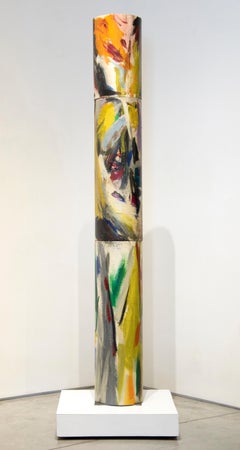
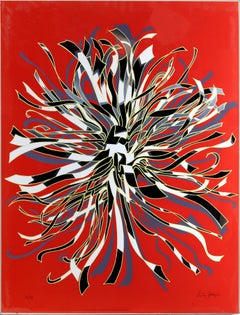
Lincoln Center Information Center

Lincoln Center Information Center

By Dorothy Gillespie

Located in Long Island City, NY

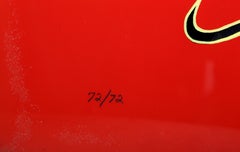
Lincoln Center Information Center by Dorothy Gillespie, American (1920–2012) Date: 1989 Screenprint, signed and numbered in pencil Edition of 72/72 Size: 40 x 32 in. (101.6 x 81.28 c...

Category

1980s Abstract Expressionist Dorothy Gillespie Art

Materials

Screen

Colorful SYMBOLS & SOUNDS Abstract Expressionist Mixed Media Painting

Colorful SYMBOLS & SOUNDS Abstract Expressionist Mixed Media Painting

By Dorothy Gillespie

Located in Surfside, FL

Not quite sure of the medium. it is a stretched canvas like material with overpainting and some sort of possible photo based process. it is a unique mixed media piece. Dorothy Gillespie (June 29, 1920 – September 30, 2012) was an American artist and sculptor who became known for her large and colorful abstract metal sculptures. Gillespie became best known for the aluminum sculptures she started to produce at the end of the 1970s. She would paint sheets of the metal, cut them into strips and connect the strips together to resemble cascades or starbursts of bright colored ribbon. The New York Times once summarized her work as “topsy-turvy, merrymaking fantasy,” and in another review declared, “The artist’s exuberant sculptures of colorful aluminum strips have earned her an international reputation.Her works are featured at her alma mater (Radford University) in Virginia, where she later returned to teach, as well as in New York (where she was artist in residence for the feminist Women's Interart Center), Wilmington, North Carolina and Florida. She enrolled both at Radford University near her hometown, and the Maryland Institute College of Art in Baltimore, Maryland. The director of the Maryland Institute, Hans Schuler, helped foster her career in fine art. On June 5, 1943, aged 23, Gillespie moved to New York City. There she took a job at the B. Altman department store as assistant art director. She also joined the Art Students League where she was exposed to new ideas about techniques, materials, and marketing. She also created works at Atelier 17 printmaking studio, where Stanley William Hayter encouraged to experiment with her own ideas. She and her husband, Bernard Israel, opened a restaurant and night club in Greenwich Village to support their family. She returned to making art in 1957, and worked at art full-time after they sold the nightclub in the 1970. In 1977 Gillespie gave her first lecture series at the New School for Social Research, and she would give others there until 1982. She taught at her alma mater as a Visiting Artist (1981-1983) and gave Radford University some of her work to begin its permanent art collection. Gillespie then served as Woodrow Wilson visiting Fellow (1985-1994), visiting many small private colleges to give public lectures and teach young artists. She returned to Radnor University to teach as Distinguished Professor of Art (1997–99).[8] She also hosted a radio program, the Dorothy Gillespie Show on Radio Station WHBI in New York from 1967-1973. Gillespie began moving away from realism and into the abstraction that marked her career. Gillespie returned to New York City in 1963 to continue her career. She maintained a studio through the 70s and advocate worked towards feminist goals in the art industry, picketing the Whitney Museum, helping to organize the Women's Interart Center, curating exhibitions of women's art, and writing articles raising awareness of her cause. Gillespie numbered among her acquaintances such art-world luminaries as Jackson Pollock, Lee Krasner, Alice Neel, Louise Nevelson and Georgia O’Keeffe. “She had amazing stories that unfortunately are gone,” her son said. During the 1960s, she built multimedia art installations that made political statements, such as 1965’s “Made in the USA,” that used blinking colored lights, mirrors, shadow boxes, rotating figures and tape recordings to convey a chaotic look at American commercial fads. The floor was strewn with real dollar bills, which visitors assumed were fake. By the 1980s, Gillespie's work had come to be known internationally. She completed many commissions for sculptures in public places, including Lincoln Center, Rockefeller Center and Walt Disney World Epcot Center in Orlando, Florida. Her work is in many collections across the United States, including the Delaware Museum, the Solomon R. Guggenheim Museum, and the National Museum of Women in the Arts. Her sculptures can also be found in the Frankfurt Museum in Germany and the Tel Aviv Museum in Israel. Group Shows Conceived and Curated by Dorothy Gillespie Women's Interart Center, New York, NY 1974 included: Betty Parsons, Elsie Asher, Alice Baber, Minna Citron, Nancy Spero, Seena Donneson, Alice Neel, Natalie Edgar, Dorothy Gillespie, and Anita Steckel. Alice Baber, Isabel Bishop, Audrey Flack, Mary Frank, Buffie Johnson, Yvonne Jacquette, Lila Katzen, Elaine De Kooning, Joyce Weinstein. "Women Artists Paint Women Artists," Virginia Miller Gallery, Miami, FL 1978; "Artist Choice," Clayworks Gallery, New York, NY 1979, included: Marisol, Joyce Weinstein, Marlyn Dintenfass, Clinton Hill, Joe Stallone, Peter Voulkos, David Hare, Susan Weil, Philip Pavia, Ka Kwong Hui...

Category

Early 2000s Abstract Expressionist Dorothy Gillespie Art

Materials

Mixed Media

Veiled Series X , Abstract Expressionist Organic Drawing Watercolor Painting

Veiled Series X , Abstract Expressionist Organic Drawing Watercolor Painting

By Dorothy Gillespie

Located in Surfside, FL

Dorothy Gillespie (June 29, 1920 – September 30, 2012) was an American artist and sculptor who became known for her large and colorful abstract metal sculptures. Gillespie became best known for the aluminum sculptures she started to produce at the end of the 1970s. She would paint sheets of the metal, cut them into strips and connect the strips together to resemble cascades or starbursts of bright colored ribbon. The New York Times once summarized her work as “topsy-turvy, merrymaking fantasy,” and in another review declared, “The artist’s exuberant sculptures of colorful aluminum strips have earned her an international reputation.Her works are featured at her alma mater (Radford University) in Virginia, where she later returned to teach, as well as in New York (where she was artist in residence for the feminist Women's Interart Center), Wilmington, North Carolina and Florida. She enrolled both at Radford University near her hometown, and the Maryland Institute College of Art in Baltimore, Maryland. The director of the Maryland Institute, Hans Schuler, helped foster her career in fine art. On June 5, 1943, aged 23, Gillespie moved to New York City. There she took a job at the B. Altman department store as assistant art director. She also joined the Art Students League where she was exposed to new ideas about techniques, materials, and marketing. She also created works at Atelier 17 printmaking studio, where Stanley William Hayter encouraged to experiment with her own ideas. She and her husband, Bernard Israel, opened a restaurant and night club in Greenwich Village to support their family. She returned to making art in 1957, and worked at art full-time after they sold the nightclub in the 1970. In 1977 Gillespie gave her first lecture series at the New School for Social Research, and she would give others there until 1982. She taught at her alma mater as a Visiting Artist (1981-1983) and gave Radford University some of her work to begin its permanent art collection. Gillespie then served as Woodrow Wilson visiting Fellow (1985-1994), visiting many small private colleges to give public lectures and teach young artists. She returned to Radnor University to teach as Distinguished Professor of Art (1997–99).[8] She also hosted a radio program, the Dorothy Gillespie Show on Radio Station WHBI in New York from 1967-1973. Gillespie began moving away from realism and into the abstraction that marked her career. Gillespie returned to New York City in 1963 to continue her career. She maintained a studio through the 70s and advocate worked towards feminist goals in the art industry, picketing the Whitney Museum, helping to organize the Women's Interart Center, curating exhibitions of women's art, and writing articles raising awareness of her cause. Gillespie numbered among her acquaintances such art-world luminaries as Jackson Pollock, Lee Krasner, Alice Neel, Louise Nevelson and Georgia O’Keeffe. “She had amazing stories that unfortunately are gone,” her son said. During the 1960s, she built multimedia art installations that made political statements, such as 1965’s “Made in the USA,” that used blinking colored lights, mirrors, shadow boxes, rotating figures and tape recordings to convey a chaotic look at American commercial fads. The floor was strewn with real dollar bills, which visitors assumed were fake. By the 1980s, Gillespie's work had come to be known internationally. She completed many commissions for sculptures in public places, including Lincoln Center, Rockefeller Center and Walt Disney World Epcot Center in Orlando, Florida. Her work is in many collections across the United States, including the Delaware Museum, the Solomon R. Guggenheim Museum, and the National Museum of Women in the Arts. Her sculptures can also be found in the Frankfurt Museum in Germany and the Tel Aviv Museum in Israel. Group Shows Conceived and Curated by Dorothy Gillespie Women's Interart Center, New York, NY 1974 included: Betty Parsons, Elsie Asher, Alice Baber, Minna Citron, Nancy Spero, Seena Donneson, Alice Neel, Natalie Edgar, Dorothy Gillespie, and Anita Steckel. Alice Baber, Isabel Bishop, Audrey Flack, Mary Frank, Buffie Johnson, Yvonne Jacquette, Lila Katzen, Elaine De Kooning, Joyce Wienstein. "Women Artists Paint Women Artists," Virginia Miller Gallery, Miami, FL 1978; "Artist Choice," Clayworks Gallery, New York, NY 1979, included: Marisol, Joyce Weinstein, Marlyn Dintenfass, Clinton Hill, Joe Stallone, Peter Voulkos, David Hare, Susan Weil, Philip Pavia, Ka Kwong Hui...

Category

Early 2000s Abstract Expressionist Dorothy Gillespie Art

Materials

Paper, Ink, Watercolor, Permanent Marker
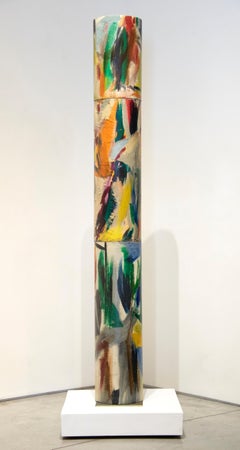
Veiled Series LX , Abstract Expressionist Organic Drawing Watercolor Painting

Veiled Series LX , Abstract Expressionist Organic Drawing Watercolor Painting

By Dorothy Gillespie

Located in Surfside, FL

Dorothy Gillespie (June 29, 1920 – September 30, 2012) was an American artist and sculptor who became known for her large and colorful abstract metal sculptures. Gillespie became best known for the aluminum sculptures she started to produce at the end of the 1970s. She would paint sheets of the metal, cut them into strips and connect the strips together to resemble cascades or starbursts of bright colored ribbon. The New York Times once summarized her work as “topsy-turvy, merrymaking fantasy,” and in another review declared, “The artist’s exuberant sculptures of colorful aluminum strips have earned her an international reputation.Her works are featured at her alma mater (Radford University) in Virginia, where she later returned to teach, as well as in New York (where she was artist in residence for the feminist Women's Interart Center), Wilmington, North Carolina and Florida. She enrolled both at Radford University near her hometown, and the Maryland Institute College of Art in Baltimore, Maryland. The director of the Maryland Institute, Hans Schuler, helped foster her career in fine art. On June 5, 1943, aged 23, Gillespie moved to New York City. There she took a job at the B. Altman department store as assistant art director. She also joined the Art Students League where she was exposed to new ideas about techniques, materials, and marketing. She also created works at Atelier 17 printmaking studio, where Stanley William Hayter encouraged to experiment with her own ideas. She and her husband, Bernard Israel, opened a restaurant and night club in Greenwich Village to support their family. She returned to making art in 1957, and worked at art full-time after they sold the nightclub in the 1970. In 1977 Gillespie gave her first lecture series at the New School for Social Research, and she would give others there until 1982. She taught at her alma mater as a Visiting Artist (1981-1983) and gave Radford University some of her work to begin its permanent art collection. Gillespie then served as Woodrow Wilson visiting Fellow (1985-1994), visiting many small private colleges to give public lectures and teach young artists. She returned to Radnor University to teach as Distinguished Professor of Art (1997–99).[8] She also hosted a radio program, the Dorothy Gillespie Show on Radio Station WHBI in New York from 1967-1973. Gillespie began moving away from realism and into the abstraction that marked her career. Gillespie returned to New York City in 1963 to continue her career. She maintained a studio through the 70s and advocate worked towards feminist goals in the art industry, picketing the Whitney Museum, helping to organize the Women's Interart Center, curating exhibitions of women's art, and writing articles raising awareness of her cause. Gillespie numbered among her acquaintances such art-world luminaries as Jackson Pollock, Lee Krasner, Alice Neel, Louise Nevelson and Georgia O’Keeffe. “She had amazing stories that unfortunately are gone,” her son said. During the 1960s, she built multimedia art installations that made political statements, such as 1965’s “Made in the USA,” that used blinking colored lights, mirrors, shadow boxes, rotating figures and tape recordings to convey a chaotic look at American commercial fads. The floor was strewn with real dollar bills, which visitors assumed were fake. By the 1980s, Gillespie's work had come to be known internationally. She completed many commissions for sculptures in public places, including Lincoln Center, Rockefeller Center and Walt Disney World Epcot Center in Orlando, Florida. Her work is in many collections across the United States, including the Delaware Museum, the Solomon R. Guggenheim Museum, and the National Museum of Women in the Arts. Her sculptures can also be found in the Frankfurt Museum in Germany and the Tel Aviv Museum in Israel. Group Shows Conceived and Curated by Dorothy Gillespie Women's Interart Center, New York, NY 1974 included: Betty Parsons, Elsie Asher, Alice Baber, Minna Citron, Nancy Spero, Seena Donneson, Alice Neel, Natalie Edgar, Dorothy Gillespie, and Anita Steckel. Alice Baber, Isabel Bishop, Audrey Flack, Mary Frank, Buffie Johnson, Yvonne Jacquette, Lila Katzen, Elaine De Kooning, Joyce Wienstein. "Women Artists Paint Women Artists," Virginia Miller Gallery, Miami, FL 1978; "Artist Choice," Clayworks Gallery, New York, NY 1979, included: Marisol, Joyce Weinstein, Marlyn Dintenfass, Clinton Hill, Joe Stallone, Peter Voulkos, David Hare, Susan Weil, Philip Pavia, Ka Kwong Hui...

Category

Early 2000s Abstract Expressionist Dorothy Gillespie Art

Materials

Paper, Ink, Watercolor, Permanent Marker
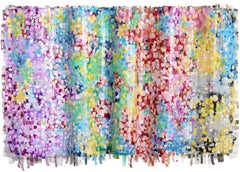
Veiled Series XX , Abstract Expressionist Organic Drawing Watercolor Painting

Veiled Series XX , Abstract Expressionist Organic Drawing Watercolor Painting

By Dorothy Gillespie

Located in Surfside, FL

Dorothy Gillespie (June 29, 1920 – September 30, 2012) was an American artist and sculptor who became known for her large and colorful abstract metal sculptures. Gillespie became best known for the aluminum sculptures she started to produce at the end of the 1970s. She would paint sheets of the metal, cut them into strips and connect the strips together to resemble cascades or starbursts of bright colored ribbon. The New York Times once summarized her work as “topsy-turvy, merrymaking fantasy,” and in another review declared, “The artist’s exuberant sculptures of colorful aluminum strips have earned her an international reputation.Her works are featured at her alma mater (Radford University) in Virginia, where she later returned to teach, as well as in New York (where she was artist in residence for the feminist Women's Interart Center), Wilmington, North Carolina and Florida. She enrolled both at Radford University near her hometown, and the Maryland Institute College of Art in Baltimore, Maryland. The director of the Maryland Institute, Hans Schuler, helped foster her career in fine art. On June 5, 1943, aged 23, Gillespie moved to New York City. There she took a job at the B. Altman department store as assistant art director. She also joined the Art Students League where she was exposed to new ideas about techniques, materials, and marketing. She also created works at Atelier 17 printmaking studio, where Stanley William Hayter encouraged to experiment with her own ideas. She and her husband, Bernard Israel, opened a restaurant and night club in Greenwich Village to support their family. She returned to making art in 1957, and worked at art full-time after they sold the nightclub in the 1970. In 1977 Gillespie gave her first lecture series at the New School for Social Research, and she would give others there until 1982. She taught at her alma mater as a Visiting Artist (1981-1983) and gave Radford University some of her work to begin its permanent art collection. Gillespie then served as Woodrow Wilson visiting Fellow (1985-1994), visiting many small private colleges to give public lectures and teach young artists. She returned to Radnor University to teach as Distinguished Professor of Art (1997–99).[8] She also hosted a radio program, the Dorothy Gillespie Show on Radio Station WHBI in New York from 1967-1973. Gillespie began moving away from realism and into the abstraction that marked her career. Gillespie returned to New York City in 1963 to continue her career. She maintained a studio through the 70s and advocate worked towards feminist goals in the art industry, picketing the Whitney Museum, helping to organize the Women's Interart Center, curating exhibitions of women's art, and writing articles raising awareness of her cause. Gillespie numbered among her acquaintances such art-world luminaries as Jackson Pollock, Lee Krasner, Alice Neel, Louise Nevelson and Georgia O’Keeffe. “She had amazing stories that unfortunately are gone,” her son said. During the 1960s, she built multimedia art installations that made political statements, such as 1965’s “Made in the USA,” that used blinking colored lights, mirrors, shadow boxes, rotating figures and tape recordings to convey a chaotic look at American commercial fads. The floor was strewn with real dollar bills, which visitors assumed were fake. By the 1980s, Gillespie's work had come to be known internationally. She completed many commissions for sculptures in public places, including Lincoln Center, Rockefeller Center and Walt Disney World Epcot Center in Orlando, Florida. Her work is in many collections across the United States, including the Delaware Museum, the Solomon R. Guggenheim Museum, and the National Museum of Women in the Arts. Her sculptures can also be found in the Frankfurt Museum in Germany and the Tel Aviv Museum in Israel. Group Shows Conceived and Curated by Dorothy Gillespie Women's Interart Center, New York, NY 1974 included: Betty Parsons, Elsie Asher, Alice Baber, Minna Citron, Nancy Spero, Seena Donneson, Alice Neel, Natalie Edgar, Dorothy Gillespie, and Anita Steckel. Alice Baber, Isabel Bishop, Audrey Flack, Mary Frank, Buffie Johnson, Yvonne Jacquette, Lila Katzen, Elaine De Kooning, Joyce Wienstein. "Women Artists Paint Women Artists," Virginia Miller Gallery, Miami, FL 1978; "Artist Choice," Clayworks Gallery, New York, NY 1979, included: Marisol, Joyce Weinstein, Marlyn Dintenfass, Clinton Hill, Joe Stallone, Peter Voulkos, David Hare, Susan Weil, Philip Pavia, Ka Kwong Hui...

Category

Early 2000s Abstract Expressionist Dorothy Gillespie Art

Materials

Paper, Ink, Watercolor, Permanent Marker
Veiled Series XXX, Abstract Expressionist Organic Drawing Watercolor Painting

Veiled Series XXX, Abstract Expressionist Organic Drawing Watercolor Painting

By Dorothy Gillespie

Located in Surfside, FL

Dorothy Gillespie (June 29, 1920 – September 30, 2012) was an American artist and sculptor who became known for her large and colorful abstract metal sculptures. Gillespie became best known for the aluminum sculptures she started to produce at the end of the 1970s. She would paint sheets of the metal, cut them into strips and connect the strips together to resemble cascades or starbursts of bright colored ribbon. The New York Times once summarized her work as “topsy-turvy, merrymaking fantasy,” and in another review declared, “The artist’s exuberant sculptures of colorful aluminum strips have earned her an international reputation.Her works are featured at her alma mater (Radford University) in Virginia, where she later returned to teach, as well as in New York (where she was artist in residence for the feminist Women's Interart Center), Wilmington, North Carolina and Florida. She enrolled both at Radford University near her hometown, and the Maryland Institute College of Art in Baltimore, Maryland. The director of the Maryland Institute, Hans Schuler, helped foster her career in fine art. On June 5, 1943, aged 23, Gillespie moved to New York City. There she took a job at the B. Altman department store as assistant art director. She also joined the Art Students League where she was exposed to new ideas about techniques, materials, and marketing. She also created works at Atelier 17 printmaking studio, where Stanley William Hayter encouraged to experiment with her own ideas. She and her husband, Bernard Israel, opened a restaurant and night club in Greenwich Village to support their family. She returned to making art in 1957, and worked at art full-time after they sold the nightclub in the 1970. In 1977 Gillespie gave her first lecture series at the New School for Social Research, and she would give others there until 1982. She taught at her alma mater as a Visiting Artist (1981-1983) and gave Radford University some of her work to begin its permanent art collection. Gillespie then served as Woodrow Wilson visiting Fellow (1985-1994), visiting many small private colleges to give public lectures and teach young artists. She returned to Radnor University to teach as Distinguished Professor of Art (1997–99).[8] She also hosted a radio program, the Dorothy Gillespie Show on Radio Station WHBI in New York from 1967-1973. Gillespie began moving away from realism and into the abstraction that marked her career. Gillespie returned to New York City in 1963 to continue her career. She maintained a studio through the 70s and advocate worked towards feminist goals in the art industry, picketing the Whitney Museum, helping to organize the Women's Interart Center, curating exhibitions of women's art, and writing articles raising awareness of her cause. Gillespie numbered among her acquaintances such art-world luminaries as Jackson Pollock, Lee Krasner, Alice Neel, Louise Nevelson and Georgia O’Keeffe. “She had amazing stories that unfortunately are gone,” her son said. During the 1960s, she built multimedia art installations that made political statements, such as 1965’s “Made in the USA,” that used blinking colored lights, mirrors, shadow boxes, rotating figures and tape recordings to convey a chaotic look at American commercial fads. The floor was strewn with real dollar bills, which visitors assumed were fake. By the 1980s, Gillespie's work had come to be known internationally. She completed many commissions for sculptures in public places, including Lincoln Center, Rockefeller Center and Walt Disney World Epcot Center in Orlando, Florida. Her work is in many collections across the United States, including the Delaware Museum, the Solomon R. Guggenheim Museum, and the National Museum of Women in the Arts. Her sculptures can also be found in the Frankfurt Museum in Germany and the Tel Aviv Museum in Israel. Group Shows Conceived and Curated by Dorothy Gillespie Women's Interart Center, New York, NY 1974 included: Betty Parsons, Elsie Asher, Alice Baber, Minna Citron, Nancy Spero, Seena Donneson, Alice Neel, Natalie Edgar, Dorothy Gillespie, and Anita Steckel. Alice Baber, Isabel Bishop, Audrey Flack, Mary Frank, Buffie Johnson, Yvonne Jacquette, Lila Katzen, Elaine De Kooning, Joyce Wienstein. "Women Artists Paint Women Artists," Virginia Miller Gallery, Miami, FL 1978; "Artist Choice," Clayworks Gallery, New York, NY 1979, included: Marisol, Joyce Weinstein, Marlyn Dintenfass, Clinton Hill, Joe Stallone, Peter Voulkos, David Hare, Susan Weil, Philip Pavia, Ka Kwong Hui...

Category

Early 2000s Abstract Expressionist Dorothy Gillespie Art

Materials

Paper, Ink, Watercolor, Permanent Marker
Dorothy Gillespie art for sale on 1stDibs.

Find a wide variety of authentic Dorothy Gillespie art available for sale on 1stDibs. You can also browse by medium to find art by Dorothy Gillespie in ink, paint, paper and more. Much of the original work by this artist or collective was created during the 21st century and contemporary and is mostly associated with the abstract style. Not every interior allows for large Dorothy Gillespie art, so small editions measuring 16 inches across are available. Customers who are interested in this artist might also find the work of Ruth Eckstein, Stephen Greene, and Ben Hancocks. Dorothy Gillespie art prices can differ depending upon medium, time period and other attributes. On 1stDibs, the price for these items starts at $750 and tops out at $2,400, while the average work can sell for $750.
Artists Similar to Dorothy Gillespie