Irene Awret Paintings

to
2
Overall Width
to
Overall Height
to
2
2
2
1
1
2
2
2
4
763
761
754
636
2
Artist: Irene Awret
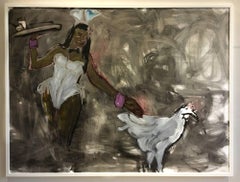
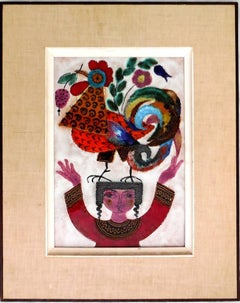
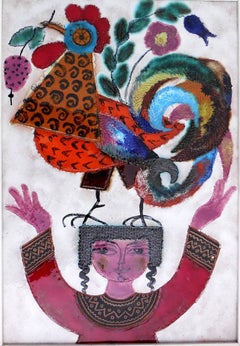
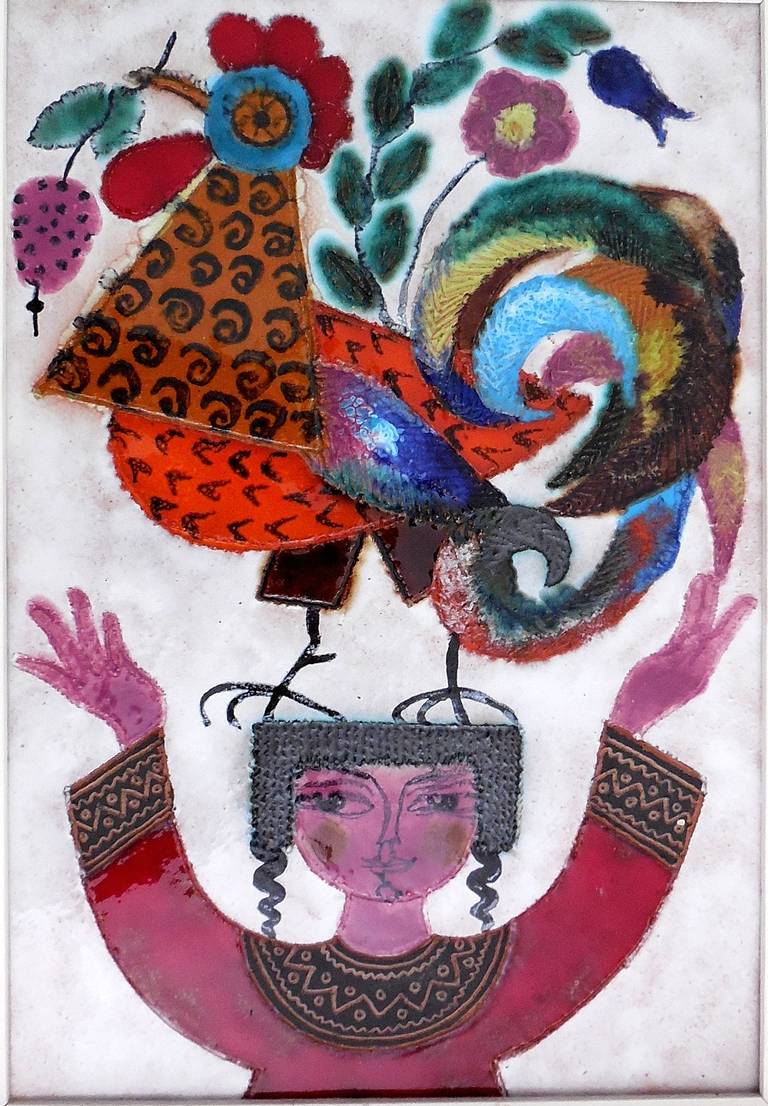
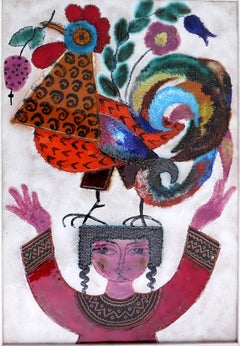
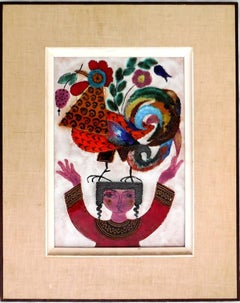
Girl & Rooster Enamel Glazed Ceramic Plaque Israeli Artist Awret Naive Folk Art

Girl & Rooster Enamel Glazed Ceramic Plaque Israeli Artist Awret Naive Folk Art

By Irene Awret

Located in Surfside, FL

This is a rare ceramic plaque painted with enamel glaze by famed Israeli German artist Irene Awret is signed Awret Safed on the verso. the actual glazed ceramic is 10X15 inches. Irèn...

Category

1950s Expressionist Irene Awret Paintings

Materials

Enamel

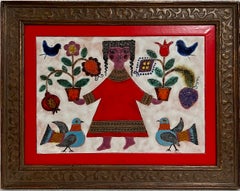
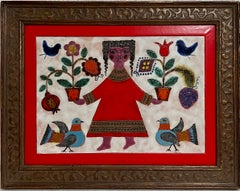
Girl & Plants Enamel Glazed Ceramic Plaque Israeli Artist Awret Naive Folk Art

Girl & Plants Enamel Glazed Ceramic Plaque Israeli Artist Awret Naive Folk Art

By Irene Awret

Located in Surfside, FL

This is a rare ceramic plaque painted with enamel glaze by famed Israeli German artist Irene Awret (these are generally hand signed Awret Safed on the verso. I just have not opened t...

Category

1950s Expressionist Irene Awret Paintings

Materials

Enamel

Related Items
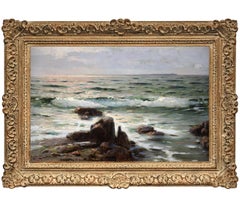
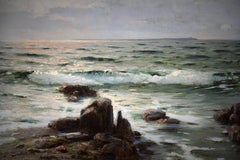
Oil painting on canvas " Rough sea with coastline on the horizon " by Schubring

Oil painting on canvas " Rough sea with coastline on the horizon " by Schubring

By Richard Schubring

Located in Gavere, BE

Schubring, Richard (1853-1902) Rough sea with coastline on the horizon Oil on canvas. Signed and dated lower right. “1895” Richard SCHUBRING is an artist born in 1853 and deceased...

Category

1890s Expressionist Irene Awret Paintings

Materials

Gold Leaf

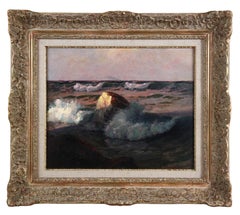
Oil painting on board "Rough sea with steamer on the horizon" by S.A.Vinogradoff

Oil painting on board "Rough sea with steamer on the horizon" by S.A.Vinogradoff

Located in Gavere, BE

Sergey VINOGRADOV ( 1869 - 1938 ) Rough sea with steamer on the horizon Sergei Arsenievich Vinogradov ( Russian: 1869–1938 ) was a Russian-Soviet Impressionist painter; known for l...

Category

1920s Expressionist Irene Awret Paintings

Materials

Gold Leaf

"Interior Scene with Figure" Expressionistic Style Oil Painting on Masonite

"Interior Scene with Figure" Expressionistic Style Oil Painting on Masonite

By Michael Baxte

Located in New York, NY

A strong modernist oil painting depicted in 1969 by Russian painter Michael Baxte. Mostly known for his abstracted figures on canvas or street scenes, this piece is a wonderful representation of his bold still life paintings, with expressive use of color, shape, and form. Later in his career, Baxte explores Expressionism, infusing both European and North American stylistic trends. This piece is from later in his career, but we can feel this underlying style throughout. Art measures 21.75 x 18 inches Michael Posner Baxte was born in 1890 in the small town of Staroselje Belarus, Russia. For the first half of the 19th century it was a center of the Chabad movement of Hasidic Jews, but this group was gone by the middle of the 19th century. By the time the Baxte family immigrated to the United States at the beginning of the 20th century, the Jewish population numbered only on the hundreds. The native language of the Baxte family was Yiddish. It is likely that the death of Michael Baxte’s father triggered the family’s immigration. Three older brothers arrived in New York between 1903 and 1905. Michael and his mother, Rebecca, arrived in 1907. By 1910 Michael, his mother, and brother, Joseph, were living in New Orleans and may have spent some time on a Louisiana plantation. Around 1912, Michael Baxte returned to Europe to study the violin. In 1914 he, his mother, and Joseph moved to New York City. Meanwhile, in Algeria, a talented young woman painter, Violette Mege, was making history. Since for the first time, a woman won the prestigious Beaux Art competition in Algeria. At first, the awards committee denied her the prize but, with French government intervention, Mege eventually prevailed. She won again 3 years later and, in 1916, used the scholarship to visit the United States of America. When Violette came to New York, she met Baxte, who was, by then, an accomplished violinist, teacher, and composer. Baxte’s compositions were performed at the Tokyo Imperial Theater, and in 1922 he was listed in the American Jewish Yearbook as one of the prominent members of the American Jewish community. As a music teacher he encouraged individual expression. Baxte stated, “No pupil should ever be forced into imitation of the teacher. Art is a personal experience, and the teacher’s truest aim must be to awaken this light of personality through the patient light of science.” By 1920 Michael Baxte and Violette Mege were living together in Manhattan. Although they claimed to be living as husband and wife, it seems that their marriage did not become official until 1928. On their “unofficial” honeymoon around 1917, in Algiers, Baxte confided to her his ambition to paint. There and later in New Mexico where the wonderful steeped sunlight approximates the coloring of Algiers, she taught him his heart’s desire. He never had any other teacher. She never had any other pupil. For ten years she devoted all her time, energy, and ambition to teaching, encouraging, inspiring him. Then in 1928, their mutual strivings were rewarded, as his works were being chosen as one of the two winners in the Dudensing National Competition for American Painters. Out of 150 artists from across the country participated in the Dudensing, and Michael Posner Baxte and, Robert Fawcett...

Category

1960s Expressionist Irene Awret Paintings

Materials

Oil, Masonite

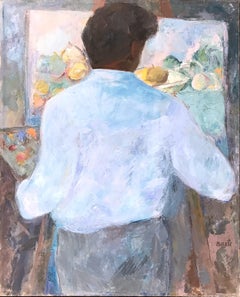
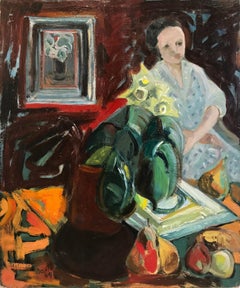
"Artist Painting Still Life" Expressionistic Style Oil Painting on Canvas

"Artist Painting Still Life" Expressionistic Style Oil Painting on Canvas

By Michael Baxte

Located in New York, NY

A strong modernist oil painting depicted in the Mid Centruy by Russian painter Michael Baxte. Mostly known for his abstracted figures on canvas or street scenes, this piece is a wonderful representation of his interior scenes with expressive use of color, shape, and form. Later in his career, Baxte explores Expressionism, infusing both European and North American stylistic trends. This painting measures 32 x 25.5 inches Michael Posner Baxte was born in 1890 in the small town of Staroselje Belarus, Russia. For the first half of the 19th century, it was a center of the Chabad movement of Hasidic Jews, but this group was gone by the middle of the 19th century. By the time the Baxte family immigrated to the United States at the beginning of the 20th century, the Jewish population numbered only on the hundreds. The native language of the Baxte family was Yiddish. It is likely that the death of Michael Baxte’s father triggered the family’s immigration. Three older brothers arrived in New York between 1903 and 1905. Michael and his mother, Rebecca, arrived in 1907. By 1910 Michael, his mother, and brother, Joseph, were living in New Orleans and may have spent some time on a Louisiana plantation...

Category

Mid-20th Century Expressionist Irene Awret Paintings

Materials

Oil, Canvas

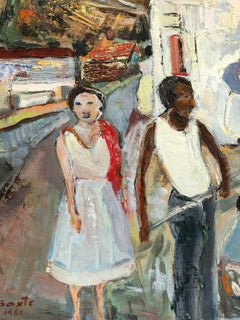
"Mexican Landscape Scene of Mother with Children" Expressionistic Style Painting

"Mexican Landscape Scene of Mother with Children" Expressionistic Style Painting

By Michael Baxte

Located in New York, NY

A strong modernist oil painting depicted in 1962 by Russian painter Michael Baxte. Mostly known for his abstracted figures on canvas or street scenes, this piece is a wonderful representation of his portraits in countryside landscapes with expressive use of color, shape, and form. Later in his career, Baxte explores Expressionism, infusing both European and North American stylistic trends. Art measures 21.25 x 25.5 inches Michael Posner Baxte was born in 1890 in the small town of Staroselje Belarus, Russia. For the first half of the 19th century, it was a center of the Chabad movement of Hasidic Jews, but this group was gone by the middle of the 19th century. By the time the Baxte family immigrated to the United States at the beginning of the 20th century, the Jewish population numbered only on the hundreds. The native language of the Baxte family was Yiddish. It is likely that the death of Michael Baxte’s father triggered the family’s immigration. Three older brothers arrived in New York between 1903 and 1905. Michael and his mother, Rebecca, arrived in 1907. By 1910 Michael, his mother, and brother, Joseph, were living in New Orleans and may have spent some time on a Louisiana plantation. Around 1912, Michael Baxte returned to Europe to study the violin. In 1914 he, his mother, and Joseph moved to New York City. Meanwhile, in Algeria, a talented young woman painter, Violette Mege, was making history. For the first time, a woman won the prestigious Beaux Art competition in Algeria. At first, the awards committee denied her the prize but, with French government intervention, Mege eventually prevailed. She won again 3 years later and, in 1916, used the scholarship to visit the United States of America. When Violette came to New York, she met Baxte, who was, by then, an accomplished violinist, teacher, and composer. Baxte’s compositions were performed at the Tokyo Imperial Theater, and in 1922 he was listed in the American Jewish Yearbook as one of the prominent members of the American Jewish community. As a music teacher, he encouraged individual expression. Baxte stated, “No pupil should ever be forced into the imitation of the teacher. Art is a personal experience, and the teacher’s truest aim must be to awaken this light of personality through the patient's light of science.” By 1920 Michael Baxte and Violette Mege were living together in Manhattan. Although they claimed to be living as husband and wife, it seems that their marriage did not become official until 1928. On their “unofficial” honeymoon around 1917, in Algiers, Baxte confided to her his ambition to paint. There and later in New Mexico where the wonderful steeped sunlight approximates the coloring of Algiers, she taught him his heart’s desire. He never had any other teacher. She never had any other pupil. For ten years she devoted all her time, energy, and ambition to teaching, encouraging, inspiring him. Then in 1928, their mutual strivings were rewarded, as his works were being chosen as one of the two winners in the Dudensing National Competition for American Painters. Out of 150 artists from across the country participated in the Dudensing, and Michael Posner Baxte and, Robert Fawcett...

Category

1960s Expressionist Irene Awret Paintings

Materials

Oil, Masonite

"Landscape Scene of Fisherman by Lake" Expressionistic Oil Painting on Masonite

"Landscape Scene of Fisherman by Lake" Expressionistic Oil Painting on Masonite

By Michael Baxte

Located in New York, NY

A strong modernist oil painting depicted in 1963 by Russian painter Michael Baxte. Mostly known for his abstracted figures on canvas or street scenes, this piece is a wonderful representation of his figures in water landscapes with expressive use of color, shape, and form. Later in his career, Baxte explores Expressionism, infusing both European and North American stylistic trends. This piece is from later in his career, but we can feel this underlying style throughout. Art measures 18 x 21.75 inches Michael Posner Baxte was born in 1890 in the small town of Staroselje Belarus, Russia. For the first half of the 19th century it was a center of the Chabad movement of Hasidic Jews, but this group was gone by the middle of the 19th century. By the time the Baxte family immigrated to the United States at the beginning of the 20th century, the Jewish population numbered only on the hundreds. The native language of the Baxte family was Yiddish. It is likely that the death of Michael Baxte’s father triggered the family’s immigration. Three older brothers arrived in New York between 1903 and 1905. Michael and his mother, Rebecca, arrived in 1907. By 1910 Michael, his mother, and brother, Joseph, were living in New Orleans and may have spent some time on a Louisiana plantation. Around 1912, Michael Baxte returned to Europe to study the violin. In 1914 he, his mother, and Joseph moved to New York City. Meanwhile, in Algeria, a talented young woman painter, Violette Mege, was making history. Since for the first time, a woman won the prestigious Beaux Art competition in Algeria. At first, the awards committee denied her the prize but, with French government intervention, Mege eventually prevailed. She won again 3 years later and, in 1916, used the scholarship to visit the United States of America. When Violette came to New York, she met Baxte, who was, by then, an accomplished violinist, teacher, and composer. Baxte’s compositions were performed at the Tokyo Imperial Theater, and in 1922 he was listed in the American Jewish Yearbook as one of the prominent members of the American Jewish community. As a music teacher he encouraged individual expression. Baxte stated, “No pupil should ever be forced into imitation of the teacher. Art is a personal experience, and the teacher’s truest aim must be to awaken this light of personality through the patient light of science.” By 1920 Michael Baxte and Violette Mege were living together in Manhattan. Although they claimed to be living as husband and wife, it seems that their marriage did not become official until 1928. On their “unofficial” honeymoon around 1917, in Algiers, Baxte confided to her his ambition to paint. There and later in New Mexico where the wonderful steeped sunlight approximates the coloring of Algiers, she taught him his heart’s desire. He never had any other teacher. She never had any other pupil. For ten years she devoted all her time, energy, and ambition to teaching, encouraging, inspiring him. Then in 1928, their mutual strivings were rewarded, as his works were being chosen as one of the two winners in the Dudensing National Competition for American Painters. Out of 150 artists from across the country participated in the Dudensing, and Michael Posner Baxte and, Robert Fawcett, were the winners. In his 1924 naturalization application, he indicated that he was sometimes known as “Michael Posner Baxte.” One of the witnesses to his application was Bernard Karfiol, a Jewish American artist. That’s when Michael may...

Category

1960s Expressionist Irene Awret Paintings
Materials

Oil, Masonite

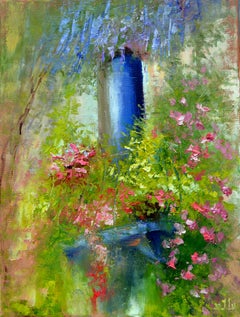
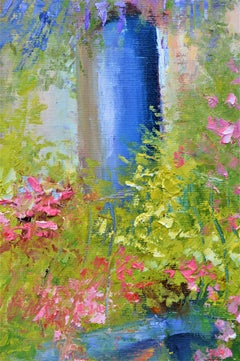
Blooming balcony – Impressionist Landscape Garden Oil Painting Wall Art

Blooming balcony – Impressionist Landscape Garden Oil Painting Wall Art

By Elena Lukina

Located in Zofingen, AG

This vibrant oil painting is an evocative landscape painting titled Blooming balcony created by the internationally registered artist Elena Lukina in 2020.As a comforting landscape p...

Category

2010s Expressionist Irene Awret Paintings

Materials

Canvas, Oil

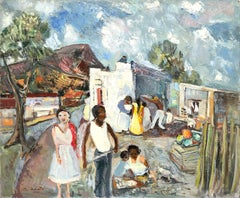
"Landscape Scene of Mexican Villagers" Expressionistic Oil Painting on Masonite

"Landscape Scene of Mexican Villagers" Expressionistic Oil Painting on Masonite

By Michael Baxte

Located in New York, NY

A strong modernist oil painting depicted in 1971 by Russian painter Michael Baxte. Mostly known for his abstracted figures on canvas or street scenes, this piece is a wonderful representation of his landscape paintings, with expressive use of color, shape, and form. Later in his career, Baxte explores Expressionism, infusing both European and North American stylistic trends. This piece is from later in his career, but we can feel this underlying style throughout. Art measures 18 x 21.75 inches Michael Posner Baxte was born in 1890 in the small town of Staroselje Belarus, Russia. For the first half of the 19th century it was a center of the Chabad movement of Hasidic Jews, but this group was gone by the middle of the 19th century. By the time the Baxte family immigrated to the United States at the beginning of the 20th century, the Jewish population numbered only on the hundreds. The native language of the Baxte family was Yiddish. It is likely that the death of Michael Baxte’s father triggered the family’s immigration. Three older brothers arrived in New York between 1903 and 1905. Michael and his mother, Rebecca, arrived in 1907. By 1910 Michael, his mother, and brother, Joseph, were living in New Orleans and may have spent some time on a Louisiana plantation. Around 1912, Michael Baxte returned to Europe to study the violin. In 1914 he, his mother, and Joseph moved to New York City. Meanwhile, in Algeria, a talented young woman painter, Violette Mege, was making history. Since for the first time, a woman won the prestigious Beaux Art competition in Algeria. At first, the awards committee denied her the prize but, with French government intervention, Mege eventually prevailed. She won again 3 years later and, in 1916, used the scholarship to visit the United States of America. When Violette came to New York, she met Baxte, who was, by then, an accomplished violinist, teacher, and composer. Baxte’s compositions were performed at the Tokyo Imperial Theater, and in 1922 he was listed in the American Jewish Yearbook as one of the prominent members of the American Jewish community. As a music teacher he encouraged individual expression. Baxte stated, “No pupil should ever be forced into imitation of the teacher. Art is a personal experience, and the teacher’s truest aim must be to awaken this light of personality through the patient light of science.” By 1920 Michael Baxte and Violette Mege were living together in Manhattan. Although they claimed to be living as husband and wife, it seems that their marriage did not become official until 1928. On their “unofficial” honeymoon around 1917, in Algiers, Baxte confided to her his ambition to paint. There and later in New Mexico where the wonderful steeped sunlight approximates the coloring of Algiers, she taught him his heart’s desire. He never had any other teacher. She never had any other pupil. For ten years she devoted all her time, energy, and ambition to teaching, encouraging, inspiring him. Then in 1928, their mutual strivings were rewarded, as his works were being chosen as one of the two winners in the Dudensing National Competition for American Painters. Out of 150 artists from across the country participated in the Dudensing, and Michael Posner Baxte and, Robert Fawcett, were the winners. In his 1924 naturalization application, he indicated that he was sometimes known as “Michael Posner Baxte.” One of the witnesses to his application was Bernard Karfiol, a Jewish American artist. That’s when Michael may...

Category

1960s Expressionist Irene Awret Paintings
Materials

Oil, Masonite

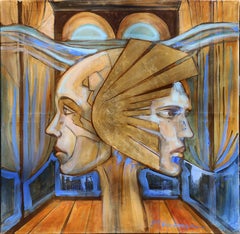
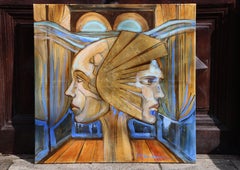
Adam & Eve in Space: Oil Painting, oil on canvas and gold leaf

Adam & Eve in Space: Oil Painting, oil on canvas and gold leaf

By Paula Craioveanu

Located in Forest Hills, NY

"Adam and Eve in Space" - original large art by Paula Craioveanu part of Myths of the Future new project. Original, large, unique painting, oil on canvas, 31.5x31.5in / 80x80cm. Sh...

Category

2010s Expressionist Irene Awret Paintings
Materials

Canvas, Oil

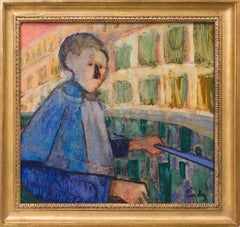
At the Theatre
At the Theatre

Donald Roy PurdyAt the Theatre, circa 1960

$2,175Sale Price|25% Off

H 17 in W 18 in

At the Theatre

By Donald Roy Purdy

Located in New York, NY

Born in 1924 Donald Purdy in the 1960s did a series of works on clay-coated paper. He loved working in this medium and he would apply oil paint and then rub it away with a cloth to ...

Category

Mid-20th Century Expressionist Irene Awret Paintings
Materials

Clay, Oil, Board

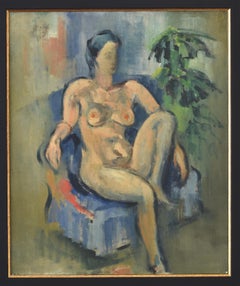
"Nude", Surrealist John Devoluy (1903-1982) Oil on canvas, French-American

"Nude", Surrealist John Devoluy (1903-1982) Oil on canvas, French-American

Located in New York, NY

John Devoluy (1903-1982) Nude, 1950 c. Oil on canvas 21 1/3 x 18 1/8 inches l 55 x 46 cm With frame: 23 1/3 x 19 2/3 inches l 59 x 50 cm John Devoluy was born in 1903 and became a c...

Category

1950s Expressionist Irene Awret Paintings
Materials

Canvas, Oil

Beauties Series: Beauty and the Bird

Beauties Series: Beauty and the Bird

By Jackie Felix

Located in Buffalo, NY

An original acrylic on paper expressionist painting by American contemporary female artist Jackie Felix. This painting from Felix's Beauty Series was exhibited in the artist's solo ...

Category

1980s Expressionist Irene Awret Paintings
Materials

Silver Leaf

Previously Available Items
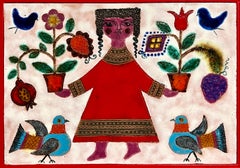
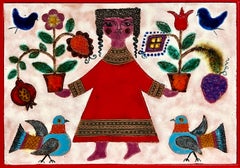
Girl & Plants Enamel Glazed Ceramic Plaque Israeli Artist Awret Naive Folk Art

Girl & Plants Enamel Glazed Ceramic Plaque Israeli Artist Awret Naive Folk Art

By Irene Awret

Located in Surfside, FL

This is a rare ceramic plaque painted with enamel glaze by famed Israeli German artist Irene Awret (these are generally hand signed Awret Safed on the verso. I just have not opened the frame to check) the actual glazed ceramic is 10.25 X 14.75 inches. It depicts a girl or woman with potted plants, birds, pomegranates and other fruits and flowers in a naif, folk art style. Irène Awret was born to a Jewish family in Berlin called Spicker, the youngest of three children. Her mother died in 1927, when Irène was six years old. In 1937 she was forced to stop high school, due to the Nazi race laws. Because she could not continue her regular studies, her father sent her to study drawing, painting and art restoration with a Jewish painter. Among his students were a large number of German Jews who knew they would have to leave Germany within a short time and would require a profession to enable them to support themselves. When the situation grew worse, following the Kristallnacht (the first major attack on German and Austrian Jews in November 1938), her uncle decided to move to Belgium. In 1939 the situation became even worse - her father was fired from his job and the family were forced to leave their home. As a result, Awret's father tried to send her and her sister to Belgium, with the help of smugglers. The first smuggler proved to be a double agent and they were sent back from Aachen to Berlin. Two weeks later they made a second, successful, attempt to sneak across the border. Awret worked for a Dutch Jewish family as a maid. As she had her room and board there, she was able to save enough money to study art part-time at Brussels' Académie Royal des Beaux-Arts. A few months later Awret's father joined her and her financial situation became easier. She left her job and studied full-time, helping support herself with restoration work when it was available and by painting portraits to order. Later, Awret found a hiding place on a farm in Waterloo with a Jewish family who were connected with the underground. In January 1943 she had to return to Brussels, living with a false identity card which stated she was a married woman with two children. Awret succeeded in renting an attic without informing the police where she was - she told her landlady that she had been forced to flee her husband because he beat her. While there, she supported herself by restoring wooden sculptures. A Jewish informer gave her up to the Gestapo, accompanying the two Gestapo men who arrested her. Awret was able to take a bag containing food and drawing materials. She was detained in the Gestapo cellars in Brussels where she drew. Because there was nothing there to draw, she sketched her own hand (view this work). Awret was interrogated in order to reveal the hiding place of her father who was still in Brussels. The National Socialist regime was determined to persecute him, even though he had fought for Germany in World War I and been permanently disabled. They stepped up their torture and brought Awret before Hartmann, the head of the Gestapo in Brussels. When Hartmann saw her block of drawings, he asked her where she had studied art and halted the interrogation. Awret was placed in a narrow cell and then transferred to Malines camp, which the Belgian's called Mechelen. Malines was a transit camp to Auschwitz, regularly sending 2000 people at a time. Although she arrived just before Transport No. 20, Irène Awret avoided being included. Instead she was put to work in the leather workshop, decorating broaches. While she was there, Hartmann visited the camp and spotted her: "I could have discovered where your father is hiding," he told her. When her artistic talents became known, she was transferred to the Mahlerstube (artist's workshop) where she worked producing graphics for the Germans until the end of the war. When Carol (Karel) Deutsch (whose works are now on view at Yad Vashem) was sent from Mechelen to his death with his wife, he left young Irene his paintbox. Irene also recalls seeing the great painter Felix Nussbaum and his wife being pushed into a boxcar bound for the gas, and tells of the aftermath of the famous 20th Train incident, when a young Jewish doctor armed only with a pistol and helped by two unarmed friends with a lantern ambushed one of Mechelen's Auschwitz-bound trains carrying 1,618 Jews, most of whom had fled Eastern Europe for Belgium. Awret's job enabled her to paint and draw - mainly in pencil, but also in watercolors and oils. In the artists' workshop she met a Jewish refugee from Poland - Azriel Awret - who would later become her husband. Among the other artists in the workshop were Herbert von Ledermann-Vütemberg, a sculptor from an aristocratic family with Jewish roots, Léon Landau, and Smilowitz, who perished in the camps in the East. Irène and Azriel tried to bribe a German officer to prevent Smilowitz's deportation. Not only were they unsuccessful, but they were almost put onto the same train. Jacques Ochs was another artist with whom they became friends in the camp. Ochs, a French-born Protestant who lived in Belgium, was interned as a political prisoner. He remained in Belgium after liberation. After the war the Awrets immigrated to Israel and made their home in Safed. They continued to work, and were instrumental in founding Safed's artists' quarter. The Beit Lohamei Haghetaot (Ghetto Fighters' House Museum) art collection holds works donated by Awret. These date from her time in Malines camp and from her stay in Brussels after the war, when she was in the company of orphans who had hidden while their parents were sent to Auschwitz. Her highly expressive works have made their way to exhibitions at theTel Aviv Museum, the Haifa Museum of Modern Art and the Modern Art Gallery in Washington, D.C., as well as into the private collections of such individuals as Dr. Jonas Salk...

Category

1950s Expressionist Irene Awret Paintings
Materials

Enamel

Girl & Rooster Enamel Glazed Ceramic Plaque Israeli Artist Awret Naive Folk Art

Girl & Rooster Enamel Glazed Ceramic Plaque Israeli Artist Awret Naive Folk Art

By Irene Awret

Located in Surfside, FL

This is a rare ceramic plaque painted with enamel glaze by famed Israeli German artist Irene Awret is signed Awret Safed on the verso. the actual glazed ceramic is 10X15 inches. Irène Awret was born to a Jewish family in Berlin called Spicker, the youngest of three children. Her mother died in 1927, when Irène was six years old. In 1937 she was forced to stop high school, due to the Nazi race laws. Because she could not continue her regular studies, her father sent her to study drawing, painting and art restoration with a Jewish painter. Among his students were a large number of German Jews who knew they would have to leave Germany within a short time and would require a profession to enable them to support themselves. When the situation grew worse, following the Kristallnacht (the first major attack on German and Austrian Jews in November 1938), her uncle decided to move to Belgium. In 1939 the situation became even worse - her father was fired from his job and the family were forced to leave their home. As a result, Awret's father tried to send her and her sister to Belgium, with the help of smugglers. The first smuggler proved to be a double agent and they were sent back from Aachen to Berlin. Two weeks later they made a second, successful, attempt to sneak across the border. Awret worked for a Dutch Jewish family as a maid. As she had her room and board there, she was able to save enough money to study art part-time at Brussels' Académie Royal des Beaux-Arts. A few months later Awret's father joined her and her financial situation became easier. She left her job and studied full-time, helping support herself with restoration work when it was available and by painting portraits to order. Later, Awret found a hiding place on a farm in Waterloo with a Jewish family who were connected with the underground. In January 1943 she had to return to Brussels, living with a false identity card which stated she was a married woman with two children. Awret succeeded in renting an attic without informing the police where she was - she told her landlady that she had been forced to flee her husband because he beat her. While there, she supported herself by restoring wooden sculptures. A Jewish informer gave her up to the Gestapo, accompanying the two Gestapo men who arrested her. Awret was able to take a bag containing food and drawing materials. She was detained in the Gestapo cellars in Brussels where she drew. Because there was nothing there to draw, she sketched her own hand (view this work). Awret was interrogated in order to reveal the hiding place of her father who was still in Brussels. The National Socialist regime was determined to persecute him, even though he had fought for Germany in World War I and been permanently disabled. They stepped up their torture and brought Awret before Hartmann, the head of the Gestapo in Brussels. When Hartmann saw her block of drawings, he asked her where she had studied art and halted the interrogation. Awret was placed in a narrow cell and then transferred to Malines camp, which the Belgian's called Mechelen. Malines was a transit camp to Auschwitz, regularly sending 2000 people at a time. Although she arrived just before Transport No. 20, Irène Awret avoided being included. Instead she was put to work in the leather workshop, decorating broaches. While she was there, Hartmann visited the camp and spotted her: "I could have discovered where your father is hiding," he told her. When her artistic talents became known, she was transferred to the Mahlerstube (artist's workshop) where she worked producing graphics for the Germans until the end of the war. When Carol (Karel) Deutsch (whose works are now on view at Yad Vashem) was sent from Mechelen to his death with his wife, he left young Irene his paintbox. Irene also recalls seeing the great painter Felix Nussbaum and his wife being pushed into a boxcar bound for the gas, and tells of the aftermath of the famous 20th Train incident, when a young Jewish doctor armed only with a pistol and helped by two unarmed friends with a lantern ambushed one of Mechelen's Auschwitz-bound trains carrying 1,618 Jews, most of whom had fled Eastern Europe for Belgium. Awret's job enabled her to paint and draw - mainly in pencil, but also in watercolors and oils. In the artists' workshop she met a Jewish refugee from Poland - Azriel Awret...

Category

1950s Expressionist Irene Awret Paintings
Materials

Enamel

Girl with Rooster, Enamel Glazed Ceramic Plaque

Girl with Rooster, Enamel Glazed Ceramic Plaque

By Irene Awret

Located in Surfside, FL

This is a rare ceramic plaque painted with enamel glaze by famed Israeli German artist Irene Awret is signed Awret Safed on the verso. the actual glazed ceramic is 10X15 inches. Irène Awret was born to a Jewish family in Berlin called Spicker, the youngest of three children. Her mother died in 1927, when Irène was six years old. In 1937 she was forced to stop high school, due to the Nazi race laws. Because she could not continue her regular studies, her father sent her to study drawing, painting and art restoration with a Jewish painter. Among his students were a large number of German Jews who knew they would have to leave Germany within a short time and would require a profession to enable them to support themselves. When the situation grew worse, following the Kristallnacht (the first major attack on German and Austrian Jews in November 1938), her uncle decided to move to Belgium. In 1939 the situation became even worse - her father was fired from his job and the family were forced to leave their home. As a result, Awret's father tried to send her and her sister to Belgium, with the help of smugglers. The first smuggler proved to be a double agent and they were sent back from Aachen to Berlin. Two weeks later they made a second, successful, attempt to sneak across the border. Awret worked for a Dutch Jewish family as a maid. As she had her room and board there, she was able to save enough money to study art part-time at Brussels' Académie Royal des Beaux-Arts. A few months later Awret's father joined her and her financial situation became easier. She left her job and studied full-time, helping support herself with restoration work when it was available and by painting portraits to order. Later, Awret found a hiding place on a farm in Waterloo with a Jewish family who were connected with the underground. In January 1943 she had to return to Brussels, living with a false identity card which stated she was a married woman with two children. Awret succeeded in renting an attic without informing the police where she was - she told her landlady that she had been forced to flee her husband because he beat her. While there, she supported herself by restoring wooden sculptures. A Jewish informer gave her up to the Gestapo, accompanying the two Gestapo men who arrested her. Awret was able to take a bag containing food and drawing materials. She was detained in the Gestapo cellars in Brussels where she drew. Because there was nothing there to draw, she sketched her own hand (view this work). Awret was interrogated in order to reveal the hiding place of her father who was still in Brussels. The National Socialist regime was determined to persecute him, even though he had fought for Germany in World War I and been permanently disabled. They stepped up their torture and brought Awret before Hartmann, the head of the Gestapo in Brussels. When Hartmann saw her block of drawings, he asked her where she had studied art and halted the interrogation. Awret was placed in a narrow cell and then transferred to Malines camp, which the Belgian's called Mechelen. Malines was a transit camp to Auschwitz, regularly sending 2000 people at a time. Although she arrived just before Transport No. 20, Irène Awret avoided being included. Instead she was put to work in the leather workshop, decorating broaches. While she was there, Hartmann visited the camp and spotted her: "I could have discovered where your father is hiding," he told her. When her artistic talents became known, she was transferred to the Mahlerstube (artist's workshop) where she worked producing graphics for the Germans until the end of the war. When Carol (Karel) Deutsch (whose works are now on view at Yad Vashem) was sent from Mechelen to his death with his wife, he left young Irene his paintbox. Irene also recalls seeing the great painter Felix Nussbaum and his wife being pushed into a boxcar bound for the gas, and tells of the aftermath of the famous 20th Train incident, when a young Jewish doctor armed only with a pistol and helped by two unarmed friends with a lantern ambushed one of Mechelen's Auschwitz-bound trains carrying 1,618 Jews, most of whom had fled Eastern Europe for Belgium. Awret's job enabled her to paint and draw - mainly in pencil, but also in watercolors and oils. In the artists' workshop she met a Jewish refugee from Poland - Azriel Awret...

Category

1950s Expressionist Irene Awret Paintings
Materials

Enamel

Irene Awret paintings for sale on 1stDibs.
Find a wide variety of authentic Irene Awret paintings available for sale on 1stDibs. You can also browse by medium to find art by Irene Awret in ceramic, enamel, metal and more. Much of the original work by this artist or collective was created during the 1950s and is mostly associated with the Expressionist style. Not every interior allows for large Irene Awret paintings, so small editions measuring 18 inches across are available. Customers who are interested in this artist might also find the work of Erich Waske, Heinrich Richter (b.1884), and Edgardo Corbelli. Irene Awret paintings prices can differ depending upon medium, time period and other attributes. On 1stDibs, the price for these items starts at $1,200 and tops out at $1,200, while the average work can sell for $1,200.