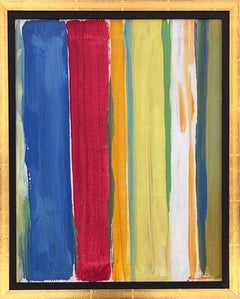
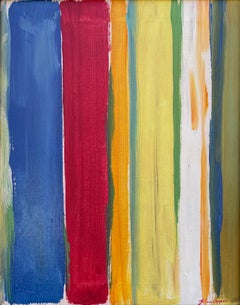
John Opper Art

American, 1908-1994
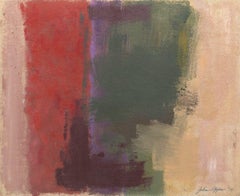
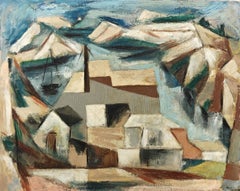
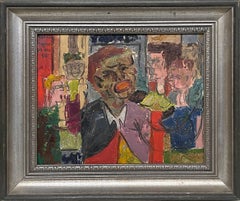
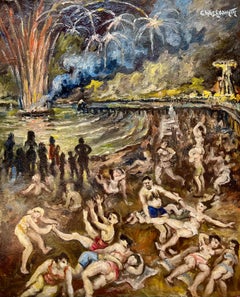
John Opper described the 1930s as a "great gestation period" for his art. "I thought the Thirties was a very vital time for American art. . . . With the WPA, you got together whether it was the [Artists'] Union or the [American Artists'] Congress or whether it was a bar. . . and you talked about art, and you heard about important artists, and you began to live art." But Opper also remembered the thirties as a period of breakdown in the vitality of American art; "we became aware that a great deal was missing." Academically trained like many of his contemporaries, Opper came to New York in 1934, two years after his graduation from Case Western Reserve University in Cleveland, Ohio. As a youth, he had taken Saturday art classes at the Cleveland Museum of Art and later studied at the Cleveland School of Art and the School of the Art Institute of Chicago. When he arrived in New York he was a well-trained painter, adept at rendering still lifes and particularly landscapes depicting the American scene. A reviewer of his 1937 exhibition at the Artists' Gallery in New York, for example, wrote about Opper's "colloquial flavor … spontaneity and an imaginative use of color which conveys just the feeling" that the subjects—East River tugboats, old garages, and scenes around Manhattan— suggested. By 1937 Opper had become familiar with modernism, though he was not yet converted to the cause. Indeed, his 1937 show was made up of the still popular regionalist paintings. Earlier, in 1935 and 1936, he studied with Hans Hofmann and began to think in terms of forces and tensions within the picture plane. He met Wilfrid Zogbaum, Giorgio Cavallon, Byron Browne, Rosalind Bengelsdorf, and George McNeil, with whom he shared a studio. He paid frequent visits to Gallatin's Gallery of Living Art. He joined the WPA easel project in 1936 and began to paint in "a kind of transformed cubist style." When war came, Opper worked for three years with a marine architectural firm making drawings for the pipe systems of PT boats. After the war, he taught at the University of Wyoming and the University of Alabama, and between 1952 and 1957, he was on the faculty at the University of North Carolina. In 1957, he began teaching at New York University, where he remained until his retirement in 1974.
to
1
1
1
Overall Width
to
Overall Height
to
3
1
2
2
1
2
1
1
1
1
1
3
3
1
1
3
11,084
2,853
2,494
1,433
3
3
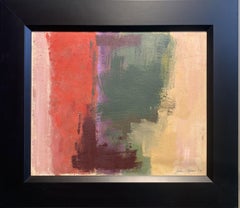
Artist: John Opper
Untitled Mid Century Abstract Oil Painting New York Artist

Untitled Mid Century Abstract Oil Painting New York Artist

By John Opper

Located in Beachwood, OH

John Opper (American, 1908 - 1994) Untitled, 1959 Oil on board Signed and dated lower right 14.75 in. h x 18 in. w. 20 in. h. x 24.5 in. w., as framed John Opper described the 1930s...

Category

1950s Abstract John Opper Art

Materials

Oil

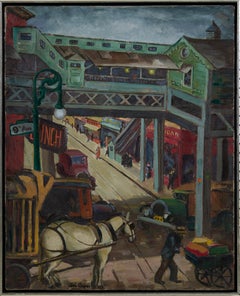
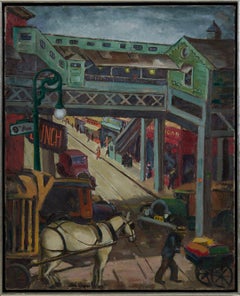
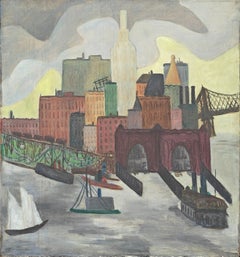
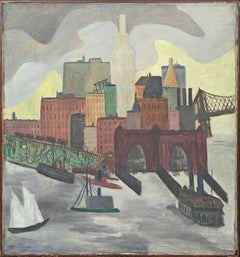
Ninth Avenue El (New York City), Mid 20th Century Cityscape Oil painting

Ninth Avenue El (New York City), Mid 20th Century Cityscape Oil painting

By John Opper

Located in Beachwood, OH

John Opper (American, 1908-1994) Ninth Avenue El (New York City), c. 1935 Oil on canvas Signed lower left and verso 30.125 x 24 inches The Ninth Avenue El was the first elevated rai...

Category

1930s American Modern John Opper Art

Materials

Oil

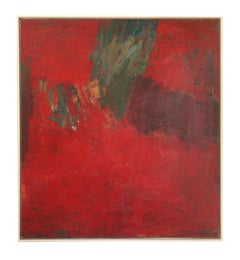
Untitled
Untitled

Untitled

By John Opper

Located in Austin, TX

Waterline Fine Art, Austin, TX is pleased to present the following work: Oil on canvas. Signed lower right, signed and dated verso. 62.25 x 56.25 in. 64 x 58 in. (framed) Custom framed in a natural cherry wood floater. Provenance Washburn Gallery, New York Behnke Doherty Gallery, Washington Depot, CT Born in 1908 in Chicago, John Opper moved with his family to Cleveland, Ohio, in 1916. In high school, he began studying art and attending classes at the Cleveland Museum of Art. After graduation, he enrolled in the Cleveland School of Art (now Cleveland Institute of Art), only to withdraw after a year and move to Chicago, where he took classes at the Art Institute of Chicago. He eventually returned to Cleveland, enrolling at Western Reserve University (now Case Western Reserve), receiving his bachelor’s degree in 1931. The Depression has taken hold during this period, so Opper found work by teaching metalworking and sketching classes at the Karamu Settlement House, the oldest African American theater in the United States. In 1933, Opper traveled to Gloucester, Massachusetts, eventually connecting with the artist Hans Hofmann, who was teaching at the school run by Ernest Thurn. Hofmann encouraged Opper to work “in a more modern vein and start finding what it’s all about.” Heeding this advice, Opper relocated to New York, co-founding a mail-order club of American and British prints for dissemination to schools and museums. By the mid-1930s, he joined the Works Progress Administration (WPA) Easel Division, and also began attending the 57th Street school that Hans Hofmann had established after leaving the Art Students League. Looking back at his time at the school, Opper felt that beyond Hofmann’s teaching, most advantageous was his contact with fellow artists, including Byron Browne, Rosalind Bengelsdorf, and George McNeil. At the time, he also met Giorgio Cavallon and the sculptor Wilfrid Zogbaum. In 1936, Opper became a founding member of the American Abstract Artists, along with Balcomb and Gertrude Greene. The organization was formed to provide an opportunity for artists to show abstract works at a time when such opportunities were scarce. This led to his first solo show in 1937 at the Artists’ Gallery in New York. During his summer in Gloucester in 1933, Opper came to know Milton Avery. Painting in Avery’s informal studio in New York City the following winter, he became acquainted with Adolph Gottlieb and Mark Rothko. Opper participated in a couple of shows during the 1930s of the American Artists Congress Against War and Fascism, whose president was Stuart Davis. About the same period, Opper joined the Artists’ Union and served as the business manager of its publication, Art Front. During World War II, Opper worked for a ship design company creating drawings for piping systems used in PT boats...

Category

1950s Abstract Expressionist John Opper Art

Materials

Canvas, Oil

Related Items
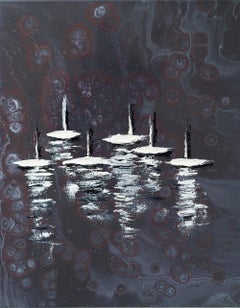
Abstraction with Yacht Regatta Original Painting Sailboats Seascape Minimalist M

Abstraction with Yacht Regatta Original Painting Sailboats Seascape Minimalist M

By Marina Fisher

Located in Zofingen, AG

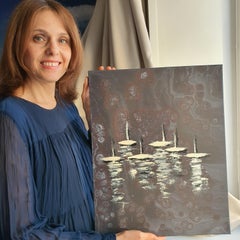
“Abstraction with Yacht Regatta Original Painting Sailboats Seascape Minimalist Marine Art” is a striking Original Painting that blends contemporary abstraction with a refined nautic...

Category

2010s Abstract John Opper Art

Materials

Canvas, Oil, Acrylic

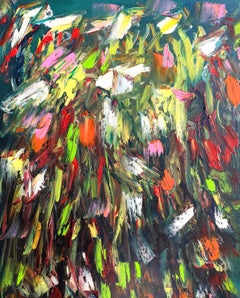
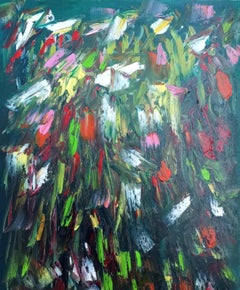
Abstract impressionist expressive nature floral oil canvas "Summer Meadow"

Abstract impressionist expressive nature floral oil canvas "Summer Meadow"

By Natalya Mougenot

Located in VÉNISSIEUX, FR

This contemporary abstract expressionist piece with a touch of impressionism was created by French artist Natalya Mougenot and belongs to her evocative series dedicated to the beauty...

Category

2010s Abstract Expressionist John Opper Art

Materials

Canvas, Oil

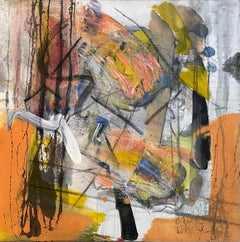
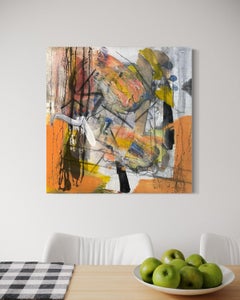
"Exuberance" by Rehfeld - Abstract Expressionism in Orange, Black, and Yellow

"Exuberance" by Rehfeld - Abstract Expressionism in Orange, Black, and Yellow

By Steven H. Rehfeld

Located in Carmel, CA

Steven H. Rehfeld (American, born 1954) "Exuberance" 2002 Oil paint, Canvas, Stretcher bars The artist signed the back of the painting. "Exuberance" by Steven Rehfeld is a visceral ...

Category

Early 2000s Abstract Expressionist John Opper Art

Materials

Canvas, Oil, Stretcher Bars

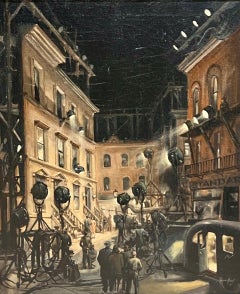
Till the Clouds Roll By 1945 Frank Sinatra Mid Century Modern Hollywood Film WPA

Till the Clouds Roll By 1945 Frank Sinatra Mid Century Modern Hollywood Film WPA

By Richard Whorf

Located in New York, NY

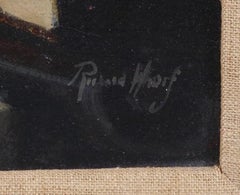
Till the Clouds Roll By 1945 Frank Sinatra Mid Century Modern Hollywood Film WPA TILL THE COULDS ROLL BY (Film Set), oil on canvas, 20 x 24 inches signed “Richard Whorf” lower right and signed and dated on the verso “R. Whorf/ Dec. 21, 1945. Frame by Hendenryk. ABOUT THE PAINTING This painting is from the collection of Barbara and Frank Sinatra, dated December 21, 1945 (just nine days after Frank Sinatra’s 30th birthday), and depicts the Metro-Goldwyn-Mayer Culver City backlot during the filming of Till the Clouds Roll By, the direction of the film having been taking over by Richard Whorf in December 1945. It is not presently clear if Whorf gave the Sinatras this painting as a gift, as the presence of the Dalzell Hatfield Galleries label on the verso indicates the painting may have been sourced there. Frank and Nancy Sinatra acquired a number of works from Dalzell Hatfield Galleries during the 1940’s, or perhaps they framed it for the couple. Sinatra performed “Old Man River’ in the film. Sinatra and June Allyson are depicted in the center of the painting. PROVENANCE From the Estate of Mrs. Nancy Sinatra; Dalzell Hatfield Galleries, Ambassador Hotel, Los Angeles. An image of the Dalzell Hatfield label and the back of the original frame (which we replaced with a stunning Heydenrk frame) are attached. Nancy Sinatra was Fran's first wife. Nancy Rose Barbato was 17 years old when she met Frank Sinatra, an 18-year-old singer from Hoboken, on the Jersey Shore in the summer of 1934. They married in 1939 at Our Lady of Sorrows Church in Jersey City where Frank gave Nancy a recording of a song dedicated to her titled "Our Love" as a wedding present. The young newlyweds lived and worked in New Jersey, where Frank worked as an unknown singing waiter and master of ceremonies at the Rustic Cabin while Nancy worked as a secretary at the American Type Founders. His musical career took off after singing with big band leaders Harry James and Tommy Dorsey...

Category

1940s American Modern John Opper Art

Materials

Canvas, Oil

Neighbors

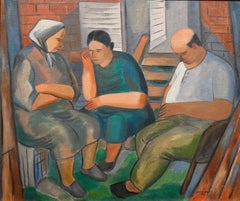
Norman BarrNeighbors, 1939

$3,250

H 22 in W 26 in D 1 in

Neighbors

By Norman Barr

Located in Los Angeles, CA

Neighbors, 1939, oil on canvas, signed and dated lower right, 22 x 26 inches Norman Barr was an American Scene painter and muralist known for his poignant depictions of working-clas...

Category

1930s American Modern John Opper Art

Materials

Canvas, Oil

"Cubist Landscape" Albert Heckman, American Modernism, Woodstock, Earth Tones

"Cubist Landscape" Albert Heckman, American Modernism, Woodstock, Earth Tones

By Albert Heckman

Located in New York, NY

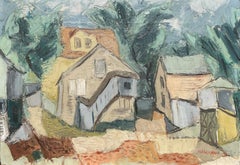
Albert Heckman Cubist Landscape Oil on canvas 16 x 20 inches Albert Heckman was born in Meadville, Western Pennsylvania, 1893. He went to New York City to try his hand at the art w...

Category

1940s American Modern John Opper Art

Materials

Canvas, Oil

A Unique, Humorous 1950s Mid-Century Modern Painting, "Auctioneer Selling Junk"

A Unique, Humorous 1950s Mid-Century Modern Painting, "Auctioneer Selling Junk"

By Harold Haydon

Located in Chicago, IL

A Unique, Humorous 1950s Mid-Century Modern Painting of a Country Auction by Notable Chicago Artist, Harold Haydon (Am. 1909-1994). Titled "Auctioneer Selling Junk" and painted in ...

Category

Mid-20th Century American Modern John Opper Art

Materials

Oil, Board

Coney Island, Fourth of July

Coney Island, Fourth of July

Located in Los Angeles, CA

Coney Island, Fourth of July, c. 1940s, oil on canvas applied to Masonite, signed upper right, 26 x 21 1/2 inches, presented in its original frame During the 1930s and 40s, Coney I...

Category

1940s American Modern John Opper Art

Materials

Canvas, Oil, Board

"New York Skyline" Adelaide Lawson Gaylor, Modernist Landscape, Female Artist

"New York Skyline" Adelaide Lawson Gaylor, Modernist Landscape, Female Artist

By Adelaide Lawson Gaylor

Located in New York, NY

Adelaide Lawson Gaylor New York Skyline, circa 1925 Oil on canvas 48 x 45 inches Modernist artist Adelaide Jaffrey Lawson Gaylor was born in New York City and studied at the Art St...

Category

1920s American Modern John Opper Art

Materials

Canvas, Oil

"Cluster of Houses near Woodstock" Albert Heckman, American Modernist Landscape

"Cluster of Houses near Woodstock" Albert Heckman, American Modernist Landscape

By Albert Heckman

Located in New York, NY

Albert Heckman Cluster of Houses near Woodstock Signed lower right Oil on canvas 10 x 14 inches Albert Heckman was born in Meadville, Western Pennsylvania, 1893. He went to New Yor...

Category

1940s American Modern John Opper Art

Materials

Canvas, Oil

Six O'Clock

Thomas CraigSix O'Clock

$12,500

H 20 in W 30 in D 2 in

Six O'Clock

Located in Los Angeles, CA

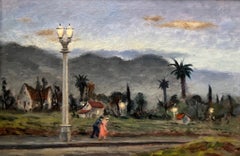
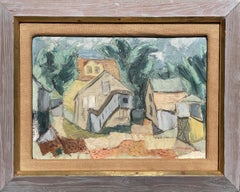
Six O-Clock, c. 1942, oil on canvas, 30 x 20 inches, signed and titled several times verso of frame and stretcher (perhaps by another hand), marked “Rehn” several times on frame (for the Frank K. M. Rehn Galleries in New York City, who represented Craig at the time); Exhibited: 1) 18th Biennial Exhibition of Contemporary American Oil Paintings from March 21 to May 2, 1943 at The Corcoran Gallery of Art in Washington, D.C. #87, original price $450 (per catalog) (exhibition label verso), 2) Craig’s one-man show at the Frank K. M. Rehn Galleries, New York City, from October 26 to November 14, 1942, #10 (original price listed as $350); and 3) Exhibition of thirty paintings sponsored by the Harrisburg Art Association at the State Museum of Pennsylvania in Harrisburg in March, 1944 (concerning this exhibit, Penelope Redd of The Evening News (Harrisburg, Pennsylvania) wrote: “Other paintings that have overtones of superrealism inherent in the subjects include Tom Craig’s California nocturne, ‘Six O’Clock,’ two figures moving through the twilight . . . .” March 6, 1944, p. 13); another label verso from The Museum of Art of Toledo (Ohio): original frame: Provenance includes George Stern Gallery, Los Angeles, CA About the Painting Long before Chris Burden’s iconic installation outside of the Los Angeles County Museum of Art, Urban Light, another artist, Tom Craig, made Southern California streetlights the subject of one of his early 1940s paintings. Consisting of dozens of recycled streetlights from the 1920s and 1930s forming a classical colonnade at the museum’s entrance, Burden’s Urban Light has become a symbol of Los Angeles. For Burden, the streetlights represent what constitutes an advanced society, something “safe after dark and beautiful to behold.” It seems that Craig is playing on the same theme in Six O-Clock. Although we see two hunched figures trudging along the sidewalk at the end of a long day, the real stars of this painting are the streetlights which brighten the twilight and silhouette another iconic symbol of Los Angeles, the palm trees in the distance. Mountains in the background and the distant view of a suburban neighborhood join the streetlights and palm trees as classic subject matter for a California Scene painting, but Craig gives us a twist by depicting the scene not as a sun-drenched natural expanse. Rather, Craig uses thin layers of oil paint, mimicking the watercolor technique for which he is most famous, to show us the twinkling beauty of manmade light and the safety it affords. Although Southern California is a land of natural wonders, the interventions of humanity are already everywhere in Los Angeles and as one critic noted, the resulting painting has an air of “superrealism.” About the Artist Thomas Theodore Craig was a well-known fixture in the Southern California art scene. He was born in Upland California. Craig graduated with a degree in botany from Pomona College and studied painting at Pamona and the Chouinard Art School with Stanton MacDonald-Wright and Barse Miller among others. He became close friends with fellow artist Milford Zornes...

Category

1940s American Modern John Opper Art
Materials

Canvas, Oil

Previously Available Items
Untitled abstract blue, red & yellow oil painting, New York artist

Untitled abstract blue, red & yellow oil painting, New York artist

By John Opper

Located in Beachwood, OH

John Opper (American, 1908-1994) Untitled Oil on canvas Signed lower right 20 x 16 inches 22.25 x 18.25 inches, framed John Opper described the 1930s as a "great gestation period" for his art. "I thought the Thirties was a very vital time for American art. . . . With the WPA, you got together whether it was the [Artists'] Union or the [American Artists'] Congress or whether it was a bar. . . and you talked about art, and you heard about important artists, and you began to live art." But Opper also remembered the thirties as a period of breakdown in the vitality of American art; "we became aware that a great deal was missing." Academically trained like many of his contemporaries, Opper came to New York in 1934, two years after his graduation from Case Western Reserve University in Cleveland, Ohio. As a youth, he had taken Saturday art classes at the Cleveland Museum of Art and later studied at the Cleveland School of Art and the School of the Art Institute of Chicago. When he arrived in New York he was a well-trained painter, adept at rendering still lifes and particularly landscapes depicting the American scene. A reviewer of his 1937 exhibition at the Artists' Gallery in New York, for example, wrote about Opper's "colloquial flavor … spontaneity and an imaginative use of color which conveys just the feeling" that the subjects—East River tugboats, old garages, and scenes around Manhattan— suggested. By 1937 Opper had become familiar with modernism, though he was not yet converted to the cause. Indeed, his 1937 show was made up of the still popular regionalist paintings. Earlier, in 1935 and 1936, he studied with Hans Hofmann and began to think in terms of forces and tensions within the picture plane. He met Wilfrid Zogbaum, Giorgio Cavallon, Byron Browne, Rosalind Bengelsdorf, and George McNeil, with whom he shared a studio. He paid frequent visits to Gallatin's Gallery of Living Art. He joined the WPA easel project in 1936 and began to paint in "a kind of transformed cubist style." When war came, Opper worked for three years with a marine architectural firm making drawings for the pipe systems of PT boats...

Category

Mid-20th Century Color-Field John Opper Art
Materials

Oil

John Opper art for sale on 1stDibs.

Find a wide variety of authentic John Opper art available for sale on 1stDibs. You can also browse by medium to find art by John Opper in paint, canvas, fabric and more. Much of the original work by this artist or collective was created during the 20th century and is mostly associated with the abstract style. Not every interior allows for large John Opper art, so small editions measuring 46 inches across are available. Customers who are interested in this artist might also find the work of Michael Goldberg, Syd Solomon, and Agnes Hart. John Opper art prices can differ depending upon medium, time period and other attributes. On 1stDibs, the price for these items starts at $25,000 and tops out at $55,000, while the average work can sell for $40,000.