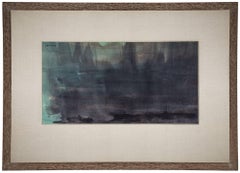
Murray Hantman Art

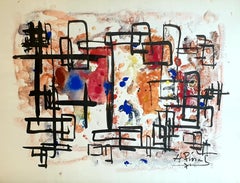
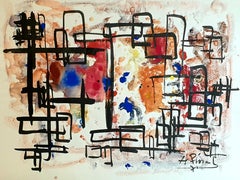
Shaped by his life experiences and a commitment to the practice of making art, the work of Murray Hantman represented a career of personal exploration and aesthetic refinement that took him from New York to Los Angeles, back to New York and eventually to the serene, yet dramatic, the coast of Maine, where he worked as part of the artists’ colony on Monhegan Island. Born in Pennsylvania in 1904, Hantman’s family moved many times to follow his father’s business opportunities, eventually settling in New York. A childhood of economic instability and dislocation formed Murray Hantman’s early years, making him independent and self-reliant from a very early age. Hantman’s father owned movie theatres and photography studios and, recognizing his son’s artistic ability, employed him to print hand-color photographs as a child. When he was eleven and living in Michigan, a public school teacher arranged for Hantman to receive a scholarship to the Detroit Museum of Art School, where after a year he was awarded another scholarship to study at the Detroit School of Design. He studied in Detroit for a year until his family abruptly moved to Alabama, interrupting his artistic and academic studies until the family moved to New York at the end of the first World War. As a young man, Hantman supported himself by working many different jobs in New York and New Jersey. Steady work with his brother at the Hartford and New Haven Railroad office in New York City finally allowed Hantman to pursue his artistic studies formally. In 1928, he enrolled in the Art Students League and became part of a social circle of artists and activists. While at the Art Students League, he worked with faculty members Boardman Robinson and Thomas Hart Benton on two mural projects. During the years around the Great Depression, Hantman worked in Los Angeles with a group of artists known as the Bloc of Painters. Recruited through an advertisement to attend a course on fresco painting, the Bloc group was headed by Mexican muralist David Alfaro Siqueiros, who had recently been exiled from Mexico for political activism. Through his work with Siqueiros, Hantman became motivated by social and political issues and their creative expression. In 1934, He returned to New York and found the community of artists there equally engaged in social justice issues. While enrolling at the newly-formed Artists’ Union to advocate for the labor rights of creative workers, Hantman met sculptor Jo Levy who would become his wife. Like many artists at the time, he found work through the Federal Art Project as a member of the Easel Painting Division, which strove to create “works of art for the public which have a definite social value to the community”. Along with the work he exhibited as a member of the WPA group, Hantman’s work from this period was in the style of Social Realism he learned from Siqueiros. Hantman and his wife, Jo Levy, believed in creating art for the public good. Their Artists’ Union friends and colleagues from the Federal Art Project formed the nucleus of their social circle and would become the community of artists who worked together during summers on Monhegan Island off the coast of Maine. In 1945, Hantman had his first solo painting show at Marquee Gallery in New York and visited Monhegan Island for the first time. The following summer, he and Levy spent the summer in Maine and would continue to do so for the next thirty years. The landscapes and seascapes of Maine would become a central subject in his work after 1946. The dramatic coastline of Monhegan Island had been an inspiration for other New York artists before Hantman, including George Bellows and Rockwell Kent. As Hantman matured as an artist he began to reject academic narrative in his work, moving towards a more expressionistic and abstract style. During this shift into abstraction, nature remained central to his work and the seascape and Maine light provided continual inspiration. In the late 1940s, Hantman began to reduce the landscape into elemental forms of color and shape. As he pursues this mode of painting, his work moves further into abstraction, juxtaposing large blocks of saturated color to convey the drama of sea and sky. Always a student and teacher, Hantman distilled the ideologies of Abstract Expressionism and synthesized its concepts into his work. Throughout the 1950s, he experimented with Action Painting, color, form and expression. By the late 1950s, Hantman’s mature style had developed into abstract works of pure color masses in simple geometric forms. His mastery of color and form continued into his late work, always reflecting the beauty of the natural world around him. Dedicated to the idea of exploration in his art, Hantman made hundreds of small color and form studies that hint at the large-scale works that would follow in the late 1960s and beyond. Hantman’s work from the ‘70s and ‘80s shows even more intensity of color and distillation of composition. The landscape of the Maine coast remained his muse throughout, the stark lines suggesting the flat plane of sea and horizon line beyond. Hantman and Jo Levy lived in New York and summered on Monhegan Island until 1975, followed by summers in Owls Head and New Harbor, Maine, until 1988, the year of his last solo exhibition, at the Portland Museum of Art. In 1989, Hantman showed with Levy in a group exhibition. Levy died in 1996, followed by Hantman in 1999.

to
2
2
2
Overall Width
to
Overall Height
to
4
4
4
4
3
1
1
1
4
11,209
2,855
2,494
1,437
4
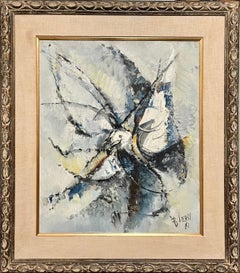
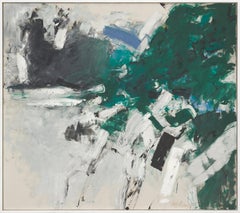
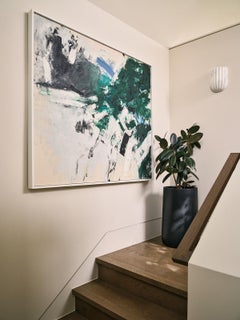
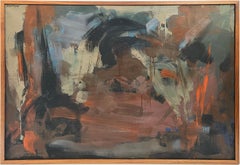
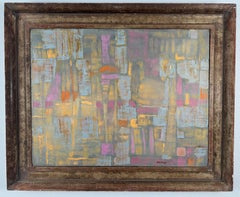
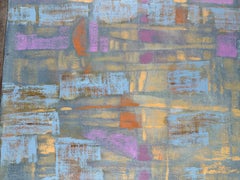
Artist: Murray Hantman
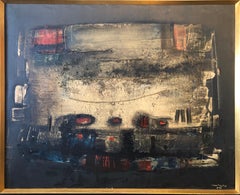
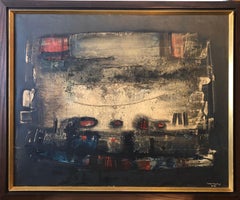
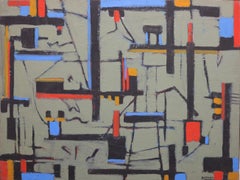
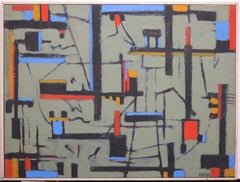
Untitled (Abstract Expressionist)

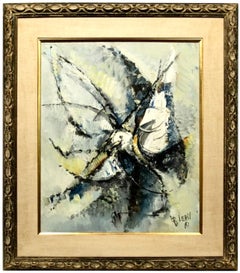
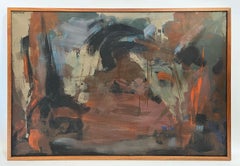
Untitled (Abstract Expressionist)

By Murray Hantman

Located in Wilton Manors, FL

Murray Hantman (1904-1999). Untitled, ca. 1950-55. Oil on canvas measures 20 x 26 inches, 26 x 32 inches in silver leaf vintage frame.. Signed lower right. Excellent condition with ...

Category

Mid-20th Century Abstract Expressionist Murray Hantman Art

Materials

Canvas, Oil

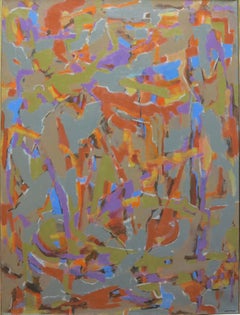
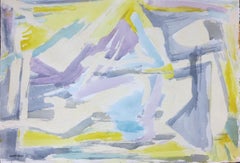
Composition (Abstract Expressionist mid-century gestural action painting)

Composition (Abstract Expressionist mid-century gestural action painting)

By Murray Hantman

Located in Wilton Manors, FL

Murray Hantman (1904-1999). Composition, 1951. Watercolor on paper, 14 x 21 inches. Unframed. Signed lower left. Signed, dated and titled en verso. Provenance: estate of Murray Hantman. Biography: Shaped by his life experiences and a commitment to the practice of making art, the work of Murray Hantman represents a career of personal exploration and aesthetic refinement that took him from New York, to Los Angeles, back to New York and eventually to the serene, yet dramatic, coast of Maine where he worked as part of the artists’ colony on Monhegan Island. Born in Pennsylvania in 1904, Hantman’s family moved many times to follow his father’s business opportunities, eventually settling in New York. A childhood of economic instability and dislocation formed Hantman’s early years, making him independent and self-reliant from a very early age. Hantman’s father owned movie theatres and photography studios and, recognizing his son’s artistic ability, employed him to print and hand-color photographs as a child. When he was eleven and living in Michigan, a public school teacher arranged for Hantman to receive a scholarship to the Detroit Museum of Art School where after a year he was awarded another scholarship to study at the Detroit School of Design. He studied in Detroit for a year until his family abruptly moved to Alabama, interrupting his artistic and academic studies until the family moved to New York at the end of the first World War. As a young man, Hantman supported himself by working many different jobs in New York and New Jersey. Steady work with his brother at the Hartford and New Haven Railroad...

Category

Mid-20th Century Abstract Expressionist Murray Hantman Art

Materials

Watercolor

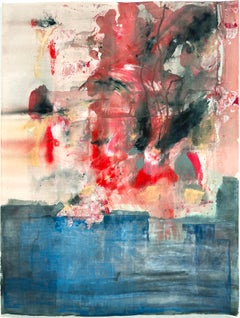
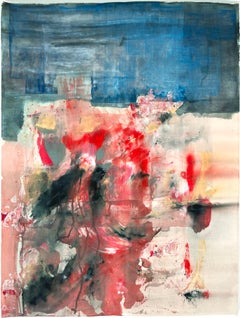
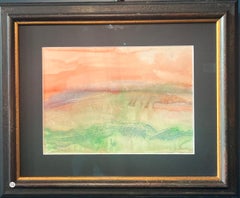
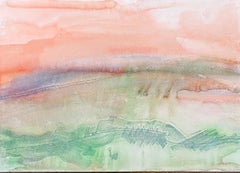
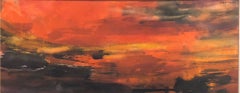
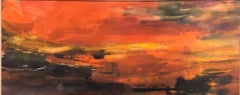
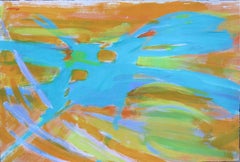
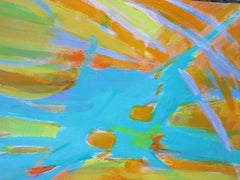
Abstract Expressionist Watercolor Fiery Sky

Abstract Expressionist Watercolor Fiery Sky

By Murray Hantman

Located in Surfside, FL

Genre: Expressionist Subject: Landscape Medium: Watercolor Surface: Paper Country: United States Dimensions w/Frame: 16" x 28" Murray Hantman (1904–1999) was a painter, muralist, an...

Category

Mid-20th Century Abstract Expressionist Murray Hantman Art

Materials

Watercolor

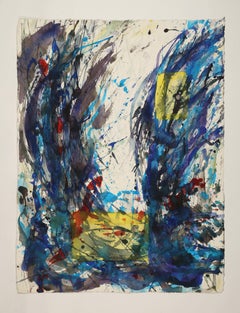
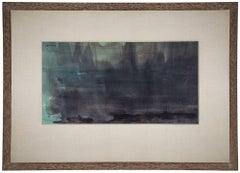
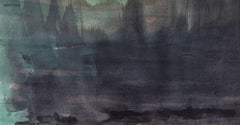
Night Rays, Abstract Expressionist Watercolor

Night Rays, Abstract Expressionist Watercolor

By Murray Hantman

Located in Surfside, FL

Genre: Expressionist Subject: Landscape Medium: Watercolor Surface: Paper Country: United States Dimensions: 16.75" x 23" Dimensions w/Frame: 18" x 24.5" Murray Hantman (1904–1999) ...

Category

Mid-20th Century Abstract Expressionist Murray Hantman Art

Materials

Watercolor

Related Items
Untitled #I
Untitled #I

R. Antony (Tony) AskewUntitled #I, c.1970

$800

H 30 in W 38.5 in D 1 in

Untitled #I

Located in San Francisco, CA

This artwork "Untitled #1" is a watercolor on paper by California abstract expressionist artist R. Anthony (Tony) Askew, b.1939. It is signed at the lower right corner by the artist....

Category

Late 20th Century Abstract Expressionist Murray Hantman Art

Materials

Watercolor

Untitled 01 - Contemporary, Organic, Black, Minimalist, Abstract, Monochrome

Untitled 01 - Contemporary, Organic, Black, Minimalist, Abstract, Monochrome

By Zsolt Berszán

Located in Baden-Baden, DE

Untitled 01, 2017 Black adhesive and black oil on canvas (Signed on reverse) 31 1/2 H x 23 5/8 H in. 80 H x 60 W cm Zsolt Berszán treats the first layer of the drawing as a substrat...

Category

2010s Abstract Expressionist Murray Hantman Art

Materials

Canvas, Adhesive, Oil

1970s Abstract Expressionist Belgian Gouache on Paper.

1970s Abstract Expressionist Belgian Gouache on Paper.

By André Pierard

Located in Cotignac, FR

1970s abstract expressionist gouache on paper by Belgian artist André Pierard painted in Provence in the south of France. A highly colourful and energetic abstract painting. The st...

Category

1970s Abstract Expressionist Murray Hantman Art

Materials

Paper, Gouache

Robert Natkin - unique early painting on historic Wells Street Gall. card Framed

Robert Natkin - unique early painting on historic Wells Street Gall. card Framed

By Robert Natkin

Located in New York, NY

Unique historic work Hand signed and dated on the front An exceptionally early gouache from 1957, executed on the verso of a Wells Street Gallery invitation card - one of the first c...

Category

1950s Abstract Expressionist Murray Hantman Art

Materials

Watercolor, Gouache

Bold Abstract and Figurative Composition in Blue and red Acrylic on Paper

Bold Abstract and Figurative Composition in Blue and red Acrylic on Paper

By Ricardo de Silva

Located in Soquel, CA

Bold Abstract and Figurative Composition in Blue and red Acrylic on Paper Bright and colorful abstracted figural painting by California-based artist, Ricardo de Silva (American/Bra...

Category

1980s Abstract Expressionist Murray Hantman Art

Materials

Acrylic, Watercolor, Archival Paper

Abstract Watercolor Painting, 'Design for Sculpture', C. 1995 by David Ruth

Abstract Watercolor Painting, 'Design for Sculpture', C. 1995 by David Ruth

By David Ruth

Located in Oakland, CA

This is a contemporary abstract watercolor painting by artist David Ruth. This series of paintings often feature bright colors and vibrant layouts that draw the viewer in. They are c...

Category

1990s Abstract Expressionist Murray Hantman Art

Materials

Paper, Watercolor

Original-Magic Bell in the Night-UK Awarded Artist-Botanical Abstract Expression

Original-Magic Bell in the Night-UK Awarded Artist-Botanical Abstract Expression

By Shizico Yi

Located in London, GB

In her latest series, "The Weaver," Shizico explores forms, layers, and time onto canvases. Applying the format of diptychs and triptychs, she creates lyrical narratives, capturing t...

Category

2010s Abstract Expressionist Murray Hantman Art

Materials

Gesso, Canvas, Oil, Acrylic, Wood Panel

Brazilian Modernist Abstract Oil Painting Latin American Expressionist Concreta

Brazilian Modernist Abstract Oil Painting Latin American Expressionist Concreta

Located in Surfside, FL

Abstract oil on canvas painting by Ivan Freitas. 25" x 31" inch canvas, framed to 30" x 36". It is signed at the lower right. Bearing a Barcinski Art Gallery label verso and a second label stating that the painting was sold in 1961 at a benefit auction for the Albert Einstein Hospital held at the Museum of San Paulo. Ivan Freitas was a Brazilian Postwar & Contemporary painter and Muralist (1932-2006) Son of muralist Severino Araújo, Ivan started painting as a self-taught artist. His first individual exhibition was at the Public Library, in 1957. With the success of the exhibition, he was able to move to Rio de Janeiro the following year, in 1958, where he came into contact with the work of artists such as Salvador Dali and Rene Magritte who influenced him. Between 1962 and 1963 he resided as a fellow in Paris. Between 1969 and 1972, he was on his second tour abroad, in New York City and commissioned by the International Telephone and Telegraph Corporation. Back in Brazil, he painted a mural of over a thousand square meters on the external wall of the National School of Music in Rio de Janeiro in 1984 - the first of the Arte nos Muros Project. Still in the 70s, he married Dalva Mendes Gall whom he left after his death in 200, an extensive collection where one can find all the best works of this renowned Paraiba artist in Brazil and abroad. The stay in New York, from 1969 to 1972, was perhaps the greatest turning point in Ivan's career. Until then, according to art critic Roberto Pontual, the plastic artist followed "a phase of abstraction close to the informal". In the United States , with so much technological influence around him, Ivan becomes interested in the machine and its movement mechanisms and inserts these perceptions in his works, as kinetic constructions with small motors hidden in boxes as Pontual defines, and also and triggering light patterns in cyclic and repeated series. (similar to the Op Art works of Julio le Parc and works by Yves Tinguely being shown at Rene Denis Gallery in Paris In 1968, the magazine Galeria de Arte Moderna (GAM), published an article entitled Ivan Freitas and the Cosmic Space. In the Brazilian Dictionary of Plastic Artists , the Italian art critic Giuseppe Marchiori refers to Ivan Frentas as someone who "controls and dominates each part of the painting with a desire to deepen the image that surprises and enchants". Still according to the critic, Ivan is someone who preserves the mystery in the harmony between lines and the colorful atmosphere, where he creates pauses and rhythms for the reading of his "secret structures". Arte Neo Concreta artists Lygia Clark, Helio Oiticica and Lygia Pape, were all contemporaries The poet Ferreira Gullar writes: "Freitas does not turn to the subjective world, does not inquire into the arcana of the unconscious; he inquires into the future and, in the solitude of his paintings, promises us a serene and orderly world. And, if in his landscapes man does not appear, it is not that this order excludes him - it is that he has not yet reached it. " Selec Solo Exhibitions 1957 - João Pessoa Public Library; João Pessoa, PB. 1960 - Ivan Freitas: Painting Exhibitions , at the Penguin Gallery; Rio de Janeiro - RJ. 1961 - MAM-BA , Salvador , BA. 1962 - Rubbers Gallery; Buenos Aires , Argentina . 1962 - La Cabana Galeria; Trieste , Italy . 1962 - Brazil-United States Cultural Institute; Rio de Janeiro - RJ. 1962 - Brazil-Uruguay Institute; Montevideo , Uruguay . 1962 - Barcinski Gallery; Rio de Janeiro - RJ. 1963 - Galleria Del Canale, Naples , Italy. 1963 - Ivan Freitas: Paris 1963, at the Barcinski Gallery ; Rio de Janeiro - RJ. 1964 - Barcinski Gallery; Rio de Janeiro - RJ. 1966 - Relief Gallery; Rio de Janeiro - RJ. 1968 - Relief Gallery; Rio de Janeiro - RJ. 1969 - Pan American Union; Washington , United States. 1971 - Miramar Gallery; New York, United States. 1971 - Bloomingdale's Art Gallery; New York, United States. 1973 - Individual, at Galeria Bonino; Rio de Janeiro - RJ. 1973 - Galeria Collection; São Paulo , SP. 1974 - Ivan Freitas: Paintings / Objectives , at the Rio de Janeiro Art Exchange; Rio de Janeiro - RJ. 1975 - Arte Global Gallery; São Paulo-SP. 1976 - Ivan Freitas: Paintings / Space / Movement , at Galeria Ipanema; Sao Paulo-SP. 1977 - Paulo Prado Gallery; Sao Paulo-SP. 1978 - Paraíba State Cultural Foundation; João Pessoa, PB. 1979 - Gallery B. 75 Concorde; Rio de Janeiro - RJ. 1980 - Individual, at Galeria do Sesi; Sao Paulo-SP. 1980 - Paulo Prado Gallery; Sao Paulo-SP. 1986 - Ivan Freitas: The Reinvented Landscape , at Galeria Arte Aplicada; Sao Paulo-SP. 1987 - Applied Art Gallery; Sao Paulo-SP. 1989 - Evasion Arte Gallery; Sao Paulo-SP. 1994 - GB Arte Gallery; Rio de Janeiro - RJ. Select Group Exhibitions 1959 - 8th National Salon of Modern Art; Rio de Janeiro - RJ. 1960 - 9th National Salon of Modern Art; Rio de Janeiro - RJ. 1961 - 10th National Salon of Modern Art - jury exemption and critical award; Rio de Janeiro - RJ. 1961 - 6th São Paulo International Art Biennial , at the Ciccilo Matarazzo Pavilion; Sao Paulo-SP. 1963 - Art from America and Spain; Europe . 1963 - 2nd Youth Biennial; Paris, France. 1963 - 7th São Paulo International Art Biennial, at the Fundação Bienal; ; Sao Paulo-SP. 1964 - 2nd Art Summary of Jornal do Brasil, at MAM-RJ; Rio de Janeiro - RJ. 1965 - Current Brazilian Art; Bonn , Germany . 1965 - Current Brazilian Art; London , England . 1965 - 1st Esso Young Artists Salon, at MAM-RJ; Rio de Janeiro - RJ. 1965 - Opinion 65, at MAM / RJ; Rio de Janeiro - RJ. 1965 - 1st Esso Salon of Young Artists, at MAC / USP; Sao Paulo-SP. 1965 - 8th São Paulo International Art Biennial, at the Fundação Bienal; Sao Paulo-SP.* 1965 - Current Brazilian Art; Vienna , Austria . 1966 - 5 Contemporary Painters from Brazil; Buenos Aires, Argentina. 1966 - 5 Contemporary Painters from Brazil; Montevideo, Uruguay. 1966 - 1st National Biennial of Plastic Arts; Salvador BA. 1967 - 9th Bienal Internacional de Arte de São Paulo, at the Bienal Foundation; Sao Paulo-SP. 1968 - 2nd Esso Young Artists Salon, at MAM / RJ; Rio de Janeiro - RJ. 1969 - 7th JB Art Summary, at MAM-RJ ; Rio de Janeiro - RJ. Local de realização:(Brasil / Rio de Janeiro / Rio de Janeiro) Instituição de realização:Museu de Arte Moderna do Rio de Janeiro, Ficha Técnicado evento Resumo de Arte JB Artista participante: Anna Letycia, Darel, Farnese de Andrade, Fayga Ostrower, Flexor, Frans Krajcberg, Ione Saldanha...

Category

1960s Abstract Expressionist Murray Hantman Art
Materials

Canvas, Oil

Large Modernist French Abstract Expressionist Colorful Bird Painting Roger Lersy

Large Modernist French Abstract Expressionist Colorful Bird Painting Roger Lersy

By Roger Lersy

Located in Surfside, FL

Roger Lersy, French (1920 - 2004) Oil on canvas Signed, R. Lersy, dated 1961 lower right Measuring 35 X 31 Matted and framed. sight 26 X 21.5 Roger Lersy was born in Paris, France ...

Category

1960s Abstract Expressionist Murray Hantman Art
Materials

Canvas, Oil, Acrylic

Untitled
Untitled

Raymond ParkerUntitled, 1965

$45,000

H 30.12 in W 23.25 in

Untitled

By Raymond Parker

Located in Palm Desert, CA

"Untitled" is an oil on canvas painting made by Ray Parker in 1965. The piece is signed verso, "R. Parker, 30 x 24, 1965". The art size is 30 1/8 x 23 1/4 inches. The framed size is ...

Category

Mid-20th Century Abstract Expressionist Murray Hantman Art
Materials

Canvas, Oil

Green Burst
Green Burst

Kyle MorrisGreen Burst, 1958

$75,000

H 48 in W 54 in

Green Burst

Located in Austin, TX

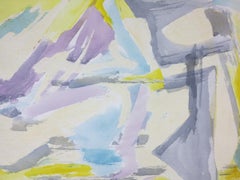
Waterline Fine Art, Austin, TX is pleased to present the following work: Kyle Morris Green Burst, 1958 Oil on canvas. Signed and dated lower right; signed, titled, dated verso. 48...

Category

1950s Abstract Expressionist Murray Hantman Art
Materials

Canvas, Oil

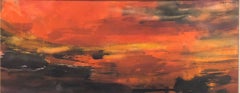
"Landscape at sunset-Luberon-France" Watercolor , cm. 29, 5 x 21 1960 ca

"Landscape at sunset-Luberon-France" Watercolor , cm. 29, 5 x 21 1960 ca

By Dora Maar

Located in Torino, IT

orange, green, sunset post-death inventory stamp of the artist's studio, bottom right Dora Maar is the pseudonym of Henrietta Theodora Markovitch (Paris 1907 - 1997). Shrouded in t...

Category

1960s Abstract Expressionist Murray Hantman Art
Materials

Paper, Watercolor

Previously Available Items
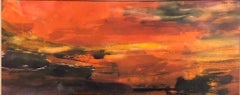
Abstract Expressionist Watercolor Fiery Sky

Abstract Expressionist Watercolor Fiery Sky

By Murray Hantman

Located in Surfside, FL

Genre: Expressionist Subject: Landscape Medium: Watercolor Surface: Paper Country: United States Dimensions w/Frame: 16" x 28" Murray Hantman (1904–1999) was a painter, muralist, an...

Category

Mid-20th Century Abstract Expressionist Murray Hantman Art
Materials

Watercolor

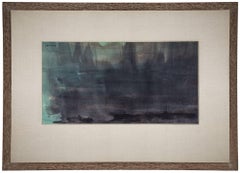
Night Rays, Abstract Expressionist Watercolor

Night Rays, Abstract Expressionist Watercolor

By Murray Hantman

Located in Surfside, FL

Genre: Expressionist Subject: Landscape Medium: Watercolor Surface: Paper Country: United States Dimensions: 16.75" x 23" Dimensions w/Frame: 18" x 24.5" Murray Hantman (1904–1999) ...

Category

Mid-20th Century Abstract Expressionist Murray Hantman Art
Materials

Watercolor

Double-sided color study 1183

Double-sided color study 1183

By Murray Hantman

Located in Wilton Manors, FL

Murray Hantman (1904-1999). Double-sided color study Composition #1183, c. 1960s. Oil on illustration board, 6 x 7 inches. Unframed. Unsigned. Accession number lower right TL.86.1183. Provenance: estate of Murray Hantman. Biography: Shaped by his life experiences and a commitment to the practice of making art, the work of Murray Hantman represents a career of personal exploration and aesthetic refinement that took him from New York, to Los Angeles, back to New York and eventually to the serene, yet dramatic, coast of Maine where he worked as part of the artists’ colony on Monhegan Island. Born in Pennsylvania in 1904, Hantman’s family moved many times to follow his father’s business opportunities, eventually settling in New York. A childhood of economic instability and dislocation formed Hantman’s early years, making him independent and self-reliant from a very early age. Hantman’s father owned movie theatres and photography studios and, recognizing his son’s artistic ability, employed him to print and hand-color photographs as a child. When he was eleven and living in Michigan, a public school teacher arranged for Hantman to receive a scholarship to the Detroit Museum of Art School where after a year he was awarded another scholarship to study at the Detroit School of Design. He studied in Detroit for a year until his family abruptly moved to Alabama, interrupting his artistic and academic studies until the family moved to New York at the end of the first World War. As a young man, Hantman supported himself by working many different jobs in New York and New Jersey. Steady work with his brother at the Hartford and New Haven Railroad office in New York City finally allowed Hantman to pursue his artistic studies in a formal way. In 1928, he enrolled in the Art Students League and became part of a social circle of artists and activists. While at the Art Students League, Hantman worked with faculty members Boardman Robinson and Thomas Hart Benton on two mural projects. During the years around the Great Depression, Hantman worked in Los Angeles with a group of artists known as the Bloc of Painters. Recruited through an advertisement to attend a course on fresco painting, the Bloc group was headed by Mexican muralist David Alfaro Siqueiros who had recently been exiled from Mexico for political activism. Through his work with Siqueiros, Hantman became motivated by social and political issues and their creative expression. In 1934, Hantman returned to New York and found the community of artists there equally engaged in social justice issues. While enrolling at the newly-formed Artists’ Union to advocate for the labor rights of creative workers, Hantman met sculptor Jo Levy who would become his wife. Like many artists at the time, Hantman found work through the Federal Art Project as a member of the Easel Painting Division which strove to create “works of art for the public which have a definite social value to the community”. (1) Along with the work he exhibited as a member of the WPA group, Hantman’s personal work from this period was in the style of Social Realism he learned from Siqueiros. Hantman and his wife, Jo Levy, believed in creating art for the public good. Their Artists’ Union friends and colleagues from the Federal Art Project formed the nucleus of their social circle and would become the community of artists who worked together during summers on Monhegan Island off the coast of Maine. In 1945, Hantman had his first solo painting show at Marquie Gallery in New York, and visits Monhegan Island for the first time. The following summer, he and Levy spend the summer in Maine, and would continue to do so for the next thirty years. The landscapes and seascapes of Maine would become a central subject in his work after 1946. The dramatic coastline of Monhegan Island had been inspiration for other New York artists before Hantman, including George Bellows and Rockwell Kent. As Hantman matured as an artist he began to reject academic narrative in his work, moving towards a more expressionistic and abstract style. During this shift into abstraction, nature remained central to his work and the seascape and Maine light provided continual inspiration. In the late 1940s, Hantman begins to reduce the landscape into elemental forms of color and shape. As he pursues this mode of painting his work moves further into abstraction, juxtaposing large blocks of saturated color to convey the drama of sea and sky. Always a student and teacher, Hantman distilled the ideologies of Abstract Expressionism and synthesized its concepts into his own work. Throughout the 1950s, he experimented with Action Painting, color, form and expression. By the late 1950s, Hantman’s mature style had developed into abstract works of pure color masses in simple geometric forms. His mastery of color and form continued into his late work, always reflecting the beauty of the natural world around him. Dedicated to the idea of exploration in his art, Hantman made hundreds of small color and form studies that hint at the large-scale works that would follow in the late 1960s and beyond. Hantman’s work from the ‘70s and ‘80s shows even more intensity of color and distillation of composition. The landscape of the Maine coast remained his muse throughout, the stark lines suggesting the flat plane of sea and horizon line beyond. Hantman and Jo Levy lived in New York and summered on Monhegan Island until 1975, followed by summers in Owls Head and New Harbor...

Category

Mid-20th Century Abstract Murray Hantman Art

Materials

Oil, Illustration Board

Untitled (Abstract Expressionist mid-century gestural action painting)

Untitled (Abstract Expressionist mid-century gestural action painting)

By Murray Hantman

Located in Wilton Manors, FL

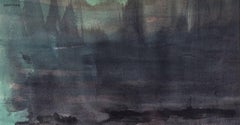
Murray Hantman (1904-1999). Untitled, 1952. Acrylic on paper, 12 x 18.5 inches. Unframed. Signed upper left. Signed, dated and titled en verso. Provenance: estate of Murray Hantman. ...

Category

1950s Abstract Expressionist Murray Hantman Art
Materials

Acrylic

Industrial Composition

Industrial Composition

By Murray Hantman

Located in Wilton Manors, FL

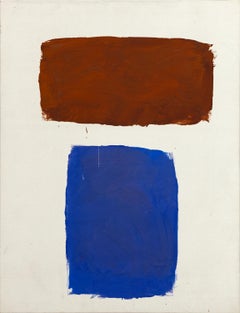
Murray Hantman (1904-1999). Industrial Composition, c.1948-50. Oil on canvas measures 18 x 24 inches, 19 x 25 inches in original simple wood strip frame. Signed lower right. Excellent condition with no conservation. Exhibition label affixed en verso. Provenance: estate of Murray Hantman. This piece was included in the exhibition Murray Hantman: From Image to Abstraction, Portland Museum of Art, 2005. Anonymous lender. Biography: Shaped by his life experiences and a commitment to the practice of making art, the work of Murray Hantman represents a career of personal exploration and aesthetic refinement that took him from New York, to Los Angeles, back to New York and eventually to the serene, yet dramatic, coast of Maine where he worked as part of the artists’ colony on Monhegan Island. Born in Pennsylvania in 1904, Hantman’s family moved many times to follow his father’s business opportunities, eventually settling in New York. A childhood of economic instability and dislocation formed Hantman’s early years, making him independent and self-reliant from a very early age. Hantman’s father owned movie theatres and photography studios and, recognizing his son’s artistic ability, employed him to print and hand-color photographs as a child. When he was eleven and living in Michigan, a public school teacher arranged for Hantman to receive a scholarship to the Detroit Museum of Art School where after a year he was awarded another scholarship to study at the Detroit School of Design. He studied in Detroit for a year until his family abruptly moved to Alabama, interrupting his artistic and academic studies until the family moved to New York at the end of the first World War. As a young man, Hantman supported himself by working many different jobs in New York and New Jersey. Steady work with his brother at the Hartford and New Haven Railroad office in New York City finally allowed Hantman to pursue his artistic studies in a formal way. In 1928, he enrolled in the Art Students League and became part of a social circle of artists and activists. While at the Art Students League, Hantman worked with faculty members Boardman Robinson and Thomas Hart Benton on two mural projects. During the years around the Great Depression, Hantman worked in Los Angeles with a group of artists known as the Bloc of Painters. Recruited through an advertisement to attend a course on fresco painting, the Bloc group was headed by Mexican muralist David Alfaro Siqueiros who had recently been exiled from Mexico for political activism. Through his work with Siqueiros, Hantman became motivated by social and political issues and their creative expression. In 1934, Hantman returned to New York and found the community of artists there equally engaged in social justice issues. While enrolling at the newly-formed Artists’ Union to advocate for the labor rights of creative workers, Hantman met sculptor Jo Levy who would become his wife. Like many artists at the time, Hantman found work through the Federal Art Project as a member of the Easel Painting Division which strove to create “works of art for the public which have a definite social value to the community”. (1) Along with the work he exhibited as a member of the WPA group, Hantman’s personal work from this period was in the style of Social Realism he learned from Siqueiros. Hantman and his wife, Jo Levy, believed in creating art for the public good. Their Artists’ Union friends and colleagues from the Federal Art Project formed the nucleus of their social circle and would become the community of artists who worked together during summers on Monhegan Island off the coast of Maine. In 1945, Hantman had his first solo painting show at Marquie Gallery in New York, and visits Monhegan Island for the first time. The following summer, he and Levy spend the summer in Maine, and would continue to do so for the next thirty years. The landscapes and seascapes of Maine would become a central subject in his work after 1946. The dramatic coastline of Monhegan Island had been inspiration for other New York artists before Hantman, including George Bellows and Rockwell Kent. As Hantman matured as an artist he began to reject academic narrative in his work, moving towards a more expressionistic and abstract style. During this shift into abstraction, nature remained central to his work and the seascape and Maine light provided continual inspiration. In the late 1940s, Hantman begins to reduce the landscape into elemental forms of color and shape. As he pursues this mode of painting his work moves further into abstraction, juxtaposing large blocks of saturated color to convey the drama of sea and sky. Always a student and teacher, Hantman distilled the ideologies of Abstract Expressionism and synthesized its concepts into his own work. Throughout the 1950s, he experimented with Action Painting, color, form and expression. By the late 1950s, Hantman’s mature style had developed into abstract works of pure color masses in simple geometric forms. His mastery of color and form continued into his late work, always reflecting the beauty of the natural world around him. Dedicated to the idea of exploration in his art, Hantman made hundreds of small color and form studies that hint at the large-scale works that would follow in the late 1960s and beyond. Hantman’s work from the ‘70s and ‘80s shows even more intensity of color and distillation of composition. The landscape of the Maine coast remained his muse throughout, the stark lines suggesting the flat plane of sea and horizon line beyond. Hantman and Jo Levy lived in New York and summered on Monhegan Island until 1975, followed by summers in Owls Head and New Harbor...

Category

Mid-20th Century Abstract Geometric Murray Hantman Art

Materials

Canvas, Oil

Untitled (abstract expressionist painting)

Untitled (abstract expressionist painting)

By Murray Hantman

Located in Wilton Manors, FL

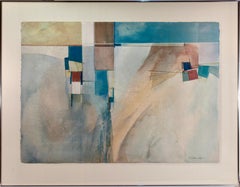
Murray Hantman (1904-1999). Untitled, 1955. Oil on canvas measures 30 x 40 inches, 31 x 41 inches in original simple wood strip frame. Signed lower right. Excellent condition with no...

Category

1950s Abstract Expressionist Murray Hantman Art
Materials

Canvas, Oil

Abstract Expressionist Watercolor Fiery Sky

Abstract Expressionist Watercolor Fiery Sky

By Murray Hantman

Located in Surfside, FL

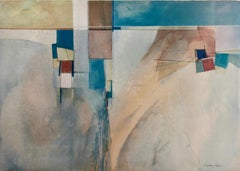
Genre: Expressionist Subject: Landscape Medium: Watercolor Surface: Paper Country: United States Dimensions w/Frame: 16" x 28" Murray Hantman (1904–1999) was a painter, muralist, an...

Category

Mid-20th Century Abstract Expressionist Murray Hantman Art
Materials

Watercolor

Night Rays, Abstract Expressionist Watercolor

Night Rays, Abstract Expressionist Watercolor

By Murray Hantman

Located in Surfside, FL

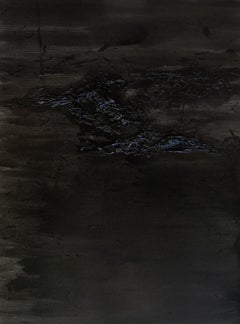
Genre: Expressionist Subject: Landscape Medium: Watercolor Surface: Paper Country: United States Dimensions: 16.75" x 23" Dimensions w/Frame: 18" x 24.5" Murray Hantman (1904–1999) ...

Category

Mid-20th Century Abstract Expressionist Murray Hantman Art
Materials

Watercolor

Murray Hantman art for sale on 1stDibs.
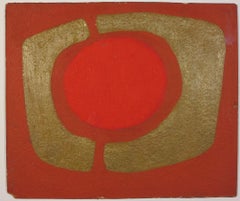
Find a wide variety of authentic Murray Hantman art available for sale on 1stDibs. You can also browse by medium to find art by Murray Hantman in paint, watercolor, canvas and more. Much of the original work by this artist or collective was created during the 20th century and is mostly associated with the abstract style. Not every interior allows for large Murray Hantman art, so small editions measuring 21 inches across are available. Customers who are interested in this artist might also find the work of Ben Hancocks, Rene Couturier, and Stephen Greene. Murray Hantman art prices can differ depending upon medium, time period and other attributes. On 1stDibs, the price for these items starts at $850 and tops out at $4,000, while the average work can sell for $1,300.