Wassily Kandinsky Abstract Prints

Russian, 1866-1944

“Color is a means of exerting a direct influence upon the soul,” wrote the pioneering abstract artist Wassily Kandinsky. The Russian-born painter and theorist dedicated his life to using abstract compositions of form and color to express deep emotion as well as to depict the language of music through visuals.

Kandinsky was part of a crucial moment in art history — the early 20th century — that saw the rise of movements like Cubism. He embraced styles such as Surrealism and Fauvism and was a leading figure in bringing together Der Blaue Reiter (the name means “The Blue Rider” after one of Kandinsky’s paintings) in 1911, a group of avant-garde artists in Munich, including Paul Klee and Franz Marc, who explored spiritual concepts through their art as a response to the materialism of the time. Kandinsky also led courses on analytical drawing and color at the Bauhaus. He was appointed by founder and architect Walter Gropius to teach in Weimar in 1922. He taught at all three of the legendary school’s locations and remained with the institution until its forced closure by the Nazi party in Berlin.

The artist had the rare and unusual trait of synesthesia, the neurological ability to perceive things using multiple senses. In Kandinsky’s case, it was the gift of “seeing” music, and music appeared in every aspect of his work, including the titles of his series “Compositions,” “Improvisations” and “Impressions.” He once described the experience of painting using a musical metaphor: “I had little thought for houses and trees, drawing colored lines and blobs on the canvas with my palette knife, and making them sing just as powerfully as I knew how.”

While Kandinsky isn’t the first abstract artist — mystically inclined painter Hilma af Klint was making nonrepresentational art well before him — he certainly had the biggest impact on establishing the style. His paintings inspired the likes of Jackson Pollock, Willem de Kooning and other Abstract Expressionists. From his Untitled (First Abstract Watercolor) painted in 1910 to future works, his unique take on using color and flair for bold, experimental compositions, Kandinsky is one of the most important figures of early-20th-century art.

Find original Wassily Kandinsky art, including paintings and prints, on 1stDibs.

to
26
2
2
1
Overall Width
to
Overall Height
to
25
5
2
56
518
196
182
174
32
24
1
2
1
1
3
17
12
2
1
1
26
3
2
2
1
22
23
30
2
Artist: Wassily Kandinsky
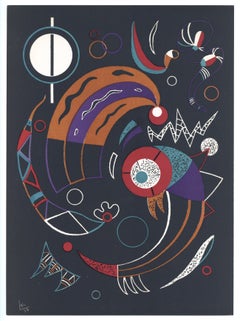
"Comets" original lithograph

"Comets" original lithograph

By Wassily Kandinsky

Located in Henderson, NV

Medium: original lithograph. Printed in 1938 and published in Paris by Teriade for the art revue Verve (volume 1, number 2). Kandinsky was invited to contribute an original compositi...

Category

1930s Expressionist Wassily Kandinsky Abstract Prints

Materials

Lithograph

Klänge: Lyrisches Woodcut Print, Abstract, Framed, Circa 1910-1919

Klänge: Lyrisches Woodcut Print, Abstract, Framed, Circa 1910-1919

By Wassily Kandinsky

Located in Milwaukee, WI

Original color woodcut 5.82 x 8.57 in (14.78 x 21.77 cm) Framed 17.57 x 20.19 in #98 in the catalogue Raisonné of Kandinsky's Graphic Works by Hans K. Roethel

Category

1910s Abstract Wassily Kandinsky Abstract Prints

Materials

Woodcut

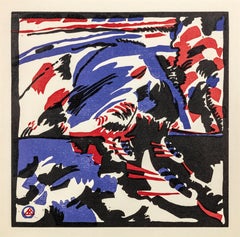
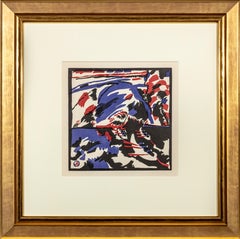
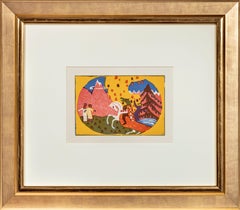
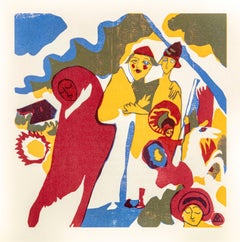
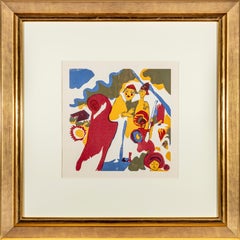
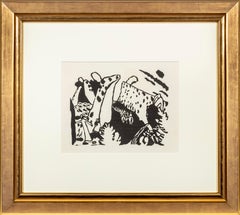
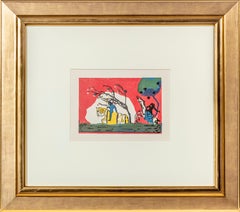
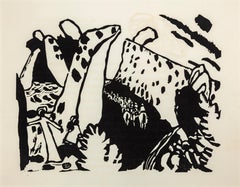
Klänge: Zwei Reiter vor Rot (Two Riders in Red), Roethel #95

Klänge: Zwei Reiter vor Rot (Two Riders in Red), Roethel #95

By Wassily Kandinsky

Located in Milwaukee, WI

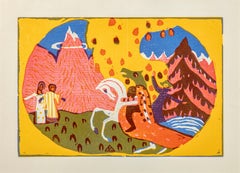
Original color woodcut 4.13 x 6.19 in (10.49 x 15.72 cm) Framed 13.88 x 15.94 in #95 in the catalogue Raisonné of Kandinsky's Graphic Works by Hans K. Roethel

Category

1910s Abstract Wassily Kandinsky Abstract Prints

Materials

Woodcut

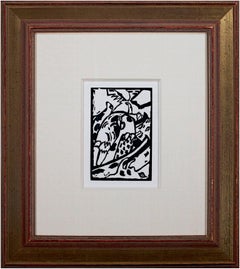
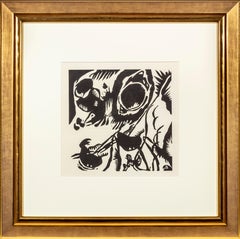
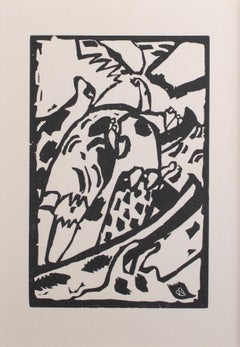
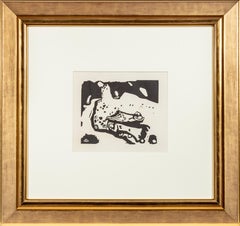
'Improvisation 7' second ed. woodcut from 'Klänge' by Wassily Kandinsky

'Improvisation 7' second ed. woodcut from 'Klänge' by Wassily Kandinsky

By Wassily Kandinsky

Located in Milwaukee, WI

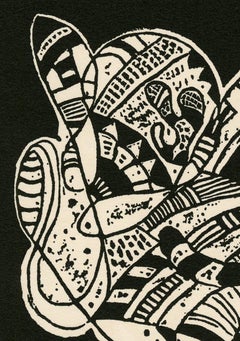
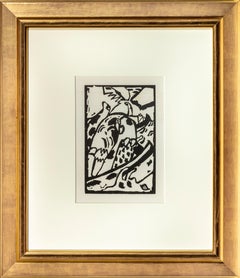
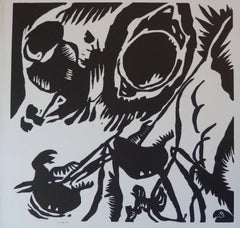
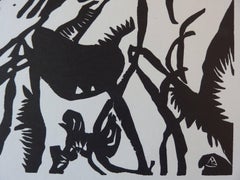
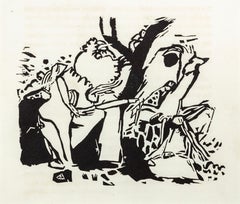
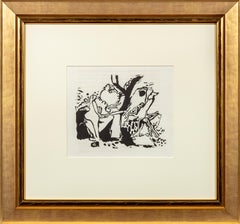
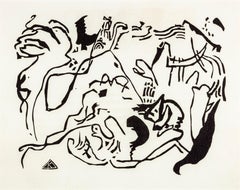
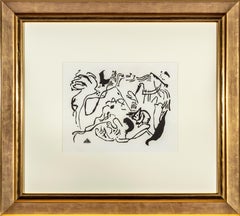
'Improvisation 7' second ed. woodcut from 'Klänge' is a woodcut print created by Wassily Kandinsky. The present woodcut print comes from the second edition of 'Klänge (Sounds),' a book of original graphics and poetry by Wassily Kandinsky. The title of the album and of this print, 'Improvisation,' demonstrated Kandinsky's interest in music and how abstract musical forms could be translated into images on a two-dimensional surface. This particular composition is difficult to read, but through the abstraction, one can make out various figures and a landscape beyond. Originally carved and printed in 1911, this second edition print was done ca. 1938. It is a woodcut in black ink on woven paper. Signed with encircled 'K' in the block, lower right (from the book, signed in ink, ed. 117/300) Image Size: 7 1/2" x 5 inches Frame Size: 22 1/4" x 18 3/4" Ref. Roethel 124 Artist Bio: The Museum of Modern Art described 'Klänge (Sounds)' as follows: Vasily Kandinsky's self-described "musical album," Klänge (Sounds), consists of thirty-eight prose-poems he wrote between 1909 and 1911 and fifty-six woodcuts he began in 1907. In the woodcuts Kandinsky veiled his subject matter, creating increasingly indecipherable images (though the horse and rider, his symbol for overcoming objective representation, runs through as a leitmotif). This process proved crucial for the development of abstraction in his art. Kandinsky said his choice of media sprang from an "inner necessity" for expression: the woodcuts were not merely illustrative, nor were the poems purely verbal descriptions. Kandinsky sought a synthesis of the arts, in which meaning was created through the interaction of, and space between, text and image, sound and meaning, mark and blank space. The experimental typography shows his interest in the physical aspects of the book. Klänge is one of three major publications by Kandinsky that appeared shortly before World War I, alongside Über die Geistige in der Kunst (Concerning the Spiritual in Art) and the Blaue Reiter almanac...

Category

1910s Blue Rider Wassily Kandinsky Abstract Prints

Materials

Woodcut, Laid Paper

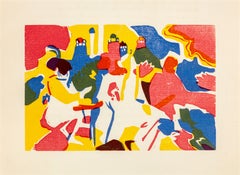
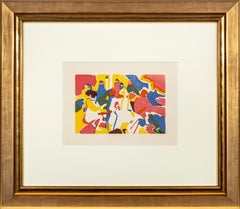
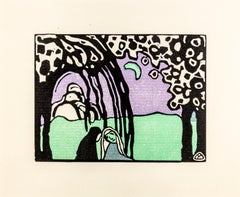
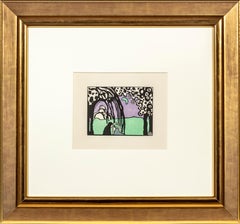
Klänge: Oriental Woodcut Print, Abstract, Framed, Circa 1910-1919

Klänge: Oriental Woodcut Print, Abstract, Framed, Circa 1910-1919

By Wassily Kandinsky

Located in Milwaukee, WI

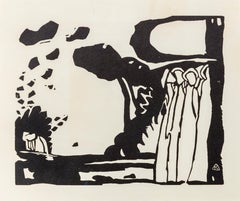
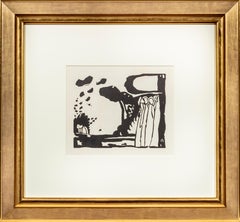
Original color woodcut 4.94 x 7.5 in (12.55 x 19.05 cm) Framed 18.44 x 21 in #106 in the catalogue Raisonné of Kandinsky's Graphic Works by Hans K. Roethel

Category

1910s Abstract Wassily Kandinsky Abstract Prints

Materials

Woodcut

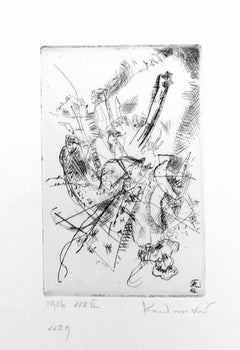
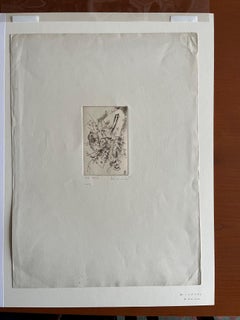
Etching 1916 Number II

Etching 1916 Number II

By Wassily Kandinsky

Located in New York, NY

Wassily Kandinsky (1866-1944), Etching 1916 Number II, drypoint, signed in pencil lower right, titled, numbered (No. 9) and dated lower left [also with initials and date in the plate lower right]. Reference: Roethel 154, only state, edition of 10. In excellent condition (the barest handling fold at sheet edge), printed on a heavy ivory wove paper, the full sheet with full margins, 4 7/8 x 3 1/4, the sheet 17 1/2 x 13 inches, archival mount with window mat. A fine fresh impression of this great rarity, printed in a dark brown ink. Kandinsky created this drypoint (erroneously named Etching 1916) in early 1916 while staying with Gabriel Munter in Stockholm during the winter of 1915-16. This is from the second series of drypoints he made; the first was in the year 1913-14. Provenance: Kornfeld Auction, Bern, June 2007. The tiny size of this edition (10) makes this print a great rarity within the Kandinsky’s printed...

Category

1910s Abstract Wassily Kandinsky Abstract Prints

Materials

Drypoint

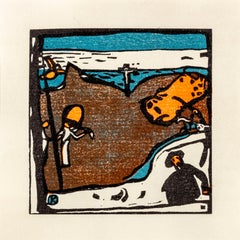
Klänge: Kahnfahrt Woodcut Print, Abstract, Framed, 1910-1919

Klänge: Kahnfahrt Woodcut Print, Abstract, Framed, 1910-1919

By Wassily Kandinsky

Located in Milwaukee, WI

Original color woodcut 8.63 x 8.69 in (21.92 x 22.07 cm) Framed 20.25 x 20.38 in #115 in the catalogue Raisonné of Kandinsky's Graphic Works by Hans K. Roethel

Category

1910s Abstract Wassily Kandinsky Abstract Prints

Materials

Woodcut

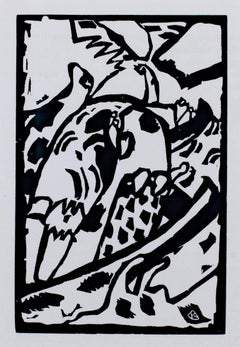
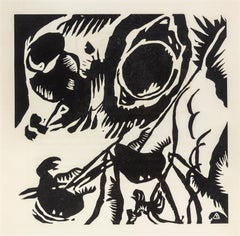
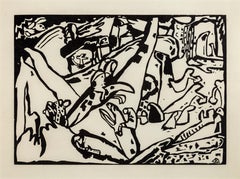
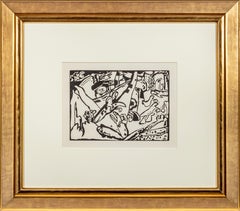
'Improvisation 7' original first ed. woodcut  from 'Klänge' by Wassily Kandinsky

'Improvisation 7' original first ed. woodcut from 'Klänge' by Wassily Kandinsky

By Wassily Kandinsky

Located in Milwaukee, WI

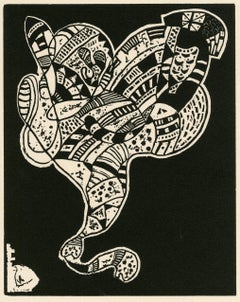
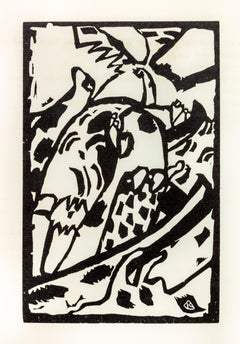
The present woodcut print comes from 'Klänge (Sounds),' a book of original graphics and poetry by Wassily Kandinsky. This first edition was released in an edition of 300, each book signed and numbered by the artist. The title of the album and this particular print, 'Improvisation,' demonstrated Kandinsky's interest in music and how abstract musical forms could be translated into images on a two-dimensional surface. This particular composition is difficult to read, but through the abstraction, one can make out various figures and a landscape beyond. 7.5 x 5 inches, image 22 x 19.5 inches, frame Woodcut in black ink on laid paper (watermark Van Gelder Zonen) Signed with encircled 'K' in the block, lower right Framed to conservation standards using 100 percent acid free archival materials including silk-lined matting with 1/4 inch bevel, museum glass, and a gold-gilded moulding Ref. Roethel 124 The Museum of Modern Art described 'Klänge (Sounds)' as follows: Vasily Kandinsky's self-described "musical album," Klänge (Sounds), consists of thirty-eight prose-poems he wrote between 1909 and 1911 and fifty-six woodcuts he began in 1907. In the woodcuts Kandinsky veiled his subject matter, creating increasingly indecipherable images (though the horse and rider, his symbol for overcoming objective representation, runs through as a leitmotif). This process proved crucial for the development of abstraction in his art. Kandinsky said his choice of media sprang from an "inner necessity" for expression: the woodcuts were not merely illustrative, nor were the poems purely verbal descriptions. Kandinsky sought a synthesis of the arts, in which meaning was created through the interaction of, and space between, text and image, sound and meaning, mark and blank space. The experimental typography shows his interest in the physical aspects of the book. Klänge is one of three major publications by Kandinsky that appeared shortly before World War I, alongside Über die Geistige in der Kunst (Concerning the Spiritual in Art) and the Blaue Reiter almanac...

Category

1910s Blue Rider Wassily Kandinsky Abstract Prints

Materials

Woodcut

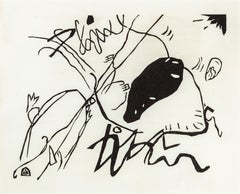
Kandinsky, Abstract Composition, c. 1935, Posthmous 1st edition, Roethel 24B

Kandinsky, Abstract Composition, c. 1935, Posthmous 1st edition, Roethel 24B

By Wassily Kandinsky

Located in Fairlawn, OH

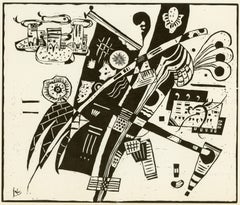
Composition Woodcut, c. 1935, printed 1966 Signed in the block lower left (see photo) This is the first printing of this image. Created in 1935, it was never printed during Kandinsky's lifetime. It is a POSTHUMOUS printing. Published by Gualtieri di San Lazzaro, Éditions XXe Siècle, Paris Issued in XXe Siècle, nouvelle série, no. 27, December 1966, Centenaire de Kandinsky Unsigned and unnumbered, as issued Edition commonly reported as approximately 2,000 Condition: Excellent Image size: 9 1/8 x 10 15/16 inches Reference: Roethel 24b Created in 1935 but apparently left unprinted during Kandinsky’s lifetime, Composition was first issued posthumously in December 1966 in the Kandinsky centenary number of the Parisian art review XXe Siècle. The woodcut was printed from Kandinsky’s original block rather than reproduced photographically. It is therefore properly described as an original, posthumously printed woodcut—not as a reproductive print “after” Kandinsky. Contemporary documentation identifies the composition as having been cut by the artist in 1935 and first published by Éditions XXe Siècle in 1966. Publication details and dimensions The print belongs to Kandinsky’s final period, begun after the closing of the Bauhaus and his move from Germany to Neuilly-sur-Seine, near Paris, in 1933. Its vocabulary differs markedly from the romantic landscapes, horsemen and apocalyptic subjects of his early Munich woodcuts. The forms are now self-contained and biomorphic: circles, hooks, floating linear elements and irregular organic silhouettes coexist within an open field. Although nonrepresentational, they suggest minute organisms, astronomical bodies or signs belonging to an invented visual language. The black-and-white medium gives the image unusual clarity. Solid forms function like sustained musical tones, while thin lines, dots and isolated marks provide accents and intervals. Areas of untouched paper are equally active, allowing the components to float without conventional gravity or horizon. Kandinsky organizes these elements through visual tension rather than perspective: large and small, dense and open, curved and angular forms establish a rhythmic equilibrium across the sheet. The woodcut process was fundamental to Kandinsky’s development. Its demand for simplification encouraged him to reduce images to essential contrasts of shape, line and ground. Nearly two-thirds of his approximately two hundred prints were made between 1900 and 1911, and his increasingly abstract woodcuts for Klänge played a decisive role in his movement away from representation. MoMA’s Kandinsky printmaking overview In this late composition, Kandinsky returned to the medium with the more refined geometry and organic imagery of his Paris years. The circumstances of the 1966 publication are integral to the work’s history. XXe Siècle, directed by the Italian-born critic and publisher Gualtieri di San Lazzaro, regularly included original prints by major modern artists. Issue no. 27, entitled Centenaire de Kandinsky, commemorated the hundredth anniversary of Kandinsky’s birth. It contained two original Kandinsky woodcuts...

Category

1930s Abstract Wassily Kandinsky Abstract Prints
Materials

Woodcut

Berggruen abstract lithographic poster by Wassily Kandinsky, 1972

Berggruen abstract lithographic poster by Wassily Kandinsky, 1972

By Wassily Kandinsky

Located in New York, NY

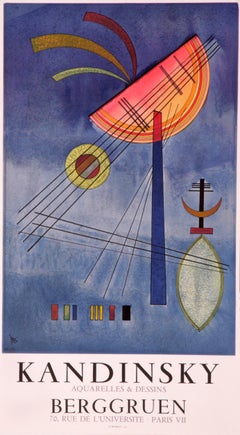
This colorful modern lithographic poster by Wassily Kandinsky was printed in 1972 at the Atelier Mourlot in Paris to promote an exhibition of his watercolors and drawings at the Gale...

Category

1970s Modern Wassily Kandinsky Abstract Prints

Materials

Lithograph

Plate 12
Plate 12

Plate 12

By Wassily Kandinsky

Located in Fairlawn, OH

Plate 12 From: 10 Origi, 1942 Signed in the block with the artist's initials lower left (printed) From: 10 Origin Not from the First edition 100, published by Allianz-Verlag, Zurich,...

Category

1970s Expressionist Wassily Kandinsky Abstract Prints

Materials

Woodcut

Small Worlds X - German Expressionism Russian

Small Worlds X - German Expressionism Russian

By Wassily Kandinsky

Located in London, GB

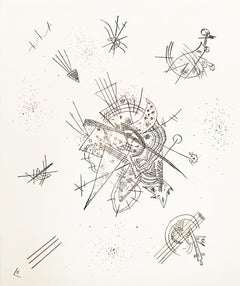
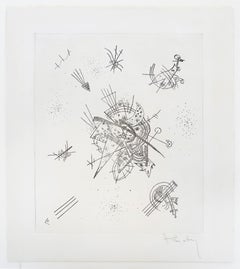
This original drypoint is hand signed in pencil by the artist “Kandinsky” at the lower right margin. It is also monogrammed and dated in the plate “VK 22” at the lower left image. It...

Category

1920s Expressionist Wassily Kandinsky Abstract Prints

Materials

Drypoint

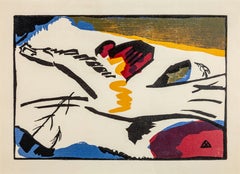
Klänge: Berge Woodcut Print, Abstract Style, Framed, Circa 1910-1919

Klänge: Berge Woodcut Print, Abstract Style, Framed, Circa 1910-1919

By Wassily Kandinsky

Located in Milwaukee, WI

Original color woodcut 4.63 x 7 in (11.76 x 17.78 cm) Framed 16.5 x 18.82 in #122 in the catalogue Raisonné of Kandinsky's Graphic Works by Hans K. Roethel This print is a whimsical...

Category

1910s Abstract Wassily Kandinsky Abstract Prints
Materials

Woodcut

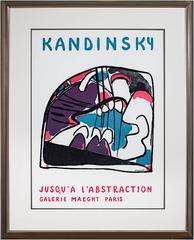
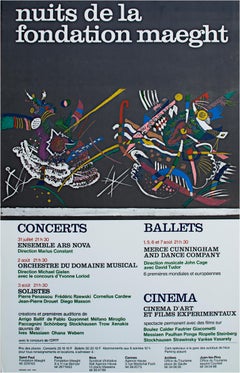
Jusqu'a L'Abstraction' color lithograph poster Wassily Kandinsky

Jusqu'a L'Abstraction' color lithograph poster Wassily Kandinsky

By Wassily Kandinsky

Located in Milwaukee, WI

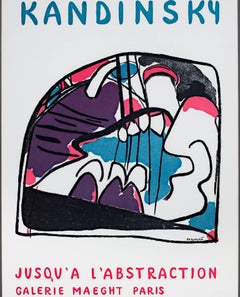
"Jusqu'a L'Abstraction" is a lithograph poster by Wassily Kandinsky. This poster depicts abstract forms in purple, pink, blue, and black and was created for the Maeght gallery in Par...

Category

1940s Modern Wassily Kandinsky Abstract Prints

Materials

Lithograph

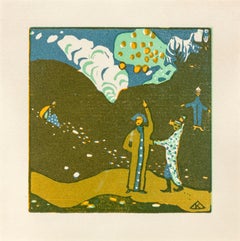
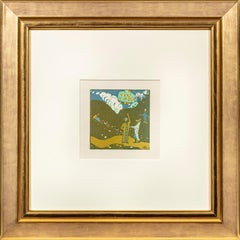
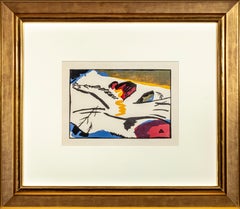
Klänge: Allerheiligen (All Saints' Day), Roethel #131, (118/300)

Klänge: Allerheiligen (All Saints' Day), Roethel #131, (118/300)

By Wassily Kandinsky

Located in Milwaukee, WI

Original color woodcut 8.63 x 8.63 in (21.92 x 21.92 cm) Framed 20.5 x 20.5 in #131 in the catalogue Raisonné of Kandinsky's Graphic Works by Hans K. Roethel

Category

1910s Abstract Wassily Kandinsky Abstract Prints
Materials

Woodcut

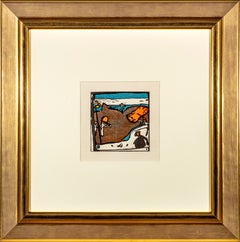
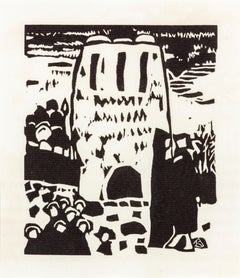
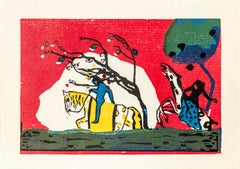
Klänge: Landschaft mit Figuren und Kruzifix, Roethel #134

Klänge: Landschaft mit Figuren und Kruzifix, Roethel #134

By Wassily Kandinsky

Located in Milwaukee, WI

Original color woodcut 3.88 x 3.75 in (9.86 x 9.52 cm) Framed 15.75 x 15.69 in #134 in the catalogue Raisonné of Kandinsky's Graphic Works by Hans K. Roethel

Category

1910s Abstract Wassily Kandinsky Abstract Prints
Materials

Woodcut

Klänge: Variation Nach Improvisation 21,  Roethel #101

Klänge: Variation Nach Improvisation 21, Roethel #101

By Wassily Kandinsky

Located in Milwaukee, WI

Original woodcut 4.5 x 5.5 in (11.43 x 13.97 cm) Framed 16.38 x 17.38 in #101 in the catalogue Raisonné of Kandinsky's Graphic Works by Hans K. Roethel

Category

1910s Abstract Wassily Kandinsky Abstract Prints
Materials

Woodcut

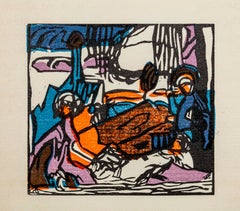
Klänge: Reiterweg (Equestrian trail), Roethel #111

Klänge: Reiterweg (Equestrian trail), Roethel #111

By Wassily Kandinsky

Located in Milwaukee, WI

Original woodcut 6.38 x 8.25 in (16.21 x 20.96 cm) Framed 18.32 x 20.44 in #111 in the catalogue Raisonné of Kandinsky's Graphic Works by Hans K. Roethel

Category

1910s Abstract Wassily Kandinsky Abstract Prints
Materials

Woodcut

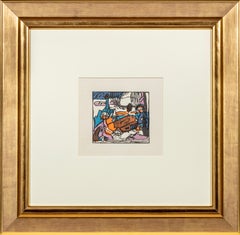
Klänge: Apfelbaum Woodcut Print, Abstract, Framed, Circa 1910-1919

Klänge: Apfelbaum Woodcut Print, Abstract, Framed, Circa 1910-1919

By Wassily Kandinsky

Located in Milwaukee, WI

Original color woodcut 3.88 x 3.88 in (9.86 x 9.86 cm) Framed 15.75 x 15.75 in #126 in the catalogue Raisonné of Kandinsky's Graphic Works by Hans K. Roethel

Category

1910s Abstract Wassily Kandinsky Abstract Prints
Materials

Woodcut

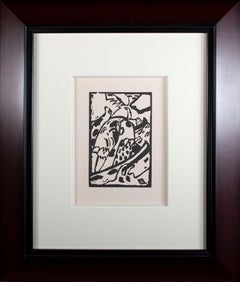
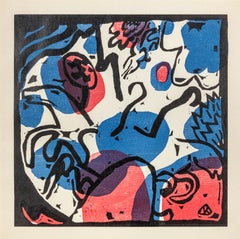
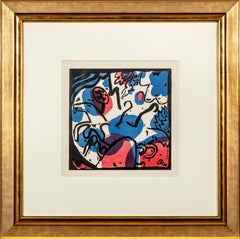
Klänge: Komposition II (Composition II), Roethel #97

Klänge: Komposition II (Composition II), Roethel #97

By Wassily Kandinsky

Located in Milwaukee, WI

Original woodcut 5.88 x 8.25 in (14.94 x 20.96 cm) Framed 15.5 x 17.88 in #97 in the catalogue Raisonné of Kandinsky's Graphic Works by Hans K. Roethel

Category

1910s Abstract Wassily Kandinsky Abstract Prints
Materials

Woodcut

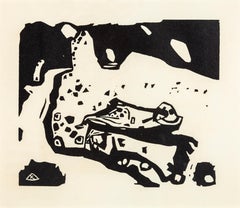
Klänge: Schwarzer Fleck (Black Spot), Roethel #145, (118/300)

Klänge: Schwarzer Fleck (Black Spot), Roethel #145, (118/300)

By Wassily Kandinsky

Located in Milwaukee, WI

Original woodcut 6.63 x 8.5 in (16.84 x 21.59 cm) Framed 18.5 x 20.38 in #145 in the catalogue Raisonné of Kandinsky's Graphic Works by Hans K. Roethel

Category

1910s Abstract Wassily Kandinsky Abstract Prints
Materials

Woodcut

Klänge: Jüngster Tag (Judgement Day), Roethel #146, (118/300)

Klänge: Jüngster Tag (Judgement Day), Roethel #146, (118/300)

By Wassily Kandinsky

Located in Milwaukee, WI

Original woodcut 6 x 8.25 in (15.24 x 20.96 cm) Framed 18.25 x 20.25 in #146 in the catalogue Raisonné of Kandinsky's Graphic Works by Hans K. Roethel

Category

1910s Abstract Wassily Kandinsky Abstract Prints
Materials

Woodcut

Wassily Kandinsky abstract prints for sale on 1stDibs.

Find a wide variety of authentic Wassily Kandinsky abstract prints available for sale on 1stDibs. You can also browse by medium to find art by Wassily Kandinsky in woodcut print, etching, lithograph and more. Much of the original work by this artist or collective was created during the 20th century and is mostly associated with the abstract style. Not every interior allows for large Wassily Kandinsky abstract prints, so small editions measuring 4 inches across are available. Customers who are interested in this artist might also find the work of Louise Bourgeois, Richard Diebenkorn, and Alberto Burri. Wassily Kandinsky abstract prints prices can differ depending upon medium, time period and other attributes. On 1stDibs, the price for these items starts at $303 and tops out at $42,000, while the average work can sell for $4,250.
Questions About Wassily Kandinsky Abstract Prints
  • 1stDibs ExpertMarch 22, 2022
    Wassily Kandinsky's art is largely in the style of Expressionism. The movement began in the early 20th century and focused on conveying the emotional aspects of the subject. Expressionist paintings tend to feature bright colors and dramatic lines. Find a range of Wassily Kandinsky art on 1stDibs.
  • 1stDibs ExpertAugust 20, 2024
    How much a Wassily Kandinsky painting is worth depends on its history, condition, size and other characteristics. In 2023, the artist's Murnau mit Kirche II sold for more than $44.7 million at an auction in London. Kandinsky used abstract compositions of form and color to express deep emotion as well as to depict the language of music through visuals. He was part of a crucial moment in art history that saw the rise of movements like Cubism. He was a leading figure in bringing together Der Blaue Reiter, a group of avant-garde artists who explored spiritual concepts through their art as a response to the materialism of the time. If you own a Kandinsky, seek the help of a certified appraiser or knowledgeable art dealer to determine how much your piece may be worth. Shop a collection of Wassily Kandinsky art on 1stDibs.
  • 1stDibs ExpertNovember 26, 2024
    What Wassily Kandinsky's most famous painting is called is The Blue Rider or Der Blaue Reiter. The work inspired the name of a group of avant-garde artists in Munich, including Kandinsky, Paul Klee and Franz Marc, who explored spiritual concepts through their art as a response to the materialism of the time. Kandinsky created the painting in 1911, and today it is a part of a private collection. It depicts a figure in a blue cloak riding a white horse across a tree-lined landscape. Shop a variety of Wassily Kandinsky art on 1stDibs.