William Stanley Haseltine Art

to
1
1
Overall Width
to
Overall Height
to
2
2
2
2
2
2
1
1
1
1
2
2
1
1
1
2
11,205
2,855
2,494
1,437
1
2
Artist: William Stanley Haseltine
Marsh in Massachusetts, Oil on Board, Hudson River School, Circa 1860s

Marsh in Massachusetts, Oil on Board, Hudson River School, Circa 1860s

By William Stanley Haseltine

Located in Fredericksburg, VA

William Stanley Haseltine’s Marsh in Massachusetts, painted circa 1860s, is a refined and atmospheric oil on board that captures the quiet poetry of the New England landscape. Measur...

Category

Mid-19th Century Hudson River School William Stanley Haseltine Art

Materials

Oil, Board

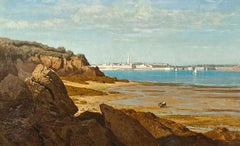
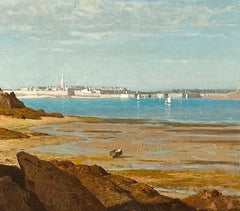
Saint-Malo, Brittany

Saint-Malo, Brittany

By William Stanley Haseltine

Located in New York, NY

The career of William Stanley Haseltine spans the entire second half of the nineteenth century. During these years he witnessed the growth and decline of American landscape painting, the new concept of plein-air painting practiced by the Barbizon artists, and the revolutionary techniques of the French Impressionists, all of which had profound effects on the development of painting in the western world. Haseltine remained open to these new developments, selecting aspects of each and assimilating them into his work. What remained constant was his love of nature and his skill at rendering exactly what he saw. His views, at once precise and poetic, are, in effect, portraits of the many places he visited and the landscapes he loved. Haseltine was born in Philadelphia, the son of a prosperous businessman. In 1850, at the age of fifteen, he began his art studies with Paul Weber, a German artist who had settled in Philadelphia two years earlier. From Weber, Haseltine learned about Romanticism and the meticulous draftsmanship that characterized the German School. At the same time, Haseltine enrolled at the University of Pennsylvania, and took sketching trips around the Pennsylvania countryside, exploring areas along the Delaware and Susquehanna rivers. Following his sophomore year, Haseltine transferred to Harvard University. After graduating from Harvard in 1854, Haseltine returned to Philadelphia and resumed his studies with Weber. Although Weber encouraged Haseltine to continue his training in Europe, the elder Haseltine was reluctant to encourage his son to pursue a career as an artist. During the next year, Haseltine took various sketching trips along the Hudson River and produced a number of pictures, some of which were exhibited at the Pennsylvania Academy of the Fine Arts in the spring of 1855. Ultimately, having convinced his father that he should be allowed to study in Europe, Haseltine accompanied Weber to Düsseldorf. The Düsseldorf Academy was, during the 1850s, at the peak of its popularity among American artists. The Academy’s strict course of study emphasized the importance of accurate draftsmanship and a strong sense of professionalism. Landscape painting was the dominant department at the Düsseldorf Academy during this period, and the most famous landscape painter there was Andreas Achenbach, under whom Haseltine studied. Achenbach’s realistic style stressed close observation of form and detail, and reinforced much of what Haseltine had already learned. His Düsseldorf training remained an important influence on him for the rest of his life. At Düsseldorf, Haseltine became friendly with other American artists studying there, especially Emanuel Leutze, Worthington Whittredge, and Albert Bierstadt. They were constant companions, and in the spring and summer months took sketching trips together. In the summer of 1856 the group took a tour of the Rhine, Ahr, and Nahe valleys, continuing through the Swiss alps and over the Saint Gotthard Pass into northern Italy. The following summer Haseltine, Whittredge, and the painter John Irving returned to Switzerland and Italy, and this time continued on to Rome. Rome was a fertile ground for artists at mid-century. When Haseltine arrived in the fall of 1857, the American sculptors Harriet Hosmer, Chauncey B. Ives, Joseph Mozier, William Henry Rinehart...

Category

19th Century American Realist William Stanley Haseltine Art

Materials

Canvas, Oil

Related Items
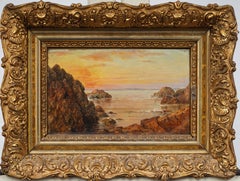
Antique American Hudson River School Luminous Coastal Sunset Seascape Painting

Antique American Hudson River School Luminous Coastal Sunset Seascape Painting

Located in Buffalo, NY

Signed and dated K. W. Newhall 1881, this luminous seascape by American painter Kate White Newhall (1840–1917) captures a dramatic coastal scene at sunset with refined academic techn...

Category

1880s Hudson River School William Stanley Haseltine Art

Materials

Oil, Board

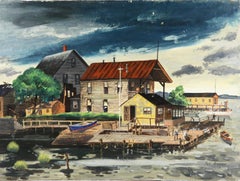
"Summer Pier Fishing" American Scene Social Realism WPA Mid-20th Century Modern

"Summer Pier Fishing" American Scene Social Realism WPA Mid-20th Century Modern

By Syd Browne

Located in New York, NY

"Summer Pier Fishing" American Scene Social Realism WPA Mid-20th Century Modern Syd J. Browne (1907-1991) "Summer Pier Fishing" 22 x 30 inches Oil on canvas. c. 1930s Signed lower r...

Category

1930s American Realist William Stanley Haseltine Art

Materials

Canvas, Oil

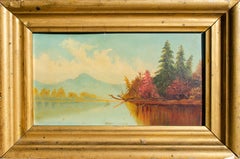
19th Century White Mountain Landscape, Unknown American School

19th Century White Mountain Landscape, Unknown American School

Located in New York, NY

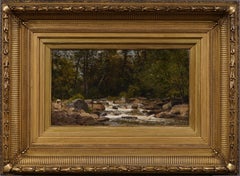
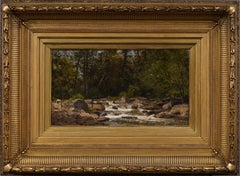
Unknown White Mountain Artist White Mountain Landscape, 19th Century Oil on board 5 x 9 1/4 in. Framed: 7 3/4 x 11 3/4 in.

Category

19th Century Hudson River School William Stanley Haseltine Art

Materials

Oil, Board

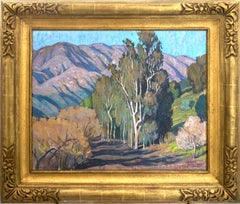
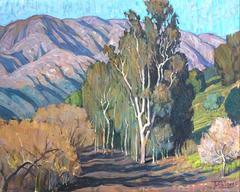
Pathway to the San Gabrielino Trail; Neglected and Protected

Pathway to the San Gabrielino Trail; Neglected and Protected

By Tim Solliday

Located in Pasadena, CA

Provenance Acquired by the gallery directly from the artist Painted en plein air in the San Gabriel Mountains near the artist's home in the early summer of 2013. Signed "T. Solliday...

Category

2010s American Realist William Stanley Haseltine Art

Materials

Canvas, Oil

"Grand Manan" Harrison Bird Brown, Maine Landscape, Hudson River School Seascape

"Grand Manan" Harrison Bird Brown, Maine Landscape, Hudson River School Seascape

By Harrison Bird Brown

Located in New York, NY

Harrison Bird Brown (1831 - 1915) Grand Manan Oil on canvas 12 x 20 inches Signed with initials lower left Harrison Bird Brown was born in 1831 in Portland, Maine, and is best known for his White Mountain landscapes and marine paintings of Maine's Casco Bay...

Category

Late 19th Century Hudson River School William Stanley Haseltine Art

Materials

Canvas, Oil

Folk Art American Hudson River School Landscape Figures Homes Rare 19th Century

Folk Art American Hudson River School Landscape Figures Homes Rare 19th Century

Located in Buffalo, NY

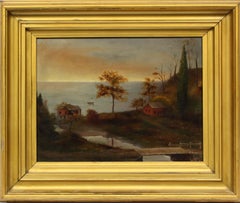
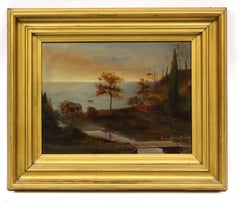
A 19th century American landscape depicting a quiet coastal or lakeside scene at dusk, where a small cluster of houses rests along the water’s edge beneath a softly glowing sky. A n...

Category

1890s Hudson River School William Stanley Haseltine Art

Materials

Oil, Board

Antique American Hudson River School Coastal Sunset Seascape Framed Oil Painting

Antique American Hudson River School Coastal Sunset Seascape Framed Oil Painting

Located in Buffalo, NY

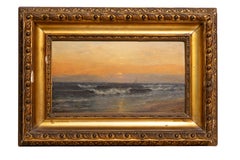
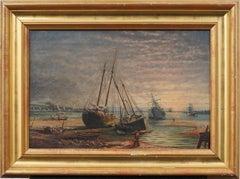
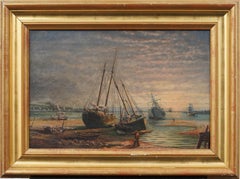
Antique American sunset seascape beach scene oil painting. Oil on board. Framed. Signed. Measuring: 15 by 21 inches overall, and 9 by 15 painting alone.. In excellent original cond...

Category

1870s Hudson River School William Stanley Haseltine Art

Materials

Oil, Board

Dusk Forest Scene, Catskills by Lockwood DeForest (American, 1850-1932)

Dusk Forest Scene, Catskills by Lockwood DeForest (American, 1850-1932)

By Lockwood DeForest

Located in New York, NY

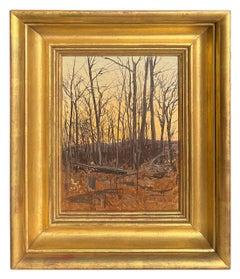
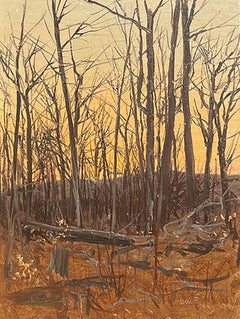
"Dusk Forest Scene, Catskills," 1875 by Hudson River School painter Lockwood DeForest (American, 1850-1932) is oil on artists card-stock and measures 9.5 x 7 inches. The work is signed by DeForest, and dated May 13, 1875 at lower right. The work is framed in an elegant, period appropriate frame, and ready to hang. Lockwood DeForest was born in New York in 1850 to a prominent family. He grew up in Greenwich Village and on Long Island at the family summer estate in Cold Spring Harbor. As was customary for a cultivated family in the Gilded Age, the DeForests made frequent trips abroad. Excursions to the great museums, which were prominent on the DeForests agenda, deepened the young Lockwood's familiarity with European painting and sculpture. Though he had begun drawing and painting somewhat earlier, it was during a visit to Rome in 1868 that nineteen-year-old DeForest first began to study art seriously, taking painting lessons from the Italian landscapist Hermann David Salomon Corrodi (1844–1905). More importantly, on the same trip, Lockwood met one of America’s most celebrated painters, (and his maternal great- uncle by marriage) Frederic Edwin Church (1826–1900), who quickly became his mentor. DeForest accompanied Church on sketching trips around Italy and continued this practice when they both returned to America in 1869. Early on in his career, de Forest made a habit of recording the date and often the place of his oil sketches, as to create a visual diary of his travels. Lockwood’s profession as a landscape painter can be primarily attributed to Frederic E. Church and his belief in the young artist’s talent. DeForest often visited Church in the Hudson River community of Catskill where, in addition to sketching trips and afternoons of painting, he assisted with the architectural drawings and planning of Olana. In 1872, DeForest took a studio at the Tenth Street Studio Building in New York. During these formative years DeForest counted among his friend’s artists such as Sanford Robinson Gifford (1823–80), George Henry Yewell (1830–1923), John Frederick Kensett (1816–72), Jervis McEntee (1828–91), and Walter Launt Palmer (1854–1932). Over the next decade DeForest experienced success as a painter. He exhibited for the first time at the National Academy of Design in 1872, and made two more painting trips abroad, in 1875–76 and 1877–78, traveling to the major continental capitals but also the Middle East and North Africa. His trip to the Middle East and the library at Church’s home, Olana, established his interest in design during his mid-twenties. From about 1878 to 1902, landscape painting was overshadowed by his activities and preoccupation with East Indian architecture and décor, a style that became quite fashionable in late nineteenth century America. From 1879-1883, de Forest founded Associated Artists along with Louis Comfort Tiffany, Candace Wheeler...

Category

19th Century Hudson River School William Stanley Haseltine Art

Materials

Oil, Board

Antique American Pastoral Hudson River Painting Farm Oxen 1890 19th Century Rare

Antique American Pastoral Hudson River Painting Farm Oxen 1890 19th Century Rare

Located in Buffalo, NY

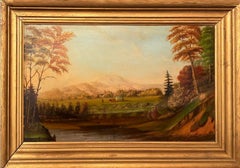
A 19th century American landscape depicting a pastoral valley framed by autumnal trees, with distant mountains rising softly along the horizon. A river winds through the foreground, ...

Category

Early 1900s Hudson River School William Stanley Haseltine Art

Materials

Oil, Board

Antique American Hudson River School Scalp Level Pennsylvania Landscape Painting

Antique American Hudson River School Scalp Level Pennsylvania Landscape Painting

Located in Buffalo, NY

Impressive early American Hudson River School landscape oil painting by Jasper Holman Lawman (1825 - 1906). Framed. Oil on board. Signed. Image size, 10H by 16L.

Category

1870s Hudson River School William Stanley Haseltine Art

Materials

Oil, Board

Antique American Sunset Seascape Giltwood Framed New England Harbor Oil Painting

Antique American Sunset Seascape Giltwood Framed New England Harbor Oil Painting

Located in Buffalo, NY

Antique American sunset seascape oil painting. Oil on board. Signed. Framed. Measuring: 18 by 24 inches overall, and 12.25 by 18 painting alone.. In excellent original condition. Ha...

Category

1850s Hudson River School William Stanley Haseltine Art

Materials

Oil, Board

"Texas Hill Country Landscape With Cattle" oil painting of wildflowers, cactus

"Texas Hill Country Landscape With Cattle" oil painting of wildflowers, cactus

By Don Warren

Located in Austin, TX

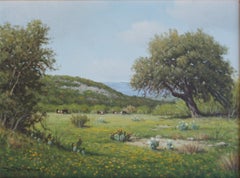
Canvas Size: 12 x 16 in. Frame Size: 20.5 x 24.5 in. Signed, lower left: "Don Warren" A serene, classic, and cheerful scene in the Texas Hill Country by Don Warren. The foreground i...

Category

1970s American Realist William Stanley Haseltine Art

Materials

Canvas, Oil

Previously Available Items
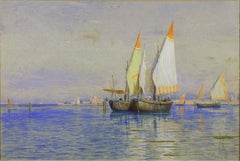
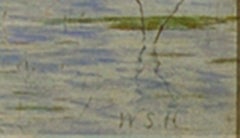
Fishing Boats, Venice

Fishing Boats, Venice

By William Stanley Haseltine

Located in New York, NY

Fishing Boats, Venice recalls a time, a place, and a social circle that lived for a charmed moment and a favored few in nineteenth-century Europe. William Stanley Haseltine was an American expatriate artist who made his home and studio “into a permanent meeting ground for the many distinguished foreigners, Americans and English, who came to Rome. . . .” (Helen Haseltine Plowden, William Stanley Haseltine, Sea and Landscape Painter (1835-1900): Notes and Recollections From His Life [1947], p. 97). Among these were Louisa Crawford Ward (daughter of New York banker and art patron Samuel Ward, sister of Julia Ward Howe, and widow of American sculptor Thomas Crawford); Henry Wadsworth Longfellow; Frederick Crowninshield (Boston Brahmin poet and painter); artist Edward Darley Boit; lawyer Joseph Choate; historian George Bancroft; writer Charles Francis Adams; and financier Junius Spencer Morgan, father of John Pierrepont Morgan, the original owner of this work. From 1874 until the artist's death, the family lived in the Palazzo Altieri, a sixteenth-century residence built by Cardinal Gian Battista Altieri Seniore and his uncle Pope Clement X. The Haseltines gathered together under their splendid and commodious roof an international literary, cultural, and artistic salon with a distinctly American accent. The career of William Stanley Haseltine spans the entire second half of the nineteenth century. During these years he witnessed the growth and decline of American landscape painting, the new concept of plein-air painting practiced by the Barbizon artists, and the revolutionary techniques of the French Impressionists, all of which had profound effects on the development of painting in the western world. Haseltine remained open to these new developments, selecting aspects of each and assimilating them into his work. What remained constant was his love of nature and his skill at rendering exactly what he saw. His views, at once precise and poetic, are, in effect, portraits of the many places he visited and the landscapes he loved. Haseltine was born in Philadelphia, the son of a prosperous businessman. In 1850, at the age of fifteen, he began studying with Paul Weber, a German artist who had settled in Philadelphia two years earlier. From Weber, Haseltine learned about Romanticism and the meticulous draftsmanship that characterized the German School. At the same time, Haseltine enrolled at the University of Pennsylvania, and took sketching trips around the Pennsylvania countryside, exploring areas along the Delaware and Susquehanna rivers. Following his sophomore year, Haseltine transferred to Harvard University. After graduating from Harvard in 1854, Haseltine returned to Philadelphia and resumed his studies with Weber. Although Weber encouraged Haseltine to continue his training in Europe, the elder Haseltine was reluctant to encourage his son to pursue a career as an artist. During the next year, Haseltine took various sketching trips along the Hudson River and produced a number of pictures, some of which were exhibited at the Pennsylvania Academy of the Fine Arts in the spring of 1855. Ultimately, having convinced his father that he should be allowed to study in Europe, Haseltine accompanied Weber to Düsseldorf. The Düsseldorf Academy was, during the 1850s, at the peak of its popularity among American artists. The Academy’s strict course of study emphasized the importance of accurate draftsmanship and a strong sense of professionalism. Landscape painting was the dominant department at the Düsseldorf Academy during this period, and the most famous landscape painter there was Andreas Achenbach, under whom Haseltine studied. Achenbach’s realistic style stressed close observation of form and detail, and reinforced much of what Haseltine had already learned. His Düsseldorf training remained an important influence on him for the rest of his life. At Düsseldorf, Haseltine became friendly with other American artists studying there, especially Emanuel Leutze, Worthington Whittredge, and Albert Bierstadt. They were constant companions, and in the spring and summer months took sketching trips together. In the summer of 1856 the group took a tour of the Rhine, Ahr, and Nahe valleys, continuing through the Swiss alps and over the Saint Gotthard Pass into northern Italy. The following summer Haseltine, Whittredge, and the painter John Irving returned to Switzerland and Italy, and this time continued on to Rome. Rome was a fertile ground for artists at mid-century. Virtually every major artist went there at some point, and some set up permanent homes and studios. When Haseltine arrived in the fall of 1857, the American sculptors Harriet Hosmer, Chauncey B. Ives, Joseph Mozier, William Henry Rinehart...

Category

Late 19th Century American Realist William Stanley Haseltine Art

Materials

Watercolor

William Stanley Haseltine art for sale on 1stDibs.

Find a wide variety of authentic William Stanley Haseltine art available for sale on 1stDibs. You can also browse by medium to find art by William Stanley Haseltine in canvas, fabric, oil paint and more. Not every interior allows for large William Stanley Haseltine art, so small editions measuring 23 inches across are available. Customers who are interested in this artist might also find the work of James Edward Buttersworth, William Rickarby Miller, and Peter Poskas. William Stanley Haseltine art prices can differ depending upon medium, time period and other attributes. On 1stDibs, the price for these items starts at $110,000 and tops out at $110,000, while the average work can sell for $110,000.

Artists Similar to William Stanley Haseltine