Want more images or videos?
Request additional images or videos from the seller
1 of 21

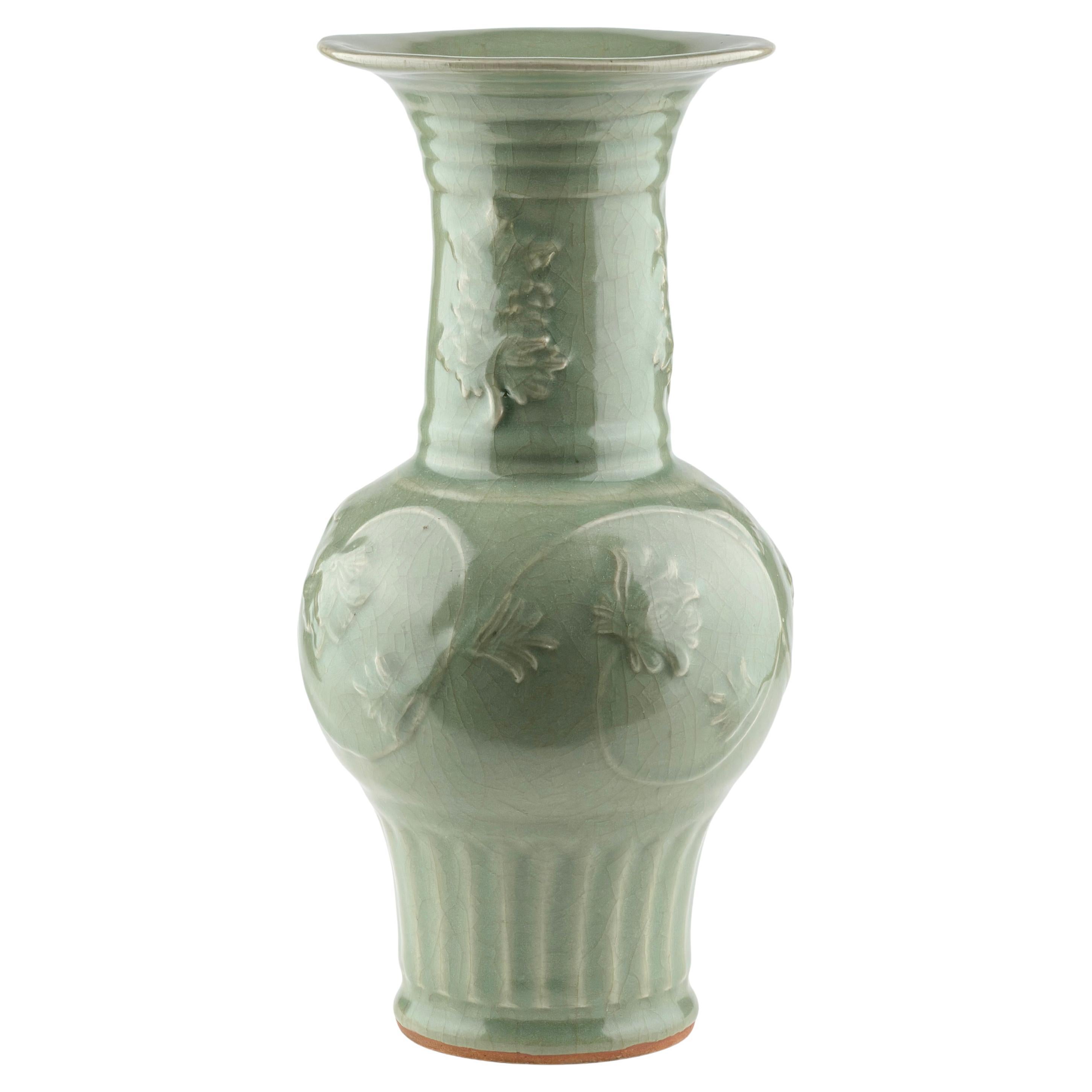
Rare Chinese Qingbai Celadon Altar Vase, Late Ming Dynasty ca. 1600-1630

$4,480.89
£3,250
€3,858.18
CA$6,201.77
A$6,224.32
CHF 3,629.59
MX$75,669.62
NOK 41,707.64
SEK 42,894.18
DKK 28,839.43

About the Item

Among the most celebrated achievements of Chinese ceramics is Qingbai, the luminous bluish-white glaze first perfected at the kilns of Jingdezhen during the Song dynasty. Revered for its jade-like translucency and quiet elegance, Qingbai came to embody ideals of refinement and restraint. Although its greatest period of production had passed by the Yuan dynasty, later potters continued to draw inspiration from these earlier masterpieces, reviving their glazes and forms for a new audience of scholars and devotees. During the late Ming and early Qing periods, private kilns produced sophisticated interpretations of archaic ritual wares that blended antiquarian taste with contemporary craftsmanship. This striking porcelain vessel is fashioned in the form of an ancient gu, a shape traditionally associated with ritual bronzes of the Shang and Zhou dynasties. Whether intended as an altar vase or candlestick, its commanding silhouette would have lent dignity and symbolic resonance to the scholar's studio or domestic shrine. The vessel rises from a broad spreading foot through a waisted stem to a generous flared cup. The body has been robustly potted and articulated with horizontal divisions suggestive of bamboo joints, an enduring symbol of integrity, resilience and scholarly virtue in Chinese culture. Around the upper section, finely incised upright leaves animate the surface with a restrained decorative rhythm. In dramatic contrast to the classical form, lively dragons emerge in high relief, coiling around the stem and encircling the lower body in animated poses. Each dragon was individually moulded and carefully applied before firing, creating a sculptural interplay of movement and shadow beneath the glaze. Their sinuous forms appear almost to rise from the porcelain itself, lending the piece a remarkable vitality. The entire surface is covered in a soft Qingbai celadon glaze, its glossy pale blue-green tone pooling within recesses and around the dragons' scales to accentuate every detail of the modelling. The exposed base remains unglazed, revealing iron-rich firing grit and a warm reddish body characteristic of traditional Jingdezhen production methods. The combination of archaistic form, Song-inspired glaze and boldly applied ornament reflects the antiquarian sensibilities that flourished during the Ming–Qing transition. Rather than simply reproducing earlier wares, pieces such as this reinterpreted historic styles through the lens of contemporary taste, resulting in objects that are both deeply rooted in tradition and unmistakably individual. Condition Presented in good antique condition overall. There is minor glaze pitting, light surface wear and natural firing grit visible to the unglazed base. Small chips and losses are present to some of the applied dragon elements, consistent with age and handling. The vessel remains structurally sound, cleanly preserved and displays exceptionally well. We ship internationally, tracked and insured.
  • Dimensions:
    Height: 9.85 in (25 cm)Width: 4.73 in (12 cm)Depth: 4.73 in (12 cm)
  • Materials and Techniques:
  • Period:
    1600-1609
  • Date of Manufacture:
    ca. 1600-1630
  • Condition:
  • Seller Location:
    Nottingham, GB
  • Reference Number:
    1stDibs: LU9003250491552

More From This Seller

View All
Rare Chinese Famille Rose Vase with Kui Xing on Dragon Fish, Guangxu Period

Rare Chinese Famille Rose Vase with Kui Xing on Dragon Fish, Guangxu Period

Located in Nottingham, GB

Famille rose enamels became one of the defining achievements of Qing dynasty porcelain, prized for their soft palette and ability to render complex figural scenes with remarkable del...

Category

Antique Late 19th Century Ceramics

Materials

Porcelain
Chinese 18th Century Celadon Porcelain Bowl

Chinese 18th Century Celadon Porcelain Bowl

Located in Nottingham, GB

Celebrated for its understated beauty, celadon has long been admired in China for its subtle jade-like qualities. Rather than relying on elaborate decoration, the finest celadon ware...

Category

Antique 18th Century Ceramics

Materials

Porcelain
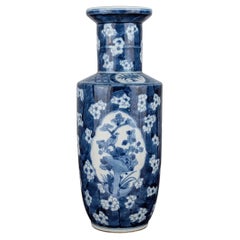
Chinese Blue and White Porcelain Prunus Rouleau Vase, Kangxi, Late 19th

Chinese Blue and White Porcelain Prunus Rouleau Vase, Kangxi, Late 19th

Located in Nottingham, GB

This elegant Chinese blue and white porcelain rouleau vase is a finely executed Kangxi revival example dating to the late 19th century. The vase bears a four-character Kangxi nian zh...

Category

Antique 19th Century Ceramics

Materials

Porcelain
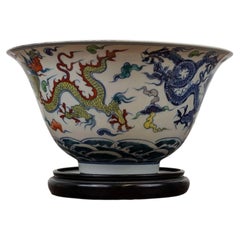
Late Qing Chinese Wucai Porcelain Bowl with Five Dragons, Guangxu Period

Late Qing Chinese Wucai Porcelain Bowl with Five Dragons, Guangxu Period

Located in Nottingham, GB

Wucai, meaning "five colours," represents one of the most celebrated achievements of Chinese porcelain production. Combining underglaze cobalt blue with overglaze enamels required a ...

Category

Antique Late 19th Century Ceramics

Materials

Porcelain
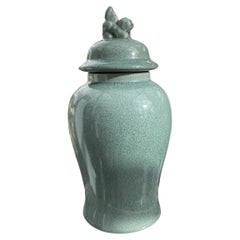
Chinese Aqua Celadon Crackle Glaze Ginger Jar with Foo Dog Finial

Chinese Aqua Celadon Crackle Glaze Ginger Jar with Foo Dog Finial

Located in Nottingham, GB

A striking vintage Chinese porcelain ginger jar or covered baluster vase, distinguished by its beautiful aqua celadon glaze and sculptural Foo Dog, or guardian lion, finial. The sub...

Category

20th Century Vases

Materials

Porcelain

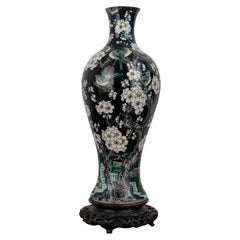
Chinese Famille Noire Porcelain Baluster Vase with Prunus and Birds, Late Qing

Chinese Famille Noire Porcelain Baluster Vase with Prunus and Birds, Late Qing

Located in Nottingham, GB

This striking Chinese famille noire porcelain vase dates to the 19th century and reflects the enduring influence of the celebrated Kangxi-period palette. Dramatic and richly decorati...

Category

Antique 19th Century Ceramics

Materials

Porcelain
You May Also Like

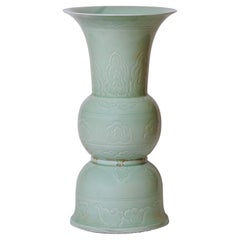
Carved Celadon Porcelain Altar Vase

Carved Celadon Porcelain Altar Vase

By Bo Jia for Middle Kingdom

Located in Manassas Park, VA

This carved trumpet vase is a traditional porcelain vessel from Jingdezhen, a town long distinguished by imperial patronage. This piece is a porcelain vase with a design reminiscent of an ancient Chinese altar piece...

Category

20th Century Chinese Qing Ceramics

Materials

Porcelain
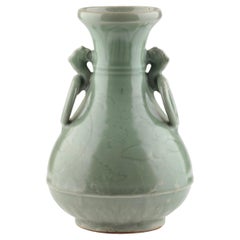
Carved Longquan Celadon Vase, Yuan-Ming Dynasty

Carved Longquan Celadon Vase, Yuan-Ming Dynasty

Located in seoul, KR

Potted in a balanced baluster form with a gently flared mouth and a stable foot, this vase presents a calm and harmonious silhouette. Animal-form handles holding looped rings add scu...

Category

Antique 15th Century and Earlier East Asian Ming Antiquities

Materials

Celadon

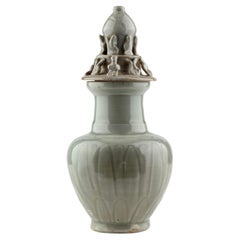
Carved 'Longquan' Celadon-glazed Funerary vase and cover, Song dynasty

Carved 'Longquan' Celadon-glazed Funerary vase and cover, Song dynasty

Located in seoul, KR

The body is decorated with incised lotus-petal motifs and covered with a characteristic blue-grey Longquan glaze. Variations in the glaze tone, resulting from contact with soil durin...

Category

Antique 15th Century and Earlier East Asian Antiquities

Materials

Celadon

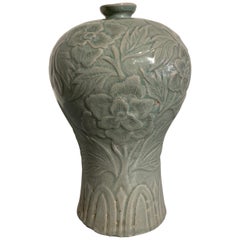
A Rare Longquan Celadon 'Peony' Vase Yuan-Ming Dynasty

A Rare Longquan Celadon 'Peony' Vase Yuan-Ming Dynasty

Located in seoul, KR

This vase features a traditional vase coated with a clear and rich green celadon glaze. A fine network of crazing covers the surface. The neck is adorned with raised vine motifs, whi...

Category

Antique 15th Century and Earlier East Asian Ming Antiquities

Materials

Celadon

CHINA Song Dynasty 960 AD Celadon Glazed Vase With Cylinder Handles

CHINA Song Dynasty 960 AD Celadon Glazed Vase With Cylinder Handles

Located in Miami, FL

A celadon vase from the Song Dynasty. This is a genuine ancient vase created during the Song Dynasty in China. Long Quan ware celadon glazed vase with long neck and two tubular ears...

Category

Antique 15th Century and Earlier Chinese Archaistic Ceramics

Materials

Ceramic, Wood