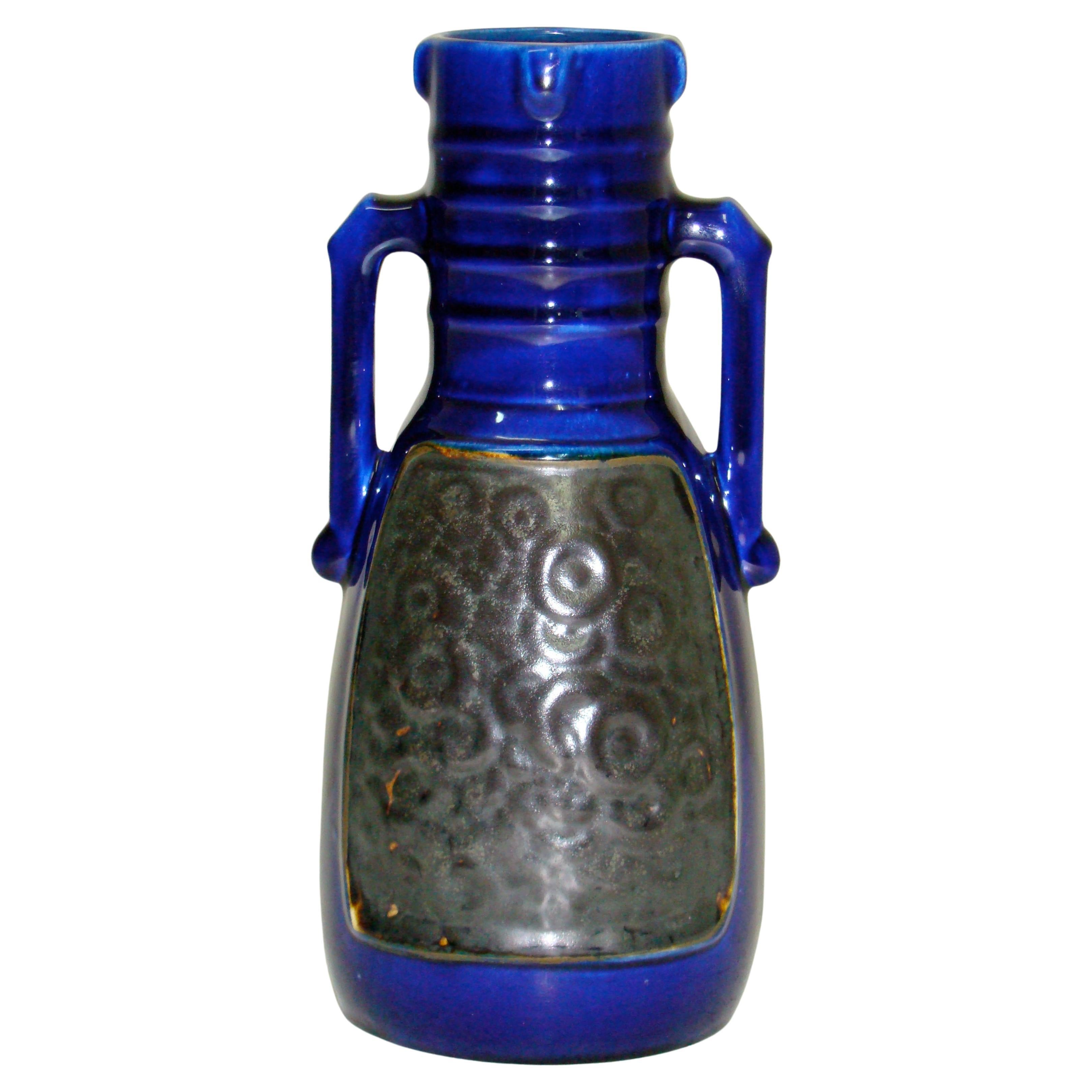
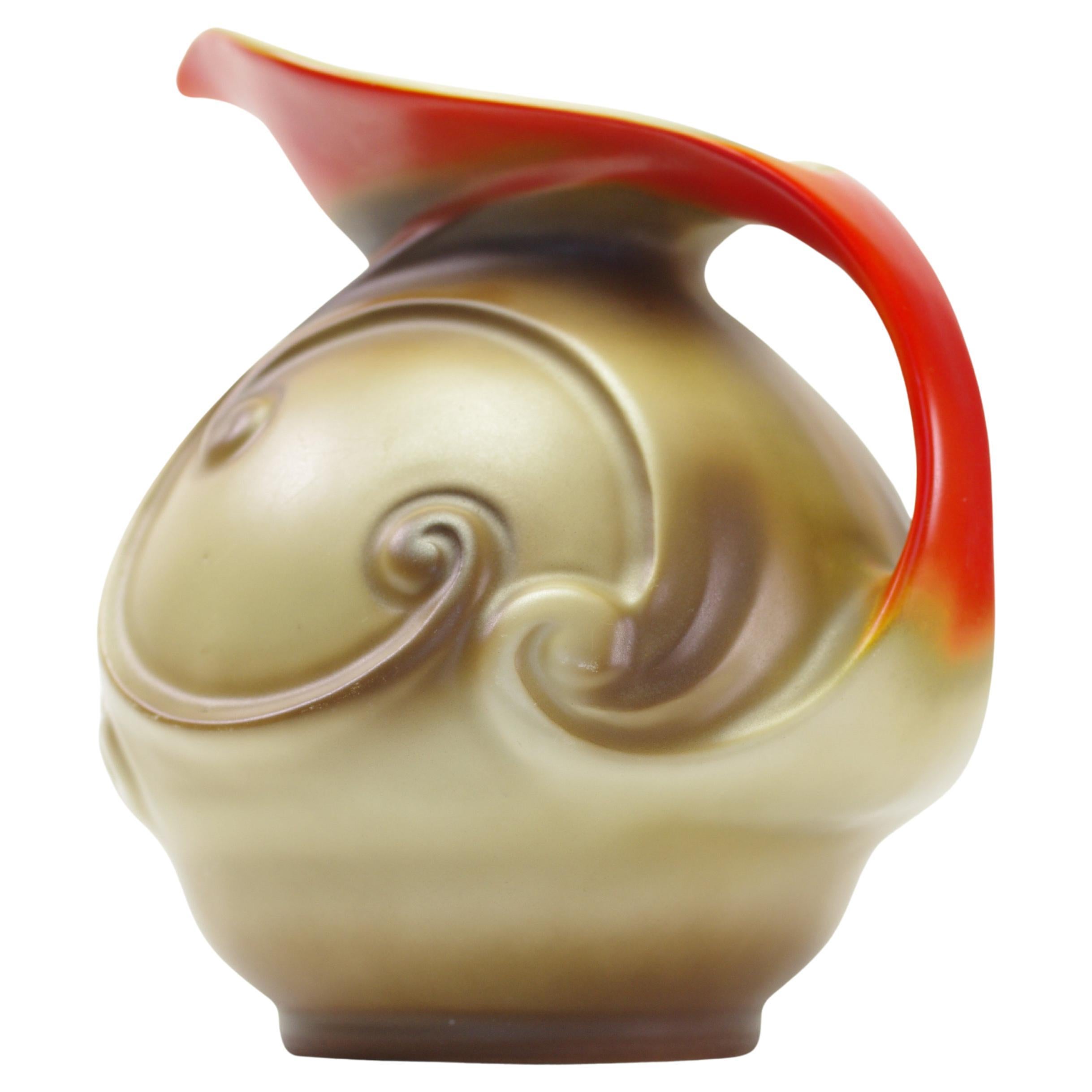
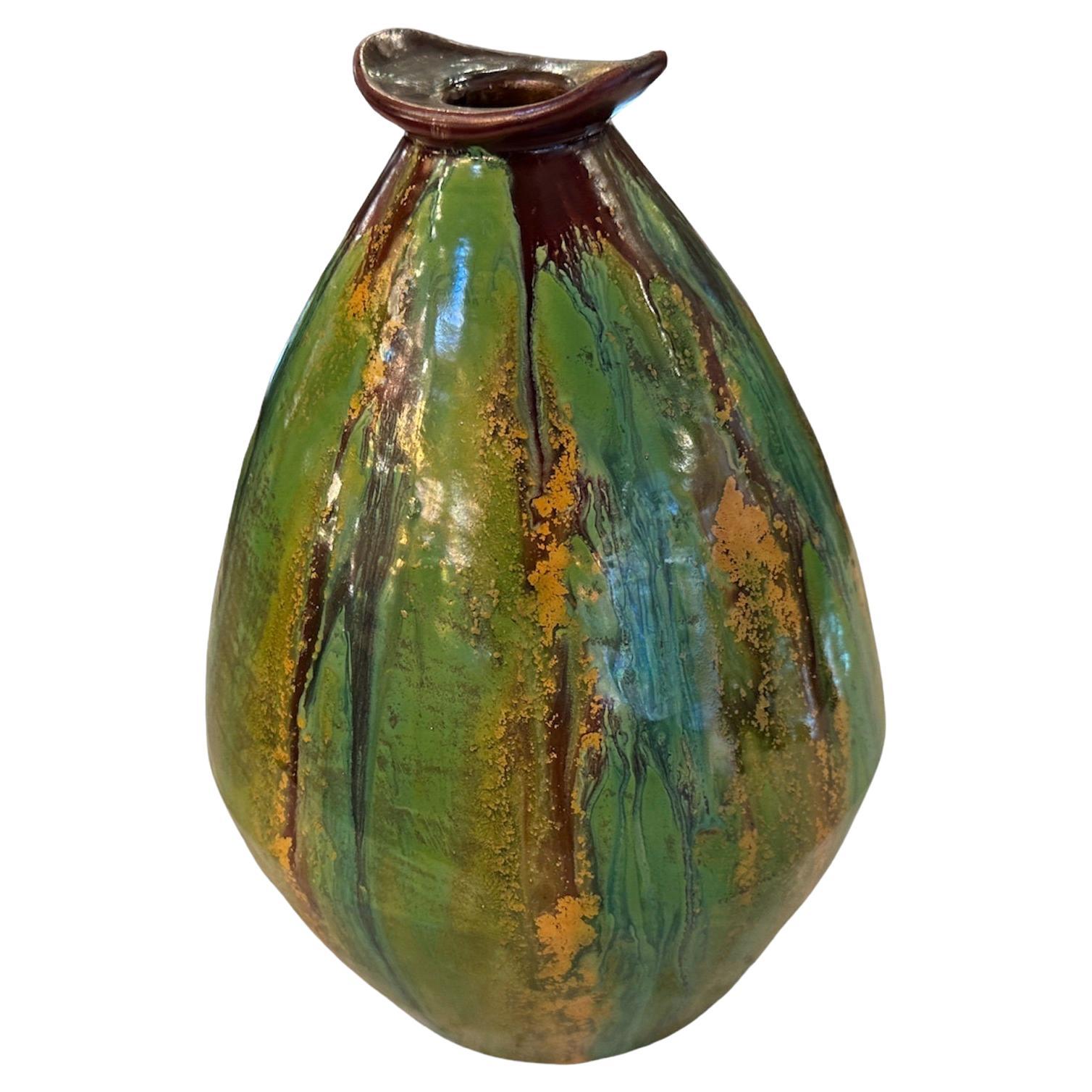
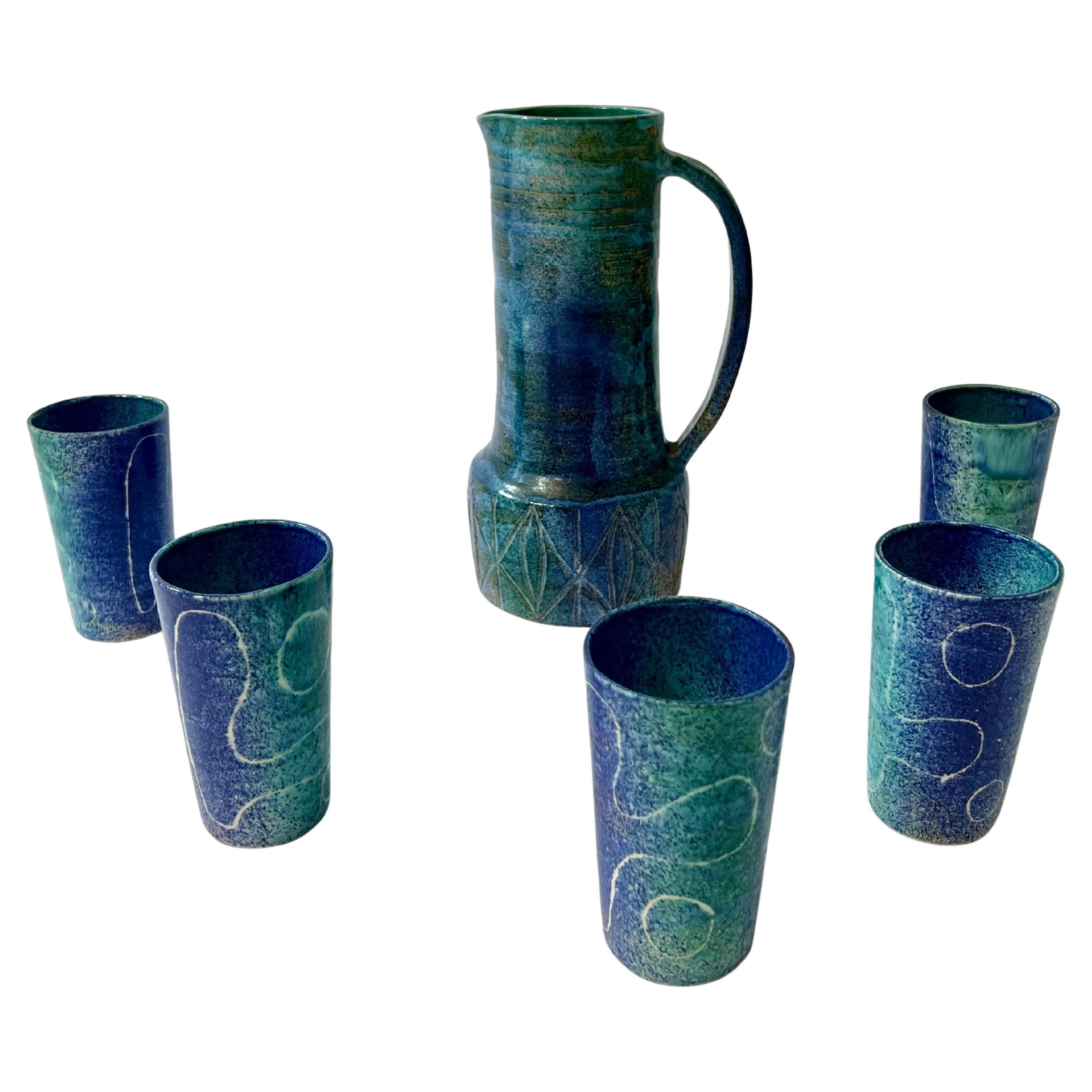
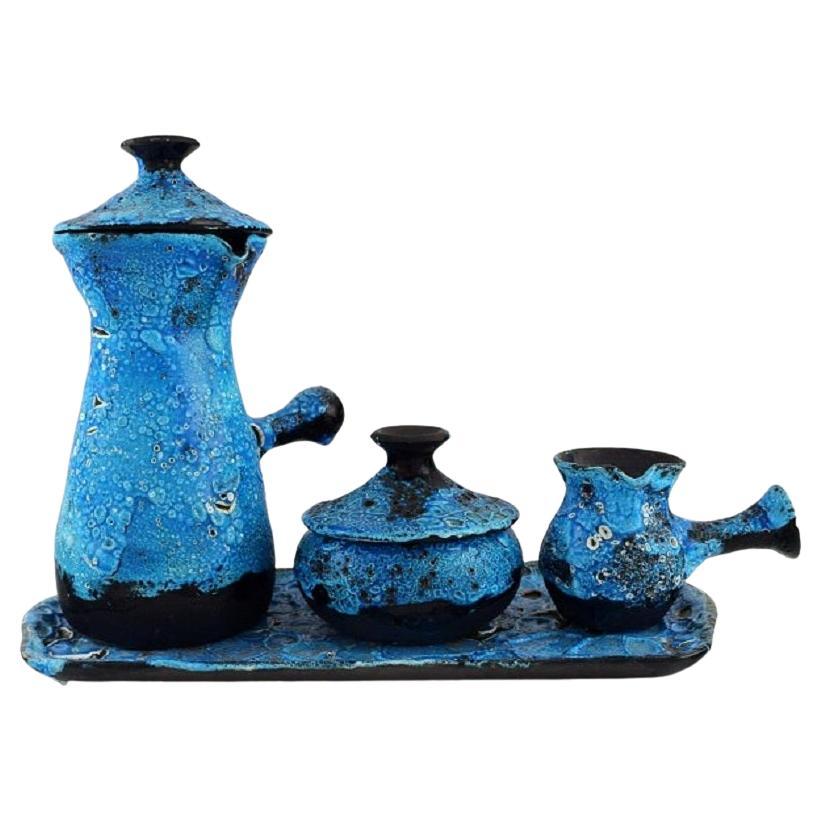
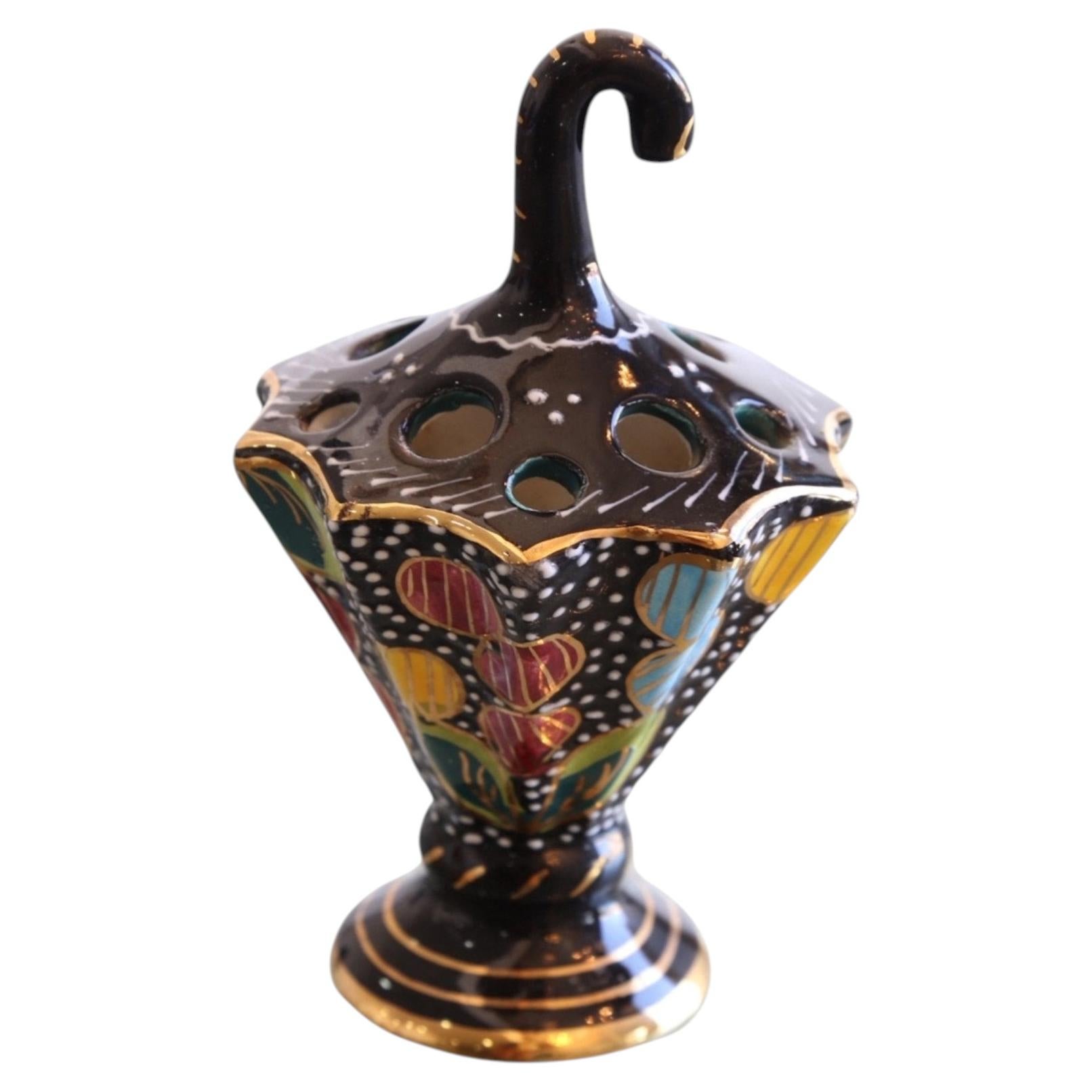
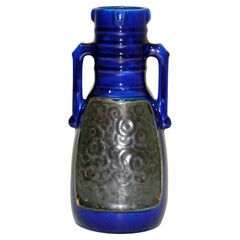
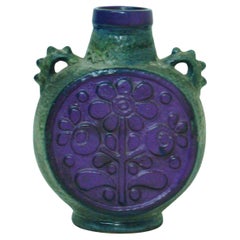
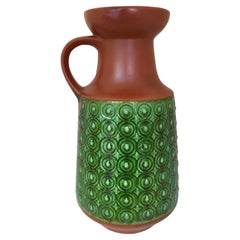
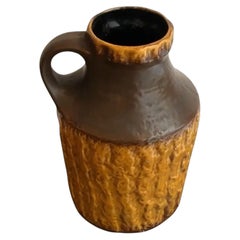
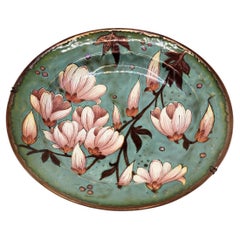
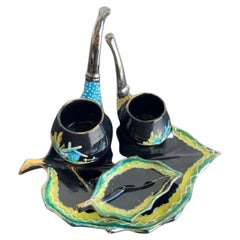
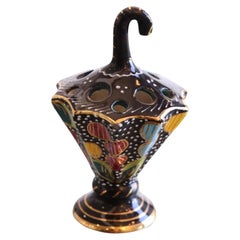
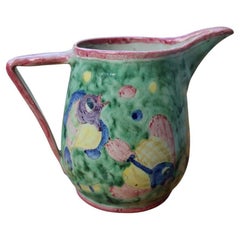
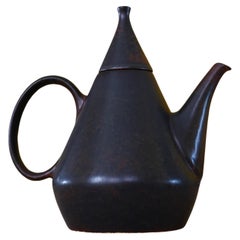
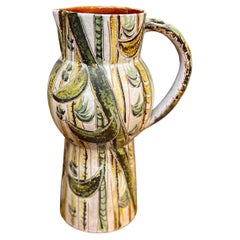
This ceramic piece was made by the famous Dutch manufacturer Plateelbakkerij Zuid-Holland (also popularly known by its abbreviated trademark, Plazuid, from Gouda, Holland). The authorship and details that can be seen on the base are identified as follows:
The Factory (Plazuid / Gouda Holland): The logo in the shape of a small hand-drawn house or little house in the center corresponds to the official mark of the Plateelbakkerij Zuid-Holland (PZH) factory, active in Gouda.
The Series / Technique ("Unique Metalique"): Handwritten at the top, it indicates that it belongs to its exclusive line of collectible pieces with metallic lustre glazes (Unique Métalique), highly valued and produced mainly from the mid-20th century (approximately between the late 1940s and the 1950s).
The Designer / Painter Initials:
To the left of the logo, the initials V.A can be read, which correspond to Willem van Ham (who signed with the acronym of his nickname or painter's mark assigned in the firm's workshops).
The most famous central element of its signature is the drawing of a small house or stylized door. This logo pays tribute to the Lazaruspoortje (the St. Lazarus Gate), a famous historical monument in the city of Gouda that was located in the immediate vicinity of the factory grounds.
Painter of the firm R. Alkema, who worked actively decorating and signing these sophisticated metallic glaze pieces for the company.
Plateelbakkerij Zuid-Holland (PZH), popularly known by its commercial contraction Plazuid, was not only the largest and most important ceramic manufacturer in the city of Gouda, but also the firm that defined and led the global phenomenon of what we collectively know today as Gouda Pottery.
This is the story of its evolution, from a humble clay pipe workshop to becoming a benchmark of 20th-century design:
1. Foundation and the High-Gloss Years (1898–1909)
The factory was founded in 1898 by local potter Adrianus Jonker and businessman Egbert Estié. Taking advantage of the historical abundance of clay in the Gouda region (which was originally used to manufacture smoking pipes), they decided to make the leap into decorative art ceramics.
The initial style: In its early years, the factory focused on high-gloss pieces heavily influenced by Art Nouveau and Jugendstil. Its designs featured organic and fluid floral motifs, usually painted on dark backgrounds.
Around 1901, PZH developed the famous "P-decor" (porcelain decoration), characterized by delicate pastel motifs on white clay.
In 1903, the original founders left the company, and the influential Hoyng family took control of the firm.
2. The Matte Glaze Revolution and the Golden Age (1910–1930)
The factory's true international turning point came around 1909–1910 thanks to a technical innovation by designer Daniël Harkink: matte glaze.
The universal "Gouda Style": This satin, non-reflective finish, decorated with geometric, abstract, and exotic floral patterns inspired by Persian, Oriental, and ancient Greek art (with legendary series such as Rhodian or Damascus), became an overwhelming commercial success.
Export fever: During the 1920s, the factory experienced its greatest splendor. The design evolved toward the symmetry of Art Deco. Plazuid pieces—characterized by their bold shapes and iconic twisted handles or ears—were exported massively to markets such as the United Kingdom and the United States.
The Royal Seal: In 1928, the Plazuid trademark began to be formally integrated into the base of the pieces. Shortly after, in 1930, owing to its success and status, the Queen of the Netherlands granted it the right to be called "Royal," changing its official name to N.V. Koninklijke Plateelbakkerij Zuid-Holland and incorporating a crown into its signatures.
3. Crisis, War, and Special Series (1930–1950)
Like the rest of the European industry, the factory was severely affected by the Great Depression of 1929 and the 1930s.
The Second World War: During the German occupation of the Netherlands, raw material restrictions forced the factory to completely halt the production of decorative art ceramics. Under forced control, they dedicated themselves exclusively to the production of utility tableware and white rationing ceramics for the civil and German markets.
Post-war and Technical Resurgence: Upon reaching the 1950s, the factory attempted to regain its artistic brilliance by reintroducing decorative lines. It was during this post-war era that glaze research workshops gained prominence, giving life to experimental, limited-production studio collections such as the Unique Métalique line, which used luxurious and complex metallic lustre glazes and volcanic or crystalline-looking textures.
4. Decline and Closure (1960s)
Despite efforts to adapt to new trends in Mid-Century Modern design, the high costs of hand-painted production and the fierce competition from mass-industrialized ceramics diminished the company's profitability. The iconic factory definitively closed its doors in 1964 (completely liquidating its operations in 1965).
The Legacy in Markings
For collectors, the base of a Zuid-Holland / Plazuid piece is an open book. The most famous central element of its signature is the drawing of a small house or stylized door. This logo pays tribute to the Lazaruspoortje (the St. Lazarus Gate), a famous historical monument in the city of Gouda that was located in the immediate vicinity of the factory grounds.
TechniqueThe Unique Métalique line from the Plateelbakkerij Zuid-Holland (Plazuid) manufacturer represented a pinnacle of technical experimentation in the mid-20th century. Since it was a special artistic series, each piece was executed individually (hence the word "Unique").Although the exact formulas were kept under strict secrecy in the Gouda laboratories, the chemical and artisanal process was based on the complex technique of metallic lustre by reduction. The method was carried out following these essential steps:1. Formulation with Metallic OxidesTo achieve those reflections that change shade with the light, Plazuid painters and chemists mixed the base glazes with liquid solutions containing heavy metal oxides (mainly silver, copper, bismuth, or iron salts). The compound was applied by brush or dipping onto the previously bisqued piece (fired a first time).2. The Key: The Reducing Atmosphere in the KilnThe secret of the "mirror" or iridescent effect did not depend solely on the paint, but on the absolute control of the fire in a second firing:Upon reaching the critical temperature (generally between $700^\circ\text{C}$ and $800^\circ\text{C}$), the artisan deliberately closed the kiln's air intakes and burned materials that generated a lot of smoke (such as damp wood, naphthalene, or oils).This triggered a reducing atmosphere, that is, an oxygen-starved environment. Since there was no free oxygen in the kiln air, the fire chemically "stole" the oxygen present in the metallic oxides deposited on the ceramic glaze.3. Fixation of Pure MetalUpon losing oxygen, the metallic salts transformed instantly, returning to their elemental state. The pure metal (copper or silver) became trapped in a microscopic and ultra-thin layer suspended on the surface of the molten glass, creating the characteristic metallic, iridescent flashes or the appearance of liquid bronze.4. Textures and Reaction Effect (Splatter or Reactionary)To add depth to the Unique Métalique series, the artisans added an extra step: before putting the piece in the kiln, they splattered or applied a second glaze on top with a different surface tension. During firing, both glazes repelled or "broke" each other (a crackle or mottled effect), giving rise to those bubbles, organic spots, and grainy textures highly sought after by collectors.A high-risk process: Because the reducing environment inside the kiln was highly unstable, a minimal change in the amount of smoke or temperature completely ruined the glaze, turning it black or dull matte. Success depended entirely on the skill of the glazer, whose personal incised signature guaranteed the quality control of the piece.
Designer R. Alkema
The greatest contribution of R. Alkema to the legacy of Dutch ceramics was his stellar participation in the development of the exclusive Unique Métalique line.
Chemical Mastery: Alkema did not work like a traditional painter who followed a pre-established drawing pattern. His job consisted of applying complex liquid solutions based on heavy metal oxides (silver, copper, bismuth) onto the pieces. This required a profound knowledge of how the pigments would react when subjected to difficult firings in a reducing atmosphere (without oxygen).
Abstract Design and Textures: Alkema stood out for his ability to create marbled surfaces, "snake skin" (crackle) effects, and deep chromatic gradients (such as metallic pinkish, purple, and coppery tones). By applying the glazes in a free and reactionary manner, he ensured that each object was unrepeatable.
The Value of His Signature (R.A)
Because the pieces in the Unique Métalique series were considered works of studio art and collectibles (rather than mass-market commercial products), the factory allowed and encouraged master artisans to sign the works with their initials.
On the base of these highly sought-after ceramics, the presence of the handwritten initials R.A alongside the iconic Gouda little house certified that the piece had been personally decorated and supervised by Alkema.
Today, R. Alkema is remembered in the design history of the Netherlands as one of the artisans who helped rescue the artistic identity of Plazuid in its final decades of existence. His works are cataloged in specialized guides of Gouda Pottery and are avidly sought after by international collectors due to their rarity, the beauty of their iridescent reflections, and for representing the transition of Dutch ceramics toward modern abstract art.
Logistics and International Shipping
We provide a comprehensive export service so that your only concern is enjoying your acquisition.
• Door-to-Door Service: Pieces located in our Argentina galleries are shipped directly to your address via air freight.
• Simplified Customs Management: We handle the processing of export permits and the payment of customs duties. You will receive your purchase without additional paperwork or surprise costs.
• High-Security Packaging: Following FedEx international standards, each piece is protected in custom-made wooden crates, designed to withstand 1-meter impacts and ensure the integrity of the object during transit.
• Note for shipments to the USA: To comply with shipping company regulations and ensure delivery at the destination, a valid tax ID (EIN, SSN, or ITIN) is required.
• Domestic US Shipping: For those pieces available in our United States storage, logistics are managed through 1stdibs.
We have specialized in the sale of Art Deco and Art Nouveau and Vintage styles since 1982. If you have any questions we are at your disposal.
Pushing the button that reads 'View All From Seller'. And you can see more objects to the style for sale.
Why are there so many antiques in Argentina?
In the 1880 – 1940 there was a grate wave of immigration encouraged by the periods of war that were taking place.
1st World War took place between 1914 and 1918
2nd World War took place between 1939 and 1945
The immigrants options were New York or Buenos Aires. Tickets were cheap and in Buenos Aires they were welcomed with open arms, as it was a country where everything was still to be done.
Argentina was the country of new opportunities, labour was needed and religious freedom was assured, in many cases the of the family travel first until they were settled and then the rest of the family members join them.
In the immigrant museum “Ellis Island Immigrant Building” in New York you can se the promotional posters of the boats that would take them to a new life.
Between the years 1895 and 1896, Argentina had the highest DGP (gross domestic product) per capita in the world according to the Maddison Historical Statistics index, this situation arose due to the large amount of food being exported to European countries, which were at war.
The Argentinean ships left the port of Buenos Aires with food, but they returned with furniture, clothes and construction elements, (it´s common to see this the old buildings of the historic neighbourhood of San Telmo, the beams with the inscription “Made in England)”, as well as many markets that were built in Buenos Aires, such us the San Telmo Market, whose structure was brought by ship and afterwards assembled in 900 Defensa Street.
With the great influence of European immigrants living in the country, the children of the upper classes travelled to study in France, resulting in the inauguration of “La Maison Argentinienne”, on 27th of June 1928, in the international city of Paris, which hosted many Argentinians that were studying in Frace.
It´s the fourth house to be built after France, Canada and Belgium, being the first Spanish-speaking one. Still in place today (17 Bd Jourdan, 75014, Paris, France). Many of the children of these wealthy families who attended international art exhibitions, museums and art courses abroad, took a keen interest in the European style. This is why Buenos Aires was at the time referred as “The Paris of South America”.
Between the years 1890 and 1920 more than a hundred Palaces were built on Alvear Avenue the most exclusive avenue in Buenos Aires. Today some of these palaces have been transformed into museums, hotels and embassies.
In the year 1936, the Kavanagh building was inaugurated, it was the tallest reinforced concrete building in South America.
During 1994 the American Society of Civil Engineers distinguished it as an “international engineering milestone”, and it´s now considered a World Heritage of Modern Architecture.
At the time was common to hire foreign architects such as Le Corbusier, who visited Buenos Aires/Argentina in 1929 and in 1948 he drew up the blueprints for a house built in La Plata City (which was declared a World Heritage Site).
In 1947, the Hungarian architect Marcelo Breuer designed “Parador Ariston” in the seaside city of Mar del Plata. After an Argentinean student at Harvard University convinced him to come to Argentina. He worked on an urban development project in the Casa Amarilla, area of La Boca.
The Ukrainian architect, Vladimiro Acosta, arrives in Argentina in 1928 and worked as an architect until que moved to Brazil.
Antonio Bonet, a Spanish architect who worked with Le Corbusier in Paris, arrives in Argentina in 1937, where he carried out several architectural works and in 1938 designs the well-known BFK chair.
Andres Kálnay, of Hungarian origin, made around 120 architectural masterpieces, among which the former Munich brewery stands out, he even made the furniture’s design.
The German architect, Walter Gropius, director of the Bauhaus, lived in Argentina, where he wrote articles for “Sur” magazine and founded in Buenos Aires, an architectural firm with Franz Möller, who was also an architect, where he built two houses.
At the same time several famous designers decided to immigrate to Argentina, among them we can find the well-known French designer, Jean-Michel Frank, who arrived in the country in 1940 and also worked for the Rockefeller family.
Special pieces were made, which were sold exclusively in the country, such as the well-known German company “WMF”, who sold their products by catalogue, which were chosen by the ladies of high society in the list of wedding gifts, as well as the pieces designed by Christofle.
The Swiss sculptor Alberto Giacometti, made special pieces for Argentinean mansions.
In 1904 the first Jansen branch outside Paris was established in Buenos Aires, as the Argentinean clientele demanded a large amount of furniture, from the end of the 19th century to the mid-20th century.
In 1970, the brand Rigolleau Argentina made pieces authorised by Lalique.
The brands Maple and Thompson also set up shop in the country.
The French plastic artist, Marcel Duchamp moved to Argentina in 1918-1919.
Glass signed Gallé, Charder, Leverre, Schneider, Muller and other French firms. They were bought in flower shops and were given to ladies with beautiful floral arrangements.
Some furniture manufacturers travelled to international fairs and bough the patterns to produce the furniture in Argentina, such as the furniture firm Englander and Bonta, who bought the patterns ins Italy.
It is worth mentioning that in Argentina we have the largest community of Italians outside of Italy, as it is estimated that 70 percent of the inhabitants have at least one Italian descendant, followed by Spanish immigrants.
The most Important furniture stores in Argentina:
Comte is founded in 1934 (under the direct management of Jean Michel Frank in 1940).
Nordiska (Swedish company established in 1934).
Churba in 1960, a company that brought foreign designers to present their furniture in the country:
Denmark: (Arne Jacobsen, Finn Juhl, Bender Madsen, Ejner Larsen, Poul Kjaerholm, Hans Wegner)
Sweden: (Hans Agne Jakobsson, Gustavsberg)
United States: (Herman Miller)
Finland: (Lisa Johansson, Folke Arstrom, Tapio Wirkkala, Alvar Aalto, Timo Sarpaneva)
Swedish Factory: (Orrefors)
Italy: (Littala, Vico Magistretti, Emma Gismondi, Gae Aulenti, Angelo Mangiarotti, Elio Martinelli, Gianna Celada, Angelo Mangiarotti, Mario Bellini, Carlo Scarpa)
Finland: (Olivia Toikka)
Plata Lappas (Lappas Silver): a goldsmith shop founded in 1887 in Argentina by Alcibiades Lappas of Greek origin.
In 2019, in Argentina took place “the Art Deco world congress”, in which we participated as hosts invited by Geo Darder, founder of the Copperbridge – Foundation, in which prominent people from all over the world attended to learn about Art Deco in Argentina.
Argentina currently has more than 100 Art Deco buildings and another 90 Art Nouveau buildings throughout the city of Buenos Aires.
Argentina is a country that has not been involved in many wars, which is why it has been a refuge for works of art and antiques from different periods of time, unlike European countries. That is way many collectors, museums and antique dealers from all over the world visit it, you should not miss the opportunity to visit this great country.
Laura Guevara Kjuder, architect.