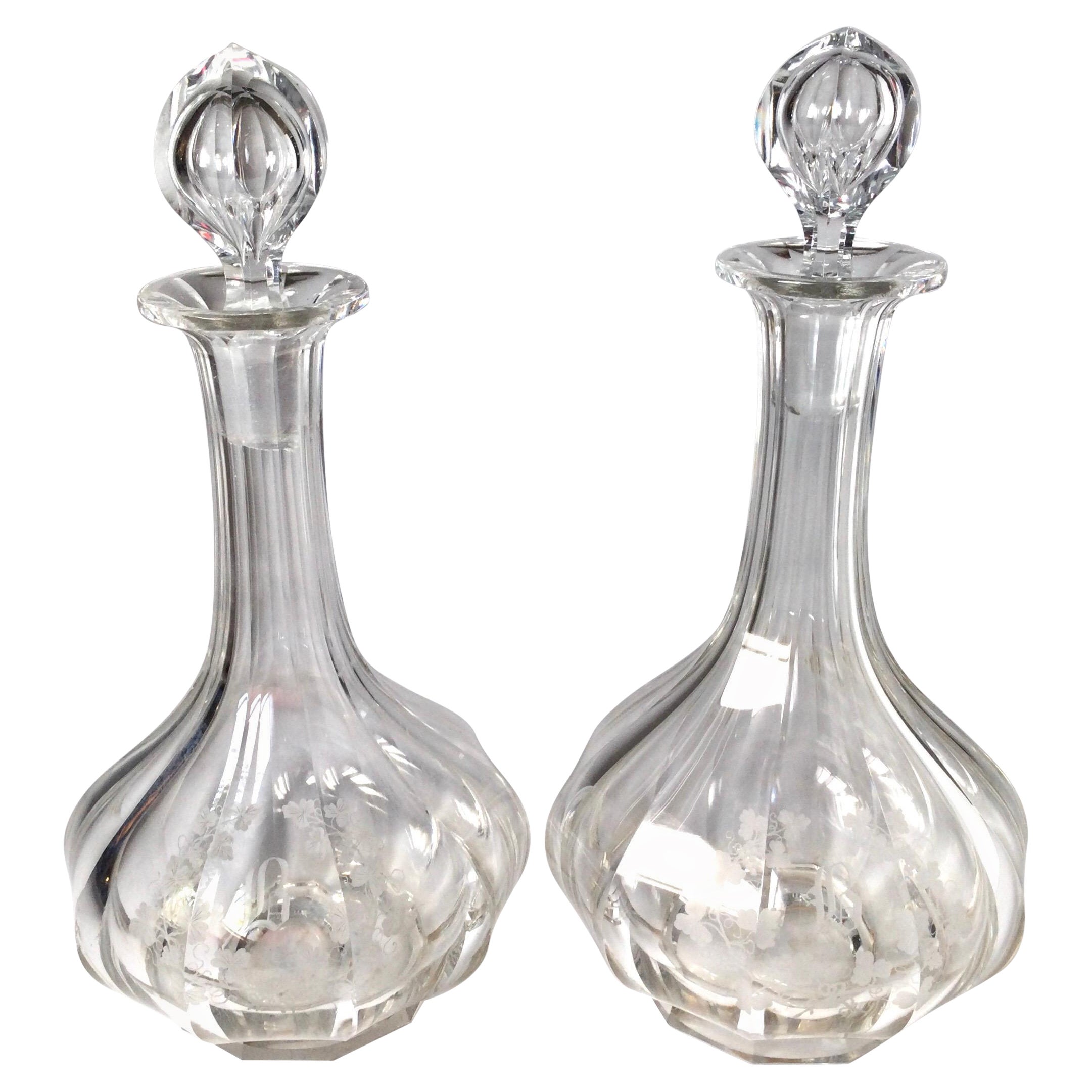
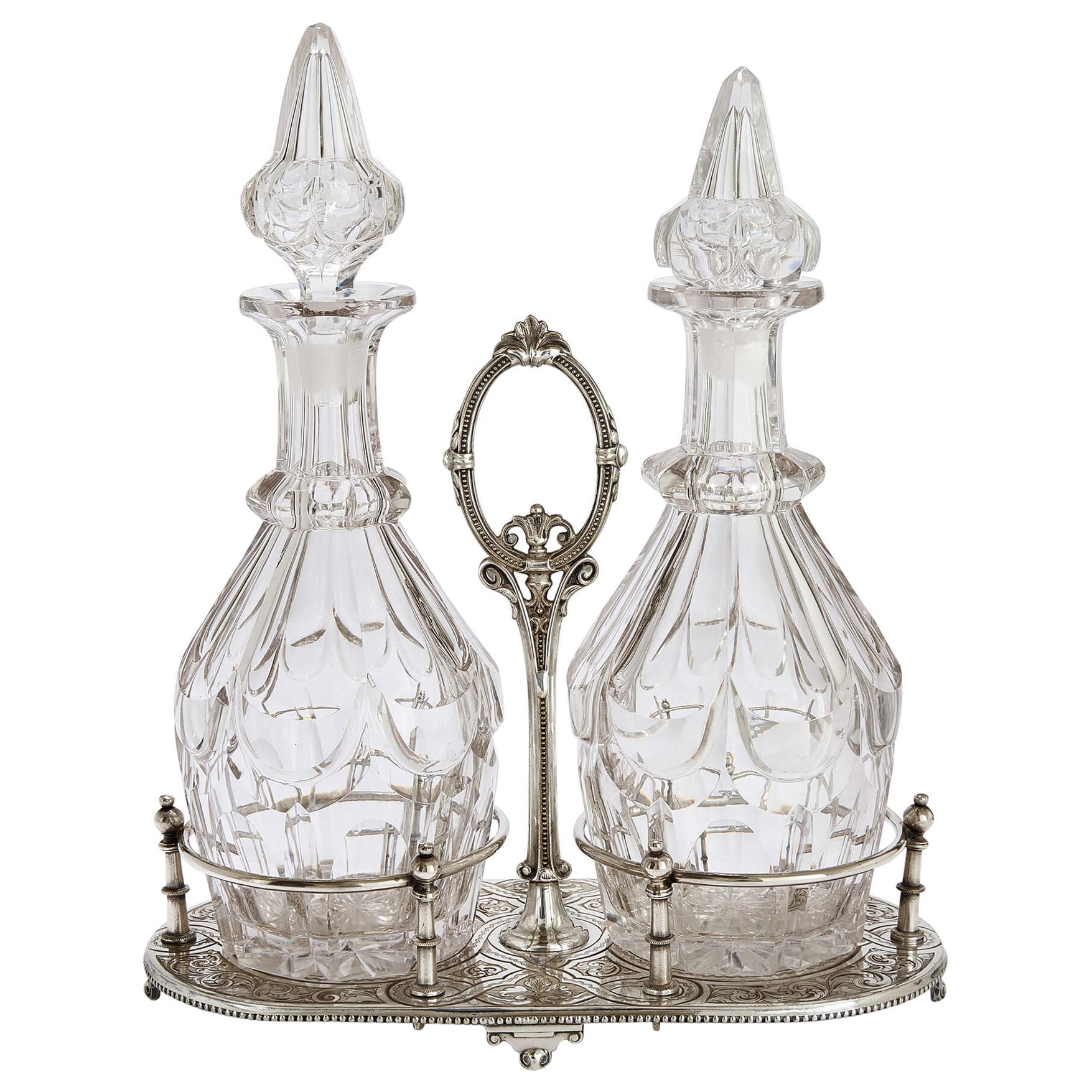
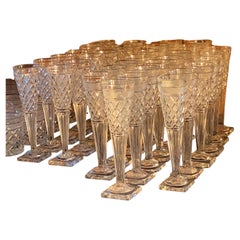
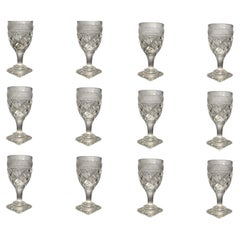
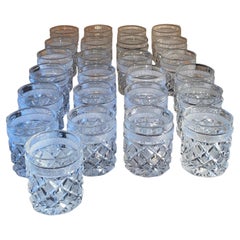
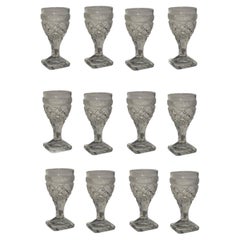
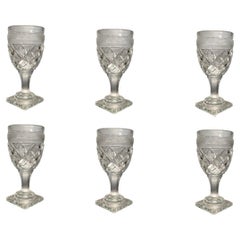
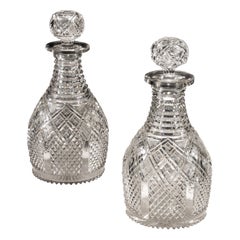
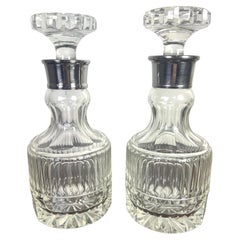
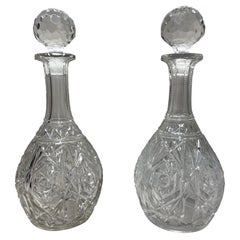
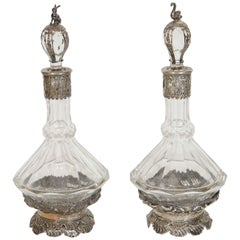
The Vonèche-Baccarat Connection: A Historical Verification The Sainte-Anne crystal factory in Vonèche is literally the birth mother of Baccarat Crystal, as well as Belgium’s own Val Saint-Lambert. In 1802, a brilliant French chemical engineer and industrialist named Aimé-Gabriel d'Artigues purchased the Verrerie de Sainte-Anne in Vonèche (then part of Napoleonic France). Under his leadership, Vonèche became the most prestigious producer of lead crystal on the continent, producing heavy, brilliant cut-glass designed to rival fine English crystal. However, after the fall of Napoleon in 1815, borders were redrawn by the Congress of Vienna, and Vonèche suddenly found itself inside the newly formed Kingdom of the Netherlands (modern-day Belgium). To avoid ruinous French import tariffs on his crystal, d'Artigues struck a deal with French King Louis XVIII in 1816: he bought a struggling glassworks in the French town of Baccarat, transferred his furnaces, formulas, and top skilled workers from Vonèche across the border, and established what we know today as Baccarat. In fact, for its first several years, Baccarat officially operated under the name "Verrerie de Vonèche à Baccarat". The Three Great Crystal Houses Factory / Brand Active Dates Key Figures Historical Connection Sainte-Anne (Vonèche) 1778 – 1830 Aimé-Gabriel d'Artigues The original parent factory in Wallonia, Belgium. Baccarat (France) 1816 – Present Aimé-Gabriel d'Artigues Founded when d'Artigues moved Vonèche operations into France to avoid import taxes. Val Saint-Lambert (Belgium) 1826 – Present François Kemlin & Auguste Lelièvre Founded near Liège by two of d'Artigues' top former directors who left Vonèche. Because Aimé-Gabriel d'Artigues supplied the imperial court of Napoleon Bonaparte and the highest echelons of European aristocracy, surviving Vonèche and early d'Artigues-era Baccarat crystal centerpieces, chandeliers, and table services are preserved as national treasures in France. Significant collections of his work are housed in the Musée du Louvre and the adjacent Musée des Arts Décoratifs (MAD) in Paris, as well as in major decorative arts museums across Belgium and Liège. Owning a piece tied to this lineage means holding a direct piece of 19th-century European museum-grade history. The Silver Collar & The "SIMONET 800" The close-up photograph of the silver collar reveals a crucial piece of physical evidence that directly ties the decanter to its aristocratic Brussels provenance: SIMONET: The maker's mark of the Simonet Brothers (Frères), a celebrated and highly prestigious master silversmithing firm based in Brussels, Belgium, active in the late 19th and early 20th centuries. How This Ties to Baron Charles Lemonnier Baron Charles Jean Maurice Lemonnier (1860–1930) was not only a prominent liberal politician but famously served as the Mayor of the City of Brussels. During the late 19th and early 20th centuries, it was standard practice among the Belgian aristocracy and high bourgeoisie to take prized antique crystal heirlooms—such as an early 19th-century Vonèche or early Val Saint-Lambert decanter—to a master silversmith to be fitted with custom solid silver collars. This was done both to protect the delicate crystal pouring rims from chipping and to elevate the object's luxury status. Because Simonet was the premier silversmith in Brussels during Lemonnier's lifetime and mayoral tenure, it is a historical certainty that the Baron (or his family) commissioned Simonet of Brussels to mount these exquisite silver collars onto the crystal decanters for his personal estate. The Cutting Style: The crystal body features a deep, sharp relief diamond cut (often referred to historically as strawberry diamond or crosshatched relief cutting). This heavy, deep-wheel cutting was the hallmark of Vonèche and early Baccarat masters, designed to catch and refract candle-light and gas-lamp light dramatically. The Neck & Stopper: The stepped shoulder transitions into a fluted, panel-cut neck, topped by a solid, multifaceted diamond-cut stopper. Proportions: At 34 cm tall (with stopper) and 12 cm in diameter, these are substantial, heavy formal dining decanters, built to serve wine, port, or spirits at large banquets. Remarkable pair of historical artifacts. The crystal body represents the finest era of Franco-Belgian lead crystal manufacturing (the Vonèche/early Baccarat lineage), while the solid 800 silver mounts by Simonet serve as a documented, physical bridge to their life in the private Brussels collection of Mayor Baron Charles Lemonnier. Both decanters and tumblers are treasures that combine that level of craftsmanship, historical significance, and well-documented provenance which is truly special to see. 7 Decanter, liqueur holder with stopper. A pair H. 27cm with stopper 34 cm diam. 12 cm