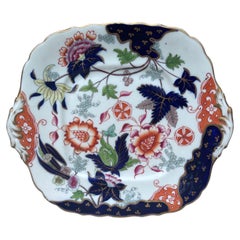
English Ironstone Chinoiserie Platter, circa 1890
Located in Austin, TX
English ironstone platter circa 1890. Chinoiserie or Imari style, decorated with flowers.
Category
Antique 1890s English Chinoiserie Platters and Serveware
Materials
Ceramic
English Ironstone Chinoiserie Platter, circa 1890
Located in Austin, TX
English ironstone platter circa 1890. Chinoiserie or Imari style, decorated with flowers.
Ceramic
$275Sale Price|35% Off
H 1.5 in Dm 10.25 in
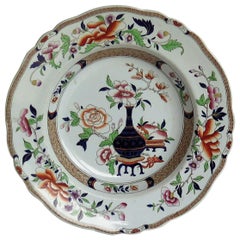
Early John Ridgway Soup Plate Aukland Chinoiserie Pattern, English, circa 1835
By John Ridgways
Located in Lincoln, Lincolnshire
This is a very decorative, Imperial Stone China (ironstone), large deep plate or soup bowl by John Ridgway, dating to the William IV period of the...
Ironstone
$291Sale Price|38% Off
H 1.25 in W 8.2 in D 8.2 in
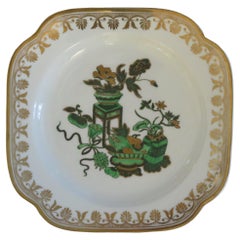
Georgian Spode Plate or Dish Chinoiserie Pattern No. 1867 porcelain, circa 1820
By Josiah Spode
Located in Lincoln, Lincolnshire
This is a beautiful square plate or dish produced by the Spode factory and made of porcelain, in the early 19th Century, Circa 1815 to 1827. The dish is well potted on a low foot ...
Porcelain
$220Sale Price|33% Off
H 1.15 in Dm 8.07 in
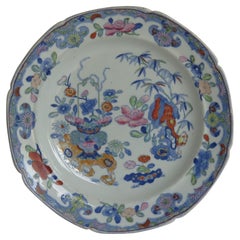
Georgian Mason's Ironstone Dish or Plate in Bamboo & Basket Pattern, circa 1817
By Mason's Ironstone
Located in Lincoln, Lincolnshire
This is a very decorative dish or plate by Mason's Ironstone, Lane Delph, England in the Bamboo and Basket pattern, dating to the early 19th century, Georgian period, circa 1813-1820. The plate or dish is fairly deep and circular in shape with a notched rim. It is decorated in one of Mason's boldly colored chinoiserie...
Ironstone
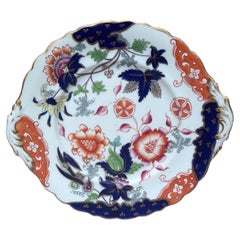
English Ironstone Chinoiserie Platter, circa 1890
Located in Austin, TX
English ironstone platter circa 1890. Chinoiserie or Imari style, decorated with flowers.
Ceramic

$1,988
H 1.07 in Dm 8.86 in
Antique 18th Century Chinese Porcelain Plate with Regency Style Overdecorating
Located in Amsterdam, Noord Holland
A very nicely made piece of 18th century porcelain decorated with a beautiful scene. Underglaze blue and overglaze other enamels done later in Europe. We have also added a picture of how a similar original Blue and white dish would have looked like. This is an example of British overdecoration.Provenance:Provenance: Doyle Sep 27, 2024 11:00 Boston Collects, Lot 1083 Six Chinese Porcelain Table Items 18th and 19th centuries Estate / Collection: Property of a Jamestown, Rhode Island Collector Often seen as ugly and black sheep of the porcelain world. British 1810-1820 Clobbered wares deserve better as they are historically very interesting. So lets call them George the IV or Regency Taste redecorated porcelain. And leave the clobbered behind us as it does no justice to what they are at all. Its not that because we live in a time were these super funky colours are out of taste that we should hate on these pieces. A short history! During the early 19th century, the Prince Regent (later King George IV) played a key role in cultivating a taste for the exotic Orient among the British elite, influencing interior design during the Regency era. His lavish projects, such as the Royal Pavilion in Brighton, epitomized this fascination. The Pavilion, with its blend of Indian, Chinese, and Gothic elements, became a symbol of the Prince’s extravagant taste. The interiors featured Chinese wallpaper, Indian textiles, and oriental furniture, reflecting the era’s growing interest in Chinoiserie and other oriental-inspired designs. This trend extended to the decorative arts, where clobbered Chinese porcelain—originally blue-and-white pieces—was reimagined with bright reds, golds, greens, and dragons to cater to the new European tastes. These colorful repainted pieces symbolized wealth, sophistication, and an affinity for the exotic, perfectly complementing the bold and opulent interiors of the time. The dragon, a powerful symbol in Chinese culture, was a recurring motif in these porcelain pieces, further aligning with the Regency’s romanticized view of the Orient. George IV’s penchant for luxury, eccentricity, and vibrant decoration influenced the wider aristocratic society, and clobbered porcelain...
Porcelain
$176Sale Price|43% Off
H 1.2 in Dm 5.65 in
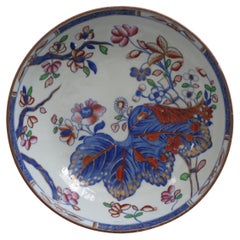
Georgian Spode Stone China Dish in Tobacco Leaf Pattern No. 2061, Circa 1820
By Spode
Located in Lincoln, Lincolnshire
This is a good stone China (Ironstone pottery) Small Dish or Bowl / Saucer, hand painted in the tobacco leaf pattern, number 2061, made by the Spode factory in the early 19th century...
Ironstone
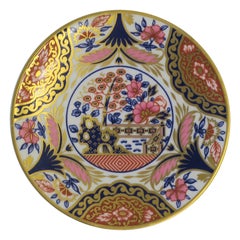
English Spode Porcelain Jewelry Dish Chinoiserie Design
By Spode
Located in New York, NY
A very beautiful English Spode porcelain 'jewelry' dish, Chinoiserie design style, circa early to mid-20th century, England. Piece has a beautiful design including its elevated footed form 'tazza'-like design. A great piece to hold jewelry (as demonstrated) or other small items on a desk, nightstand...
Porcelain
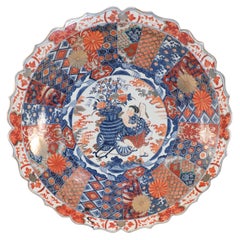
Antique Chinese Guangcai Centerpiece Bowl, Porcelain, Circa 1850
Located in Queens, NY
Antique Chinese Guangcai (Late 19th Century) export porcelain centerpiece bowl decorated with blue and orange patterned panels around a center scene of a woman walking with a large u...
Porcelain
$231Sale Price|53% Off
H 1.38 in Dm 8.13 in
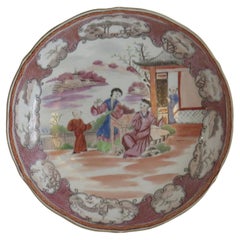
Early Miles Mason Saucer Dish Porcelain Boy at Door Pattern, circa 1805
By Miles Mason Porcelain
Located in Lincoln, Lincolnshire
This is a porcelain Saucer Dish or Bowl in the "Boy at the Door" pattern, made by Miles Mason (Mason's) dating to very early in the 19th century. This d...
Porcelain
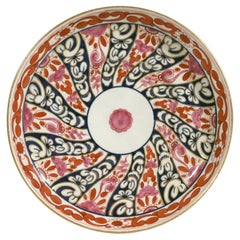
First Period Worcester Porcelain Saucer Dish in Queen Charlotte Pattern
By 1st Period Worcester Dr. Wall
Located in Downingtown, PA
Dimensions 8 1/4 inches (20.96 cm) Diameter 1 1/4 inches (3.18 cm) Height Condition Report The dish is in phenomenal antique condition, showing absolutely no wear to the central we...
Porcelain
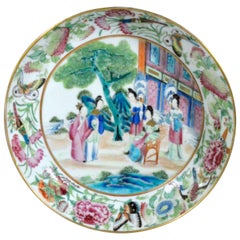
Chinese Export Rose Mandarin Porcelain Saucer Dish, Famille Rose, Circa 1810
Located in Downingtown, PA
Chinese Export Rose Mandarin Porcelain Saucer Dish, Famille Rose, Circa 1810 Canton, circa 1810, Jiaqing period Early Rose Mandarin at its most charming: a Jiaqing period saucer di...
Porcelain
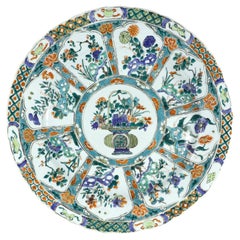
Chinese Porcelain Famille Verte Large "Flower Basket" Dish, Kangxi Period
Located in Downingtown, PA
Vibrant Prosperity: A Famille Verte 'Flower Basket' Dish from the Kangxi Golden Age This magnificent Chinese Export porcelain dish, dating to the height of the Kangxi Period (c. 1700-1710), is a resplendent example of the famed famille verte (green family) palette. This enameling technique, characterized by its brilliant, translucent greens, yellows, and blues, reached its zenith under the patronage of the Kangxi Emperor, ushering in a golden age of ceramic production at the imperial kilns in Jingdezhen (Guest and Gray). Auspicious Symbolism and Design Mastery The dish is a feast of intricate design and rich symbolism, centered on an openwork beribboned basket of peony and lotus flowers. The flower basket motif is highly auspicious in Chinese art, being one of the attributes of the Daoist Immortal Lan Caihe, and symbolizes longevity and good fortune (Sotheby's, Lot 657, 2015). This meaning is powerfully reinforced by the inclusion of a central shou character (寿) in the basket, the Chinese ideograph for Longevity, a core wish in Chinese culture for a long, healthy, and prosperous life (Metropolitan Museum of Art). The presence of the shou character, often incorporated into designs for Imperial birthday celebrations during this era, underscores the dish's grand and celebratory intent. The radial design radiates outward with petal-shaped reserves in the cavetto, each containing detailed flowering plants issuing from rockwork, all set against a signature pale-green stippled ground (Dizi). The border completes the composition with an ornate pattern of green trellis-work punctuated by iron-red flower heads, alternating with oval panels containing various Precious Objects (Ba Gu), further emphasizing wealth and good fortune. This large dish, at over 14 inches in diameter, was one of the exquisite items commissioned for the European export market, particularly by the Dutch East India Company (VOC), where its vibrant colors and complex iconography were highly prized by wealthy clientele (Guest and Gray). The reverse, painted in underglaze blue with delicate floral sprays, maintains a link to the more traditional Chinese aesthetic. This piece is a tangible embodiment of the technical sophistication and artistic brilliance that made Kangxi famille verte porcelain...
Porcelain
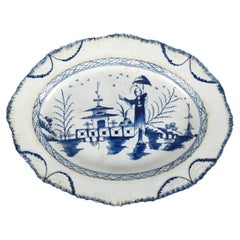
Chinoiserie Design Pearlware Oval Dish, Leeds Pottery, Circa 1790
By Leeds Pottery
Located in Downingtown, PA
Pearlware Blue and White Chinoiserie Shell-Edge Oval Dish, Probably Leeds Circa 1790 This large oval pearlware dish is painted in underglaze blue with a lively chinoiserie scene, a ...
Pearlware, Pottery
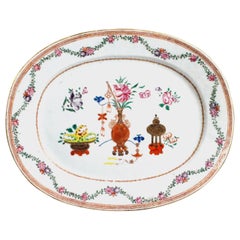
Chinese Export Famille Rose 'Precious Objects' Porcelain Dish
Located in Downingtown, PA
Chinese Export Famille Rose 'Precious Objects' Porcelain Dish, Qianlong Period, Circa 1765-1775 This superb oval dish is a quintessential example of Chinese Export porcelain create...
Porcelain
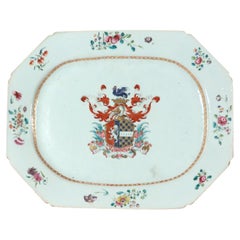
Chinese Export Porcelain Armorial Dish, Arms Hutchinson impaling Calthrop
Located in Downingtown, PA
The Hutchinson & Calthrop Armorial Platter: The Massachusetts Link Circa 1755 This Chinese Export porcelain platter, dating to the Qianlong period, circa 1755, is painted in vibrant...
Porcelain