Neoclassical Political and Patriotic Memorabilia

NEOCLASSICAL STYLE

Neoclassical design emerged in Europe in the 1750s, as the Age of Enlightenment reached full flower. Neoclassical furniture took its cues from the styles of ancient Rome and Athens: symmetrical, ordered, dignified forms with such details as tapered and fluted chair and table legs, backrest finials and scrolled arms.

Over a period of some 20 years, first in France and later in Britain, neoclassical design — also known as Louis XVI, or Louis Seize — would supersede the lithe and curvaceous Rococo or Louis XV style.

The first half of the 18th century had seen a rebirth of interest in classical antiquity. The "Grand Tour" of Europe, codified as a part of the proper education of a patrician gentleman, included an extended visit to Rome. Some ventured further, to sketch the ruins of ancient Greece. These drawings and others — particularly those derived from the surprising and rich archaeological discoveries in the 1730s and ’40s at the sites of the Roman cities of Pompeii and Herculaneum — caused great excitement among intellectuals and aesthetes alike.

Neoclassical furniture is meant to reflect both grace and power. The overall appearance of neoclassical chairs, tables and cabinetry is strong and rectilinear. These pieces are, in effect, classical architecture in miniature: chair and table legs are shaped like columns; cabinets are constructed with elements that mirror friezes and pediments.

Yet neoclassicism is enlivened by gilt and silver leaf, marquetry, and carved and applied ornamental motifs based on Greek and Roman sculpture: acanthus leaves, garlands, laurel wreaths, sheaves of arrow, medallions and chair splats are carved in the shapes of lyres and urns. Ormolu — or elaborate bronze gilding — was essential to French design in the 18th and 19th centuries as a cornerstone of the neoclassical and Empire styles.

As you can see from the furniture on these pages, there is a bit of whimsy in such stately pieces — a touch of lightness that will always keep neoclassicism fresh.

Find antique neoclassical furniture today on 1stDibs.

to
5
4
1
18
7
4
3
3
1
1
1
1
1
3
1
2
1
5
1
1
1
1
4
3
1
1
1
5
5
5
Style: Neoclassical
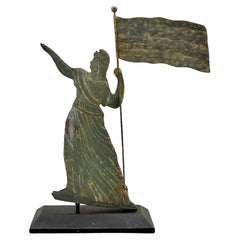
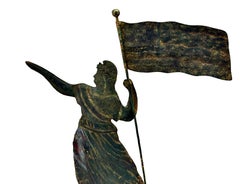
Late 19th-century “Goddess of Liberty” Copper Weathervane on Stand

Late 19th-century “Goddess of Liberty” Copper Weathervane on Stand

Located in San Francisco, CA

On offer is a late 19th-century American folk art "Goddess of Liberty" molded copper weathervane mounted on a gallery presentation stand. The figure represents Liberty (also historic...

Category

Late 19th Century American Antique Neoclassical Political and Patriotic Memorabilia

Materials

Copper

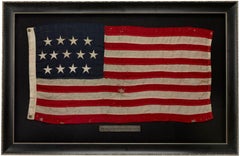
13-Star Wool American Flag, with Zig-Zag Stars, Circa 1900

13-Star Wool American Flag, with Zig-Zag Stars, Circa 1900

Located in Colorado Springs, CO

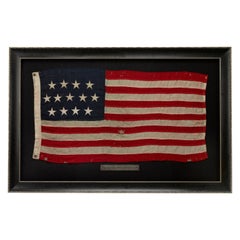
This is a beautiful 13-star American flag, each star sewn with zig-zag stitching. The wool flag was sewn at the turn of the century, circa 1900. The flag features 13 white stars rest...

Category

Early 1900s American Antique Neoclassical Political and Patriotic Memorabilia

Materials

Brass

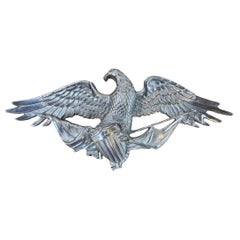
Polished Aluminum Bald Eagle Clutching USA Flag and Crest Wall Decor

Polished Aluminum Bald Eagle Clutching USA Flag and Crest Wall Decor

Located in Stamford, CT

Large Bald Eagle clutching USA Flag and crest wall decor. This large patriotic eagle wall plaque is a beautiful piece made with hand crafted polished aluminum very good quality and w...

Category

2010s Indian Neoclassical Political and Patriotic Memorabilia

Materials

Aluminum

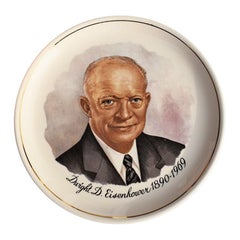
President Dwight D. Eisenhower Commemorative Ceramic Plate

President Dwight D. Eisenhower Commemorative Ceramic Plate

Located in Oklahoma City, OK

A round ceramic commemorative plate of President Dwight Eisenhower. The plate is circular, with gold detail around the edges, and a portrait of Presi...

Category

20th Century North American Neoclassical Political and Patriotic Memorabilia

Materials

Gold

Related Items
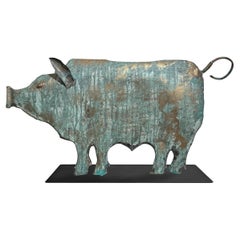
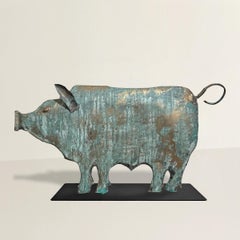
Mid-Late 20th Century American Copper Pig Weathervane

Mid-Late 20th Century American Copper Pig Weathervane

Located in Chicago, IL

This mid-to-late 20th-century American copper pig weathervane is full of charm and character, with a strong, graphic silhouette that captures the essence of...

Category

Late 20th Century American Neoclassical Political and Patriotic Memorabilia

Materials

Copper

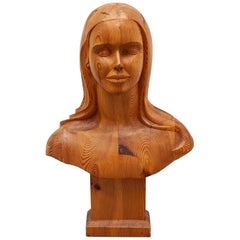
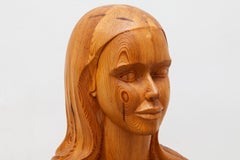
French Women Bust Sculpture "Marianne" Godess of Liberty in Solid Wood, 1960s

French Women Bust Sculpture "Marianne" Godess of Liberty in Solid Wood, 1960s

Located in Antwerp, BE

Vintage French bust sculpture of a woman Marianne has been the national personification of the French Republic since the French Revolution, as a personification of liberty, equality, fraternity and reason, and a portrayal of the Goddess of Liberty...

Category

1960s French Vintage Neoclassical Political and Patriotic Memorabilia

Materials

Wood

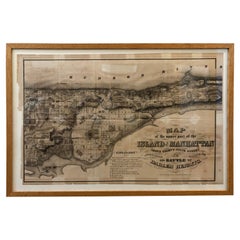
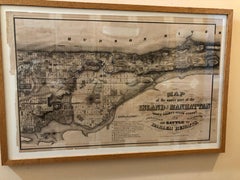
1868 Map of the Upper Part of the Island of Manhattan Above 86th Street

1868 Map of the Upper Part of the Island of Manhattan Above 86th Street

By Wm. Rogers Mfg. Co.

Located in San Francisco, CA

This wonderful piece of New York City history is over 150 years old. It depicts 86th street and above. It was lithographed by WC Rogers and company. It was made to show what was the Battle of Harlem during the Revolutionary war...

Category

1860s American Antique Neoclassical Political and Patriotic Memorabilia

Materials

Paper

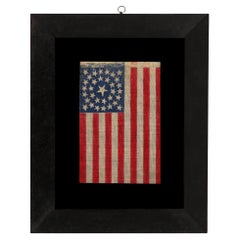
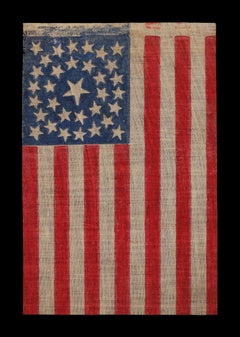
33 star Antique American Parade Flag with Stars in a Double Wreath Configuration

33 star Antique American Parade Flag with Stars in a Double Wreath Configuration

Located in York County, PA

33 STARS IN A DOUBLE-WREATH CONFIGURATION, ON AN ANTIQUE AMERICAN FLAG DATING IMMEDIATELY PRE-CIVIL WAR THROUGH THE WAR'S OPENING YEAR, REFLECTS THE ADDITION OF OREGON TO THE UNION, ...

Category

Mid-20th Century American Neoclassical Political and Patriotic Memorabilia

Materials

Cotton

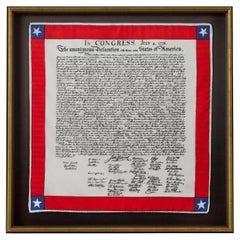
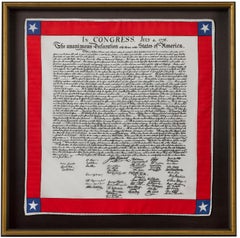
Declaration of Independence Printed Scarf

Declaration of Independence Printed Scarf

$2,000

H 32.5 in W 32.5 in D 2.5 in

Declaration of Independence Printed Scarf

Located in Colorado Springs, CO

Presented is a patriotic silk scarf, celebrating the Declaration of Independence. At center of the silk scarf design is artistic rendering of the Declaration of Independence. The famous text and signatures are printed in black ink on white silk. A border of bright red encloses the text, with a five-pointed white star set against a blue square appearing at each corner. This is a newly made silk scarf, printed to celebrate our Nation's foundational text. The United States Declaration of Independence...

Category

21st Century and Contemporary American Neoclassical Political and Patriotic Memorabilia

Materials

Silk

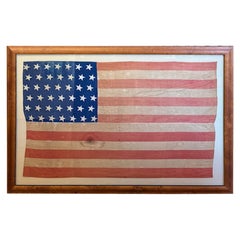
19th Century American 42 Star Flag, circa 1889

19th Century American 42 Star Flag, circa 1889

$4,800

H 38.5 in W 54.75 in D 1 in

19th Century American 42 Star Flag, circa 1889

Located in Nantucket, MA

19th Century American 42 Star Flag, circa 1889, printed on linen period flag in the "Dancing Star" pattern. This was never an official U.S. flag sanctioned b y congress, but was made...

Category

1880s American Antique Neoclassical Political and Patriotic Memorabilia

Materials

Linen

48 Star Antique American Flag, with Hand-Crocheted Stars, ca 1917-1918

48 Star Antique American Flag, with Hand-Crocheted Stars, ca 1917-1918

Located in York County, PA

48 STARFISH-LIKE, NEEDLEWORK EXECUTED STARS ON A HAND-CROCHETED ANTIQUE AMERICAN FLAG FROM THE EARLIEST PART OF THE 48 STAR ERA, 1912-WWI (U.S. INVOLVEMENT 1917-18) OR EVEN PRIOR TO ...

Category

Early 20th Century American Neoclassical Political and Patriotic Memorabilia

Materials

Cotton

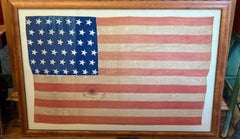
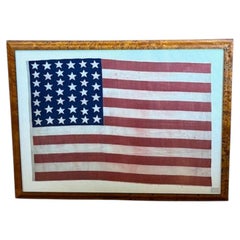
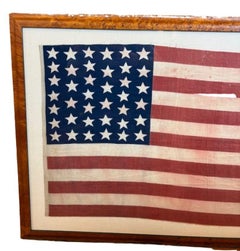
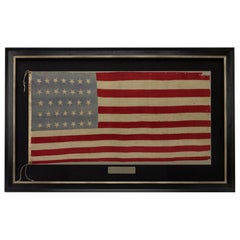
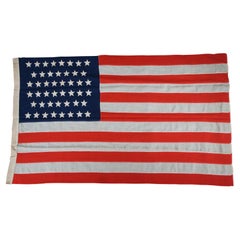
American 39 Star Flag, circa 1889

American 39 Star Flag, circa 1889

$3,600

H 23 in W 30.13 in D 0.75 in

American 39 Star Flag, circa 1889

Located in Nantucket, MA

Antique American 39 Star Flag, circa 1889, a printed cotton flag bearing 39 stars in the wavy star pattern. Never an official American flag, this configuration anticipated the admiss...

Category

Late 19th Century American Antique Neoclassical Political and Patriotic Memorabilia

Materials

Cotton

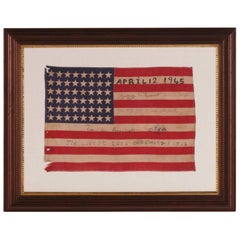
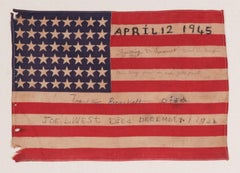
Antique American Flag w/ Hand-Written Inscriptions Mourning the Death of FDR

Antique American Flag w/ Hand-Written Inscriptions Mourning the Death of FDR

Located in York County, PA

48 STARS ON ANTIQUE AMERICAN FLAG WITH HAND-WRITTEN INSCRIPTIONS AND AN EMBROIDERED DATE OF APRIL 12TH, 1945, MOURNING THE DEATH OF PRESIDENT FRANKLIN DELANO ROOSEVELT: American national parade flag with 48 stars, printed on cotton, embellished with hand-written inscriptions and an embroidered date to commemorate the death of FDR on April 12th, 1945. “On this day in 1945, President Franklin D. Roosevelt died of a massive cerebral hemorrhage at his Warm Springs, Georgia, retreat at the age of 63. Roosevelt’s death in the final months of World War II was met with shock and grief throughout the Western world. Many Americans had no inkling of his decline in health. [He] had been president for more than 12 years, longer than any other person. He led the country through some of its greatest domestic and foreign crises to the impending defeat of Nazi Germany and within sight of Japan’s surrender...

Category

1940s American Vintage Neoclassical Political and Patriotic Memorabilia

Materials

Cotton

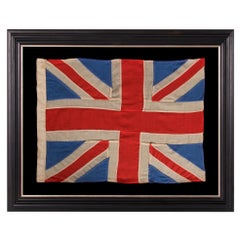
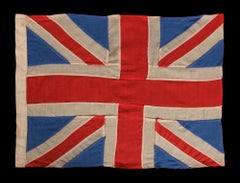
Early 20th Century British Union Flag, ca 1918-1952

Early 20th Century British Union Flag, ca 1918-1952

Located in York County, PA

BRITISH UNION FLAG OF THE EARLY 20TH CENTURY, WITH BRILLIANT AND UNUSUAL, COBALT BLUE COLORATION, AND A SIMPLIFIED, FOLK STYLE, WITH INCORRECT PROPORTIONS IN THE CROSSES OF ST. ANDRE...

Category

Mid-20th Century English Neoclassical Political and Patriotic Memorabilia

Materials

Wool

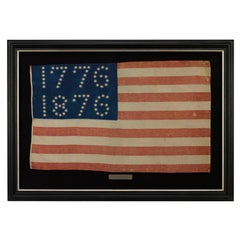
Centennial Celebration "1776-1876" American Flag Banner

Centennial Celebration "1776-1876" American Flag Banner

Located in Colorado Springs, CO

Presented is a rare Centennial patriotic flag banner, dating to 1876. The flag’s brilliant blue canton is spectacular, with 81 five-pointed, rayed stars, arranged to read “1776” and “1876.” The flag’s design is completed with thirteen alternating red and white stripes. The flag is a three-piece, treadle-sewn sewn construction, printed on a thin wool and cotton blend. Along the edge, there is a narrow, treadle-sewn sleeve made of cotton tape. In the lead up to the nation’s Centennial in 1876, flag makers and individuals looked to the past for designs to produce as part of the country’s many celebrations. Popular interpretation of the stars and stripes undoubtedly reached its climax of variety and originality at the time of our Nation’s first Centennial. Since no design restrictions were placed on flagmaker’s imaginations and no strict distinctions were drawn between official and unofficial star counts, it is no surprise that, on the occasion of the Centennial, creativity in flag design was not the exception, but the rule. The cantons from this period presented an array of geometric abstractions. Great star patterns, referred to as the “starry flower of Liberty” by Oliver Wendell Holmes, that were popular from 1818 and on, resurfaced in Centennial flags...

Category

1870s American Antique Neoclassical Political and Patriotic Memorabilia

Materials

Wool, Cotton

Previously Available Items
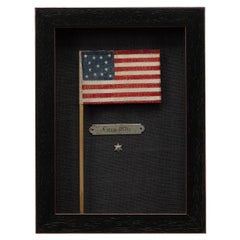
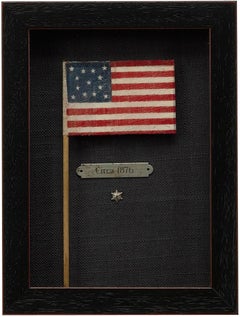
13-Star Flag Waver for the Centennial Celebration

13-Star Flag Waver for the Centennial Celebration

Located in Colorado Springs, CO

This small charming 13-star flag waver was made for and sold during the nation’s Centennial celebration in Philadelphia in 1876. All manner of flags were made for the official Centen...

Category

1870s American Antique Neoclassical Political and Patriotic Memorabilia

Materials

Fabric

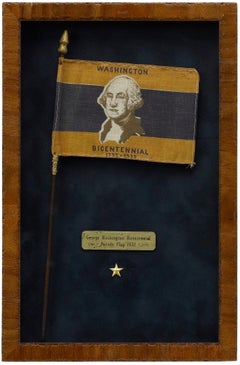
"Washington Bicentennial 1732-1932" Parade Flag, Printed Gold and Blue, c. 1930

"Washington Bicentennial 1732-1932" Parade Flag, Printed Gold and Blue, c. 1930

Located in Colorado Springs, CO

Presented is a George Washington Bicentennial parade flag from 1932. The flag is printed with gold, white, and blue stripes, with a prominent bust portrait of George Washington at ce...

Category

1930s American Vintage Neoclassical Political and Patriotic Memorabilia

Materials

Fabric, Wood

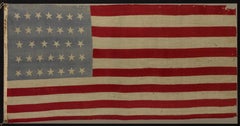
34-Star American Parade Flag, Commemorating Kansas Statehood, Circa 1861-1863

34-Star American Parade Flag, Commemorating Kansas Statehood, Circa 1861-1863

Located in Colorado Springs, CO

Offered is a spectacular 34-star American flag, produced during the Civil War. This flag features 34 printed white stars, on a blue wool blend canton. The stars are arranged in whims...

Category

1860s American Antique Neoclassical Political and Patriotic Memorabilia

Materials

Brass

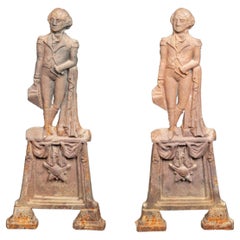
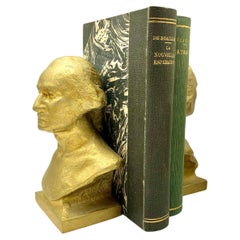
Vintage Cast Iron American Classical George Washington Bookends

Vintage Cast Iron American Classical George Washington Bookends

Located in New York, NY

Pair of American Classical vintage cast iron bookends depicting the bust of George Washington afer the late 18th century model by Jean Antoine Houdon. Early 20th Century Attractive p...

Category

Early 20th Century American Neoclassical Political and Patriotic Memorabilia

Materials

Iron

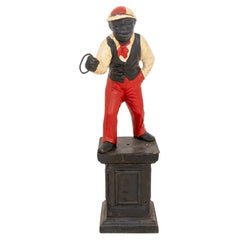
Cast Iron Polychromed Jockey Figure, 20th Cetury

Cast Iron Polychromed Jockey Figure, 20th Cetury

Located in Astoria, NY

Cast Iron polychromed figural hitching post in the form of an African American jockey or groom wearing red white and black, standing on a black...

Category

Early 20th Century Neoclassical Political and Patriotic Memorabilia

Materials

Iron

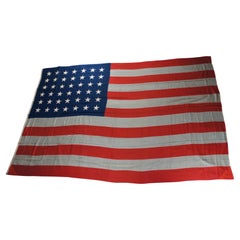
Antique 46 Star WMH Horstmann Company United States of America Flag 83"

Antique 46 Star WMH Horstmann Company United States of America Flag 83"

By Horstmann

Located in Dayton, OH

Antique forty six star large wool American flag by Horstmann Company, circa 1908-1912. Horstmann firm was founded by William H. Horstmann (1785-1850), who had immigrated to Philadelphia from Germany. Horstmann bought out a local swordmaker in 1828 and thereafter entered the military goods field. The firm benefitted from the Civil War, becoming the largest military goods supplier in the nation by 1864. WILLIAM H. HORSTMANN & SONS, Manufacturers of Dress Trimmings and Military Goods. 5th & Cherry Streets, Philadelphia, PA. This house was founded, in 1815, by William H. Horstmann, a native of Cassel, in Germany. He had learned the trade of silk-weaving in France, and, emigrating to the United States in the above-mentioned year, established himself in Philadelphia as a manufacturer of fringe, laces and trimmings of various kinds. He married the daughter of Frederick Hoeckly, a German settler in Philadelphia, and also a manufacturer of fringe, coach-lace and tassels. He devised several improvements in this trade, especially by introducing varieties in the styles and patterns of this class of goods, there being at that time only two patterns used in the trade, which were known as the Jefferson pattern and the Monroe pattern. In 1824, he introduced into this country from Germany the use of plaiting or braiding machines, and about the same time he was the first to introduce into this country the use of the Jacquard loom, for weaving patterns in textile fabrics. His location was in the first instance at No. 50 North Third street, but within a short time he removed to a store next to the Harp and Crown tavern, afterwards known as the City hotel, and continued his business within a short distance of this point for many years. In 1828, he commenced the manufacture of military trimmings as a special department, and this branch has grown to most important proportions, Horstmann's military goods being in demand throughout time country. The firm have also executed large Government contracts in this line for the War and Navy Departments. In 1831, he established a branch house in New York city, and about the same time erected a factory at the corner of Germantown road and Columbia avenue. The factory was continued here until time erection of the extensive building at Fifth and Cherry streets, where the works, salesrooms and offices of time firm now are. This massive structure is six stories high, and extends 140 feet on Fifth street and 200 on Cherry street, and reaches back to Race street. The separate departments into which the business is divided are thirty in number. More than 1000 distinct looms and machines are in use in the building, many of them very costly and some invented and used exclusively by this firm, the motive power being supplied by a steam engine of fifty horse power. The area covered by the works is about 11,000 square feet. Time number of hands employed is very large, about 500. When the erection of a vast factory at this point was first proposed, a strong opposition was made by time holders of the neighboring property. The ancient German Lutheran Church and burying ground, since removed, stood opposite the site, and a bill was introduced into the Legislature to forbid the use of a steam engine within 100 yards of any place of worship. The interests which such a bill would have affected injuriously, especially those of several newspapers, roused a strong opposition to it, and it failed to become a law. In 1845, William H. Horstmann, the founder of the house, retired from the business, and his two sons, William and Sigmund, assumed the management and it was under their direction that the new building, above described, was erected. The goods produced by this house are of almost endless extent and variety. They include goods woven from all the various textile fibres—cotton, wool, silk, etc.—in every style, color and pattern, and are used for an infinite number of purposes. Narrow woven goods are time staple production, made up into material for dresses for both sexes, for use in daily life, and for regalia for ""societies;"" for the costumes of the stage, the upholstering of houses and of carriages, the uniforms of soldiers, together with equipments for the same, and for funeral purposes. The raw material used in the manufacture is to a great extent very costly, and their store rooms often hold as much as $200,000 worth of goods in an unworked state. There are two rooms devoted to power looms in the factory, one for coach lace and one for other styles of weaving, in which about 250 of these machines are constantly running. The braiding machines in the coach lace room are very noteworthy. The cord to be covered with braid is drawn through an opening in time middle of a flat, circular, metallic plate, about 15 inches across. Up to a point on this cord, about a foot above the plate, the threads of the braiding material converge, like the ribs of a tent-roof, and there weave in and out and out and in, as the coating of braid grows, and time covered cord rises and is wound away above. The weaving is accomplished by the motion of the spools below that carry the different threads of the braid. These spools stand in uprights, which are carried round and amongst each other in curved slots in the above-mentioned broad metallic plate. All but two of these spools run in and out among each other, with a swift, easy and intricate motion, mind so rapid that time eye can hardly follow it, while one or two special spools run steadily round and round among time twisting spools with the most extreme swiftness. Many other machines, displaying equally ingenious mechanism, are used in the factory. The various details of equipment manufactured and supplied by this house are also important, both for their number and the superior quality of the manufacture. The one article of swords may be taken as an instance. This trade grew naturally and immediately out of the established army and navy goods department of the works, it being necessary that the sword itself should be furnished together with the sword-belt and other trappings all complete. Every part of the sword and trappings, with the exception of the blade, is made on the premises. The blades are almost all imported from the ancient German sword-blade emporium of Solingen, where, it is said, swords have been made ever since the year 1147, when Count Adolphus of Berg brought home from the East and established there the business of forging Damascus blades. There is in this department a stock of some thousands of blades, of many different patterns and sizes, ready to be set and finished. Any style or sword can be had from this warehouse, from the plainest kind up to a presentation sword...

Category

1910s Vintage Neoclassical Political and Patriotic Memorabilia
Materials

Wool

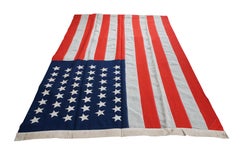
Rare Monumental 1890 Antique 42 Star United States of America Flag

Rare Monumental 1890 Antique 42 Star United States of America Flag

Located in Dayton, OH

Monumental fifteen foot 42 star American flag, circa 1889-1890. The 42-star flag is rare because only a limited number of 42-star flags were produced after Washington became a state on Nov. 11, 1889. But it takes a more intimate knowledge of flag trivia to know just why it happened this way. White stars are added to the blue field of the star-spangled banner on the Fourth of July after a state is admitted to the union. In the fall of 1889, several western territories became states. Dakota was admitted, and then split into North and South Dakota, on Nov. 2, 1889, which made them state and star numbers 39 and 40. Montana was named the 41st state on Nov. 8, followed by Washington, on Nov. 11. Only a few flag manufacturers began producing 42-star flags before the official addition of the 42nd star on July 4, 1890. Those who tried to jump the gun by being the first to produce an up-to-date flag were surprised when Idaho was admitted to the United States on July 3...

Category

1890s Antique Neoclassical Political and Patriotic Memorabilia
Materials

Cotton

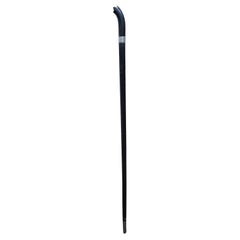
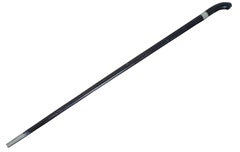
Historic Antique Civil War Walking Stick Cane of General Joe Hooker

Historic Antique Civil War Walking Stick Cane of General Joe Hooker

Located in Dayton, OH

"Very rare antique 18th century wood walking stick, staff or cane once owned by General Joe Hooker. Engraved silver band reads Gen. Joe Hooker. Measure: 35". A history of the cane is included which reads: “This cane was given to Chaplain Earnshaw by the family of General Joseph Hooker, who commanded the English Forces at the Battle of Chancellorsville (which he lost.) The shaft of the cane was made from the “poop” of the vessel of John Paul Jones. The handle was made from the horn of a buffalo that General Grant shot. General Hooker died with the cane in his hands as he walked down stairs. Two battles later which ended in Gettysburg, the Norths cause was settled. General grant was put in command.” Province Estate of J. Frederic Gagel, owner of multiple Thoroughbred race horses that competed in the Narragansett Special and Kentucky Derby. Their family heritage was strongly intertwined with the military having officers in battles dating back to the American Revolution. John Paul Jones (born John Paul; July 6, 1747 – July 18, 1792) was a Scottish-American naval captain who was the United States' first well-known naval commander in the American Revolutionary War. He made many friends among U.S political elites (including John Hancock[1] and Benjamin Franklin[2]) as well as enemies (who accused him of piracy), and his actions in British waters during the Revolution earned him an international reputation that persists to this day. As such, he is sometimes referred to as the ""Father of the American Navy"" (a nickname he shares with John Barry and John Adams[3]). Jones Jones was born and raised in Scotland, became a sailor at the age of thirteen, and served as commander of several merchantmen. After having killed one of his mutinous crew members with a sword, he fled to the Colony of Virginia and around 1775 joined the newly founded Continental Navy in their fight against the Kingdom of Great Britain in the American Revolutionary War. He commanded U.S. Navy ships stationed in France, led one failed assault on Britain, and several attacks on British merchant ships. Left without a command in 1787, he joined the Imperial Russian Navy and obtained the rank of rear admiral. Hooker “Joseph Hooker (November 13, 1814 – October 31, 1879) was an American Civil War officer / general for the Union, chiefly remembered for his decisive defeat by Confederate General Robert E. Lee at the Battle of Chancellorsville in 1863. Hooker had served in the Seminole Wars and the Mexican–American War, receiving three brevet promotions, before resigning from the Army. At the start of the Civil War, he joined the Union side as a brigadier general, distinguishing himself at Williamsburg, Antietam and Fredericksburg, after which he was given command of the Army of the Potomac...

Category

19th Century Antique Neoclassical Political and Patriotic Memorabilia
Materials

Hardwood

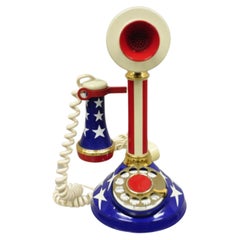
Vintage Deco-Tel Rotary Phone Telephone American Flag Patriotic 1970s

Vintage Deco-Tel Rotary Phone Telephone American Flag Patriotic 1970s

Located in Philadelphia, PA

Vintage Deco-Tel Rotary Phone Telephone American Flag Patriotic 1970s. Circa 1970s. Measurements: 12" H x 5.5" W x 5.5" D.

Category

1970s Vintage Neoclassical Political and Patriotic Memorabilia
Materials

Plastic

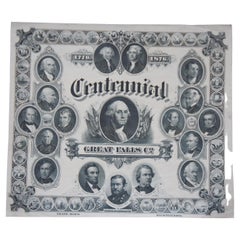
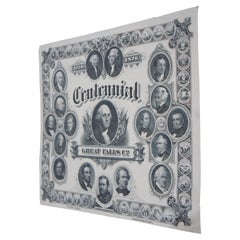
1876 Antique American Centennial Bank Note Engraving 18 Presidents 36 States

1876 Antique American Centennial Bank Note Engraving 18 Presidents 36 States

By American Bank Note Company

Located in Dayton, OH

"Rare antique 1876 bank note engraving commemorating the Centennial anniversary of the United States of America and advertising the Great Falls Company; prod...

Category

1870s Antique Neoclassical Political and Patriotic Memorabilia
Materials

Paper

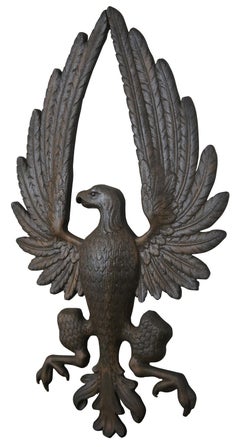
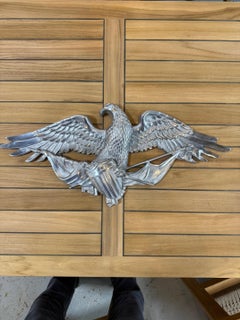
Vintage Solid Brass American Bald Eagle Wall Plaque Emblem Crest Heraldic

Vintage Solid Brass American Bald Eagle Wall Plaque Emblem Crest Heraldic

Located in Dayton, OH

Vintage solid brass bald eagle shaped wall plaque. Measure: 23".  

Category

Mid-20th Century Neoclassical Political and Patriotic Memorabilia
Materials

Brass

Neoclassical political and patriotic memorabilia for sale on 1stDibs.
Find a broad range of unique Neoclassical political and patriotic memorabilia for sale on 1stDibs. Many of these items were first offered in the Late 20th Century, but contemporary artisans have continued to produce works inspired by this style. If you’re looking to add vintage political and patriotic memorabilia created in this style to your space, the works available on 1stDibs include folk art, more furniture and collectibles, building and garden elements and other home furnishings, frequently crafted with metal, fabric and other materials. If you’re shopping for used Neoclassical political and patriotic memorabilia made in a specific country, there are North America, and United States pieces for sale on 1stDibs. While there are many designers and brands associated with original political and patriotic memorabilia, popular names associated with this style include Eagle & Young, and Horstmann. It’s true that these talented designers have at times inspired knockoffs, but our experienced specialists have partnered with only top vetted sellers to offer authentic pieces that come with a buyer protection guarantee. Prices for political and patriotic memorabilia differ depending upon multiple factors, including designer, materials, construction methods, condition and provenance. On 1stDibs, the price for these items starts at $125 and tops out at $18,000 while the average work can sell for $898.