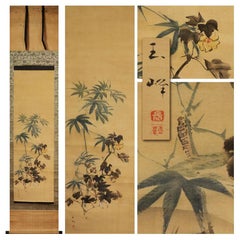
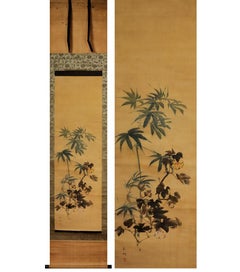
Edo Paintings

EDO STYLE

Edo furniture was created during a flourishing time for the decorative arts owing to the stability of the Tokugawa shogunate rule in Japan. Spanning from 1603 to 1867, this era of peace and economic growth supported artistic advancements in lacquer, woodblock printing, porcelain and other artisanal trades. Because the country was largely isolated, there was little outside influence, leading to centuries of exceptional attention to the design of its furnishings and the quality of its traditional arts.

Unlike during the Meiji period that followed, with an increase in domestic and international markets, furniture during the Edo period was predominately commissioned by the ruling class, although people from across social groups benefited from the burgeoning metropolitan hubs for artisanal trades. For instance, Kyoto became a major center for lacquer art. Most furniture pieces were made from wood such as cedar or ash, including the era’s sashimono cabinets, which involved fine joinery and were rooted in the Heian period.

Sashimono cabinets, which were built by master craftsmen in a range of different wood types owing to the various trees that populate Japan, occasionally featured a stack of slender drawers as well as sliding doors. They were popular with everyone from samurai to kabuki actors. Tansu storage chests crafted from wood with metal fittings were also common in Edo-period homes. Some were designed to be easily portable while others were made to double as staircases.

Painted folding screens, called byōbu, were also fashionable, with Japanese artists inspired by nature, literature and scenes of history and daily life to create vivid works. In Buddhist temples and the palatial homes of the aristocratic class, fusuma, or large sliding panels, would sometimes be adorned with gold or silver leaf. These dividers allowed interiors to change throughout the day, closing in small spaces for personal use or reflecting candlelight to illuminate communal spaces after dark.

Find a collection of Edo tables, lighting, decorative objects, wall decorations and more furniture on 1stDibs.

to
2
31
23
73
Height
to
Width
to
2,968
2,521
855
711
468
399
251
153
118
98
95
69
67
60
58
47
38
23
24
41
8
2
1
2
51
51
37
26
20
48
45
45
73
73
73
2
1
1
1
1
Style: Edo
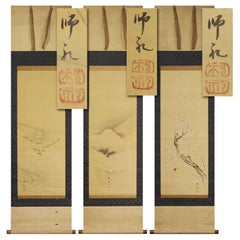
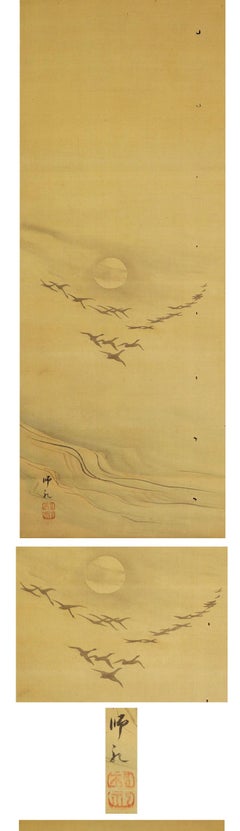
Lovely Japanese 18/19th c Edo Scroll Triptyque , Fuji, Dragon Flowers

Lovely Japanese 18/19th c Edo Scroll Triptyque , Fuji, Dragon Flowers

Located in Amsterdam, Noord Holland

This is a pair of Edo period pieces, each with a beautiful ``cherry blossoms and swallow'', ``Fuji and rising dragon'', and ``wild geese'' . ■Silk book, handpainted ■Condition:   T...

Category

18th Century Antique Edo Paintings

Materials

Silk

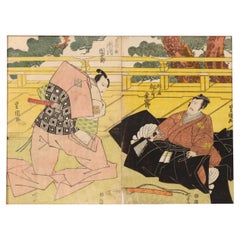
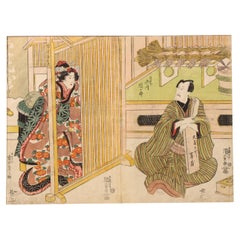
Antique Japanese Woodblock by Utagawa Kunisada I, 19th C

Antique Japanese Woodblock by Utagawa Kunisada I, 19th C

Located in Amsterdam, Noord Holland

Utagawa Kunisada I (Honjo, Edo 1786-1865 Edo), Diptych, The actors Matsumoto Koshiro as Wakasanosuke and Ichikawa Danjuro as Moronoo, signed: Toyokuni ga, publisher; Kawaguchina Uhei...

Category

19th Century Japanese Antique Edo Paintings

Materials

Paper

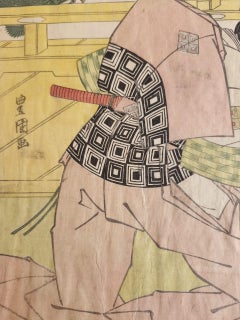
Antique Japanese Woodblock by Utagawa Kunisada I, 19th Century

Antique Japanese Woodblock by Utagawa Kunisada I, 19th Century

Located in Amsterdam, Noord Holland

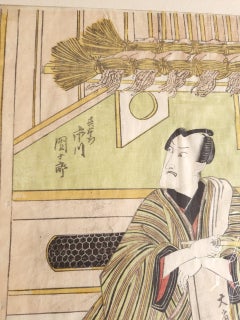
Utagawa Kunisada I (Honjo, Edo 1786-1865 Edo) Ichikawa Danjuro as Kudo Saemon Provenance: From the collection of Clemens Merkelbach van Enkhuizen, A well known Dutch painter and art...

Category

19th Century Japanese Antique Edo Paintings

Materials

Paper

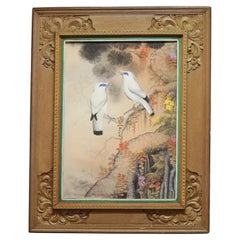
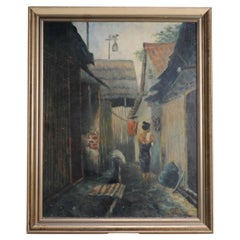
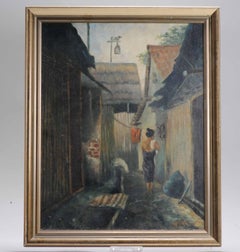
1998 C Balinese Indonesia Suparta Painting with Wood Carved Frame Balinese

1998 C Balinese Indonesia Suparta Painting with Wood Carved Frame Balinese

Located in Amsterdam, Noord Holland

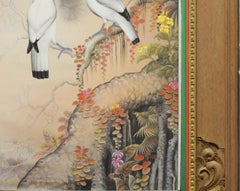
Lovely painting with carved frame. Balinese style. Very well made. Very nice shaped. Condition Overall Condition some small usage signs to frame. Size 790x995mm Period 20th century

Category

20th Century Edo Paintings

Materials

Silk

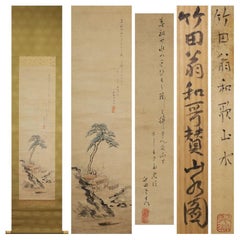
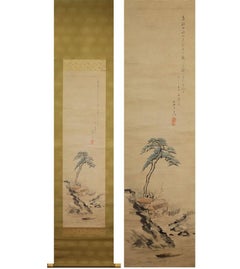
Japanese Nihonga Painting 18/19th c Edo Scroll Tanomura Chikuden Self Portrait

Japanese Nihonga Painting 18/19th c Edo Scroll Tanomura Chikuden Self Portrait

Located in Amsterdam, Noord Holland

Tanomura Takeda's handwritten self-portrait hymn "Painted Landscape" with himself working in a hut Takeda Tanomura and depicts fields and mountains in spring,   and is accompanied by a self-written waka poem that is thought to be about the scene. [Tanomura Takeda] A painter from Takeda Village, Naoniri District, Bungo Province (present-day Takeda City). His family was born as the second son of Ken'an, who had been a samurai physician in the Oka domain for generations. He first studied medicine, but preferred learning over medicine, and studied Chinese studies under Kimizan Karahashi, a He also learned painting techniques from Buncho Tani, and after returning to Japan, he served as the president of a domain school. He resigned his post in 1812 and traveled between Keihan and Osaka, where he interacted with Raizanyo, Shinozaki Kotake, Urakami Gyokudo, Okada Yonezanjin, Unka Shonin, Aoki Mokubei...

Category

18th Century Antique Edo Paintings

Materials

Silk

Lovely Japanese Nihonga 19th c Edo Scroll by Okamoto Sukehiko , Winter Hermit

Lovely Japanese Nihonga 19th c Edo Scroll by Okamoto Sukehiko , Winter Hermit

Located in Amsterdam, Noord Holland

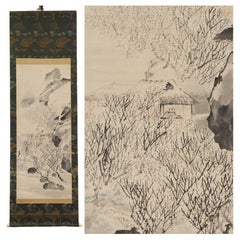
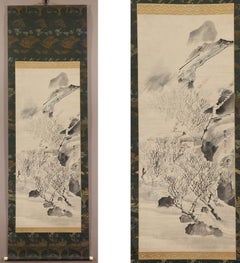
[Authentic work] ◆ Akihiko Okamoto ◆ Winter forest landscape ◆ Japanese painting ◆ Hand-painted ◆ Paper ◆ Hanging scroll ◆ Okamoto (Sukehiko Okamoto) Sukehiko Okamoto [Art yearbook ...

Category

19th Century Antique Edo Paintings

Materials

Silk

Japanese Painting  Meiji  Scroll Taizo Tae Nihonga New Year's Day, 1903

Japanese Painting Meiji Scroll Taizo Tae Nihonga New Year's Day, 1903

Located in Amsterdam, Noord Holland

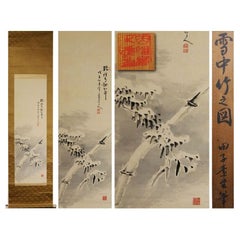
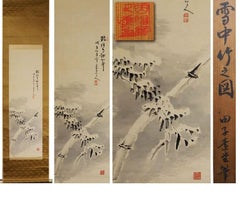
The following is a work depicting a picture of bamboo in the snow, drawn by Sodo Tae (Taizo).    [Tae Sodo]   1870 (Meiji 3) - 1939 (Showa 14)   Agricultural manager, politician, an...

Category

Early 1900s Antique Edo Paintings

Materials

Silk

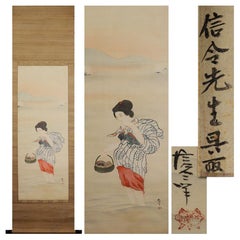
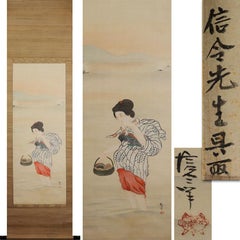
Japanese Nihonga Painting 19th Meiji Scroll Ukiyo-E Lady picking Clams

Japanese Nihonga Painting 19th Meiji Scroll Ukiyo-E Lady picking Clams

Located in Amsterdam, Noord Holland

Product Description This piece   depicts a beautiful woman with her skirts   rolled up as she hunts for clams on a shallow shore ,   giving it an indescribably impressive expression....

Category

19th Century Antique Edo Paintings

Materials

Silk

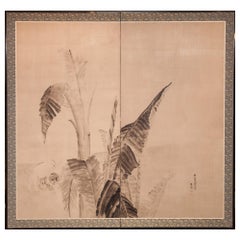
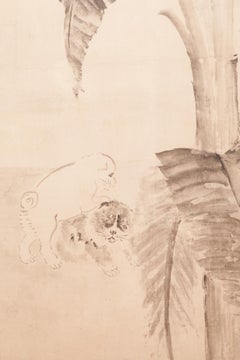
Japanese Two Panel Screen Ink Painting of Banana Leaves on Mulberry Paper

Japanese Two Panel Screen Ink Painting of Banana Leaves on Mulberry Paper

Located in Hudson, NY

Edo period (dated 1787) beautiful painting of unfurling palm leaves with romping puppies in the background. Ink painting (sumi-e) on mulberry paper. Signature reads: Okyo. Calligraph...

Category

Late 18th Century Japanese Antique Edo Paintings

Materials

Paper

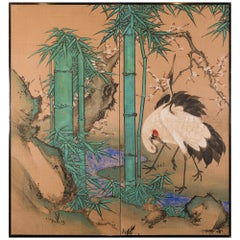
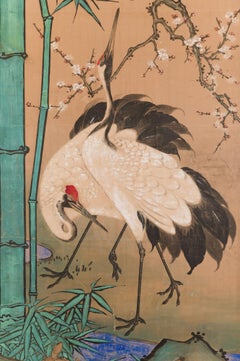
Japanese Two Panel Screen Amorous Cranes and Turtles

Japanese Two Panel Screen Amorous Cranes and Turtles

Located in Hudson, NY

Japanese two panel screen: Amorous Cranes and Turtles. In Japan, cranes symbolize fidelity as they mate for life and turtles symbolize longevity. Additionally, this screen also has the Japanese motif of sho-chiku-bai, or the three friends of winter (pine, plum, and bamboo). So called the three friends of winter because all three flourish during the cold months. This screen was originally fusuma doors...

Category

1850s Japanese Antique Edo Paintings

Materials

Wood, Paper

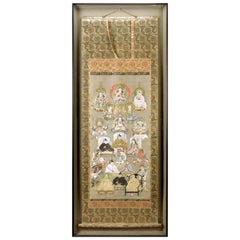
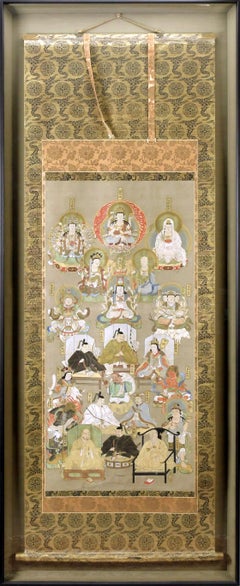
Japanese Silk Suijaku Scroll Nyorai-Kojin with Mixed Buddhism and Shinto Deities

Japanese Silk Suijaku Scroll Nyorai-Kojin with Mixed Buddhism and Shinto Deities

Located in Atlanta, GA

A Japanese silk Suijaku hanging scroll beautifully presented in a custom wood shadow box frame from Edo period (circa 18-19th century). The scroll, surmounted on golden brocade was painted in fine details with gouache, ink and gold powder highlight, served as a Suijaku mandala for the worshippers. Honji Suijaku is a complicated religious concept uniquely developed in Japan. It mixed and hybrid the Buddism deities with native shinto spirits (known as Kami), which were seen as local manifestations (the suijaku, literally means a "trace") of Buddhist deities (the honji literally the original ground). The original idea may lie with the synergetic strategy to spread Buddism by making it more relatable to the local population who had already worshiped Shinto gods. The paradigm, adopted in the 10th century from an orignal Chinese concept, remained a defining feature of Japanese religious life up to the end of the Edo period (1868). Instead of being confined to deities, its application was often extended to historical figures as shown on this scroll. This long hanging scroll depicts an arrangement of 21 figures including Buddhism and Shinto deities as well as two historical figures on the bottom. Each figure was name-tagged in Kanji for easy identification by the worshippers. It was used in the temple or shrine so that when the worshipper prayed in front the mandala, they prayed simultaneously to all the deities. On the very top, sits Nyorai-Kojin, a hybrid deity of Nyorai Buddha and Kojin, the kaki for fire, stove and kitchen. From the top to bottom and left to right, here is the list of the deities: Kanon with Thousand Hands, Kanon with Willow Branch, Monju Bosatsu...

Category

Early 19th Century Japanese Antique Edo Paintings

Materials

Silk, Wood

Lovely Japanese 18th c Edo Scroll by Tamamine Hasegawa , Flowers 19th c

Lovely Japanese 18th c Edo Scroll by Tamamine Hasegawa , Flowers 19th c

Located in Amsterdam, Noord Holland

The following is a beautiful work of Fuyo drawn by Hasegawa using a skillful brush.    [Hasegawa]   1822-1879 Painter from the late Edo period to the Meiji period.   *Painter born...

Category

19th Century Antique Edo Paintings

Materials

Silk

Edo paintings for sale on 1stDibs.

Find a broad range of unique Edo paintings for sale on 1stDibs. Many of these items were first offered in the Early 20th Century, but contemporary artisans have continued to produce works inspired by this style. If you’re looking to add vintage paintings created in this style to your space, the works available on 1stDibs include wall decorations, asian art and furniture and other home furnishings, frequently crafted with fabric, paper and other materials. If you’re shopping for used Edo paintings made in a specific country, there are Asia, East Asia, and Japan pieces for sale on 1stDibs. While there are many designers and brands associated with original paintings, popular names associated with this style include Mitani Toshuku, Rimpa School, Tosa Mitsusuke, and Yanagisawa Kien. It’s true that these talented designers have at times inspired knockoffs, but our experienced specialists have partnered with only top vetted sellers to offer authentic pieces that come with a buyer protection guarantee. Prices for paintings differ depending upon multiple factors, including designer, materials, construction methods, condition and provenance. On 1stDibs, the price for these items starts at $1,000 and tops out at $230,000 while the average work can sell for $8,900.