By Kitagawa Utamaro 1
Located in Fairlawn, OH
Kitagawa Utamaro (1750-1806)
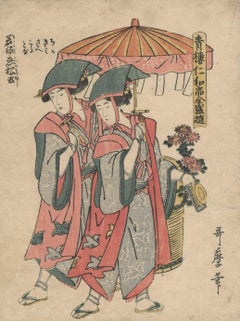
Wakamurasaki, Matsukaze ("Young Murasaki" and "Wind in the Pines.")
Color woodcut, c. 1800
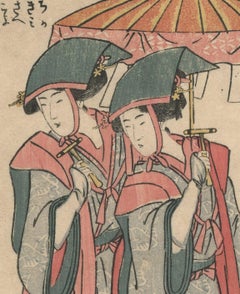
Signed in the block, Utamaro fude (see photo)
Series: Seirō Niwaka Zensei Asobi ( "Popular Entertainment at the Niwaka Festival, Yoshiwara".)
(Green Houses) is a poetic term for the pleasure quarters, specifically the Yoshiwara district."Niwaka" refers to amateur theatrical performances and parades held during the Niwaka festival
Format: chuban
Fresh colors and condition
Housed in an 8 ply rag mat with OP3 Acrylic in a rounded corner Hackman 1" metal leaf frame
Image size: 9 x 7 inches
Frame size: 14-1/4 x 16-7/8 x 3/4"
These are names of chapters from the classic 11th-century novel The Tale of Genji (Genji monogatari). The women in the print are likely performing a parody (mitate) or "modern" version of these classic themes.
The print depicts two beauties in elaborate costumes, carrying umbrellas and flowers, typical of the processions held during the Niwaka festival in the Yoshiwara.
Kitagawa Utamaro (1750-1806)
Kitagawa Utamaro is highly appreciated as the dominating ukiyo-e artist of the late eighteenth century. Yet little is known about his life. Neither the precise date of Utamaro's birth, his birthplace, nor any substantial information about his parents are known.
Utamaro’s original name was Ichitaro Kitagawa. It is generally agreed that he started his career as a pupil of the painter Toriyama Sekien. His early known works are actor portraits and theater programs, published under the name of Utagawa Toyoaki. In 1781/82 he changed his name to Kitagawa Utamaro. Around 1783 Utamaro started a successful cooperation with the publisher Tsutaya Juzaburo. Together they published several book illustrations. The early works of Utamaro were influenced by Torii Kiyonaga and Harunobu Suzuki...
Category
Early 1800s Other Art Style Ohio - Art