Felix Labisse Abstract Prints

French, 1905-1982

Félix Labisse was a self-taught painter, illustrator and theater designer born in Douai, a small commune in France close to the Belgian border. In Douai, Labisse studied at the Collège Saint Jean and later enrolled at the École de Pêche in Ostend, a city on the Belgian coast. Labisse was closely associated with the Expressionist painter James Ensor, whom he met on a visit to Ostend in 1922. Subsequently, Labisse’s early works are anchored in Flemish Expressionism under the influence of Ensor. In his later works, Labisse developed his own aesthetic, exploring the boundaries between fantasy, ritual, magic and eroticism. He experimented with perspective and used motifs such as naked women and hybrid beasts in fantastical settings. Labisse also met the filmmaker Henri Storck, and they founded the Club du Cinéma d’Ostende, which disseminated avant-garde films by Man Ray, Carl Dreyer and Fritz Lang.

Beginning in 1927, Labisse divided his time between Paris and Ostend, becoming a major French painter. His first exhibition, which gained him critical acclaim, took place at the Ostend Gallery of Modern Art in July 1928. In 1933, Labisse settled in Paris and produced the set and costumes for Autour d’une Mère at the Théâtre de l’Atelier. In Paris, he became part of the Surrealist milieu, meeting André Masson, Max Ernst, Raymond Queneau, René Magritte and Paul Delvaux. It was in 1938 that Labisse fully established his career as a painter after his exhibition at the Palais des Beaux-Arts in Brussels. In 1947, the French filmmaker Alain Resnaise created a short film starring Labisse in his studio titled Visite à Félix. Labisse was also a successful illustrator, producing drawings for the books Le Bain avec Andromède (1944) and Histoire Naturelle (1948) by Robert Desnos. His subjects included creatures such as the cyclops and the medieval French Guivre — a serpentine creature.

By 1951, Labisse moved to Neuilly-sur-Seine, where he would later die. Closely linked to Surrealism — a movement to which he never completely adhered too — Labisse is perhaps most recognized for his 1960s series of austere, blue goddess-like women. Interestingly, his political differences estranged him from the writer André Breton, a communist who was the founder of Surrealism and author of the Surrealist Manifesto. Remaining on the sidelines of Breton’s movement, Labisse continued to explore the limits of his imagination through painting. In 1957, Labisse published his Le Sorcier des Familles: Almanach Fatidique, featuring texts and illustrations in the layout of a calendar. He earned the respect of Breton, who wrote to him: "Beyond what may have sometimes divided us, let me tell you that I greatly appreciate your Sorcier des Familles […] This is a surrealist book, as I see it. My warmest compliments."

Labisse had his first retrospective in July 1960 at Knokke Casino in Belgium, where he exhibited 105 paintings. In 1966, he was elected a member of the Académie des Beaux-Arts in France, and in 1974, he became a member of the jury at the Cannes festival. Labisse maintained a lifelong friendship with Ensor that is immortalized in the painting Bonjour M. Ensor (1964).

(Biography provided by Stern Pissarro Gallery)

to
1
Overall Width
to
Overall Height
to
1
5
518
196
182
174
1
1
1
1
1
Artist: Felix Labisse
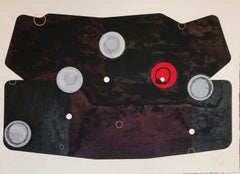
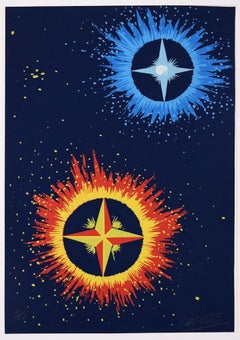
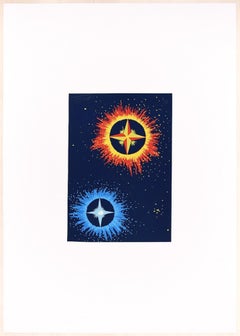
Stellar Composition - Screen Print y Félix Labisse - 1970s

Stellar Composition - Screen Print y Félix Labisse - 1970s

By Felix Labisse

Located in Roma, IT

Stellar Composition is a colored serigraph on paper realized by the French artist Félix Labisse. Hand-signed in pencil on lower right margin. Numbered in pencil and in Roman numerals on lower left margin. This is an artist's proof on a edition of 16 prints, on a total edition of 100 pieces. In very good conditions, this original print is glued on a white cardboard passepartout, cm 69.6 x 50. Félix Labisse (Douai 1905 - Paris 1982) The French painter, illustrator and scenographer (especially for J.-L. Barrault), Fèlix Labisse settled in Paris in 1933, after a period spent in Ostend during which he was in close contact with J. Ensor and supported by R Desnos. His works, influenced by surrealism, show a dreamlike and fantastic atmosphere of magical metamorphosis. In June 1951 he created the sets for Jean-Paul Sartre's play "Il diavolo e il buon Dio", staged by Louis Jouvet. During this time he spends his time between Paris and Knokke Le Zoute...

Category

1970s Contemporary Felix Labisse Abstract Prints

Materials

Screen

Related Items
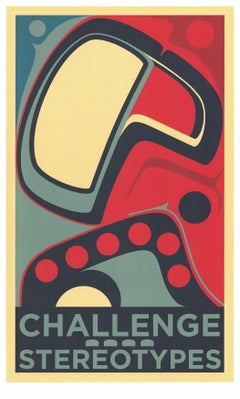
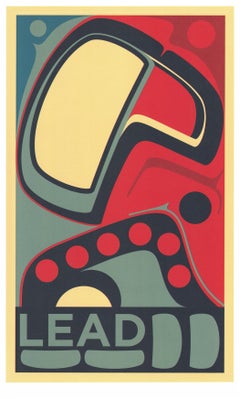
There is Hope, If We Rise (Lead) Screen Print, Contemporary, 2010-

There is Hope, If We Rise (Lead) Screen Print, Contemporary, 2010-

By Sonny Assu

Located in Montreal, Quebec

Sonny Assu (Liǥwildaʼx̱w of the Kwakwaka’wakw Nations) was raised in North Delta, BC, over 250 km away from his home ancestral home on Vancouver Island. Having been raised as your ev...

Category

2010s Contemporary Felix Labisse Abstract Prints

Materials

Screen

There Is Hope, If We Rise Screen Print, Contemporary, Framed, 2010+

There Is Hope, If We Rise Screen Print, Contemporary, Framed, 2010+

By Sonny Assu

Located in Montreal, Quebec

Sonny Assu (Liǥwildaʼx̱w of the Kwakwaka’wakw Nations) was raised in North Delta, BC, over 250 km away from his home ancestral home on Vancouver Island. Having been raised as your ev...

Category

2010s Contemporary Felix Labisse Abstract Prints

Materials

Screen

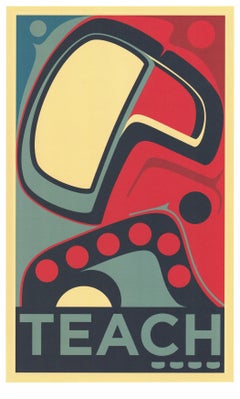
There is Hope, If We Rise (Teach) Screen Print, Contemporary, 2010-

There is Hope, If We Rise (Teach) Screen Print, Contemporary, 2010-

By Sonny Assu

Located in Montreal, Quebec

Sonny Assu (Liǥwildaʼx̱w of the Kwakwaka’wakw Nations) was raised in North Delta, BC, over 250 km away from his home ancestral home on Vancouver Island. Having been raised as your everyday average suburbanite, it wasn't until he was eight years old that he discovered his Liǥwildax̱w/Kwakwaka’wakw heritage. Later in life, this discovery would be the conceptual focal point that helped launch his unique art practice. Assu's artistic practice is diverse: spanning painting, sculpture, photography, digital art and printmaking. Sonny negotiates Western and Kwakwaka’wakw principles of art making as a means of exploring his family history and the experiences of being an Indigenous person in the colonial state of Canada. Having cut his teeth in Vancouver's art scene, Assu packed up and moved to Montreal to be with the love of his life. Five years later, along with his wife and beautiful daughter, Sonny moved back to BC, eventually settling back "home" in unceded Liǥwildaʼx̱w territory (Campbell River, BC.). Assu received his BFA from the Emily Carr University in 2002 and was the recipient of their distinguished alumni award in 2006. He received the BC Creative Achievement Award in First Nations art...

Category

2010s Contemporary Felix Labisse Abstract Prints

Materials

Screen

There is Hope, If We Rise Screen Print, Contemporary, Framed, 2010+

There is Hope, If We Rise Screen Print, Contemporary, Framed, 2010+

By Sonny Assu

Located in Montreal, Quebec

Sonny Assu (Liǥwildaʼx̱w of the Kwakwaka’wakw Nations) was raised in North Delta, BC, over 250 km away from his home ancestral home on Vancouver Island. Having been raised as your ev...

Category

2010s Contemporary Felix Labisse Abstract Prints

Materials

Screen

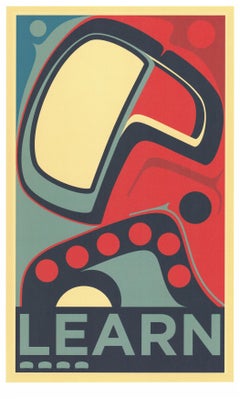
There is Hope, If We Rise (Learn) Screen Print, Contemporary, 2010-

There is Hope, If We Rise (Learn) Screen Print, Contemporary, 2010-

By Sonny Assu

Located in Montreal, Quebec

Sonny Assu (Liǥwildaʼx̱w of the Kwakwaka’wakw Nations) was raised in North Delta, BC, over 250 km away from his home ancestral home on Vancouver Island. Having been raised as your everyday average suburbanite, it wasn't until he was eight years old that he discovered his Liǥwildax̱w/Kwakwaka’wakw heritage. Later in life, this discovery would be the conceptual focal point that helped launch his unique art practice. Assu's artistic practice is diverse: spanning painting, sculpture, photography, digital art and printmaking. Sonny negotiates Western and Kwakwaka’wakw principles of art making as a means of exploring his family history and the experiences of being an Indigenous person in the colonial state of Canada. Having cut his teeth in Vancouver's art scene, Assu packed up and moved to Montreal to be with the love of his life. Five years later, along with his wife and beautiful daughter, Sonny moved back to BC, eventually settling back "home" in unceded Liǥwildaʼx̱w territory (Campbell River, BC.). Assu received his BFA from the Emily Carr University in 2002 and was the recipient of their distinguished alumni award in 2006. He received the BC Creative Achievement Award in First Nations art...

Category

2010s Contemporary Felix Labisse Abstract Prints

Materials

Screen

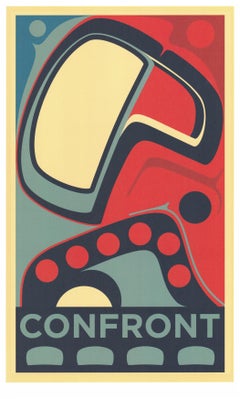
There is Hope, If We Rise (Confront) Contemporary Screen Print, 2010-

There is Hope, If We Rise (Confront) Contemporary Screen Print, 2010-

By Sonny Assu

Located in Montreal, Quebec

Sonny Assu (Liǥwildaʼx̱w of the Kwakwaka’wakw Nations) was raised in North Delta, BC, over 250 km away from his home ancestral home on Vancouver Island. Having been raised as your everyday average suburbanite, it wasn't until he was eight years old that he discovered his Liǥwildax̱w/Kwakwaka’wakw heritage. Later in life, this discovery would be the conceptual focal point that helped launch his unique art practice. Assu's artistic practice is diverse: spanning painting, sculpture, photography, digital art and printmaking. Sonny negotiates Western and Kwakwaka’wakw principles of art making as a means of exploring his family history and the experiences of being an Indigenous person in the colonial state of Canada. Having cut his teeth in Vancouver's art scene, Assu packed up and moved to Montreal to be with the love of his life. Five years later, along with his wife and beautiful daughter, Sonny moved back to BC, eventually settling back "home" in unceded Liǥwildaʼx̱w territory (Campbell River, BC.). Assu received his BFA from the Emily Carr University in 2002 and was the recipient of their distinguished alumni award in 2006. He received the BC Creative Achievement Award in First Nations art...

Category

2010s Contemporary Felix Labisse Abstract Prints

Materials

Screen

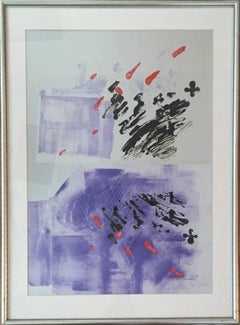
Composed Field II, Contemporary Screenprint by George Chemeche

Composed Field II, Contemporary Screenprint by George Chemeche

By George Chemeche

Located in Long Island City, NY

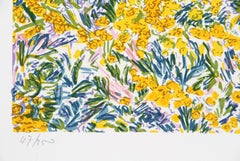
George Chemeche, Iraqi/American (1934 - ) - Composed Field II, Year: 1979, Medium: Screenprint, signed and numbered in pencil, Edition: 250, AP 25, Image Size: 32.5 x 29.5 inches...

Category

1970s Contemporary Felix Labisse Abstract Prints

Materials

Screen

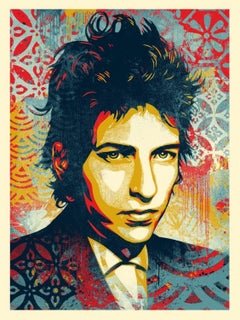
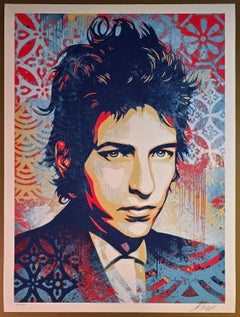
A Hard Rain’s A-Gonna Fall (Bob Dylan, Portrait, Tribute, Protest Music)

A Hard Rain’s A-Gonna Fall (Bob Dylan, Portrait, Tribute, Protest Music)

By Shepard Fairey

Located in Kansas City, MO

Shepard Fairey A Hard Rain’s A-Gonna Fall Screen print on thick cream Speckletone paper Year: 2025 Size: 24 x 18 inches (60.96 x 45.72 cm) Edition: 500 Signed by Shepard Fairey, dated and numbered by hand COA provided *Edition number may vary from the image shown. In this portrait inspired by Bob Dylan, Shepard Fairey reflects on the enduring cultural and political significance of one of the most influential songwriters of the 20th century. While acknowledging that Dylan’s vast catalog varies in resonance for him personally, Fairey emphasizes the extraordinary impact of Dylan’s strongest work—particularly his socially conscious and protest-oriented songs—which helped redefine the role of music as a vehicle for commentary, dissent, and cultural transformation. The print takes its title from Dylan’s seminal song A Hard Rain’s A-Gonna Fall, a composition Fairey regards as emblematic of art that is both timely and timeless. The lyrics—filled with surreal, apocalyptic, and symbolic imagery—serve as a poetic meditation on violence, injustice, fear, and moral urgency. For Fairey, Dylan’s ability to combine lyrical complexity with emotional immediacy positions him not only as a musician, but as a “people’s poet” whose work continues to shape public consciousness across generations. Visually, the composition is based on a photograph by Daniel Kramer, who documented Dylan extensively during his rapid rise to prominence in the mid-1960s. Fairey’s interpretation captures both Dylan’s self-possession and his well-known resistance to being cast as the singular “voice of a generation.” Through bold graphic stylization and restrained symbolism, the portrait pays tribute to Dylan’s lasting influence on music, political expression, and artistic independence. Bob Dylan portrait...

Category

2010s Contemporary Felix Labisse Abstract Prints

Materials

Screen

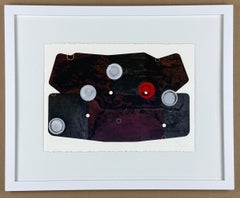
Victor Guadalajara, ¨Boceto Luna Roja¨, 2020, Piezography, 10.2x14.2 in

Victor Guadalajara, ¨Boceto Luna Roja¨, 2020, Piezography, 10.2x14.2 in

By Victor Guadalajara

Located in Miami, FL

Victor Guadalajara (Mexico, 1965) 'Boceto Luna Roja', 2020 piezography on paper Velin Arches 300 g. 10.3 x 14.2 in. (26 x 36 cm.) ID: GUA-999 Hand-signed by author

Category

2010s Contemporary Felix Labisse Abstract Prints

Materials

Screen, Digital Pigment

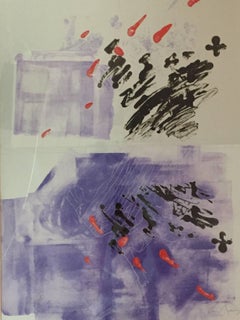
"Untitled"
"Untitled"

Dan Reisinger"Untitled"

$650

H 33 in W 24.75 in

"Untitled"

By Dan Reisinger

Located in Surfside, FL

Reisinger was born in Kanjiža, Serbia, into a family of painters and decorators active in Austria-Hungary and the Balkans. Most family members died in the Holocaust, including his father. As a teenager, he became active in the Partisan Pioneer Brigade and, with his mother and stepfather, immigrated to Israel in 1949. Reisinger initially lived in a transit camp and then worked as a house painter in order to earn money from almost any source. In 1950 at age 16, he was accepted as a student—its youngest up to the time—at the Bezalel Academy of Art and Design in Jerusalem, there to 1954. During mandatory service in the Israeli Air Force from 1954, he was the art director of its books and other publications. While there, he attended a class on postage-stamp design taught by Abram Games, who became his mentor and friend. Subsequently, he traveled, studied, and worked in Europe: from 1957 in Brussels and then onto London where, 1964–66, studied stage and three-dimensional design at the Central School of Art and Design, designed posters for Britain's Royal Mail, and worked for other clients while making intermittent visits to Israel. Then in 1966, he returned permanently to Israel and established a studio in Tel Aviv and today in Giv'atayim. His work has been included in numerous international group and one-person exhibitions. A large number of social-, political-, and cultural-theme posters and other graphic design, such as calendars, packaging, and more than 150 logos are superior to much of his fine art. He designed a new logo for El Al airlines (1972), and the 50-meter-long aluminum-cast relief (1978) of a biblical quotation in Hebrew on the exterior of the Yad Vashem, Israel's official museum/memorial to Holocaust victims, in Jerusalem. He has also designed logos for the Tel Aviv Museum of Arts, Tefen Museum of Arts, and Habima Theater (הבימה - התיאטרון הלאומי) and the symbol and posters of the 9th-15th Maccabiah Games (מַכַּבִּיָּה). His widely published self-produced “Again?” poster (1993) features a Nazi swastika (which Reisinger incorrectly made to face left) breaks apart to 5 pointed red Star of soviet union in reference to the possible dreaded repeat of the Holocaust. The influences on his work—itself more widely focused than solely on social and political issues—have come from colorists, Minimalists, Constructivists, and humorists. He claims one of his more significant contributions has been to stretch the visual and communicative possibilities of Hebrew letters through his symbols and logos. Reisinger is one of Israel's most-accomplished graphic designers; the others include Franz Kraus...

Category

20th Century Contemporary Felix Labisse Abstract Prints
Materials

Screen

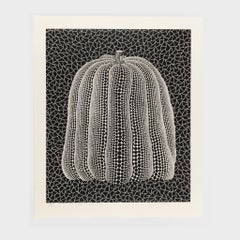
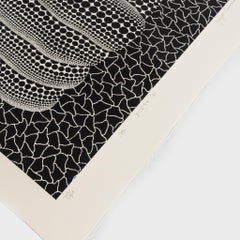
Signed Pumpkin Screenprint, Contemporary, 20th Century, Ed. 102/120

Signed Pumpkin Screenprint, Contemporary, 20th Century, Ed. 102/120

By Yayoi Kusama

Located in Bristol, GB

Screenprint Edition 102 of 120 83.5 × 70.5 cm (32.9 x 27.8 in) Signed, titled, dated and numbered on front Artwork in excellent condition considering its age. Only visible under stud...

Category

20th Century Contemporary Felix Labisse Abstract Prints
Materials

Screen

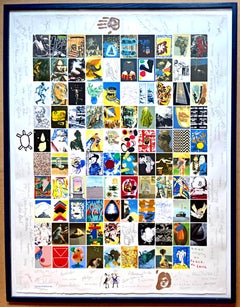
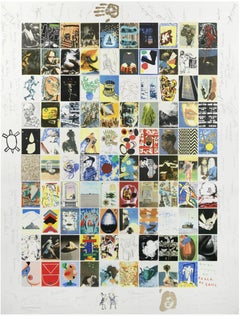
Visual Aid for Band Aid SIGNED 104 British artists: David Hockney, Bridget Riley

Visual Aid for Band Aid SIGNED 104 British artists: David Hockney, Bridget Riley

Located in New York, NY

David Hockney, Bridget Riley, Joe Tilson, Howard Hodgkin, Peter Blake + 99 artists Visual Aid for Band Aid - designed, and HAND SIGNED and annotated by 104 renowned artists, with off...

Category

1980s Contemporary Felix Labisse Abstract Prints
Materials

Ink, Permanent Marker, Pencil, Screen

Previously Available Items
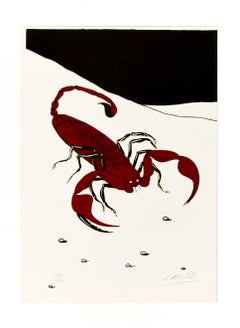
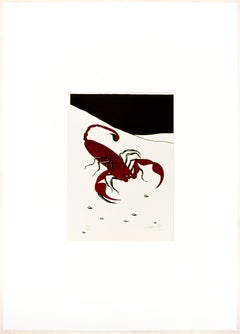
Scorpion - Original Screen Print y Félix Labisse - 1970s

Scorpion - Original Screen Print y Félix Labisse - 1970s

By Felix Labisse

Located in Roma, IT

Scorpion is a colored serigraph on paper realized by the French artist Félix Labisse. Hand-signed in pencil on lower right margin. Numbered in pencil on lower left margin. Edition of 100 pieces. In very good conditions, this original print is glued on a white cardboard passepartout, cm 69.6 x 50. This is a beautiful original print with superb graphic elegance, to collect at home. Félix Labisse (Douai 1905 - Paris 1982) The French painter, illustrator and scenographer (especially for J.-L. Barrault), Fèlix Labisse settled in Paris in 1933, after a period spent in Ostend during which he was in close contact with J. Ensor and supported by R Desnos. His works, influenced by surrealism, show a dreamlike and fantastic atmosphere of magical metamorphosis. In June 1951 he created the sets for Jean-Paul Sartre's play "Il diavolo e il buon Dio", staged by Louis Jouvet. During this time he spends his time between Paris and Knokke Le Zoute...

Category

1970s Contemporary Felix Labisse Abstract Prints
Materials

Screen

Felix Labisse abstract prints for sale on 1stDibs.

Find a wide variety of authentic Felix Labisse abstract prints available for sale on 1stDibs. You can also browse by medium to find art by Felix Labisse in lithograph, screen print and more. Much of the original work by this artist or collective was created during the 1970s and is mostly associated with the modern style. Not every interior allows for large Felix Labisse abstract prints, so small editions measuring 10 inches across are available. Customers who are interested in this artist might also find the work of René Lubarow, Camille Bryen, and Jean Lurcat. Felix Labisse abstract prints prices can differ depending upon medium, time period and other attributes. On 1stDibs, the price for these items starts at $323 and tops out at $334, while the average work can sell for $329.